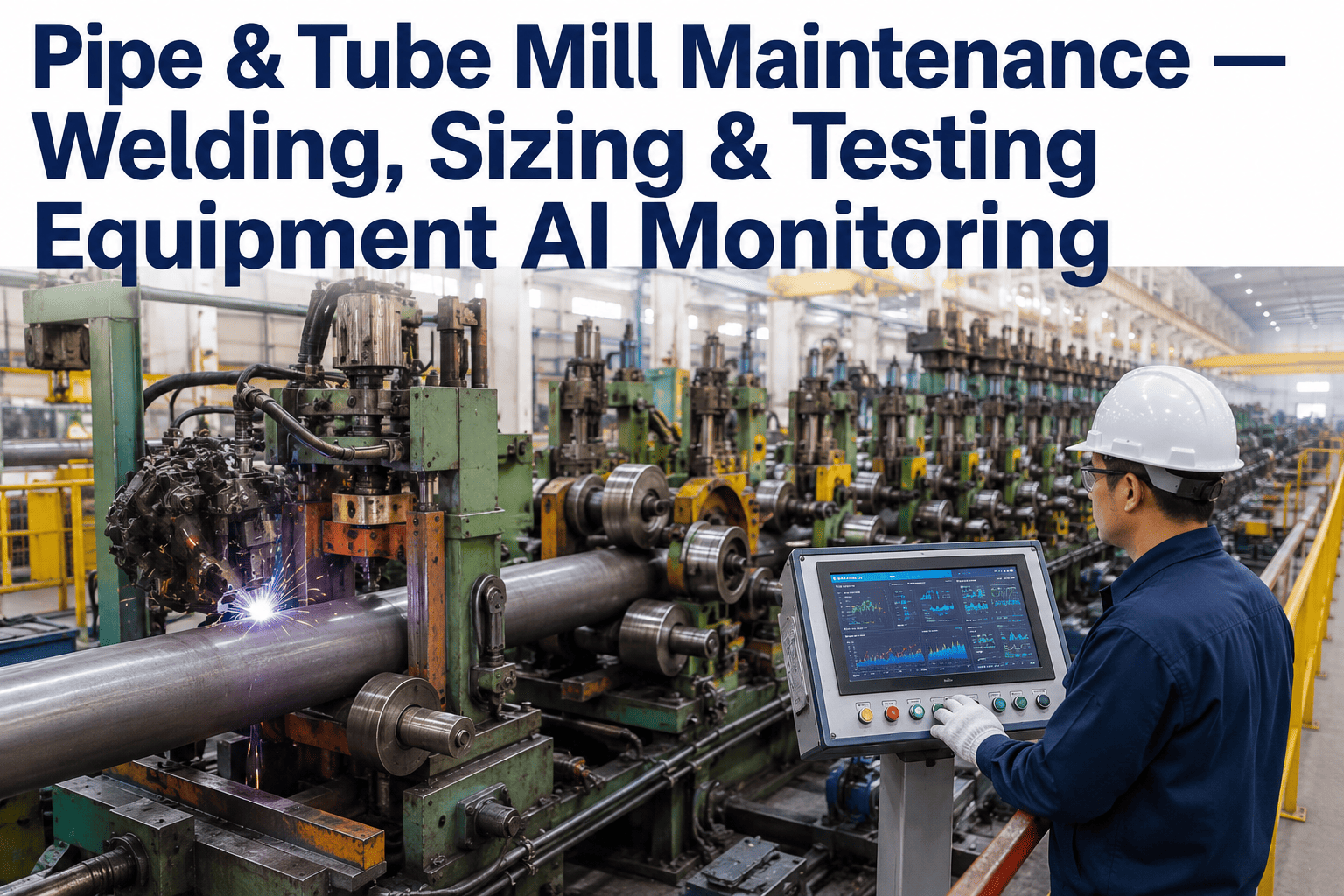
Steel manufacturing quality standards have evolved from simple physical measurements to a complex, multi-layered verification ecosystem where metallurgical integrity is proven through data-driven analytics. In today's high-stakes industrial environment, where a single 0.01% carbon deviation or a microscopic surface crack can trigger million-dollar liability claims in automotive or aerospace sectors, a "gut-feeling" approach to quality is no longer viable. A structured, data-rich Steel Quality Inspection Checklist is the only way to ensure 100% compliance with ASTM, EN, and JIS standards while meeting the hyper-specific internal tolerances of Tier-1 OEMs. Book a Demo to see how iFactory's manufacturing intelligence software converts raw metallurgical telemetry into real-time operational decision support and audit-ready Mill Test Reports (MTR).
Automate Industrial Steel Quality Analytics
Monitor spectrometer calibration, track real-time tensile test curves, log surface vision defects, and generate automated Mill Test Certificates for your entire steel manufacturing facility.
1. Raw Material & Scrap Chemistry Integrity
Verify input quality before the melt to prevent batch contamination. Eliminate "off-grade" heats by identifying non-ferrous contaminants in the scrap yard. Book a Demo to digitize your scrap yard quality logs.
2. Melt Shop & Ladle Metallurgy Analytics
Monitor ladle chemistry and slag health in real-time. Prevent oxidation and phosphorus reversion through precise metallurgical tracking. Book a Demo to integrate spectrometer data.
3. Mechanical & Strength Property Calibration
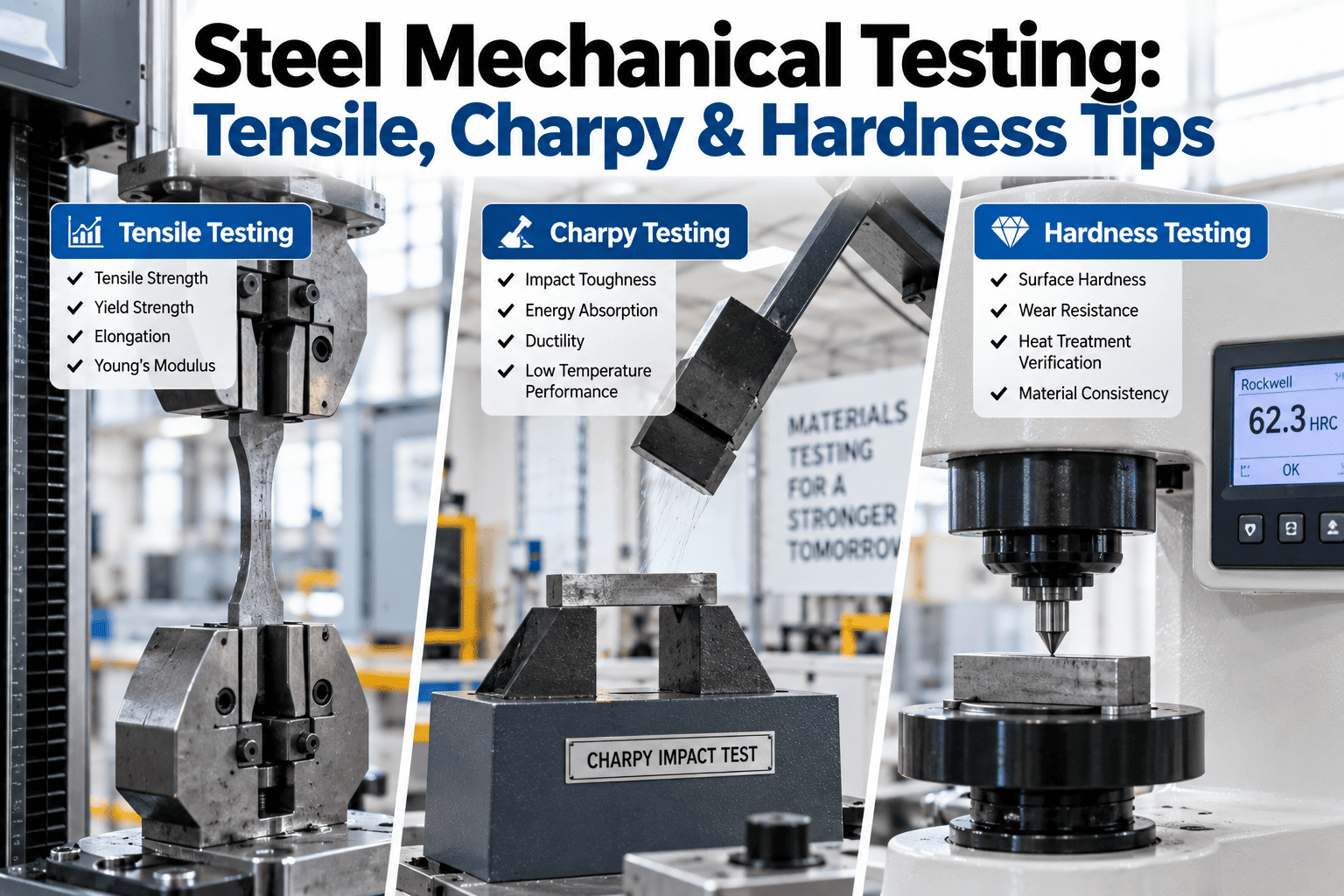
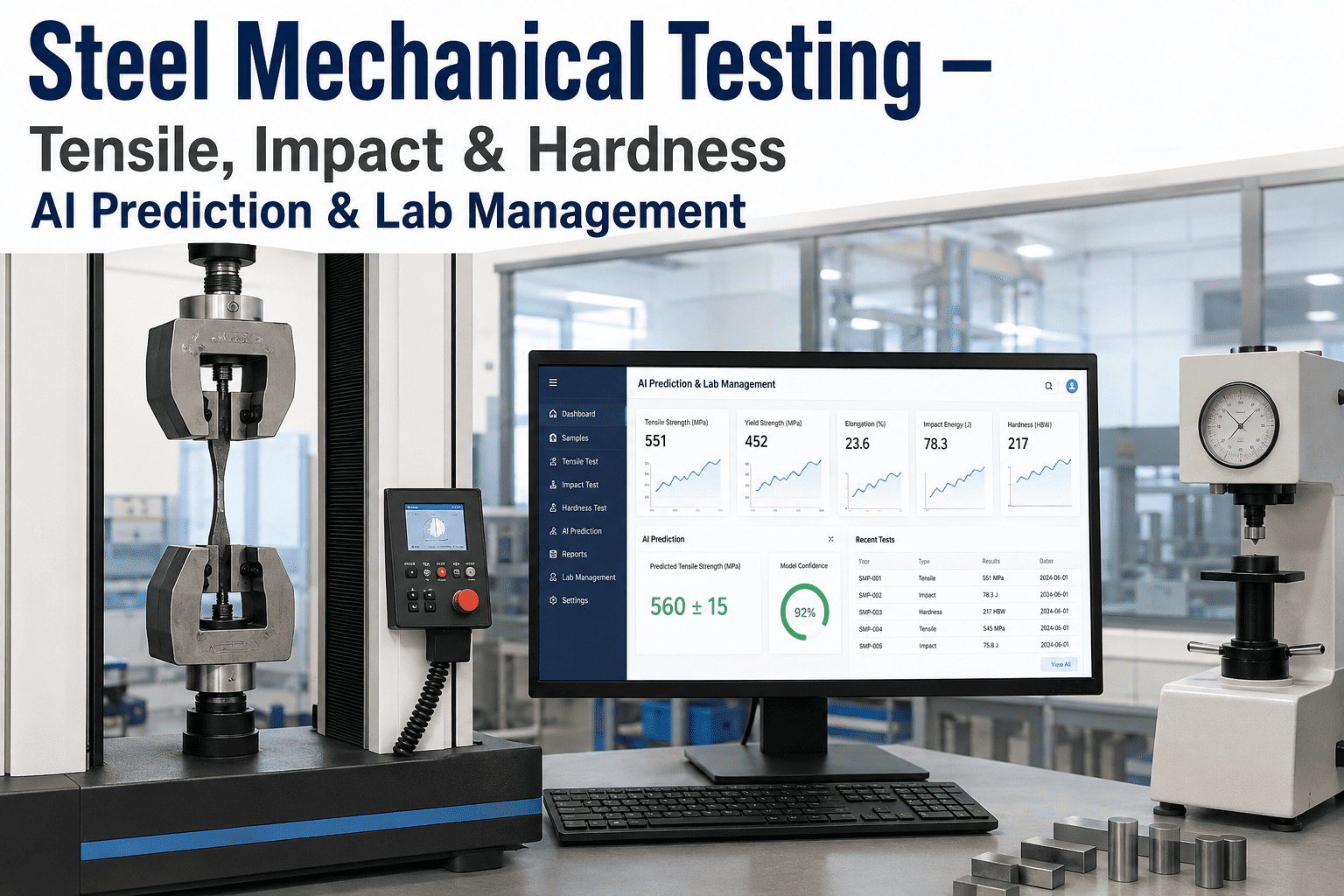
Verify tensile precision and ductility for structural consistency. Prevent structural failures through rigorous destructive test audits and machine calibration. Book a Demo to log mechanical test results.
4. Surface Quality & Vision Analytics
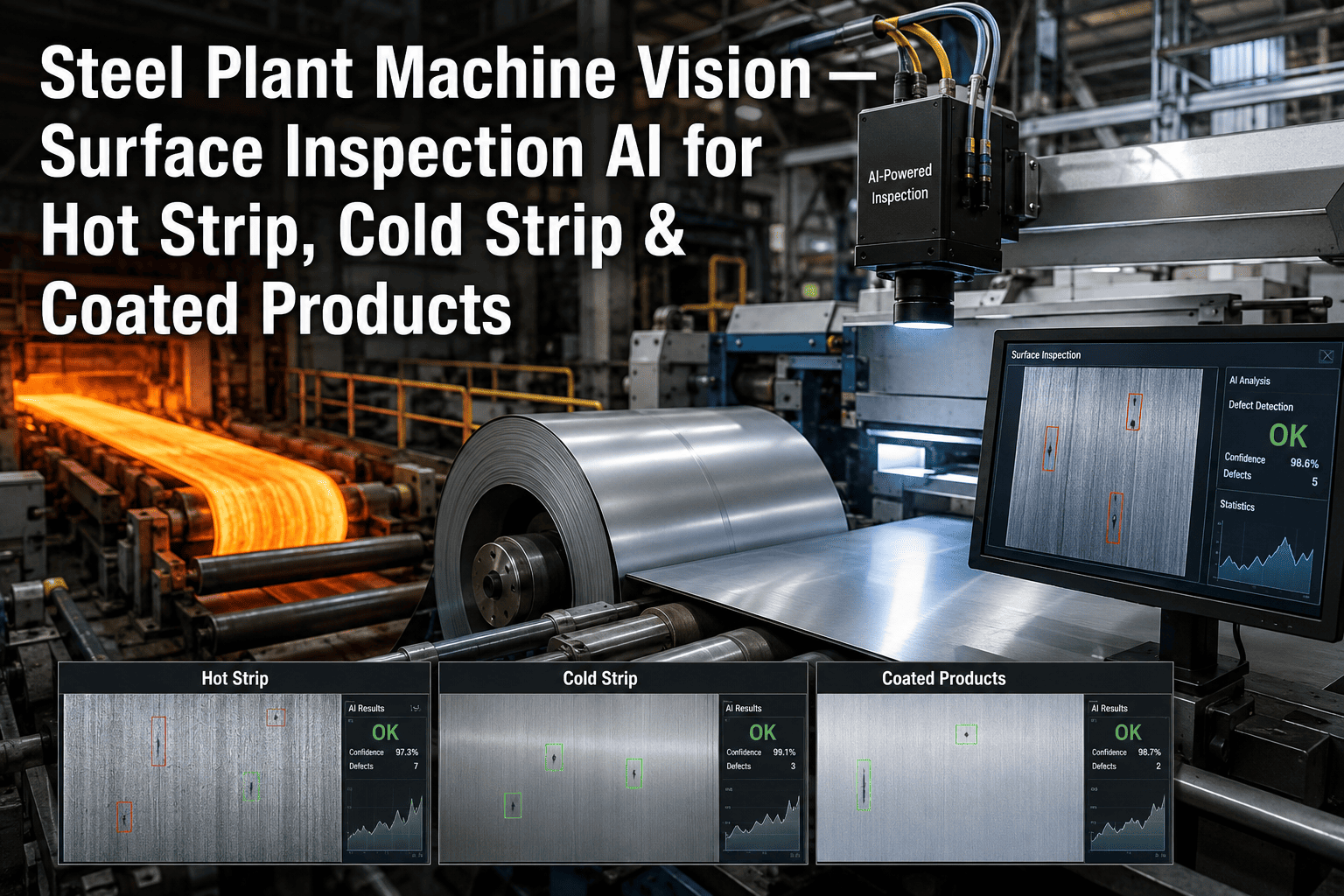
Identify microscopic surface flaws through AI vision and visual audits. Prevent customer rejections by detecting slivers and rolled-in scale early. Book a Demo to integrate AI vision data.
5. Dimensional Stability & Gauge Analytics
Verify thickness precision and flatness across the entire run. Ensure 100% compliance with OEM gauge tolerances through real-time telemetry. Book a Demo to automate gauge logging.
6. Heat Treatment & Annealing Validation
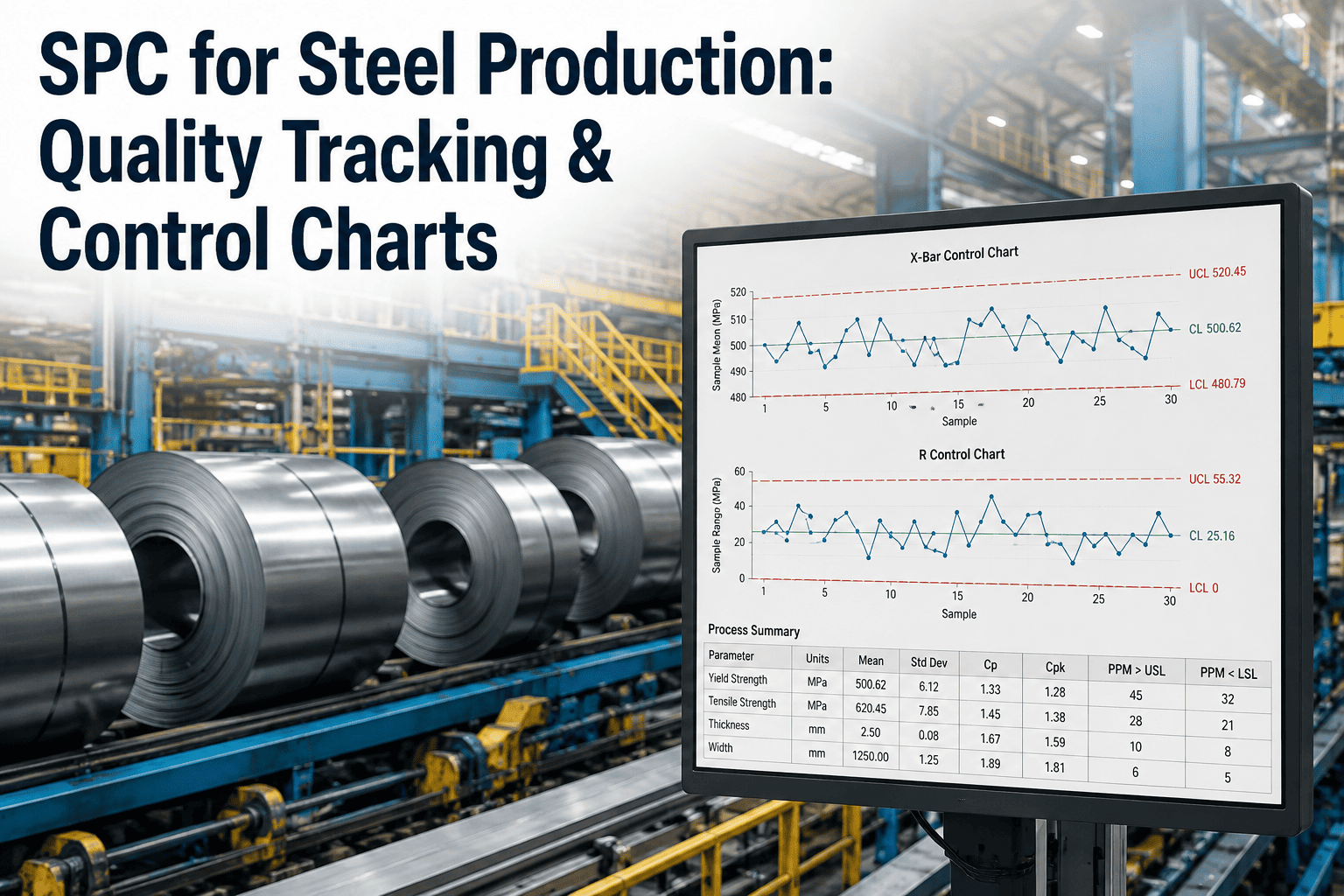
Maintain phase transformation stability through furnace audits. Prevent inconsistent hardness through proactive TUS and SAT testing. Book a Demo to track furnace uniformity.
7. Microstructure & Grain Size Analytics
Ensure metallurgical integrity through microscopic audits. Prevent brittle fracture by verifying grain size and inclusion cleanliness. Book a Demo to log ASTM E112 findings.
8. Finishing, Bundling & Shipping Integrity
Maintain traceability and prevent corrosion through shipping audits. Ensure every bundle is stenciled and oiled according to customer specs. Book a Demo to automate shipping logs.
9. Certification & MTR Compliance Analytics
Centralize quality documentation for 100% audit readiness. Ensure Mill Test Reports are accurate, timestamped, and digitally signed. Book a Demo to digitize your MTR logs.
Digitize Your Steel Plant Quality Program
iFactory auto-schedules spectrometer calibration, tracks tensile machine health, logs surface vision data, and generates audit-ready Mill Test Reports for your entire manufacturing facility.
"Since moving to iFactory's digital quality hub, our metallurgical audit preparation time has dropped from three days to thirty minutes. Our automotive customers now have 100% visibility into the Cpk stability of every heat we ship, which has eliminated our quality-related claim backlog entirely."
— Director of Quality & Metallurgy, Top-5 Global Steel Manufacturer
Frequently Asked Questions — Steel Quality Inspection Analytics
1. How often should spectrometer calibration be verified?
For high-spec steel manufacturing, spectrometer calibration should be verified using 'Type Standards' at least once per shift. iFactory's digital checklist includes a mandatory verification step that blocks data entry if the calibration window is expired.
2. Why is Carbon Equivalent (CEV) so critical for structural steel?
CEV determines the weldability of the steel. High CEV values can lead to hydrogen-induced cracking in the heat-affected zone of welds. Our system automatically calculates CEV and flags any heat that requires pre-heating documentation for the customer.
3. What is the difference between a 3.1 and 3.2 Mill Test Certificate?
A 3.1 certificate is issued by the manufacturer's authorized quality department, independent of production. A 3.2 certificate requires an additional witness by the purchaser's authorized representative or a third-party inspector. Our platform automates the workflow for both levels.
4. How do you measure surface roughness (Ra) on high-speed lines?
We integrate data from inline laser-profilometers or manual handheld stylus-profilometers at the exit of the finishing mill. Tracking Ra drift in real-time allows for scheduled roll changes before surface finish falls out of automotive spec.
5. What are I-Units in steel flatness measurements?
I-Units are a mathematical representation of flatness that accounts for both the height and frequency of waves. One I-Unit represents a length difference of 0.001%. Automotive panels typically require flatness < 10 I-units.
6. How does digital inclusion rating (ASTM E45) improve steel cleanliness?
By logging inclusion types and counts directly into the quality hub, metallurgists can correlate 'dirty' heats with specific ladle-stirring times or slag chemistry issues, allowing for immediate process correction in the melt shop.
7. Can smart quality sensors replace manual physical testing?
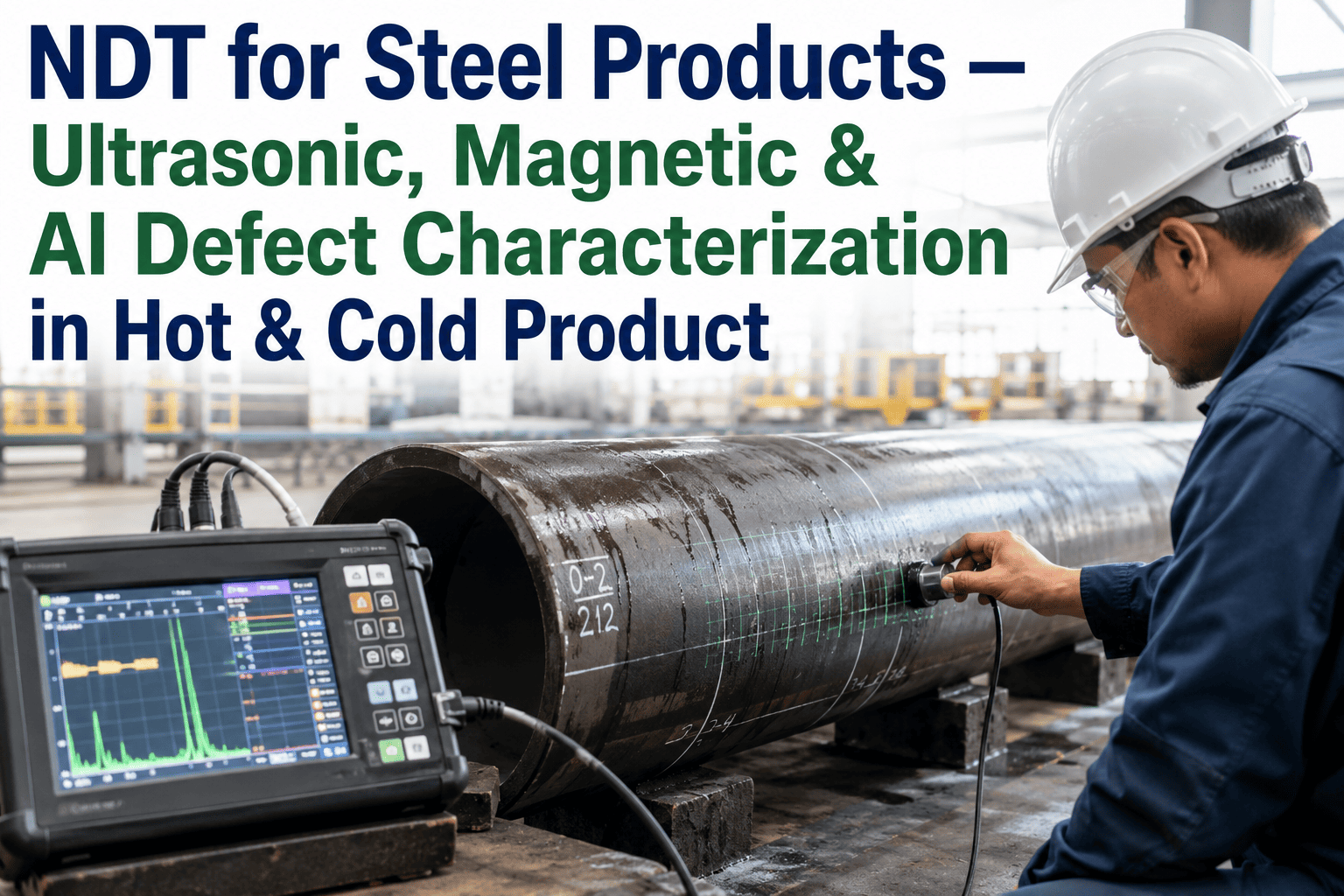
While physical tensile and impact tests remain the gold standard for certification, non-destructive sensors (UT, Eddy Current, Magnetic Flux) provide 100% surface and internal coverage that spot-checking cannot achieve.
8. How long is the ROI period for digitizing a steel quality lab?
Most mills achieve ROI within 4-6 months through a combination of reduced off-grade downgrades, lower scrap rates, and the elimination of manual report-consolidation labor.
Start Your Steel Quality Compliance Program Today
Join industrial leaders automating metallurgical test scheduling, tracking furnace TUS health, managing compliance logs, and passing audits with complete, timestamped analytics documentation.