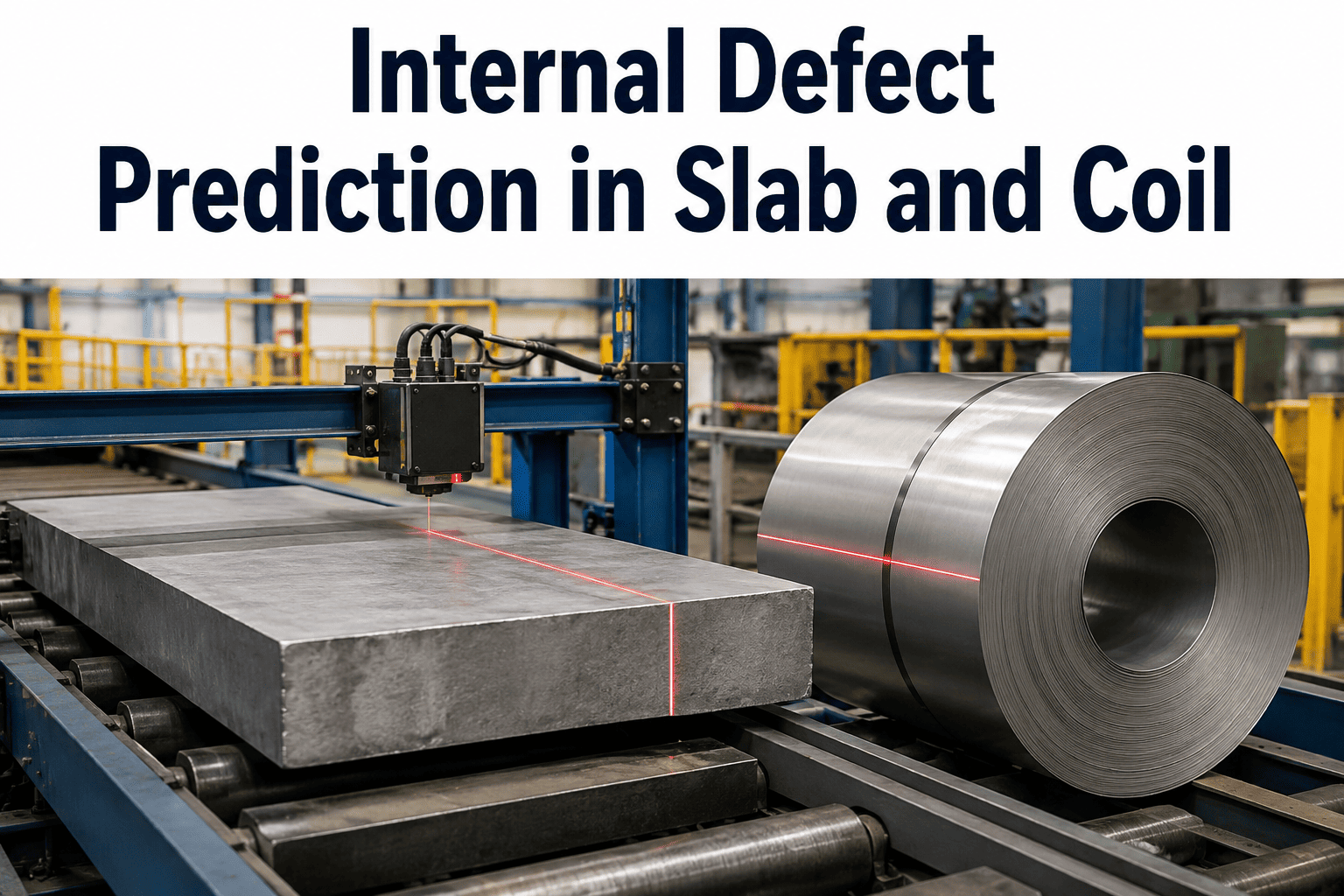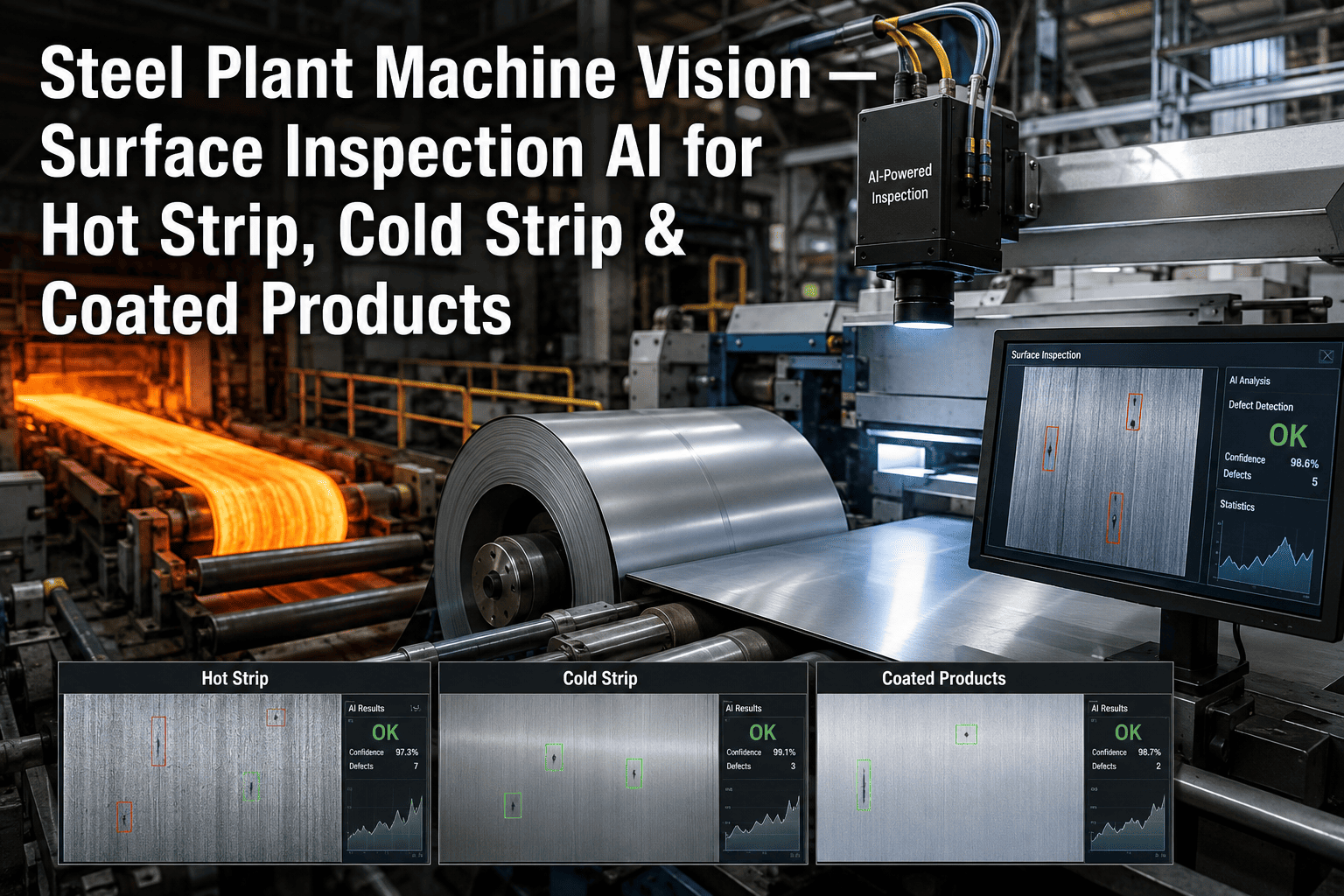
An ultrasonic scan of a slab or plate produces a signal trace that an experienced operator can interpret quickly for an obvious defect, but the harder calls — a borderline indication that might be a small inclusion cluster or might be nothing, a lamination signature that's ambiguous at the plate edge — are exactly where operator-to-operator variation shows up most, and where a genuine defect can slip through if the shift's interpretation happens to lean permissive that day. Automated NDT with AI-assisted defect characterization doesn't replace ultrasonic or magnetic testing physics, but it does change how consistently the borderline calls get made across slabs, plates, coils, and long products. This piece covers where NDT interpretation typically varies most, what automated characterization actually adds, and how a demo can walk through defect characterization consistency against your current inspection data.
Where Operator Interpretation Variability Actually Shows Up
Ultrasonic testing works by interpreting reflected sound wave amplitude and timing against a known reference, and magnetic particle or magnetic flux leakage testing works by interpreting flux disturbance patterns at a surface or near-surface flaw — both methods rely on skilled interpretation, and both produce results that are genuinely ambiguous at the margins. A clear, large internal void or crack is rarely a difficult call for any trained operator. The difficulty concentrates in small inclusion clusters near a rejection threshold, laminations that show a weak or partial signature rather than a textbook reflection, and indications near a product edge where geometry itself can distort the signal independent of any actual defect.
These borderline cases are precisely where two operators reviewing the same trace can reasonably disagree, and where fatigue, shift timing, and even subtle differences in how each operator was trained to interpret ambiguous signals introduce variability that has nothing to do with the actual condition of the steel.
| Product Form | Common NDT Method | Typical Defect Focus |
|---|---|---|
| Slabs | Ultrasonic testing | Internal porosity, inclusion clusters, centerline segregation |
| Plates | Ultrasonic testing | Laminations, internal voids, edge-region indications |
| Coils | Magnetic flux leakage, eddy current | Surface and near-surface defects along coil length |
| Long products (bar, rod) | Ultrasonic, magnetic particle | Internal cracks, seams, subsurface inclusions |
What AI-Assisted Characterization Actually Changes
Automated defect characterization trained on a large library of historical indications, matched against confirmed outcomes from destructive verification or downstream performance, gives each new borderline indication a consistent classification reference point rather than relying solely on an individual operator's judgment in that moment. This doesn't remove the operator from the decision — final disposition on ambiguous or high-consequence indications still typically involves human review — but it does mean every operator is working from the same characterization baseline rather than each bringing purely individual experience to an ambiguous call.
Automating Detection Without Losing Traceability
A common concern with automated NDT is losing the auditability that comes with a documented human interpretation on every indication — particularly important in industries where a customer or certifying body may later question a disposition decision. Well-implemented automated characterization preserves the full signal trace and the automated classification alongside any human review, rather than replacing the record with only a pass/fail outcome, which means the same level of traceability remains available while adding a consistent, documented characterization step that a purely manual process didn't previously provide.
What This Means for a Process Engineer Reviewing Inspection Data
With a consistent characterization baseline in place, a process engineer reviewing recurring indication patterns across a product line can trust that a spike in borderline calls reflects an actual change in process condition rather than a shift change or a different operator's interpretation tendencies. That distinction matters directly for root cause work — if inclusion cluster indications are trending upward on a specific caster or rolling schedule, it's much more useful to know that's a genuine process signal rather than discovering later it was simply a difference in how one operator classified ambiguous traces compared to another.
It also changes how disputed rejections get resolved with customers. Having the full signal trace, the automated classification, and the human review decision all preserved together gives a far stronger basis for explaining a disposition than a pass/fail record alone, particularly for indications that fell near a rejection threshold where the classification basis genuinely matters.