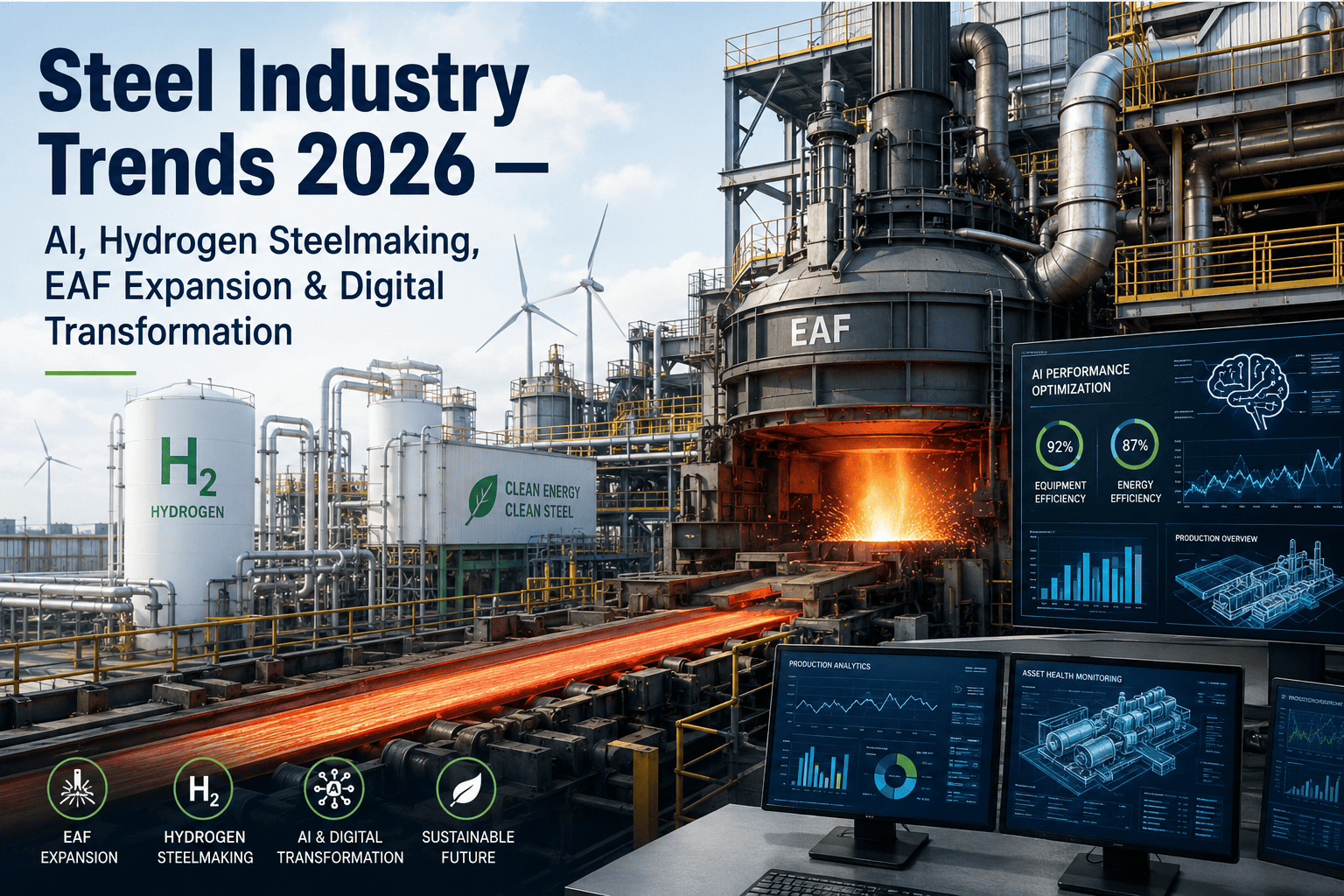
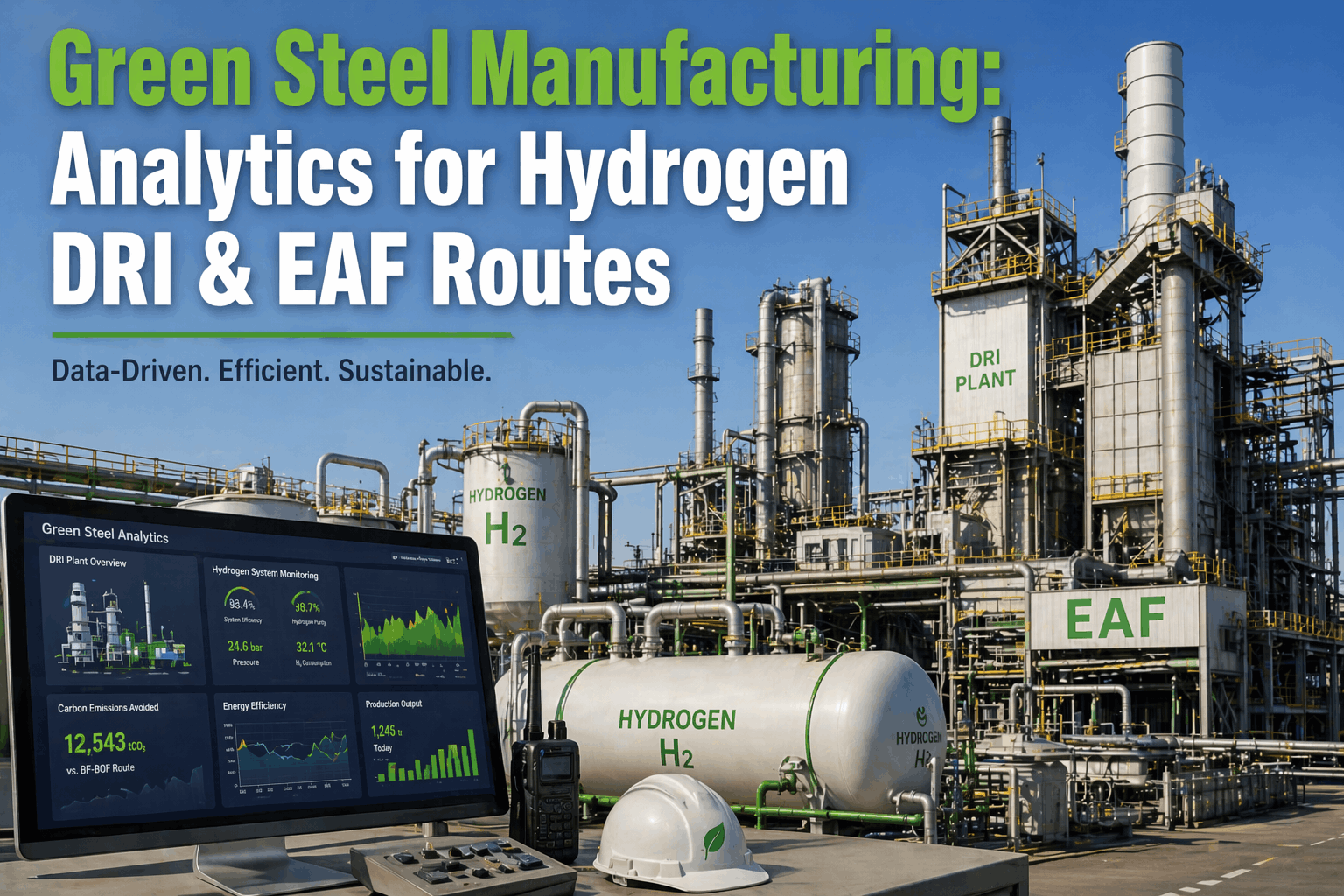
Steel manufacturing accounts for 7% of global energy-related CO₂ emissions — and the only pathway to deep decarbonization runs through renewable energy. The green hydrogen market alone is projected to grow from $12.3 billion in 2025 to $231 billion by 2035 at 34% CAGR, driven primarily by hard-to-decarbonize industries like steel chemicals, and heavy transport. In the steel sector specifically, green hydrogen-based Direct Reduced Iron (H₂-DRI) followed by Electric Arc Furnace (EAF) steelmaking is the most widely analyzed decarbonization route — with Nature Communications research showing competitive fossil-free steel could emerge by 2030 if coking coal prices remain high, with projected costs of $535–972 per tonne and renewable energy systems representing 21–33% of total production costs by 2050. Wind energy currently contributes the largest share of green hydrogen production at 47.75% of renewable sources, with solar close behind and costs declining rapidly — average LCOE projected to fall from $43/MWh in 2030 to $30/MWh by 2050, and hydrogen costs from $3.2/kg to $2.1/kg over the same period. EU CBAM and ETS free allowance phase-out create massive regulatory incentives for steel producers to integrate renewables now. Meanwhile, over 75% of green hydrogen projects are at risk from policy uncertainty. For steel producers, the question isn't whether to integrate renewables but how to sequence investments across solar, wind, hydrogen electrolysis, DRI conversion, and EAF capacity. iFactory's supply chain and operations platform helps steel manufacturers track renewable energy procurement, carbon intensity metrics, CBAM compliance data, and equipment maintenance across the transition to green steel production. Book a free demo and plan your renewable integration roadmap.
HERORenewable Energy Integration for Steel Manufacturing
Solar, Wind, and Green Hydrogen — The Three Pillars of Fossil-Free Steel
Steel's decarbonization depends on replacing coking coal with renewable electricity and green hydrogen. This guide maps the full integration pathway — from solar and wind farm economics to electrolyzer technology selection, H₂-DRI process design, EAF conversion, and the regulatory frameworks that determine whether the investment case works today.
Solar, Wind, and Green Hydrogen — How Each Powers the Steel Transition
Solar Energy
Solar PV provides the cheapest electricity in most geographies — critical because renewable energy systems represent 21–33% of green steel production costs by 2050. Research shows competitive green steel production clusters near the Tropics of Cancer and Capricorn where solar irradiance is strongest. Fixed-mount solar already outcompetes natural gas combined cycle in many regions even without subsidies. Solar powers both direct EAF operations and electrolysis for hydrogen production.
Wind Energy
Wind energy contributes the largest share of green hydrogen production globally — 47.75% of renewable sources in 2025. Onshore wind provides consistent supplementary generation that complements solar's diurnal pattern, reducing hydrogen storage requirements. Nature Communications research confirms that the most competitive green steel locations feature strong solar with supplementary onshore wind. Offshore wind potential is vast but faces policy uncertainty and higher costs.
Green Hydrogen
Green hydrogen is the essential molecule — the reducing agent that replaces coking coal in the DRI process. Produced via electrolysis powered by renewable electricity, green H₂ eliminates the carbon from iron ore reduction entirely. PEM electrolyzers lead with 38.1% market share due to flexibility with variable renewable inputs. Alkaline electrolyzers offer lower cost for steady-state production. Hydrogen costs projected to fall from $3.2/kg (2030) to $2.1/kg (2050).
From Renewable Electron to Finished Steel — The H₂-DRI-EAF Process
The dominant decarbonization pathway replaces the blast furnace with hydrogen-based direct reduction and electric arc furnace steelmaking.
Renewable Electricity Generation
Solar PV and wind farms generate clean electricity. Optimal locations combine strong solar irradiance with supplementary wind to maximize capacity factor and minimize storage costs. Grid-connected or islanded configurations depending on infrastructure availability.
Water Electrolysis → Green H₂
Renewable electricity powers electrolyzers (PEM or alkaline) that split water into hydrogen and oxygen. PEM electrolyzers handle variable renewable input better; alkaline offers lower cost at steady state. Hydrogen is stored in pressurized tanks or underground salt caverns. See electrolyzer tracking
H₂-DRI (Direct Reduced Iron)
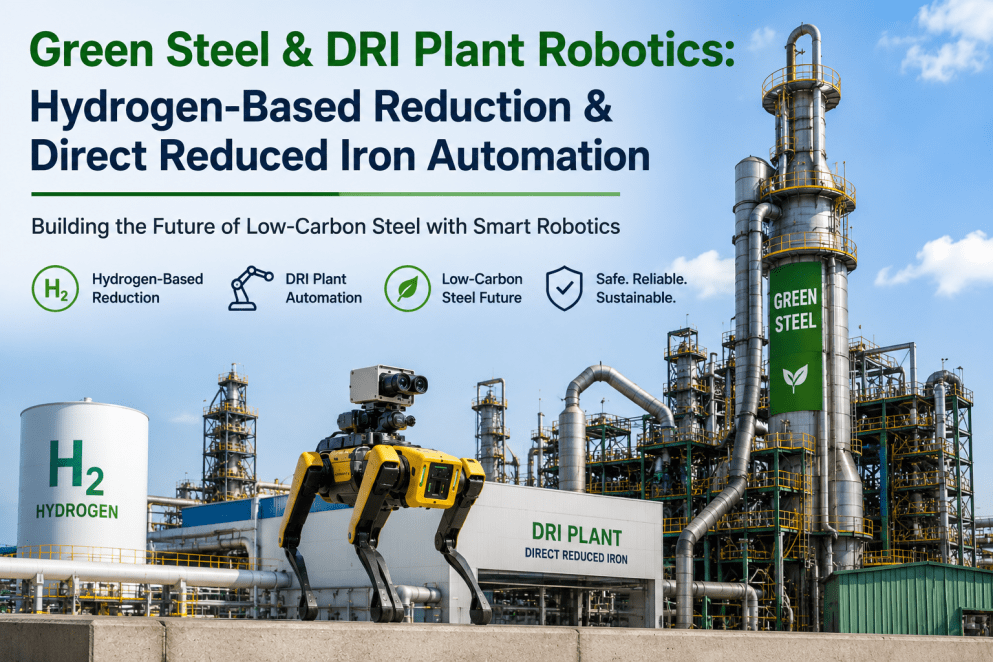
Green hydrogen flows into a shaft furnace (Midrex or HYL/Energiron technology) where it reduces iron ore pellets to metallic iron — replacing the coking coal used in blast furnaces. The byproduct is water vapor, not CO₂. Output is DRI/HBI with 90–92%+ iron content.
EAF Steelmaking
DRI/HBI feeds into an Electric Arc Furnace powered by renewable electricity. EAF melts and refines the iron into finished steel products. The entire route — renewable electricity → hydrogen → DRI → EAF — achieves up to 95% CO₂ reduction compared to BF-BOF production.
When Does Green Steel Become Competitive? The Cost Convergence Timeline
Green Steel Production Cost
Current projected range for green H₂-DRI-EAF steel without scrap charging (Nature Communications). Costs vary dramatically by location — Tropics offer lowest costs due to solar quality. Renewable energy system represents 27–41% of total cost in 2030, declining to 21–33% by 2050 as technology costs fall.
Renewable Electricity (LCOE)
Average LCOE across all regions declining from $43/MWh (2030) to $30/MWh (2050). Best locations already below $25/MWh. Solar PV outcompetes natural gas combined cycle in many regions without subsidies. Each $10/MWh reduction in LCOE significantly impacts green steel economics. Model your energy costs
Green Hydrogen Cost
Hydrogen costs declining from $3.2/kg (2030) to $2.1/kg (2050) as electrolyzer costs fall, efficiency improves, and renewable electricity cheapens. PEM electrolyzers lead at 38.1% market share for flexibility with variable renewables. Alkaline electrolyzers offer lower steady-state cost. Hydrogen cost is the single largest variable in green steel economics.
Carbon Cost (EU ETS)
EU ETS carbon prices rising as free allowances phase out (2026–2034). CBAM adds border carbon cost for imported steel. As carbon costs rise and renewable costs fall, the crossover point where green steel becomes cheaper than BF-BOF production accelerates. If coking coal prices remain high, competitive green steel emerges from 2030 in favorable locations.
The Policy Framework Driving Renewable Integration in Steel
CBAM + ETS Phase-Out
EU CBAM (2026 definitive phase) prices embedded carbon in imported steel. ETS free allowance phase-out (2026–2034) escalates costs for BF-BOF producers. Together, these create a 14–43x increase in carbon costs for European steel. Green steel producers gain massive competitive advantage in the EU market.
IRA & Policy Uncertainty
Inflation Reduction Act provides production tax credits for clean hydrogen (45V). However, the OBBBA accelerates phaseout of 45Y/48E credits for wind and solar projects starting after July 2026. Over 75% of green hydrogen projects are now at risk from policy changes. Low-carbon hydrogen may still qualify for 10-year credits if construction begins before 2028. Track policy impacts
National Hydrogen Missions
India's National Hydrogen Mission targets 5 million metric tons of green H₂ annually by 2030 with $2.4B initial investment. China leads global production with 20 million tonnes. Japan pursues import strategies from Australia and Middle East. Oman positioning as global green hydrogen hub for steel sector. Asia-Pacific dominates green H₂ market with 47.4% share.
Where Green Steel Works Best — Geospatial Factors That Determine Competitiveness
Nature Communications research analyzing 300+ locations found that green steel competitiveness depends on co-locating renewable energy, iron ore, and favorable labor costs.
Solar Irradiance Quality
The single most important factor. Competitive green steel clusters near the Tropics of Cancer and Capricorn where solar capacity factors are highest. Each percentage point of capacity factor improvement cascades through LCOE, hydrogen cost, and final steel cost.
Supplementary Wind Resource
Locations with strong solar plus consistent onshore wind minimize energy storage requirements and maximize electrolyzer utilization — reducing both capital and operating costs for hydrogen production.
Iron Ore Proximity & Quality
Co-location with high-grade iron ore (67%+ Fe, low impurities) eliminates ore transportation costs and enables mine-mouth DRI production. Australia, Brazil, and West Africa offer the strongest combined renewable + ore resources. Analyze location economics
Water Availability
Electrolysis requires significant water inputs. Arid regions with excellent solar may face water constraints. Desalination adds cost but is feasible in coastal locations. Water availability is an often-overlooked constraint for large-scale green hydrogen production.
Labor Costs & Infrastructure
Steelworker wages and existing industrial infrastructure affect total production costs. Favorable locations combine renewable resources with competitive labor — often in emerging economies positioned to capture the green steel value chain.
How iFactory Supports the Renewable-Steel Integration
Renewable Energy Procurement Tracking
Monitor PPA contracts, solar/wind farm output, grid vs. dedicated supply, and renewable energy certificate allocation. Track actual renewable fraction of your electricity consumption against green steel targets.
Carbon Intensity & CBAM Compliance
Calculate and document embedded carbon per tonne of steel using actual renewable energy data, hydrogen source verification, and process emissions. Generate CBAM-compliant data packages for EU export. See CBAM tools
Electrolyzer & DRI Plant Maintenance
Predictive maintenance scheduling for electrolyzers, hydrogen storage, DRI shaft furnaces, and EAF systems. Track membrane degradation, catalyst performance, and stack efficiency to optimize hydrogen production uptime.
Green Steel Cost Modeling
Compare total cost of ownership for BF-BOF vs. H₂-DRI-EAF under multiple carbon price, renewable cost, and hydrogen cost scenarios. Identify the crossover point for your specific operations and market position.
Complete Renewable-Steel Integration Scope
Frequently Asked Questions — Renewable Energy for Steel Manufacturing
When will green steel become cost-competitive with BF-BOF production?
Nature Communications research shows that if coking coal prices remain high and projected cost reductions materialize for solar, wind, and electrolyzers, fossil-free steel could become competitive in favorable locations from 2030, with further improvement toward 2050. The crossover depends primarily on three variables: renewable electricity cost (LCOE), green hydrogen cost, and carbon pricing. Current green steel costs range from $535–972/tonne without scrap charging. As LCOE declines to $30/MWh and hydrogen to $2.1/kg by 2050, and EU ETS carbon prices rise above €100/tonne, the economics increasingly favor the green route — especially for steel exported to carbon-priced markets. Model your crossover point
Should we prioritize solar or wind for steel decarbonization?
Both are needed, but the optimal mix depends on your location. Research shows the most competitive green steel locations feature strong solar as the primary resource with supplementary onshore wind. Solar provides the cheapest electricity in most geographies, while wind provides generation during nighttime and cloudy periods, improving electrolyzer utilization and reducing hydrogen storage requirements. Wind currently contributes the largest share (47.75%) of green hydrogen production globally. The best approach is site-specific resource assessment — some locations favor solar-dominant systems while others benefit from balanced solar-wind portfolios.
What type of electrolyzer is best for steel manufacturing hydrogen?
PEM (Proton Exchange Membrane) electrolyzers lead with 38.1% market share because they handle variable renewable electricity input well — critical when powered by intermittent solar and wind. They have faster response times and work efficiently across different load levels. Alkaline electrolyzers offer lower capital cost and longer operational lifespan, making them ideal for steady-state hydrogen production where renewable variability is managed by energy storage. Solid Oxide Electrolyzers (SOEC) can utilize waste heat from steel processes for higher efficiency but are less commercially mature. Most large-scale projects deploy a mix of technologies. Compare electrolyzer options
How does EU CBAM affect the business case for renewable steel?
CBAM creates a powerful incentive by requiring EU importers to purchase certificates covering embedded carbon in imported steel at EU ETS prices. Steel produced via H₂-DRI-EAF with renewable energy has dramatically lower embedded carbon than BF-BOF steel — potentially 90–95% less. This means significantly lower CBAM certificate costs for green steel importers, creating a price advantage that can offset the current production cost premium. As ETS free allowances phase out (2026–2034), EU domestic producers face the same carbon cost pressure. Together, CBAM and ETS make the renewable steel business case increasingly compelling each year.
What are the biggest risks for renewable energy integration in steel?
Key risks include policy uncertainty (over 75% of US green hydrogen projects at risk from OBBBA changes), hydrogen cost trajectory (if electrolyzer costs don't decline as projected), renewable intermittency management (requiring storage or grid backup), water availability for electrolysis in arid high-solar regions, high-grade iron ore availability for DRI (not all ore grades are suitable), and the scale of capital investment required for the full transition. Mitigation strategies include phased investment, starting with gas-hydrogen blends before transitioning to 100% green H₂, securing long-term renewable PPAs, and locating production in jurisdictions with stable policy frameworks.
Can existing steel plants be converted to use renewable energy and green hydrogen?
Existing EAF plants can switch to renewable electricity relatively straightforwardly through PPAs or on-site generation. Existing DRI plants (Midrex or HYL/Energiron) can progressively blend green hydrogen into their natural gas feed — many projects start at 15–30% hydrogen and ramp up over time as supply and cost improve. Converting BF-BOF plants to the H₂-DRI-EAF route is more complex and typically requires new DRI shaft furnace construction and EAF installation alongside or replacing blast furnaces. This is a major capital project but can be phased over multiple years. Plan your transition pathway
The Steel Industry's Decarbonization Runs Through Renewable Energy
Solar, wind, and green hydrogen aren't alternatives to each other — they're the integrated system that makes fossil-free steel possible. iFactory helps you track the renewable inputs, manage the new equipment, and prove the carbon reduction.