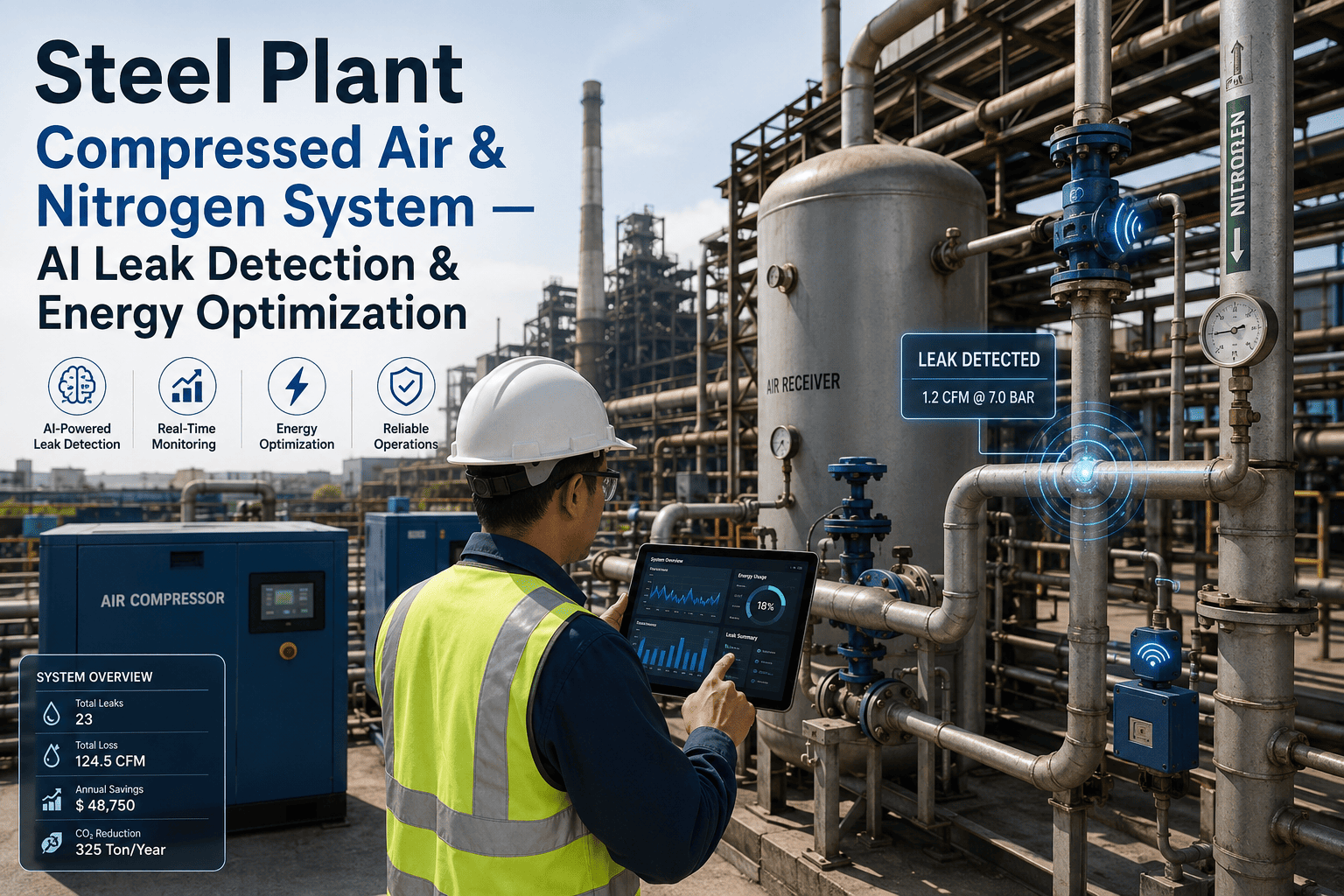
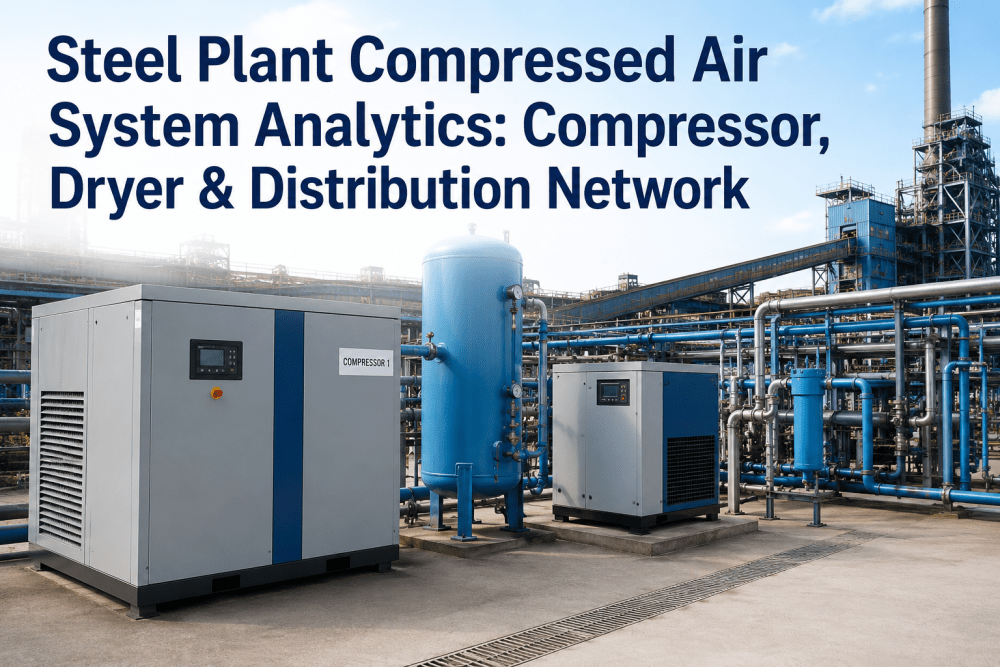
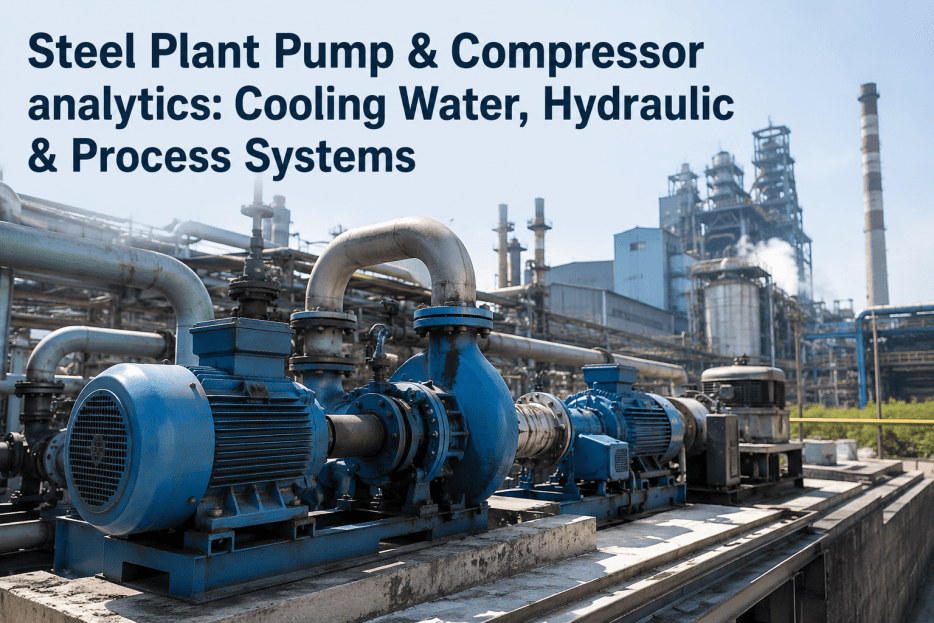
In a high-output steel plant, industrial gases and compressed air are often the most overlooked cost centers—until a centrifugal compressor surges or a hidden nitrogen leak costs the mill $15,000 in a single weekend. Most steel utility managers rely on "Simulated Efficiency"—monitoring pressure gauges that refresh every 10 minutes while thousands of cubic meters of expensive argon and oxygen vanish through undetected pipeline leaks or sticking pneumatic valves. If your gas analytics platform cannot pinpoint a leak location or predict a compressor stage failure before it triggers an emergency blow-off, you don't have a utility strategy; you have a margin-leakage problem. To see how iFactory’s AI-driven Gas & Air analytics recovers thousands in wasted utility costs, Book a Demo with our gas engineering team today.
The "Leak Gap" Hiding Inside Steel Plant Utility Networks
Why Monitoring Main-Line Pressure Isn't Enough
Steel plants operate miles of high-pressure pipelines carrying everything from instrument air to volatile oxygen and expensive argon. However, most facility managers are operating with a "Visibility Gap." While they can see the total gas generated at the plant, they have no real-time insight into the **Specific Consumption** at each furnace, caster, or baghouse. A 5% flow imbalance—often dismissed as "meter error"—is frequently a significant pipeline leak or a valve failing to seat. The "Leak Gap" is the time between a leak occurring and a utility manager manually identifying it during a weekend walk-down. iFactory closes this gap by using AI to correlate supply-side generation with demand-side consumption in 10-second intervals, flagging imbalances the moment they occur.
5 Root Causes of Gas System Analytics Failure
Diagnosing the Visibility Gap Before the Next Utility Crisis
How Utility Data Silos Amplify Steel Production Risk
The True Cost of Industrial Gas Invisibility
A failure in the compressed air or industrial gas system is never a "utility-only" event—it is a production event. If instrument air pressure drops, the entire furnace control system can fail safe, triggering a massive production restart. If the oxygen plant fails during a peak EAF melt, the heat is lost. When your utility analytics are siloed, you are managing these risks reactively. The table below outlines the annualized risk and cost profile of common gas system failure modes in a 1.5M TPA steel mill.
| Failure Mode | Primary Asset Impact | Secondary Operational Risk | Annualized Cost Range |
|---|---|---|---|
| Hidden Nitrogen Leak | Gas Consumption Spike | Oxygen Enrichment (Safety Risk) | $65K – $140K |
| Compressor Surge | Centrifugal Bearing Failure | Total Plant Air Outage | $180K – $520K |
| Argon Flow Imbalance | Refining Cost Overrun | Heat Quality Rejection | $120K – $340K |
| Filter Fouling | Specific Power Loss | Compressor Overheating | $45K – $110K |
| Valve Seal Failure | Combustion Inefficiency | Gas Safety Hazard | $90K – $280K |
What Genuine Real-Time Gas Analytics Requires
The Architecture of a "Gas Intelligence" Digital Twin
Real-time gas analytics in a steel environment requires four core architectural pillars: **1. High-Frequency Flow Balancing** between generation and consumption points; **2. Predictive Valve Analytics** to catch response-time drifts; **3. Compressor Stage Monitoring** using physics-informed ML; and **4. Safety-Linked Alerting** that triggers gas isolation if flow imbalances exceed safety thresholds. Platforms that only monitor pressure are missing 80% of the cost-recovery opportunity in industrial gas management.
The 5-Step Framework for Gas & Air Optimization
Safety & Regulatory Risk in Gas Management
Oxygen Safety and Nitrogen Asphyxiation Prevention
In industrial gas management, efficiency is the goal, but safety is the prerequisite. A hidden nitrogen leak in a confined space or an oxygen leak in a high-carbon zone is a life-critical risk. iFactory’s "Gas Safety" layer correlates flow imbalances with local atmosphere sensors to provide high-confidence alerts for potential leaks before they reach dangerous concentrations. This automated surveillance provides a level of risk mitigation that manual inspections simply cannot match. For utility directors, iFactory isn't just an efficiency tool—it’s a critical component of the plant's safety management system (SMS). Book a Demo to see our gas safety automation in action.
Frequently Asked Questions
What is "Specific Power" in compressed air systems?
Specific Power is the ratio of energy consumed (kW) to the volume of air delivered (CFM). It is the most accurate measure of compressor efficiency. iFactory tracks this in real-time to detect internal degradation or filter fouling before costs escalate.
How does the system detect leaks without ultrasonic sensors?
We use "Flow Balance AI." By correlating the supply-side flow from the compressors/ASP with the demand-side consumption meters at the process lines, we can identify imbalances that indicate a localized pipeline leak or an open bypass valve.
Can iFactory prevent centrifugal compressor surge?
Yes. We monitor high-frequency pressure transients and motor currents to identify the "Pre-Surge" harmonic. This allows for automated anti-surge valve adjustments that protect the expensive centrifugal impellers from catastrophic failure.
How much Argon can really be saved in secondary refining?
Most mills see a **10-15% reduction** in specific Argon consumption. The ROI is driven by identifying "Hidden Stirring" (valves not fully closed) and optimizing flow rates for specific steel grades using AI-driven recipes.
How does the platform handle gas safety monitoring?
The AI correlates pressure drops and flow imbalances with production state. For example, if flow is detected in a Nitrogen line when a furnace is down for maintenance, an immediate "Confined Space Entry" alert is triggered.
Is it compatible with legacy Air Separation Plants (ASP)?
Yes. We integrate with existing ASP control systems (Level-1/Level-2) to ingest supply data, providing the intelligence layer needed to balance supply with the live demands of the steel shop.
What are the main causes of compressor health failure?
Intercooler fouling, oil contamination, and bearing wear are the primary drivers. iFactory monitors the temperature delta across intercoolers and vibration harmonics to identify these issues 4-6 weeks before a trip occurs.
How long does it take to see ROI in gas systems?
Most mills achieve full ROI within **6 months**, primarily through leak detection and Argon recovery. The reduction in unplanned compressor downtime provides significant additional value in the first year.