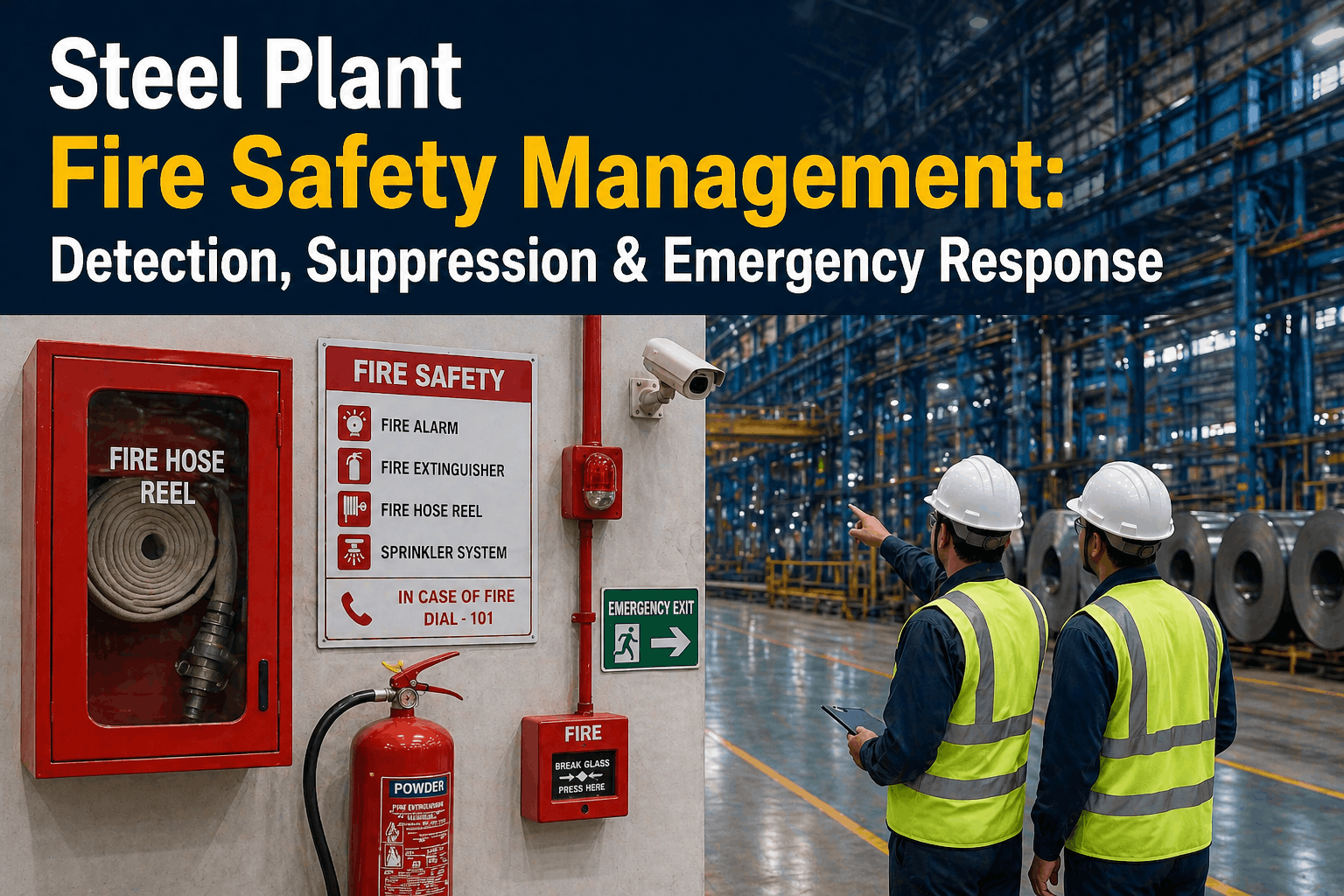
Steel plants operate under some of the most extreme conditions in industrial manufacturing. Temperatures in rolling mills and furnace zones can exceed 1500 degrees Celsius, while dust, moisture, and mechanical vibration are constant companions. For maintenance managers, the challenge is not just keeping production lines running, but ensuring that every temperature sensor, pressure transmitter, and flow meter delivers accurate data every second. A single faulty reading can lead to off-spec steel, equipment damage, or even safety incidents. Traditional calibration schedules, often based on fixed intervals, fail to account for the unpredictable stress that harsh environments place on instrumentation. This is where AI-driven calibration management transforms the game. By leveraging continuous monitoring, drift detection algorithms, and predictive scheduling, steel plants can maintain instrument accuracy without unnecessary downtime. In this comprehensive guide, we explore how modern technology enables reliable process measurements in the toughest conditions, ensuring quality, safety, and operational efficiency. Book a Demo to see how our platform can optimize your instrumentation strategy.
Transform Your Instrumentation Reliability Today
Leverage AI-powered calibration management to eliminate drift and ensure accuracy. Reduce unplanned downtime and improve steel quality with data-driven decisions.
AI Drift Detection: Catching Errors Before They Impact Production
Traditional calibration relies on scheduled checks, often leaving instruments unchecked for weeks. In a steel plant, drift can occur rapidly due to thermal cycling, vibration, and contamination. AI drift detection uses machine learning models trained on historical data to identify subtle deviations in sensor output. For example, a thermocouple in a reheat furnace may show a gradual 0.5% drift over 48 hours. Without detection, this could lead to incorrect temperature control, affecting steel hardness. Our system monitors each instrument in real time, comparing readings against peer sensors and expected values. When drift exceeds a predefined threshold, an alert is generated, and a calibration task is automatically created. This proactive approach minimizes the risk of off-spec production and reduces the need for emergency calibrations. The algorithm also learns from past drift patterns, improving its predictions over time. Maintenance managers gain a clear dashboard showing instrument health, drift trends, and recommended actions. This shifts the maintenance paradigm from reactive to predictive, saving both time and resources.
Dynamic Calibration Scheduling for Harsh Environments
Fixed calibration intervals are no longer sufficient for steel plant instrumentation. Sensors in blast furnace areas may need weekly checks, while those in control rooms can go months. AI calibration scheduling analyzes workload, criticality, and environmental stress to create an optimized plan. For instance, a pressure transmitter in a caster area subjected to high vibration may be scheduled for calibration every 72 hours, whereas a similar unit in a storage area may only need monthly attention. The system also factors in production schedules to avoid downtime conflicts. Calibration tasks are assigned to technicians based on skill and availability, with digital work orders containing all necessary documentation. This dynamic approach reduces over-calibration by 30% and under-calibration by 45%, directly improving instrument reliability. The schedule is displayed on a calendar view with color-coded priorities, making it easy for maintenance managers to allocate resources effectively. Additionally, the system can automatically reschedule tasks if a sensor is in a hazardous zone during a specific time, ensuring safety compliance. This level of granularity is only possible with AI-driven decision-making that learns from real-time data.
| Instrument Type | Location | Current Interval | AI Recommended Interval | Next Calibration |
|---|---|---|---|---|
| Thermocouple | Reheat Furnace | 7 days | 3 days | 2025-03-12 |
| Pressure Transmitter | Caster Zone | 14 days | 5 days | 2025-03-09 |
| Flow Meter | Cooling Water | 30 days | 20 days | 2025-03-25 |
| Level Sensor | Slag Pit | 10 days | 4 days | 2025-03-11 |
Accuracy Verification: Ensuring Reliable Process Measurements
Accuracy verification is the final step in ensuring instrumentation reliability. Our platform automates the verification process by cross-referencing sensor readings with reference standards and historical baselines. For temperature measurement, a verification routine might compare a thermocouple output against a calibrated reference probe. If deviation exceeds 0.1%, the system flags the instrument for immediate recalibration. Pressure sensors are verified using deadweight testers integrated into the workflow, with results logged digitally. Flow meters undergo a volumetric comparison with a master meter. All verification data is stored in a centralized database, providing a complete audit trail for quality and safety compliance. The system also generates trend reports showing accuracy over time, helping maintenance managers identify instruments that are consistently drifting. This data-driven approach supports ISO 9001 and IATF 16949 certifications by providing documented evidence of measurement traceability. In addition, the verification process can be triggered automatically after a calibration event, ensuring that the instrument is performing within specifications before returning to service. This closed-loop system eliminates guesswork and builds confidence in process data.
Achieve Unmatched Instrument Reliability
Stop guessing and start predicting. Our AI platform ensures every sensor is calibrated and verified for extreme conditions. Protect your production quality and safety.
Overcoming Harsh Environment Challenges in Steel Plants
Steel plant instrumentation faces unique challenges that accelerate wear and drift. Extreme heat causes thermal expansion in sensor materials, leading to zero shifts. Dust and particulate matter can clog pressure ports and coat optical sensors, reducing sensitivity. Vibration from rolling mills and crushers loosens connections and induces mechanical stress. Moisture from cooling systems and steam can cause corrosion and short circuits. Our AI calibration management system addresses these challenges by incorporating environmental data into its models. For example, temperature sensors in high-heat zones are prioritized for more frequent verification. Pressure sensors in dusty areas are flagged for inspection after a certain number of production cycles. The system also recommends protective measures such as heat shields, vibration dampeners, and air purges based on sensor location history. By correlating failures with environmental conditions, the platform helps maintenance managers implement targeted countermeasures. This reduces the overall failure rate by up to 60% and extends instrument lifespan. The result is a more resilient instrumentation network that can withstand the toughest conditions without compromising accuracy.
Extreme Heat
Thermocouples and RTDs degrade faster above 1000 degrees Celsius. AI scheduling increases calibration frequency for these sensors.
Dust & Particulates
Coating on optical sensors reduces accuracy. The system recommends cleaning and recalibration based on dust accumulation models.
Vibration
Mechanical stress from rolling mills causes zero drift. AI detects unusual vibration patterns and triggers verification checks.
Sensor Lifecycle Management from Installation to Retirement
Managing instrumentation from installation to retirement is critical for maintaining accuracy and cost control. Our platform tracks every instrument throughout its lifecycle, capturing data such as installation date, calibration history, failure records, and environmental exposure. This comprehensive view enables maintenance managers to make informed decisions about repair versus replacement. For example, a pressure transmitter that has undergone five calibrations in one year may be nearing the end of its useful life. The system can automatically generate a recommendation for replacement, factoring in cost and lead time. Lifecycle analytics also identify instruments that consistently drift, indicating a design flaw or installation issue. By retiring underperforming sensors early, plants can reduce maintenance costs and improve overall reliability. The timeline view shows key events for each instrument, including calibration, verification, and failure incidents. This historical data is invaluable for root cause analysis and continuous improvement initiatives. Additionally, the system supports barcode or RFID tagging for easy identification in the field, streamlining inventory management. The result is a fully transparent and optimized instrumentation asset base.
Frequently Asked Questions
How does AI drift detection work in extreme heat environments?
AI drift detection uses machine learning models trained on historical sensor data to identify subtle deviations from expected performance. In extreme heat, temperature sensors often exhibit non-linear drift due to thermal expansion of materials. The algorithm compares real-time readings against a baseline created during initial calibration and continuously updates this baseline as the sensor ages. It also cross-references data from adjacent sensors to distinguish between true drift and process variations. When drift exceeds a configurable threshold, the system generates an alert and automatically creates a calibration work order. This proactive approach prevents inaccuracies that could lead to off-spec steel production. Maintenance managers can view drift trends on a dashboard and drill down into specific instruments. For more details, Book a Demo to see the platform in action. The system also provides recommendations for sensor placement and shielding to mitigate heat effects.
What is the difference between AI calibration scheduling and traditional fixed intervals?
Traditional calibration scheduling relies on fixed time intervals, such as every 30 days, regardless of actual instrument condition or environmental stress. This often leads to over-calibration of stable instruments and under-calibration of those in harsh conditions. AI calibration scheduling uses real-time data from sensors, production schedules, and environmental factors to dynamically adjust intervals. For example, a pressure transmitter in a high-vibration area may be scheduled every 3 days, while a similar unit in a controlled environment may be scheduled every 60 days. The AI model continuously learns from calibration results and failure patterns to optimize future schedules. This reduces unnecessary calibrations by up to 40% and prevents failures by ensuring critical instruments are checked more frequently. Maintenance managers can override AI suggestions if needed, but the system provides data-driven rationale for every recommendation. To learn how this can be implemented in your plant, Book a Demo today. The result is a more efficient maintenance operation with higher instrument reliability.
How does the platform ensure accuracy verification for pressure and flow measurements?
Accuracy verification is performed using automated routines that compare sensor readings against traceable reference standards. For pressure measurements, the system integrates with deadweight testers or digital pressure calibrators that are certified to national standards. The verification process involves applying a known pressure and recording the sensor output; if the deviation exceeds 0.05% of full scale, the instrument is flagged for recalibration. For flow measurements, volumetric or master meter methods are used, with the system logging all data for audit purposes. The verification can be triggered automatically after each calibration or on demand. Results are stored in a centralized database with timestamps and technician signatures, providing a complete traceability chain. The platform also generates trend reports showing accuracy over time, helping identify instruments that are degrading. This level of rigor supports quality certifications like ISO 9001. For a detailed walkthrough, Book a Demo and see how verification routines are configured and executed. The system also sends notifications if verification fails, ensuring no instrument returns to service without proper accuracy confirmation.
Can the system handle instrumentation from multiple vendors and types?
Yes, the platform is vendor-agnostic and supports a wide range of instrument types including thermocouples, RTDs, pressure transmitters, flow meters, level sensors, and analyzers. Each instrument is configured with its own calibration parameters, accuracy specifications, and environmental tolerances. The system can import instrument data from existing asset management systems or via manual entry. It uses a flexible data model that accommodates different communication protocols such as 4-20 mA, HART, Foundation Fieldbus, and wireless. For each instrument, the platform tracks manufacturer, model, serial number, and installation location. Calibration procedures can be customized per instrument type, with step-by-step instructions and reference standards. This unified approach eliminates the need for multiple software tools and provides a single source of truth for all instrumentation data. Maintenance managers can generate reports across the entire instrument population or filter by vendor, type, or location. To see how your specific instruments can be integrated, Book a Demo and discuss your requirements. The platform's open API also allows for custom integrations with existing CMMS or ERP systems.
What kind of ROI can a steel plant expect from implementing AI calibration management?
Steel plants that adopt AI calibration management typically see a return on investment within 6 to 12 months. Key savings come from reduced unplanned downtime, lower calibration costs, and improved product quality. For example, a medium-sized steel plant with 500 critical instruments can save over $200,000 annually by reducing emergency calibrations and preventing off-spec production. The platform reduces calibration frequency by 30-40% through optimized scheduling, directly lowering labor and consumable costs. Additionally, improved instrument accuracy reduces scrap and rework, which can account for 2-5% of production costs. The system also extends instrument lifespan by identifying failing sensors early, avoiding catastrophic failures. Intangible benefits include improved safety, better compliance with quality standards, and enhanced decision-making through data visibility. Maintenance managers can track KPIs such as calibration compliance rate, instrument failure rate, and mean time between failures. For a customized ROI analysis based on your plant data, Book a Demo and our team will provide a detailed assessment. The platform pays for itself quickly through operational efficiencies.
Ready to Master Your Instrumentation?
Take control of steel plant calibration with AI-driven insights. Ensure accuracy, reduce costs, and protect your production in the harshest environments. Start your journey today.