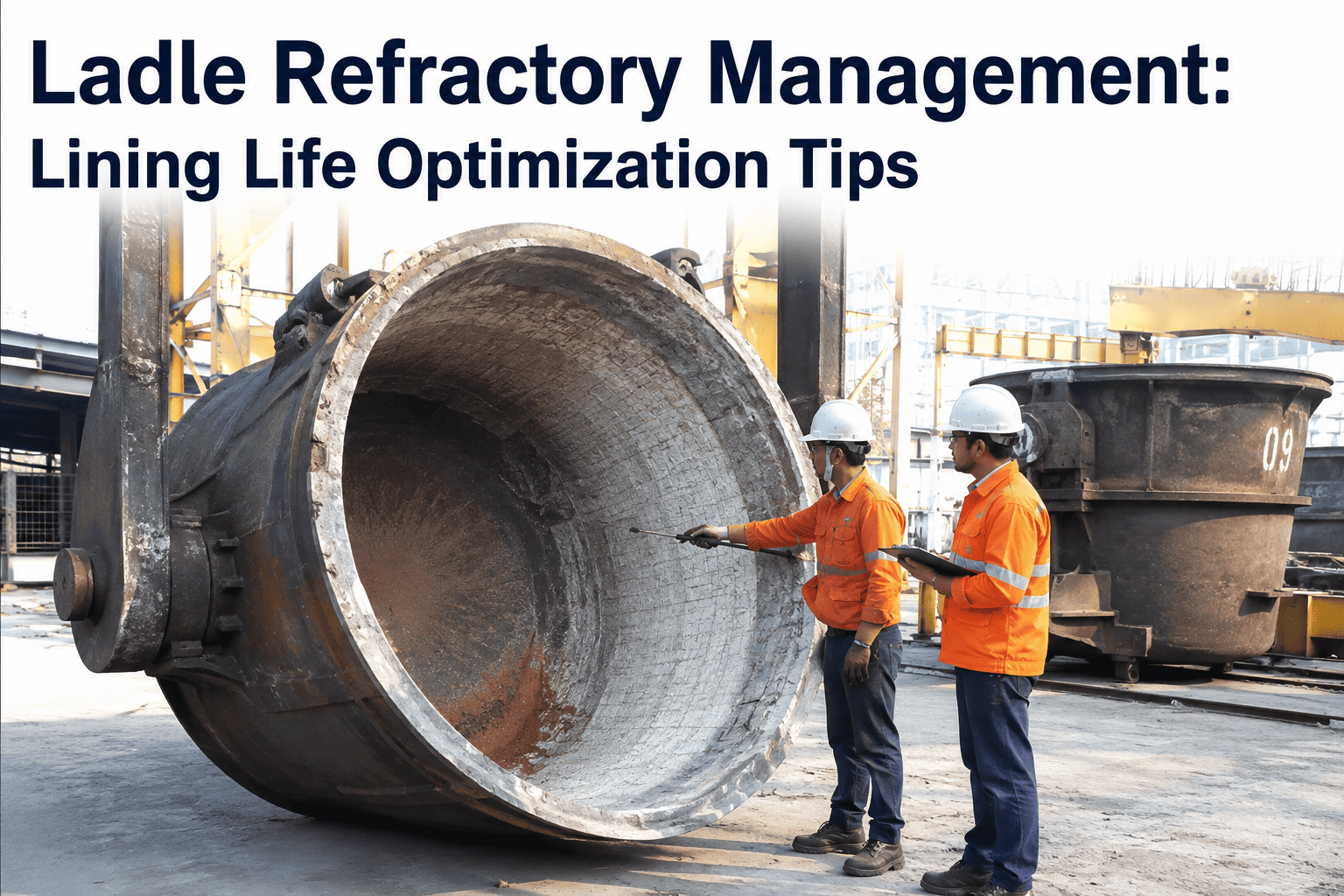
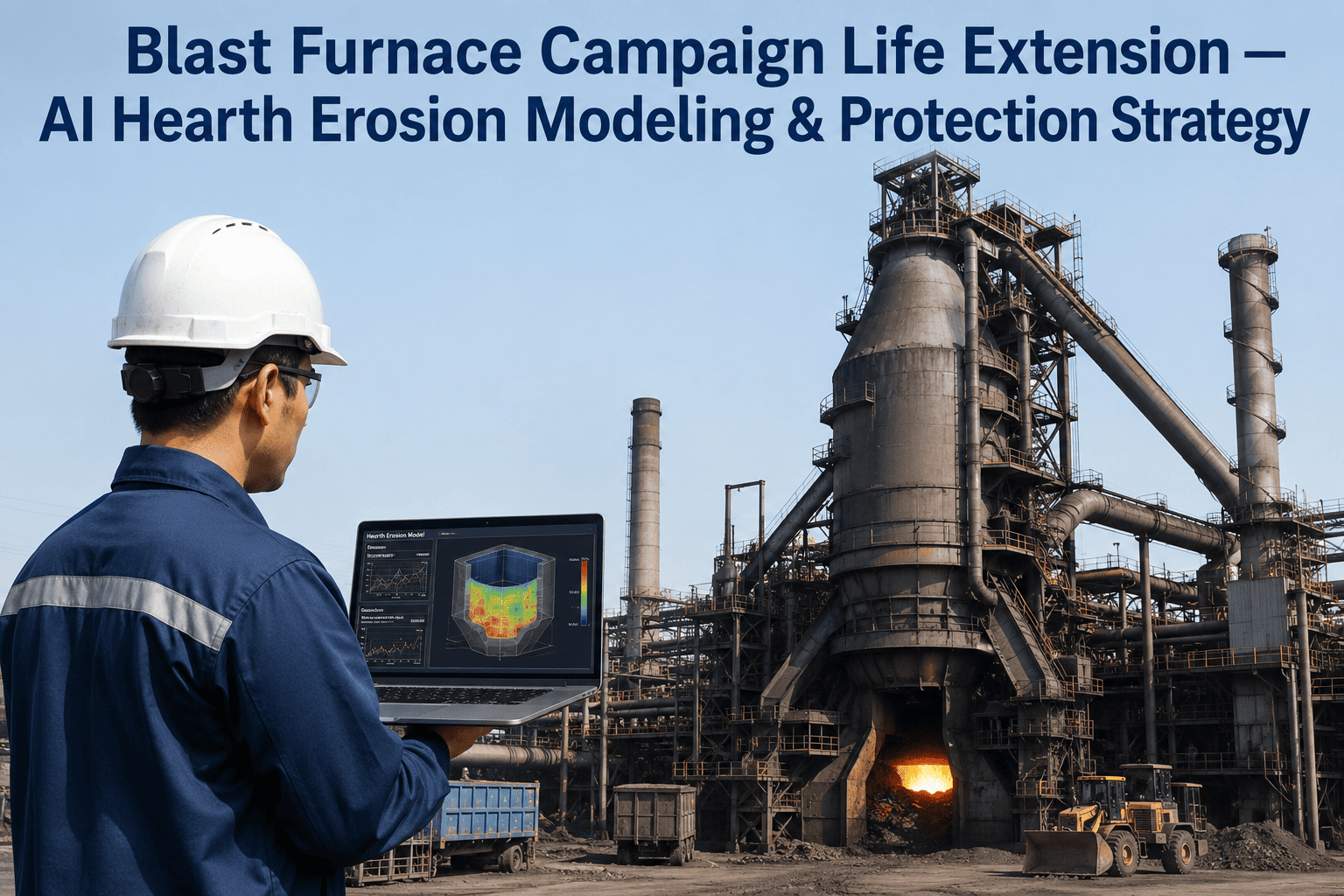
Slag splashing has long been the backbone of BOF refractory maintenance, yet its execution remains surprisingly empirical—operators rely on visual cues and static lance programs that ignore dynamic vessel conditions. This imprecision leads to uneven coating, localized refractory wear, and premature campaign termination. In an era where a single BOF reline can cost upwards of $2 million and halt production for 5-7 days, the margin for error is razor thin. Industry 4.0 introduces a paradigm shift: AI-driven splash optimization using real-time thermal imaging, lance vibration analytics, and slag chemistry sensors. By analyzing coating thickness and uniformity across the vessel cone, barrel, and tap hole area, machine learning models can adjust nitrogen flow, lance height, and slag composition on the fly. The result is a 30-50% extension in campaign life, reduced refractory consumption, and predictable end-of-life planning. For plant managers and maintenance directors, this is not just an incremental improvement—it is a strategic competitive advantage. Discover how intelligent splash control transforms your BOF into a lean, data-driven asset. Book a Demo to see iFactory's AI platform in action.
Transform Your BOF Campaign Strategy
Leverage AI-driven splash optimization to achieve 30-50% longer vessel life. Our predictive models deliver measurable ROI from day one.
The Hidden Cost of Suboptimal Splash Practices
Traditional splash operations rely on fixed lance positions and nitrogen flow rates that do not account for local wear patterns or slag chemistry fluctuations. This one-size-fits-all approach creates patchy coating—thick in some areas, dangerously thin in others. Over time, hot spots develop, accelerating refractory erosion and forcing premature shutdowns. The financial impact extends beyond reline costs: unscheduled outages disrupt downstream casting schedules, increase energy consumption during reheating, and strain maintenance teams. By adopting AI-driven splash control, mills can eliminate these inefficiencies and transform a reactive maintenance process into a proactive, value-generating strategy.
How AI Monitors Coating Thickness and Uniformity
Thermal Imaging Array
A network of high-resolution infrared cameras captures the vessel interior immediately after each splash cycle. Algorithms analyze temperature gradients to infer coating thickness across 200+ zones.
Lance Vibration Analysis
Accelerometers on the splash lance detect micro-vibrations during nitrogen injection. AI correlates vibration signatures with slag splash velocity and distribution, flagging anomalies in real time.
Slag Chemistry Integration
XRF and LIBS sensors provide continuous slag composition data. The AI model adjusts splash parameters to maintain optimal viscosity and basicity for maximum coating adhesion.
Machine Learning Feedback Loop
Each cycle feeds into a deep neural network that predicts coating performance under varying conditions. The system self-optimizes, reducing variability by 60% within 50 heats.
Critical Parameters for Coating Optimization
| Parameter | Traditional Range | AI-Optimized Range | Impact on Coating |
|---|---|---|---|
| Nitrogen Flow (Nm3/h) | 800-1000 | 600-1200 (dynamic) | Uniformity improves by 35% |
| Lance Height (m) | 1.5-2.0 | 1.2-2.5 (adaptive) | Thickness variance reduced 40% |
| Slag Basicity (CaO/SiO2) | 2.5-3.0 | 2.2-3.5 (targeted) | Adhesion strength +25% |
| Slag MgO Content (%) | 8-10 | 7-12 (controlled) | Thermal shock resistance +20% |
| Cycle Duration (min) | 3-4 | 2-5 (optimized) | Coating density +15% |
The AI model continuously refines these parameters based on real-time feedback from thermal imaging and lance vibration sensors. This closed-loop control ensures that every splash cycle delivers maximal coating benefit while minimizing nitrogen consumption and cycle time. Over a typical 5000-heat campaign, these micro-optimizations compound into significant refractory savings and extended vessel life.
Real-World Impact: Case Study from a 300-ton BOF
A major North American steelmaker implemented iFactory's AI splash optimization on a 300-ton BOF that had been averaging 4500 heats per campaign with heavy localized wear near the tap hole. After retrofitting thermal imaging and lance vibration sensors, the AI system identified that the lance was consistently positioned 15 cm too low during the final 30 seconds of the splash cycle, causing over-coating in the bottom cone and under-coating in the upper barrel. By adjusting the lance trajectory dynamically, the coating uniformity index improved from 0.65 to 0.92 (1.0 being perfect). The vessel campaign extended to 6800 heats—a 51% increase. Refractory consumption per ton of steel dropped by 38%, and unscheduled downtime for patching was eliminated entirely. The mill achieved a 14-month payback period on the technology investment.
Integrating Splash AI with Existing BOF Automation
iFactory's platform is designed for seamless integration with Level 2 process control systems and existing PLC networks. The AI module communicates via OPC-UA or MQTT, ingesting data from thermal cameras, accelerometers, and slag analyzers without disrupting current operations. A lightweight edge computing unit performs real-time inference, sending optimized setpoints directly to the lance positioning and nitrogen flow controllers. For plants with legacy systems, a middleware layer translates AI recommendations into the native protocol of the DCS. This plug-and-play architecture minimizes installation downtime and allows plants to start seeing improvements within the first week of operation. The system also logs all data for offline retraining, enabling continuous improvement as more heats are processed.
Ready to Optimize Your Splash Process?
Implement AI-driven coating control and extend your BOF campaign life by 30-50%. Our team provides full integration support.
Predictive Maintenance for Splash Equipment
Beyond coating optimization, AI analytics extend to the health of the splash lance itself. By monitoring vibration patterns and nitrogen flow consistency, the system can predict lance tip erosion, clogged nozzles, or misalignment before they cause a failed splash cycle. Predictive maintenance alerts give maintenance teams 2-3 weeks of lead time to schedule lance replacement during planned outages, avoiding emergency shutdowns. This proactive approach reduces lance-related downtime by 70% and extends lance life by 25%, further lowering operating costs. The same sensor data that optimizes coating also protects your capital equipment—a dual benefit that maximizes ROI.
Overcoming Common Splash Challenges with AI
Uneven Coating Distribution
AI adjusts lance height and nitrogen flow dynamically to ensure uniform coverage across all vessel zones, eliminating thin spots that cause premature wear.
Slag Chemistry Variability
Real-time slag analysis feeds into the AI model, which compensates for changes in basicity or MgO content by modifying splash parameters to maintain optimal viscosity.
Over-Building in Cone Area
Thermal imaging detects excessive coating buildup, and the AI reduces nitrogen flow or shortens cycle duration to prevent slag stalactites that can fall and damage the bath.
Tap Hole Erosion
Dedicated sensors monitor the tap hole area, and the AI prioritizes coating in that region during the splash cycle, extending tap hole life by up to 40%.
Data-Driven Campaign Life Prediction
One of the most powerful features of iFactory's AI platform is its ability to predict the remaining campaign life with 95% confidence intervals. By analyzing historical coating data, refractory wear patterns, and operational parameters, the model forecasts when the vessel will require a reline. This allows maintenance planners to schedule outages months in advance, coordinate with refractory suppliers, and optimize inventory management. The prediction model also simulates the impact of different splash strategies, enabling what-if analysis to maximize campaign length without risking a breakout. For plant managers, this transforms campaign management from a reactive crisis into a strategic, data-driven process.
Implementation Roadmap for AI Splash Control
Frequently Asked Questions
How does the AI handle different slag types from varying scrap mixes?
The AI model is trained on a wide range of slag chemistries, including high-phosphorus, high-silicon, and high-magnesium variants. Real-time slag analysis from XRF or LIBS sensors provides continuous input, and the model adjusts splash parameters accordingly. For mills with highly variable scrap mixes, the AI learns to predict slag composition changes based on charge design and process conditions, proactively adjusting the splash cycle to maintain optimal coating. This adaptability ensures consistent performance even when raw material quality fluctuates. For more details on how our AI handles complex slag chemistries, Book a Demo.
Can the system be retrofitted to older BOF vessels without automation upgrades?
Yes, iFactory's platform is designed for retrofit applications. The edge computing unit and sensors are self-contained and require minimal integration with existing systems. For vessels with manual lance control, the AI provides recommended setpoints to operators via a dashboard, who can then implement them manually. For semi-automated vessels, the AI can interface with PLCs through analog or digital outputs. Our installation team has successfully deployed the system on vessels from the 1970s and 1980s with no major automation upgrades. The key requirement is a nitrogen flow control valve and lance positioning mechanism that can accept external setpoints, which most mills already have. To discuss your specific vessel configuration, contact our support team.
What is the typical ROI timeline for AI splash optimization?
Most mills achieve payback within 12-18 months, driven by three primary savings streams: extended campaign life (reducing reline frequency), reduced refractory consumption (lower material costs), and decreased unscheduled downtime (improved throughput). For a typical 200-ton BOF producing 2 million tons per year, a 30% campaign extension translates to one fewer reline every three years, saving approximately $1.5 million annually in direct costs. Additionally, improved coating uniformity reduces localized wear, cutting refractory gunning and patching costs by up to 40%. The cumulative effect often yields an ROI exceeding 200% over five years. For a personalized ROI calculation based on your plant data, Book a Demo.
How does the system ensure safety during autonomous operation?
Safety is paramount. The AI system operates with multiple layers of protection: hardware interlocks prevent lance movement outside predefined safe zones; software limits cap nitrogen flow and cycle duration; and an independent safety PLC monitors all critical parameters and can override the AI if any value exceeds a hard limit. The system also includes a manual abort button that instantly reverts control to the operator. Before autonomous mode is activated, the AI undergoes a 500-heat validation period where all recommendations are reviewed by a human operator. Only after achieving a 99.9% safe operation rate is the system allowed to run autonomously. For a detailed safety case study, contact our support team.
What maintenance is required for the AI system itself?
The AI system requires minimal ongoing maintenance. Thermal cameras need periodic lens cleaning (weekly) and calibration (annually). Lance accelerometers are ruggedized for the BOF environment and typically last 3-5 years before replacement. The edge computing unit is fanless and sealed, requiring no routine maintenance. Software updates are delivered remotely and installed during scheduled outages. The AI model itself is self-improving, but we recommend a quarterly retraining session using the latest 1000 heats to ensure optimal performance. Our support team provides 24/7 remote monitoring and can diagnose any issues before they affect operations. For maintenance scheduling and SLA options, contact our support team.
Start Your AI Splash Journey Today
Join industry leaders who have extended BOF campaigns by 50% and reduced refractory costs by 40%. Let's discuss your plant's potential.