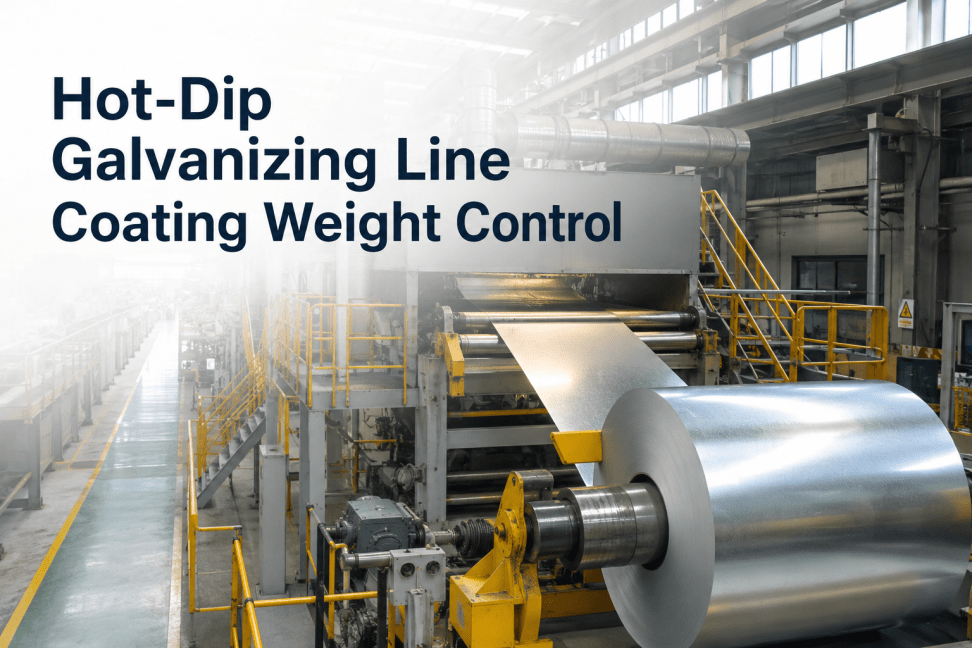
Hot-Dip Galvanizing (HDG) represents the absolute pinnacle of metallurgical value-addition in the steel industry. Transforming cold-rolled strip into high-performance automotive body panels or corrosion-resistant construction alloys requires the absolute synchronization of annealing furnaces, zinc bath chemistry, and high-velocity air knives. In a Continuous Galvanizing Line (CGL), a single deviation in snout atmosphere or a blocked air knife nozzle doesn't just bump margins—it destroys prime yield and results in massive zinc waste. Legacy CGL control relies heavily on reactive coating weight gauges and manual dross removal. Implementing iFactory AI-driven galvanizing analytics synchronizes induction heater loads, air knife pressure signatures, and zinc pot chemistry into a unified predictive network. By detecting sink roll vibration and optimizing coating mass-flow before defects occur, producers drastically reduce zinc consumption and eliminate surface rejections. Book a Coating Strategy Session to learn how modern CGL analytics completely eradicates zinc over-coating and surface defects.
Master Zinc Coating Precision and Reduce Dross with AI Analytics
Leverage advanced CGL analytics to perfectly track zinc pot chemistry, monitor air knife pressures, and align skin pass mechanicals in real-time.
Why Galvanizing Precision is the Ultimate Cost Differentiator
Unlike simpler processes where raw material costs are fixed, galvanizing profitability is a game of zinc mass-balance. Over-coating by just 5 grams per square meter on a high-speed line can waste millions of dollars in zinc annually. Galvanizing precision requires absolute synchronization across the furnace, pot, and knife sections. If the air knives fail to maintain a precise gap, or if dross buildup on the sink roll goes undetected, the surface defects render the coil scrap for automotive exposed-panels. Integrating an overarching galvanizing analytics dashboard ensures every heater, roll, and sensor communicates flawlessly, guaranteeing perfect corrosion protection at the lowest possible zinc outlay. Book a workflow presentation to view how AI prevents coating drifting across continuous shifts.
Galvanizing Quality: The 6 Diagnostic Pillars
Total galvanizing tracking expands beyond simple coating gauges. By monitoring the complex interaction between zinc chemistry and air knife fluid dynamics, the AI platform guarantees absolute surface perfection from the snout to the tension leveler.
Zinc Bath Chemistry & Temperature
Monitors Aluminum (Al) concentration and pot temperature in real-time. Predicts the onset of dross formation by mapping the solubility limits of iron and zinc alloys.
Pure Bath StabilityAir Knife Pressure & Gap Analytics
Integrates high-speed pressure sensors with strip distance lasers. Automatically adjusts knife pressure to strip speed ratios to maintain micron-level coating uniformity.
Perfect Mass-Flow ControlDross Management & Surface Quality
AI vision identifies dross pimples and surface marks instantly. Correlates defects with pot turbulence data to recommend optimal drossing intervals and robot paths.
Eliminate Surface PimplesGalvannealing Furnace Control
During GA production, maintaining exact iron-zinc alloy timing is critical. AI analyzes furnace temperature gradients to prevent powdering or flaking defects in final forming.
Flawless Alloy Phase ControlSkin Pass & Tension Leveler Diagnostics
Achieving precise surface roughness (Ra) and flatness is critical for paint adhesion. The AI analyzes elongation forces to ensure perfect mechanical properties for automotive stamping.
Consistent Paint AdhesionSnout & Sink Roll Reliability
Tracks the "bearing health" of submerged sink rolls and the dew point of the snout atmosphere. Predicts roll eccentricity that causes periodic coating thickness variations.
Zero Unplanned Pot PulldownsThe Science of Dross Formation: AI-Driven Bath Intelligence
In a zinc pot, dross is an inevitable byproduct of the reaction between the steel strip and the molten zinc. However, "Top Dross" and "Bottom Dross" only become quality failures when they are stirred into the coating zone. iFactory's module uses Computational Fluid Dynamics (CFD) proxies to monitor pot turbulence. By correlating induction heater patterns with strip speed, the AI identifies when dross is likely to migrate into the "Sink Roll Bite." This allows operators to slow down or schedule a drossing cycle before a single automotive coil is rejected for surface pimples. Book a precision strategy session to see our bath models.
The AI-Driven Coating Workflow: From Cleaning to Leveling
Tracking galvanizing quality requires microsecond precision looping between air knife servos and inline gauges. Book a workflow presentation to view how AI prevents coating drifting across continuous shifts.
Steel Cleaning & Annealing Ingestion
The AI monitors the alkali cleaning section and annealing furnace dew points. This ensures the strip surface is perfectly "activated" for zinc adhesion before entering the snout.
Surface Activation AlignmentZinc Bath & Snout Calibration
As the strip enters the pot, the AI dispatches real-time chemistry adjustments. It ensures the zinc temperature is perfectly balanced against the strip speed to prevent snout ash defects.
Dynamic Bath CorrectionAir Knife Mass-Flow Monitoring
High-speed sensors scan the coating weight 500 times per minute. If Stand 1 begins to over-coat, the AI modulates air knife nozzle pressure to break the excess zinc loop instantly.
Active Coating SuppressionPost-Coat Verification & Leveling
The AI detects micro-drifts in thickness and flatness, calculating exactly when the skin pass rolls require extraction. Final quality reports are generated for 100% customer compliance.
Zero Quality HoldsGalvanizing Sophistication: Upgrading to AI Coating
Many GI/GA lines suffer from "Zinc Creep"—relying on safe, high coating targets that waste millions in raw materials. Run an architecture audit to discover how easily machine learning overlays onto your existing CGL setup.
Manual Dip & Visual Inspection
Operators rely on simple Level 1 gauges and visual dross monitoring. High rates of over-coating are used to "play it safe," resulting in massive annual zinc waste and frequent surface rejections.
Basic Level 1 Automation
The pulpit receives air knife pressure alarms and basic furnace trends. Human operators must manually override the knife gaps. Reaction times are slow, resulting in off-spec head and tail ends.
Closed-Loop Coating Control
Scanning gauges map the coating profile dynamically. Basic PLC loops adjust air knives, but dross formation and roll wear are still tracked separately on paper logs.
Fully Integrated AI Galvanizing Twin
The ultimate unified state. Machine learning binds pot chemistry directly to air knife dynamics and roll wear sensors. The line runs fully optimized for minimum zinc usage and absolute automotive surface quality.
Telemetry Enablers for Galvanizing Precision
| Source Integration Layer | Application in CGL Operations | Analytical Output |
|---|---|---|
| Induction Heater VFDs | Monitoring heater loads and pot turbulence zones | Identifies dross migration risks and heater efficiency |
| Air Knife Pressure Sensors | Real-time nozzle pressure vs. strip speed tracking | Guarantees 100% coating weight uniformity across the width |
| Inline Coating Weight Gauges | X-ray or isotope scanning of the top/bottom coating | Immediate feedback loop for air knife pressure adjustments |
| Furnace Temperature Arrays | Mapping the CGL furnace annealing and GA zones | Ensures perfect iron-zinc alloy phase for GA automotive steel |
Critical Galvanizing Equipment Domains
High-Precision Air Knives
AI monitors the "Nozzle Health" to detect clogs or edge-mask misalignments. Predicts when a nozzle requires cleaning before it causes heavy coating streaks.
Unbreakable Coating LogicInduction Zinc Pots
Tracks the "Pot Lining Health" and heater refractory wear. Predicts catastrophic heater failure that could lead to a million-dollar pot freeze event.
Zero Pot Freeze EventsSkin Pass Mills
Sensors monitor work roll vibration and texture degradation. Detects if the roll roughness is insufficient for automotive paint adhesion standards.
100% Paint Adhesion Compliance12-Month CGL ROI Projection Matrix
What CGL Managers Are Saying
"Before adopting iFactory's CGL AI-driven frameworks, handling dross-related rejections was a total guessing game. We would just pulldown the pot and hope the pimples disappeared. Once we integrated bath chemistry with the induction heater data directly into our dashboards, the platform instantly traced our dross spikes back to an inconsistent Al concentration killing our coating quality on automotive grades. It solved a $400k scrap problem overnight."
Frequently Asked Questions: Galvanizing Line Analytics
Will these analytics interface natively with our legacy Level 1 pot PLCs?
Yes. Our edge modules process the raw analog signals from induction heaters and air knives directly, allowing our AI to build hyper-accurate digital twins without hardware replacements.
How quickly does the platform detect an air knife nozzle clog?
Our high-frequency edge logic can detect steering imbalances or nozzle pressure drops in literal milliseconds. Intercept protocols issue cleaning alerts far preceding human operator discovery.
How does pot chemistry analytics prevent dross formation claims?
CGL analytics tracks exact Al/Fe solubility matrices, particularly iron loading that causes dross fallout. Ensuring pure bath ratios inherently protects the coating from premature surface pimples.
Can AI monitor GA (Galvanneal) phase integrity independently?
Absolutely. The platform maps distinct GA furnace temperature matrices, measuring precise iron-zinc alloy phases to assure ultimate automotive-body conformity and structural stamping limits. Book a GA review.
Is the platform secure for sensitive coating recipes and pot chemistry?
Yes, iFactory uses enterprise-grade encryption and secure private cloud instances, ensuring that your sensitive galvanizing recipes and production data remain protected at all times.
What is the ROI on reducing zinc over-coating?
Reducing zinc over-coating by just 1g/m² on a 300,000 tpy line can save over $1.5M in raw material costs annually, typically paying for the platform in less than 3 months.
Can the system automatically adjust air knives for strip shape changes?
Yes, by fusing strip flatness data with air knife pressure loops, the AI automatically compensates for center-buckle or edge-wave issues to ensure uniform coating.
How does the platform handle sink roll maintenance?
By monitoring roll vibration and eccentricity, the platform dispatches maintenance before a roll seizure occurs, preventing catastrophic coil-marking and unplanned pot pulldowns.
Rule Every Micron of Zinc Coating
Eradicate zinc waste, destroy hidden destructive dross marking, and assure unmatched coating uniformity by mobilizing massive data across your entire CGL configuration.


-&-finishing-line-analytics.png)