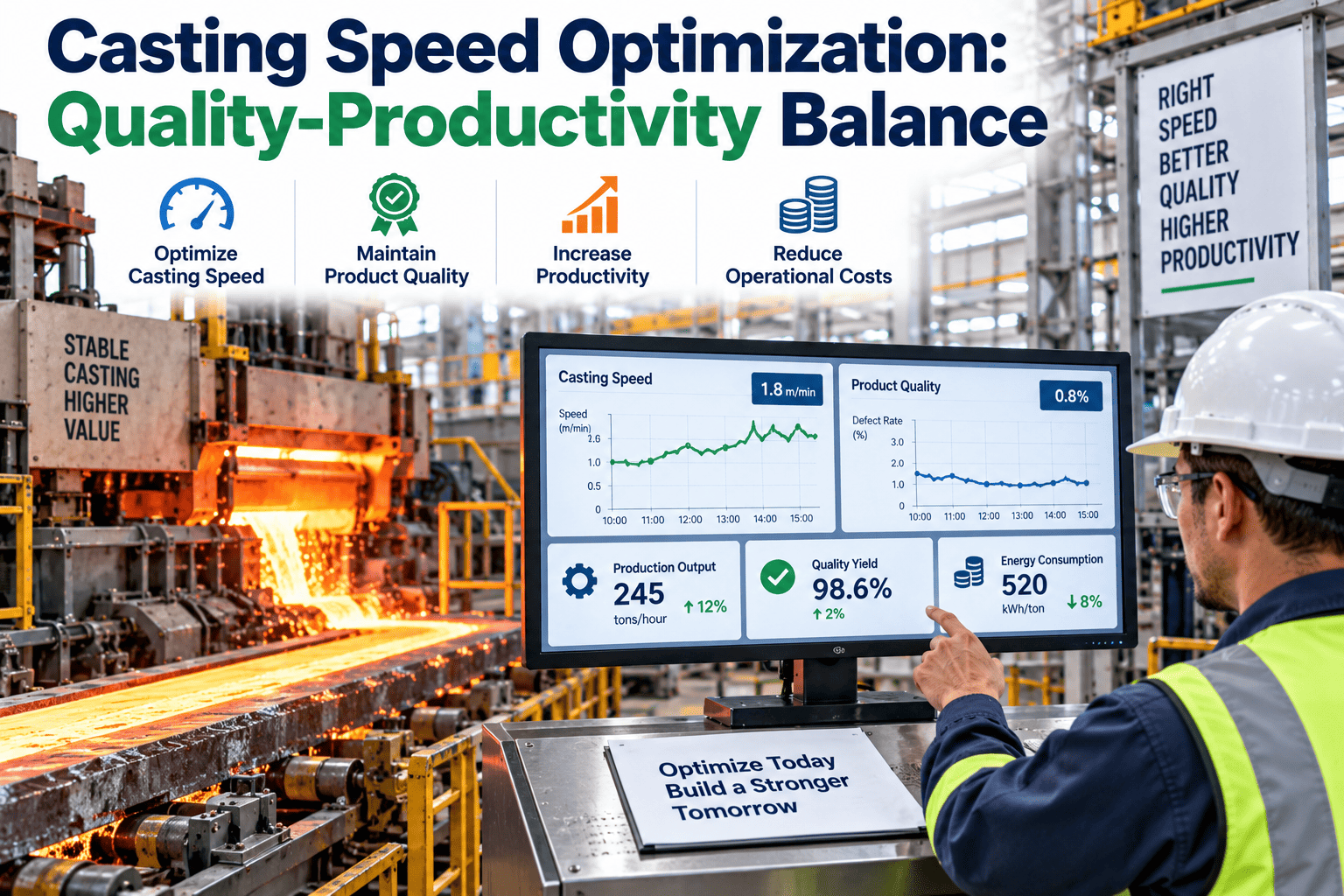
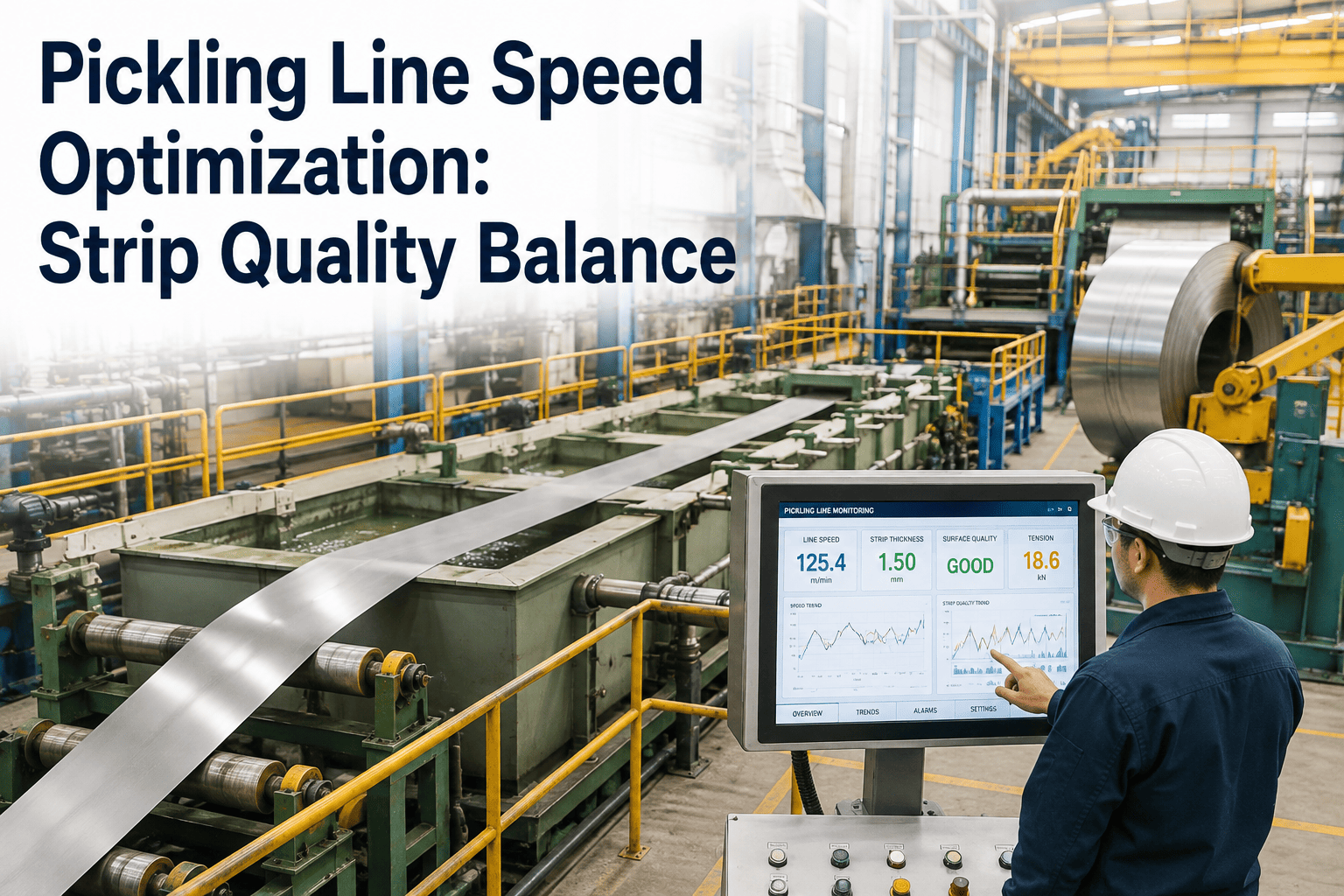
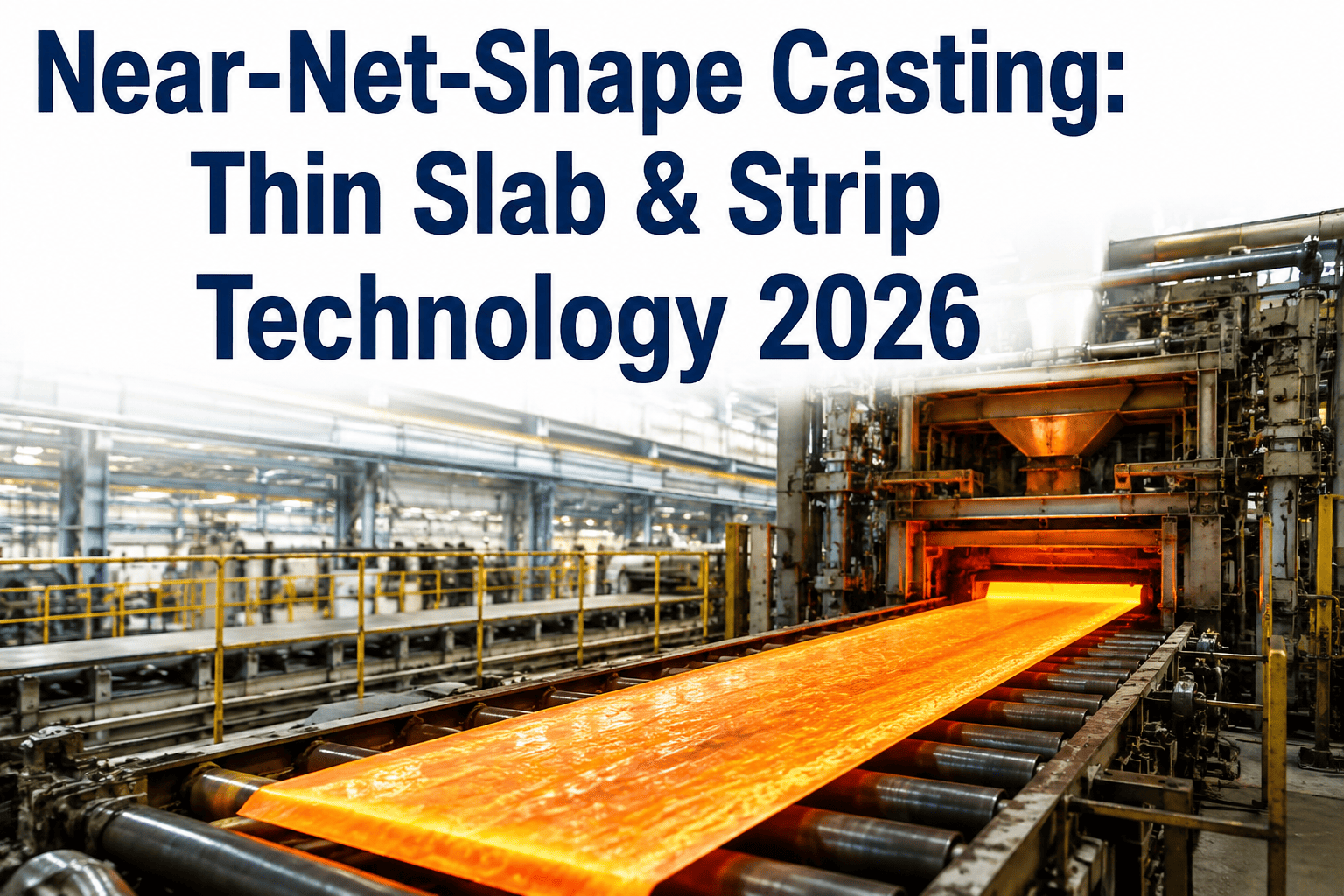
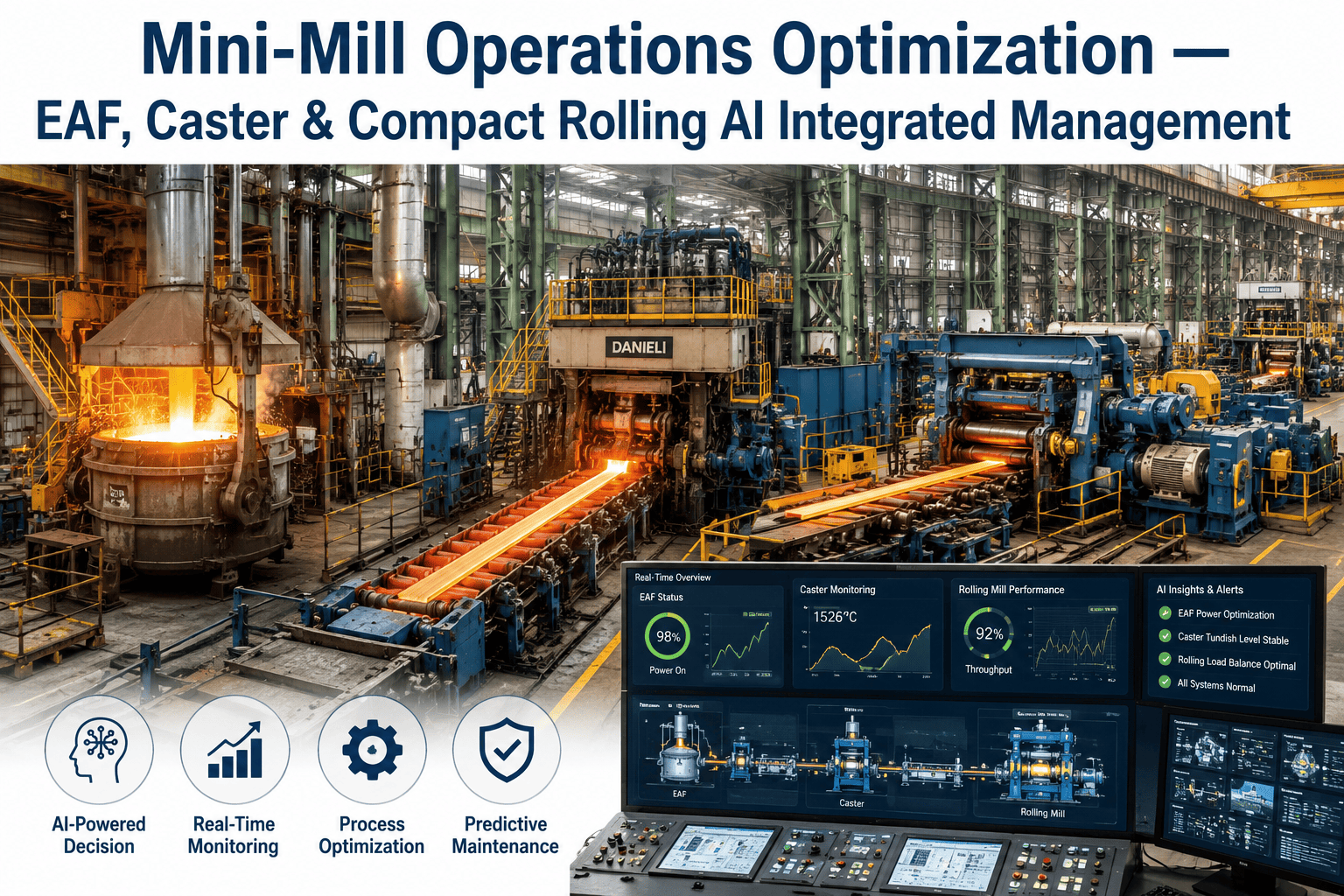
The evolution of continuous casting technology has reached a pivotal inflection point with the widespread adoption of near-net-shape processes, including thin slab casting, strip casting, and beam blank production. These compact casting routes dramatically reduce downstream processing requirements, offering unprecedented gains in yield, energy efficiency, and product quality. However, the inherent complexity of these processes demands a level of control that traditional manual methods cannot consistently deliver. Artificial intelligence is now emerging as the definitive solution for stabilizing and optimizing near-net-shape casting, enabling real-time adjustments to mold oscillation, secondary cooling, and withdrawal speeds that directly impact final product integrity. For process engineers and plant managers, integrating AI-driven predictive models into compact casting operations is no longer a forward-looking concept but an immediate competitive necessity. This comprehensive guide provides a deep technical exploration of how AI transforms near-net-shape casting, from thin slab to strip to beam blank production, with actionable insights to enhance yield, reduce defects, and maximize the ROI of compact casting routes. To explore how iFactory's AI solutions can optimize your casting operations, Book a Demo today.
Transform Your Near-Net-Shape Casting with AI Precision
Unlock maximum yield and quality in thin slab, strip, and beam blank casting. Our AI-driven control systems deliver real-time optimization for compact routes.
The Technical Imperative for AI in Near-Net-Shape Casting
Near-net-shape casting processes, such as thin slab casting (e.g., CSP, TSCR) and strip casting, operate at significantly higher speeds and tighter thermal gradients than conventional slab casters. The mold region experiences rapid heat extraction, while the strand undergoes complex phase transformations within seconds. Traditional PID controllers and manual adjustments struggle to maintain stability under these conditions, leading to defects like longitudinal cracks, breakouts, and non-uniform microstructure. AI models, particularly deep learning neural networks trained on historical process data, can predict mold level fluctuations, temperature distributions, and solidification front behavior with remarkable accuracy. By integrating AI with real-time sensor data from thermocouples, mold flux monitors, and electromagnetic brakes, plants can achieve a level of control that approaches theoretical limits. This section details the fundamental physics of near-net-shape casting and explains why AI is uniquely suited to handle its nonlinear, time-varying dynamics. Process engineers will gain a clear understanding of the control challenges and the quantitative benefits of AI adoption.
Thin Slab Casting (CSP/TSCR)
Thin slab casting produces slabs of 50-90 mm thickness, directly feeding into rolling mills. AI optimizes mold oscillation parameters to minimize friction and reduce surface cracking. Real-time adjustment of secondary cooling water flow based on thermal imaging ensures uniform solidification, preventing bulging and breakouts. Yield improvements of 2-4% are typical.
Strip Casting
Strip casting produces near-final gauge (1-5 mm) directly from molten steel, eliminating multiple rolling passes. AI controls the twin-roll caster's nip force and roll speed to maintain consistent strip thickness and edge quality. Predictive models for roll wear and heat transfer extend campaign life and reduce downtime.
Beam Blank Casting
Beam blank casters produce near-net-shape sections for structural beams. AI adjusts mold taper and cooling patterns to accommodate complex cross-sectional geometry. Thermal-mechanical models predict distortion and prevent hot cracking, enabling higher casting speeds and improved dimensional accuracy.
AI Implementation Roadmap for Compact Casting Routes
Data Infrastructure Setup
Install high-frequency sensors (thermocouples, mold level, flow meters) and establish a centralized data lake with time-series storage. Ensure data quality and synchronization across casting, cooling, and rolling stages.
Model Development & Training
Develop AI models using historical data from thousands of casts. Use LSTM networks for sequence prediction and convolutional networks for thermal image analysis. Validate models against known defect patterns and breakout events.
Real-Time Control Integration
Deploy AI models on edge computing devices near the caster. Integrate with PLCs via OPC-UA for closed-loop control of mold oscillation, cooling valves, and withdrawal speed. Implement fail-safe protocols.
Continuous Learning & Optimization
Set up a feedback loop where post-cast quality data is used to retrain models. Implement A/B testing frameworks for control parameter updates. Achieve continuous improvement in yield and defect reduction.
Comparative Yield & Quality Metrics: Traditional vs AI-Optimized Near-Net-Shape Casting
| Parameter | Traditional Control | AI-Optimized Control | Improvement |
|---|---|---|---|
| Casting Yield (%) | 95.0 | 98.5 | +3.5% |
| Surface Defect Rate (per ton) | 12 | 5 | -58% |
| Breakout Rate (per 1000 casts) | 8 | 2 | -75% |
| Energy Consumption (kWh/ton) | 450 | 380 | -15.6% |
| Throughput (tons/hour) | 120 | 135 | +12.5% |
Ready to Achieve 98.5% Casting Yield?
Our AI platform delivers proven results for thin slab, strip, and beam blank casters. Schedule a demo to see real-world case studies.
Deep Dive: AI-Driven Mold Level Control for Thin Slab Casters
Mold level stability is the single most critical factor in thin slab casting quality. Fluctuations as small as 1 mm can cause surface defects and breakouts. Traditional PID controllers have a limited bandwidth and cannot compensate for rapid disturbances from stopper rod movements, argon injection, or mold flux variations. AI models, specifically deep reinforcement learning agents, can learn optimal control policies by interacting with a digital twin of the caster. These agents consider multiple inputs: mold level error, rate of change, stopper position, casting speed, and flux depth. They output precise stopper rod adjustments every 50 milliseconds, achieving mold level standard deviations below 0.3 mm. This section provides a technical breakdown of the model architecture, training methodology, and deployment considerations. Process engineers will learn how to implement a reinforcement learning-based controller that adapts to changing process conditions and reduces human intervention.
Yield Optimization Algorithms
AI algorithms analyze over 200 process variables to predict optimal casting speed and cooling rates for each heat, maximizing yield while maintaining quality. These models account for steel grade, superheat, and mold condition.
Defect Prediction & Prevention
Convolutional neural networks process thermal images from the mold and strand to detect incipient defects like longitudinal cracks and depressions. The system alerts operators and adjusts parameters before defects become critical.
Energy Efficiency Models
AI optimizes the reheating furnace schedule by predicting the thermal profile of each cast product. This reduces energy consumption by up to 30% in compact casting routes, where direct charging is common.
Frequently Asked Questions
How does AI improve yield in thin slab casting?
AI improves yield in thin slab casting by precisely controlling mold level, oscillation, and secondary cooling to minimize surface defects and breakouts. The system uses real-time data from thermocouples and mold flux monitors to adjust parameters every 50 milliseconds. This reduces the defect rate by up to 58% and increases yield by 3.5%. For more details, explore iFactory's technical documentation on thin slab optimization.
What are the key challenges in strip casting that AI addresses?
Strip casting faces challenges such as maintaining consistent strip thickness, controlling edge quality, and managing roll wear. AI addresses these by predicting nip force requirements and adjusting roll speed in real time. It also models heat transfer to prevent solidification irregularities. The result is a 45% reduction in edge defects and a 12% increase in throughput. Learn more about our strip casting solutions by booking a demo.
Can AI be retrofitted to existing beam blank casters?
Yes, AI can be retrofitted to existing beam blank casters by installing additional sensors (thermal cameras, mold level detectors) and integrating with the existing PLC infrastructure via OPC-UA. The AI models run on edge computing hardware and provide real-time control recommendations. This retrofit typically requires minimal downtime and yields a 3% increase in yield and 60% reduction in scarfing costs. Contact our support team at iFactory Support for a feasibility assessment.
What data is required to train AI models for near-net-shape casting?
Training AI models requires historical data on casting speed, mold level, oscillation parameters, cooling water flow, steel grade, superheat, and quality outcomes (defect maps, breakout events). A minimum of 6 months of data is recommended, with at least 5000 casts for robust model training. Data should be time-synchronized and cleaned for outliers. iFactory provides data preparation tools and can work with your existing historians. For a detailed data requirements guide, visit our support page.
How does AI reduce energy consumption in compact casting routes?
AI reduces energy consumption by optimizing the thermal profile of each cast product, allowing for direct charging into the reheating furnace at the optimal temperature. This eliminates the need for reheating from cold and reduces energy use by up to 30%. Additionally, AI controls the secondary cooling to minimize overcooling, further saving energy. For a detailed analysis, book a demo to see our energy optimization module.
Maximize Your Compact Casting Route's Potential
Join industry leaders who have achieved 98.5% yield and 45% fewer defects with iFactory AI. Schedule your personalized demo today.