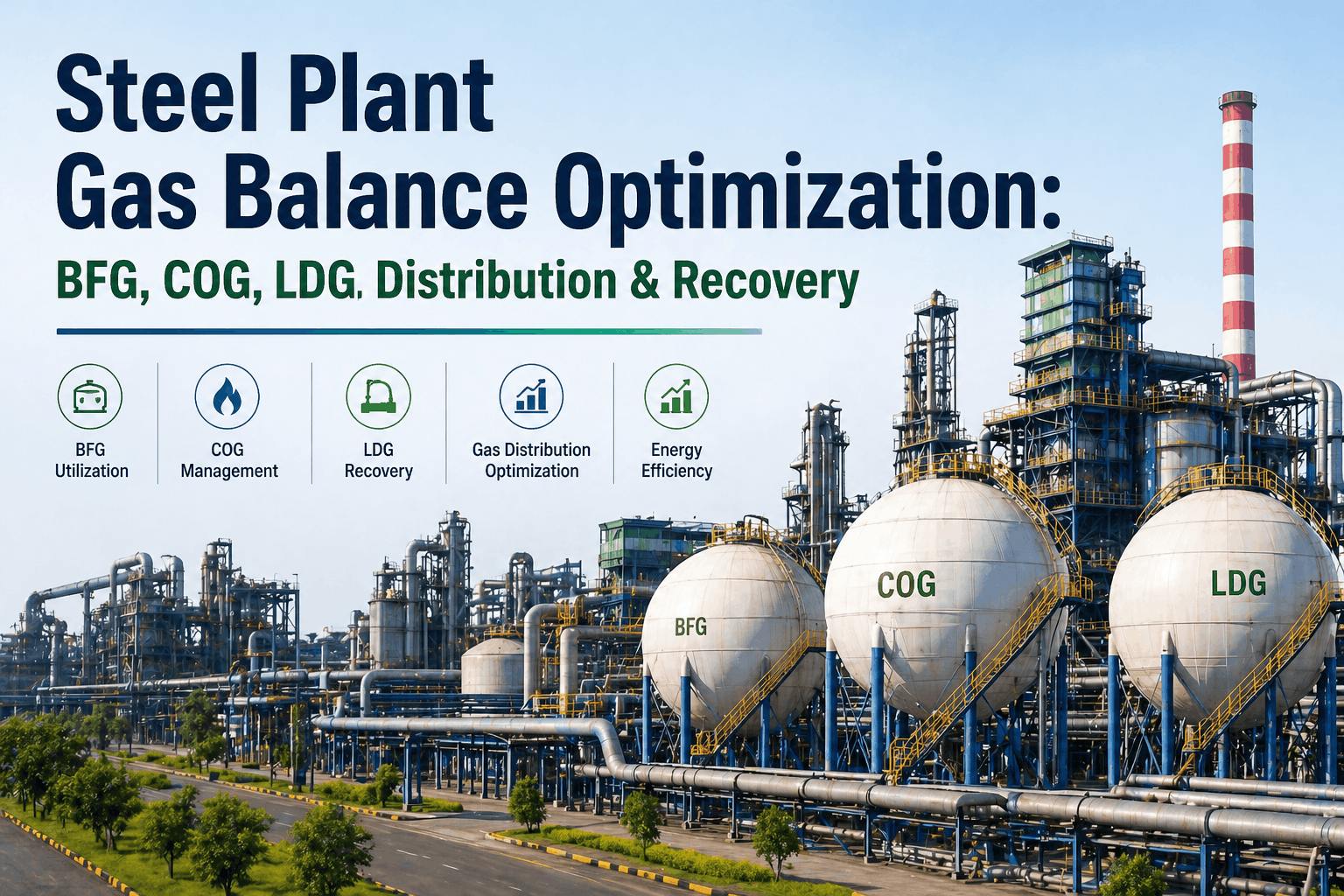
Steel plant gas balance optimization is the critical discipline of synchronizing the generation and consumption of metallurgical gases—Blast Furnace Gas (BFG), Coke Oven Gas (COG), and LD Converter Gas (LDG)—to achieve zero flaring and maximum energy recovery. In the modern integrated steel plant, the gas network is a dynamic ecosystem where a 5% shift in calorific value or a pressure pulse in the main can lead to multi-million dollar energy losses or environmental violations. Schedule a Gas Audit to see how iFactory's Energy Control Tower leverages AI to stabilize gas network pressure and maximize the utilization of waste gases in your boilers and furnaces.
1. The Multi-Gas Ecosystem: BFG, COG, and LDG Dynamics
The primary challenge of a steel plant's energy balance is the disparate nature of its fuel gases. Blast Furnace Gas (BFG) is produced continuously but has a low calorific value (~800 kcal/Nm3). Coke Oven Gas (COG) is high-value (~4200 kcal/Nm3) and hydrogen-rich, while LD Gas (LDG) is intermittent, high in CO, and requires precise holder management to avoid hazardous flaring. iFactory's Gas Network Analytics provides a unified digital twin of these intersecting streams, allowing for real-time balancing between generating units and consuming departments.
Without real-time analytics, gas dispatchers often rely on "static" setpoints, leading to excessive flare losses during production surges or gas holder overflows. iFactory moves your plant to Dynamic Buffer Management, where gas holder levels are predicted 30 minutes in advance, allowing boilers to preemptively switch fuels and absorb excess gas volume before it hits the flare stack.
2. Gas Network Pressure Stabilization & TRT Optimization
Network pressure stability is the silent driver of furnace efficiency. Fluctuations in the BFG main pressure can destabilize the Top Pressure Recovery Turbine (TRT) and impact the thermal consistency of hot blast stoves. iFactory's Pressure Control Analytics monitors the impedance and pressure-drop across the distribution network, identifying bottleneck valves or moisture-traps that cause localized pressure oscillations.
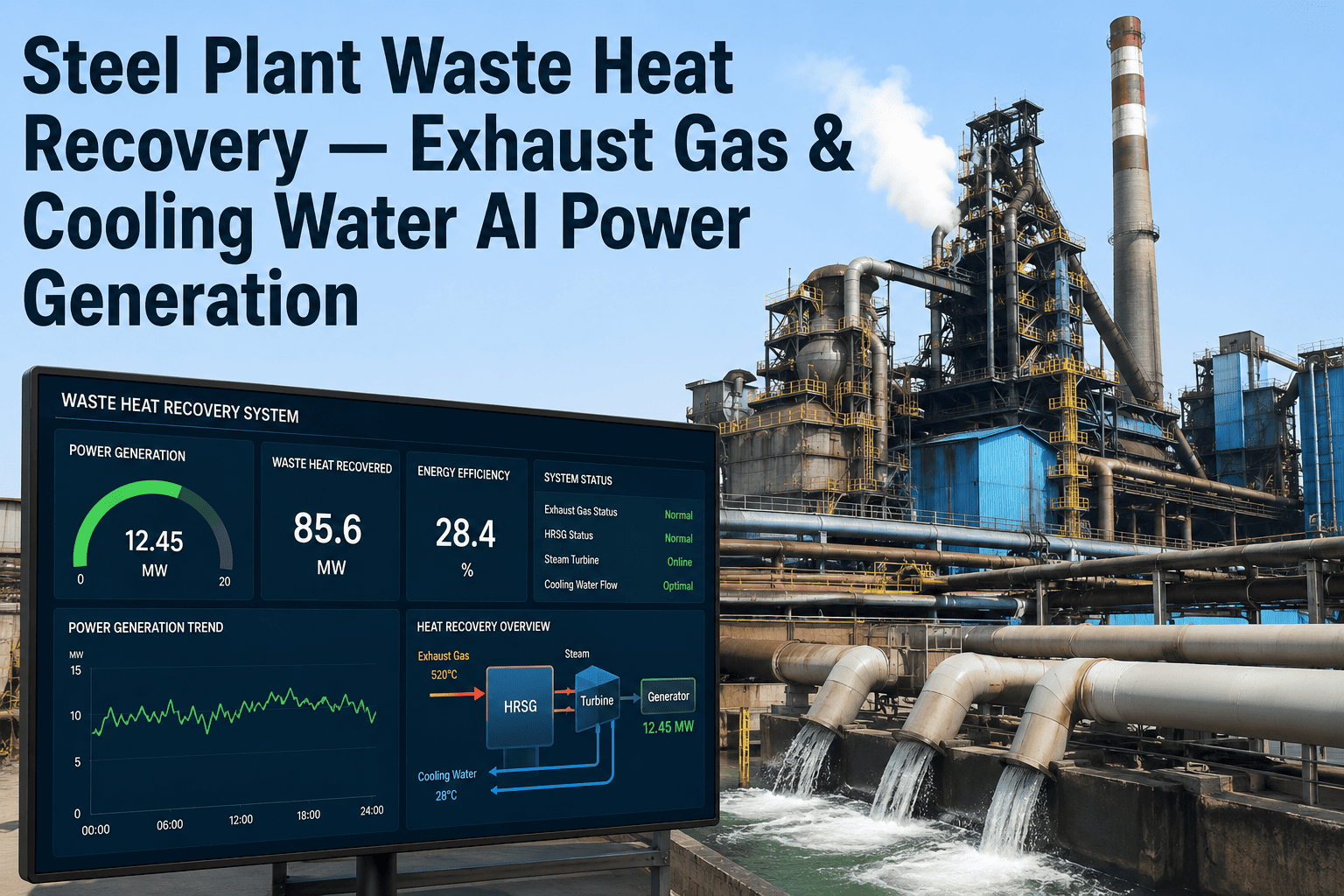
By stabilizing the BFG main, iFactory ensures that the TRT operates at its peak thermodynamic efficiency, maximizing electricity generation while maintaining the precise top-pressure required for Blast Furnace stable-state operation. Connect your TRT telemetry to start optimizing your secondary power generation.
The Strategic Gas Distribution Lifecycle
Optimizing the gas balance requires a granular understanding of the lifecycle from production at the furnaces to final combustion at the boilers or reheating units. iFactory's Gas Lifecycle Analytics ensures that no joule of energy is wasted through inefficient mixing or unplanned pressure drops. Book a Demo to see this lifecycle in action.
Production & Gas Cleaning Analytics
Monitor the volume and chemistry of BFG and COG at the source. iFactory tracks gas scrubber efficiency to ensure that moisture and dust levels remain within safety limits for the distribution network, preventing pipe erosion and valve blockages in the gas mains.
Gas Holder Buffering & Level Prediction
Gas holders act as the "batteries" of the plant. iFactory's AI predicts holder 'breathing' patterns, identifying when a surge in LDG production from the converter will exceed the holder's capacity, triggering automated fuel-switching at the power plant boilers.
Mixed Gas Station & CV Optimization
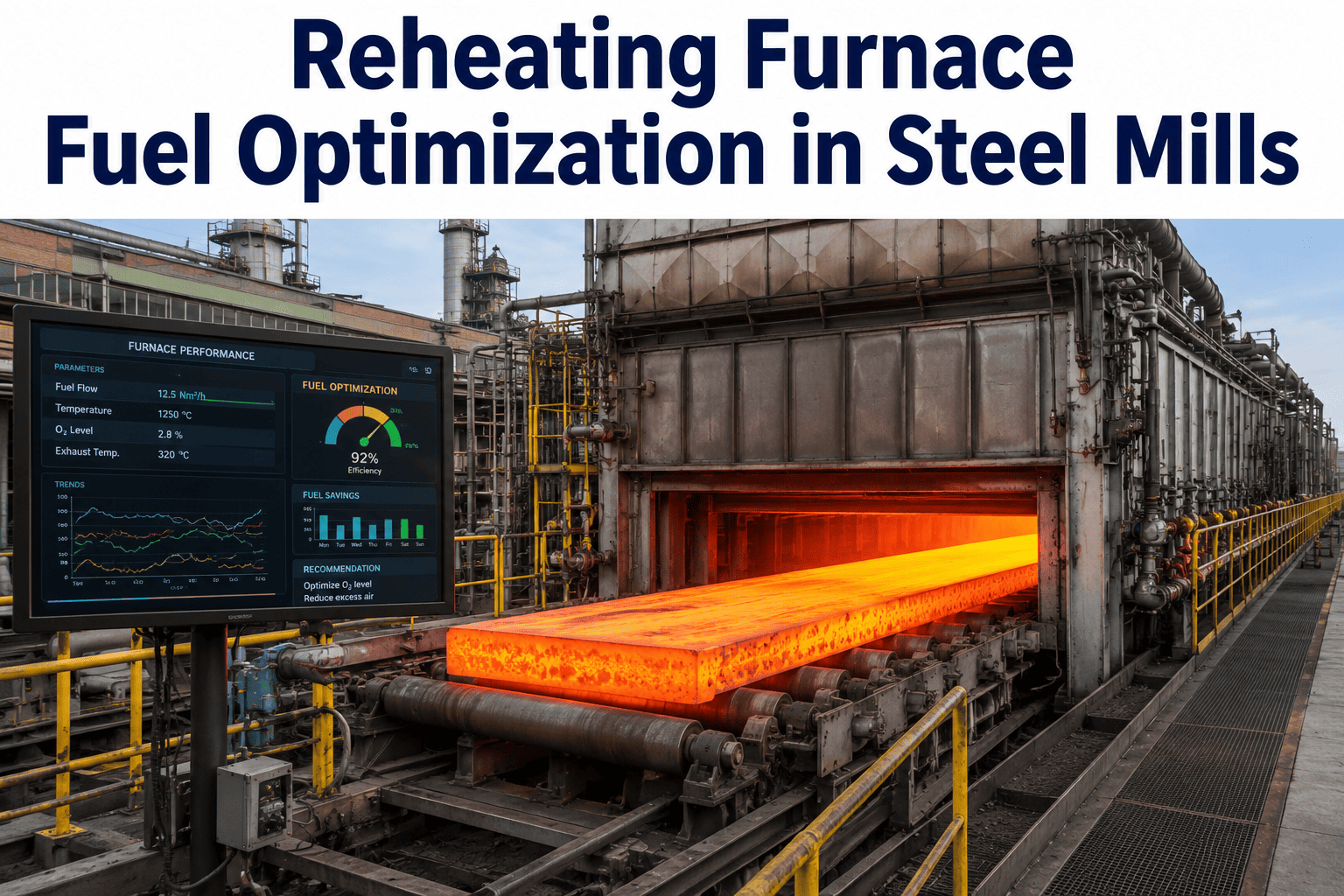
Precision blending of BFG and COG is required to reach the specific calorific value (CV) needed for reheating furnaces. iFactory automates the mixing station control loop, eliminating CV fluctuations that lead to inconsistent slab heating and high specific fuel consumption.
Flare Stack Minimization & ESG Reporting
The final line of defense. iFactory logs every flaring incident, its cause, and the total energy lost. This data is automatically compiled into ESG and carbon intensity reports, providing the transparency required for modern environmental compliance. Analyze your flare losses here.
Metallurgical Fuel Gas Characteristics Matrix
| Gas Type | Calorific Value (kcal/Nm3) | Key Characteristics | Optimization Potential |
|---|---|---|---|
| BFG | 750 - 900 | Continuous flow; high N2/CO2; slow combustion | Maximize stove heating and boiler base-load usage |
| COG | 4000 - 4500 | Hydrogen-rich (~60%); high CV; requires H2S cleaning | Prioritize for reheating furnaces and H2-recovery |
| LDG | 1800 - 2200 | Intermittent (cyclic); high CO; requires holder buffer | Replace BFG/COG in boilers during converter blowing |
| Mixed Gas | 1200 - 2500 | Stable CV target; optimized for specific burners | Dynamic air-to-fuel ratio control based on real-time CV |
Mass-Balance Leak Detection & Network Integrity
A 1% leak in a BFG main can represent $500k in annual energy loss and a major safety risk in terms of CO exposure. iFactory's Mass-Balance Analytics uses flow-rate differentials across the network to identify hidden leaks in real-time. By correlating pressure-drop telemetry with valve positions, the system can pinpoint the approximate coordinate of a structural breach or seal failure.
This move from "visual inspection" to Analytical Integrity Monitoring ensures that the network is always operating at maximum thermodynamic efficiency. Baseline your network integrity today to eliminate hidden energy bleed.
The iFactory Digital Energy Network Maturity Matrix
Identify your current state and map your path to a fully optimized, zero-emission Control Tower.
The Strategic Roadmap to Zero-Flare Energy Recovery
Phase 1: Instrumentation & Network Mapping
Deploy high-accuracy flow and pressure sensors at every generating and consuming node. Establish a high-frequency data link to the EMS/DCS. Output: Total energy visibility dashboard.
Phase 2: Gas Holder Buffer Optimization
Implement AI-based level prediction for dry/wet gas holders. Automate the LDG recovery cycle to maximize holder absorption. Output: 40% reduction in unplanned flaring.
Phase 3: Dynamic Mixing & CV Stabilization
Enable the closed-loop mixing station control for reheating furnaces. Link real-time CV data to burner air-to-fuel ratio logic. Output: 5-8% reduction in specific heat consumption.
Phase 4: Predictive Fuel Switching & Load Balancing
Integrate power plant boilers into the gas balance logic. Automate the switch from Natural Gas to waste gases based on network pressure. Output: 15% reduction in purchased fuel cost.
Phase 5: Autonomous ESG Control Tower
Full implementation of zero-flare algorithms and automated ESG reporting. Ready for H2 enrichment and carbon capture. Output: World-class energy efficiency benchmarks. Start your energy roadmap today.
"Before iFactory, our gas balance was a reactive game of 'catching' pressure pulses. We were flaring nearly 12% of our COG during every converter cycle. Today, our flare stacks are cold, and we've reduced our purchased natural gas by 18% through predictive gas holder management."
Frequently Asked Questions — Steel Plant Gas Balance Optimization
What is the primary cause of unplanned gas flaring in a steel plant?
The primary cause is a mismatch between cyclic gas generation (like LDG from a converter) and the buffering capacity of the gas holders. iFactory solves this by predicting production cycles and adjusting boiler fuel-mix targets ahead of time to create "room" in the system.
How does mixed gas calorific value (CV) affect reheating furnace performance?
Fluctuating CV leads to inconsistent slab temperatures and higher oxygen consumption. iFactory stabilizes the mixed gas CV to within ±1.5%, ensuring uniform heating and reducing the specific heat consumption per ton of steel.
Can analytics improve the life of dry gas holders (Wiggins type)?
Yes. By optimizing the piston movement and reducing the frequency of rapid full-stroke cycles, iFactory minimizes the mechanical wear on the gas holder seals and structural components, extending maintenance intervals by up to 30%.
Why is Blast Furnace Gas (BFG) difficult to burn in boilers?
BFG has a very low energy density and a slow combustion rate. iFactory's boiler control logic ensures the perfect air-to-fuel ratio and pilot-gas (COG) enrichment levels required to maintain stable combustion and prevent flame-out incidents.
How does iFactory track carbon intensity for gas networks?
We calculate the carbon emission factor for every gas stream in real-time. By maximizing the use of waste gases and preventing flaring, we provide a verifiable reduction in Scope 1 emissions, directly supporting your ESG reporting requirements.
What is the ROI of a gas balance optimization project?
ROI is typically achieved in 8-14 months through three streams: (1) Reduced purchase of Natural Gas/Oil, (2) Increased power generation from surplus gas, and (3) Reduced environmental fines and carbon taxes.
Does iFactory integrate with existing Energy Management Systems (EMS)?
Yes. iFactory is designed to sit 'on top' of your existing EMS or DCS, acting as the intelligent analytical layer that provides the predictive insights and optimization setpoints that traditional systems miss.
How do you manage hazardous gases like CO in LDG?
Safety is our primary constraint. iFactory's Gas Safety Layer monitors CO levels and gas main pressures with millisecond resolution, ensuring that all optimization actions are within the strict safety bounds of the plant's metallurgical protocols.
How does TRT efficiency depend on gas network pressure?
The Top Pressure Recovery Turbine (TRT) requires a stable upstream pressure to maintain its expansion ratio. Oscillations in the BFG main lead to frequent bypass-valve operations, wasting energy. iFactory stabilizes the network pressure to keep the TRT at its maximum output.
Can mass-balance analytics identify small gas leaks?
Yes. By using high-precision flowmeters and compensating for temperature and pressure, iFactory can identify volume discrepancies as small as 0.5%, flagging potential leaks or moisture accumulations in the gas network before they trigger low-pressure alarms.