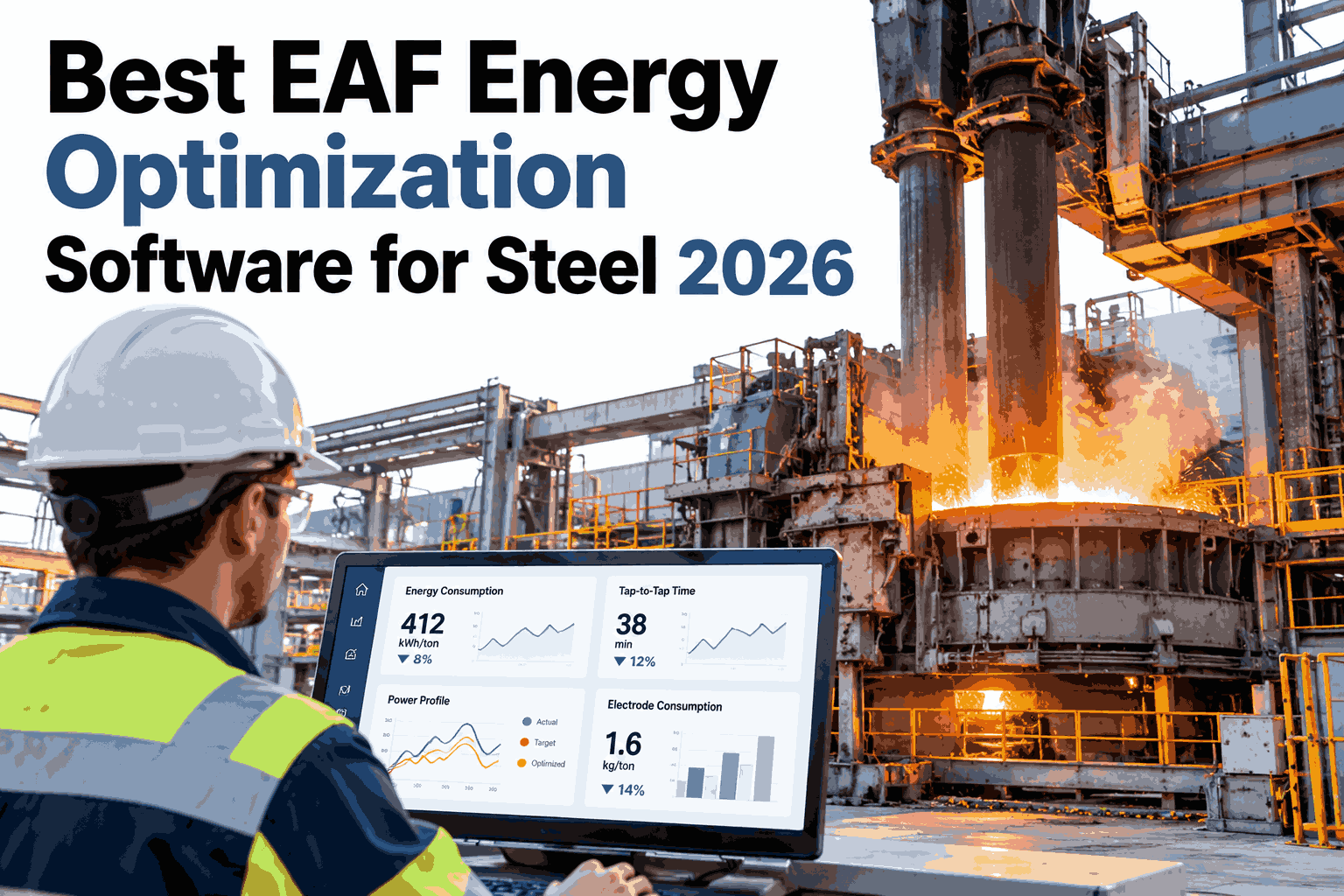
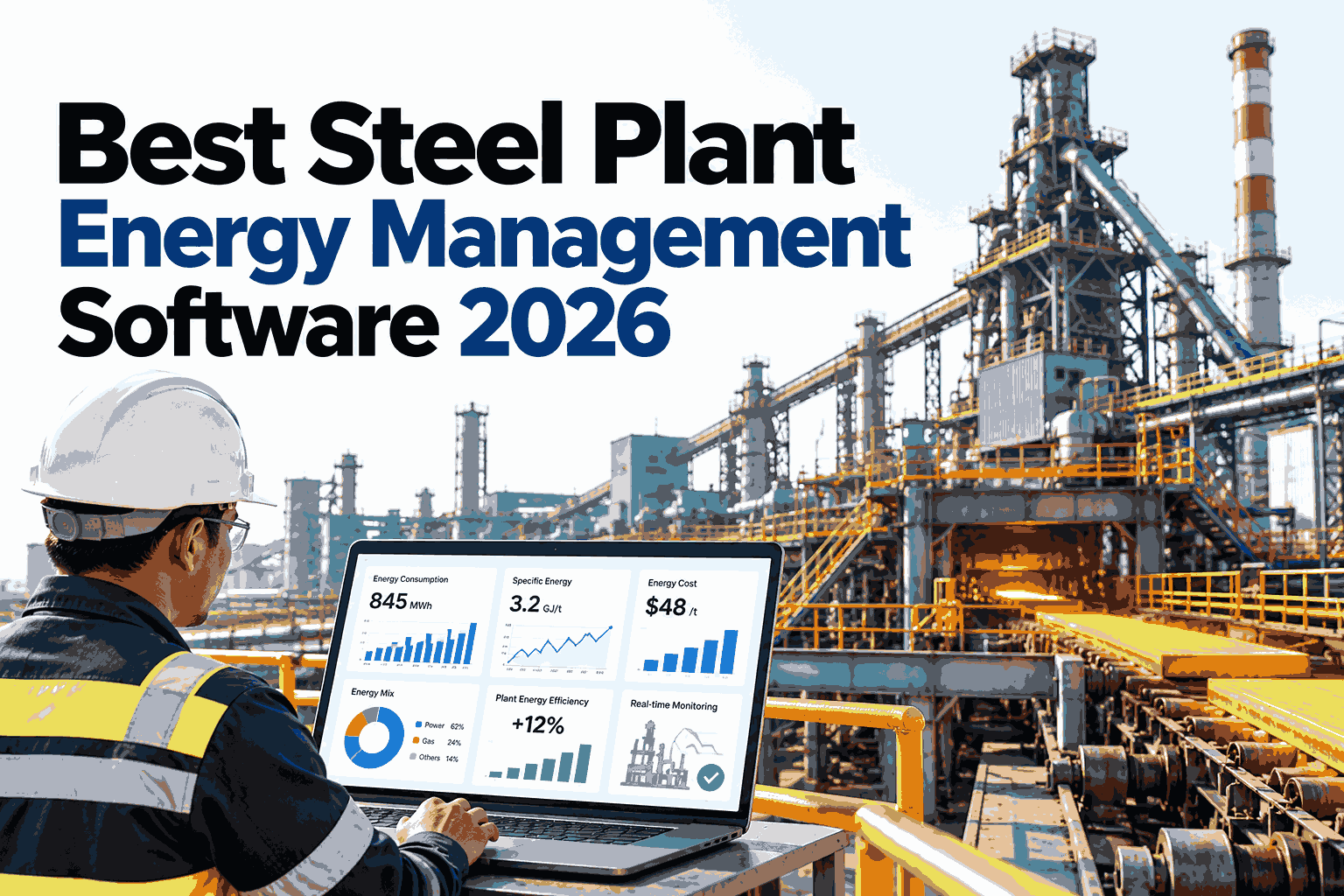
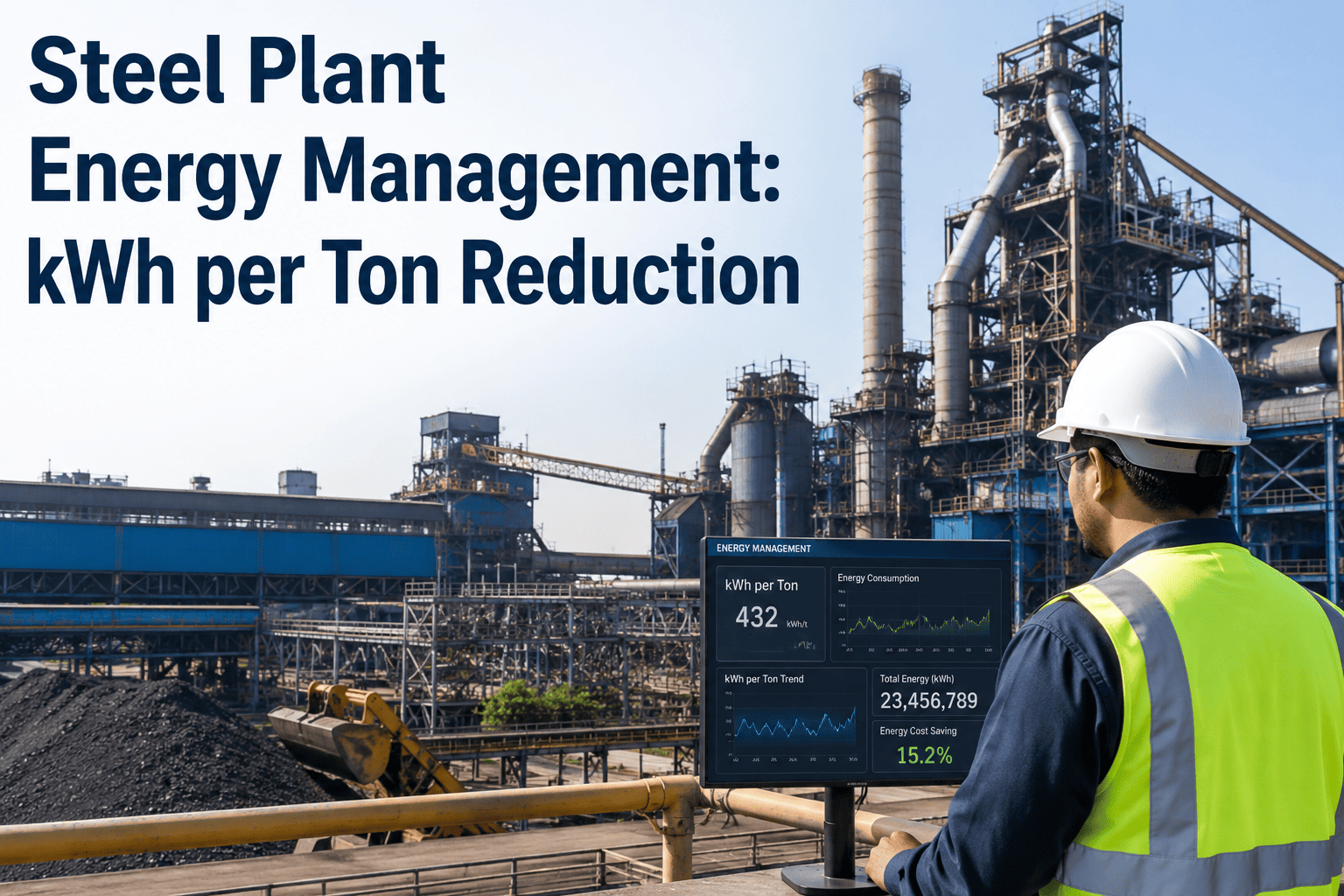
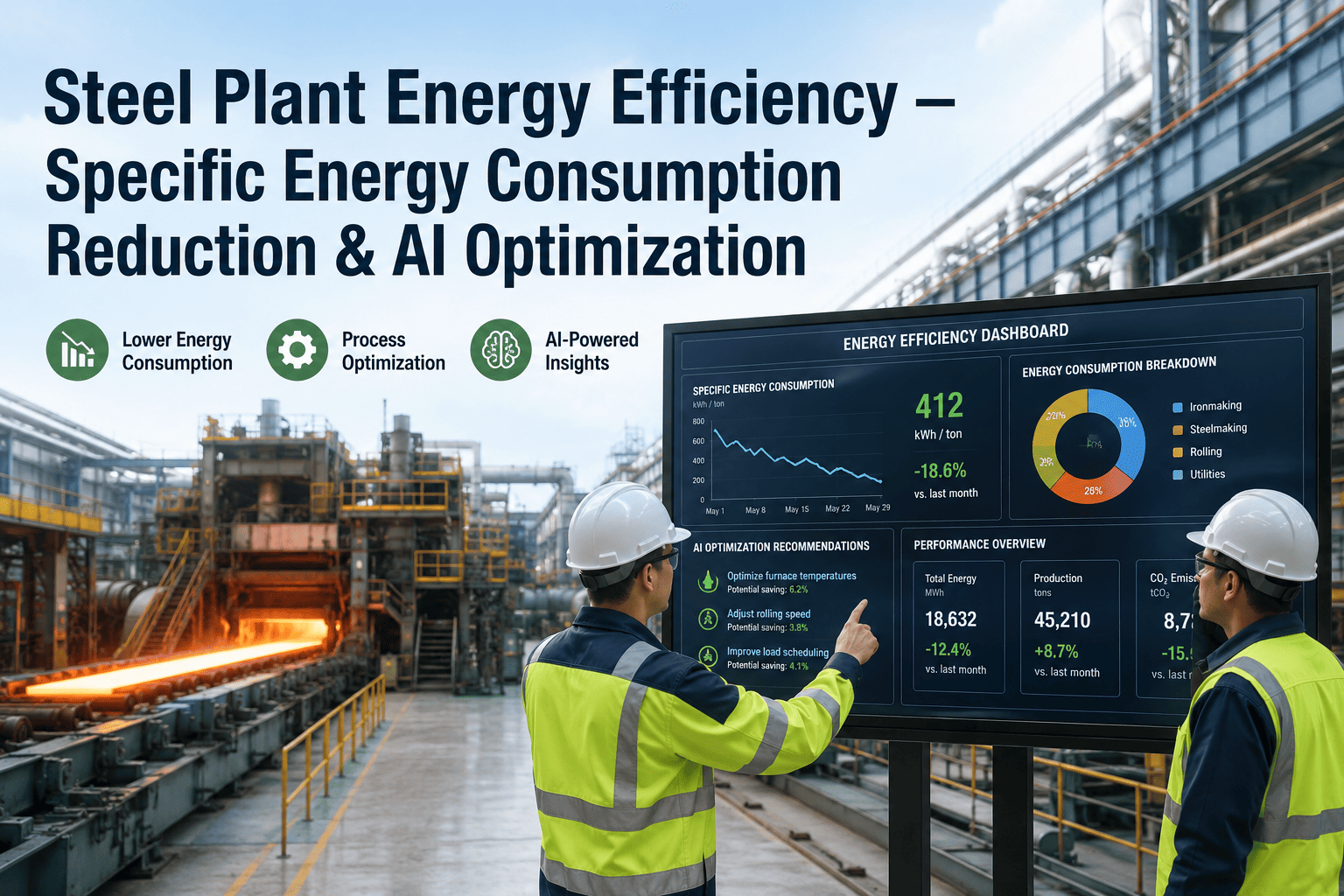
Steel plant energy management and AI-driven intensity tracking have evolved from internal cost-saving initiatives into the strategic backbone of global competitiveness and "Green Steel" certification. In an industry where a single integrated mill can consume as much electricity as a mid-sized city, the transition from monthly utility bill reconciliation to real-time, millisecond-level Specific Energy Consumption (SEC) tracking is no longer optional. As regulatory frameworks like the Carbon Border Adjustment Mechanism (CBAM) begin to penalize high-carbon production, steelmakers are facing a double-edged sword: rising energy tariffs and increasing carbon taxes. Organizations that book a demo with iFactory are discovering that they can achieve a 15-25% reduction in their total energy footprint by deploying autonomous ML models that bridge the gap between process physics and electrical intensity. By correlating Heat IDs with real-time furnace harmonics and rolling torque, iFactory provides the granular visibility needed to optimize kWh/ton at the batch level, transforming energy from a fixed overhead into a controllable production variable.
Reduce Your kWh/ton Intensity with iFactory AI-Driven Energy Analytics
Our Mobile AI-driven platform delivers integrated energy intensity dashboards, real-time fuel-per-ton tracking, and autonomous waste heat recovery — purpose-built for integrated steel plant sustainability.
The "Intensity Blind Spot": Why Siloed Energy Data Destroys Margin
The fundamental failure in traditional steel energy management is the lack of "Operational Context." Most mills possess thousands of power meters and gas sensors, but the data is rarely correlated with the metallurgical state of the mill. This creates a visibility gap where a maintenance team might see a spike in electrical demand but cannot determine if it is due to a change in scrap density in the EAF, a mechanical misalignment in a rolling stand, or a failure in the cooling water pump sequencing. This lack of correlation leads to "Reactive Energy Management," where corrections are made only after the month-end bill arrives, by which time thousands of tonnes of high-intensity steel have already been shipped. iFactory eliminates this blind spot by creating a unified data lake that ingests SCADA energy tags alongside LIMS chemistry and MES production data. Reliability leads exploring this data-driven shift often begin by choosing to schedule a session to see how our platform automates SEC benchmarking across diverse product portfolios.
Utility Monitoring
Data is siloed in substation meters. No link to production Batch IDs or Grade specific requirements.
Reactive Audit
Energy team reviews totals weeks later. Unable to pinpoint the specific machine or shift causing waste.
Manual Fixes
Operators attempt setpoint changes without real-time intensity feedback, often compromising quality for energy.
AI Governance
Autonomous ML loops micro-adjust fuel and power inputs every second, maintaining peak efficiency at all times.
Specific Energy Consumption (SEC) Anomalies
iFactory establishes a dynamic benchmark for every steel grade. If the AI detects that a specific heat of High-Strength Low-Alloy (HSLA) steel is consuming 12% more electricity than its historical baseline, it autonomously identifies the root cause — such as a lagging electrode or a blocked off-gas damper — and pushes an alert to the furnace supervisor.
Ghost Load & Idle Run Mitigation
Steel mills are filled with massive auxiliary motors for fans, descalers, and hydraulics that often run at 100% load during micro-stoppages. iFactory monitors production status and autonomously recommends "Energy Safe States" for auxiliaries, reducing idle-run waste by up to 22% without impacting system restart times.
Fuel-Air Ratio & SFC Governance
Natural gas reheat furnaces often suffer from oxygen-rich or fuel-rich burners due to valve wear. iFactory's fuel optimization module uses real-time off-gas oxygen analysis to micro-adjust burner ratios, ensuring that Specific Fuel Consumption (SFC) stays within the tightest thermodynamic limits for every slab dimension.
The Economic Engine of Green Steel: iFactory vs. Traditional
The ROI of AI energy management is calculated not just in saved kilowatts, but in "Carbon Compliance." As green energy transition accelerates, iFactory provides the data infrastructure needed to monetize energy efficiency. The table below compares the core capabilities of traditional energy management systems with iFactory's autonomous AI platform.
| Energy Control Area | Traditional Management | iFactory AI Autonomous Approach | Sustainability Benefit |
|---|---|---|---|
| Peak Demand Mgmt | Manual load shedding based on alarms | Predictive ML load forecasting (2-hour horizon) | Avoidance of utility penalties |
| Grade-level SEC | Monthly estimated averages | Real-time tracking linked to Heat ID | Precise carbon footprint per ton |
| EAF Arc Stability | Static PID secondary voltage control | High-frequency harmonic arc optimization | –3% Electrical intensity |
| Compressed Air | Timed compressor sequencing | Leak-intensity prioritization via acoustics | ROI-driven leak remediation |
| Waste Heat Recovery | Static damper control | Predictive off-gas energy potential modeling | +15% Energy recovery rate |
| Compliance Audit | Manual spreadsheet reconciliation | Automated ISO 50001 evidence logs | 100% Digital Certification |
Asset-Level Energy Optimization Scenarios
iFactory's energy governance extends from the ultra-high voltage melt shop to the precision-controlled finishing lines. By treating every major asset as an energy-consuming "Digital Twin," we provide technicians with the exact instructions needed to maintain thermodynamic perfection. Process leads looking to unify their energy strategy across multiple sites often book a demo to view our enterprise-level energy heatmaps.
iFactory correlates electrode positioning speed with arc-current stability to minimize radiative heat loss to the furnace panels. By autonomously suggesting the optimal power profile for the current scrap density, the system reduces electricity consumption by 15-20 kWh/ton per heat heat.
Our ML models predict the thermal soaking requirements of the specific alloy being heated. By autonomously micro-adjusting air-fuel ratios, iFactory prevents over-heating and scale loss, saving on both natural gas consumption and yield-loss at the roughing mill.
iFactory identifies non-critical auxiliary loads that can be throttled or delayed during high-demand utility spikes. This predictive "Load Leveling" reduces peak demand charges and ensures that the mill operates at maximum power factor efficiency during every production shift.
Compliance & Decarbonization Roadmap
The path to "Zero-Carbon Steel" requires a multi-year strategy built on reliable data. iFactory provides the "Phased Decarbonization Roadmap" that helps steel sites prioritize energy investments with the highest carbon-mitigation ROI. From initial digital transformation to fully autonomous energy governance, we provide the platform for the future of the industry.
Energy Data Unification
Goal: Transparency
- Real-time SEC (kWh/ton) tracking
- Digital ISO 50001 logging
- Idle-run waste alerts
- Batch-level energy tagging
Predictive Asset Governance
Goal: Intensity Reduction
- ML-driven arc stability control
- Furnace fuel-air ratio AI
- Waste heat energy prediction
- Peak demand load shedding
Autonomous Green Mill
Goal: Net Zero Integration
- Renewable energy mix balancing
- Carbon-intensity certification AI
- Autonomous utility-grid response
- Circular energy loop optimization
"Our facility was struggling with fluctuating specific energy consumption across different steel grades. iFactory transformed our energy data from a utility expense into a production KPI. We can now correlate electrode consumption and furnace kWh directly with Heat ID, which has allowed us to reduce our EAF energy intensity by 18% in the first year. It's the most effective tool we've ever used for ISO 50001 compliance."
Steel Plant Energy Management — Frequently Asked Questions
How does iFactory normalize energy intensity for different steel grades?
Steel chemistry and slab geometry significantly impact energy demand. iFactory uses "Normalization ML" to account for these variables, providing an SEC benchmark that is tailored to each specific product, ensuring that intensity comparisons are fair and scientifically valid.
Can the system help reduce CO2 emissions for 'Green Steel' certification?
Yes. By reducing kWh/ton and Specific Fuel Consumption (SFC), the platform directly lowers Scope 1 and Scope 2 carbon emissions. We provide the auditable digital traceability required for certification bodies like ResponsibleSteel or for ESG reporting.
How does the platform handle peak utility tariffs and demand charges?
Our "Peak Predictor" module analyzes your upcoming production schedule against utility tariff windows. It recommends pump sequencing or LMF heating adjustments that shift non-critical loads away from peak times, saving thousands in demand charges every month.
Does iFactory monitor waste energy in compressed air and steam systems?
Absolutely. We integrate flow and acoustic data to identify leaks in auxiliary systems. In a typical mill, identifying and fixing a single major compressed air leak can pay for an entire IoT sensor gateway deployment in weeks.
Is the energy dashboard available to operators on the floor?
Yes — the iFactory mobile app provides every operator with their zone-specific energy health score. This empowers frontline staff to take immediate action on idle-run equipment or cooling-fan waste during production delays.
What integration protocols are used for power meters and PLCs?
We support standard industrial protocols including Modbus-TCP, OPC-UA, and MQTT. Our IoT gateways act as "Protocol Translators," allowing us to pull data from legacy utility meters and modern smart-grids simultaneously.
How does the AI optimize EAF electrode consumption?
By stabilizing the plasma arc and optimizing power factor, the AI reduces electrode "bore-in" time and prevents severe arc wandering. This reduces the specific electrode wear (kg/ton) alongside electricity savings.
Can we automate ISO 50001 energy reporting?
Yes. iFactory automatically generates the Energy Performance Indicators (EnPIs) and Energy Baselines (EnBs) required for ISO 50001 audits, reducing the manual reporting burden on your energy team by up to 90%.
Transform Your Steel Plant into an Energy-Optimized Leader
iFactory's Mobile AI-driven App delivers integrated energy modules, real-time SEC analytics, and autonomous fuel-air governance — built for manufacturers ready to lower costs and lead in sustainability.