Textile manufacturers have long accepted defects as an unavoidable cost of production. The old playbook — hire more inspectors, run end-of-line checks, write off bad batches — is quietly becoming obsolete. AI-powered real-time quality control is replacing guesswork with precision, catching defects at the source, not after the damage is done. This page breaks down what's actually changing on factory floors today, backed by current data, and what it means for manufacturers who are still running on manual inspection. If you want to understand how this applies to your specific operation, our support team can walk you through it.
AI in Quality Control · Textile Manufacturing
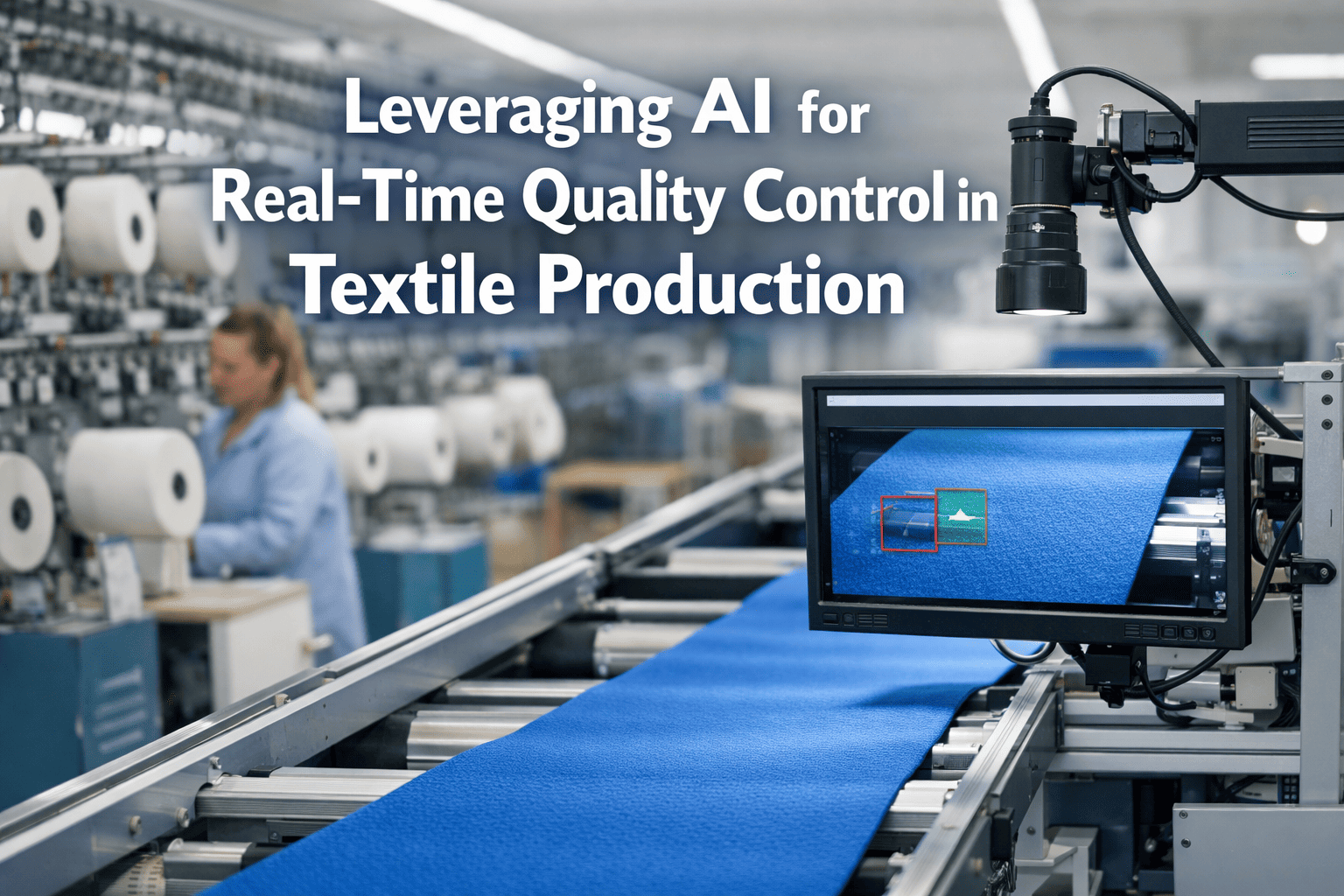
Real-Time AI Quality Control Is Rewriting Textile Manufacturing
Manual inspection misses 20–30% of defects. AI catches them in milliseconds — every meter, every batch, every shift.
Book a Demo
99%
AI defect detection accuracy
60–70%
Manual inspection accuracy
10–15%
Production lost to defects without AI
30–50%
Drop in defect-related waste after AI adoption
The Gap Manual Inspection Can't Close
Human inspectors are reliable, experienced, and attentive — up to a point. At high production speeds, even the best inspector is working against biology. Fatigue, lighting variation, and sheer volume mean that 20–30% of textile defects pass through undetected. That's not a workforce problem. It's a structural limitation of manual quality control at scale.
60–70%
Manual Inspection Accuracy
The ceiling for human visual inspection, even under optimal conditions. High-speed production pushes accuracy lower.
99%
AI Inspection Accuracy
Consistent, fatigue-free, operating 24/7. Every meter of fabric scanned at production speed with no drift in performance.
Defect types AI detects in real time
Yarn Breakage
Loose Threads
Weave Misalignment
Color Deviation
Fiber Contamination
Coating Inconsistency
Pattern Errors
Pilling & Surface Flaws
How AI Quality Inspection Actually Works
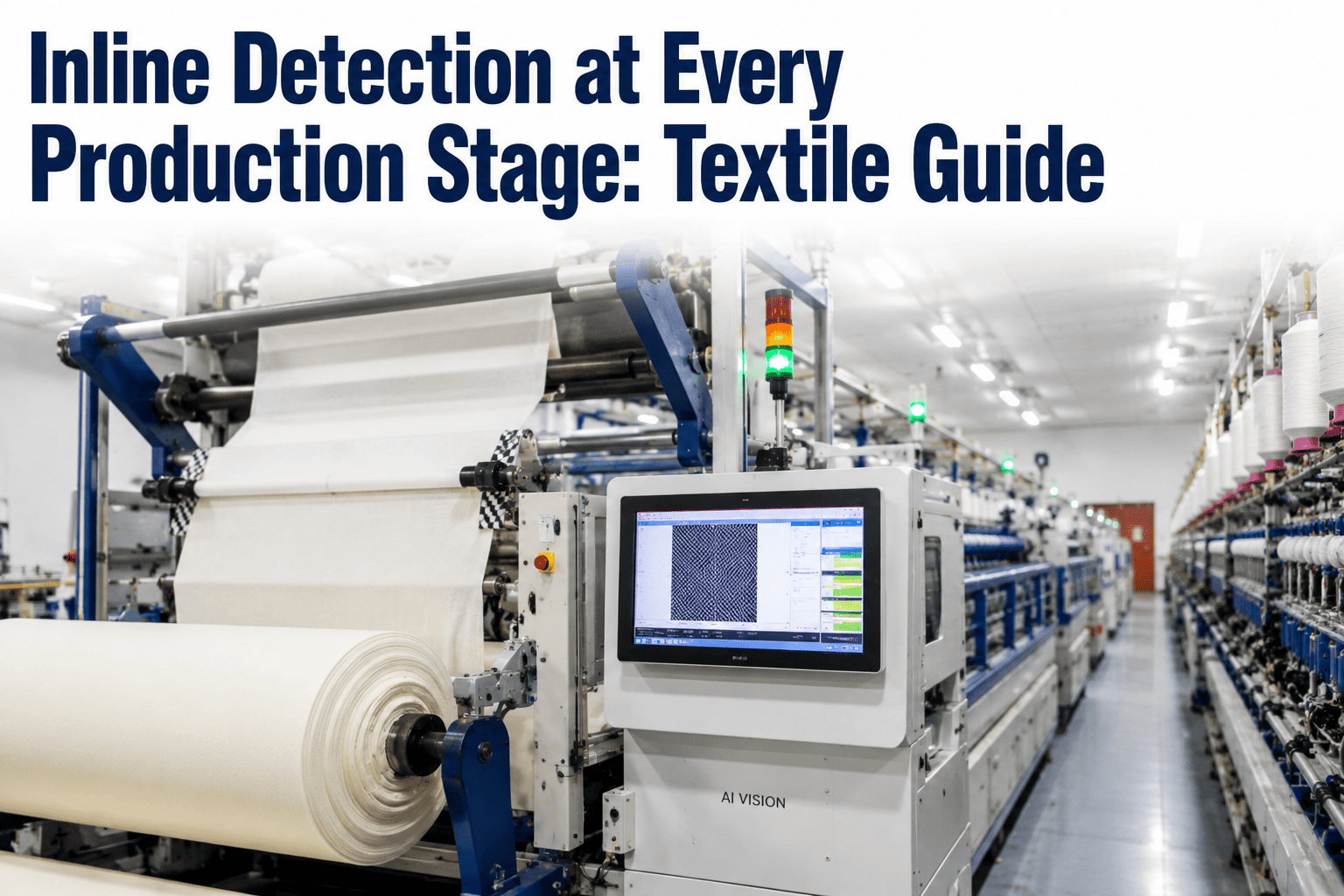
AI-based fabric inspection is not a single technology — it's a layered system that combines hardware, computer vision, and machine learning running in parallel with your existing production line.
01
High-Speed Camera Scanning
High-resolution cameras mounted inline capture thousands of images per second across every centimeter of fabric passing through the line — in real time, with no production slowdown.
02
Deep Learning Analysis
Convolutional Neural Networks (CNNs) analyze each frame against trained defect models. The system identifies anomalies — broken yarns, weave gaps, dye inconsistencies — with precision far beyond human vision.
03
Instant Flagging & Alert
Defective segments are flagged the moment they're detected. Operators receive real-time alerts with defect location, type, and severity — enabling immediate corrective action before the batch runs further.
04
Continuous Model Learning
Every inspection run feeds back into the model. Over time, the system learns your specific fabrics, machines, and production conditions — becoming more precise, not less, as it accumulates your data.
From Reactive to Predictive: The Bigger Shift
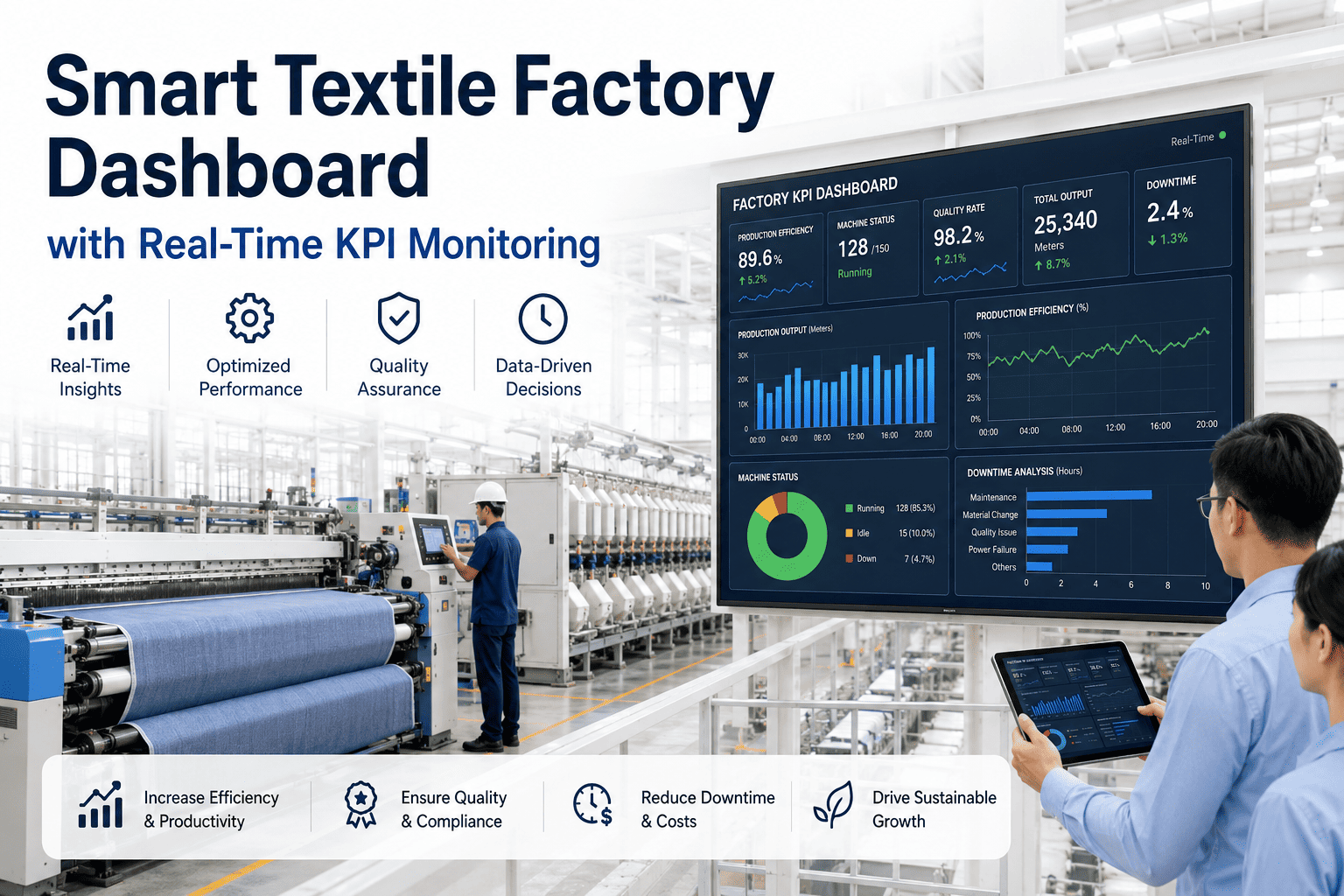
Real-time detection is only half the story. The more powerful shift is predictive quality control — using historical defect data and machine performance patterns to anticipate problems before they reach the fabric.
Traditional
Defect Found at End of Run
The entire batch is inspected after production completes. Defects discovered late mean rework, rejects, or write-offs — with no way to prevent the same issue on the next run.
High waste · High rework cost · Zero prevention
AI-Driven
Defect Detected & Predicted Live
AI monitors machine calibration, yarn tension, and environmental variables in real time. It forecasts where defects are likely to occur and alerts operators before quality drops — not after.
Near-zero waste · Continuous correction · Full prevention
Predictive AI systems analyze variables like machine run hours, fabric type, operator patterns, and environmental conditions simultaneously — flagging the combination most likely to produce defects before it does.
What the Numbers Look Like After Deployment
These aren't projections — they're outcomes reported by textile manufacturers that have moved from manual to AI-driven quality control.
40%
Reduction in Defect Rates
Leading technical textile producers reported a 40% drop in defect rates within months of deploying AI inspection systems.
30–50%
Less Defect-Related Waste
Companies switching to AI defect detection consistently report 30–50% reductions in material written off due to quality failures.
20–30x
Faster Than Human Inspection
AI-based systems inspect fabric defects 20–30 times faster than human inspectors — at full production speed, without slowdown.
$2M+
Annual Savings in Material Cost
A single German technical textile manufacturer saved over $2 million per year in material costs after integrating AI inspection.
Industries Where AI Quality Control Matters Most
The stakes for defect detection are not equal across all textile applications. In technical textiles especially, even micro-defects can mean product failure, safety risk, or rejected contracts.
Apparel & Fashion
Color consistency, pattern alignment, surface flaw detection at scale
Technical Textiles
Structural integrity in aerospace, automotive, and defense fabrics
Home Textiles
Weave consistency, dimensional accuracy, surface uniformity
Medical Textiles
Zero-tolerance defect standards for hygiene and safety compliance
Nonwovens
Density uniformity, bonding consistency, contamination detection
Market Context: Why Adoption Is Accelerating Now
The global AI in textile market was valued at approximately $4.1 billion in 2025 and is growing at a CAGR of 32.45% — reaching a projected $68.4 billion by 2035. Quality inspection is the single largest application segment, holding 32% of the total market. Computer vision is the fastest-growing technology within it, at 25% CAGR. This isn't incremental improvement. It's a structural shift in how textile quality is managed globally.
Global AI in Textile Market Projection · 32.45% CAGR
38%
ML & Deep Learning market share
32%
Quality Inspection — largest application
25%
Computer Vision CAGR — fastest growing
50%
Asia-Pacific global market share
Questions Manufacturers Ask Before Deploying
iFactory · Textile Manufacturing Intelligence
Stop Catching Defects After They Cost You Money
iFactory brings real-time AI quality inspection, predictive defect detection, and production analytics to textile manufacturers of every size. See live how it integrates with your existing lines — no new machinery required. Deployed in 7–14 days.
Book a Demo