At a spinning mill in Rajasthan, a ring frame bearing showed the first signs of wear on day 3. By day 19, the motor seized — halting output for 31 hours, triggering ₹4.2 lakh in emergency repairs, and delaying two export orders. The fault signature was in the sensor data the entire time. Nobody was reading it. That is what reactive maintenance costs textile factories every week across India and beyond. AI-powered predictive maintenance changes that equation permanently — catching faults 2 to 6 weeks before breakdown, so your team fixes machines on your schedule, not the machine's. If your facility is still waiting for failures to announce themselves, book a demo with iFactory and see what your machines are already telling you.
AI-Powered Predictive Maintenance for Textile Factories
82% of manufacturers experienced unplanned downtime in the last 3 years. In textile factories, one seized spindle motor can halt an entire production line for hours. AI predictive maintenance monitors every machine continuously — flagging failures weeks before they happen, slashing emergency costs, and keeping your factory running at full capacity.
Book a DemoThree Maintenance Approaches — Only One Actually Works
Most textile factories are stuck in the first two stages. The cost difference is enormous.
Wait for machines to fail. Scramble for parts. Pay emergency labor rates. Lose production hours. Repeat every few weeks. The average textile mill pays 3–4x more per repair under this model.
Replace parts every 90 days whether they need it or not. Causes unnecessary downtime, wastes good components, and still misses random failures between inspection cycles.
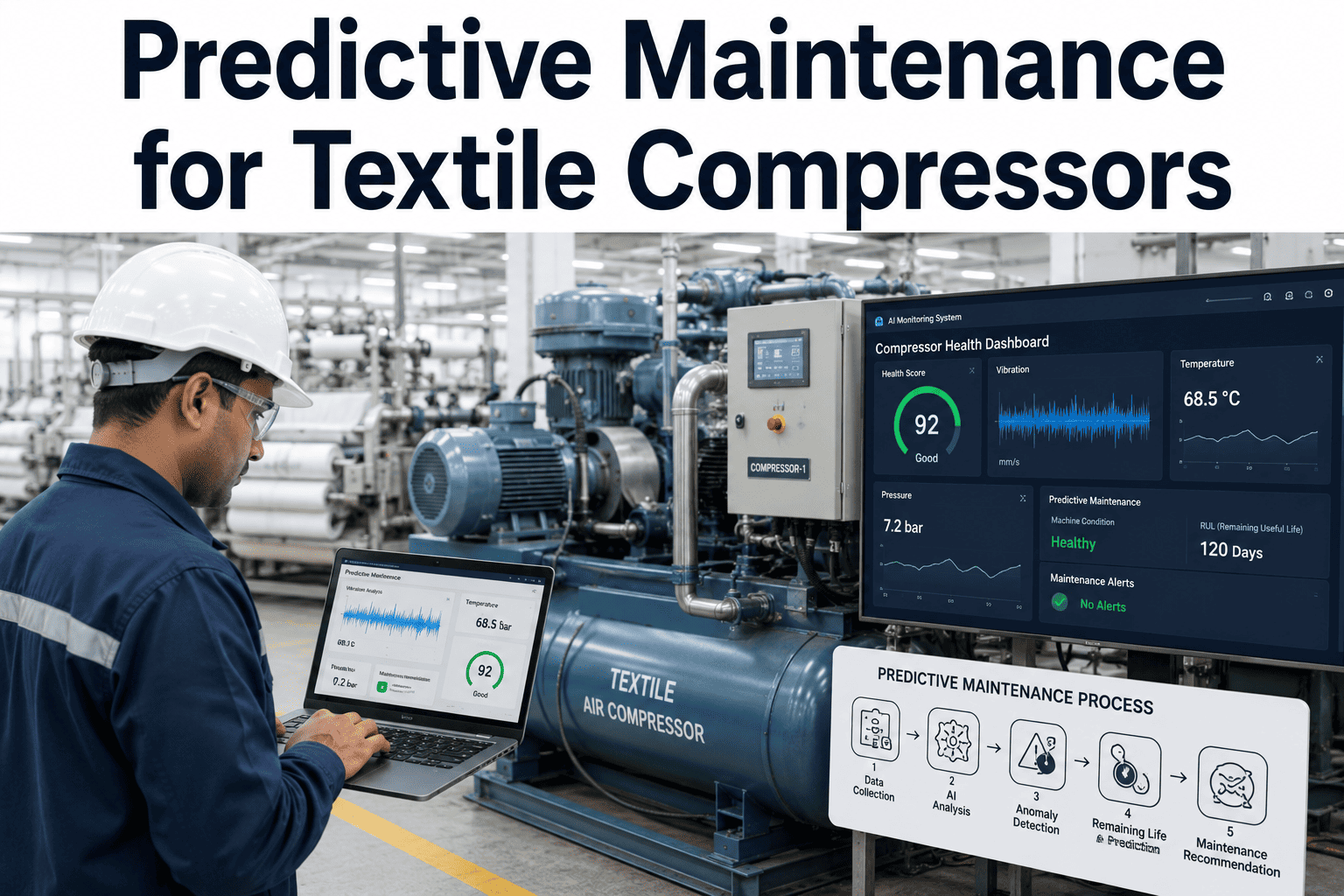
AI reads live sensor data 24/7 — detecting vibration drift, thermal anomalies, and current spikes weeks before failure. Maintenance happens when data says it should, not when a machine stops production.
The Four Signals Every Textile Machine Sends Before It Fails
AI reads these continuously. Manual inspection catches them only if the timing is perfect — which it rarely is.
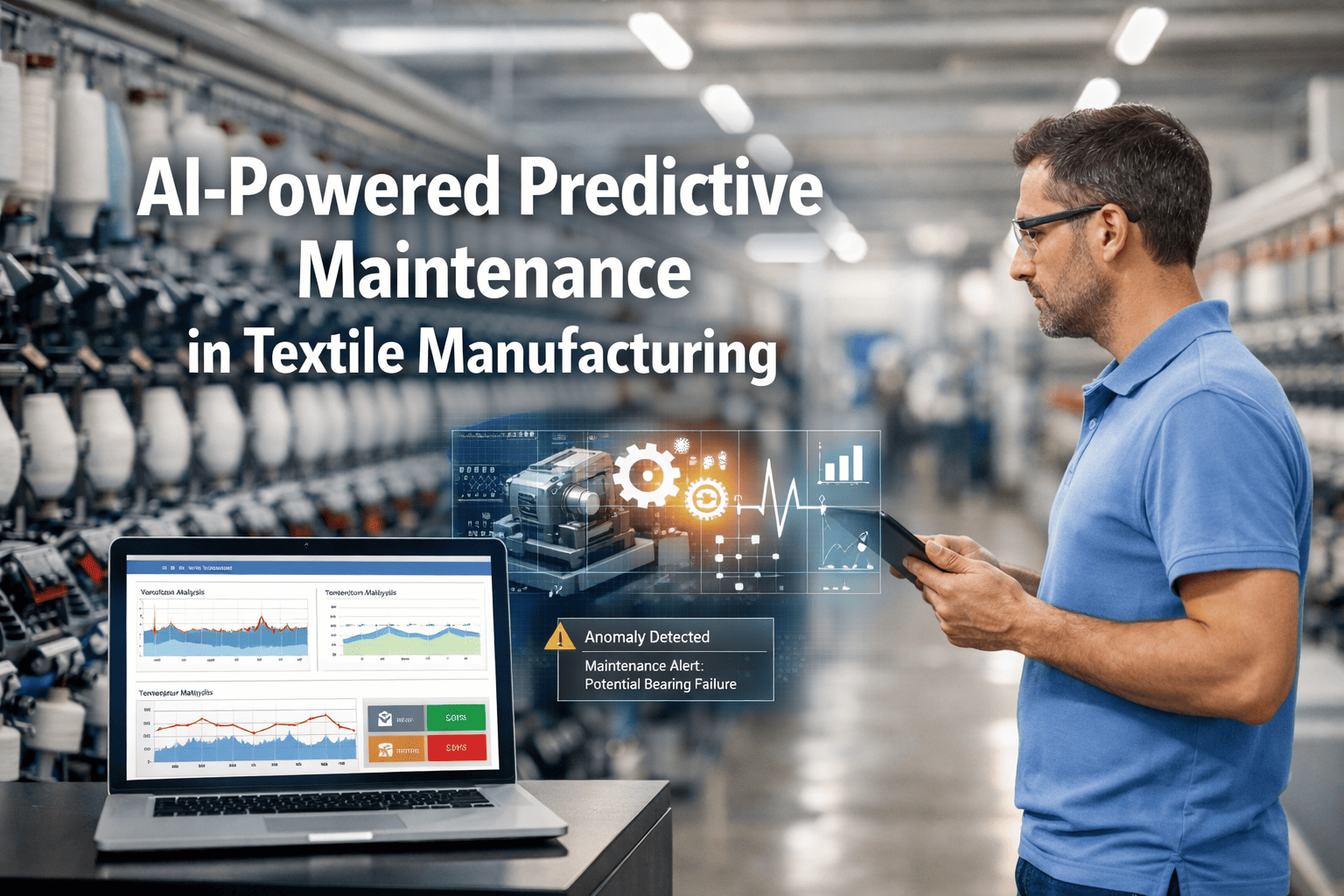
Spindle bearing wear shows as micro-vibration amplitude drift — as little as 4% above baseline. Invisible to the human hand or ear until the bearing is already failing.
Motor winding degradation and bearing friction show as temperature deviation — 8°C above normal operating envelope is a reliable early warning before insulation breakdown.
A motor drawing 8–12% more current than its 21-day baseline is compensating for mechanical friction or electrical degradation — a clear precursor to winding failure or seized bearing.
Pump impeller wear, clogged filters, and valve actuator degradation appear as pressure differential trends. In dyeing systems, this directly predicts bath quality failures before product is affected.
What the Same Fault Costs — Reactive vs Predictive
A single ring frame spindle bearing failure. Two outcomes. The difference is whether AI was watching.
Every Textile Machine. Monitored. Continuously.
iFactory deploys sensor baselines and AI anomaly models for each asset type — purpose-built for textile manufacturing environments.
| Machine Type | Sensors Monitored | Common Fault Detected | Advance Warning |
|---|---|---|---|
| Ring Spinning Frames | Vibration, temperature, current, speed | Spindle bearing wear, drafting roller failure | 3–6 weeks |
| Rapier & Air-Jet Looms | Cam vibration, tension, motor current | Rapier head wear, shed timing drift | 2–5 weeks |
| Dyeing Jets & Jiggers | Pressure differential, temperature, flow | Pump impeller wear, valve actuator degradation | 2–4 weeks |
| Circular Knitting Machines | Cylinder vibration, yarn tension, carriage load | Needle breakage precursor, sinker cam wear | 1–3 weeks |
| Stenter Frames | Chain tension, heating element resistance, motor draw | Chain elongation, heating zone failure | 2–5 weeks |
| Winding Machines | Drum vibration, traverse tension, motor current | Drum surface wear, traverse mechanism failure | 3–5 weeks |
From Raw Sensor Data to Work Order in Four Steps
No production shutdown. No new hires. Fully live in 14 days.
IoT sensors for vibration, temperature, current, and pressure attach non-invasively to spindles, loom drives, pumps, and motors. iFactory integrates with existing SCADA and PLC systems or deploys standalone — no shutdown required. Legacy machinery included.
Machine learning builds a normal operating envelope for each asset — factoring in shift patterns, load cycles, and equipment age. Any deviation from this baseline generates a scored anomaly. A spindle running 9% outside its 21-day vibration baseline gets flagged automatically.
When failure probability crosses defined thresholds, iFactory auto-generates a pre-populated work order — asset ID, fault type, recommended action, urgency level, and parts checklist. Critical alerts escalate to production managers immediately.
With 3–6 weeks of advance warning, your team orders parts, books the right technician, and slots the repair into the next planned low-production window. Same fault. One-tenth the cost. No lost output.
Not sure where to start? We make it simple.
Our support team will map your current machine register, identify your highest-risk assets, and show you exactly what iFactory would monitor — before you commit to anything. No setup cost, no IT complexity, and no production disruption during deployment.
What Textile Mills Achieve After Deploying iFactory
Common Questions About AI Predictive Maintenance in Textile Factories
Your Next Machine Failure Is Already Developing. Catch It First.
iFactory deploys AI-powered predictive maintenance across your textile facility in 7–14 days. Pre-built machine templates for spinning, weaving, knitting, and dyeing equipment — plus a dedicated onboarding team — ensure you are live before the next failure hits your production floor.
Book a Demo