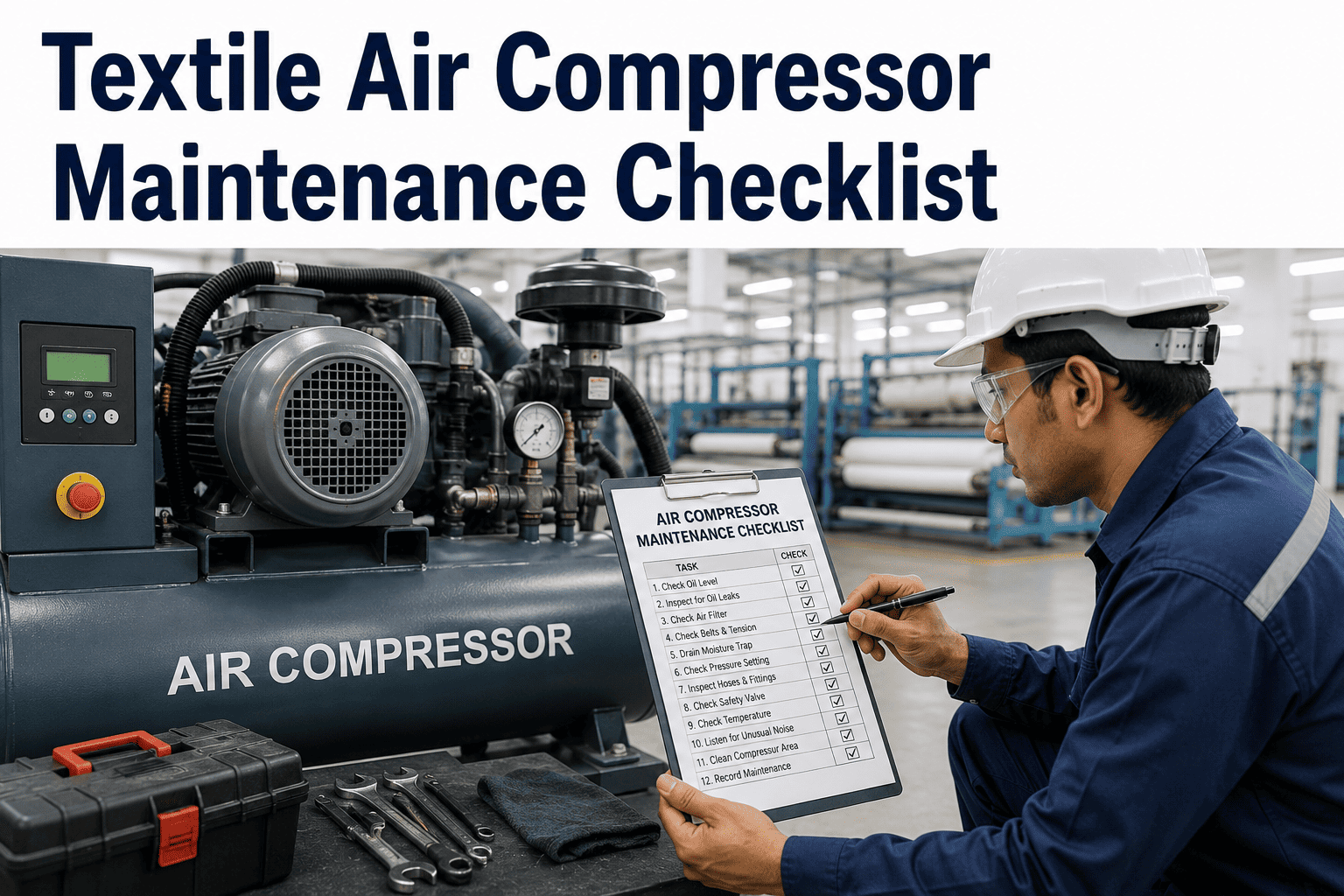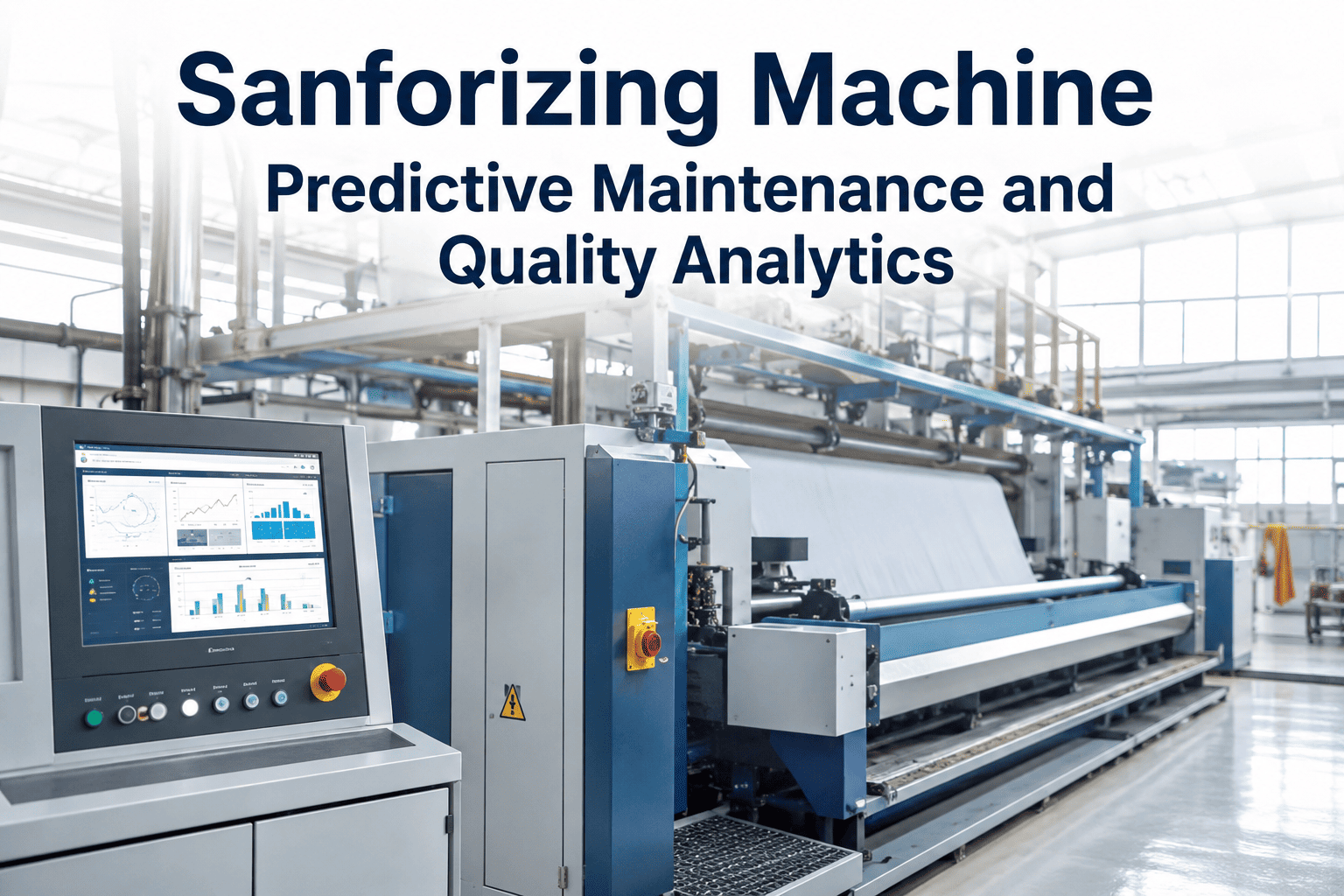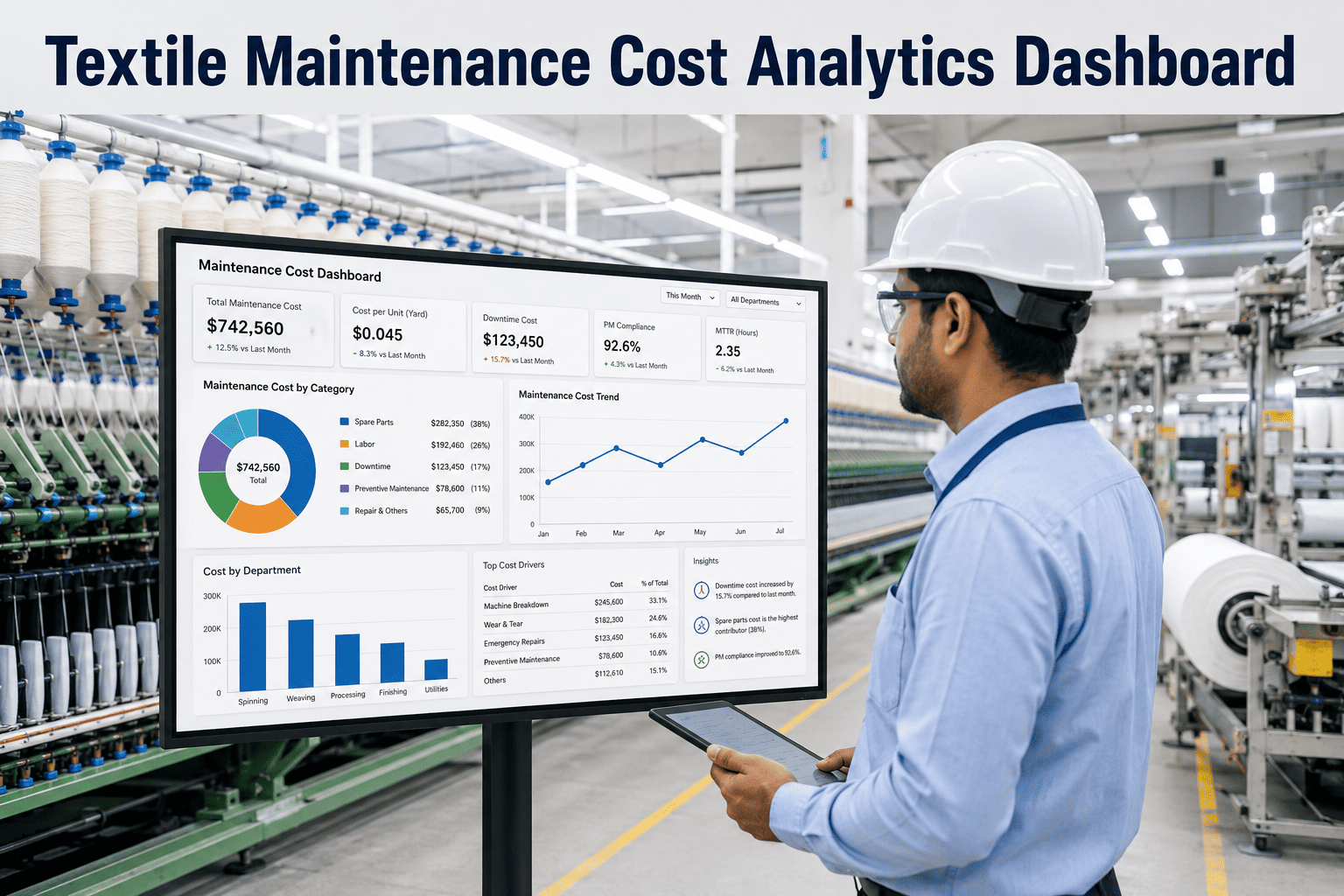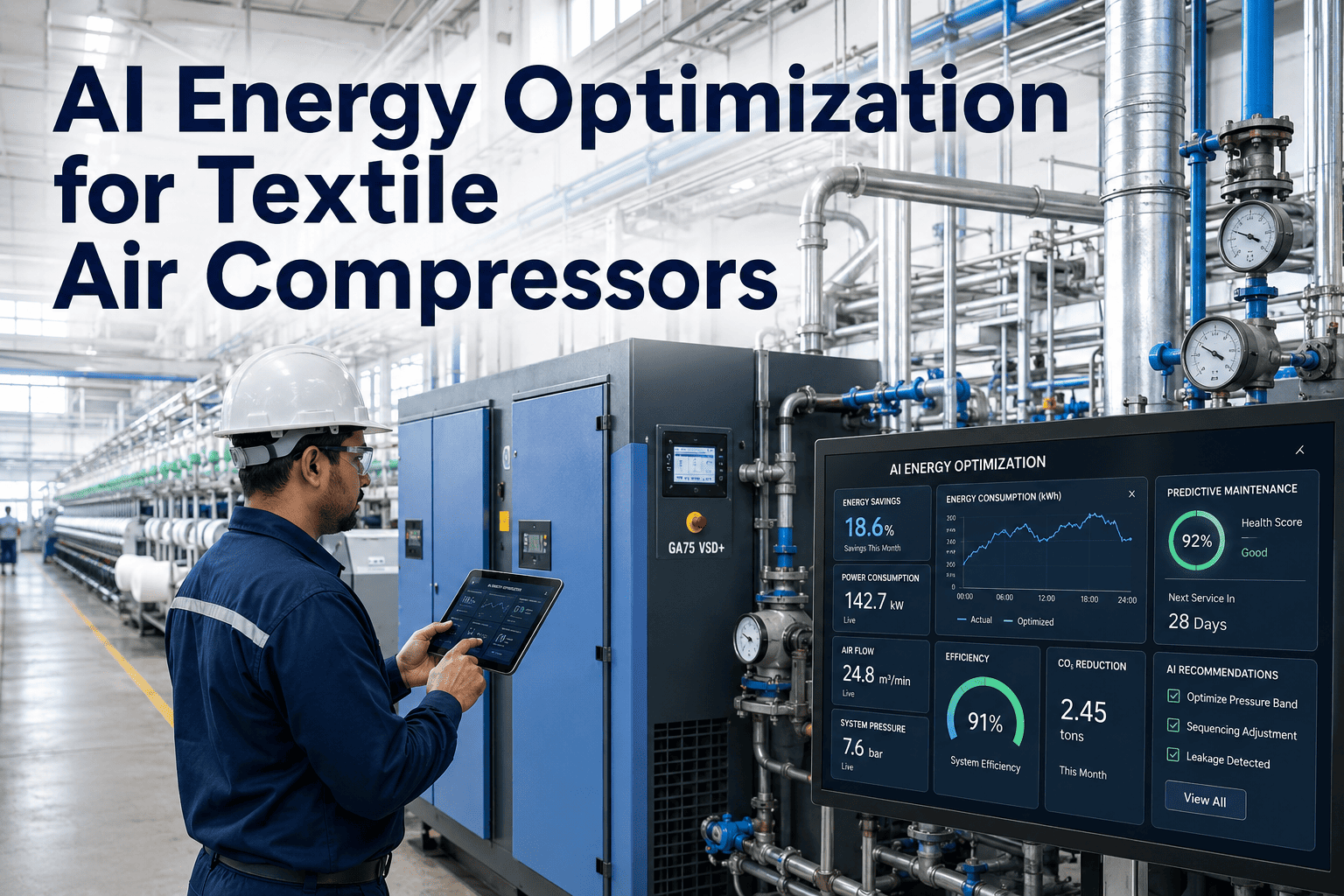
Compressed air systems are the backbone of textile manufacturing, powering pneumatic looms, spinning frames, and material handling equipment. In a typical textile mill, compressors account for up to 30% of total energy consumption, yet they are often the most neglected asset when it comes to proactive maintenance. Unplanned compressor failures can halt entire production lines, leading to costly downtime, missed delivery deadlines, and significant energy waste. Traditional reactive maintenance approaches are no longer sufficient in today's competitive landscape. Textile manufacturers are turning to AI-driven predictive maintenance to monitor compressor health in real time, analyze pressure fluctuations, and schedule repairs before failures occur. This shift not only reduces downtime but also extends equipment lifespan and lowers energy costs. By leveraging advanced analytics and automated work orders, mills can transform their maintenance operations from a cost center into a strategic advantage. Book a Demo to see how predictive maintenance can revolutionize your textile compressor management.
Stop Compressor Failures Before They Stop Production
Discover how AI predictive maintenance keeps your textile compressors running 24/7. Reduce downtime by 40% and energy costs by 25%.
40%
Reduction in unplanned downtime
25%
Lower energy consumption
60%
Fewer emergency work orders
3x
Extended compressor lifespan
Real-Time Pressure Analytics for Early Detection
Pressure fluctuations are the earliest indicators of compressor health issues. Our AI system analyzes pressure data from sensors across your compressed air network, detecting anomalies such as gradual pressure drops, rapid cycling, or excessive dew point variations. These patterns often precede mechanical failures like valve leaks, bearing wear, or separator blockages. By catching these signs days or even weeks in advance, maintenance teams can intervene during planned shutdowns rather than emergency breakdowns. The system correlates pressure data with temperature, vibration, and current draw to build a comprehensive health profile for each compressor. This multi-dimensional analysis reduces false alarms and provides actionable insights. For instance, a gradual pressure drop combined with increased motor current may indicate a failing intake filter, while rapid cycling points to a faulty unloader valve. With this level of granularity, textile mills can prioritize maintenance tasks based on actual risk, not arbitrary schedules.
Key Benefits for Textile Mills
Reduced Energy Costs
Optimized compressor operation cuts energy waste from leaks, inefficient cycling, and over-pressurization. Typical savings of 15-25% on compressed air energy bills.
Extended Equipment Life
Proactive maintenance prevents catastrophic failures and reduces wear on critical components like bearings, seals, and valves, extending compressor life by up to 3x.
Improved Production Reliability
Uninterrupted compressed air supply ensures looms, spindles, and conveyors operate at peak efficiency, reducing production stoppages and improving OEE.
Streamlined Work Order Management
Automated work orders generated from predictive alerts ensure maintenance tasks are assigned, tracked, and completed on time, eliminating manual paperwork.
Transform Your Maintenance Strategy Today
Move from reactive repairs to predictive precision. Our AI platform integrates with your existing CMMS to deliver real-time compressor insights.
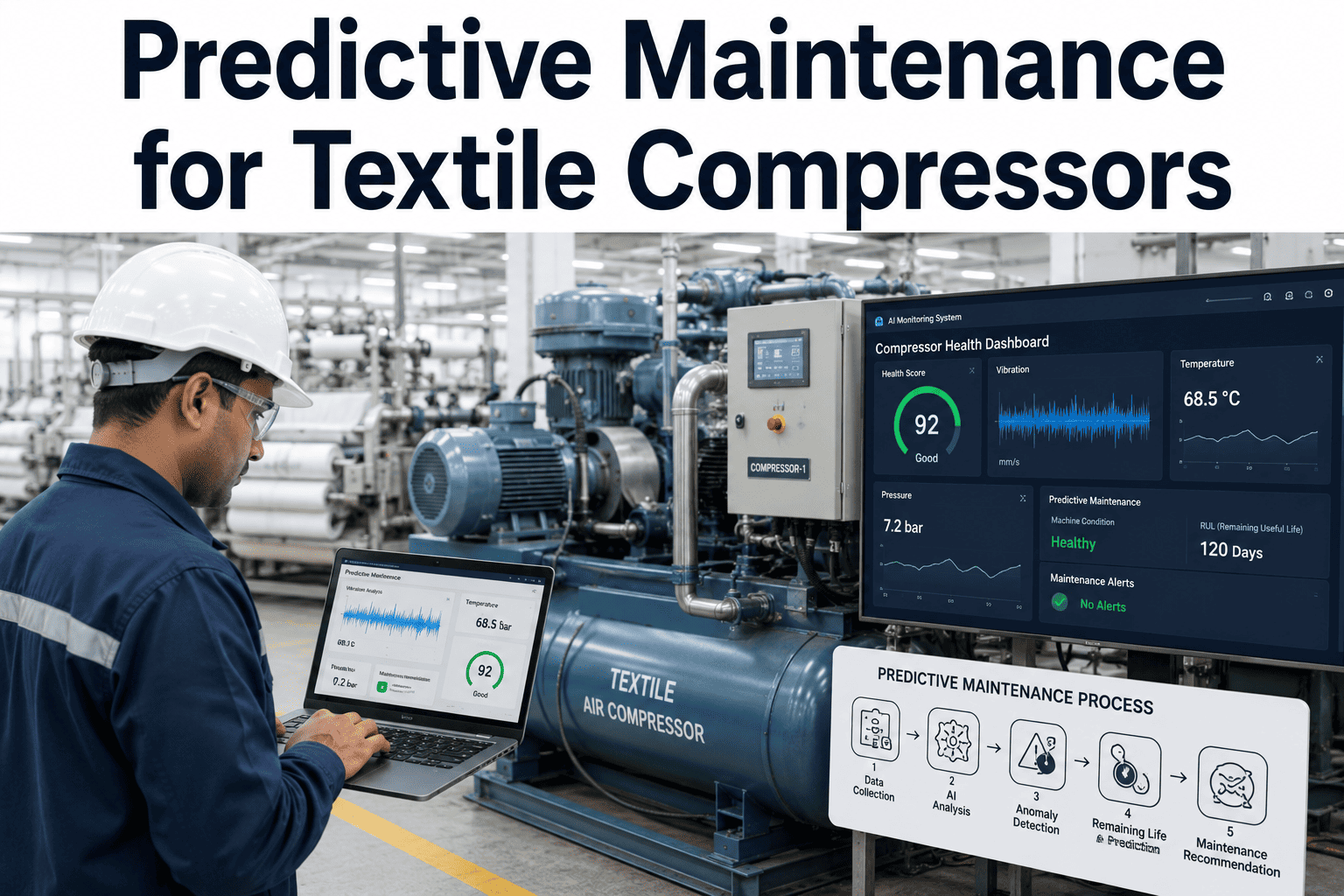
How Predictive Maintenance Works in Your Mill
Sensor Installation and Data Collection
Wireless sensors are installed on each compressor to monitor pressure, temperature, vibration, and power consumption. Data is streamed to the cloud every 10 seconds, providing a continuous stream of operational information.
AI Model Training and Baseline Creation
Machine learning algorithms analyze historical data to establish normal operating baselines for each compressor. The model learns typical pressure profiles, load cycles, and energy consumption patterns specific to your mill.
Anomaly Detection and Alert Generation
When real-time data deviates from the baseline by a predefined threshold, the system generates an alert. Alerts are categorized by severity (low, medium, high) and include diagnostic information to guide maintenance actions.
Automated Work Order Creation
High-severity alerts automatically create work orders in your CMMS. The work order includes the compressor ID, anomaly description, recommended actions, and priority level. Technicians receive notifications on their mobile devices.
Continuous Improvement and Reporting
After each maintenance event, the system updates its model with the outcome, improving future predictions. Monthly reports provide insights on compressor health trends, energy savings, and maintenance effectiveness.
Compressor Failure Modes and Predictive Indicators
| Failure Mode | Predictive Indicator | Detection Method | Lead Time |
|---|---|---|---|
| Bearing Wear | Increased vibration amplitude | Vibration analysis | 2-4 weeks |
| Valve Leakage | Gradual pressure drop | Pressure trend monitoring | 1-3 weeks |
| Intake Filter Clog | Higher motor current | Power consumption analysis | 1-2 weeks |
| Unloader Valve Failure | Rapid pressure cycling | Pressure pattern recognition | 3-7 days |
| Separator Blockage | Increased differential pressure | Differential pressure sensors | 1-2 weeks |
| Cooling System Failure | Rising discharge temperature | Temperature trend analysis | 2-5 days |
Frequently Asked Questions
How does predictive maintenance reduce energy costs for textile compressors?
Predictive maintenance identifies inefficiencies such as leaks, clogged filters, and malfunctioning controls that cause compressors to work harder than necessary. By addressing these issues proactively, mills can reduce energy consumption by 15-25%. For example, a single 1/4-inch leak in a compressed air line can cost over $8,000 per year in wasted energy. Our system detects such leaks through pressure decay analysis and alerts maintenance teams to repair them promptly. Additionally, optimizing load/unload cycles prevents compressors from running at full capacity during low-demand periods. Book a Demo to see how our energy analytics module can cut your utility bills.
Can the system integrate with our existing CMMS or ERP?
Yes, our predictive maintenance platform is designed for seamless integration with leading CMMS and ERP systems such as SAP, Oracle, and Maintenance Connection. We use standard APIs and webhooks to synchronize asset data, work orders, and maintenance histories. Integration ensures that predictive alerts automatically generate work orders in your existing system, eliminating duplicate data entry and streamlining workflows. For mills without a CMMS, we offer a built-in work order management module that can be used standalone or as a stepping stone to a full CMMS implementation. Book a Demo to discuss your specific integration requirements.
What types of sensors are required and how are they installed?
We use industrial-grade wireless sensors that measure pressure, temperature, vibration, and power consumption. Installation is non-invasive and typically takes less than two hours per compressor. Sensors are mounted on the compressor discharge line, air receiver tank, and motor housing using magnetic brackets or adhesive mounts. They communicate via LoRaWAN or Wi-Fi to a local gateway, which sends data to the cloud. No hardwiring or electrical modifications are needed, making the system safe and easy to deploy across multiple compressors. Each sensor has a battery life of 3-5 years, ensuring minimal maintenance. Book a Demo to learn about our sensor packages and installation process.
How accurate are the predictive alerts? Will we get too many false alarms?
Our AI models are trained on millions of data points from textile mills worldwide, achieving a 92% anomaly detection rate with a false alarm rate below 5%. The system uses adaptive thresholds that adjust to seasonal production changes, ensuring alerts are relevant and actionable. For example, during summer months when ambient temperatures are higher, the system automatically recalibrates baseline temperatures to avoid nuisance alarms. Each alert includes a confidence score and diagnostic details, so maintenance teams can prioritize responses. Over time, the model becomes more accurate as it learns the specific behavior of your compressors. Book a Demo to see our accuracy metrics and case studies.
What is the typical ROI for implementing predictive maintenance on textile compressors?
Most textile mills achieve a full return on investment within 6 to 12 months. The ROI comes from three primary sources: reduced energy costs (15-25% savings), decreased unplanned downtime (40-60% reduction), and extended compressor lifespan (2-3x longer). For a mid-sized mill with 10 compressors, annual savings typically range from $150,000 to $300,000. Additionally, fewer emergency repairs reduce overtime labor costs and avoid expensive rush orders for replacement parts. Our platform provides a built-in ROI calculator that tracks savings in real time, so you can see the financial impact month over month. Book a Demo to get a personalized ROI estimate for your facility.
Ready to Eliminate Compressor Downtime?
Join hundreds of textile mills using AI predictive maintenance to optimize compressor performance and reduce costs. Start your transformation today.