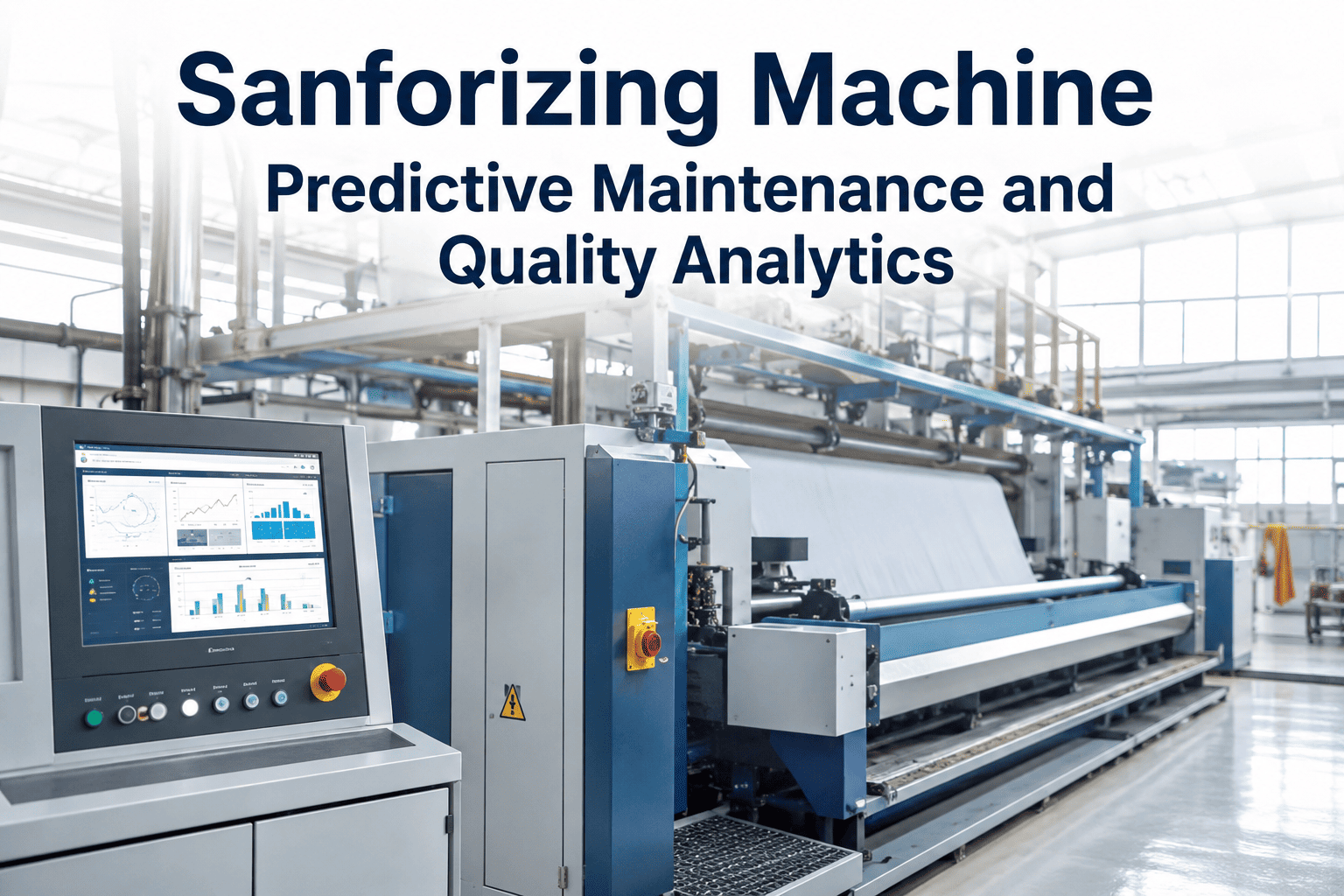
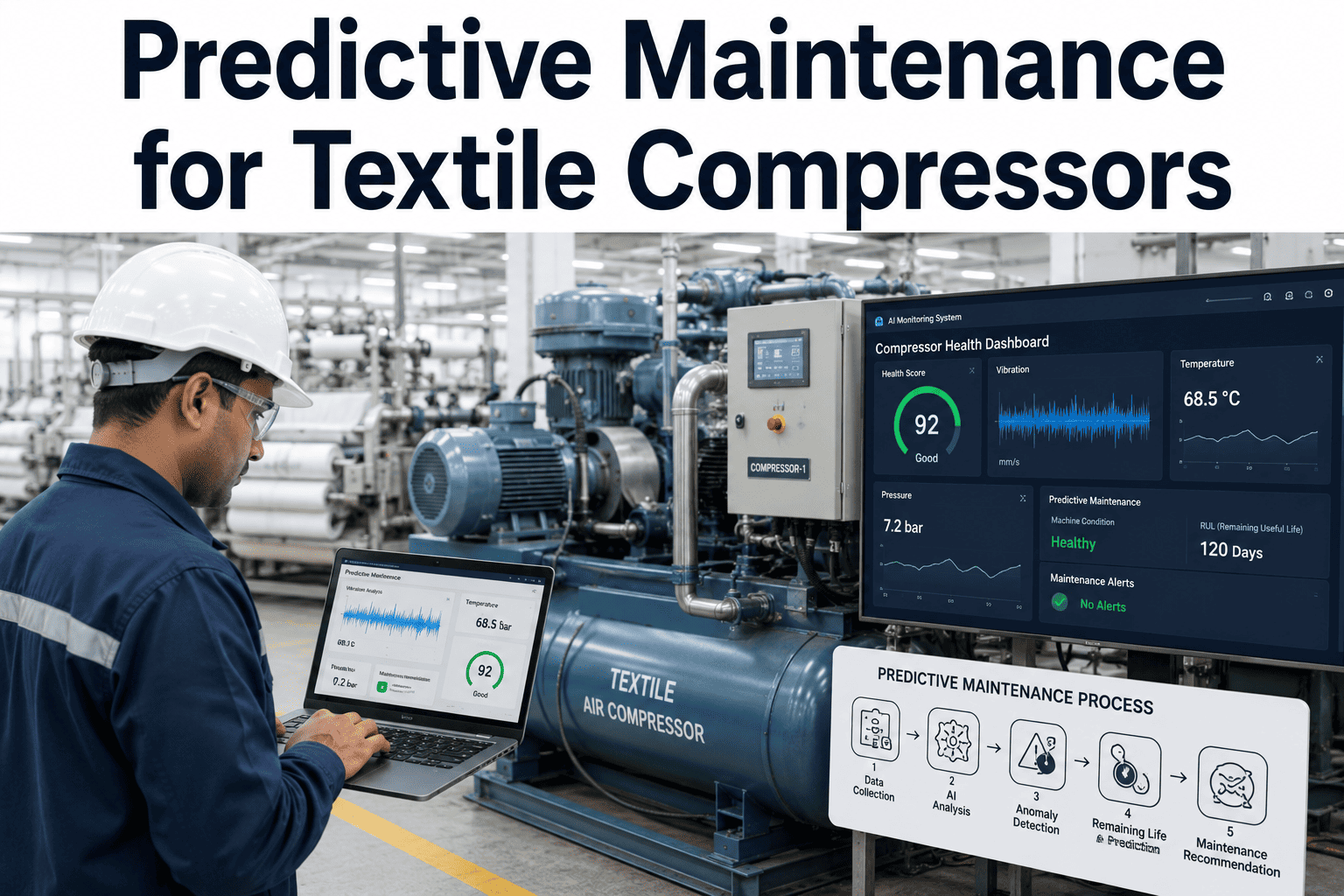
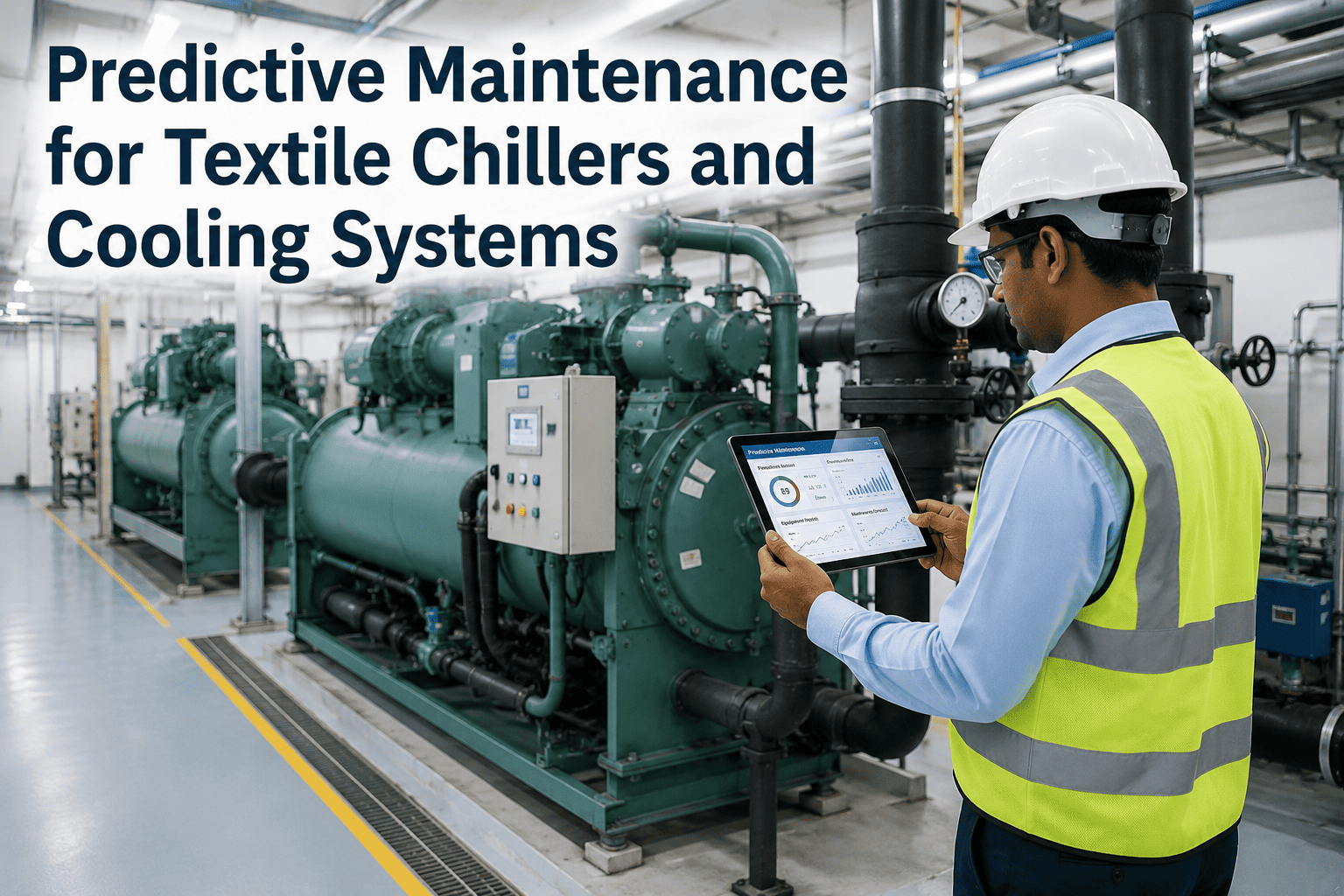
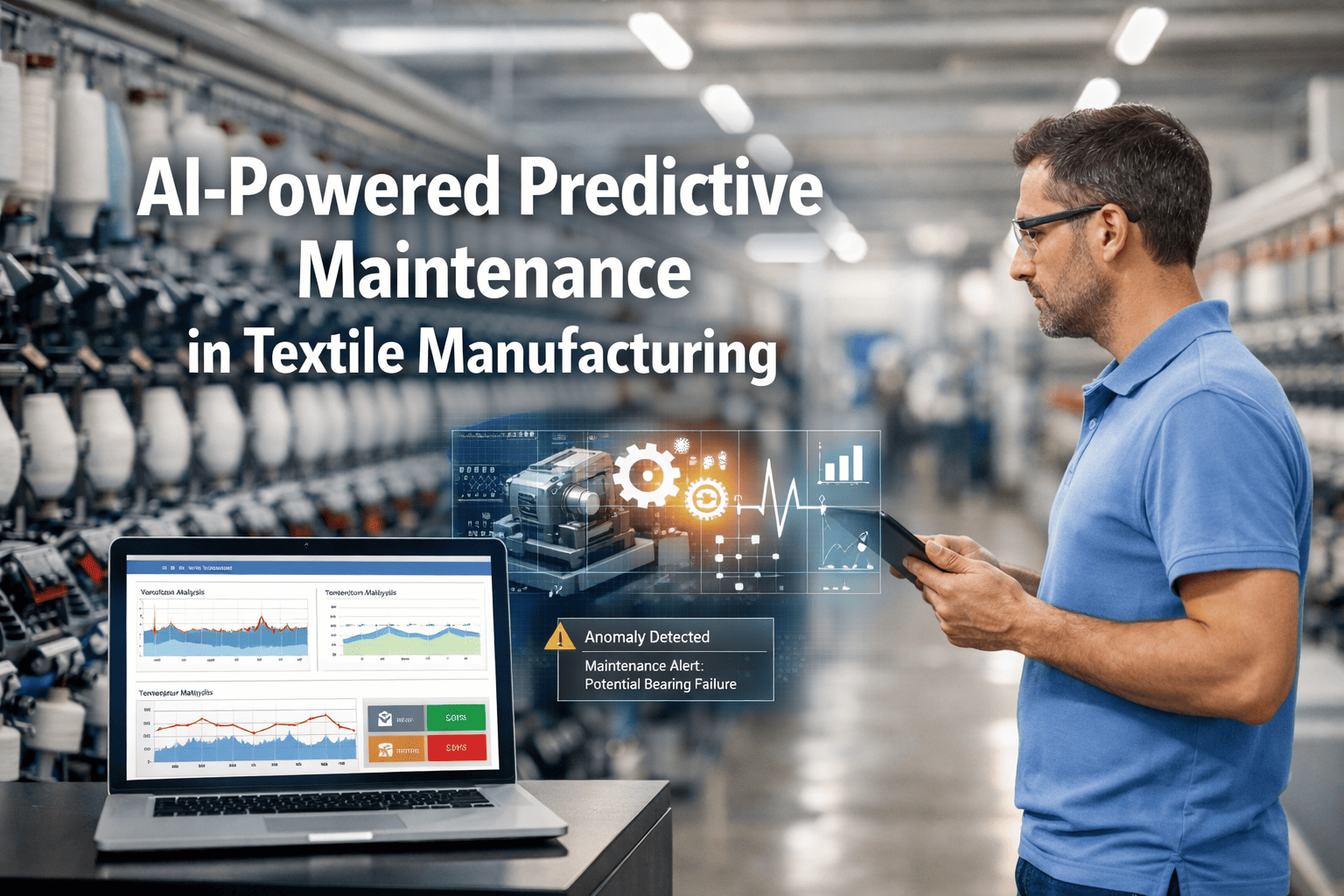
A ring spinning machine at a mid-size textile mill ran with a developing bearing fault for 22 days before it seized — halting three connected looms, triggering $38,000 in emergency repairs, and losing 4,100 meters of production. The vibration signature was visible in the data the entire time. No one was looking. Unplanned downtime in textile manufacturing costs mills $10,000–$50,000 per hour — and 80% of those failures are predictable with the right monitoring in place. If your facility is still running on reactive maintenance, book a demo with iFactory and see how AI analytics catches failures before they cost you.
How AI-Based Predictive Analytics Reduces Textile Equipment Failures
Textile mills running reactive maintenance lose 15% of production annually to avoidable machine failures. AI-powered predictive analytics changes that — flagging faults weeks before breakdown, slashing emergency costs, and keeping looms, spinners, and dyeing machines running at peak output.
Book a Free DemoWhy Textile Machines Keep Failing — And Why It's Not Bad Luck
Most textile equipment failures are not sudden events. They are slow-building degradation patterns that go undetected because mills are still relying on calendar-based maintenance and human observation.
30% of all textile maintenance costs go to tasks that were either done too early or too late — scheduled by the calendar, not by actual machine condition.
Vibration spikes, thermal drift, and pressure deviations in spinning and weaving machines go untracked between manual inspections — the window where failures develop.
Emergency callouts cost 3–4x more than planned interventions for the same fault. Textile mills pay this premium repeatedly because the warning signs were never captured.
One failed loom can halt downstream dyeing and finishing operations. A single unplanned event cascades — affecting delivery schedules, order fulfillment, and customer contracts.
What Happens in the 30 Days Before a Textile Machine Fails
AI doesn't predict the future — it reads the present more precisely than any human inspection can. Here's what the data looks like before a typical spindle motor failure:
Vibration amplitude increases 4–6% above rolling baseline. Invisible to walkthroughs. AI anomaly score: Low. Flagged for monitoring.
Low RiskMotor current draw rises 8%. Bearing temperature deviates 11°C from normal operating envelope. Pattern matches early bearing wear signature.
Moderate Risk — Alert GeneratedSpindle speed consistency drops. Output quality variance increases 12%. Failure probability score crosses 65%. Work order auto-generated. Maintenance scheduled.
High Risk — Work Order IssuedTechnician replaces bearing during scheduled low-production window. Total cost: $2,800. Without AI monitoring, this same fault costs $35,000–$50,000 at breakdown.
Resolved — $47,200 SavedThe Data Your Machines Are Producing That Nobody Is Reading
Textile equipment generates continuous failure signals. AI captures what periodic maintenance schedules completely miss.
- Spindle vibration frequency & amplitude trends
- Traveler wear rate via current anomaly patterns
- Drafting roller bearing temperature deviation
- Motor power factor degradation over 14-day window
- Cam & crank mechanism vibration signature drift
- Warp beam tension irregularity patterns
- Shed formation timing deviation — warp breakage predictor
- Rapier head motor current draw anomalies
- Pump impeller wear via pressure differential trends
- Heating element resistance drift — bath temperature predictor
- Agitator motor vibration for bearing wear detection
- Valve actuator torque anomaly — chemical dosing integrity
- Needle cylinder vibration — needle breakage precursor
- Yarn feeder tension variance and feed rate anomalies
- Carriage drive belt wear — tension loss detection
- Sinker cam wear via loop length consistency monitoring
See Which of Your Machines Are Already at Risk
iFactory's AI analyzes your textile equipment profile and shows failure probability scores across your entire machine register — before the next breakdown happens. Book a 30-minute demo with your asset list and get a live risk assessment.
What Textile Mills Gain After Deploying AI Predictive Monitoring
Outcomes from facilities that switched from reactive maintenance programs to AI-powered condition monitoring.
Mills monitoring spindles, looms, and dyeing equipment in real time report 20–45% reduction in unplanned production stoppages within the first year.
AI-driven condition-based scheduling eliminates unnecessary preventive tasks while catching real faults early — shifting maintenance spend from reactive to planned.
Degrading motors and pumps draw excess power before they fail. AI catches efficiency loss at 3–5% deviation — recovering energy spend before it compounds.
Catching faults early prevents catastrophic failures that destroy components permanently. Planned micro-interventions extend machine life by 30–40% on average.
Equipment running outside normal performance envelopes produces quality variance. AI monitoring keeps machines in spec — directly reducing defect rates and material waste.
Between avoided emergency repairs, energy recovery, and reduced waste, most textile facilities reach full investment payback within a single production season.
Reactive Maintenance vs. AI Predictive Monitoring — In Your Facility
Eight real differences between how textile mills operate today versus how they operate with iFactory running in the background.
iFactory in Your Textile Facility — From Sensors to Saved Production
A four-stage flow from IoT data capture to factory floor intervention — with no manual data entry, no new hires, and no facility shutdown during setup.
IoT sensors for vibration, temperature, current, and pressure attach to spindles, loom drives, pumps, and motors. iFactory integrates with existing SCADA and PLC systems or deploys standalone sensors — no production shutdown required.
Machine learning builds a normal operating envelope for each asset — factoring in shift patterns, load variation, and equipment age. Any deviation from that baseline generates an anomaly score. A spindle bearing drifting 9% outside its 21-day baseline gets flagged automatically.
When failure probability crosses defined thresholds, iFactory generates a pre-populated work order — asset ID, fault type, recommended action, and urgency level. Critical alerts escalate to the production manager immediately. Nothing gets missed between shifts.
With 2–5 weeks of advance warning, your maintenance team books the right technician, orders parts ahead of arrival, and schedules the repair during the next planned maintenance window — not during a 3am production crisis. Same fault. One-tenth the cost.
Your Next Machine Failure Is Already Developing. Catch It First.
iFactory deploys AI-powered predictive monitoring across your textile facility in 7–14 days. Pre-built machine templates for spinning, weaving, knitting, and dyeing equipment — plus a dedicated onboarding team — ensure you are live before the next failure hits your production schedule.