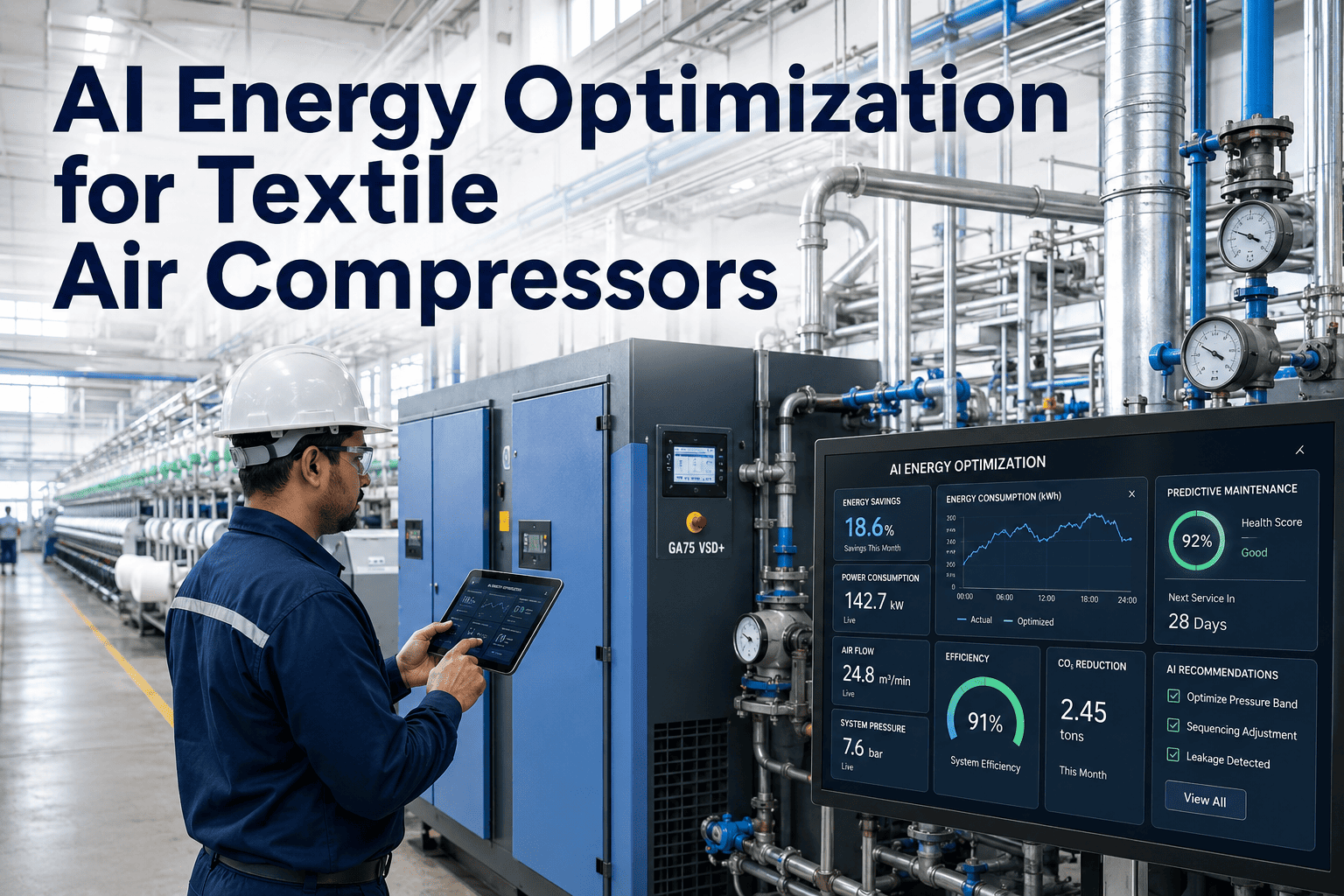
Compressed air is often called the most expensive utility in a textile plant because so little of the energy spent generating it ever reaches useful work — air jet looms, pneumatic actuators, and cleaning guns consume only a fraction of what the compressor room produces, and the rest disappears through leaking fittings, worn hoses, and open blow-off points that nobody has walked past with a listening device in months. A single quarter-inch leak running continuously can cost a plant thousands of dollars a year in wasted electricity, and most facilities carry dozens of leaks at any given time without knowing it. iFactory's AI compressed air analytics platform continuously watches pressure, flow, and compressor load data to flag leaks and inefficiencies as they develop, instead of waiting for the annual ultrasonic leak survey to find them. Book a Demo to see how much compressed air your plant is currently paying for and never using.
COMPRESSED AIR · LEAK DETECTION · AI ANALYTICS · TEXTILE UTILITIES
Somewhere in Your Compressed Air Line Right Now, a Leak Is Running a Meter You Cannot See
iFactory's AI analytics platform monitors pressure trends, flow patterns, and compressor load continuously to find compressed air leaks days after they start, not months later at the next manual survey.
THE COST OF SILENCE
What an Undetected Compressed Air Leak Actually Costs Over a Year
Compressed air is generated at roughly seven to eight times the energy cost of the equivalent electrical work, which is why even small, seemingly harmless leaks add up to a meaningful share of a plant's total energy bill when left unaddressed.
20-30%
Share of total compressed air generated at a typical textile plant that is lost to leaks rather than used productively
$1,200+
Estimated annual electricity cost of a single continuously running quarter-inch leak at typical industrial air pressure
30-50
Typical number of active leaks found during a first-time ultrasonic leak survey at a mid-sized textile plant
1x / Year
Frequency most plants perform a formal leak survey, leaving months of unnoticed waste between each check
DETECTION CHECKLIST
Six Signals iFactory's AI Analyzes to Catch Leaks Between Manual Surveys
Because leaks develop gradually and often start small, catching them early requires watching several data signals together rather than relying on a single pressure reading. The checklist below outlines what the platform continuously evaluates across the compressed air system.
1
Off-hours baseline consumption — air demand during nights, weekends, and planned shutdowns should approach zero; any sustained draw signals a leak
2
Compressor load-to-unload cycling frequency — leaks force compressors to cycle more often than production demand alone would require
3
Pressure drop across distribution zones — an unexplained pressure differential between the compressor room and a production zone points to a leak along that path
4
Flow versus scheduled production correlation — air flow that does not track the production schedule indicates consumption unrelated to actual work
5
Specific power trend of each compressor — rising kW per unit of air delivered often signals both leaks and compressor inefficiency together
6
Zone-level consumption drift over time — gradual increases in a specific department's baseline usage are tracked and flagged before they become large losses
Your Compressors Are Working Overtime for Leaks You Have Never Seen and Cannot Hear Over the Factory Floor
iFactory's AI analytics platform finds the pressure and flow patterns that only a leak produces, and tells your maintenance team exactly which zone to check first. See it running on your own compressed air data.
CASE SNAPSHOT
A Typical Leak Detection Timeline From First Alert to Repair
The example below reflects the typical sequence iFactory's platform follows once an anomaly is first detected in a plant's compressed air network, from the earliest signal through confirmed repair and savings verification.
1
Anomaly Flagged
Off-hours consumption in a finishing department begins trending 18 percent above its established baseline over three consecutive nights, triggering an automatic alert to the maintenance team.
2
Zone Isolated
Pressure differential analysis narrows the likely leak location to a specific header segment feeding three machines, saving the maintenance technician from having to survey the entire department.
3
Leak Confirmed and Repaired
A technician performs a targeted ultrasonic check on the flagged segment, finds a failed quick-connect fitting, and replaces it during the next scheduled stoppage.
4
Savings Verified
Off-hours baseline consumption for the zone is monitored for the following week to confirm it has returned to its expected level, and the annualized savings figure is logged automatically.
MANUAL SURVEY VS CONTINUOUS AI MONITORING
How Detection Speed Changes With Continuous Monitoring
Scroll the table sideways on smaller screens to see how leak detection timing and coverage differ between an annual manual survey and iFactory's continuous approach.
| Factor | Annual Manual Survey | iFactory AI Monitoring |
|---|
| Detection Frequency | Once or twice per year | Continuous, 24/7 |
| Average Time to Detect | Up to 12 months | 3-7 days |
| Coverage | Walked sections only | Entire monitored network |
| Cost Tracking | Estimated after the fact | Live per-zone consumption |
FREQUENTLY ASKED QUESTIONS
Questions Plants Ask Before Deploying AI Leak Detection
Do we need to install new flow meters at every machine, or can the system work with existing compressor room instrumentation?
iFactory typically starts with the flow and pressure instrumentation already present at the compressor room and major distribution headers, which is often sufficient to detect zone-level leaks and establish accurate baselines for each department. For plants that want machine-level granularity, additional flow meters can be added at specific points, but this is usually a second phase rather than a requirement to get started, so most plants see value from day one using existing infrastructure.
Contact our support team for an assessment of your current instrumentation.
How does the AI distinguish a genuine leak from normal seasonal or production volume changes in air demand?
The platform builds a baseline for each zone that accounts for production schedule, shift pattern, and seasonal factors such as pneumatic tool usage changes, so a leak alert is only triggered when consumption deviates from what the schedule and history would predict rather than from a fixed number. Off-hours monitoring is particularly reliable for this purpose because production-driven demand should be near zero during shutdown periods, making any sustained draw during those windows a strong and specific leak signal.
Book a Demo to see how baseline modeling works for your production calendar.
Can the system tell maintenance teams approximately where a leak is located, or just that one exists somewhere?
iFactory narrows the likely leak location to a specific distribution zone or header segment using pressure differential and flow analysis across the monitored points in the network, which significantly reduces the area a technician needs to physically inspect with an ultrasonic detector. While the system does not pinpoint the exact fitting or hose without a manual confirmation step, directing the search to a specific segment instead of an entire department cuts investigation time substantially.
Contact our support team to see a sample leak location report.
What kind of return on investment should we expect, and how quickly does the platform pay for itself?
Most textile plants recover leaks representing 15 to 25 percent of total compressed air generation within the first few months of continuous monitoring, and the electricity savings from repairing those leaks typically cover the cost of the platform well within the first year. Beyond the initial leak cleanup, ongoing monitoring continues to catch new leaks as they develop, meaning the compressed air waste that would otherwise accumulate silently between annual surveys is instead addressed continuously.
Book a Demo for a savings estimate based on your compressor capacity and current electricity rate.
Every Month Without Continuous Monitoring Is Another Month of Paying to Compress Air That Never Does a Day of Work
iFactory's AI compressed air analytics platform finds leaks in days instead of the months it takes to reach the next scheduled survey. Book a demo and see the waste in your own plant's data.