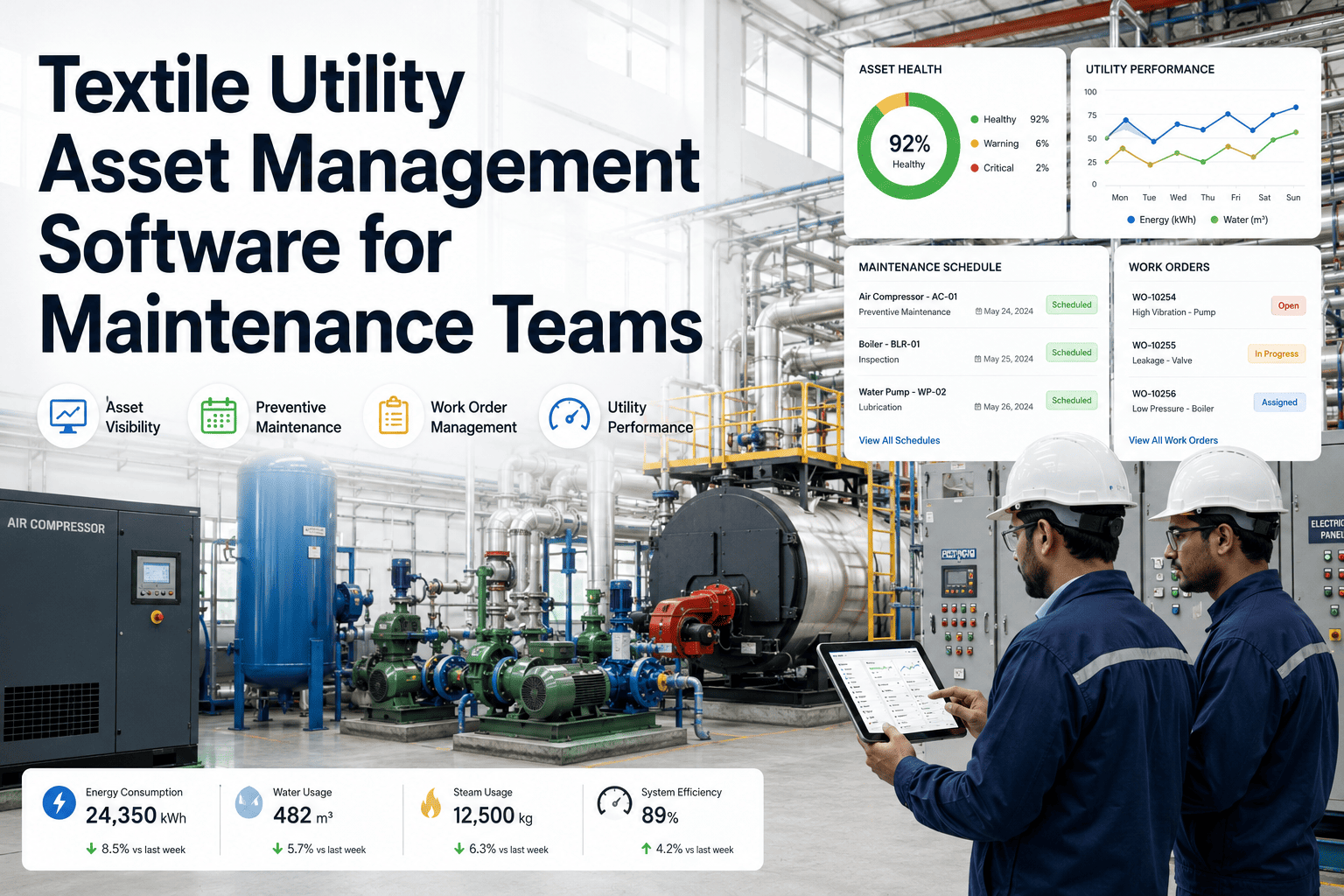
Ask a maintenance manager at most textile plants to pull up the complete service history, spare parts status, and inspection record for a single boiler, compressor, or chiller, and the answer usually lives across a paper logbook, a spreadsheet someone maintains from memory, and whatever the senior technician happens to remember from the last breakdown. Utility assets — boilers, compressors, chillers, cooling towers, and the electrical infrastructure feeding them — are among the most critical and most expensive equipment in the plant, yet they are frequently the least systematically tracked, because they sit outside the production line and outside the attention of daily shop floor reviews. iFactory's utility asset management platform brings every utility asset, work order, inspection, and spare part into one connected system, so maintenance teams always know the condition, history, and readiness of the equipment the entire plant depends on. Book a Demo to see your utility assets organized in one place for the first time.
Your Production Line Has a Maintenance System — Does Your Boiler Room Have One Too?
iFactory's utility asset management platform tracks every boiler, compressor, chiller, and utility asset in one system, with complete work order history, inspection records, and spare parts visibility.
Why Utility Equipment Ends Up the Least Tracked Assets in the Plant
Utility assets keep every production line running, yet they are commonly managed with far less rigor than the production machinery they support. The figures below reflect what iFactory typically finds when assessing utility asset management maturity at textile plants.
Four Stages of Utility Asset Management iFactory Brings Together
Effective utility asset management is not a single feature but a connected lifecycle, where each stage feeds information into the next so maintenance decisions are made with complete context rather than in isolation.
Asset Registry and Documentation
Every boiler, compressor, chiller, transformer, and utility asset is registered with its specifications, installation date, warranty status, and complete maintenance history in one searchable record.
Scheduled Inspection and Compliance Tracking
Statutory inspection requirements, preventive maintenance intervals, and safety compliance checks are scheduled automatically and tracked to completion with digital records replacing paper checklists.
Work Order Management
Breakdown, preventive, and inspection-triggered work orders are created, assigned, and tracked to closure, with technician notes and parts used captured against each asset's permanent history.
Spare Parts and Performance History
Critical spares are linked to the specific assets they serve, and performance trends across every recorded work order build a complete picture of each asset's reliability over its lifetime.
A Logbook Cannot Tell You Which Compressor Has Failed Three Times This Year for the Same Reason
iFactory's utility asset management platform connects every inspection, work order, and spare part to the asset it belongs to, so patterns become visible instead of forgotten. See your own utility assets organized.
How Utility Asset Tracking Changes With a Connected System
The comparison below reflects the practical difference maintenance teams report after moving utility asset tracking off paper and spreadsheets into a connected platform.
| Factor | Paper / Spreadsheet Tracking | iFactory Asset Platform |
|---|---|---|
| Maintenance History Access | Scattered, hard to search | Complete history per asset |
| Inspection Compliance | Manually tracked, easy to miss | Automated scheduling and alerts |
| Spare Parts Visibility | Separate from asset records | Linked directly to each asset |
| Recurring Issue Detection | Relies on staff memory | Visible in asset history trends |
| Audit Readiness | Time-consuming to compile | Reports generated on demand |
Outcomes Reported After Deploying Utility Asset Management
The results below reflect sustained improvements measured across textile plants after consolidating utility asset tracking into a single connected platform, measured over a minimum six month period.
Questions Maintenance Teams Ask About Utility Asset Management
Every Utility Asset in Your Plant Has a Story to Tell — Right Now It Is Scattered Across a Logbook, a Memory, and a Filing Cabinet
iFactory's utility asset management platform brings that story together in one connected system your whole maintenance team can rely on. Book a demo and see how it works with your own equipment list.