.jpg)
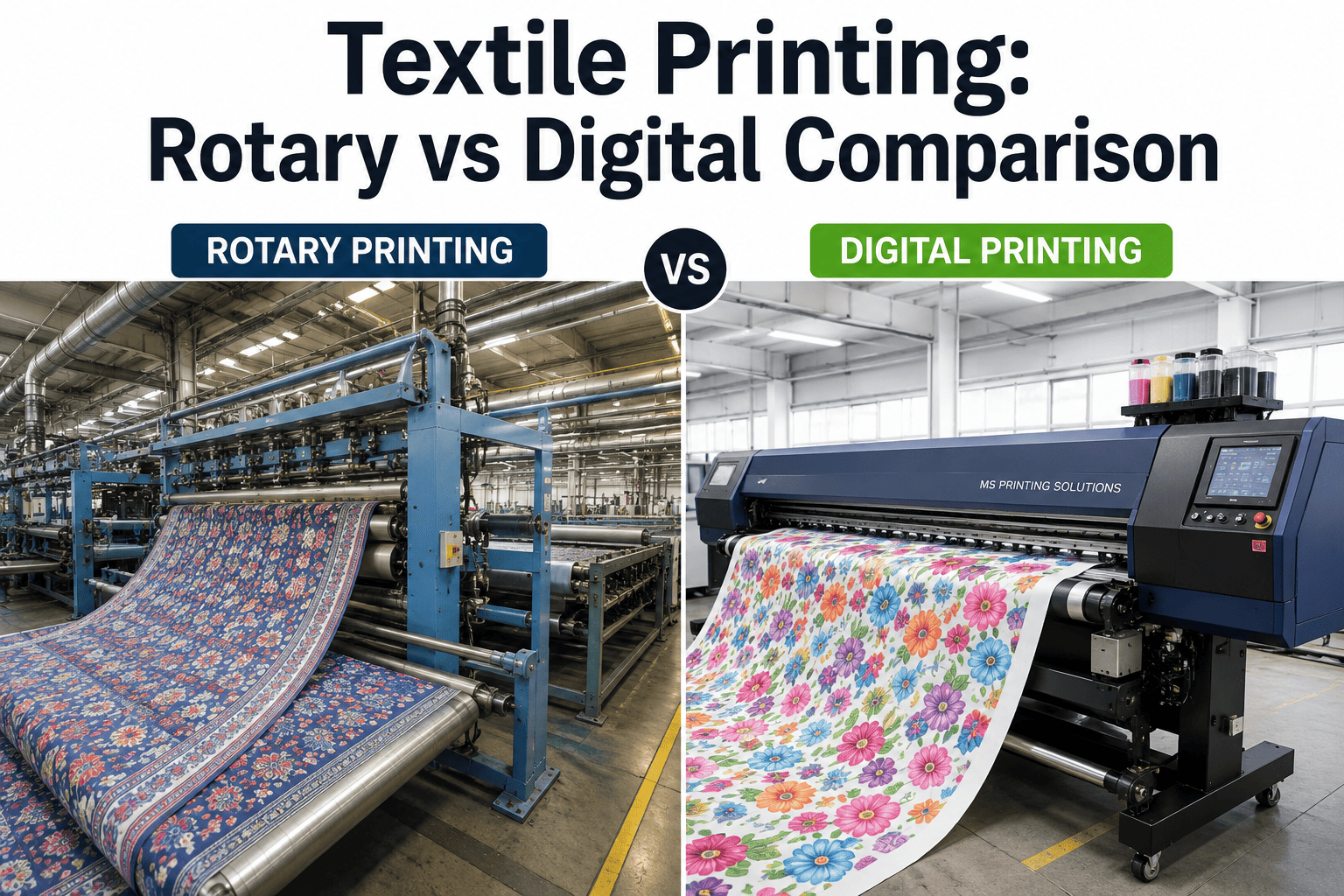
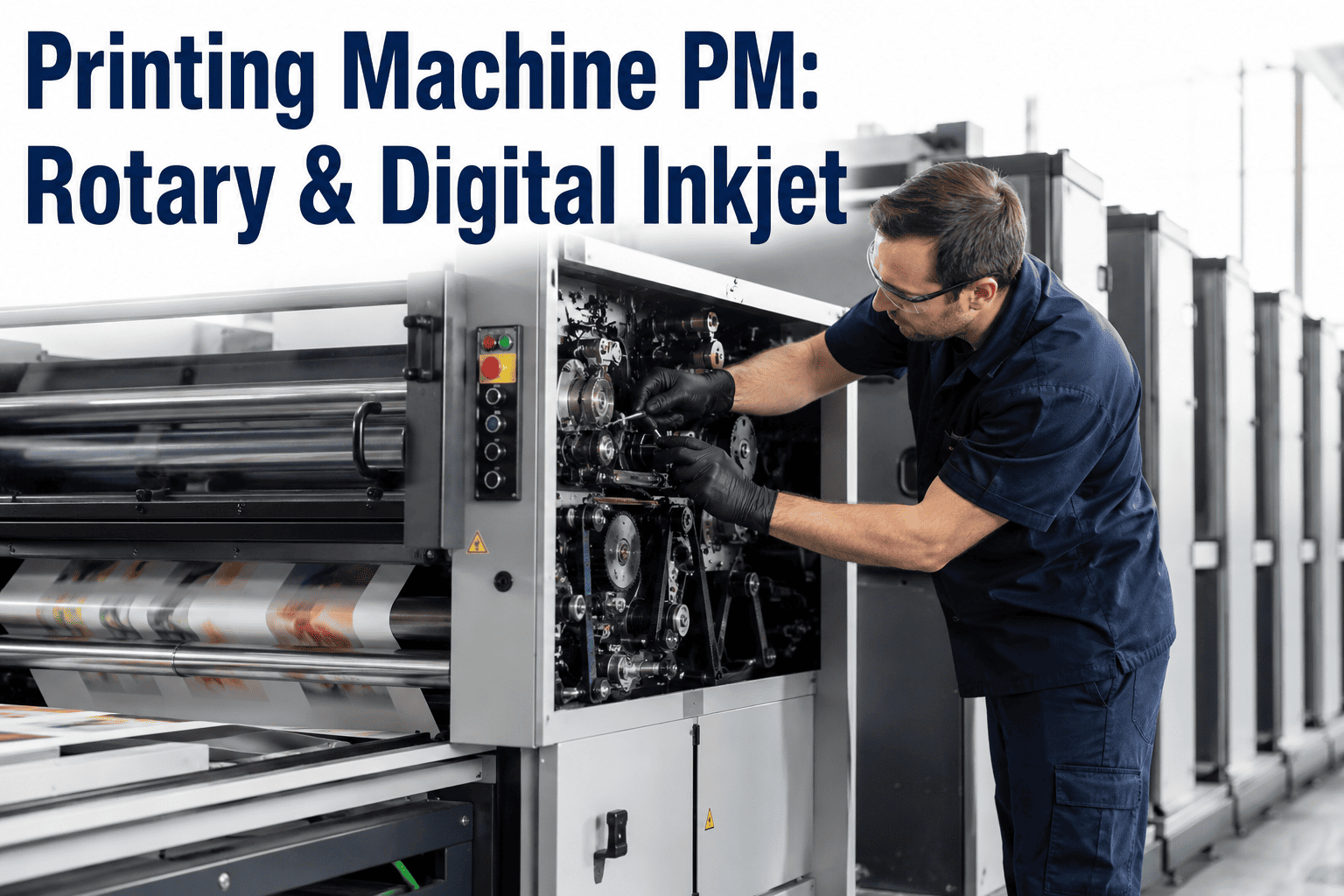
The choice between digital inkjet and rotary screen printing has never been more consequential for textile manufacturers. In 2026, digital textile printing has reached production speeds of 75 meters per minute on single-pass machines, while rotary screen remains the volume champion at 80 to 100 meters per minute. But production speed alone does not determine the right technology. Setup cost, minimum order quantity, color complexity, and sustainability requirements now weigh equally in the decision. This comparison framework helps production managers and facility executives evaluate both technologies across every dimension that affects throughput, cost per meter, and long-term capital efficiency.
Find the Right Print Technology for Your Production Mix
A structured technology assessment evaluates run length distribution, color count, substrate mix, and sustainability targets to recommend the optimal printing configuration for your facility. We analyze your current order book against break-even curves to identify which orders should route to digital and which to rotary, then build a capital roadmap that phases in the right equipment at the right time.
Digital vs. Rotary: Side-by-Side Comparison
Five critical performance dimensions determine which technology fits a given production profile. Each is scored with current 2026 technology benchmarks.
| Dimension | Digital Inkjet | Rotary Screen | Advantage |
|---|---|---|---|
| Production Speed | 35-75 m/min (single-pass); 15-30 m/min (scanning) | 80-100 m/min sustained | Rotary |
| Setup Time | 15-30 minutes (file upload, RIP, calibration) | 3-6 weeks (screen engraving, color matching, strike-off) | Digital |
| Color Capability | 16.7 million colors, CMYK plus spot colors, photorealistic gradients | 8-24 colors per design, limited by number of screens | Digital |
| Minimum Order | 1 meter (no economic penalty for short runs) | 500-3,000 meters minimum to offset screen and setup cost | Digital |
| Cost per Meter at 10,000m | $1.20-2.80/m (ink, energy, maintenance) | $0.60-1.50/m (amortized screen, labor, energy) | Rotary |
Which Technology Wins by Production Scenario
The right choice depends on order profile, not maximum speed. These three common scenarios show how run length and design complexity shift the economic equation.
Fast Fashion and Sample Production
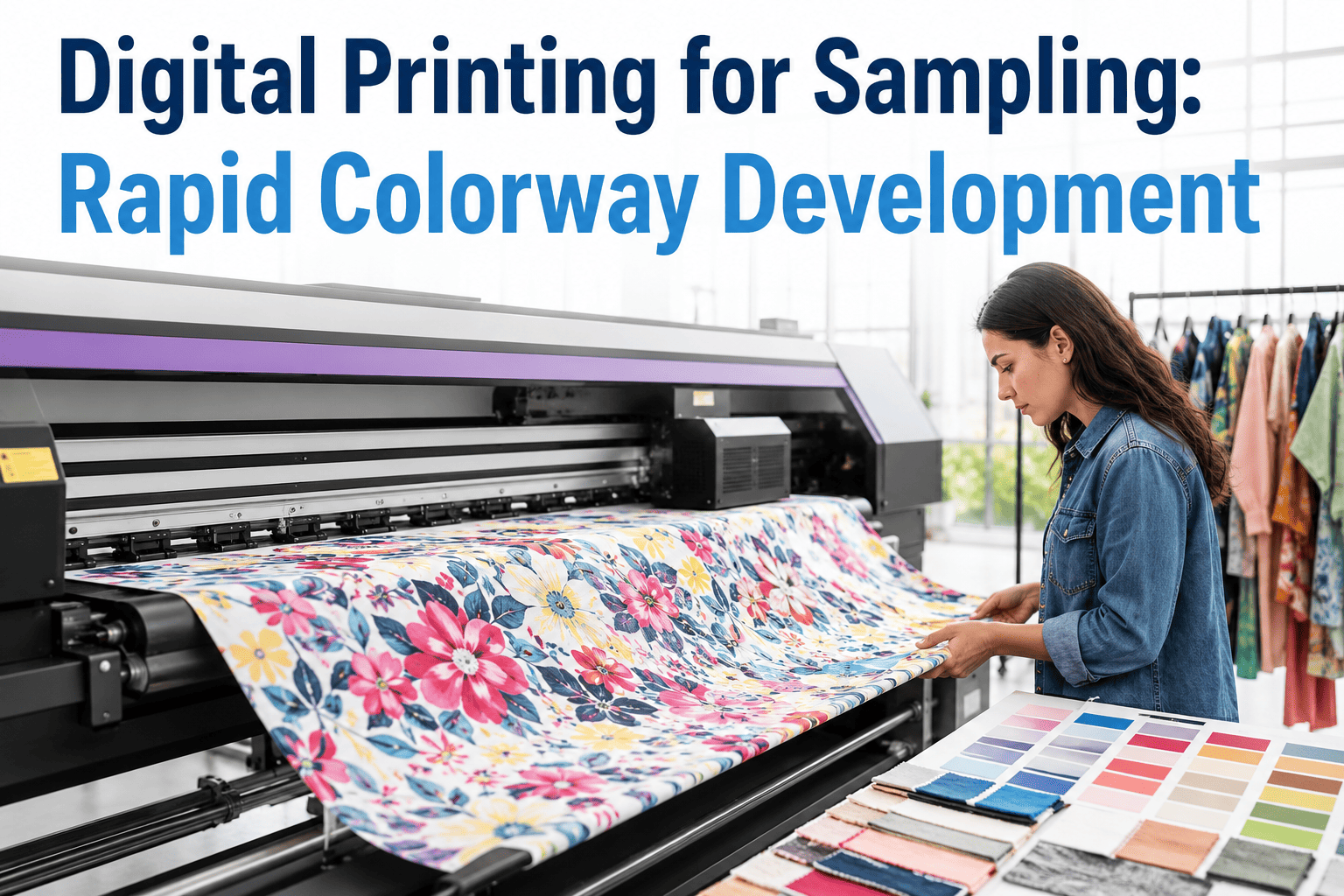
Run lengths under 500 meters, frequent design changes, 6 to 12 colorways per style. Digital eliminates screen costs entirely and reduces time-to-sample from weeks to hours. Setup amortization per meter approaches zero.
Mid-Run Production
Run lengths between 1,000 and 5,000 meters with moderate color counts. Break-even calculation depends on number of screens, design complexity, and local labor rates. Digital single-pass machines increasingly compete in this band.
High-Volume Bulk Orders
Run lengths above 5,000 meters with stable designs and limited colorways. Rotary delivers the lowest cost per meter through high throughput and amortized screen costs. Best for commodity fabrics with repeat orders.
Evaluate Your Production Mix Against Both Technologies
A structured technology assessment maps your order profile against the break-even curves for digital and rotary, identifying immediate cost savings and long-term capital planning opportunities. The analysis accounts for your specific labor rates, ink and screen costs, and design complexity to produce a recommendation calibrated to your facility's economics rather than generic industry averages.
Workflow Comparison: From Design to Finished Fabric
The total production cycle time differs dramatically between technologies. Digital compresses the workflow from weeks to hours by eliminating screen engraving, color separation, and strike-off iterations.
Break-Even Analysis: Where Each Technology Wins on Cost
The economic crossover point between digital and rotary depends on run length, color count, and design complexity. This analysis uses industry benchmarks from the Gherzi study on textile printing economics.
Digital Wins Unambiguously
At run lengths under 1,000 meters, digital printing is 40 to 60 percent cheaper per meter than rotary. Zero screen cost and minimal setup time eliminate the startup overhead that makes short runs uneconomical on rotary.
Decision Depends on Variables
In this band, the break-even point shifts based on number of colors, screen quality, and labor rates. Digital single-pass machines at 75 m/min increasingly compete with rotary in the upper range of this band.
Rotary Remains Cost Leader
For production runs above 5,000 meters per design, rotary screen printing delivers the lowest cost per meter. High throughput and amortized screen costs create an advantage that widens as run length increases.
Frequently Asked Questions
What is the break-even point between digital and rotary screen printing?
Industry research by Gherzi indicates that digital printing is generally more economical for run lengths under 1,200 meters per design. Rotary screen printing becomes more cost-effective above 3,000 meters. Between 1,000 and 3,000 meters, the break-even point depends on design complexity, number of colors, screen costs, and local labor rates. Digital single-pass technology at 75 meters per minute is narrowing this gap significantly.
Can digital textile printing match the print quality of rotary screen?
In 2026, digital printing exceeds rotary in several quality dimensions: photorealistic detail, gradient smoothness, and color count. However, rotary still produces more vibrant solid-color coverage and typically offers superior wash fastness due to thicker ink deposition. For high-end fashion requiring unlimited color palettes and photographic detail, digital is preferred. For workwear, uniform fabrics, and applications demanding maximum durability, rotary maintains an edge.
How do setup costs compare between digital and rotary printing?
Rotary screen printing requires significant upfront investment per design: screen costs range from $50 to $200 per screen depending on mesh count and quality, with each color requiring a separate screen. For a typical 6-color design, screen costs alone can reach $300 to $1,200 plus engraving labor. Digital printing has essentially zero setup cost per design, with only file preparation and RIP processing required. This fundamental difference drives the economic advantage of digital for short runs.
Which technology is more sustainable and environmentally friendly?
Digital textile printing produces 60 to 70 percent less water consumption and 30 to 40 percent less energy usage compared to rotary screen printing. It eliminates screen waste, reduces chemical usage in color matching, and enables on-demand production that minimizes overstock waste. Rotary screen printing has made sustainability improvements through water-based inks and closed-loop wash systems, but digital retains a clear environmental advantage across most metrics.
When does it make sense to invest in both technologies?
Facilities with diverse order profiles increasingly adopt a hybrid model: digital for sampling, short runs, and high-complexity designs under 1,000 meters, and rotary for stable long-run production above 3,000 meters. This configuration maximizes capital efficiency by routing each order to the technology that delivers the lowest cost per meter for its specific run length and complexity profile.
Evaluate Your Print Technology Strategy Against Current ROI Benchmarks
Replace assumption-based technology decisions with data-driven production analysis. Route every order to the right technology and capture the full cost advantage of both digital and rotary printing. Facility teams that run this analysis typically identify 15 to 25 percent of their production volume that could shift to the lower-cost technology, with average savings of $0.30 to $0.60 per meter on re-routed orders.