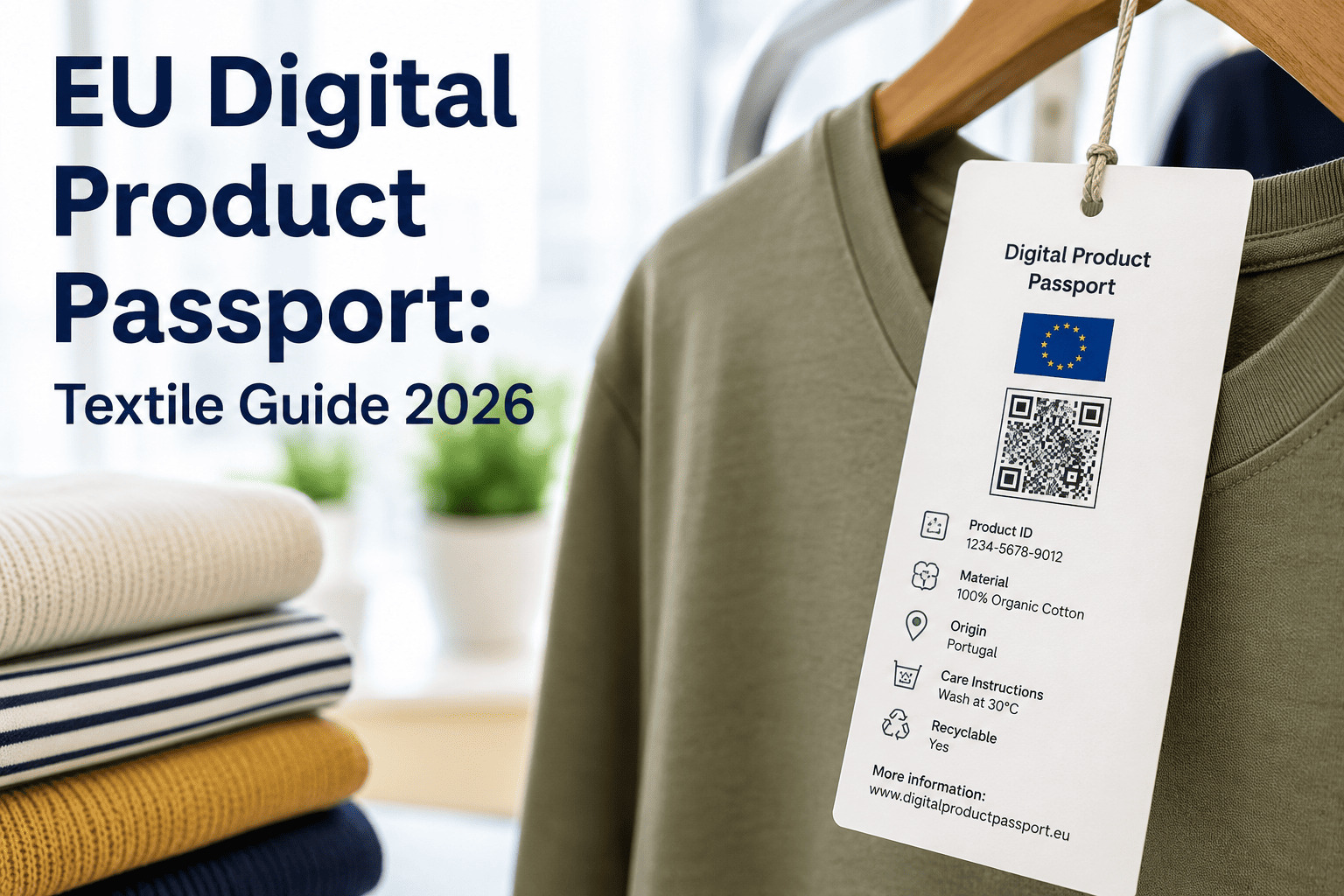
A compliance manager at a garment exporter selling into three EU retail chains gets a note from her biggest account: start preparing fibre composition, country-of-manufacture, and certification data at the product level, because a Digital Product Passport requirement is coming for every textile SKU. She has certificates in a shared drive, composition data scattered across supplier invoices, and no single system tying either to a specific style. The delegated act is not final, but the buyer is not waiting for it to be. Book a demo to see how product-level compliance data can be structured ahead of the EU textile mandate.
The EU Digital Product Passport for Textiles — What Is Fixed in Law, What Is Still Undecided, and How to Prepare Now
The Digital Product Passport is already law under the Ecodesign for Sustainable Products Regulation. What remains open for textiles is the final data set and exact compliance date — but the direction, and the cost of waiting, are already clear.
The Digital Product Passport Is Not Its Own Law — It Is a Tool Inside a Bigger One
The Ecodesign for Sustainable Products Regulation is the framework regulation that gives the European Commission legal authority to require a Digital Product Passport for specific product categories. ESPR itself does not spell out exactly what a textile DPP must contain — that detail comes through a separate delegated act specific to textiles and apparel, which is still being finalized. This two-layer structure explains why so much online commentary sounds contradictory: ESPR being "in force" and textiles having "no confirmed requirements yet" are both true statements about two different layers of the same regulation.
Batteries were the first product category to get a finalized delegated act, and the battery passport is now functioning as the practical template — proof that the digital carrier, access rights, and structured data model behind a DPP actually works at scale before textiles follow the same path.
The Waste Numbers Behind Why Textiles Moved to the Front of the DPP Queue
Textiles were named a priority sector under the ESPR working plan for reasons visible in the industry's own waste figures. EU citizens discard roughly 5 million tonnes of clothing every year, an amount that works out to around 12 kilograms per person, and the overwhelming majority of that volume is never collected for reuse or recycling at all. Of the small fraction that is collected, only about one percent is turned back into new garments — the rest is downcycled into lower-value material or ends up landfilled or incinerated regardless of the collection effort that went into gathering it.
That combination — high volume, fast turnover, and almost no functioning circular loop — is exactly the profile the Ecodesign for Sustainable Products Regulation was designed to target. A Digital Product Passport gives regulators, recyclers, and secondhand markets a structured way to know what a garment is actually made of at end of life, which is the missing piece that keeps recycling rates near zero even where sorting infrastructure already exists.
How the Textile Delegated Act Is Expected to Unfold
Dates above are indicative and drawn from the EU's own working plan and industry tracking as of mid-2026 — treat them as a planning horizon rather than a fixed deadline, and confirm current status before finalizing internal timelines.
Waiting for the Final Delegated Act Is the Most Expensive Way to Prepare
Brands mapping supplier data now are building a structured foundation; brands waiting for the finished regulation are set up to scramble under a compliance deadline instead.
What a Textile Digital Product Passport Is Expected to Contain
Early technical specifications group the expected textile DPP data into four broad categories, phased in over time rather than required all at once. Phase one, expected first, covers composition and origin data most manufacturers already hold in some form. Later phases add environmental and end-of-life data that require genuinely new measurement infrastructure for most factories.
The Open Questions the Delegated Act Still Has to Settle
Three significant questions remain open even in mid-2026 technical drafts. The first is granularity — whether the passport applies at the model, batch, or individual item level, which changes the entire data architecture a manufacturer needs to build. The second is the access rights model — which parties in the value chain can see which fields, since a DPP is not intended to expose commercially sensitive supplier data to every downstream party with a QR scanner. The third is the exact data carrier standard, though GS1 Digital Link and similar interoperable formats are the leading direction across other ESPR product categories already finalized.
These open questions matter operationally, not just legally. A model-level passport means one dataset can serve every unit of a given style, which is far less demanding to build than an item-level passport requiring a unique record per individual garment produced. Manufacturers building internal systems now have a real choice to make: architect for the more demanding item-level scenario as a hedge, or wait for clarity and risk a rebuild later. Most early movers are choosing the hedge, since a system built for item-level granularity can always serve model-level requirements, but the reverse is not true without significant rework.
What a Manufacturer Can Do Today, Regardless of the Final Delegated Act
Why Early Movers and Late Movers End Up on Very Different Cost Curves
Factories that started structuring compliance data as early as 2024 report a materially smoother path than those beginning now under buyer pressure — the difference shows up not in the final data itself but in how it was collected. Early movers built data capture into existing supplier relationships gradually; late movers are forced into rush certification requests, expedited testing fees, and supplier pushback on tight timelines, all compressed into a single scramble. Industry commentary places the practical cost difference between early and late preparation at several times the baseline — not because the data is harder to produce, but because producing it under deadline pressure removes every negotiating advantage a manufacturer would otherwise have with its own supply chain.
Most of the Data a Textile DPP Needs Already Exists Somewhere on Your Floor
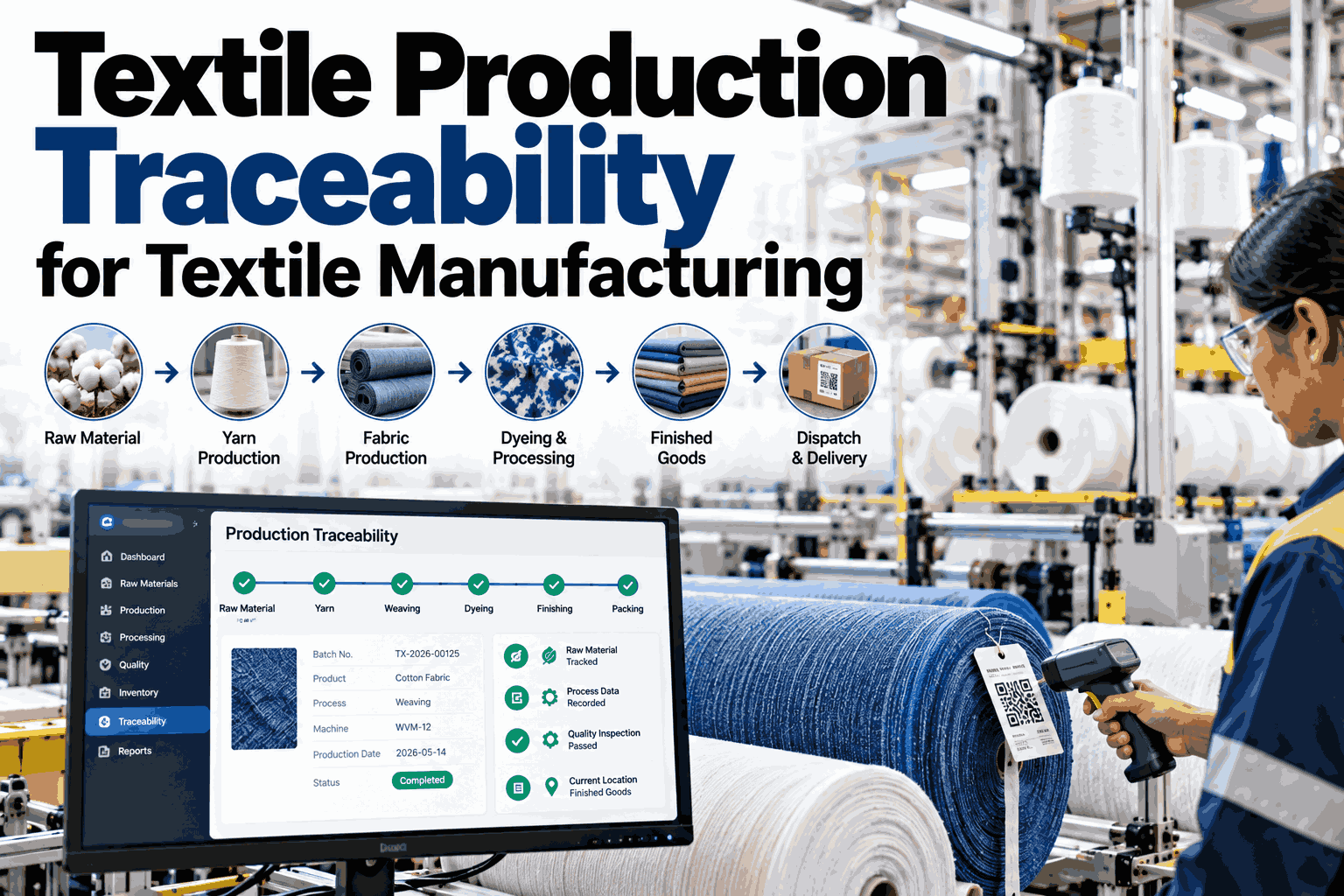
The gap most manufacturers face is not a missing measurement — it is a missing connection between systems that already hold the relevant data and a structure that ties it to an individual product. Fibre composition sits in a spinning mill's raw material records. Dyeing energy consumption sits in a utility meter log. Certification documents sit in a quality office file. None of that is new data collection; it is data that already exists, scattered across departments that have never needed to report it at the individual style level before.
Building toward DPP readiness in practice means connecting those existing records — MES production data, energy metering, supplier certification files, and bill-of-materials records — into a single structure indexed by style and batch, well before any specific delegated act forces the exercise. The manufacturers furthest ahead on this are not the ones with the most sophisticated sustainability programs; they are the ones whose factory floor data was already connected and queryable before the compliance deadline made it urgent.
Questions Manufacturers Ask About EU Digital Product Passport Readiness
Structure Your Product Compliance Data Before the Textile Delegated Act Forces the Timeline
Move composition, certification, and origin data out of scattered supplier documents and into a system built around each individual style — ready for whichever final data set the EU adopts.


.jpg)