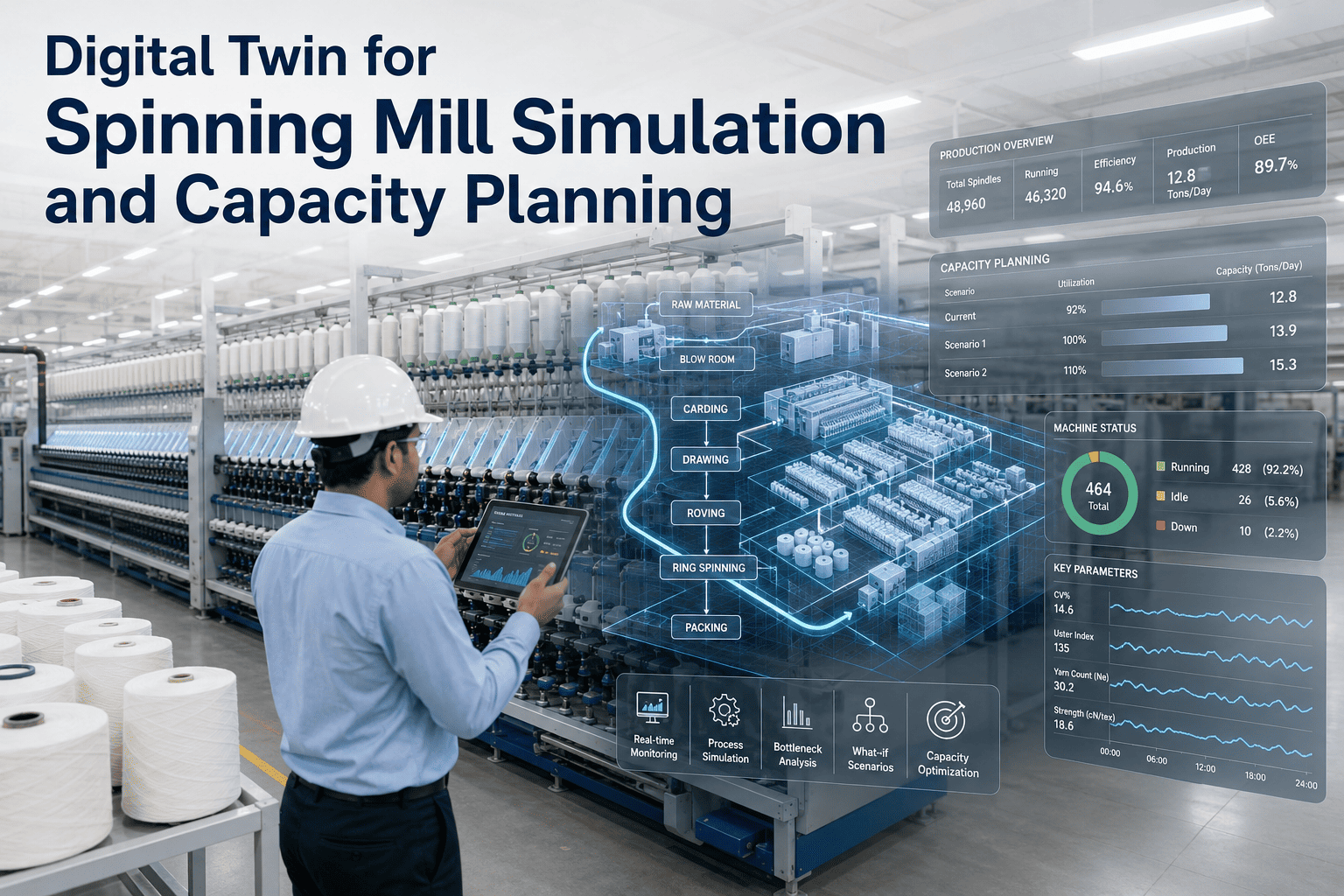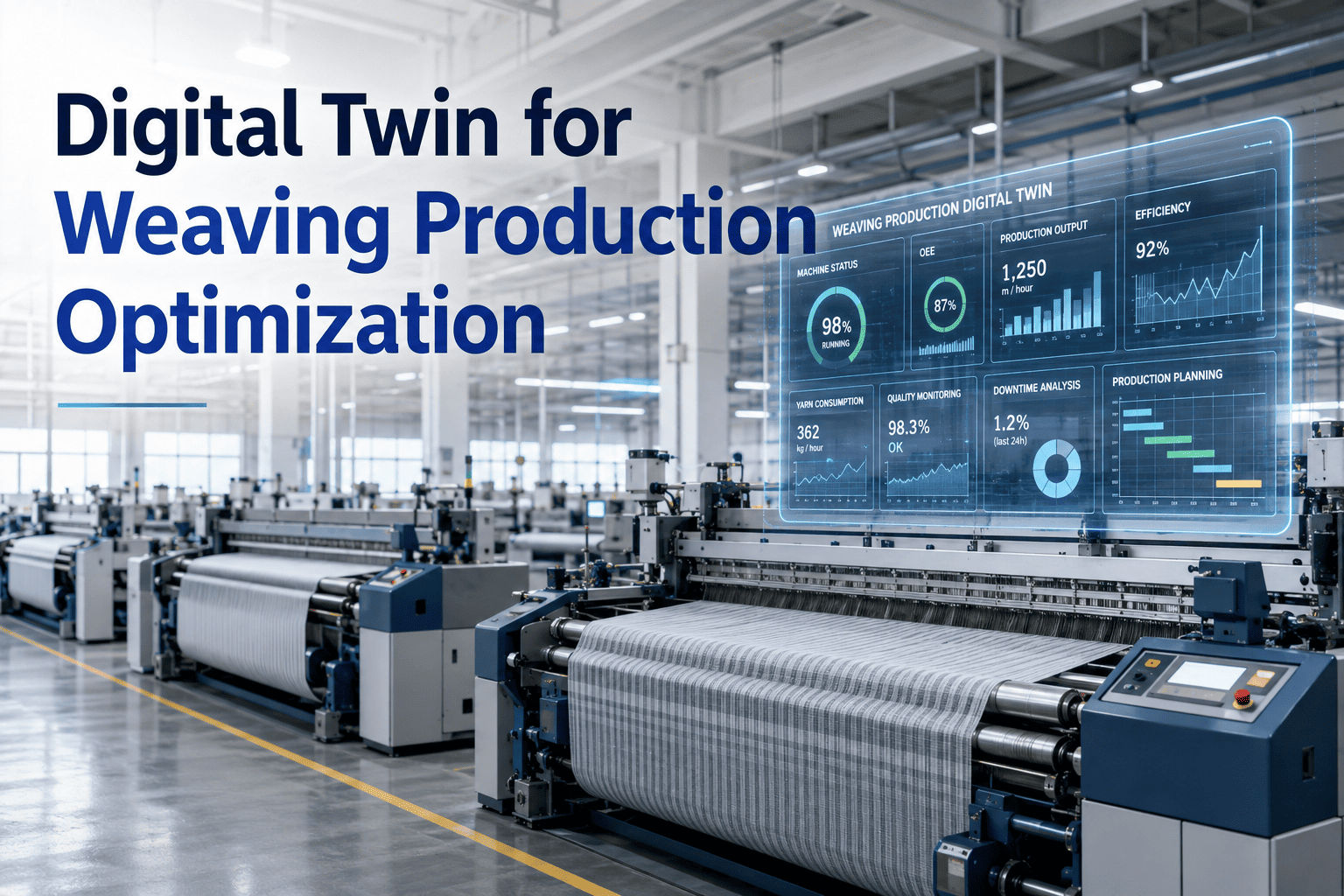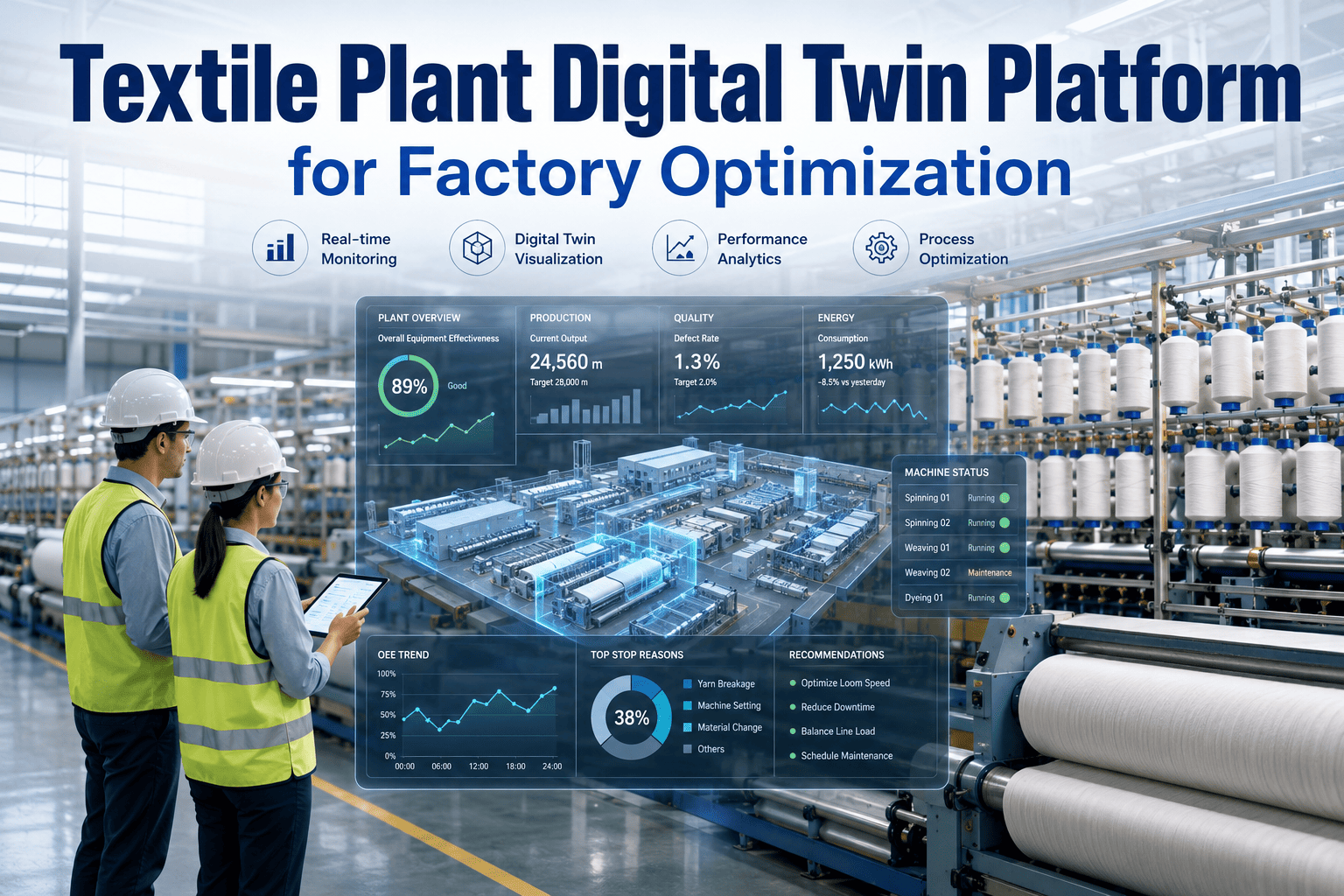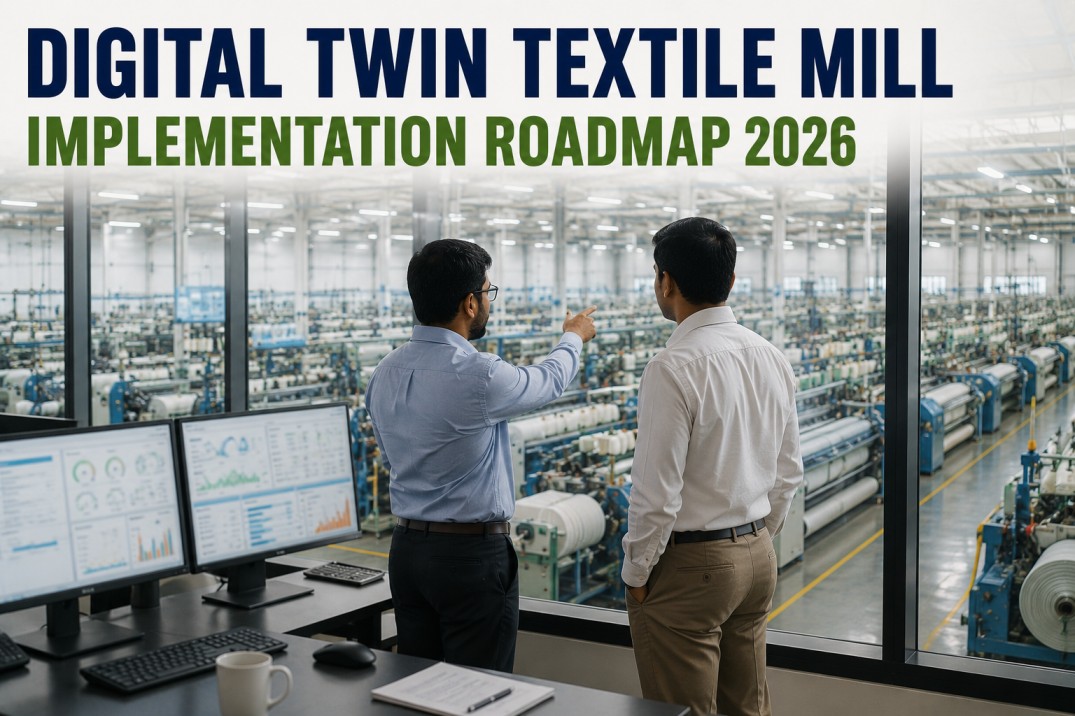
A digital twin is a living, physics-accurate digital representation of your textile mill that mirrors real production conditions in real time. Unlike a static 3D model, a properly built digital twin ingests live machine data, production events, energy consumption, and quality metrics to create a synchronized virtual replica that behaves identically to the physical mill. This allows mill managers, production engineers, and maintenance teams to visualize current conditions across every department, run what-if simulations without disrupting live production, predict quality deviations and equipment failures before they occur, and eventually close the control loop for autonomous optimization. Textile manufacturing is uniquely suited for digital twin technology because it is a continuous-flow process with complex interdependencies between spinning, weaving, dyeing, and finishing — small changes in upstream conditions propagate through the entire value chain in ways that are invisible to traditional monitoring tools. A well-executed digital twin captures these interdependencies and transforms them into actionable insight. This roadmap covers the five maturity levels of digital twin implementation, the four-layer architecture required to support them, the highest-ROI use cases for textile mills, a phased 24-month implementation timeline, the technology stack needed at each stage, and the concrete financial outcomes that mills achieve at each maturity level.
Start Your Digital Twin Journey with a 30-Minute Strategy Session
iFactory has deployed digital twin solutions across spinning, weaving, dyeing, and finishing mills. Book a free consultation to assess your mill's digital twin readiness and identify the highest-ROI starting point.
Digital Twin Maturity Pyramid: Five Levels of Textile Mill Intelligence
Digital twin capability is not achieved overnight. Mills progress through five distinct maturity levels, each building on the foundation established by the previous level. The pyramid structure reflects the increasing complexity, data requirements, and value generation as mills advance from basic visualization to autonomous optimization. Most textile mills begin at Level 0 (no digital representation) and require 18–24 months to reach Level 4 if the implementation roadmap is followed systematically.
Four-Layer Digital Twin Architecture for Textile Manufacturing
A production-grade digital twin requires four interconnected layers that span the gap between physical mill equipment and business decision-making. Each layer performs a distinct function and communicates with adjacent layers through standardized APIs and data models. The architecture is designed to be modular — mills can start with a single layer and expand incrementally without rework.
Ready to Build Your Digital Twin? Start with an Architecture Assessment
iFactory's digital twin architecture is purpose-built for textile manufacturing. We assess your current technology stack, identify gaps, and design a modular architecture that grows with your maturity level.
Highest-ROI Digital Twin Use Cases for Textile Mills
While digital twin technology has broad applications across textile manufacturing, four use cases consistently deliver the highest return on investment based on iFactory's deployment experience across 40+ textile mills. Each use case targets a different aspect of mill operations and can be implemented independently before expanding to additional use cases.
24-Month Digital Twin Implementation Roadmap
The implementation roadmap follows a phased approach that aligns with the digital twin maturity pyramid. Each phase builds on the deliverables of the previous phase and includes defined milestones, resource requirements, and go-no-go decision gates. The total timeline is 24 months for a full-scope implementation covering all five maturity levels.
Digital Twin Technology Stack: What You Need at Each Layer
Building a digital twin requires selecting the right technology components for each architectural layer. The table below maps the specific technologies, their purpose, and the implementation timeline associated with each layer. Mills should prioritize technologies based on their current maturity level target rather than procuring everything upfront.
| Layer | Technology | Purpose | Timeline |
|---|---|---|---|
| IoT & Edge | Sensors, PLC, OPC UA, MQTT, Edge Gateways | Real-time data acquisition from mill floor equipment | Months 1–3 |
| Data Layer | Time-Series DB, Data Lake, Digital Thread | Storage, normalization, and end-to-end traceability | Months 2–6 |
| Modeling | 3D Engines, Physics Simulation, Geometry Models | Digital representation and behavior modeling | Months 4–10 |
| Analytics | ML/AI, Optimization Solvers, Simulation Engine | Prediction, scenario analysis, and optimization | Months 8–18 |
| Visualization | WebGL Dashboards, Mobile Apps, Report Engine | Human interface for operators, engineers, and managers | Months 3–24+ |
Before-and-After Performance: Measurable Impact of Digital Twin Deployment
The ROI of a textile digital twin is measured in concrete operational improvements across multiple dimensions. The following comparison shows performance ranges observed across iFactory digital twin deployments at mills that reached at least Level 3 (Simulate) maturity. Individual results vary based on mill size, current technology baseline, and implementation scope.
Digital Twin Implementation: Frequently Asked Questions
What is the difference between a digital twin and a 3D model or simulation?
A static 3D model is a fixed digital representation of physical geometry with no connection to real-time data — it shows what the mill looks like. A simulation uses predefined mathematical models to predict behavior but typically runs with input assumptions rather than actual operational data. A digital twin combines both with continuous real-time data synchronization: the twin automatically updates itself based on live sensor readings from the physical mill, enabling accurate what-if analysis, performance monitoring, and closed-loop control. Unlike a simulation that you run on demand, a digital twin maintains persistent, bidirectional synchronization throughout its lifecycle.
How much data infrastructure is needed before a digital twin is viable?
Mills do not need perfect data infrastructure to start. Level 1 (Visualize) requires only physical layout data and machine geometry — no real-time connectivity needed. Level 2 (Monitor) requires basic sensor data such as machine status (running/stopped), production counts, and energy consumption from existing panel meters. Most textile mills already have 60–80% of the data required for Level 2 available through existing PLCs, SCADA systems, and electricity meters. The key is identifying and closing sensor gaps early in the implementation. iFactory's digital twin deployment process includes a comprehensive data gap analysis during the first 30 days.
Can a digital twin be built for an existing textile mill, or is it only for new greenfield facilities?
Digital twins are deployed on existing operating mills far more frequently than on greenfield facilities. The majority of iFactory's digital twin implementations have been on brownfield mills built between 1995 and 2015. The implementation begins with a 3D laser scan of the existing mill layout to create the base digital model, followed by integration with existing automation and data collection infrastructure. Older mills with limited existing sensor coverage may require additional edge gateway deployments, but the cost is typically recovered within the first year through energy and maintenance savings alone.
What is the typical payback period for a textile mill digital twin investment?
Payback periods vary by mill size and starting maturity level, but iFactory's deployment data shows a median payback period of 14–18 months for mills that implement through Level 3 (Simulate). Mills that begin with higher existing automation levels achieve faster payback because the data acquisition infrastructure cost is lower. The primary ROI drivers are energy reduction (10–18%), unplanned downtime reduction (30–45%), and throughput improvement (15–20%). Most mills report positive net ROI within 12 months of reaching Level 2 (Monitor), and cumulative ROI over a 5-year period typically ranges from 300–600% depending on mill size and scope.
How does a digital twin integrate with existing MES, ERP, and CMMS systems?
The digital twin integrates with existing enterprise systems through a middleware integration layer that uses REST APIs, OPC UA, and standard data exchange formats. The twin ingests production orders from ERP, machine state and quality data from MES, and maintenance schedules from CMMS to maintain a synchronized view of mill operations. Conversely, the twin outputs simulation results, predictive alerts, and optimization recommendations back to these systems through the same integration layer. iFactory's digital twin platform includes pre-built connectors for major textile ERP, MES, and CMMS platforms, reducing integration effort by approximately 60% compared to custom integration development.
Begin Your Digital Twin Implementation — Schedule a Readiness Assessment
iFactory's digital twin experts will evaluate your mill's current maturity level, identify quick-win opportunities, and deliver a phased implementation roadmap customized to your production profile, budget, and business objectives.