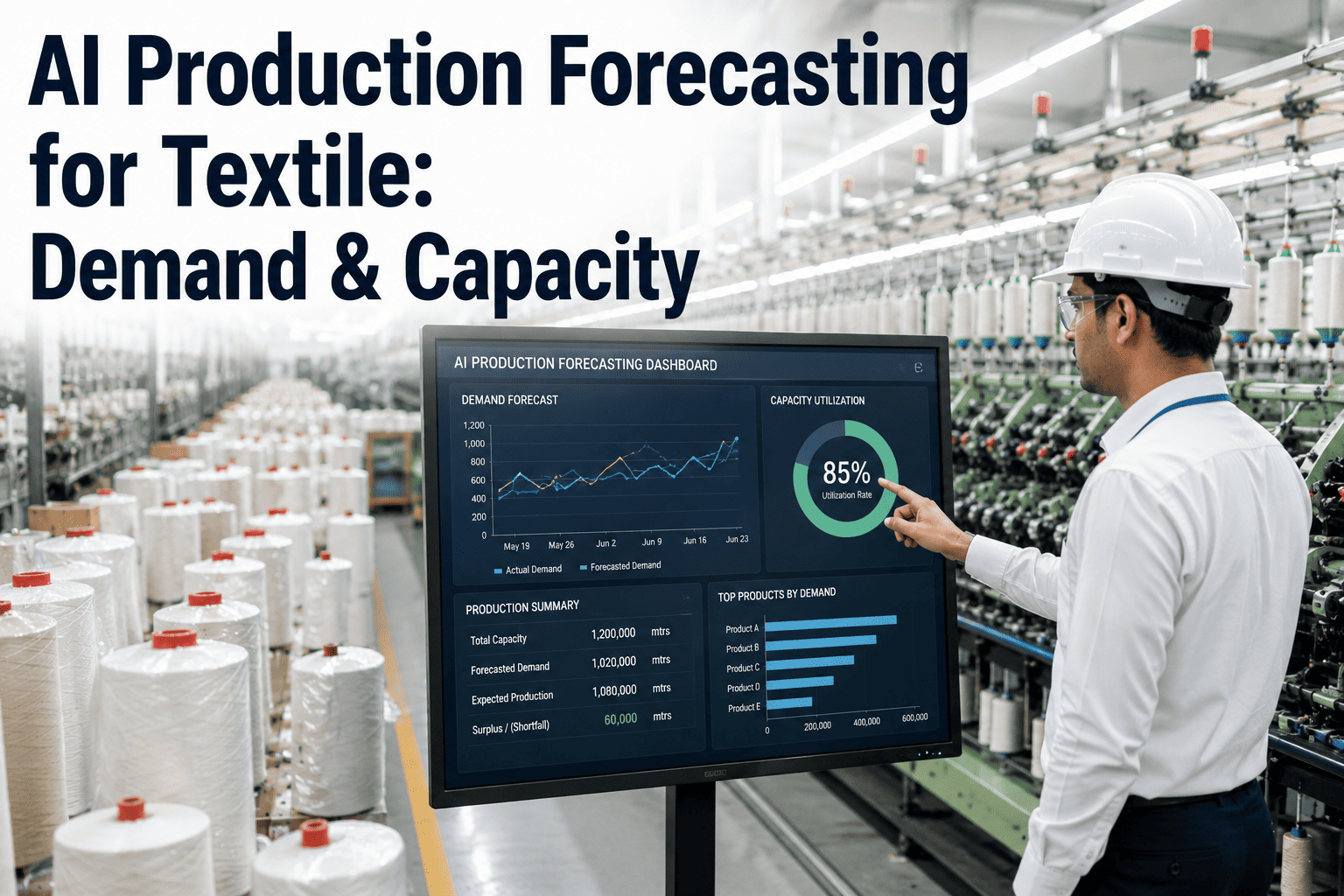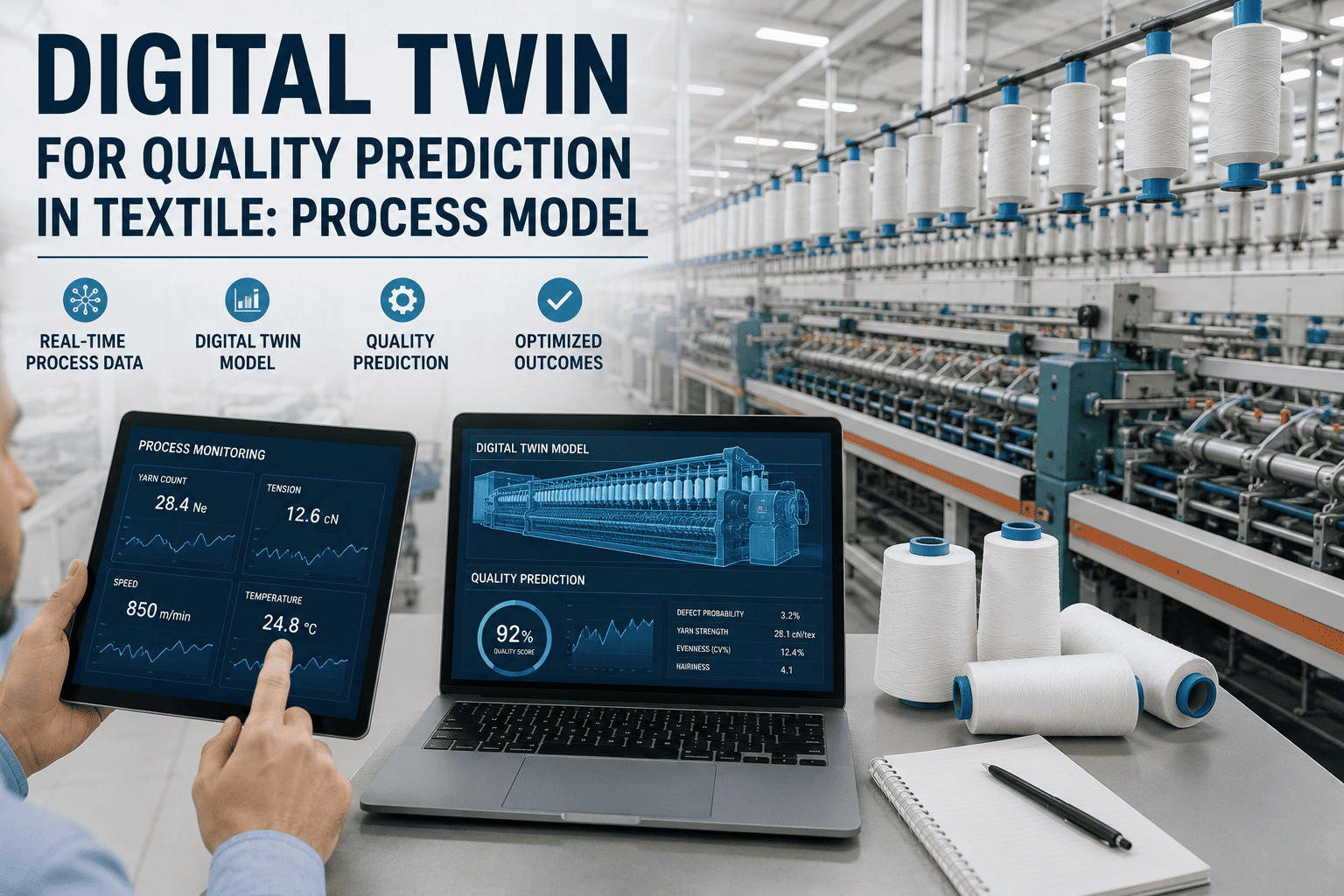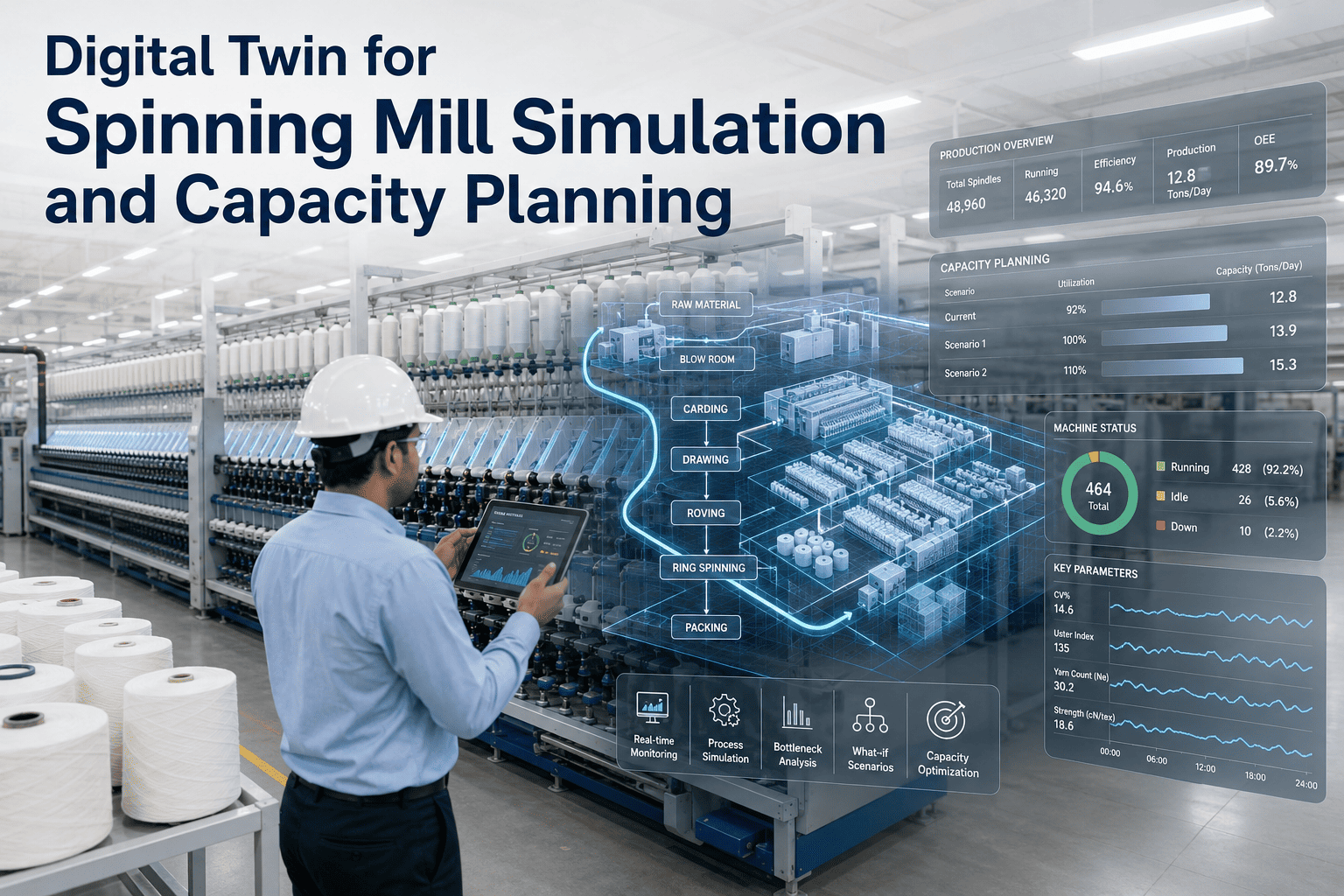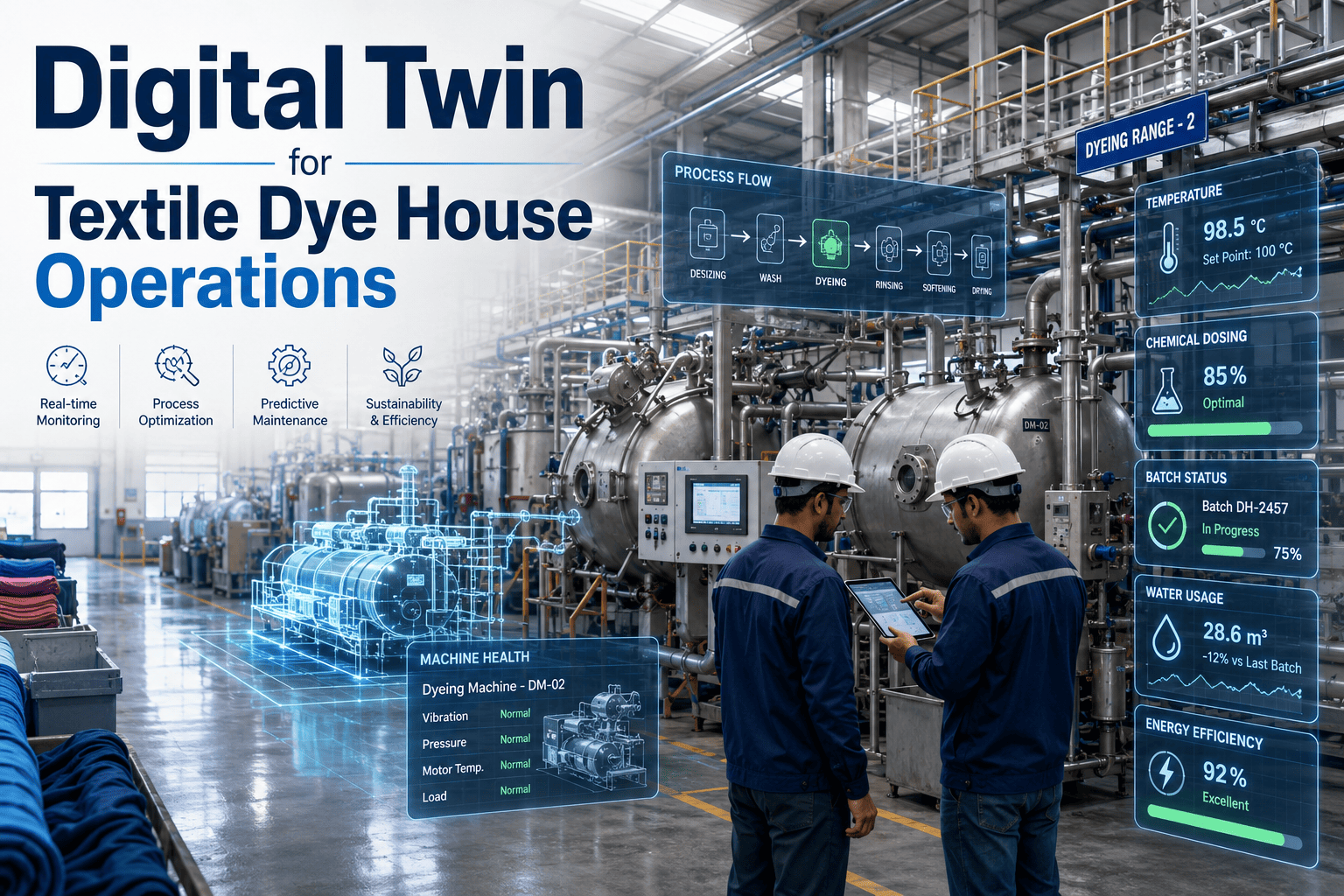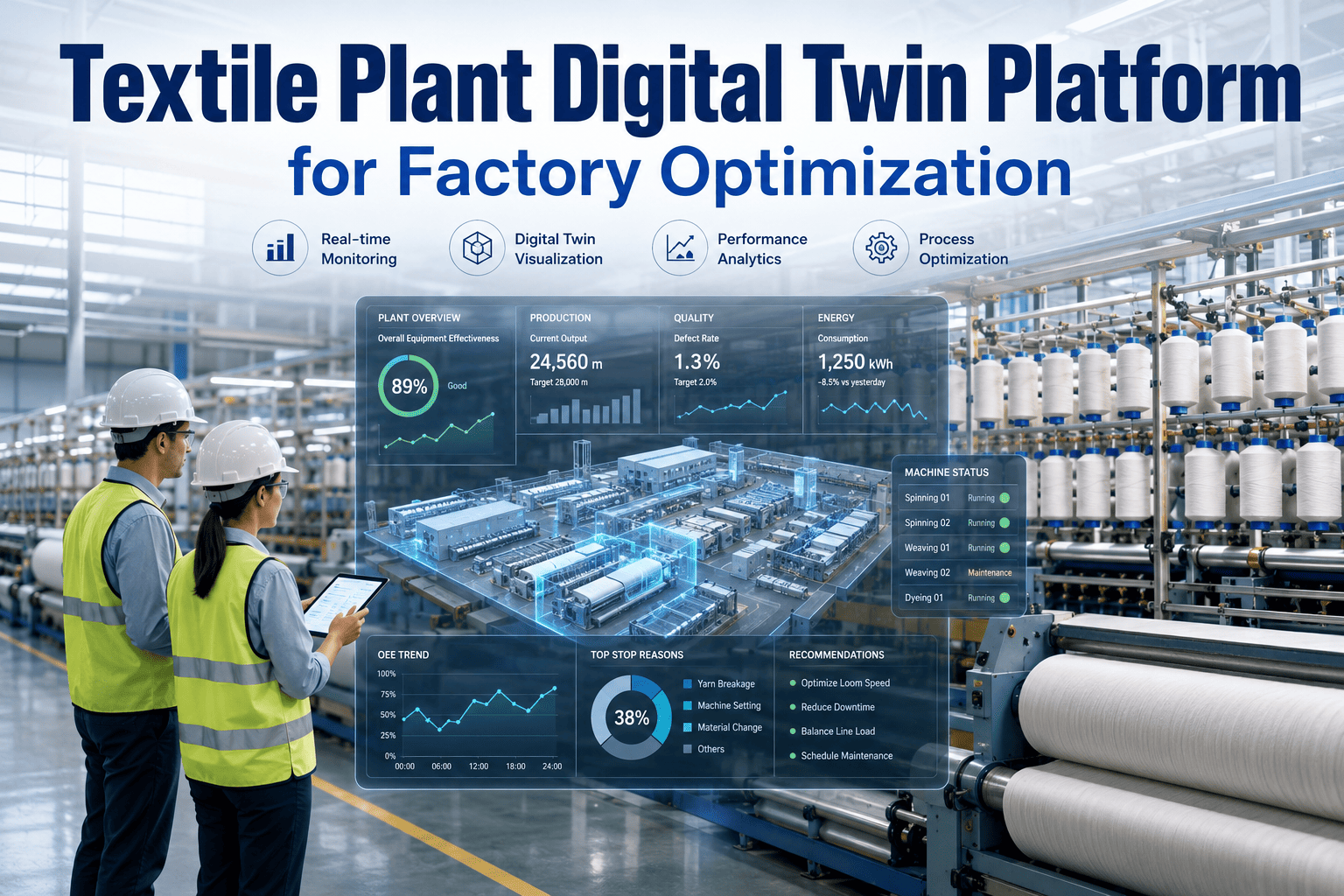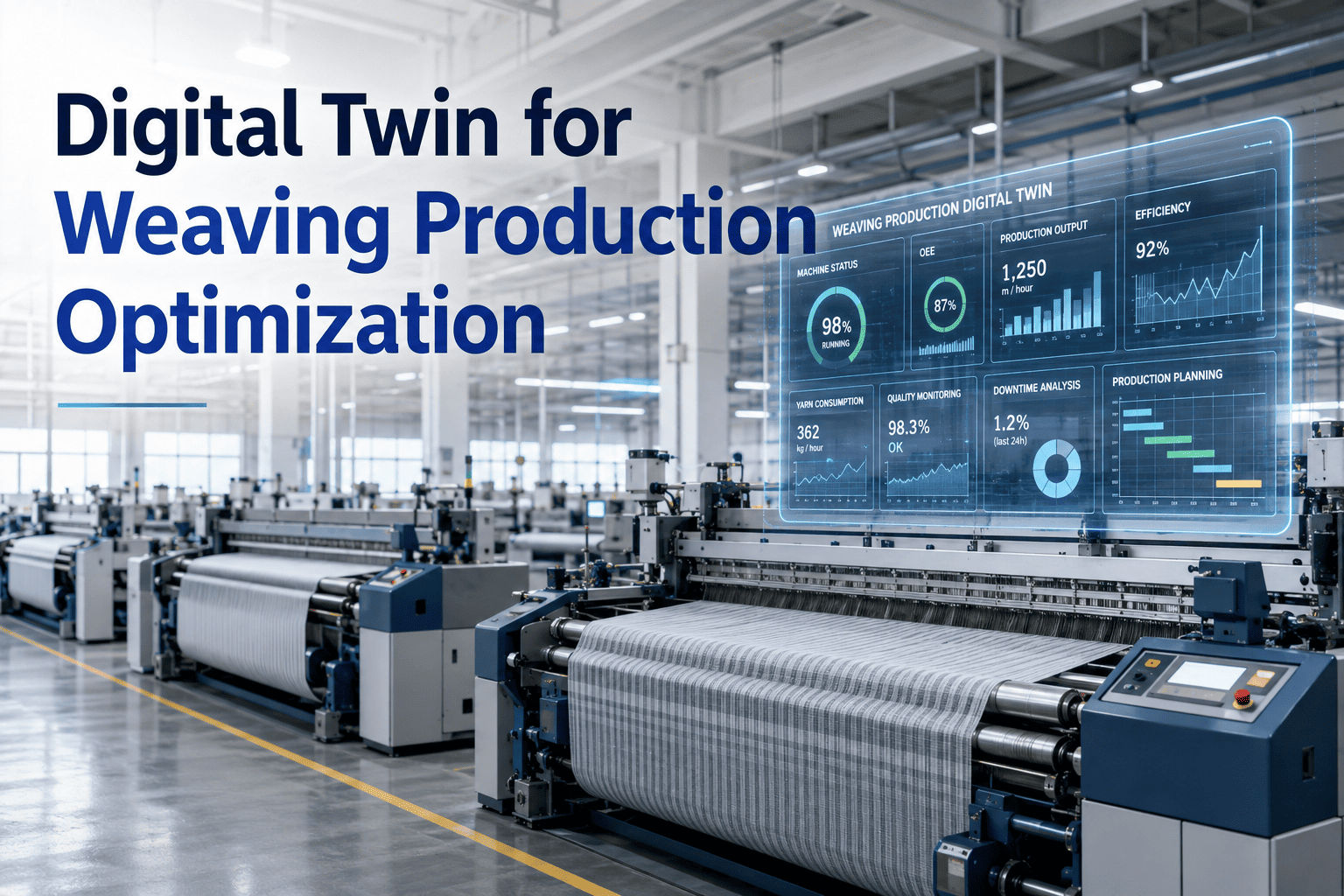
In the fiercely competitive textile industry, weaving mills face relentless pressure to maximize output while minimizing costs and delays. Traditional production planning relies on static spreadsheets and historical averages, often failing to capture the dynamic interplay of loom breakdowns, material shortages, and maintenance schedules. A digital twin for weaving production optimization offers a paradigm shift, creating a real-time virtual replica of your entire weaving floor. This powerful simulation tool models every aspect of loom capacity, downtime patterns, material flow, bottlenecks, and maintenance impact on delivery commitments. By leveraging AI-driven analytics, plant managers can test scenarios, predict outcomes, and make data-backed decisions that boost overall equipment effectiveness (OEE) and on-time delivery. The result is a smarter, more agile weaving operation that adapts to disruptions before they escalate. Book a Demo to see how our digital twin transforms your weaving production.
Transform Your Weaving Floor with Real-Time Simulation
Eliminate guesswork. Simulate loom performance, identify bottlenecks, and optimize delivery schedules with precision.
Why Weaving Mills Need a Digital Twin
Weaving is a complex, multi-variable process where loom speeds, yarn quality, maintenance intervals, and operator efficiency interact in non-linear ways. Traditional methods treat these as isolated factors, leading to suboptimal planning. A digital twin integrates real-time data from looms, sensors, and ERP systems to create a holistic model. This model simulates the entire production ecosystem, allowing managers to ask "what-if" questions: What if we change the maintenance schedule? What if a key loom breaks down? What if yarn supply is delayed? The answers come instantly, enabling proactive adjustments that keep production on track. By visualizing material flow and bottleneck formation, the digital twin reveals hidden inefficiencies, such as looms waiting for creel changes or downstream processes starved of fabric. This level of insight is impossible with traditional tools, making the digital twin an indispensable asset for any weaving mill aiming for world-class performance.
How the Digital Twin Works: A Step-by-Step Process
Data Ingestion and Model Creation
Real-time data from looms, sensors, and MES systems is ingested and used to build a virtual replica of the weaving floor. Parameters include loom speed, efficiency, downtime reasons, and material consumption.
Simulation and Scenario Testing
The digital twin runs simulations based on current conditions and planned changes. Users can test scenarios like adding a shift, changing maintenance intervals, or rerouting material flow to see the impact on output and delivery.
Bottleneck Identification and Analysis
Using advanced analytics, the twin pinpoints bottlenecks in real time, such as looms with high downtime, material shortages, or unbalanced workloads. It quantifies the impact of each bottleneck on overall throughput.
Optimization and Decision Support
Based on simulation results, the system recommends optimal production schedules, maintenance plans, and material allocation. Managers can implement changes with confidence, knowing the predicted outcomes.
Core Capabilities of the Weaving Digital Twin
Loom Capacity Simulation
Model each loom's maximum throughput under current conditions. Simulate the effect of speed changes, style changes, and maintenance on capacity utilization. Achieve up to 95% capacity planning accuracy.
Downtime Pattern Analysis
Classify downtime by cause (mechanical, electrical, material, operator) and simulate how reducing specific downtime types impacts overall OEE. Target high-impact areas for continuous improvement.
Material Flow Modeling
Visualize yarn and fabric movement from warehouse to loom to finishing. Identify congestion points and optimize buffer sizes to ensure smooth flow. Reduce work-in-progress inventory by 25%.
Bottleneck Impact Analysis
Quantify the effect of each bottleneck on delivery dates and throughput. Use heat maps and trend charts to prioritize resolution efforts. Improve on-time delivery by 15%.
Maintenance Impact Modeling
Simulate preventive vs. reactive maintenance strategies. Optimize maintenance intervals to balance cost and uptime. Predict maintenance-related downtime with 90% accuracy.
Delivery Commitment Planning
Use simulation to validate delivery promises. Adjust production schedules in real time to meet customer deadlines. Increase delivery reliability by 20%.
Key Metrics Tracked by the Digital Twin
| Metric | Traditional Method | Digital Twin Approach | Improvement |
|---|---|---|---|
| OEE | Manual calculation, weekly | Real-time, automated | 30% increase |
| Downtime Tracking | Paper logs, delayed | Sensor-based, instant | 50% faster response |
| Bottleneck Identification | Visual observation | Algorithmic detection | 2X accuracy |
| Delivery Accuracy | Historical trends | Predictive simulation | 15% improvement |
| Maintenance Planning | Fixed intervals | Condition-based, dynamic | 20% cost reduction |
Ready to Simulate Your Way to Higher OEE?
Stop reacting to problems. Start predicting and preventing them with a digital twin built for weaving production.
Case Study: How a Mid-Size Weaving Mill Boosted Output by 25%
A weaving mill with 200 looms was struggling with frequent breakdowns and missed delivery deadlines. They implemented a digital twin from iFactory to model their entire production process. The twin revealed that 40% of downtime was caused by a single loom model with a known mechanical issue. By simulating different maintenance strategies, they optimized spare parts inventory and reduced downtime by 30%. Additionally, material flow analysis showed that yarn shortages were causing 15% of idle time. The twin helped redesign the material replenishment process, cutting idle time by half. Within six months, OEE rose from 62% to 82%, and on-time delivery improved from 78% to 93%. The mill now uses the digital twin daily for production planning and scenario testing, giving them a competitive edge in a tight market.
Frequently Asked Questions
What specific data does the weaving digital twin require to function effectively?
The digital twin requires real-time data from looms, including speed, efficiency, downtime events (with causes), and production counts. It also needs material data such as yarn consumption, inventory levels, and delivery schedules. Additionally, maintenance logs, shift schedules, and operator assignments are integrated. This data is typically sourced from sensors, PLCs, MES systems, and ERP platforms. The twin uses this information to create an accurate virtual model that mirrors the actual weaving floor. For mills without full sensor coverage, manual data entry can be used initially, but automated data collection is recommended for best results. Book a Demo to discuss your data setup.
How long does it take to implement a digital twin for a weaving plant?
Implementation time varies based on plant complexity and data availability. Typically, a pilot project for a single weaving section can be deployed in 4 to 6 weeks. This includes data integration, model calibration, and user training. Full plant rollout may take 8 to 12 weeks, depending on the number of looms and systems involved. The key is to start with a focused scope, demonstrate value, then expand. Our team works closely with your IT and production teams to ensure a smooth transition. Book a Demo to get a timeline estimate for your plant.
Can the digital twin simulate different weaving styles and fabric types?
Yes, the digital twin is designed to handle a wide variety of weaving styles, including plain, twill, satin, and dobby weaves, as well as different fabric types like cotton, polyester, and blends. The model uses parameters such as warp and weft density, yarn count, and loom speed settings to accurately simulate each style change. It can predict how changing a style affects throughput, downtime, and material consumption. This capability is particularly valuable for mills that frequently switch between styles, as it helps optimize changeover procedures and reduce idle time. Book a Demo to see style simulation in action.
How does the digital twin handle maintenance planning and what are the benefits?
The digital twin models the impact of different maintenance strategies on loom performance and overall production. It can simulate preventive maintenance at fixed intervals, condition-based maintenance triggered by sensor data, or a hybrid approach. The twin predicts how each strategy affects downtime, spare parts usage, and OEE. For example, it might show that shifting from fixed-interval to condition-based maintenance reduces unnecessary downtime by 20% while extending component life. The system also alerts managers when a loom is approaching a critical state, allowing proactive intervention. This leads to lower maintenance costs, fewer unexpected breakdowns, and higher equipment reliability. Book a Demo to explore maintenance simulation.
What is the ROI of implementing a digital twin for weaving production?
ROI is typically realized within 6 to 12 months. Key drivers include a 20-30% reduction in downtime, a 15-20% increase in OEE, and a 10-15% improvement in on-time delivery. These translate into significant revenue gains and cost savings. For a mid-size mill with 200 looms, a 25% reduction in downtime can save over 1,000 production hours per year, worth hundreds of thousands of dollars. Additionally, better delivery performance leads to higher customer satisfaction and repeat orders. The digital twin also reduces waste from inefficient material flow and lowers maintenance costs through optimized planning. Book a Demo to calculate your potential ROI.
Don't Let Uncertainty Drive Your Weaving Decisions
Take control with a digital twin that gives you foresight. Simulate, optimize, and deliver on time, every time.