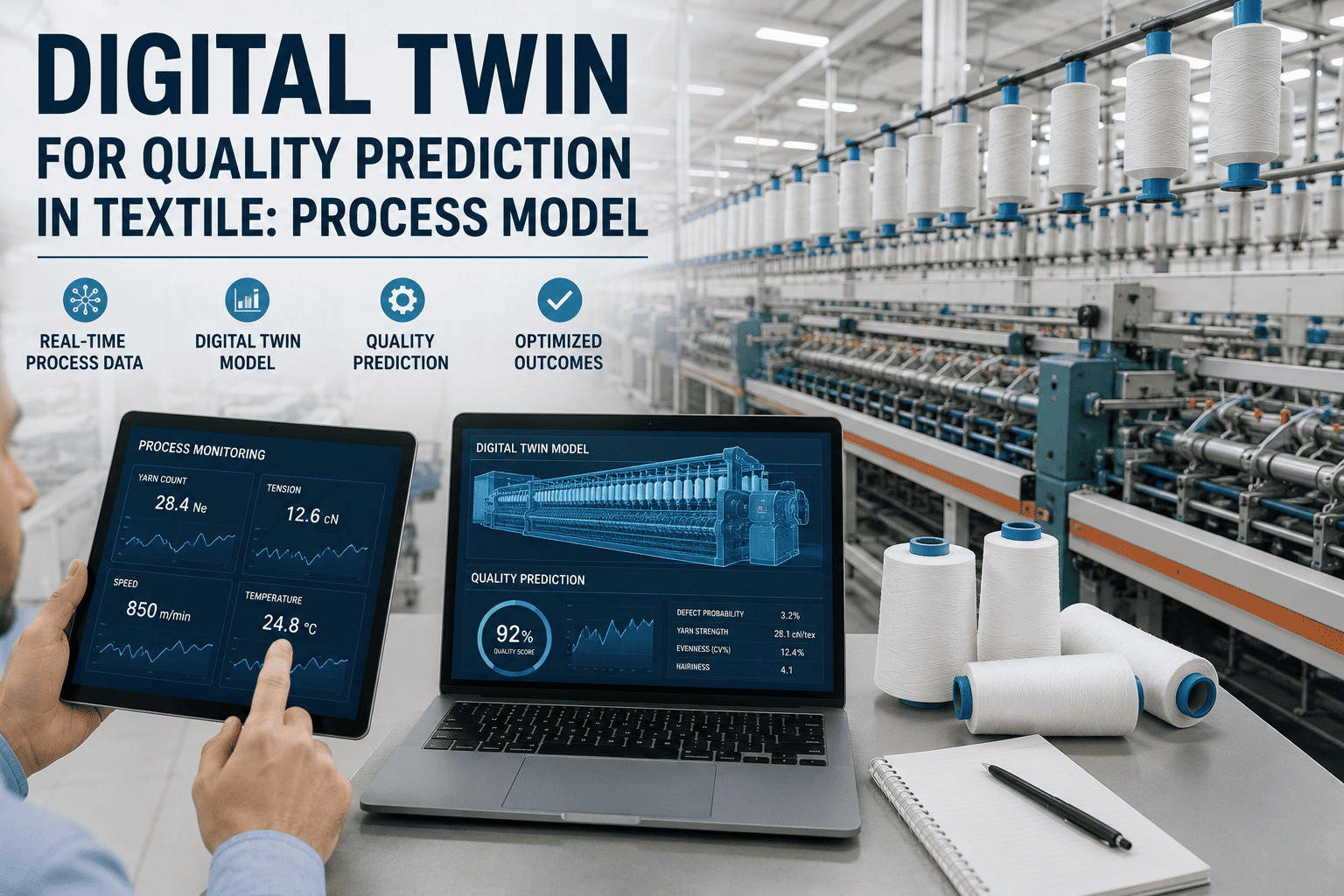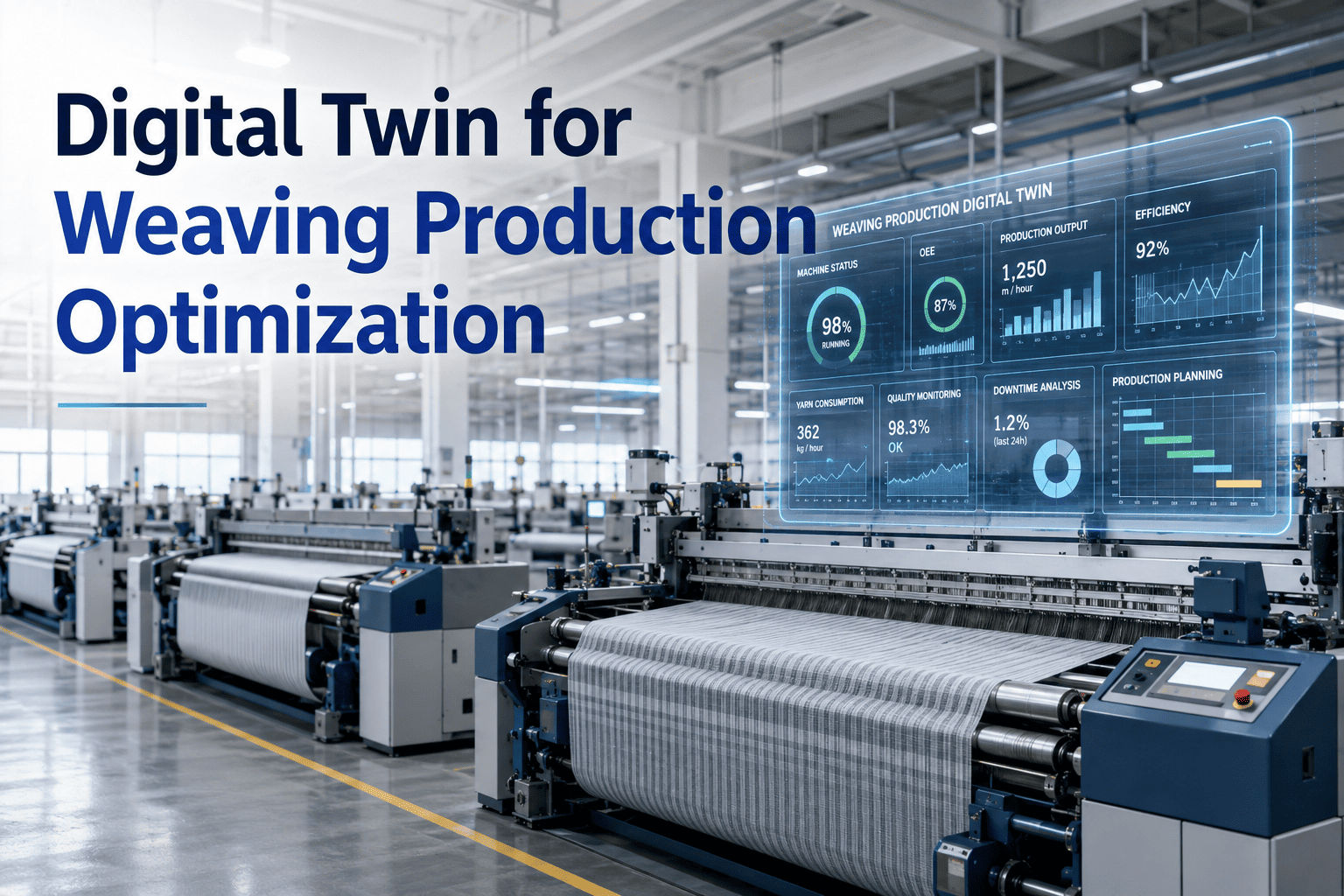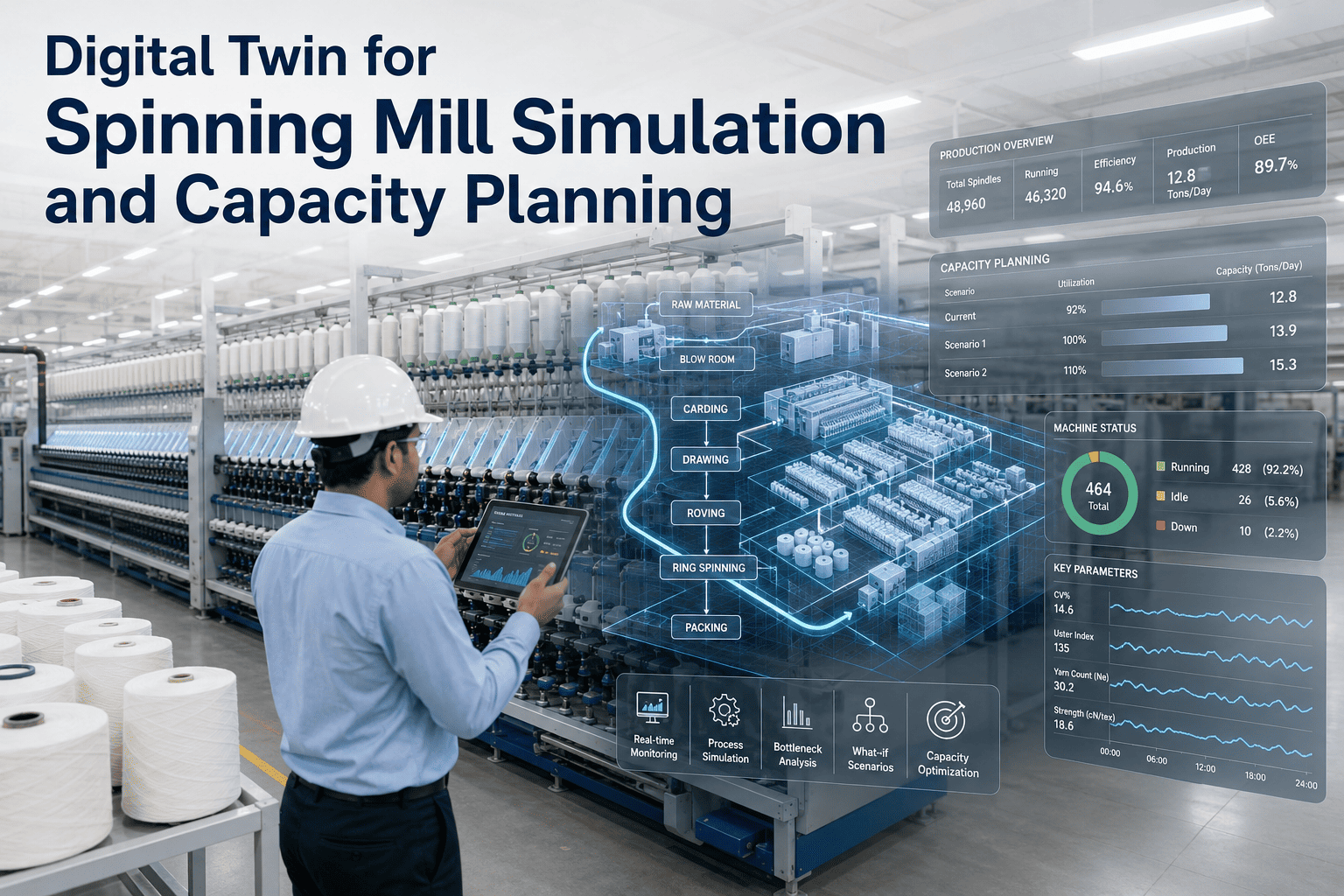
Spinning mills face constant pressure to maximize production efficiency while managing complex machinery, raw material variability, and fluctuating order demands. Traditional capacity planning methods often fall short, relying on static spreadsheets and historical averages that cannot capture the dynamic interplay between carding, drawing, roving, ring frames, winding, and supporting utilities. This is where digital twin technology transforms operations. By creating a real-time virtual replica of the entire spinning process, mill managers can simulate production scenarios, identify bottlenecks, and optimize resource allocation with unprecedented accuracy. The result is higher throughput, reduced downtime, and confident order commitment. In this comprehensive guide, we explore how digital twin simulation enables precise capacity planning across every stage of spinning, from blowroom to finished yarn. Book a Demo to see how iFactory's digital twin can revolutionize your mill planning.
Transform Your Spinning Mill with Digital Twin Simulation
Gain real-time visibility into every machine and process. Eliminate guesswork and maximize throughput with iFactory's advanced digital twin platform.
Ring Frame Simulation for Throughput Optimization
Ring frames are the heart of any spinning mill, converting roving into yarn. Digital twin simulation models each spindle's speed, twist, and tension in real time, allowing managers to test different production parameters without disrupting actual operations. By simulating variables such as yarn count, traveler speed, and ring diameter, mills can identify the optimal settings for each order type. This leads to a 5-8% increase in ring frame productivity while maintaining yarn quality standards. The simulation also predicts maintenance needs based on spindle load and runtime, preventing unexpected breakdowns that can halt the entire line.
Carding and Roving Process Modeling
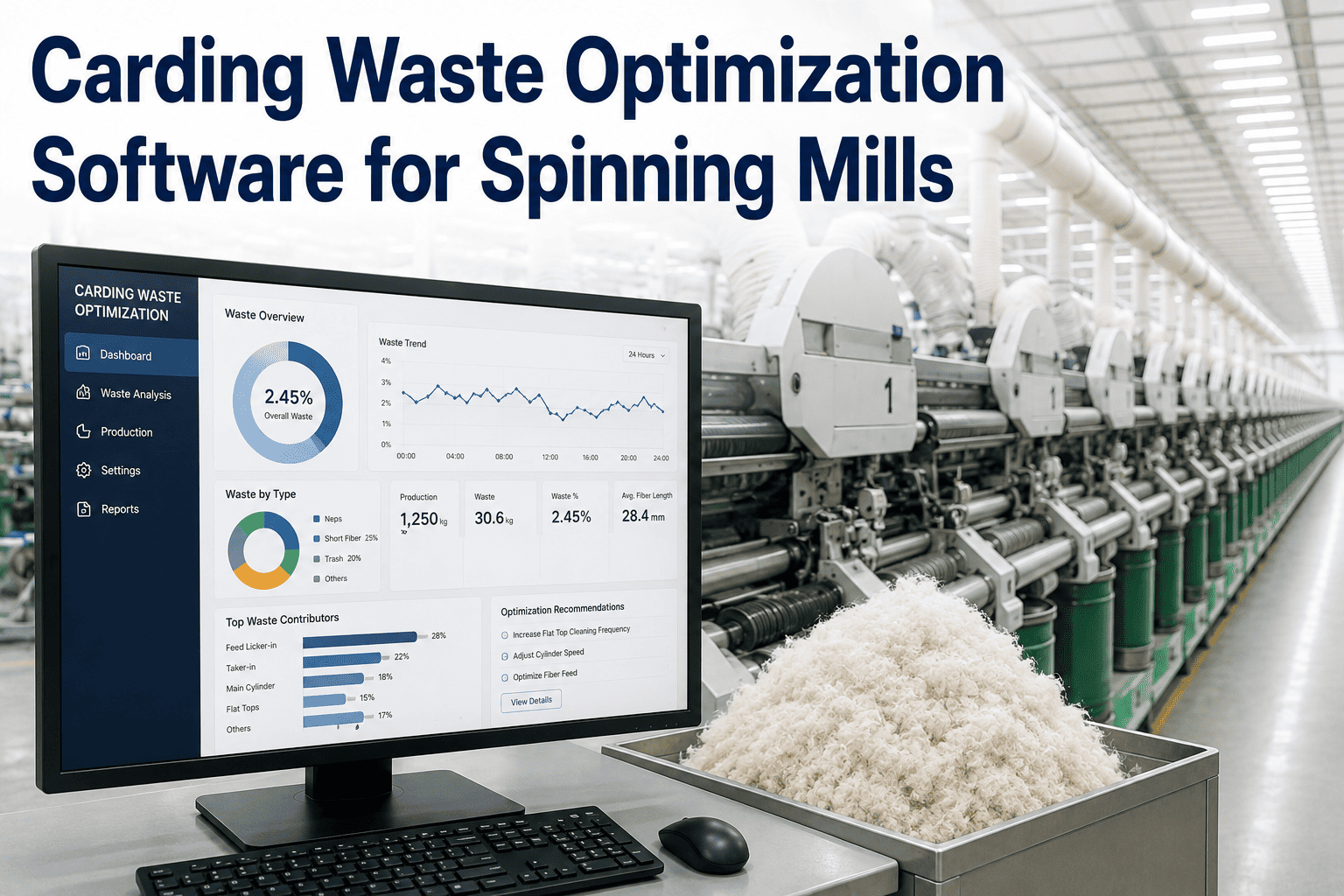
Carding and roving are critical for fiber alignment and sliver quality. A digital twin simulates the carding process by modeling cylinder speed, doffer speed, and feed rates, enabling mills to find the perfect balance between throughput and fiber opening. For roving, the simulation tracks flyer speed, bobbin build, and tension control. By adjusting these parameters in the virtual environment, mills can reduce sliver unevenness by up to 12% and improve roving strength. This directly impacts downstream ring frame performance and final yarn quality. The digital twin also alerts operators when settings drift outside optimal ranges, ensuring consistent output.
Carding Throughput
85 kg/hr
Sliver Uniformity
98.5%
Roving Strength
4.2 cN/tex
Step-by-Step Digital Twin Implementation for Spinning Mills
Data Collection and Sensor Integration
Install IoT sensors on all critical machines: blowroom, carding, drawing, roving, ring frames, and winding. Capture real-time data on speed, temperature, vibration, and production counts.
Virtual Model Calibration
Build a digital twin using historical data and machine specifications. Calibrate the model to match actual production outputs with less than 2% error margin.
Scenario Simulation and Bottleneck Analysis
Run what-if scenarios: change yarn count, adjust machine speeds, or simulate a machine breakdown. Identify bottlenecks in real time and evaluate impact on overall capacity.
Optimization and Order Commitment
Use simulation results to set optimal production parameters. Commit to order delivery dates with confidence, backed by simulation data that ensures capacity availability.
Ready to Simulate Your Spinning Mill's Full Potential?
Stop guessing and start simulating. iFactory's digital twin gives you the power to test every scenario and make data-driven decisions that boost profitability.
Key Benefits of Spinning Mill Digital Twin
Real-Time Bottleneck Detection
Instantly identify which machine or process is constraining production. Digital twin pinpoints the exact cause, whether it's a ring frame spindle issue or a carding feed problem, allowing immediate corrective action.
Optimized Maintenance Scheduling
Simulate the impact of preventive maintenance on production. Schedule maintenance during low-demand periods without affecting order commitments, reducing unplanned downtime by up to 25%.
Energy Consumption Reduction
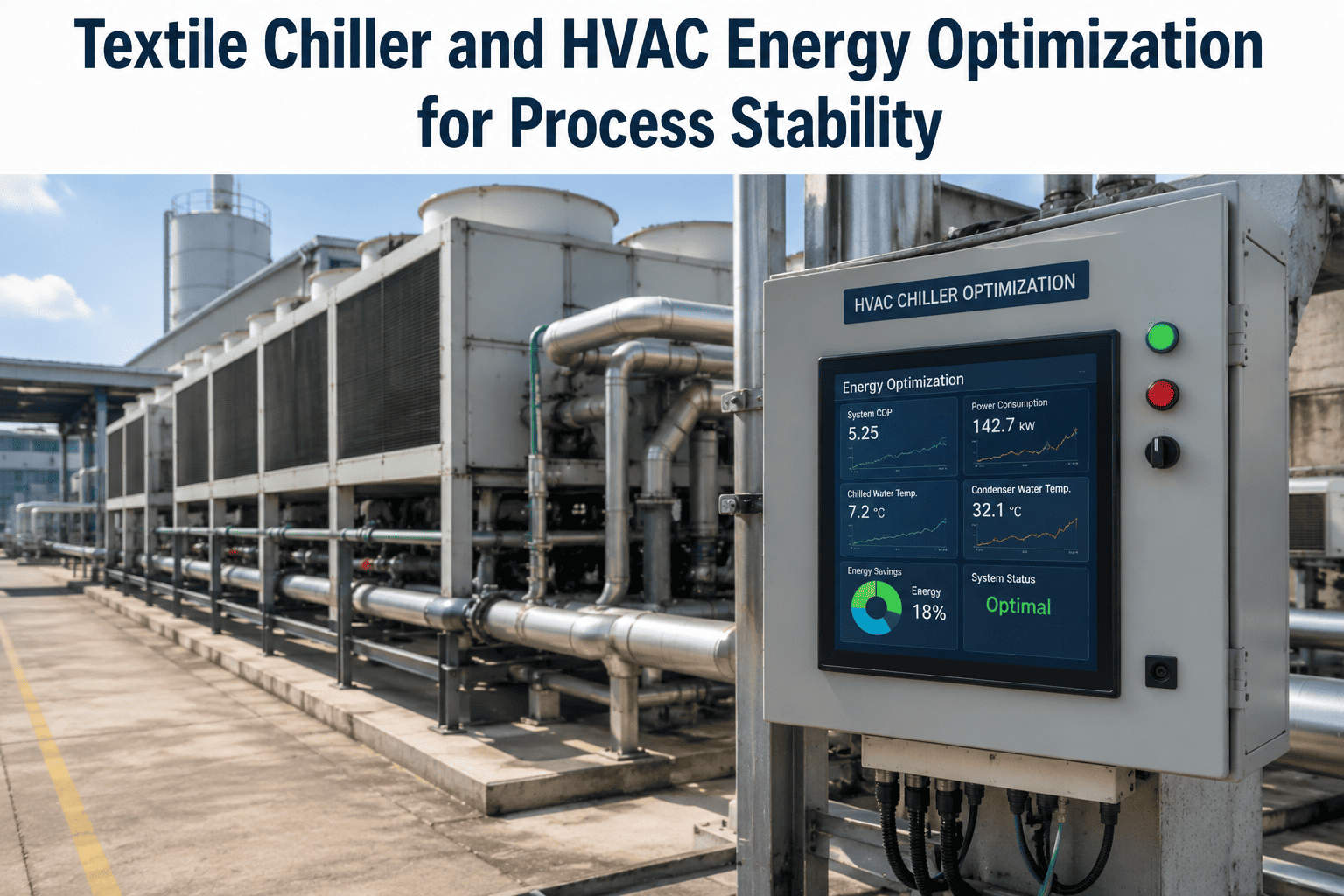
Model energy usage across all machines. Adjust parameters like ring frame speed or air conditioning settings to lower power consumption by 10-15% while maintaining quality.
Labor Allocation Planning
Simulate operator assignments and shift patterns to ensure optimal labor utilization. Reduce idle time and improve overall labor efficiency by 12%.
Order Feasibility Analysis
Before accepting a new order, simulate its impact on current capacity. Determine if the order can be fulfilled on time without disrupting existing commitments, reducing overpromising and late deliveries.
Quality Consistency
Monitor yarn quality parameters in the digital twin. Adjust process settings to maintain consistent CV%, thin places, and thick places, ensuring customer specifications are met every time.
Digital Twin Impact on Spinning Mill KPIs
| KPI | Before Digital Twin | After Digital Twin | Improvement |
|---|---|---|---|
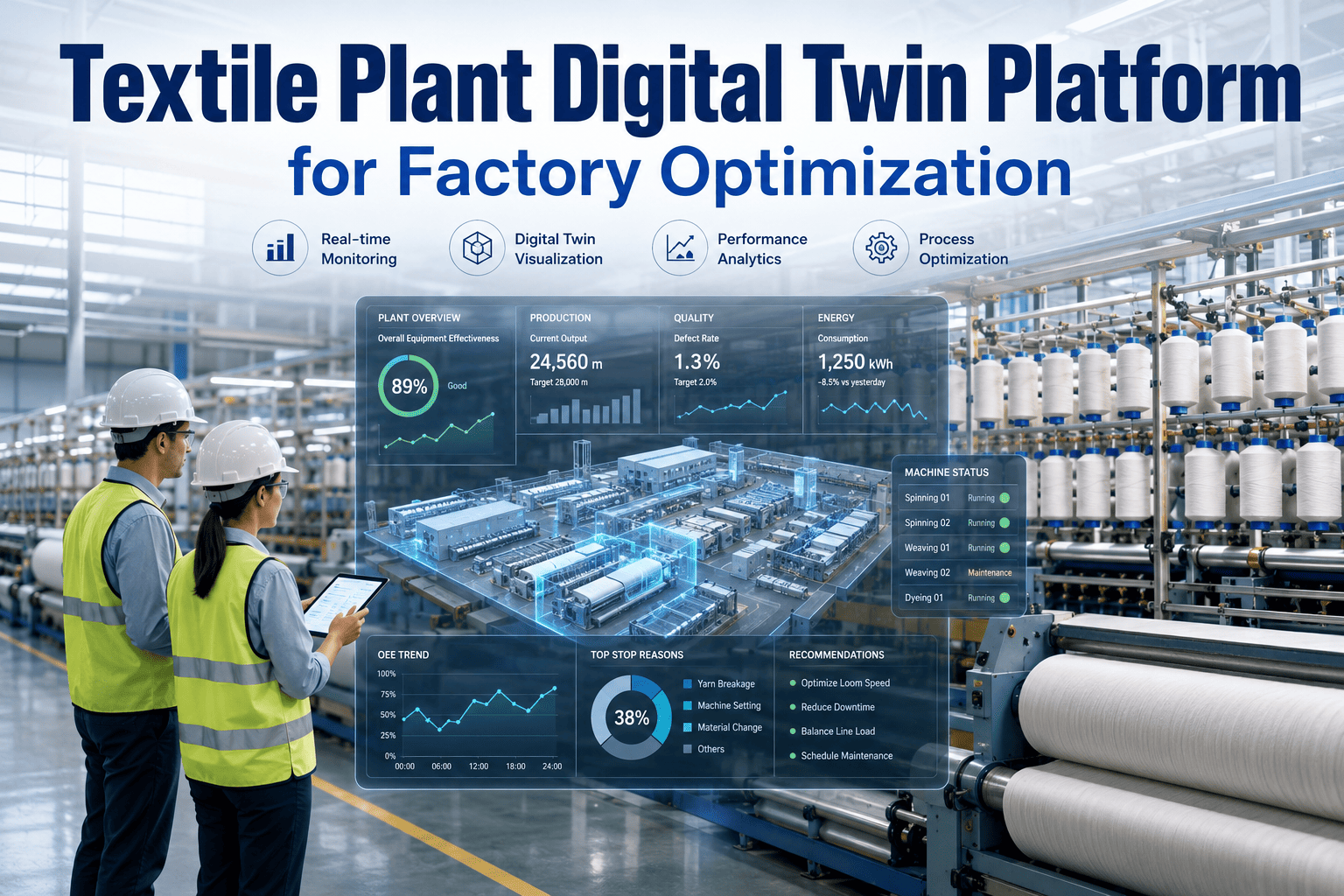
| Overall Equipment Effectiveness (OEE) | 75% | 88% | +17% |
| Unplanned Downtime (hours/month) | 45 | 32 | -29% |
| Order Fulfillment Accuracy | 82% | 96% | +17% |
| Energy Cost per Kg of Yarn | $0.45 | $0.38 | -16% |
| Labor Productivity (kg/operator-hour) | 18 | 22 | +22% |
| First Pass Yield | 89% | 95% | +7% |
Frequently Asked Questions
How does a digital twin simulate spinning mill capacity?
A digital twin creates a virtual replica of the entire spinning process, from blowroom to winding. It uses real-time data from IoT sensors on each machine to model production rates, material flow, and resource usage. Mill managers can then run simulations to test different scenarios, such as changing yarn count, adjusting machine speeds, or adding shifts. The simulation outputs predicted throughput, bottlenecks, and quality metrics, enabling precise capacity planning. Book a Demo to see how this works in your mill.
What data is required to build a digital twin for a spinning mill?
Building an accurate digital twin requires machine specifications (e.g., ring frame spindle count, carding cylinder speed), historical production data (e.g., throughput, downtime, quality), and real-time sensor data (e.g., vibration, temperature, speed). Additionally, material properties like fiber length, fineness, and strength are needed to model process behavior. iFactory's platform integrates with existing ERP and MES systems to pull this data automatically. Contact Support for a detailed data requirement checklist.
How long does it take to implement a digital twin for a spinning mill?
Implementation typically takes 4 to 8 weeks, depending on mill size and data availability. The process includes sensor installation, data integration, model calibration, and user training. iFactory's team works closely with your IT and production teams to ensure a smooth deployment. The digital twin can be operational and delivering insights within 6 weeks for a medium-sized mill. Book a Demo to discuss your specific timeline.
Can the digital twin help with new product development?
Yes, the digital twin is an excellent tool for new product development. Mills can simulate the production of new yarn counts, blends, or finishes without disrupting existing orders. The model predicts machine performance, material consumption, and quality outcomes, allowing R&D teams to optimize parameters before physical trials. This reduces development time by up to 40% and minimizes waste. Contact Support to learn more about simulation capabilities for new products.
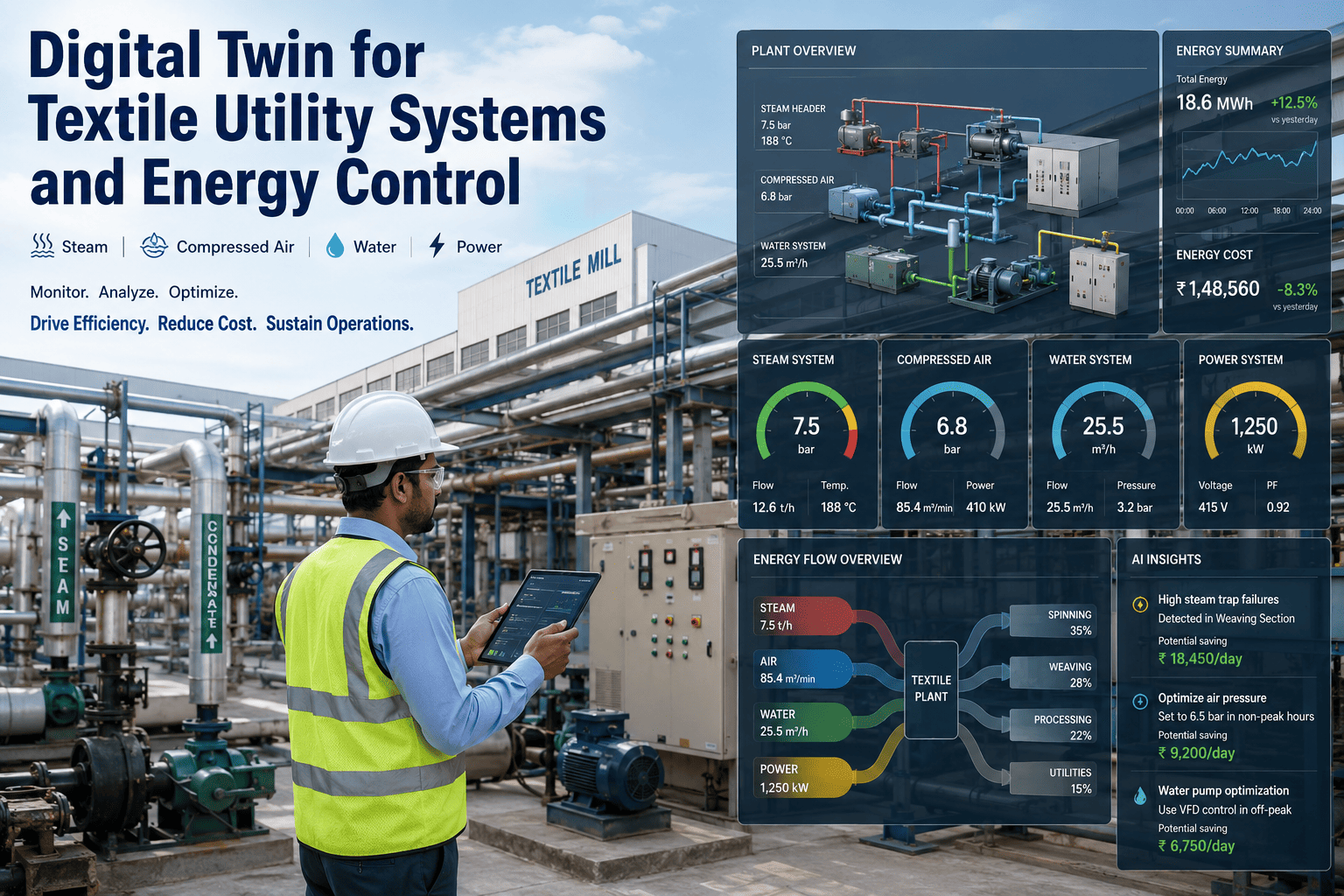
How does the digital twin handle utility constraints like power and compressed air?
The digital twin models utility consumption for each machine and process. It simulates the impact of power outages, compressor failures, or HVAC inefficiencies on production capacity. Mill managers can run scenarios to determine the best way to allocate limited utilities during peak demand or emergencies. This ensures that critical machines like ring frames and winding always have the resources they need. Book a Demo to see utility simulation in action.
Take Control of Your Spinning Mill Capacity Today
Stop reacting to problems. Start predicting and optimizing with iFactory's digital twin. See real results in your mill within weeks.