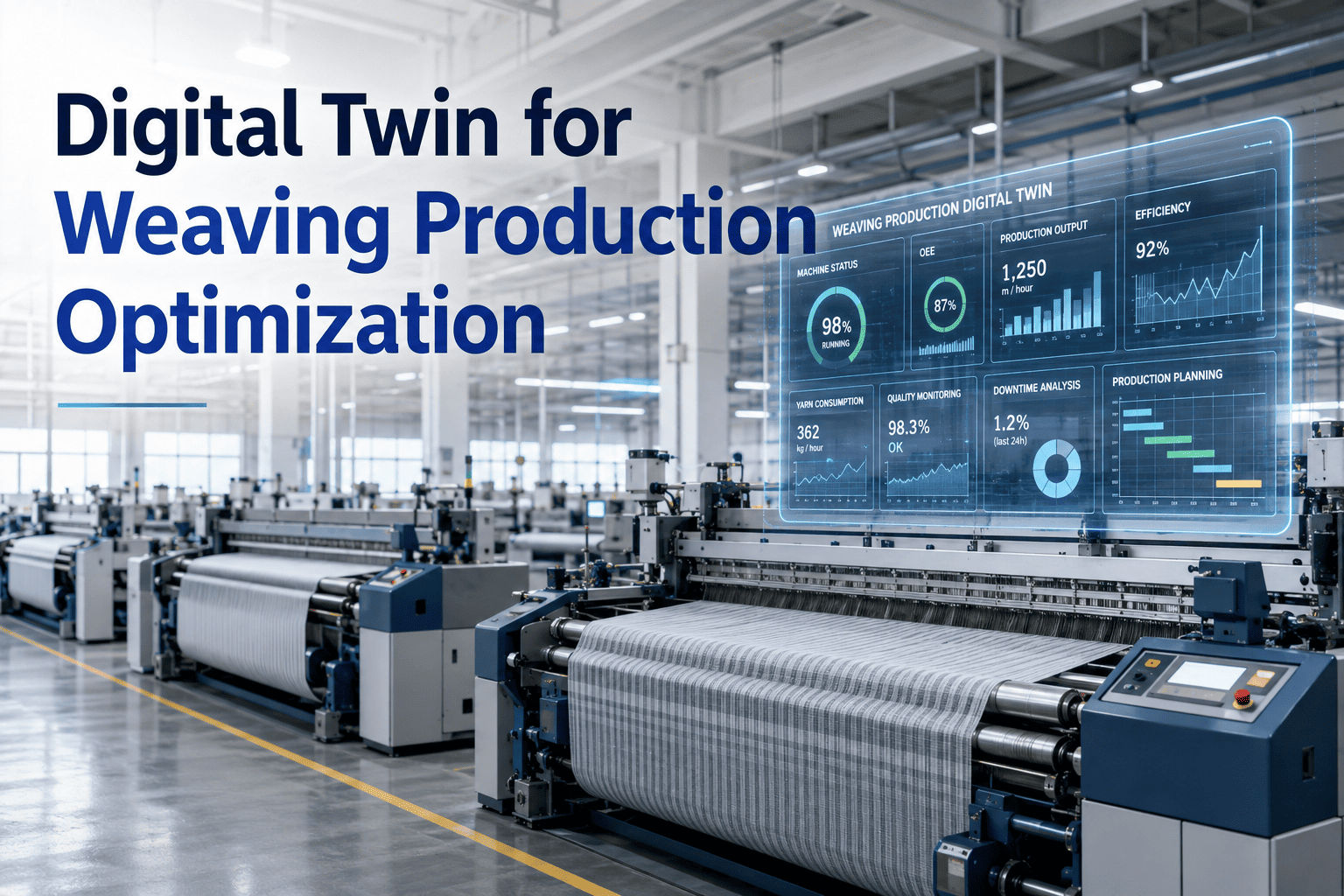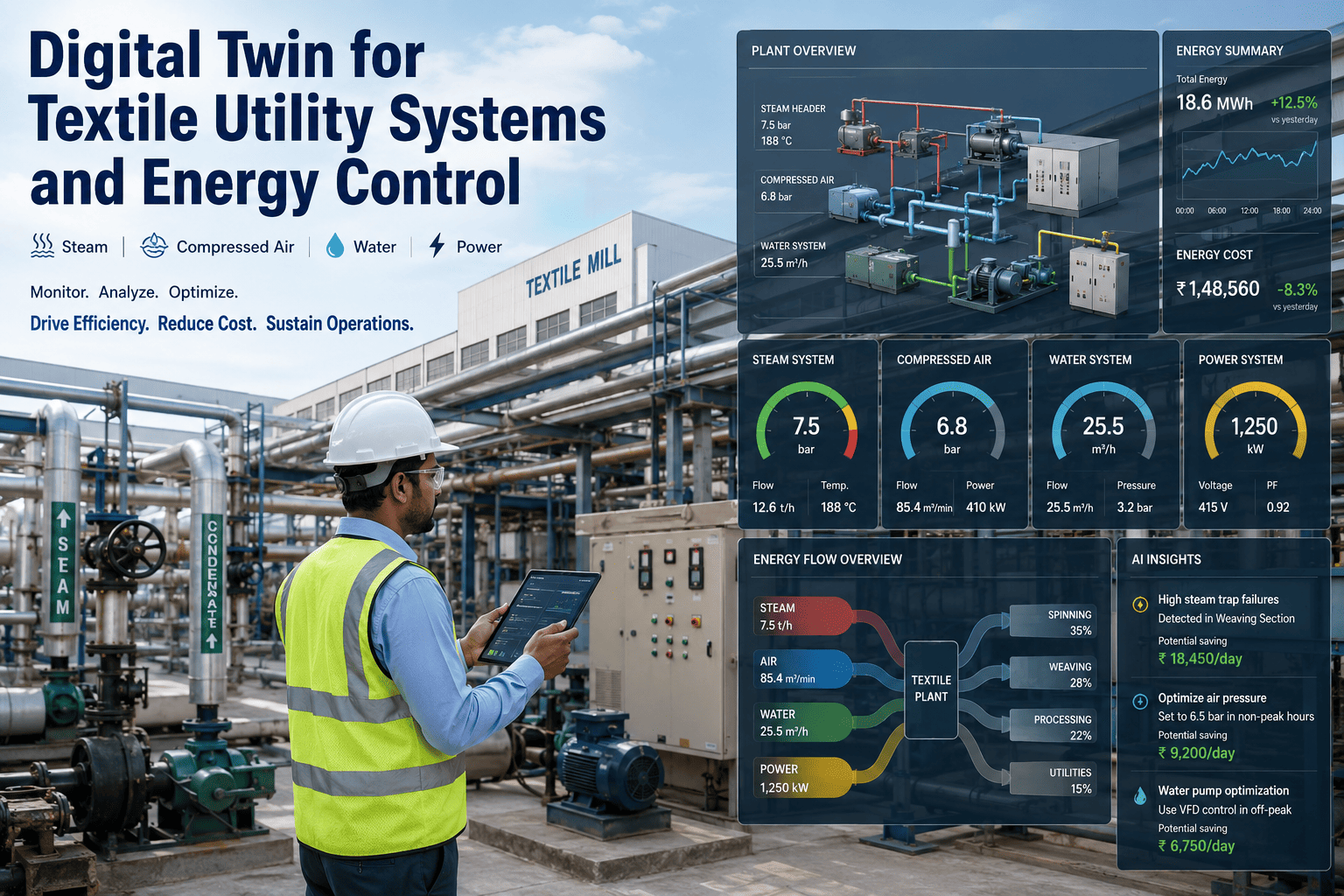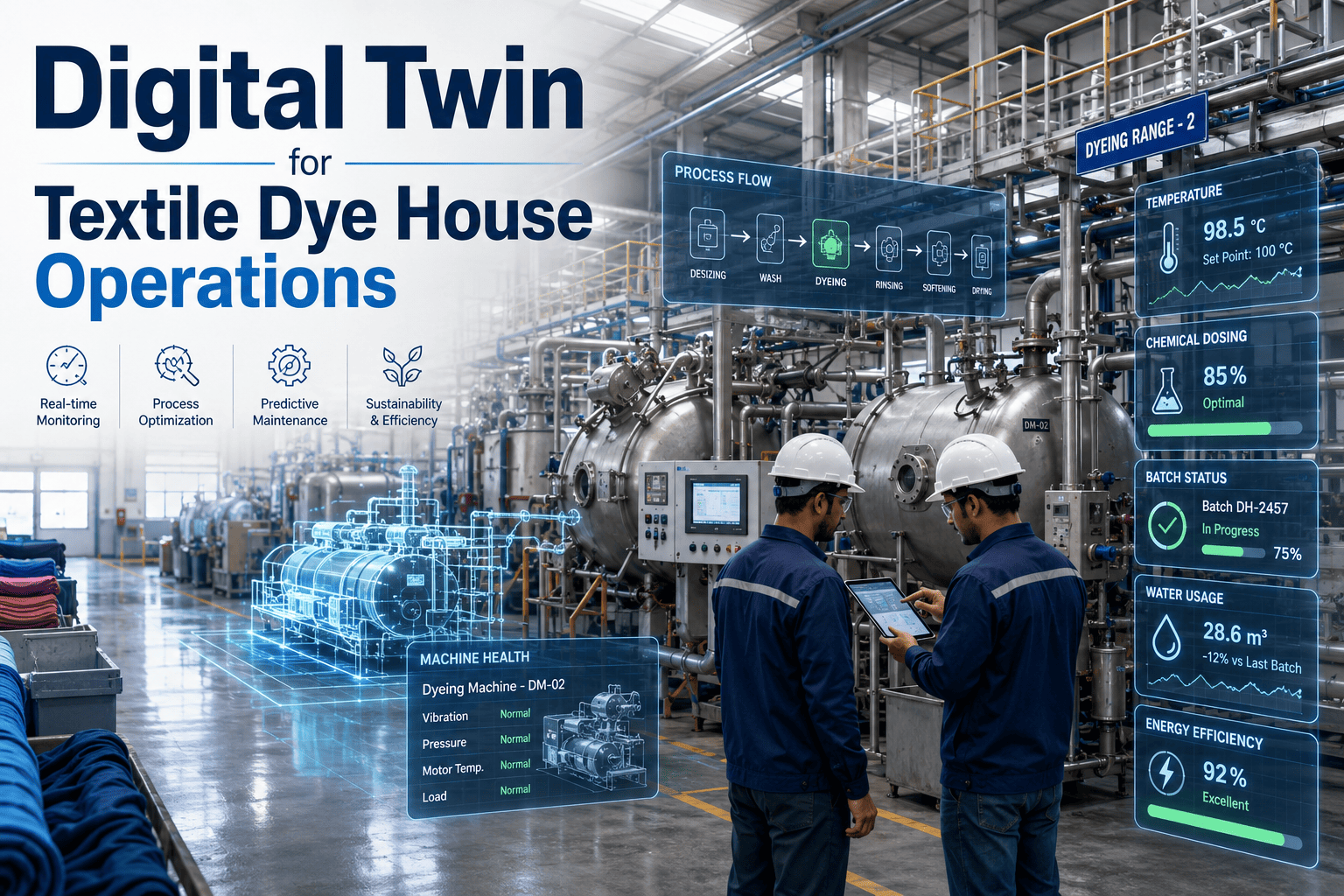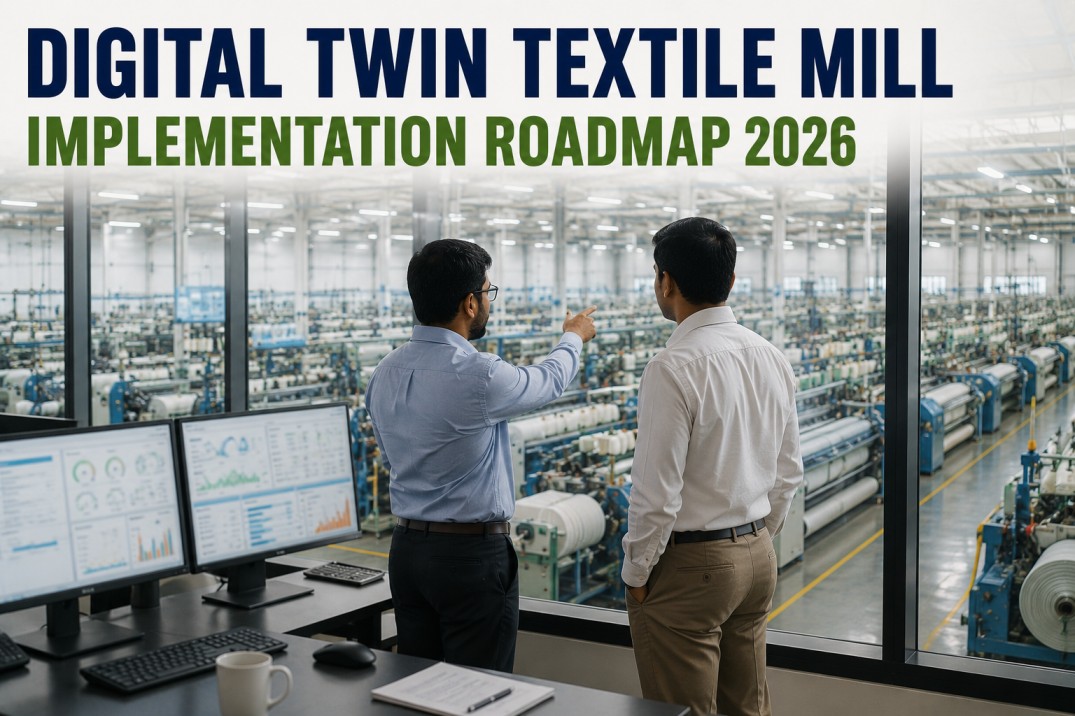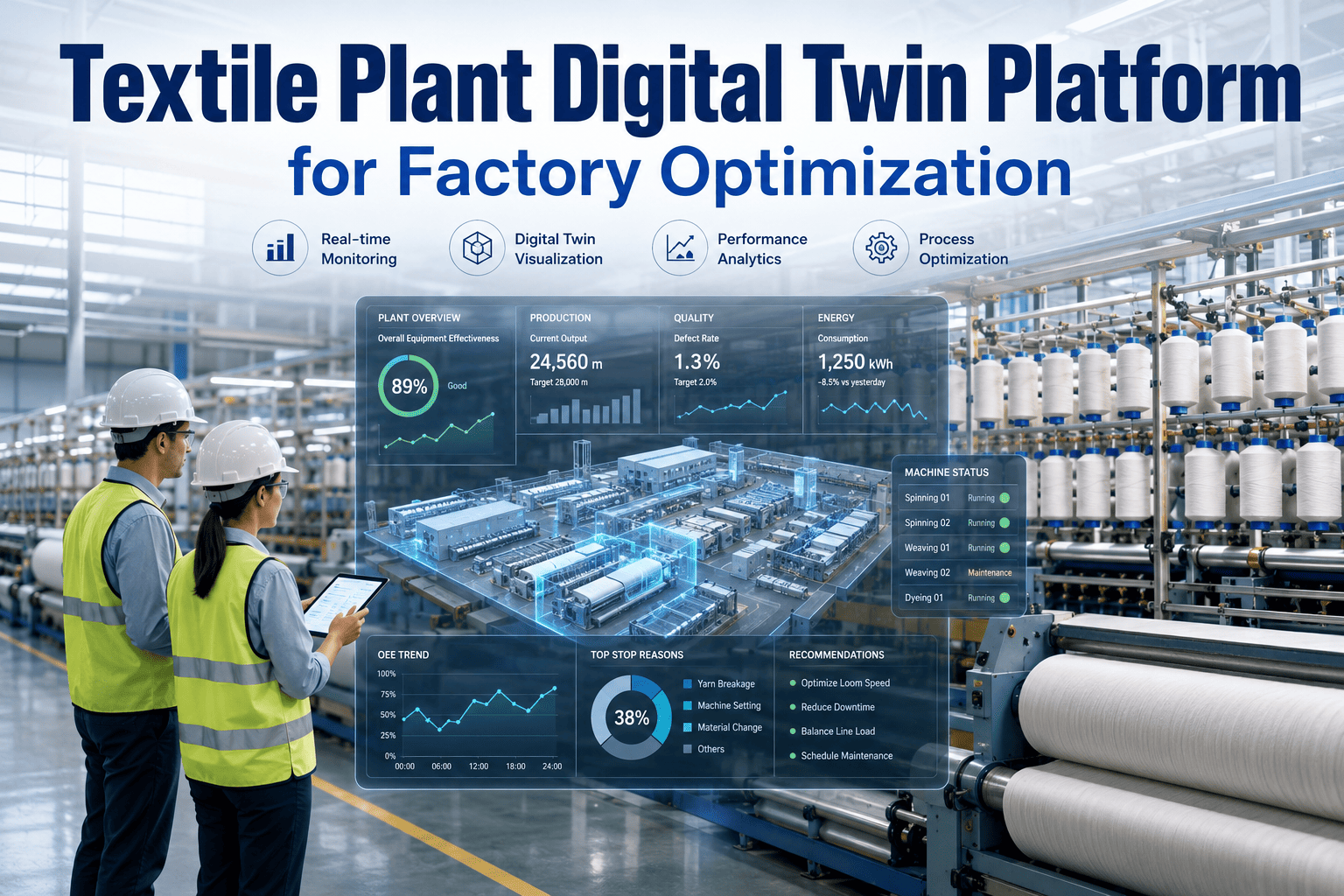
Every capacity decision in a textile mill, whether it's adding a shift, rerouting material flow, or squeezing more output from an existing line, is usually tested for the first time on the actual production floor, where mistakes cost real output and real money. A digital twin flips that order by letting a mill simulate the change first, using a live model of machines, material flow, and energy use built from the plant's own operational data. Bottlenecks, capacity limits, and energy tradeoffs show up in the simulation before a single machine setting changes on the floor. That means the expensive trial-and-error that used to happen in production now happens in software instead, and plants exploring this can book a demo to see a twin built from a real mill layout.
DIGITAL TWIN · FACTORY OPTIMIZATION
Test the Change Before It Costs You Production Time
A live digital twin of your mill simulates capacity, material flow, bottlenecks, and energy use, so decisions get tested in software before they touch the actual production floor.
Machine Layer
Real-time machine states and throughput feed the model continuously
Material Flow Layer
Work-in-progress movement between stages is mapped and tracked
Capacity Layer
Bottlenecks and idle capacity across lines are surfaced automatically
Energy Layer
Power draw by machine and process stage is tracked against output
Why Simulating First Beats Learning on the Floor
Adding a shift, changing a product mix, or rerouting a bottlenecked process sounds simple in a planning meeting, but the downstream effects on capacity and energy use are hard to predict from experience alone once a mill has more than a handful of interdependent lines. Running that change on the actual floor to find out what happens is the traditional approach, and it's also the expensive one, since a miscalculated shift addition or a rerouted line that creates a new bottleneck elsewhere costs weeks of lost efficiency to correct.
SIMULATE YOUR OWN LAYOUT
See Your Mill's Twin Built From Your Own Floor Plan
Walk through a capacity or energy scenario using your actual line data.
What a Simulated Scenario Looks Like
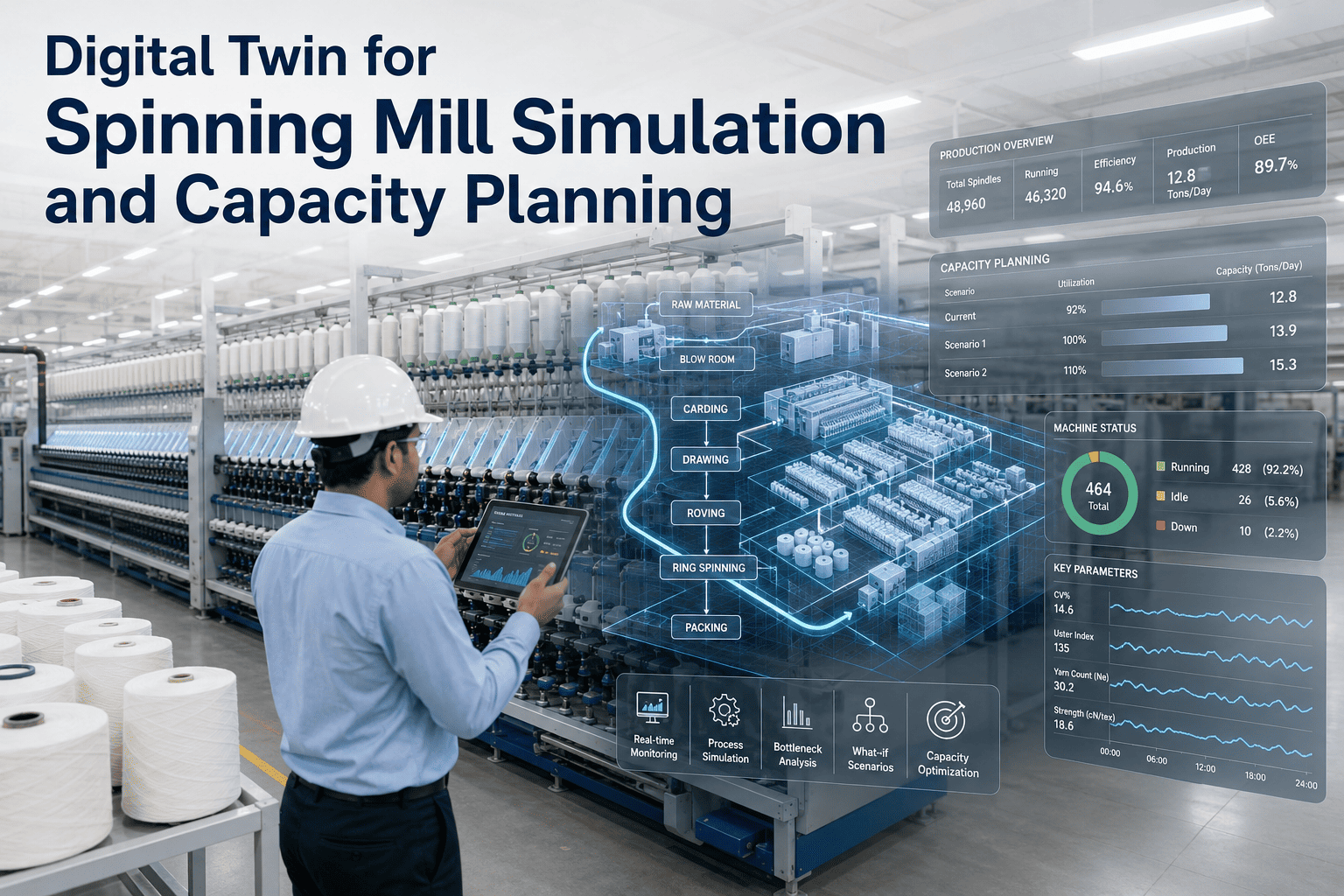
A capacity scenario compares current line utilization against a proposed change, showing where the model expects new bottlenecks or freed-up capacity to appear before anything changes on the floor.
10-30%
Typical energy consumption reduction identified through simulation-driven optimization
1%
Cut in production scrap can lower a mill's overall carbon footprint by more than 1%
Before It Happens
Bottlenecks and capacity conflicts get identified before a floor change is made
What an Operations Director Told Us
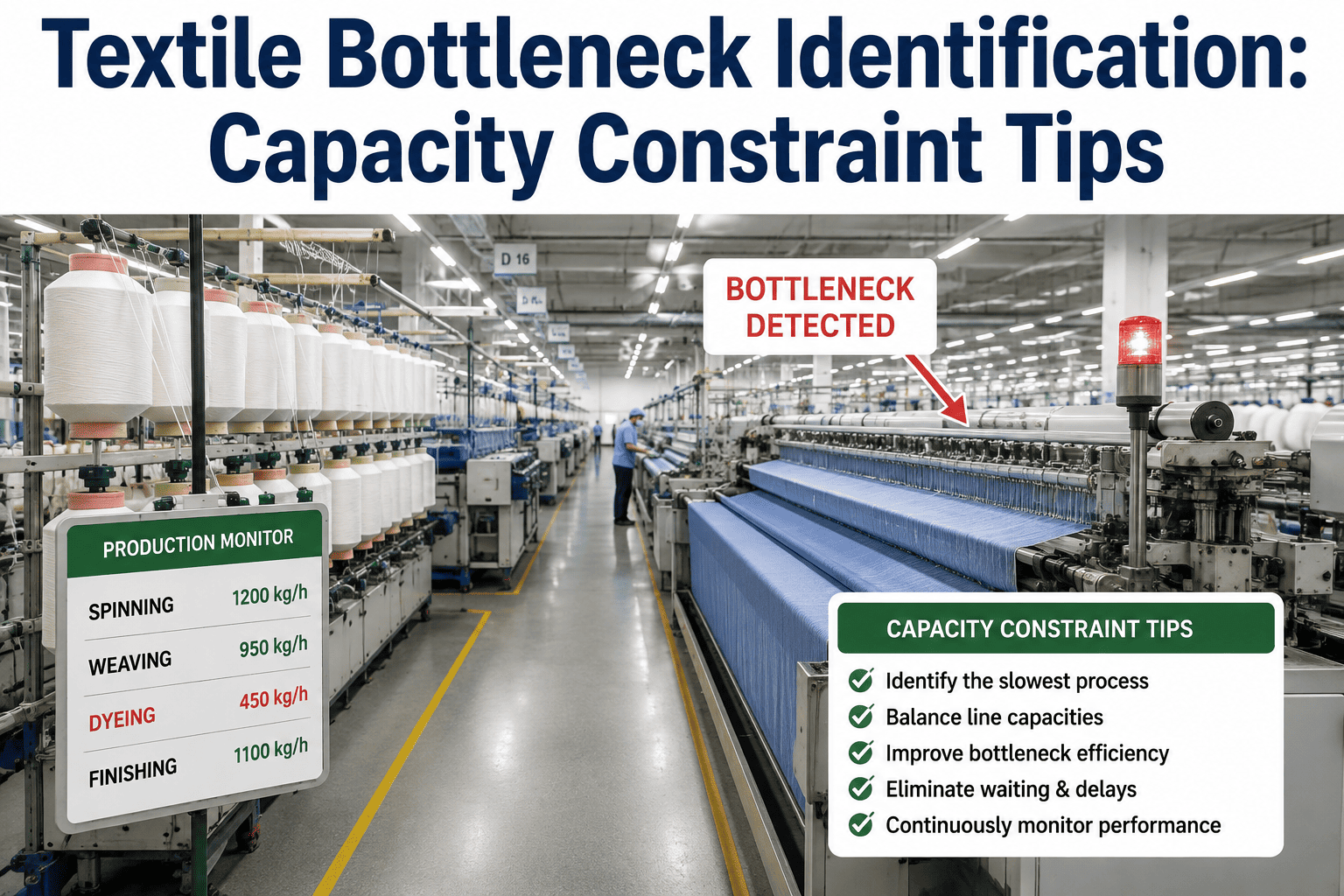
We were about to add a second shift to weaving without realizing finishing couldn't absorb the extra volume. The simulation caught that in an afternoon, something that would have taken us a costly quarter to discover on the actual floor.
Operations Director, Composite Textile Group
Frequently Asked Questions
How accurate is the twin compared to the actual floor?
Accuracy depends on how much real operational data feeds the model, and most mills see the twin closely track actual floor behavior once it's calibrated against a few weeks of live machine and material flow data. The model improves continuously as more real data flows in, so early simulations are directional while later ones become precise enough for confident capacity decisions. A demo can show calibration accuracy on a sample scenario.
Do we need new sensors installed before building a twin?
Most mills already generate enough machine and process data through existing IoT sensors and MES systems to build an initial twin, and the platform connects to that data rather than requiring a full new sensor deployment. Gaps in specific areas, like energy metering on older equipment, can be added incrementally as the twin's scope expands. Current data availability can be reviewed with support.
Can the twin model multiple mill locations at once?
Yes, larger operations often build a twin per location first and then connect them for cross-site capacity and material flow planning, since demand shifts between sites are common in multi-plant operations. This lets corporate planning teams simulate moving production between mills, not just optimizing within a single location.
How long does it take to build an initial working twin?
An initial twin covering core lines typically takes a few weeks once data connections are in place, with accuracy improving over the following months as the model sees more real production cycles and seasonal variation. Plants usually start running their first real capacity or energy scenarios well before the twin is fully mature across every process stage.
Does simulating energy use actually change our energy bill?
The simulation itself doesn't change consumption, but it identifies where machines run inefficiently or where scheduling shifts could avoid peak tariff windows, and mills that act on those findings typically see meaningful reductions in both energy costs and overall waste. The value comes from acting on what the twin surfaces, which is why most rollouts pair simulation with a defined follow-up process.
MODEL YOUR NEXT CAPACITY DECISION
Find the Bottleneck Before You Build the Change
Get a working simulation built around your mill's actual layout and data.