Steam is the circulatory system of a textile mill. Wet processing — desizing, scouring, bleaching, dyeing, finishing — consumes 60 to 70 percent of a mill's total thermal energy, and the boiler house is the single largest utility cost center on the balance sheet. Most textile mills operate their steam systems at 72 to 78 percent efficiency, meaning nearly a quarter of every fuel dollar leaves the stack as wasted heat. At scale, a mid-size mill burning 30 tons of coal per day at 74 percent efficiency loses the equivalent of 7.8 tons of coal daily to incomplete combustion, radiation, and condensate not returned. The gap between a neglected steam system and a managed one is not academic — it represents direct annual savings of $400,000 to $1.2 million for the typical integrated textile operation producing 20 to 50 tons of fabric per day.
Turn Steam Inefficiency Into Margin Improvement
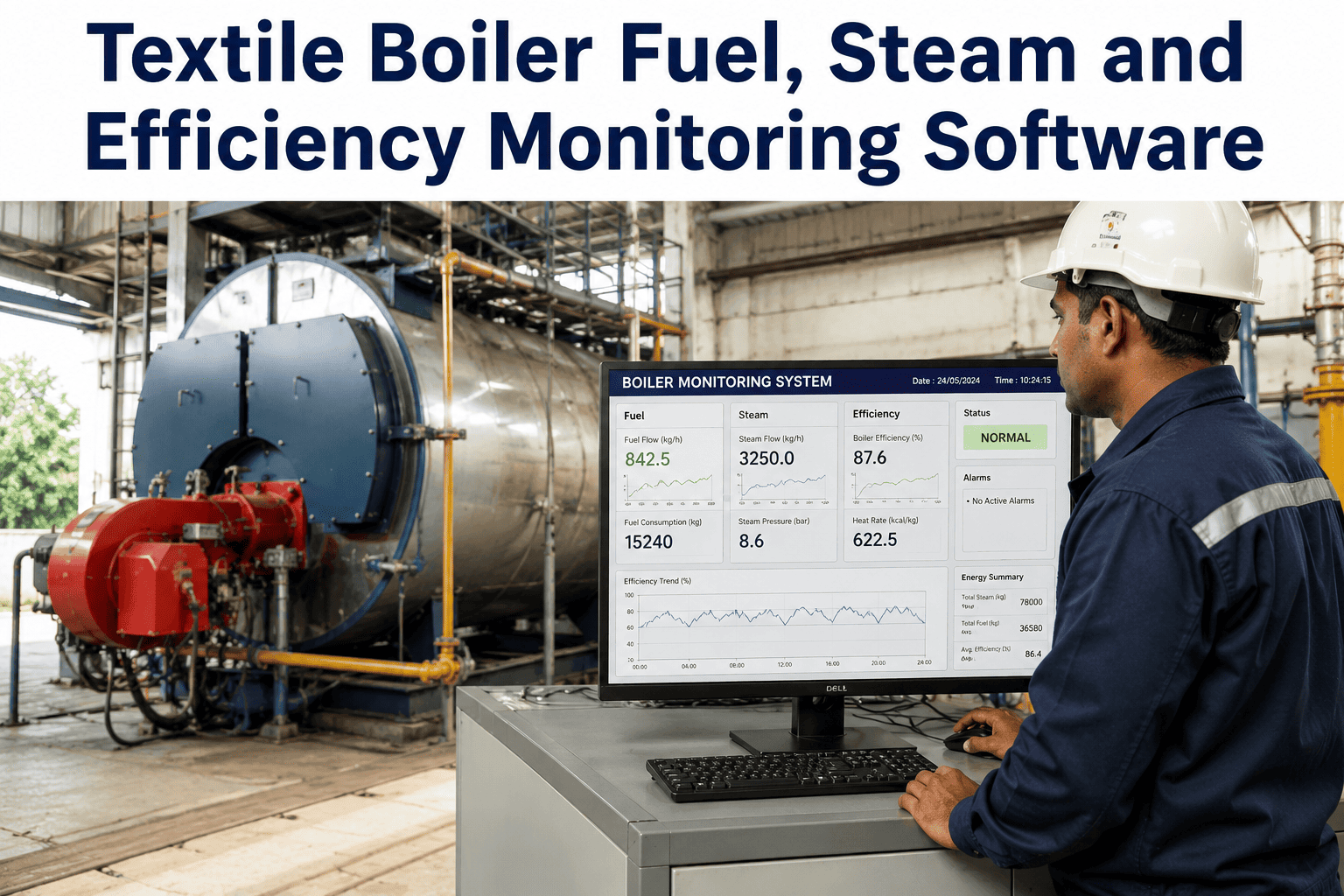
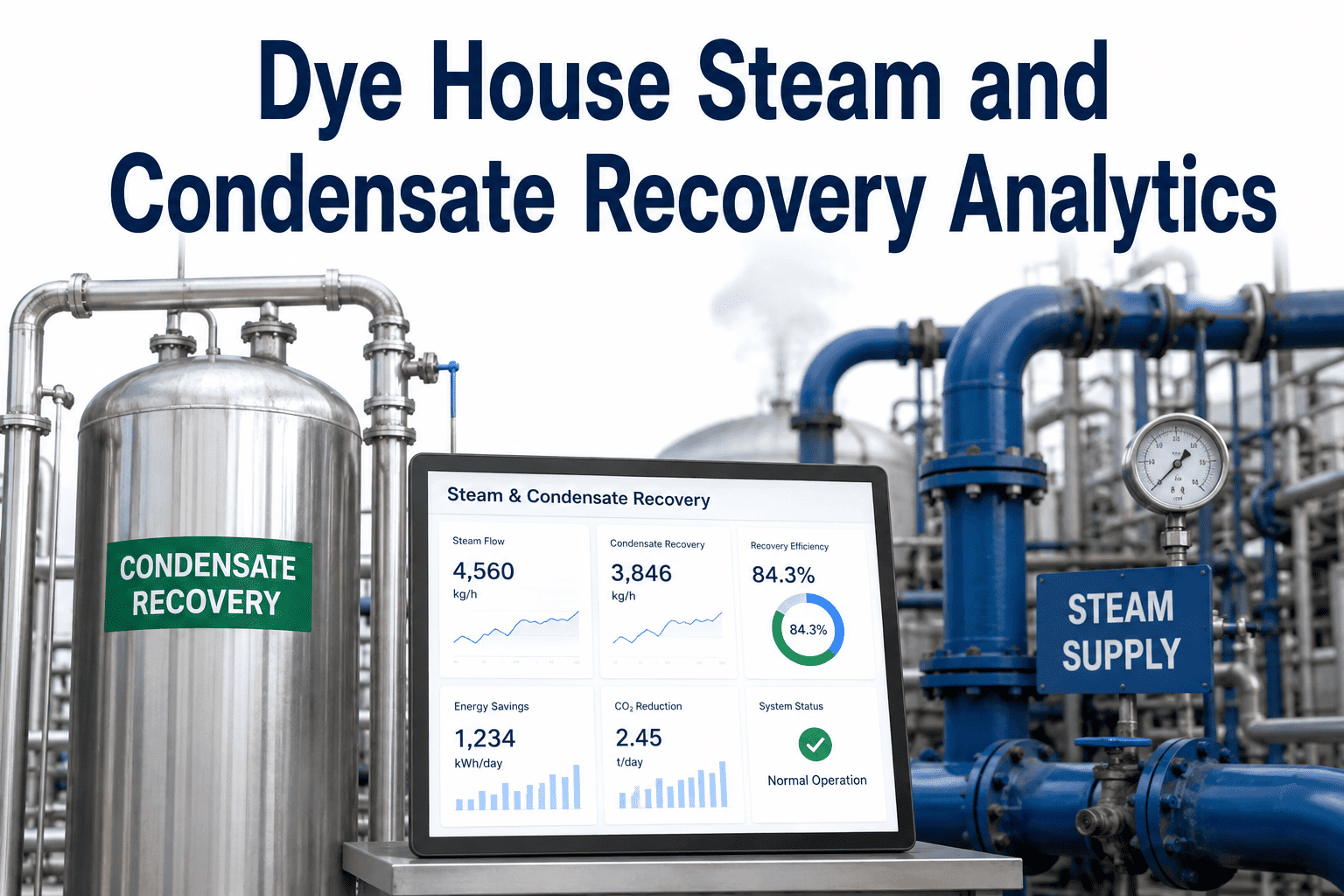
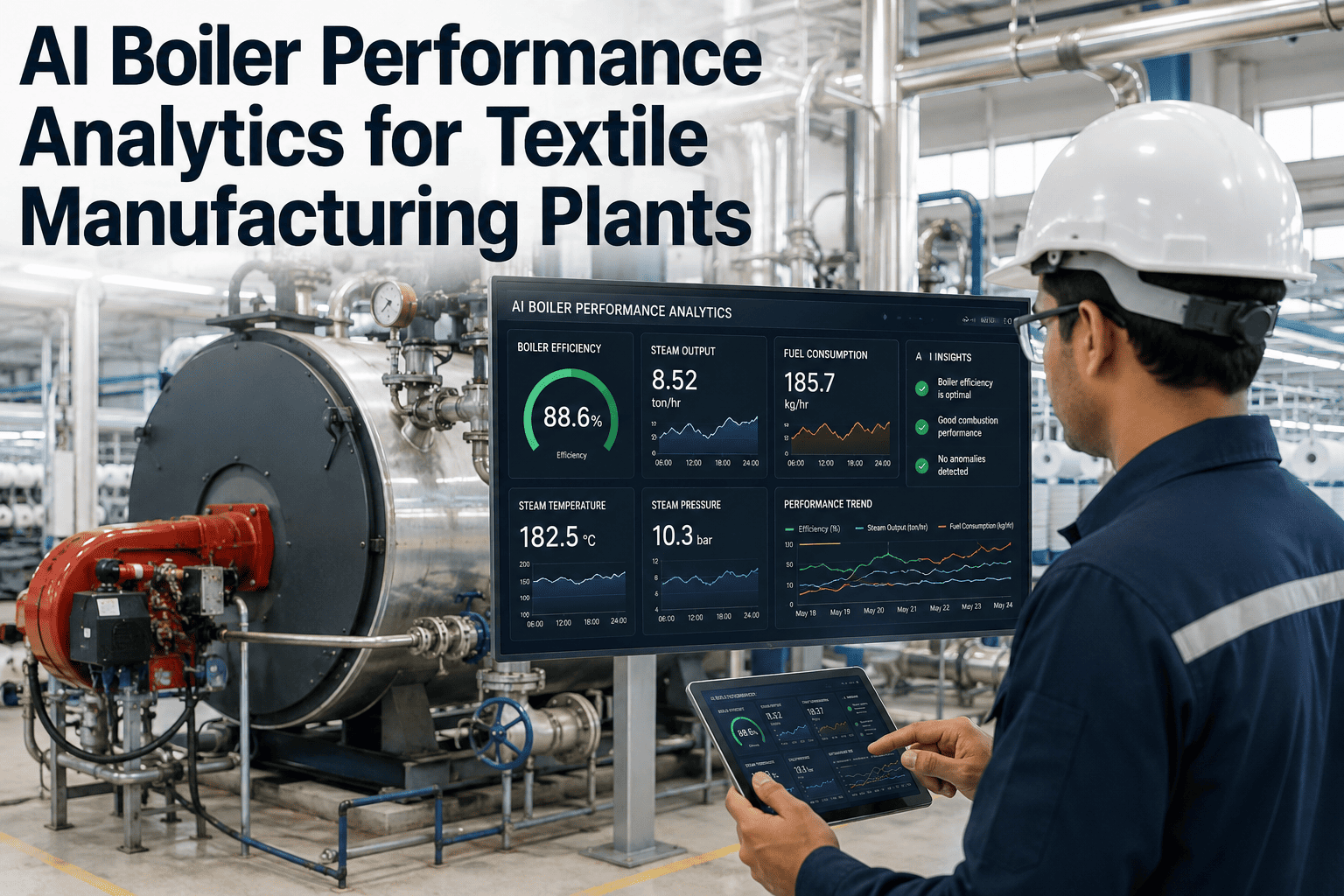
iFactory Boiler Monitoring connects boiler PLCs, steam flow meters, condensate sensors, and quality analyzers into a single dashboard that tracks efficiency in real time and flags deviations before they compound into fuel waste.
Four KPIs That Define Steam System Health
These four metrics provide a complete picture of boiler house performance. Tracking them daily — not monthly — separates mills that sustain 86-plus percent efficiency from those that drift toward 72 percent without realizing it.
Boiler Efficiency
88%Combustion tuning, excess air optimization, and soot-blow scheduling push efficiency past 86 percent. Each 1 percent gain on a 10 TPH boiler saves approximately $12,000 annually in fuel cost.
Condensate Return Rate
82%Every ton of condensate returned at 95 deg C saves $10 in water treatment chemicals, fuel to reheat feedwater, and sewage charges. Most mills abandon 55 percent of this value down the drain.
Steam-to-Fabric Ratio
10:1Kilograms of steam consumed per kilogram of fabric produced. Mills exceeding 12:1 typically have undetected trap failures, uninsulated piping, or condensate not returned.
Specific Fuel Consumption
1.45Kilograms of coal equivalent consumed per ton of steam generated. Baseline 1.80 reflects standard textile mill performance. The 1.45 target is achievable with integrated monitoring, tuning, and recovery.
Where Steam Losses Accumulate From Feedwater to Process
A pound of steam generated at the boiler loses energy at every stage before it reaches the fabric. Understanding where and why these losses occur is the prerequisite to fixing them.
Feedwater Treatment & Preheating
Hard water causes scale buildup on heat transfer surfaces. A 1-millimeter scale layer increases fuel consumption by 7 to 11 percent. Economizers recover flue gas heat to preheat feedwater, recovering 3 to 5 percent of stack losses.
Combustion & Heat Transfer
Incomplete combustion from improper air-to-fuel ratio is the largest single efficiency loss. Excess oxygen above 5 percent in flue gas wastes fuel heating air that never contributes to steam generation. Soot buildup on fire tubes degrades heat transfer progressively.
Distribution Piping & Insulation
Bare or damaged steam pipes radiate heat continuously. In textile mills with long overhead pipe runs — common in weaving and finishing sheds — distribution losses reach 5 to 8 percent. Proper insulation of flanges, valves, and pipe sections recovers this waste directly.
Steam Traps & Condensate Drainage
A single failed-open steam trap can waste $500 to $1,200 per year in live steam discharge. Studies show 15 to 25 percent of traps in textile mills have failed open. Traps that fail closed flood heat exchangers, reducing production throughput and fabric quality.
Condensate Recovery
Hot condensate at 95 deg C contains roughly 25 percent of the energy from the original steam. Mills with recovery below 50 percent are literally sending a quarter of their fuel budget to the drain. Each 10 percent improvement in return rate saves 1.2 to 1.5 percent of total boiler fuel.
Steam Intensity by Wet Process
Steam consumption varies dramatically across wet processes. Knowing the benchmark for each stage lets operations teams isolate the processes that deviate from target and prioritize interventions where the payback is largest.
| Wet Process | Typical Steam kg/kg Fabric | Target Steam kg/kg Fabric | Saving Potential | Primary Loss Cause |
|---|---|---|---|---|
| Desizing | 3.0 - 4.0 | 2.0 - 2.8 | 30-35% | Uncovered bleach bath, direct steam injection |
| Scouring / Kier | 3.5 - 5.0 | 2.5 - 3.2 | 30-40% | Low condensate return from J-box |
| Bleaching | 2.5 - 3.5 | 1.8 - 2.2 | 30-35% | Heat loss from open saturation baths |
| Dyeing | 5.0 - 7.0 | 3.5 - 4.5 | 30-40% | Failed traps on drying cans, long liquor ratios |
| Drying / Stenter | 2.0 - 3.0 | 1.3 - 1.8 | 30-40% | Exhaust heat loss, non-returned drying cylinder condensate |
Benchmark Your Processes Against Industry Targets
iFactory maps live steam consumption per process, per shift, per machine — and flags any process that exceeds its target steam-to-fabric ratio before the waste compounds.
Five Actions That Deliver Verified Steam Savings
Each of these interventions has documented payback under 12 months in textile mill environments. The sequence matters — combustion tuning and trap repair come first because they deliver the largest savings with the smallest capital outlay.
Combustion Tuning & Excess Air Control
Continuous oxygen trim control maintains excess O2 at 3 percent. For a 10 TPH coal-fired boiler, this alone saves 5 to 8 percent of fuel. Flue gas temperature monitoring detects soot buildup and triggers automatic soot-blowing.
Steam Trap Survey & Replacement Program
Annual trap audit with quarterly follow-up. Infrared and ultrasonic scanning identifies failed-open and failed-closed traps. Replacement of failed traps with venturi-orifice or thermostatic elements for each pressure range.
Condensate Recovery Loop Expansion
Install recovery piping from drying cylinders, J-boxes, and dyeing machine coils to a central condensate collection tank with flash tank. Return 95 deg C water to deaerator. Each 10 percent increase in return rate cuts fuel consumption 1.5 percent.
Pipe, Valve & Flange Insulation Program
Systematic insulation of all bare steam piping, flanges, valves, and condensate return lines. For a 150-meter uninsulated 6-inch steam main operating at 10 bar, annual heat loss equals approximately $18,000 in fuel value.
Boiler Load Optimization & Sequencing
Multiple boilers operating at partial load waste fuel. Load management algorithms sequence boilers to operate each unit nearest its peak efficiency point. Minimum load constraints prevent short-cycling on small steam demand fluctuations.
Fuel Economics & Emissions at a Glance
Fuel choice is a multi-variable decision that affects boiler efficiency, operating cost, and regulatory compliance. The table below compares the four most common textile mill fuels on the metrics that matter for operations and finance.
| Fuel Type | Energy Density (kcal/kg) | Relative Cost per MMBtu | Achievable Boiler Efficiency | CO2 Intensity | Ash / Residue |
|---|---|---|---|---|---|
| Coal (Indian/Bituminous) | 5,000 - 6,500 | Baseline | 78-84% | High | Significant |
| Natural Gas / PNG | 9,000 - 10,000 | 1.5 - 2.5x | 88-93% | Moderate | None |
| Biomass (Rice Husk / Briquettes) | 3,200 - 4,000 | 0.6 - 0.9x | 72-78% | Low | Moderate |
| Furnace Oil / HSD | 9,500 - 10,500 | 2.0 - 3.5x | 82-87% | Moderate | Low |
Frequently Asked Questions
What is a realistic boiler efficiency target for a textile mill?
For coal-fired boilers common in textile mills, sustained efficiency of 82 to 86 percent is achievable with combustion tuning, soot-blowing discipline, and excess air control. Oil and gas-fired boilers can reach 88 to 93 percent. Achieving these targets requires continuous monitoring — not periodic manual measurements — because efficiency drifts daily as fuel quality, load conditions, and tube cleanliness change.
How much can condensate recovery improve fuel consumption?
Returning high-temperature condensate to the boiler feedwater reduces the thermal energy required to raise feedwater to saturation temperature. Each 10 percent increase in condensate return rate reduces boiler fuel consumption by approximately 1.2 to 1.5 percent. A mill moving from 45 percent to 82 percent return — common in iFactory projects — eliminates roughly 5 to 6 percent of total boiler fuel spend through this single intervention.
How does iFactory monitor boiler efficiency in real time?
iFactory connects to existing boiler PLCs, gas analyzers, flow meters, and temperature sensors. The platform calculates direct and indirect efficiency using the ASME PTC 4.1 standard — accounting for fuel properties, flue gas composition, feedwater temperature, blowdown rate, and surface radiation losses. Efficiency is displayed as a live KPI with trend lines, and automated alerts trigger when efficiency drops below defined thresholds or deviates from the trailing seven-day average.
What is the typical payback period for boiler optimization monitoring?
iFactory's Boiler Monitoring module typically pays for itself within 6 to 10 months in a mid-size textile mill. The quickest returns come from identifying combustion drift and trap failures — both of which are common in textile environments and both of which iFactory catches within days of deployment. Annual savings range from $80,000 for a small mill with a single 10 TPH boiler to over $400,000 for larger operations with multiple boilers serving weaving, dyeing, and finishing.
What is the ideal steam-to-fabric ratio for an integrated textile mill?
An integrated mill performing desizing, scouring, bleaching, dyeing, and finishing should target 9 to 11 kilograms of steam per kilogram of fabric produced. Mills above 13:1 have actionable losses — typically condensate not returned, uninsulated distribution piping, or failed steam traps. The ratio varies by fabric type (cotton vs. polyester vs. blends) and process sequence, which is why iFactory tracks it per-product instead of using a single mill-level number.
Steam Is Your Mill's Largest Utility Cost — Measure It Like One
iFactory delivers real-time boiler efficiency, per-process steam intensity, condensate return tracking, and automated alerts when any KPI deviates from target. Deployed in days, integrated with your existing sensors and PLCs.