Organic cotton accounts for approximately 1 to 2 percent of global cotton production, yet labels claiming organic content appear on an estimated 5 to 8 percent of cotton-containing garments sold at retail — a gap that represents roughly 200,000 to 300,000 metric tons of fraudulent organic claims annually, according to Textile Exchange market data. Brands and retailers under pressure from EU Digital Product Passport regulations (effective 2026), US Federal Trade Commission Green Guides enforcement, and consumer litigation over false sustainability claims are demanding verifiable chain-of-custody documentation that conventional paper certificates cannot reliably provide. Blockchain-based traceability platforms — TextileGenesis, TrusTrace, and FibreTrace — address this gap by recording each transaction from farm gin to finished garment on an immutable distributed ledger, with physical tracer technologies (FibreTrace's luminescent pigments) or mass-balance reconciliation (TextileGenesis's Token system) providing material-to-transaction verification. For textile mills, implementing blockchain traceability is no longer optional: every major brand group has at least one blockchain pilot program, and buyers are beginning to require digital traceability as a condition of vendor registration for organic cotton programs.
Blockchain-Ready Organic Cotton Traceability
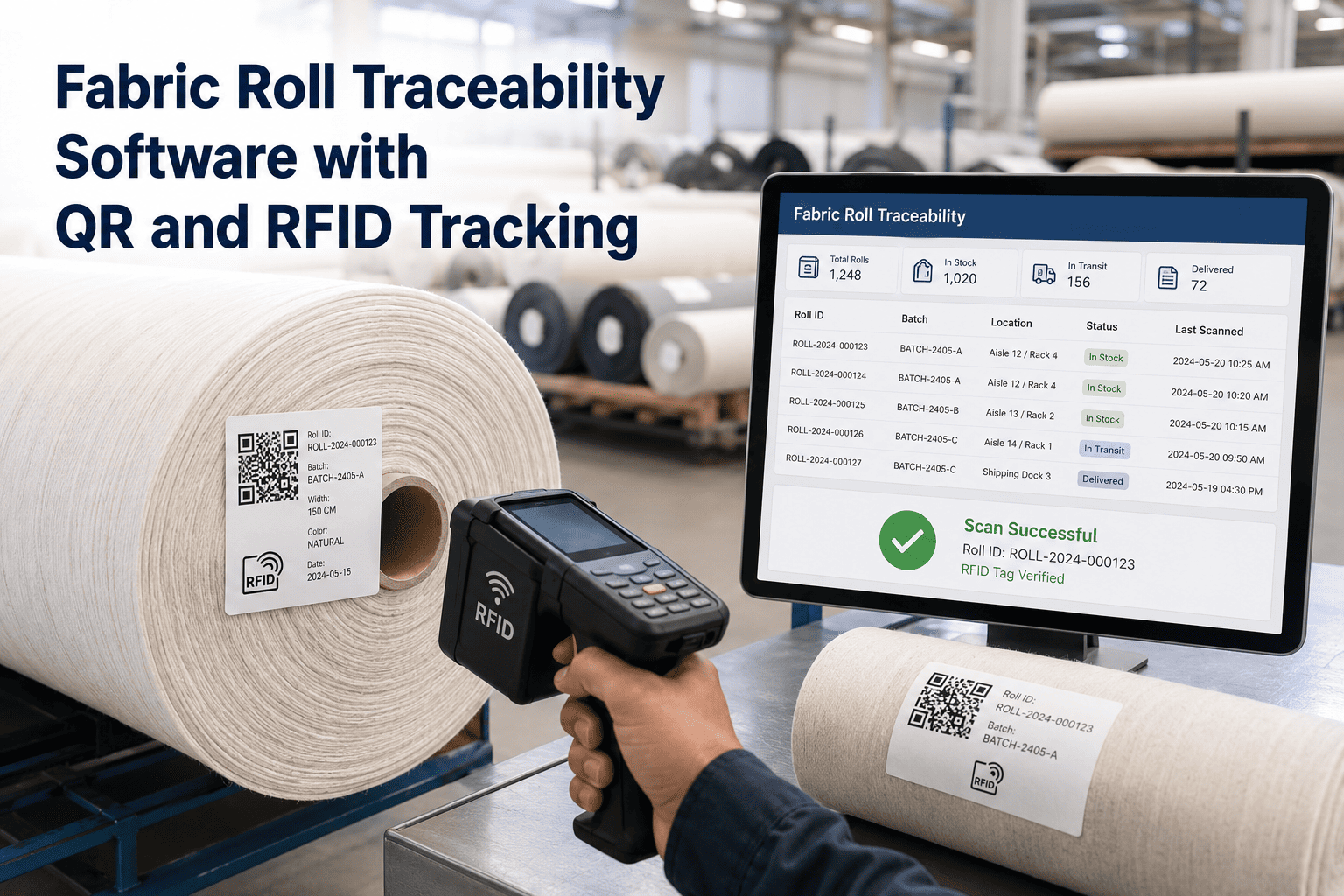
iFactory Traceability Module integrates with TextileGenesis, TrusTrace, and FibreTrace APIs to automate data collection at every stage — from gin receipt to finished fabric shipment.
Four Reasons Traceability Is Now a Buying Requirement
The gap between organic cotton production and organic cotton claims has triggered regulatory, legal, and brand-level responses that make blockchain traceability a condition of market access rather than a differentiator.
For every 1 ton of verified organic cotton, approximately 5 tons of labeled organic cotton products appear at retail. The gap represents systematic fraud in paper-based certification systems.
A 2025 Textile Exchange survey found 86 percent of responding brands and retailers plan to require digital chain-of-custody documentation for organic cotton by 2027, up from 34 percent in 2023.
Mills with verified blockchain traceability capture the full organic premium. Mills relying on paper certificates face 10 to 15 percent discount requests from buyers who cannot verify the organic claim downstream.
The ESPR regulation requires digital product passports with verified sustainability data for textile imports. Organic claims must be backed by auditable chain-of-custody records accessible via QR code.
How Blockchain Traceability Links Field to Fabric
Each supply chain stage creates a verifiable data block on the ledger. The chain link between blocks represents a certified transaction that can be audited independently by brands, certifiers, and regulators.
Traceability Platform Comparison
Three major platforms dominate organic cotton blockchain traceability. Each takes a different technical approach to verifying that organic material claims match physical material flows.
| Feature | TextileGenesis | TrusTrace | FibreTrace |
|---|---|---|---|
| Technology | Blockchain (EOSIO), mass-balance tokens | SaaS with blockchain audit layer | Physical tracer + blockchain |
| Verification Method | Tokenized mass balance per transaction | Document upload + audit reconciliation | Luminescent pigment scanned at each stage |
| Cotton Coverage | Organic, BCI, recycled, regenerative | Organic, BCI, Fairtrade, recycled | Organic, BCI, regenerative |
| Brand Adoption | H&M, Kering, PVH, Zalando | Adidas, H&M, Levi's, Decathlon | Target, Wolverine, The Very Group |
| Mill Integration | API to ERP/MES, manual upload | API, EDI, CSV, portal | API + handheld scanner hardware |
| EU DPP Ready | Yes — native DPP generation | Yes — DPP module 2025 | Yes — tracer embedded in product |
| Pricing Model | Per-transaction fee + subscription | Subscription per facility | Hardware + tracer material + subscription |
Connect to Any Traceability Platform From One System
iFactory's Traceability Hub provides pre-built connectors to TextileGenesis, TrusTrace, and FibreTrace, automatically pushing production data, mass balance, and transaction certificates from your mill floor.
Digital Product Passport — Data Points per Supply Chain Stage
The EU Digital Product Passport regulation specifies minimum data requirements for organic claims. Each stage contributes specific data points that are hashed and linked on the blockchain ledger.
Implementation Roadmap — 9 Months to Full Traceability
Becoming blockchain-traceable for organic cotton requires system integration, process alignment, and certification readiness. The typical timeline from decision to live data on a traceability platform is 6 to 9 months.
- Audit current data capture at each stage
- Select platform (TextileGenesis / TrusTrace / FibreTrace)
- Define data fields per supply chain link
- API connection from ERP/MES to platform
- Configure mass-balance reconciliation rules
- Train staff on data entry and scanning
- Run 3 to 5 batches through full chain
- External audit of blockchain records vs physical
- Certification body sign-off (OCS / GOTS)
- Roll out to all organic cotton production
- Share platform access with buyers
- Generate Digital Product Passports per order
Frequently Asked Questions
Is blockchain traceability mandatory for organic cotton today?
Blockchain traceability is not yet legally mandatory for organic cotton claims, but major brand groups have made it a de facto requirement for vendor registration. H&M, Kering, PVH, Adidas, Levi's, and Target all have active blockchain pilot programs for organic cotton sourcing, and several have announced timelines requiring digital traceability by 2026 or 2027. The EU Digital Product Passport regulation, effective 2026 for textile imports, does not mandate blockchain specifically but requires verifiable chain-of-custody data accessible via digital means — blockchain is the most practical solution for meeting this requirement across multi-stage supply chains. Mills that implement blockchain traceability now gain preferential access to brand organic cotton programs and premium pricing, while mills relying on paper certificates face increasing discount pressure.
How does blockchain verify that organic cotton is actually organic?
Blockchain does not independently verify organic status — it verifies that certified organic material was transacted between certified parties and that the mass balance of inputs matches outputs. Each transaction on the ledger references an external organic certificate (e.g., USDA NOP, EU Organic, GOTS, or OCS) held by the selling party. The blockchain records the quantity transferred, the certificate ID, and the date, creating a tamper-evident chain from farm to finished product. Physical tracer technologies like FibreTrace's luminescent pigments add an additional verification layer by embedding a unique tracer in the cotton at the gin stage that can be scanned at each subsequent stage to confirm physical material continuity. Auditors can independently verify blockchain records against physical inventory and certificates at any stage.
What data does my mill need to capture for blockchain traceability?
For each organic cotton batch, your mill needs to capture the following data: incoming bale IDs and weights, supplier organic certificate reference, lot composition (organic percentage by weight), transaction certificate IDs for each material transfer, production records linking input bales to output yarns or fabrics (mass balance calculation), waste percentage and waste destination, and output lot IDs with weights shipped to the next supply chain stage. If your mill performs multiple transformations (e.g., spinning and weaving), each transformation requires a separate transaction record. iFactory's Traceability Module automates this data capture from your existing ERP, MES, and weighbridge systems, maps it to the selected platform's data schema, and pushes it to the blockchain ledger without manual data entry.
How much does blockchain traceability cost for a textile mill?
The total cost depends on the platform selected and the mill's existing digital infrastructure. TextileGenesis charges a per-transaction fee (typically $0.10 to $0.50 per transaction certificate) plus an annual subscription of $10,000 to $30,000 per facility. TrusTrace charges a subscription fee based on facility count and transaction volume, typically $15,000 to $40,000 per year for a medium-size mill. FibreTrace requires hardware (handheld scanners at $500 to $1,500 each), tracer material at $0.01 to $0.03 per meter of fabric, plus an annual subscription. System integration costs for API connection to existing ERP/MES range from $20,000 to $60,000 depending on complexity. The organic cotton premium of 30 to 50 percent over conventional cotton typically covers the traceability cost entirely, and mills report that the investment pays back within 6 to 12 months through premium capture and brand contract retention.
What happens if there's a mass-balance discrepancy on the blockchain?
Mass-balance discrepancies — where the organic material output exceeds the documented organic input — trigger an automatic alert on the platform and flag the affected batches for audit. A discrepancy of 1 to 3 percent is typically attributed to measurement tolerance and accepted by brands. Discrepancies above 5 percent require investigation and corrective action, and repeated discrepancies can result in suspension from the brand's organic program. Mills should maintain a reconciliation buffer by sourcing 5 to 10 percent more organic certificate volume than physical production volume to account for normal conversion losses. The immutability of blockchain records means that discrepancies cannot be retroactively corrected — the mill must issue a new transaction certificate with a corrected mass balance and maintain an audit trail explaining the adjustment.
Traceable Organic Cotton Starts on Your Mill Floor
iFactory captures the data your traceability platform needs — automatically, in real time, from the equipment and systems you already operate.