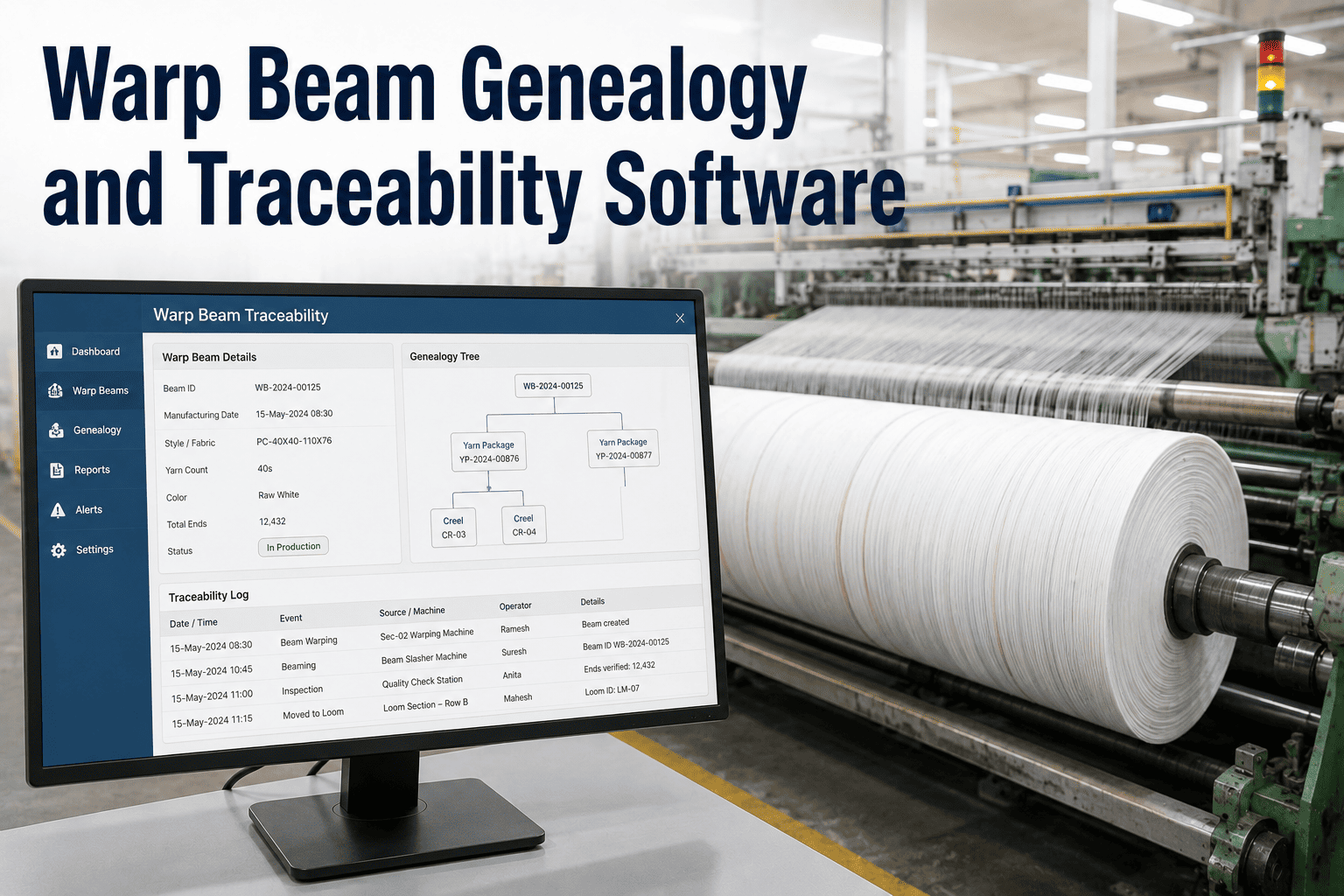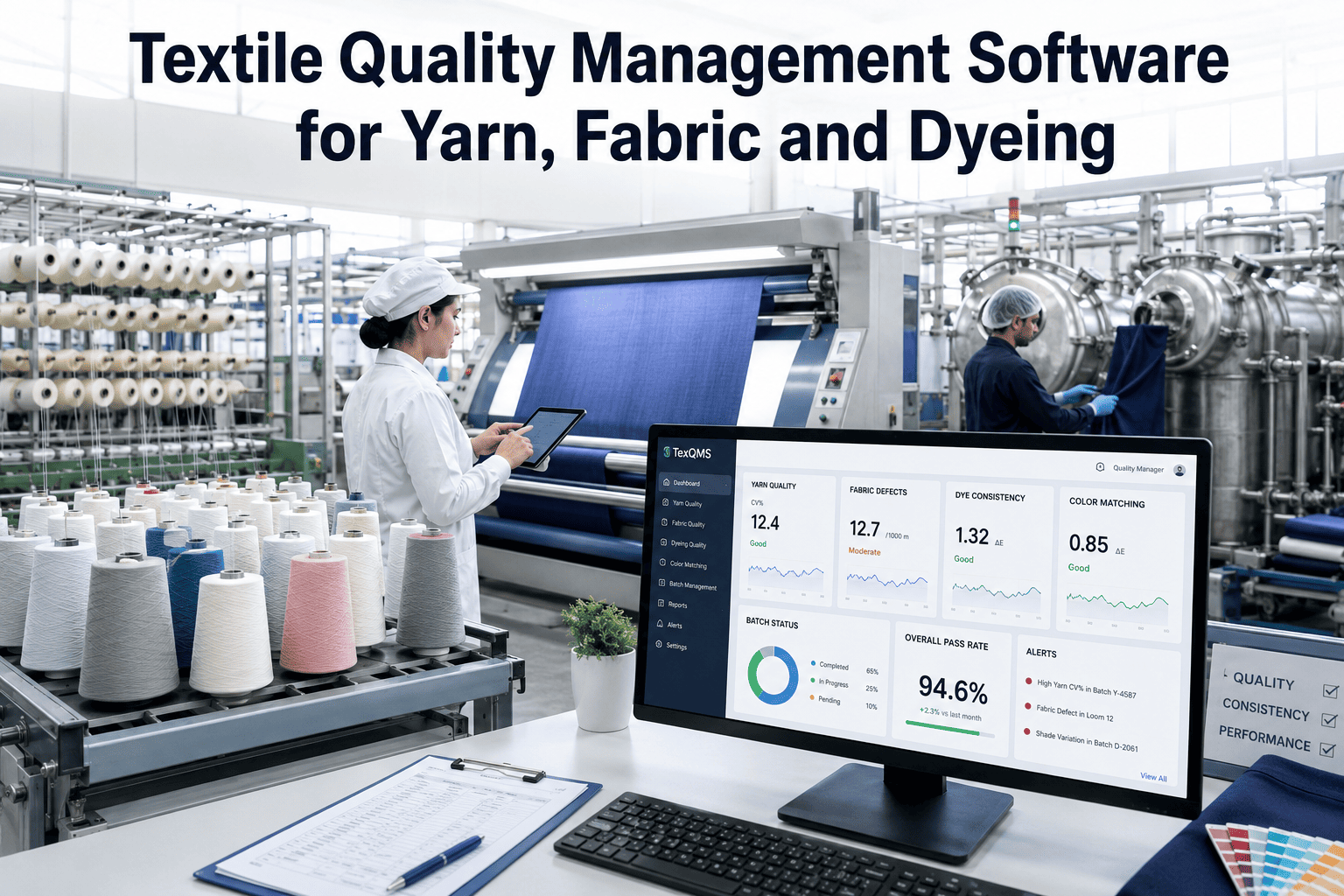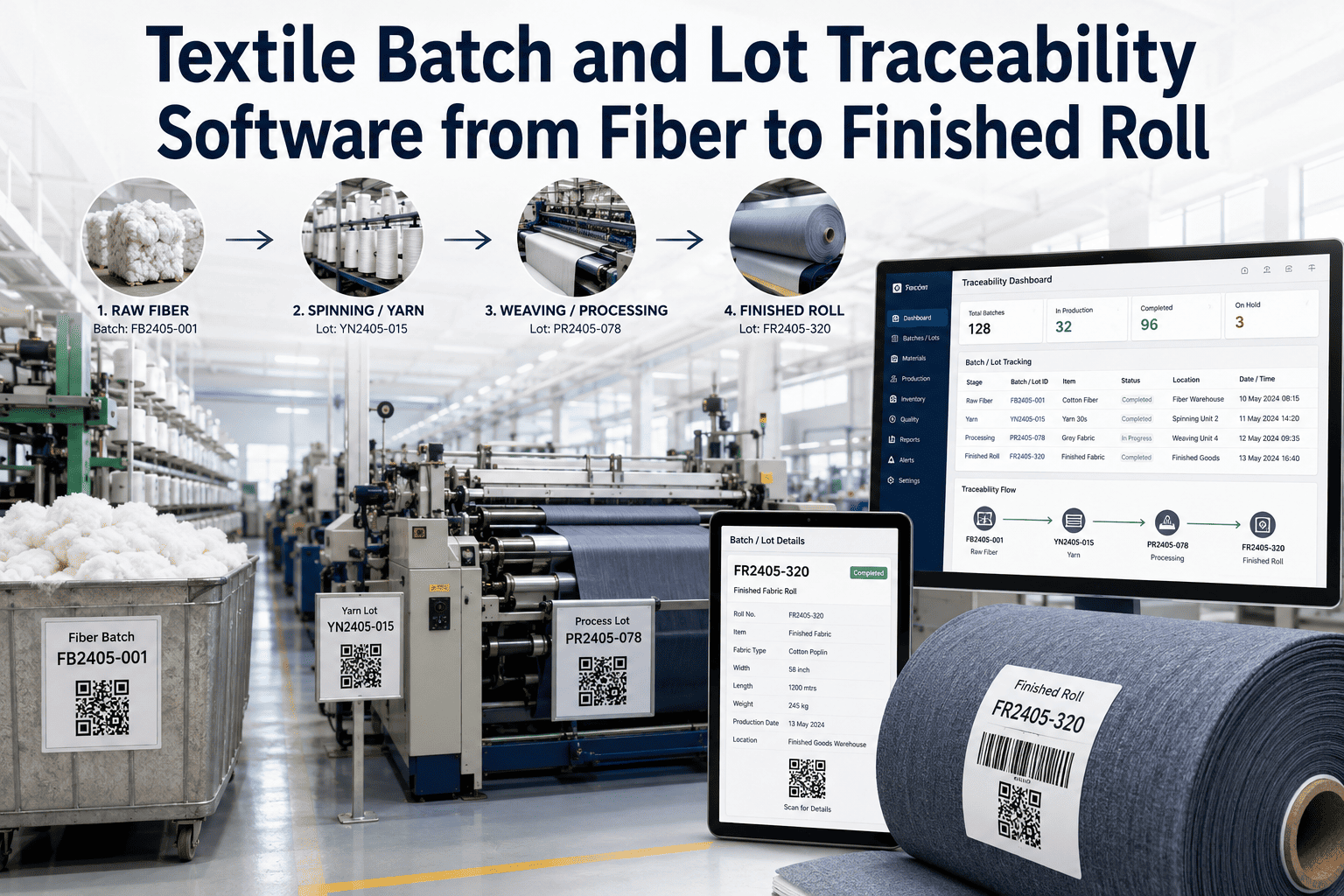
In the complex, multi-stage world of textile manufacturing, the ability to trace every single component from raw fiber to the finished roll is no longer a competitive advantage—it is an absolute operational necessity. Textile batch and lot traceability software provides the granular, real-time visibility required to manage countless variables across spinning, weaving, dyeing, finishing, and final inspection. Without this digital backbone, manufacturers face crippling risks: prolonged recalls, unresolved quality claims, and costly production inefficiencies. Our enterprise-grade solution, built on Industry 4.0 principles, empowers plant managers, maintenance directors, and CTOs to instantly pinpoint the exact origin of any defect, accelerate root-cause analysis, and maintain rigorous compliance with global standards. By integrating seamlessly with existing MES and ERP systems, we deliver a unified genealogy of every fiber, yarn, dye lot, and finished roll. Book a Demo to see how our platform transforms traceability from a reactive burden into a proactive strategic asset.
Real-Time Traceability Across Every Production Stage
From raw fiber intake to finished roll dispatch, our software captures every batch, lot, and process parameter in a single, immutable digital thread.
Fiber Lot Tracking
Capture every incoming fiber lot with supplier, origin, grade, and test data. Link directly to yarn production for full visibility from the start.
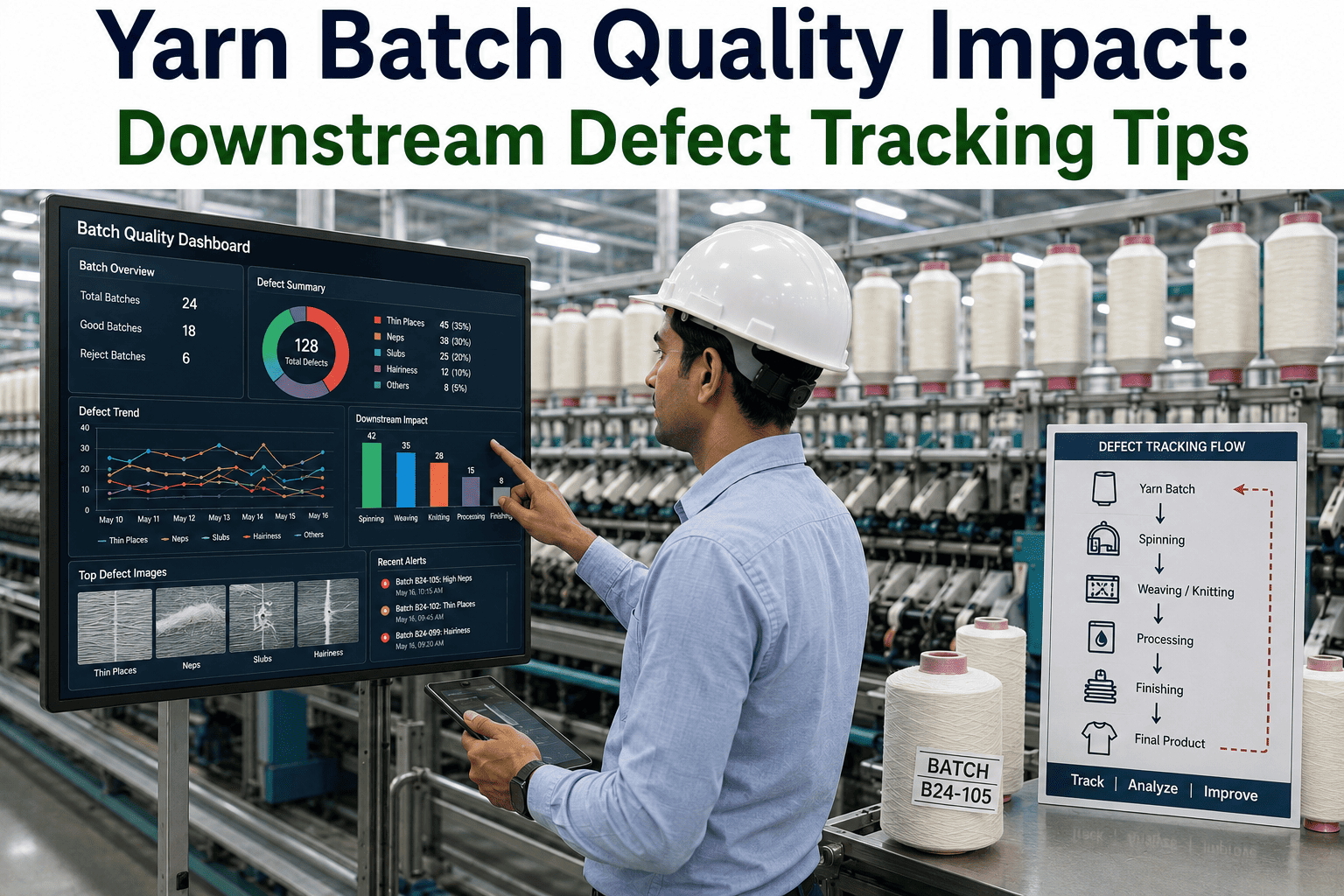
Yarn Batch Genealogy
Track each yarn batch through spinning, twisting, and winding. Record machine parameters, operator IDs, and intermediate quality checks.
Dye Lot Reconciliation
Manage dye recipes, chemical batches, and application processes. Ensure color consistency and full traceability for every dyed lot.
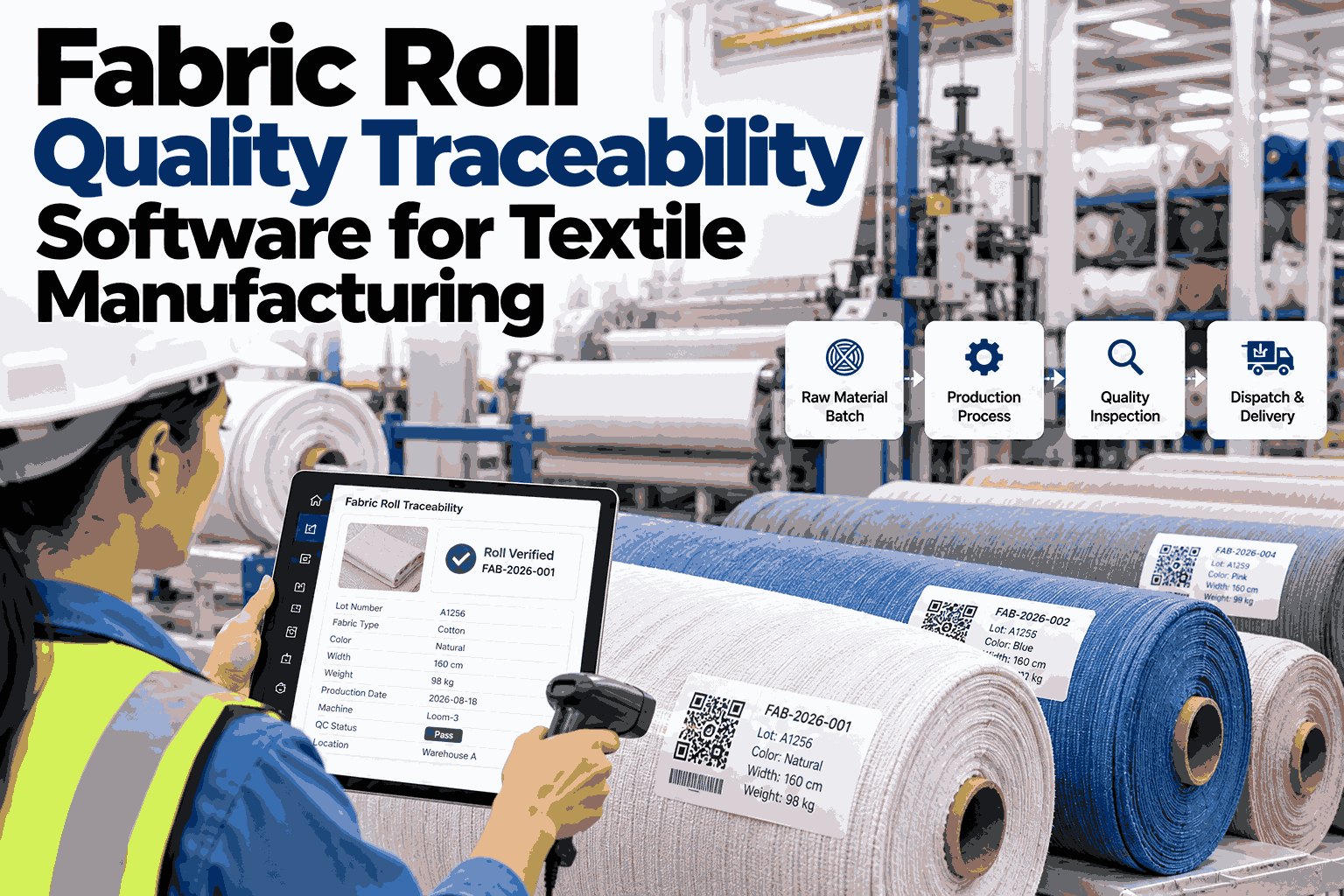
Fabric Roll Traceability
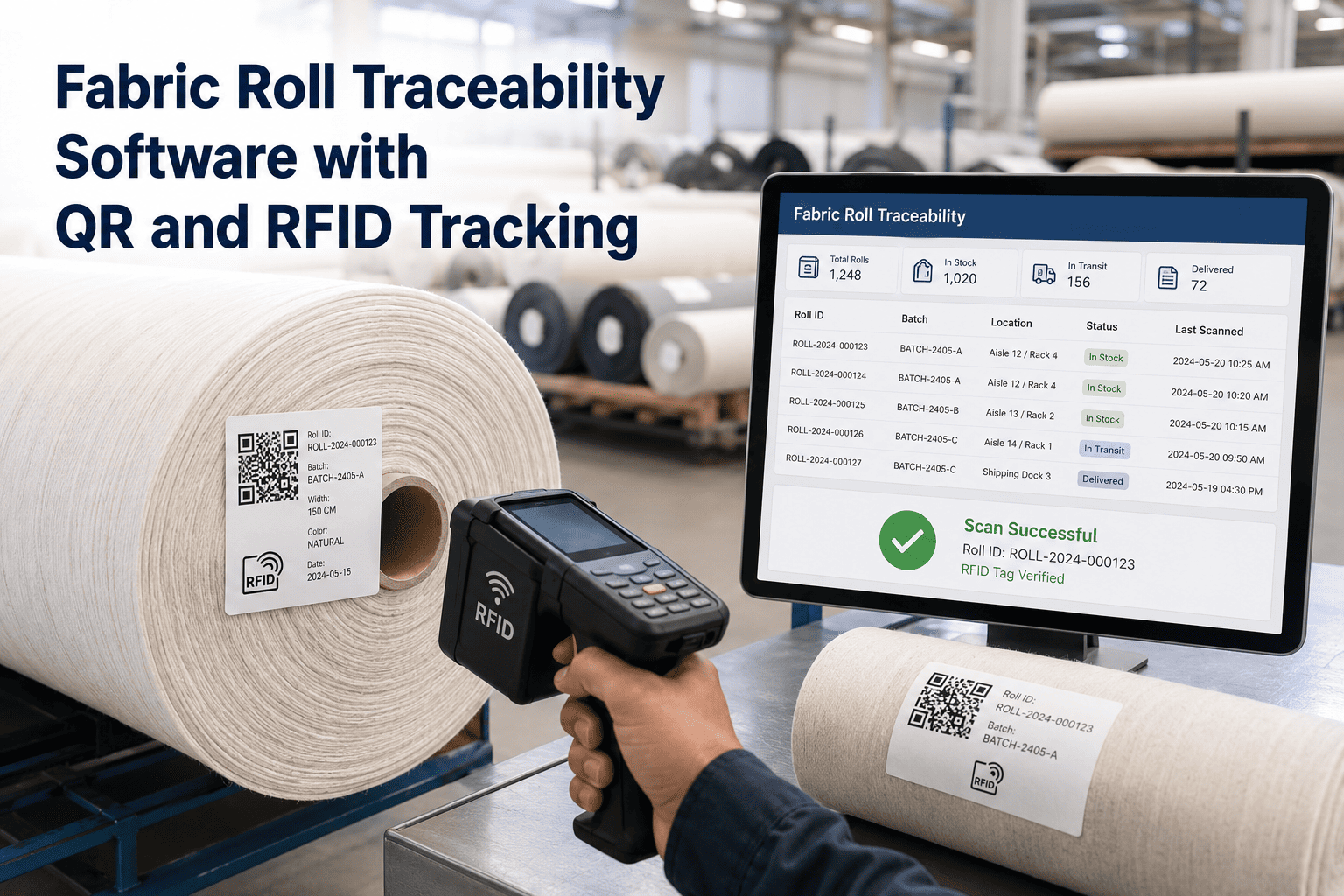
Generate unique IDs for every finished roll, linking back to all upstream batches. Include inspection results, defects, and shipping data.
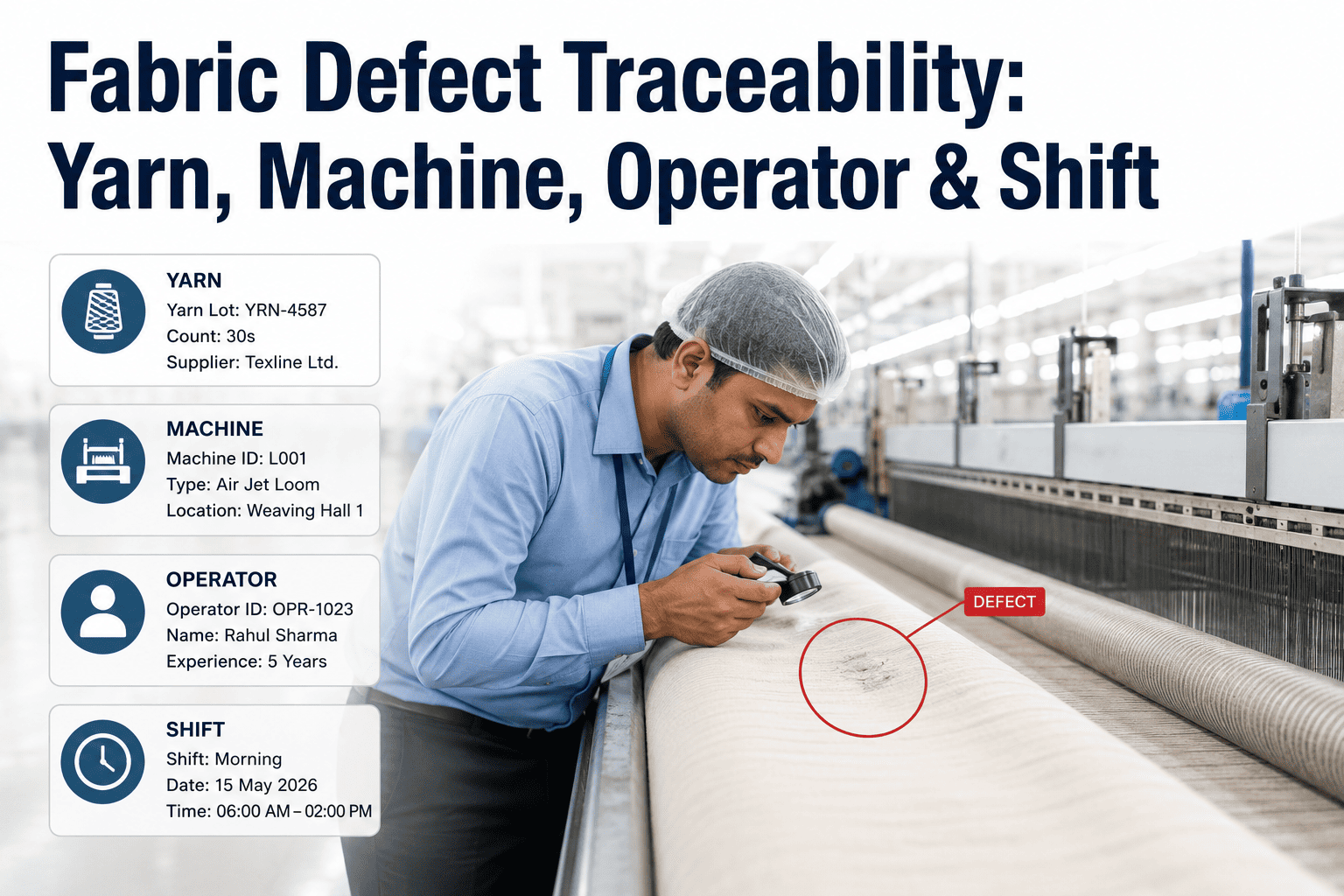
Defect Mapping
Automatically record defects during inspection and map them to specific batches, machines, or operators. Enable rapid root-cause analysis.
Recall Management
In the event of a recall, instantly identify all affected batches and rolls. Generate reports for customers and regulators in minutes, not days.
How Our Traceability Solution Works
Inbound Fiber Receipt
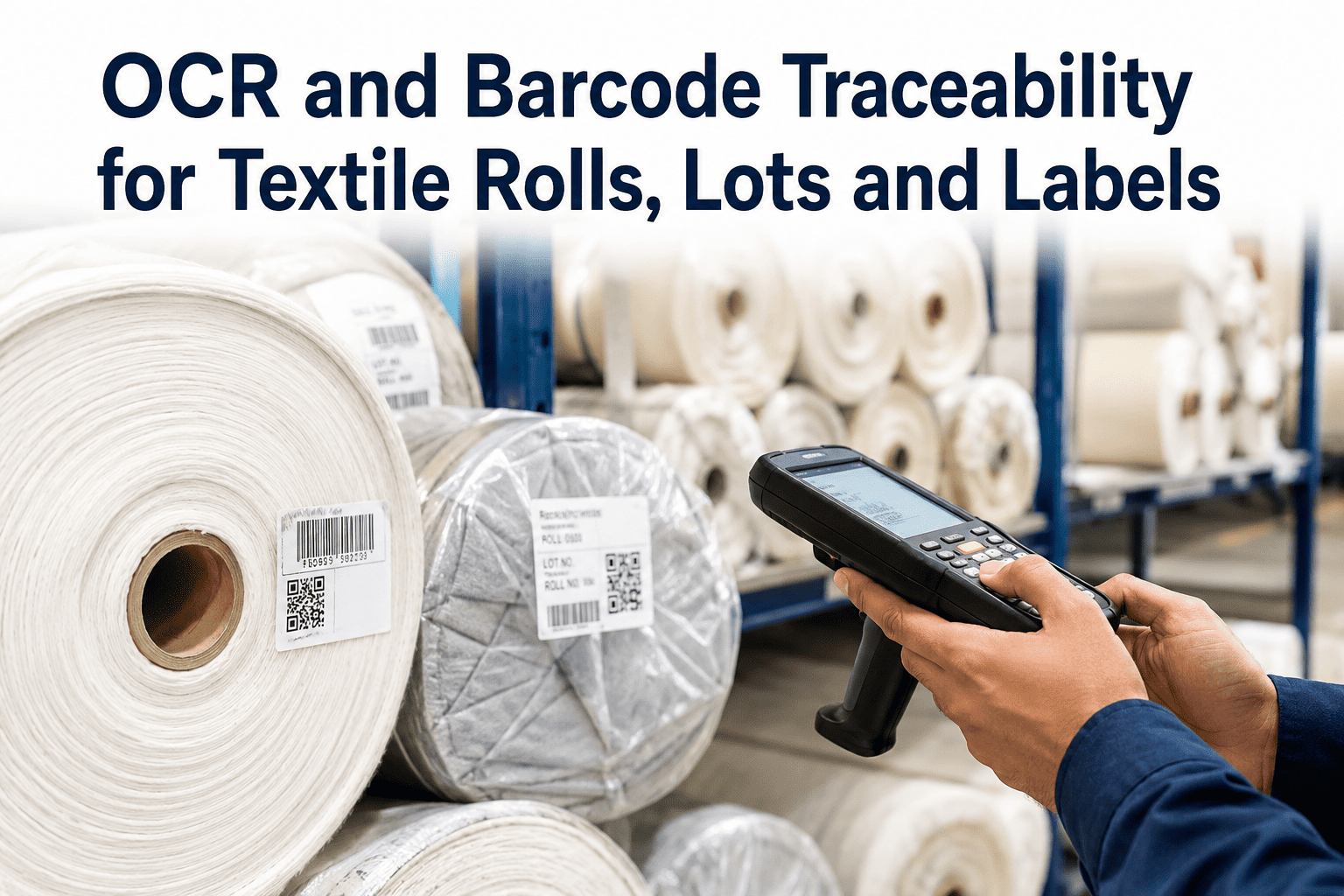
Scan supplier barcodes and capture lot numbers, certificates, and test results. Assign a unique system ID for every incoming bale or container.
Yarn Production
Record blending ratios, machine settings, and real-time quality metrics. Every yarn package gets a traceable batch code.
Dyeing & Finishing
Link dye recipes, chemical lots, and process parameters to each batch. Monitor color fastness and shade consistency.
Fabric Formation
Associate warp and weft yarn batches with each fabric lot. Track loom settings, speed, and efficiency.
Inspection & Roll Up
Scan defects, grade rolls, and assign final quality scores. Generate a complete digital genealogy for each roll.
Ready to Eliminate Traceability Gaps?
Our platform gives you real-time visibility from fiber to finished roll. Schedule a personalized demo today.
Regulatory Compliance
Meet OEKO-TEX, GOTS, and other global standards with automated documentation and audit trails. Reduce non-compliance risk.
Faster Root-Cause Analysis
When a defect appears, trace back through every production step in seconds. Identify the exact machine, operator, or material source.
Reduced Waste
Target recalls to only affected batches instead of entire production runs. Minimize scrap and rework costs.
Improved Customer Trust
Provide customers with detailed traceability reports on every shipment. Strengthen relationships and win more business.
Technical Architecture of Textile Traceability
Our system is built on a distributed ledger architecture that ensures data immutability and real-time synchronization across multiple plants. Each production event—fiber receipt, blending, spinning, dyeing, weaving, inspection—generates a unique hash that links to the previous event, creating an unbreakable chain of custody. The platform integrates with IoT sensors on machines to automatically capture process parameters like temperature, humidity, and machine speed, enriching the traceability data without manual entry. APIs connect to your existing ERP and MES systems, pulling order and inventory data while pushing traceability events back. This bidirectional flow ensures that every batch is traceable from purchase order to customer delivery. The system supports barcode, QR code, and RFID scanning for rapid data capture on the shop floor, with mobile interfaces for operators and supervisors. All data is encrypted at rest and in transit, with role-based access controls to protect sensitive information. Real-time dashboards provide a bird's-eye view of traceability completeness, highlighting any gaps or anomalies that require immediate attention.
Real-World Use Cases
Recall Containment
A major apparel brand discovers a dye lot with excessive heavy metals. With our traceability software, the manufacturer instantly identifies all rolls containing that dye lot, isolates them in the warehouse, and provides a detailed report to the brand within hours. The recall is limited to 500 rolls instead of 10,000, saving millions in potential losses.
Supplier Quality Escalation
A spinning mill receives a batch of cotton with inconsistent fiber length. The system flags the issue during yarn production and automatically quarantines all related lots. The mill uses the traceability data to negotiate a credit with the supplier and adjust blending ratios to maintain yarn quality.
Customer Audit Response
A high-end fashion house requests full traceability documentation for a fabric order. Our platform generates a comprehensive report in minutes, showing every fiber lot, yarn batch, dye recipe, and inspection result. The audit passes with zero findings, and the customer places a repeat order.
Frequently Asked Questions
How does your traceability software integrate with our existing ERP or MES?
Our platform offers robust REST APIs and pre-built connectors for major ERP systems like SAP, Oracle, and Microsoft Dynamics. We also support standard MES integration protocols such as OPC UA and MQTT. The integration can be configured to automatically pull production orders, material masters, and inventory data, while pushing traceability events, defect records, and batch genealogy back. Our implementation team works closely with your IT department to ensure a seamless, non-disruptive deployment. For more details, visit our support page or book a demo to discuss your specific system landscape.
What types of data can be captured at each traceability point?
At each production stage, our system captures a comprehensive set of data points. For fiber receipt: supplier, lot number, origin, grade, test results (length, strength, micronaire). For yarn production: blending ratios, machine ID, operator, speed, twist, and real-time quality metrics. For dyeing: recipe, chemical batch numbers, temperature curve, pH, and shade measurement. For fabric formation: loom settings, warp/weft yarn lots, and efficiency. For inspection: defect type, location, severity, and roll grade. All data is timestamped and linked to the unique batch or roll ID. This rich dataset enables deep analytics and rapid root-cause analysis. To see a full data model, schedule a demo with our technical team.
Can the system handle high-speed production environments with minimal operator input?
Absolutely. Our platform is designed for high-volume textile lines. We leverage automatic identification technologies such as barcode scanners, RFID readers, and vision systems to capture data without slowing down production. For example, at the roll-up station, a camera reads the roll barcode and automatically records weight, length, and inspection results. IoT sensors on machines stream process parameters directly into the traceability database. Operators only need to intervene for exceptions or manual quality checks. This automation ensures 99.8% data capture accuracy even at line speeds exceeding 100 meters per minute. For a technical walkthrough, book a demo or check our support resources.
How do you handle data privacy and security for sensitive production information?
Data security is a top priority. Our platform encrypts all data at rest using AES-256 and in transit using TLS 1.3. Access is controlled via role-based permissions, ensuring only authorized personnel can view or modify traceability records. We also support multi-tenancy with logical data isolation for contract manufacturers serving multiple brands. Audit logs track every data access and change. The system is compliant with GDPR, CCPA, and other data protection regulations. For customers requiring on-premises deployment, we offer a fully air-gapped version. For more information, visit our security page or book a demo to discuss your compliance needs.
What reporting and analytics capabilities are included for traceability data?
Our platform includes a comprehensive suite of reports and dashboards. You can generate traceability certificates for individual rolls, batch genealogy trees, defect heatmaps by machine or operator, recall impact analyses, and supplier quality scorecards. All reports are exportable to PDF, Excel, and CSV. Real-time dashboards show traceability completeness, open recalls, and quality trends. The system also supports ad-hoc queries through a drag-and-drop analytics interface. For advanced users, we provide a SQL-based query tool and integration with BI platforms like Power BI and Tableau. To see sample reports, book a demo or visit our documentation.
Transform Your Textile Traceability Today
Empower your team with real-time visibility from fiber to finished roll. Reduce recalls, improve quality, and build customer trust.