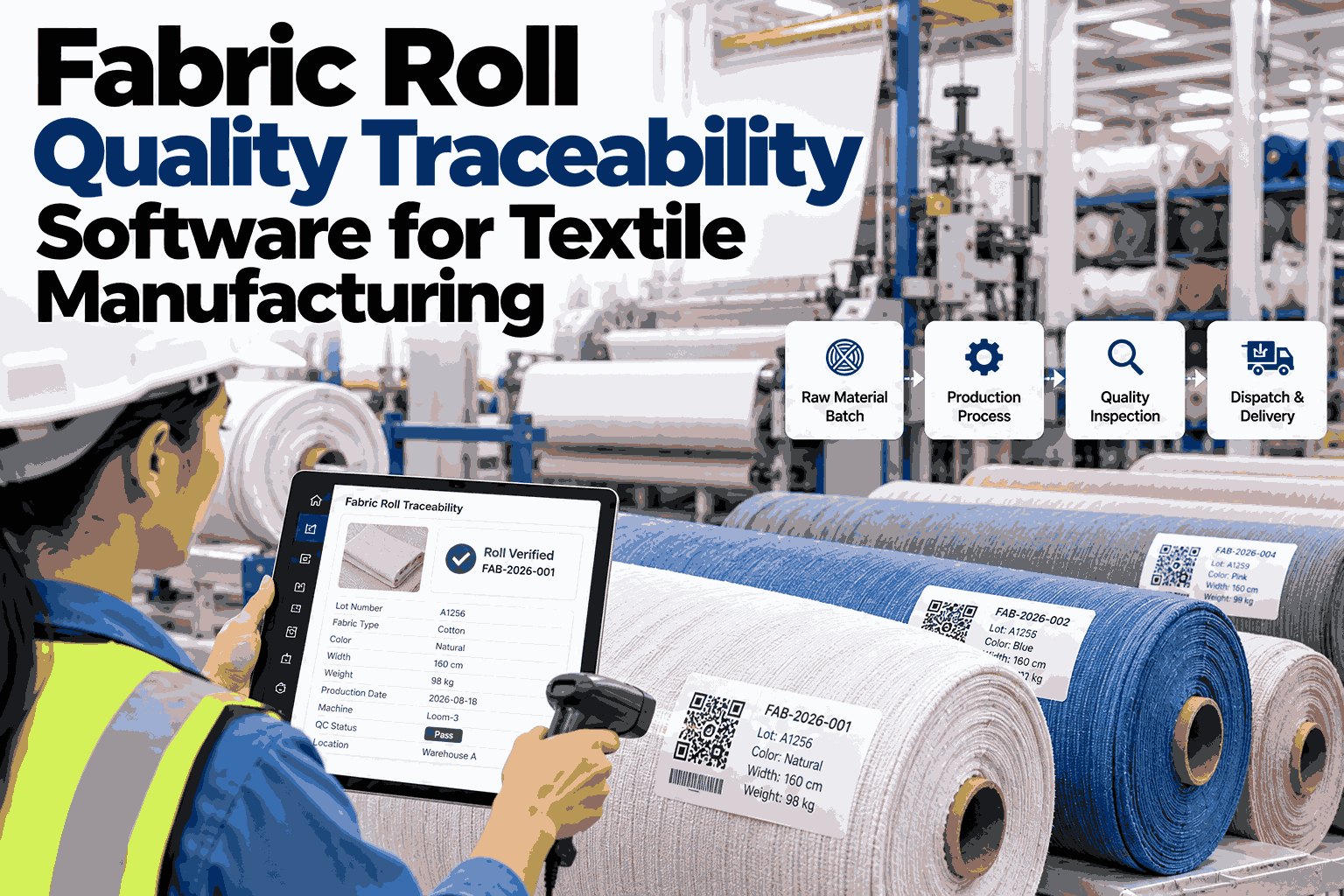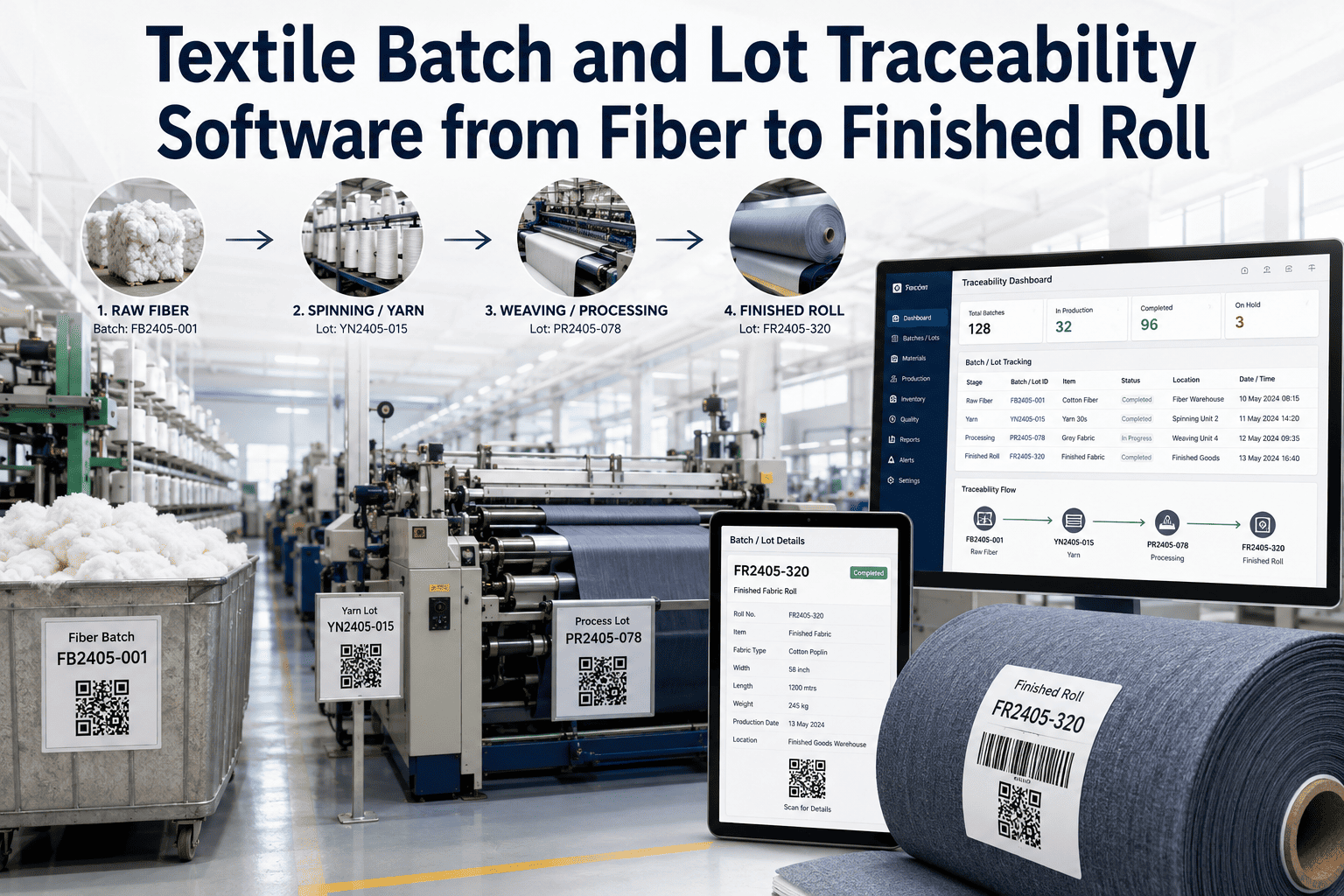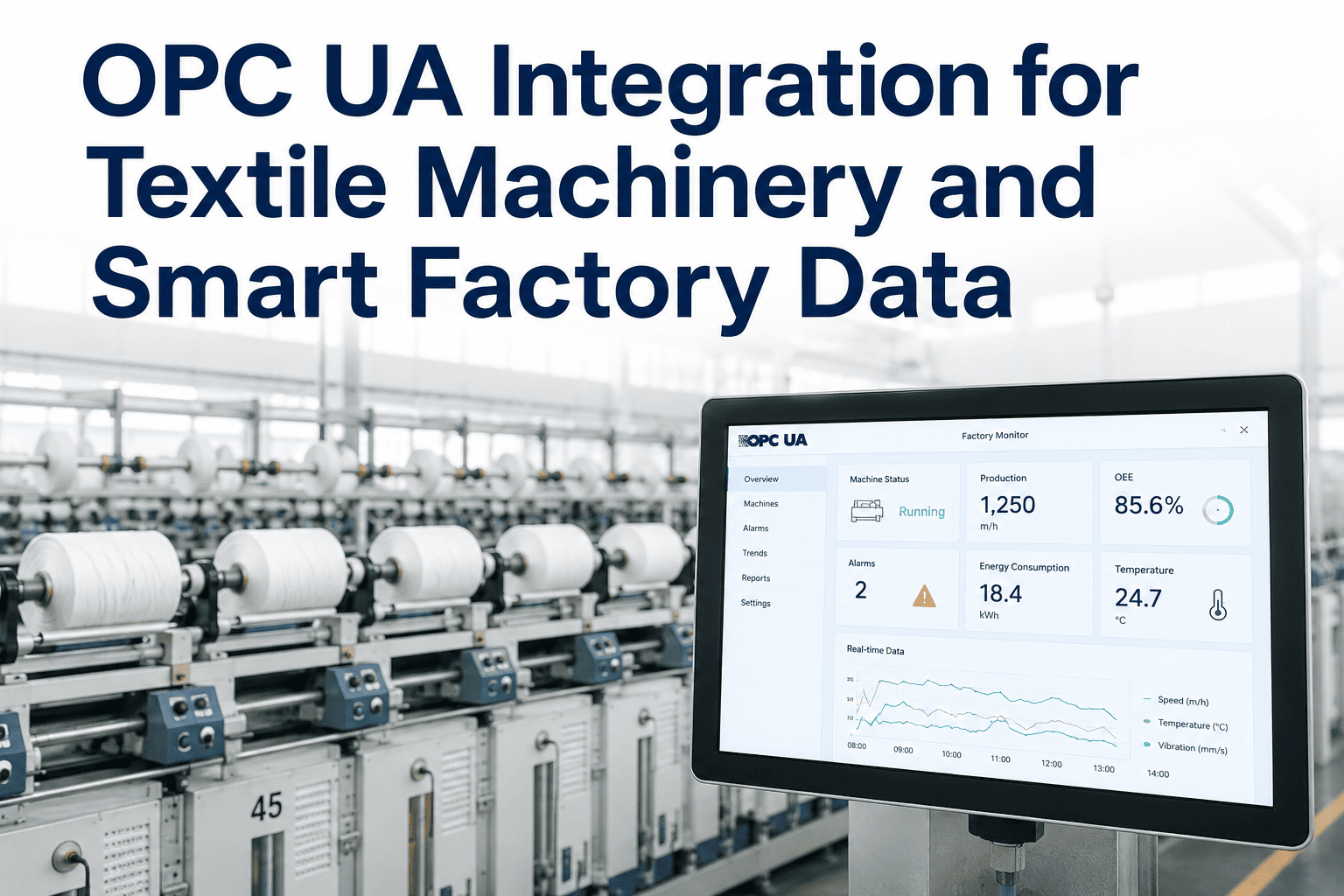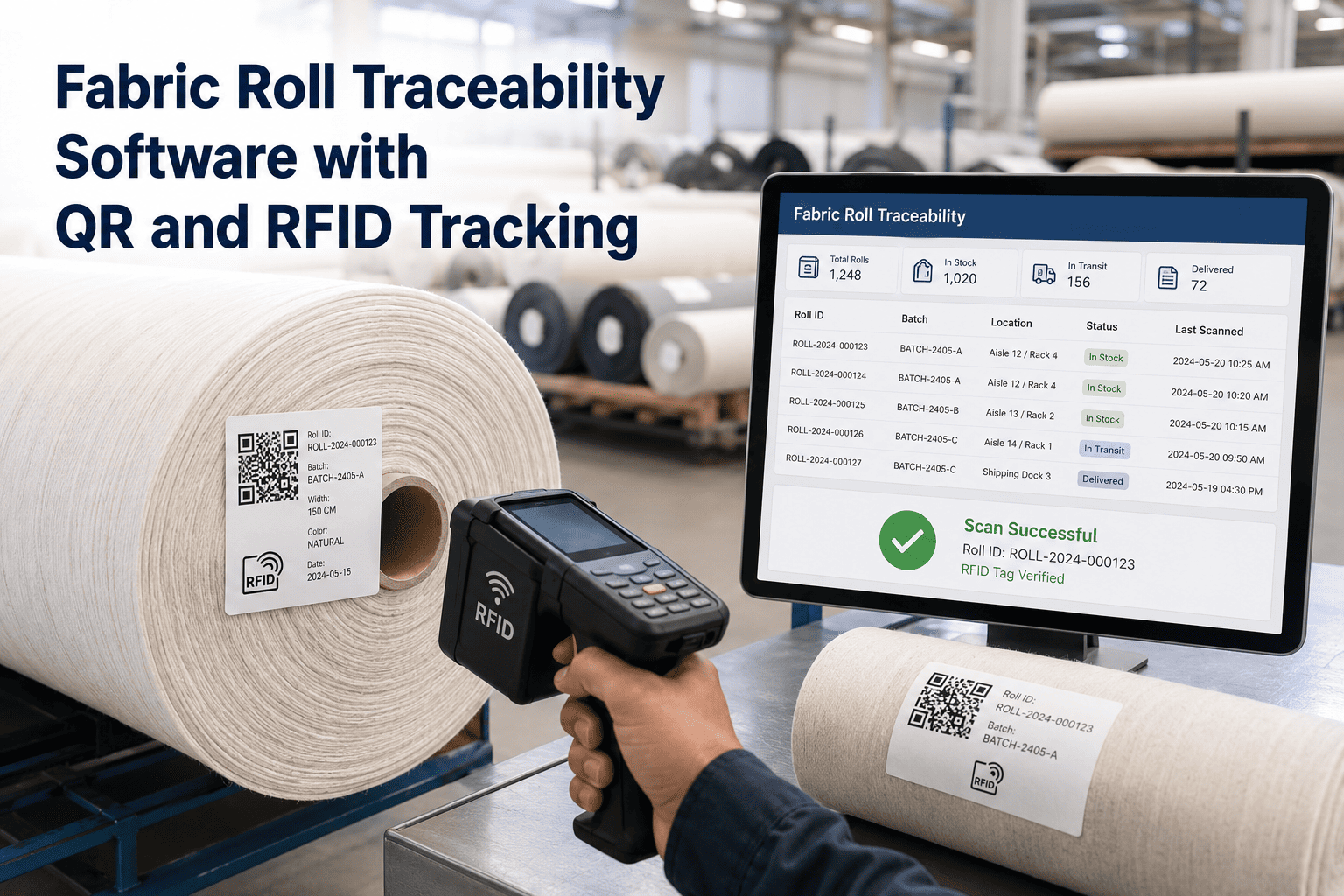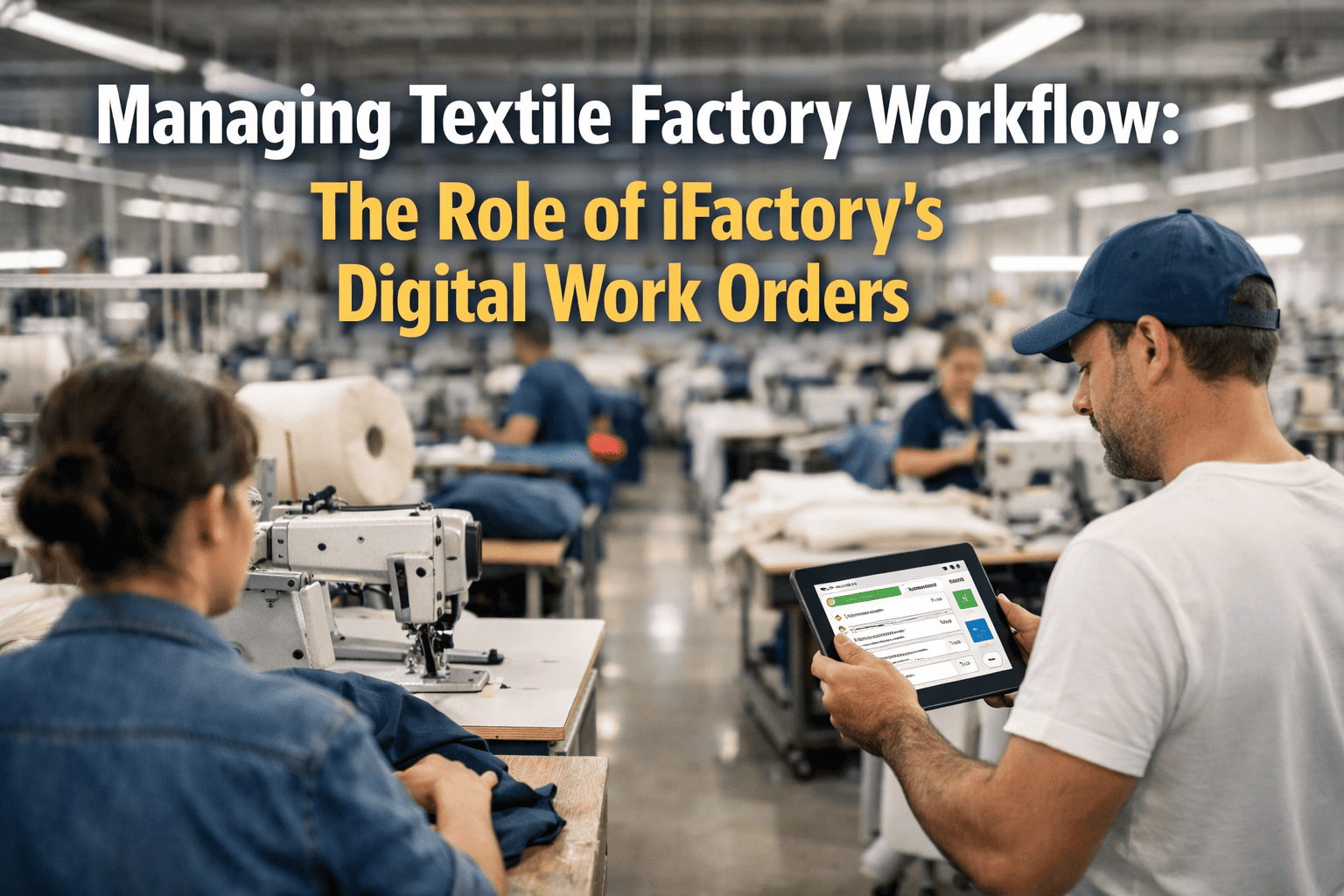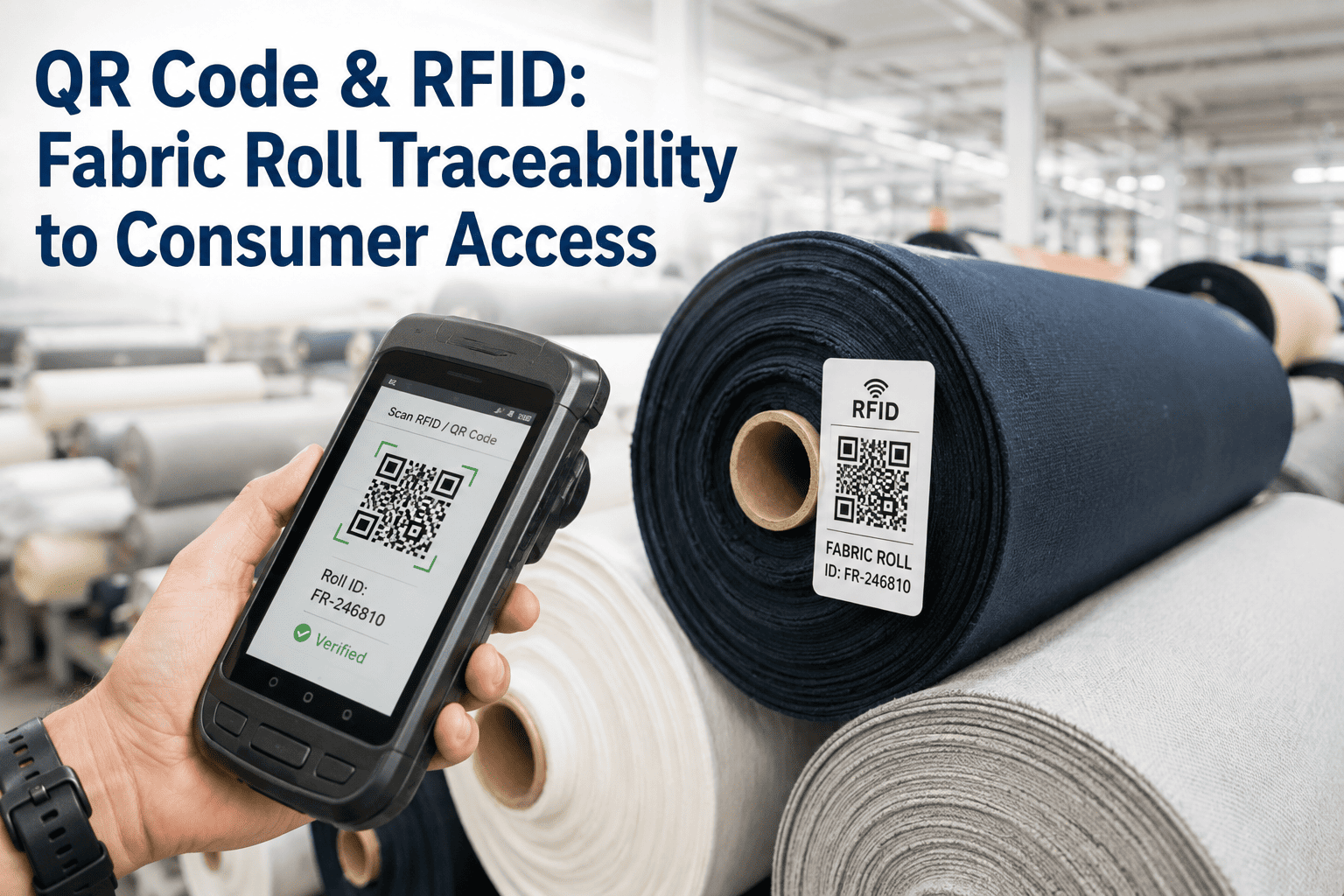
The EU's Digital Product Passport moves from policy into enforcement territory in 2026 and 2027, and textiles sit near the front of the priority list — every regulated garment will need a QR code, NFC tag, or RFID chip that resolves to a verified digital record covering material composition, origin, and environmental impact. A QR code linking to a generic supplier list doesn't satisfy that requirement; regulators have been explicit that the passport has to be a living, verifiable data system, not a digital brochure. iFactory's roll-level traceability system captures the actual production data — yarn lot, dye batch, machine, shift — and makes it retrievable through the same QR or RFID identifier at every stage from factory floor to the consumer's phone. What makes this shift significant for textile manufacturers specifically is that most mills already have fragments of the required data sitting somewhere in their systems — yarn test reports, dye batch logs, compliance certificates — but rarely in a form that's connected to a single retrievable identifier a consumer or regulator can actually scan. The regulatory requirement isn't asking mills to generate entirely new information from scratch that doesn't already exist somewhere internally; it's asking them to connect information that already exists into one queryable, verifiable chain that resolves reliably from a single scan.
One Identifier. Four Very Different Audiences. Each Needs to See Something Different.
A single QR code or RFID tag on a fabric roll has to serve a warehouse worker doing bulk inventory, a factory quality engineer investigating a defect, a retail buyer verifying compliance documentation, and a consumer checking where their garment actually came from — without exposing production data that isn't meant for public view.
RFID or QR Code — They're Not Actually Competing for the Exact Same Job
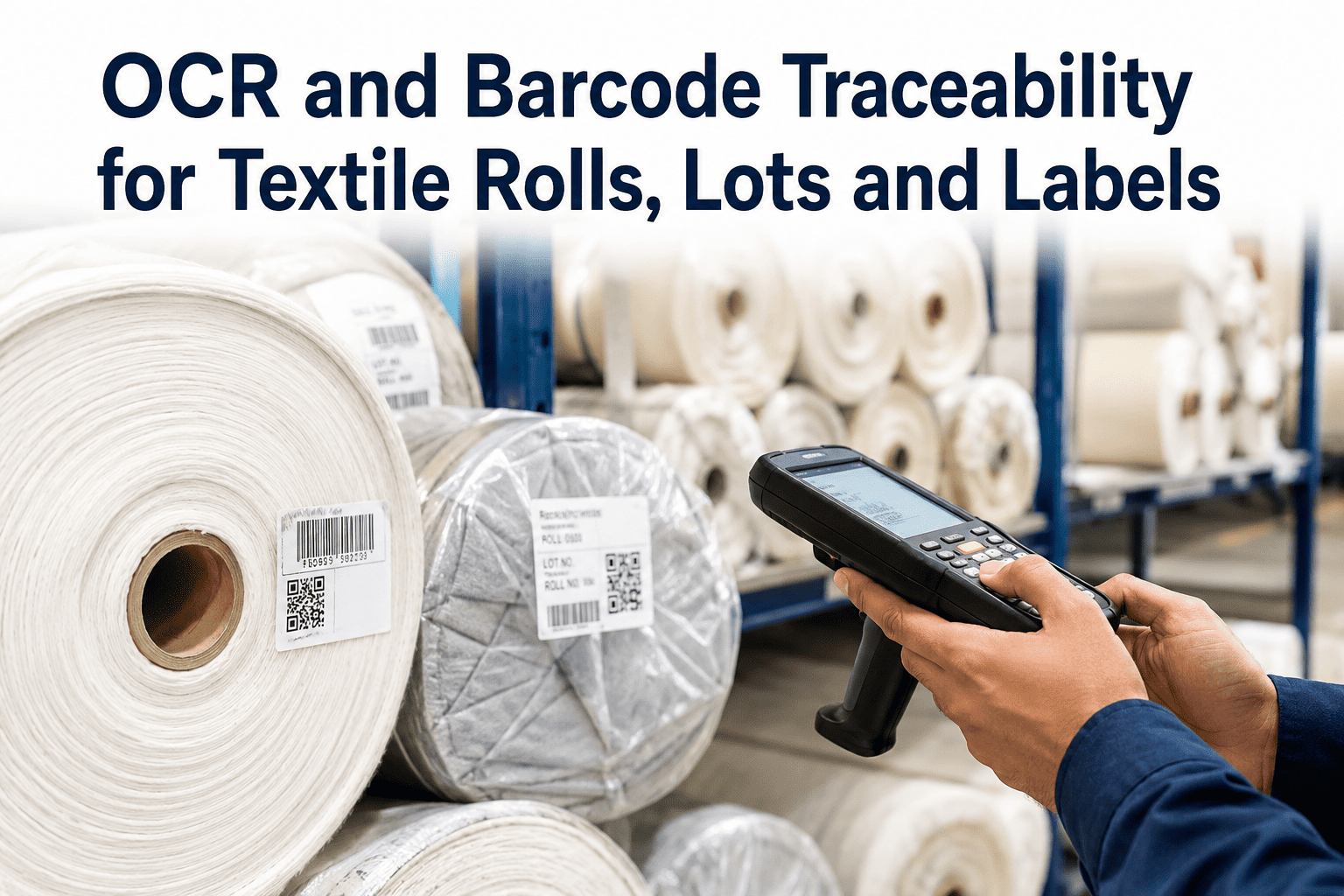
The RFID-versus-QR debate gets treated as an either/or decision more often than it deserves to be, because in practice the two technologies solve different problems well and the same problem badly. RFID excels at bulk, no-line-of-sight scanning — a warehouse can read hundreds of tagged rolls simultaneously as they pass through a portal, without anyone individually scanning each one. QR codes excel at consumer-facing accessibility — anyone with a smartphone camera can scan one instantly, with zero additional hardware required, which makes it the only realistic option for a garment tag a retail customer will interact with.
The cost structure behind each technology reinforces this natural division of labor. RFID's higher per-tag and infrastructure cost is easy to justify at the roll or lot level, where a single tag might represent hundreds of meters of fabric and dozens of eventual garments — the tag cost per unit of value tracked is trivial. That same cost logic breaks down at the individual consumer garment level, where QR code printing costs pennies and RFID infrastructure would require every consumer to own a reader they don't have and have no reason to purchase.
Most mature textile traceability implementations use both, assigned to the stage where each technology's strengths actually matter. RFID tags travel with the fabric roll through spinning, weaving, dyeing, and warehouse logistics — the stages where speed and bulk scanning without physical handling deliver real efficiency. A QR code gets applied at the point where the product transitions toward retail and the consumer, since that's where universal accessibility from an ordinary smartphone matters more than scan speed.
| Factor | RFID | QR Code |
|---|---|---|
| Read range | Centimeters to several meters (passive to active) | Requires close, direct contact |
| Bulk scanning | Hundreds of tags per second, no line of sight | One at a time, camera must frame each code |
| Consumer accessibility | Requires a dedicated reader — most consumers don't have one | Any smartphone camera, zero extra hardware |
| Durability in production | Withstands heat, moisture, and abrasion well | Printed codes can smudge, fade, or delaminate |
| Cost per unit | Higher — infrastructure and per-tag cost both add up | Very low — printing cost only |
Factory-Floor Speed and Consumer-Facing Access Don't Have to Be the Same Technology
iFactory supports RFID for high-speed internal tracking and QR code generation for consumer and compliance access — both pointing back to the same underlying production record.
What the EU Digital Product Passport Actually Requires — And What It Doesn't
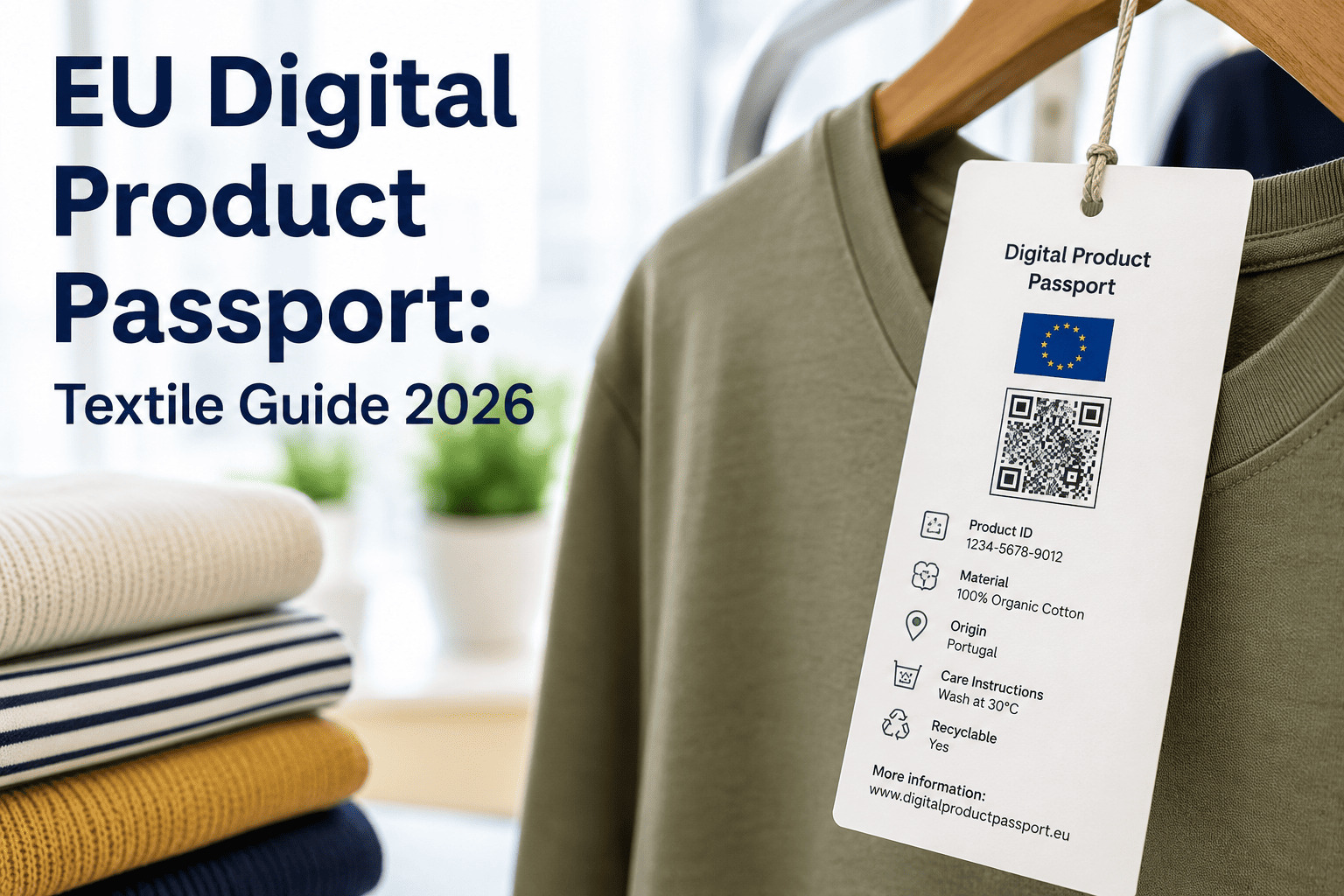
The Digital Product Passport is one of the clearest regulatory drivers behind consumer-facing textile traceability right now, and it's worth being precise about what it does and doesn't mandate, since a lot of guidance in this space conflates the two. The regulation requires a persistent data carrier — a QR code, RFID chip, or NFC tag — physically attached to the product, resolving to a structured digital record covering material composition, origin, environmental impact, and compliance documentation. The minimum required data granularity is the production batch, not necessarily the individual item, which matters for how a mill scopes its initial implementation.
This batch-level minimum is worth dwelling on, because it changes the scope of the implementation project considerably compared to full item-level serialization. A mill doesn't need to assign a unique, permanently trackable identity to every individual garment produced from a given yarn lot and dye batch — the regulation is satisfied by accurate data at the batch that garment came from. Item-level tracking remains a voluntary enhancement some brands pursue for additional supply chain visibility or anti-counterfeiting purposes, but it's not the baseline compliance requirement, and conflating the two can lead a mill to over-scope an initial implementation far beyond what's actually mandated.
What it doesn't require, at least in current guidance, is universal item-level serialization or blockchain infrastructure — those remain implementation choices rather than mandates. The regulation cares about the outcome: a consumer, regulator, or recycler scanning the code gets accurate, verifiable data. How a mill or brand achieves that outcome technically — RFID for internal tracking feeding into a QR code for consumer access, a fully serialized item-level system, or something in between — is left to the implementer, as long as the data resolved is genuinely accurate rather than a generic supplier declaration dressed up as product-specific information.
Composition & Origin Data
Fiber content, blend ratios, and origin data down to the batch level — the foundational layer most DPP frameworks require first, since it's the most straightforward to verify against existing mill records and typically the easiest data category for a mill to populate accurately from day one.
Impact Indicators
Water, energy, and carbon data tied to the specific production batch — requiring genuine process-level data capture, not an industry-average estimate applied uniformly across every product regardless of how that specific batch was actually produced.
Chemical & Certification Records
REACH compliance documentation, third-party certifications like GOTS or OEKO-TEX, linked directly to the batch they apply to rather than referenced only as a general, company-wide claim disconnected from any specific product.
Care & End-of-Life Data
Care instructions, durability information, and recyclability guidance — the layer most directly consumer-facing, since it's the data a shopper actually references after purchase, day to day, not just once at the point of sale.
Building the Chain From Factory Floor to Consumer Scan, Step by Step
A consumer-facing QR code that resolves to accurate, verifiable data is only possible if the underlying production traceability is solid — the consumer-facing layer is the last, most visible piece of a chain that has to be built from the factory floor outward, not designed backward from a marketing requirement. Attempting to build the consumer layer first, without the internal batch-level data foundation to support it, produces exactly the "digital brochure" problem regulators have flagged as non-compliant.
This ordering matters more than it might seem at first, because the two directions of implementation produce structurally different outcomes even when the end result looks superficially similar. A consumer-first approach starts with the desired scan experience and works backward to find data that fits it — which tends to surface gaps only when a specific claim can't actually be substantiated, often after the QR code is already printed and in circulation. A factory-first approach starts by ensuring every batch has verified, accurate data at the point of creation, then extends that same verified data outward to whatever audience needs to see it — consumer, regulator, or internal quality team. The second approach is slower to reach a polished consumer-facing result, but the data underneath it is trustworthy from day one.
Establish batch-level identity at the earliest production stage
Yarn lot, dye batch, and greige roll each need a unique identifier assigned the moment they're created — this is the foundation every later layer of traceability depends on.
Tag rolls with RFID for internal production and logistics tracking
RFID's bulk-scan speed makes it the practical choice for warehouse and logistics stages, where hundreds of rolls need tracking without individual handling.
Define what data each access tier actually needs to see
Factory-floor process parameters aren't relevant, and shouldn't be exposed, to a retail compliance auditor or a consumer — deliberately scope what each audience's scan reveals rather than exposing everything to everyone.
Generate consumer-facing QR codes at the retail transition point
Apply the QR code, linked to the same underlying batch record but scoped to consumer-relevant data, at the stage where the product moves toward final packaging and retail.
Validate the full chain end-to-end before claiming compliance
Scan the actual consumer-facing code on a finished product and confirm the data displayed is accurate and complete — a chain that looks correct on paper can still break at any single handoff.
Consumer Transparency as a Genuine Trust Signal, Not Just a Compliance Checkbox
Regulatory pressure is the more immediate driver behind consumer-facing traceability right now, but treating it purely as a compliance obligation misses the real commercial upside available to brands that get there early and build the capability well before it's strictly required of them by regulators. A significant share of environmental claims in the market today are vague or entirely unsupported by evidence — a QR code resolving to specific, batch-verified data stands out clearly against a background of generic sustainability marketing that consumers have increasingly learned to distrust.
This distinction between verifiable and vague matters more than it might initially seem. A brand that can show a customer the actual dye batch parameters, the specific yarn lot's origin, and genuine environmental impact data tied to the product in their hands is making a fundamentally different claim than a brand pointing to a general sustainability page describing company-wide aspirations. The former is falsifiable and specific; the latter is marketing. As consumer skepticism toward unverified sustainability claims continues to grow, the gap in credibility between these two approaches only widens.
There's also a first-mover consideration worth naming plainly: once a meaningful share of the market has genuine batch-verified traceability data behind their QR codes, brands still relying on generic claims will look conspicuously evasive by comparison, not merely behind the curve. The window where "we're working on transparency" is an acceptable answer to a customer's question is closing as more competitors move from policy statements to scannable, verifiable data — and the brands treating this as infrastructure to build now, rather than a future compliance deadline to worry about later, are the ones positioned to benefit from that shift rather than scramble to catch up to it.
The most common mistake I see is brands designing the consumer-facing QR code experience first — the nice landing page, the sustainability story — and only later discovering the underlying production data doesn't actually support the claims being displayed. Traceability has to be built from the factory floor outward. Get the batch-level identity right at yarn and dye stage, and the consumer layer becomes a straightforward extension. Try to build it the other way around, and you end up with a beautiful page connected to nothing verifiable underneath it.
Frequently Asked Questions
Do we need both RFID and QR codes, or can we standardize on just one?
Most textile operations get the best result from using both, assigned to the stage where each technology's strengths matter most — RFID for bulk, no-contact scanning during production and warehouse logistics, and QR codes for the retail and consumer-facing stage where universal smartphone accessibility is essential. Standardizing on RFID alone creates a real accessibility gap at the consumer end, since almost no consumer owns an RFID reader, and expecting them to acquire one to check a garment's origin is an unrealistic barrier that defeats the purpose of consumer-facing transparency entirely.
Standardizing on QR alone sacrifices the bulk-scanning efficiency that makes RFID valuable in high-volume production and logistics environments. Book a demo to see how iFactory supports both technologies pointing back to the same underlying batch record.
Is the EU Digital Product Passport actually mandatory yet, and when does it apply to us?
The regulatory framework is already established under the EU's Ecodesign for Sustainable Products Regulation, with the central registry targeted for operational launch in 2026 and textile-specific delegated acts and enforcement expected to phase in over 2027 and beyond, with extended timelines for smaller businesses. The exact enforcement date for any specific brand depends on company size and the finalized delegated act timeline, which has been evolving.
Given the lead time required to build genuine batch-level traceability data — which can't be assembled retroactively with any credibility — most guidance recommends starting the data foundation work well ahead of the enforcement date rather than waiting for a final deadline to be confirmed. Book a demo to discuss a realistic preparation timeline for your specific market exposure.
How do we prevent sensitive factory data from being exposed through a consumer-facing QR code?
The same physical identifier can resolve to different data depending on who's scanning and what credentials or context they're presenting — a tiered access model where a consumer scan shows origin, composition, and care data while a factory-floor scan by an authorized system shows full production parameters. This isn't a workaround; it's the standard approach in mature implementations, since regulators, consumers, and internal quality teams all need different slices of the same underlying record.
Getting this scoping right at the data architecture level, before generating any consumer-facing codes, prevents both an over-exposure risk and an under-delivery risk where compliance-relevant data isn't actually accessible to the parties who need it. iFactory's support team can walk through how tiered access is structured for different stakeholder types.
What happens if a QR code or RFID tag gets damaged or falls off before reaching the consumer?
This is a genuine practical concern, and it's part of why the persistent data carrier requirement in regulations like the DPP specifically calls for durability sufficient to survive washing, handling, and normal wear — a hangtag QR code that falls off in transit doesn't meet that bar. Woven-in labels, heat-transfer printed codes, or NFC chips embedded directly into a garment component are all more durable options than a simple paper hangtag for products expected to retain traceability through the retail and consumer lifecycle.
For roll-level RFID tags used in internal production tracking, durability requirements are somewhat different since the tag doesn't need to survive to the end consumer — it needs to survive the specific production and logistics environment it travels through. Book a demo to review durable tagging options suited to your specific production environment and product lifecycle.
Can smaller mills realistically implement this, or is it only feasible for large brands with big budgets?
The underlying data discipline — assigning batch identity at receiving, linking test data to lots, tracking consumption through production stages — is the same regardless of company size, and it's genuinely more manageable for a smaller operation with fewer distinct product lines and less process variation to capture. QR code generation itself carries minimal marginal cost once the underlying data system exists, since it's primarily a printing cost rather than an infrastructure investment.
The scaling challenge tends to be less about mill size and more about how many disconnected systems currently hold fragments of the relevant data — a smaller mill with cleaner, more centralized records can often move faster than a larger one untangling data spread across many disconnected legacy systems. Book a demo to discuss a scoped starting point appropriate to your current systems and production scale.
Build Traceability From the Factory Floor Outward — Not the Marketing Page Working Backward
iFactory captures batch-level production data starting at yarn and dye stage, tracks it through RFID at the logistics layer, and makes it accessible through consumer-facing QR codes — all pointing back to one verified underlying record, not a static marketing page assembled after the fact.