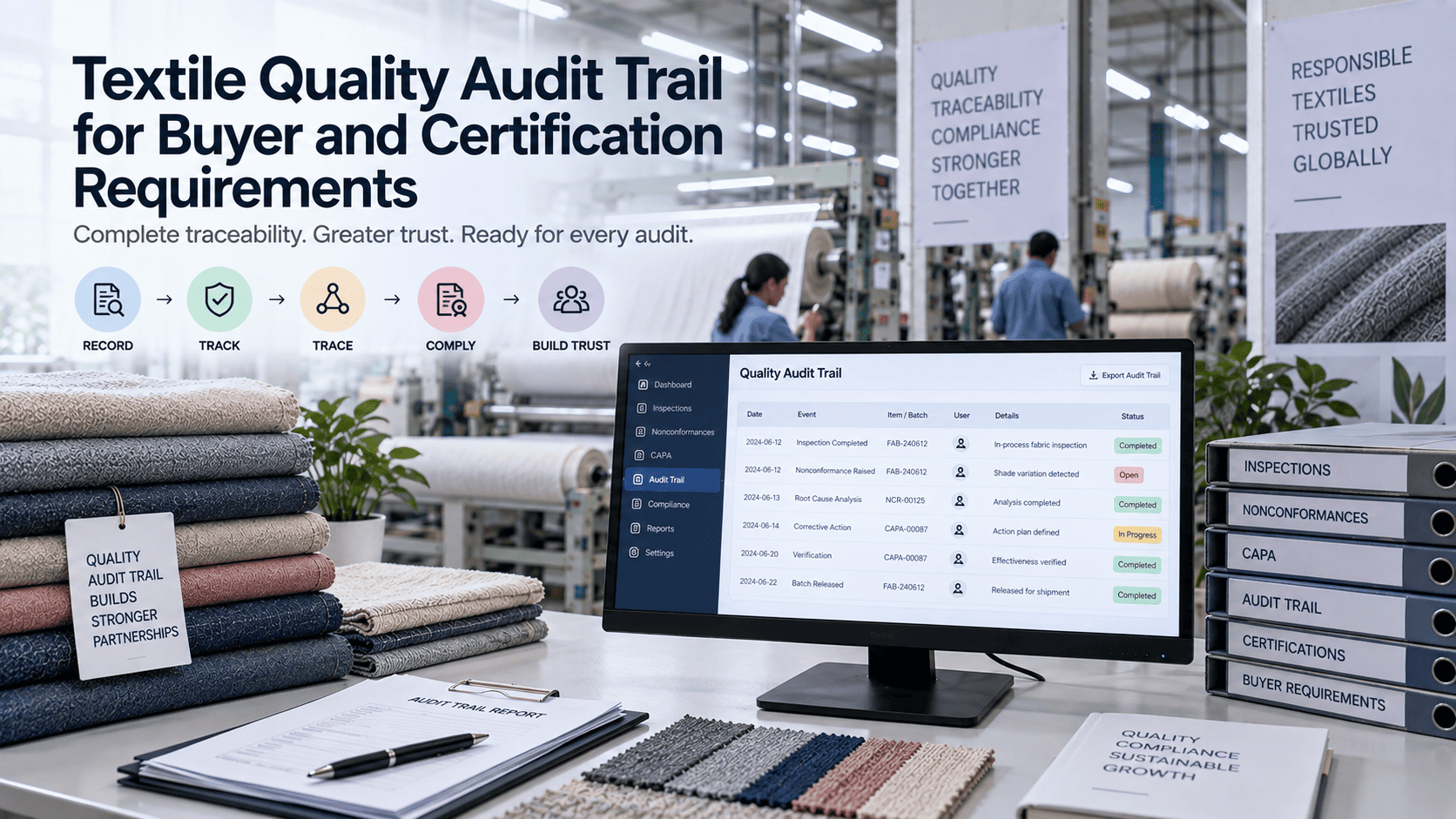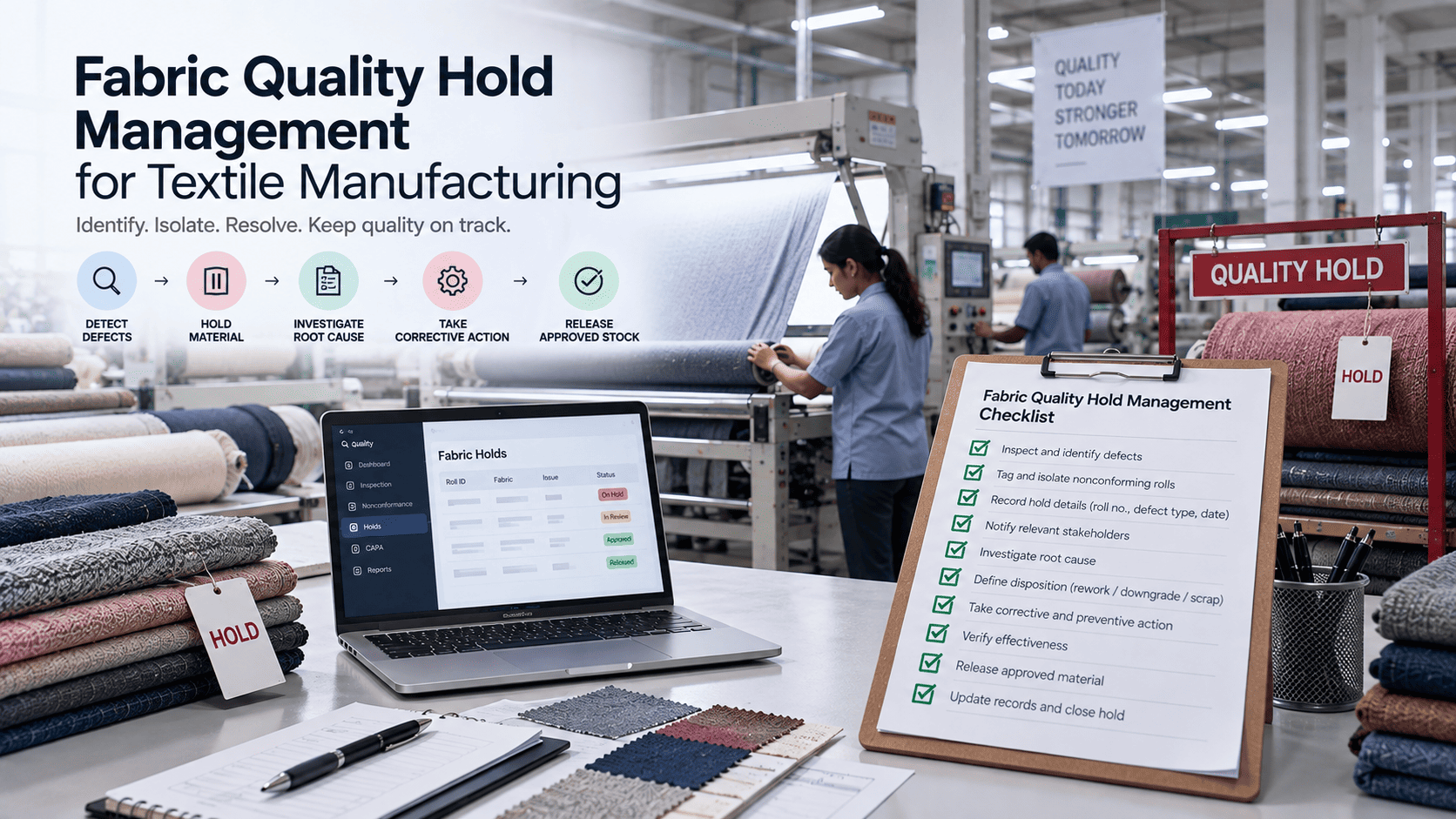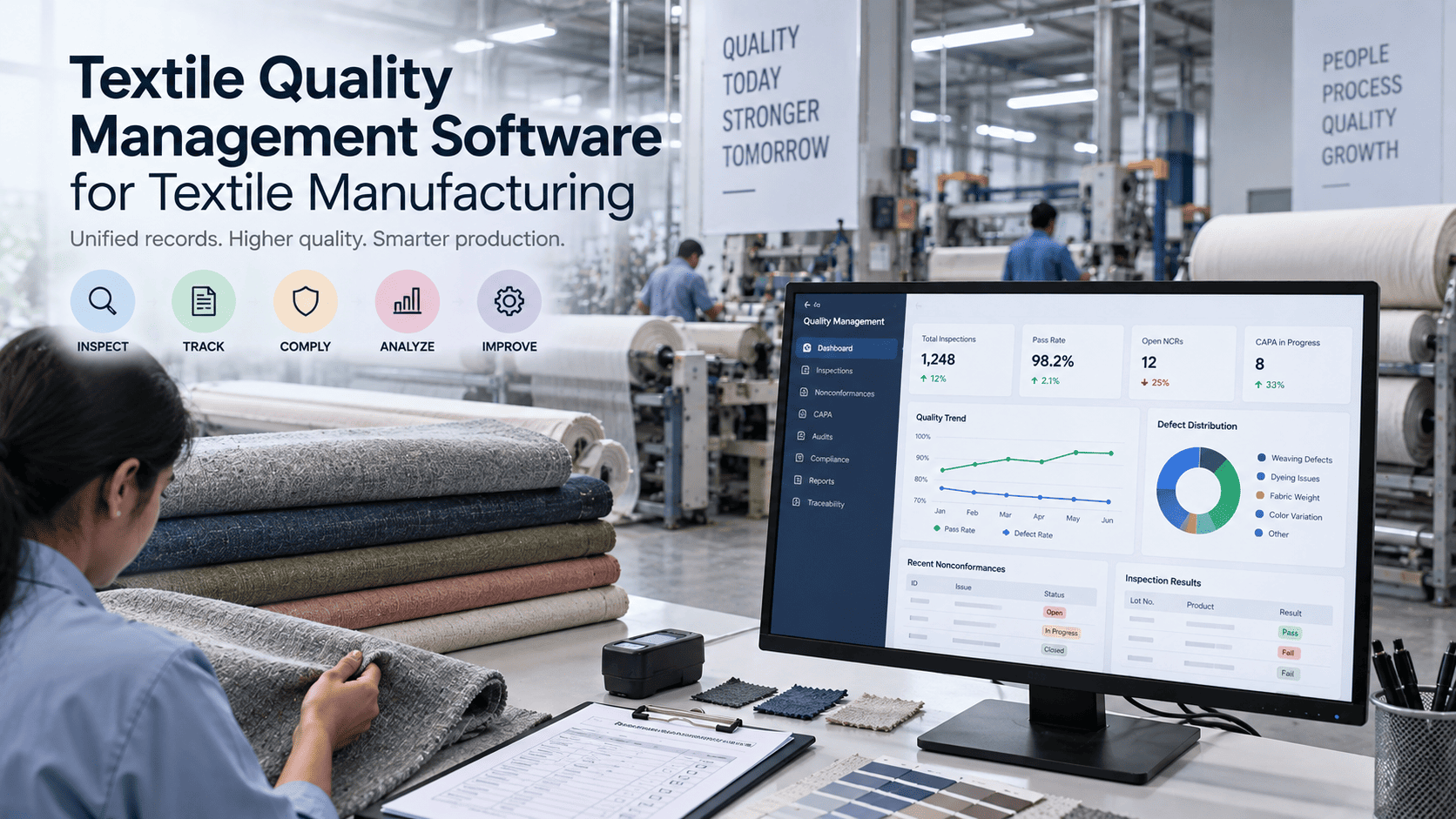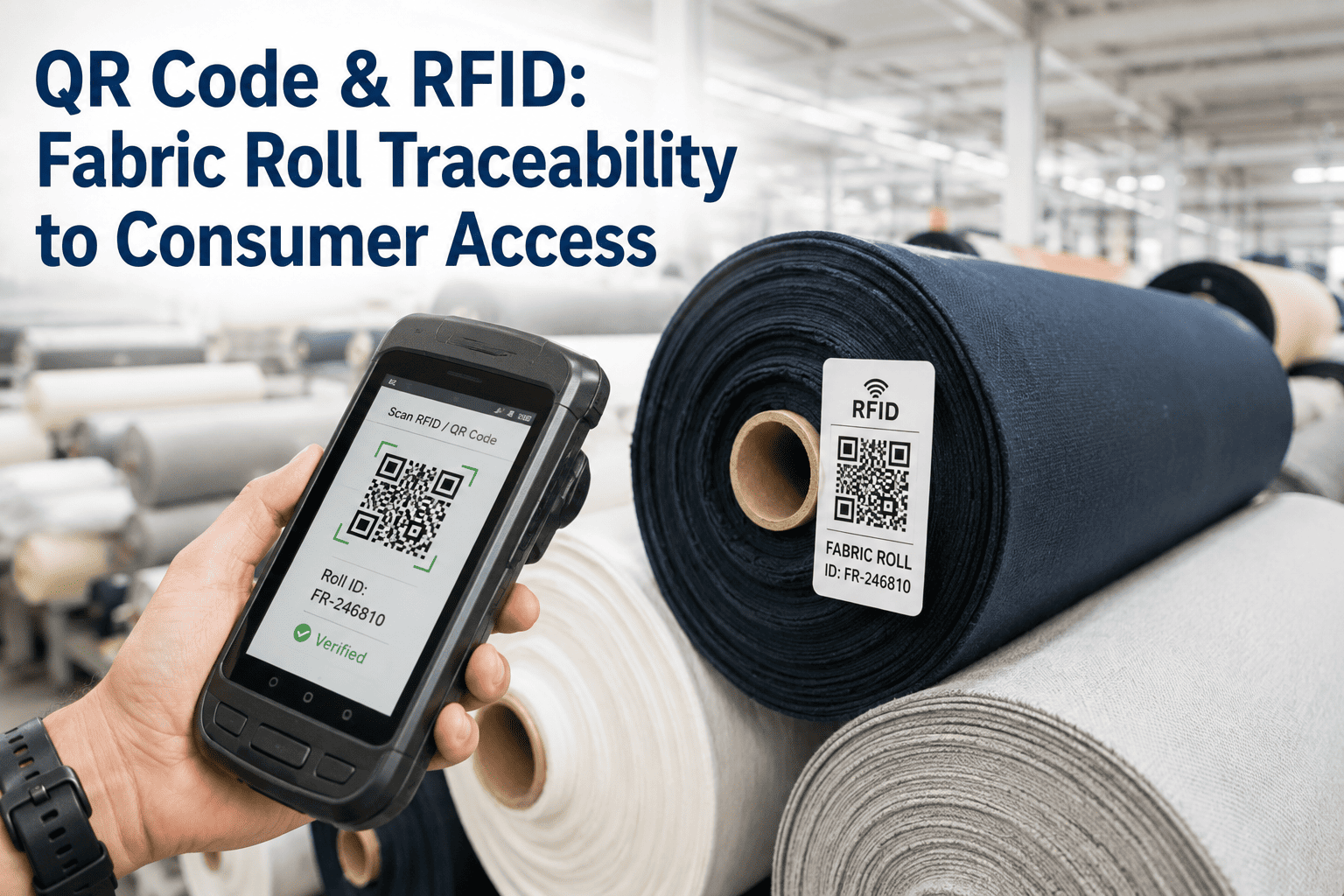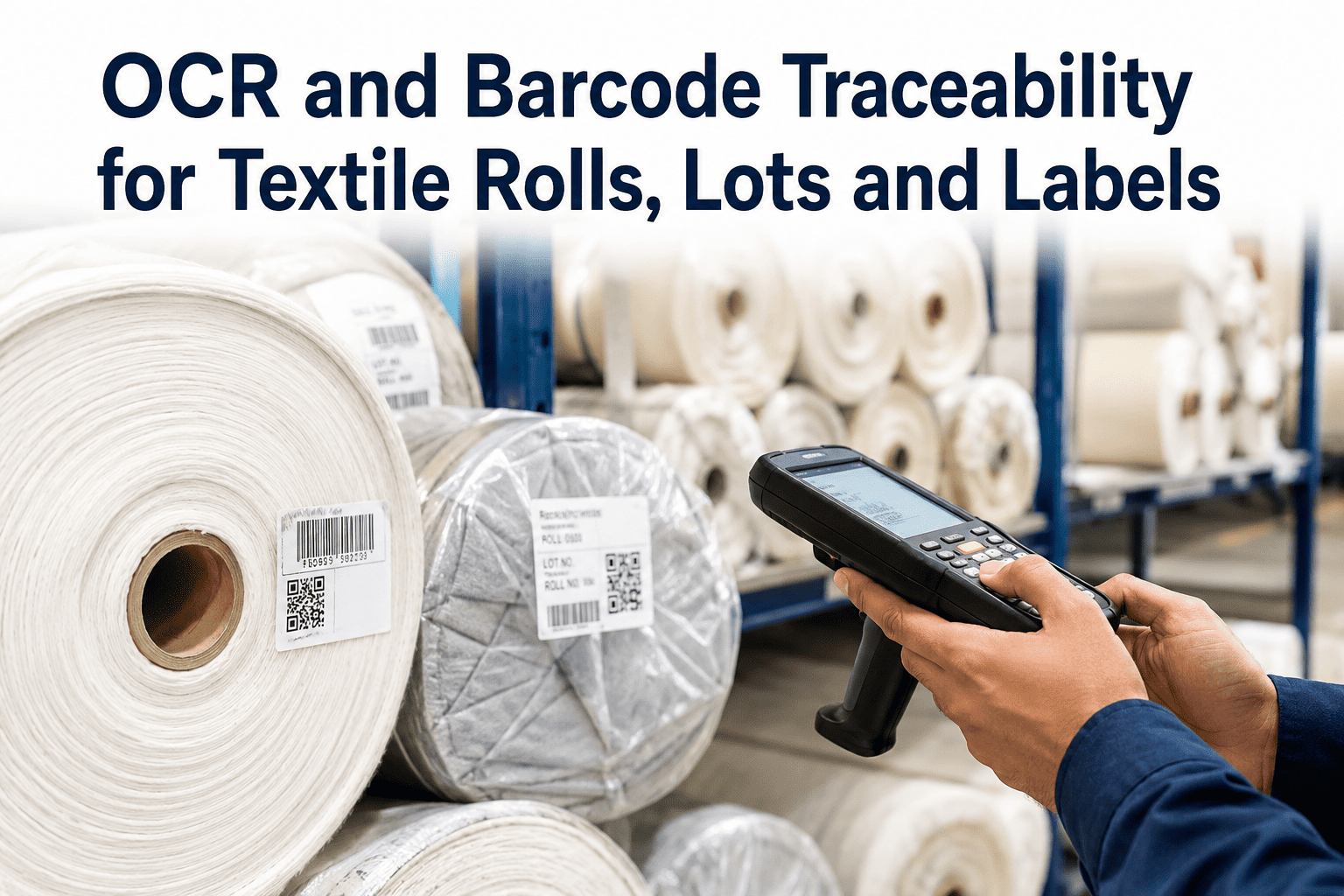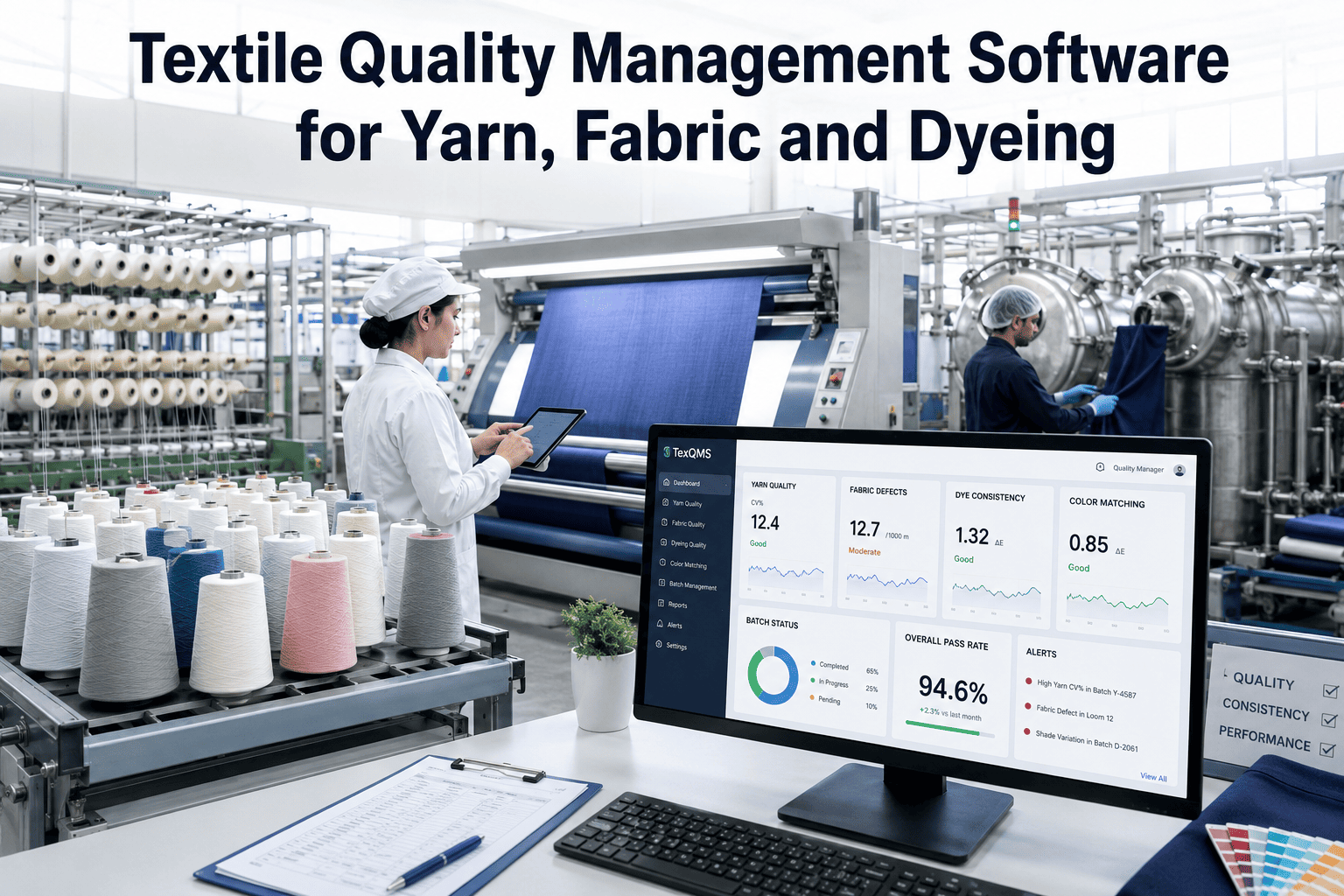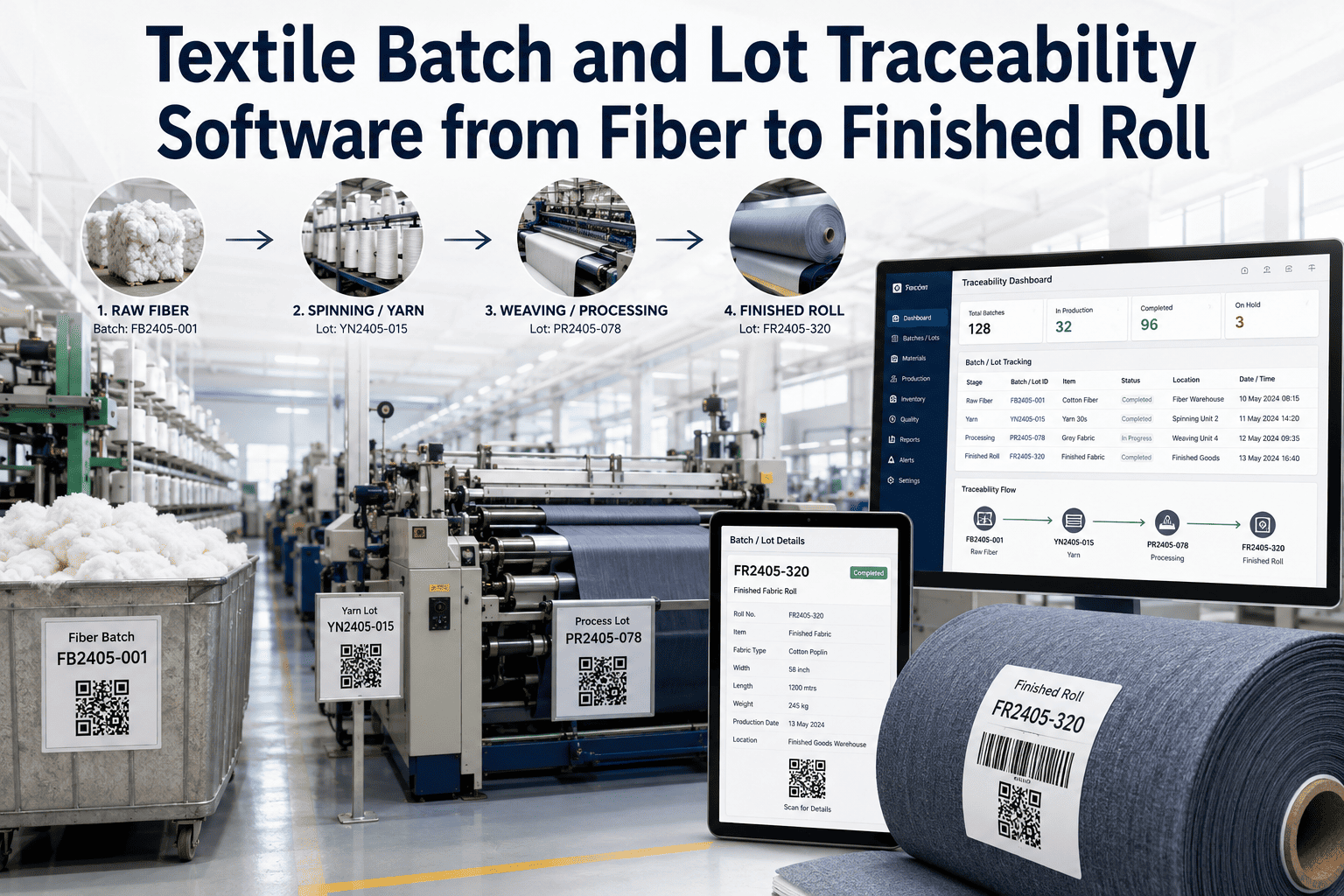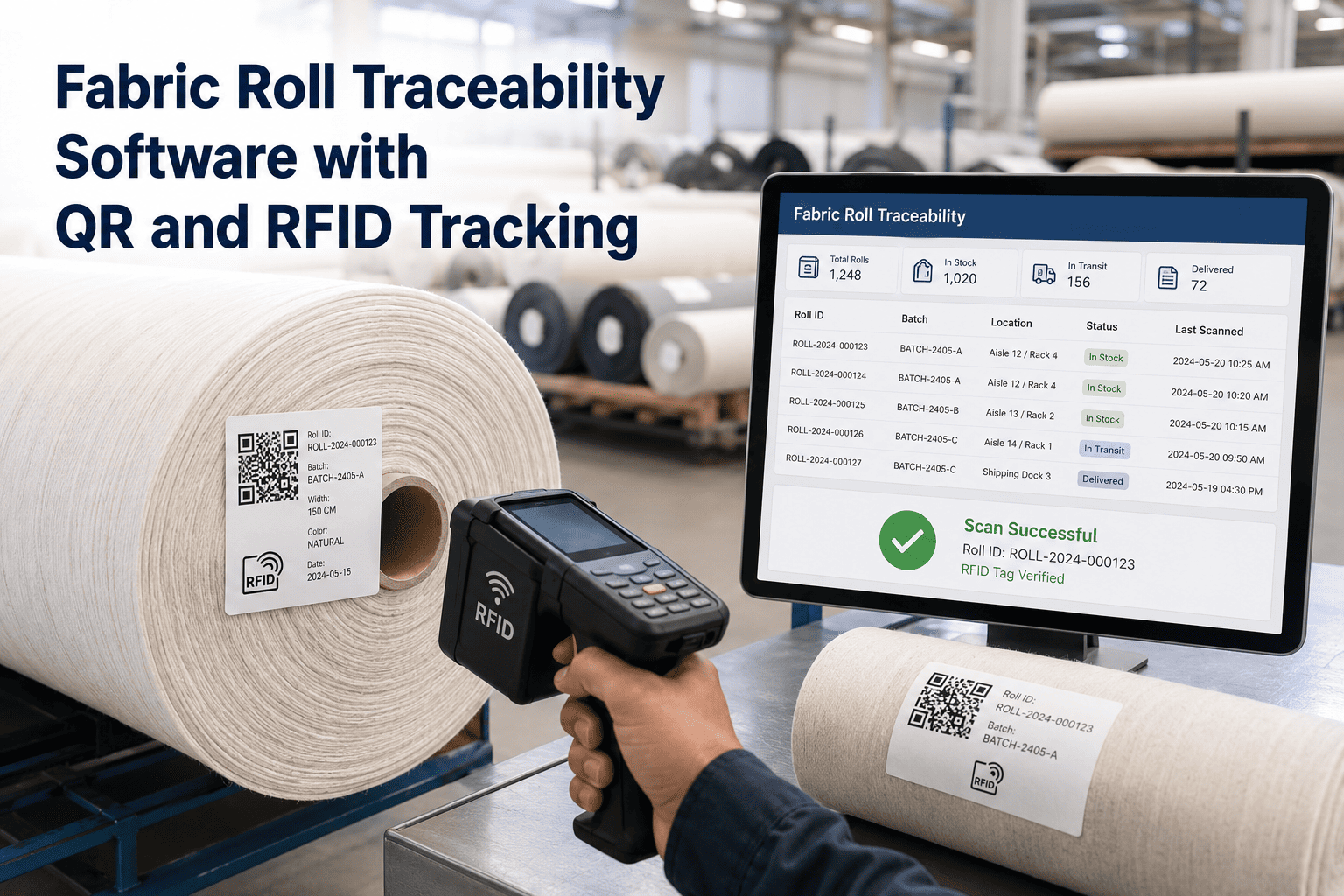
A buyer calls asking for full documentation on a rejected shipment, machine records, dye lot parameters, inspection sign-offs, dispatch details, all of it, and the answer determines whether that relationship survives the conversation. Fabric roll traceability software with QR and RFID tracking makes that call a non-event, because every roll already carries a complete, searchable history from the moment it leaves the machine to the moment it ships. Instead of digging through paper logs and separate spreadsheets, a single scan pulls the full story. Mills that want audit-ready traceability on every roll can book a demo to see it live.
FABRIC ROLL TRACEABILITY · QR & RFID · 2026
Every Roll, Fully Traceable, One Scan Away
Machine history, inspection records, batch data, and dispatch status attached to every fabric roll, so audit requests and buyer questions get answered in minutes, not days.
Why Roll-Level Traceability Has Become Non-Negotiable
Buyers in 2026 are asking harder questions than they did even two years ago, particularly around sustainable sourcing, ethical materials, and full production trails for export compliance. A mill that can only offer partial paper trails, or that needs two days to pull together a roll's history from separate logbooks, is at a real disadvantage against a competitor who can produce the same documentation in minutes. This is not just about avoiding a bad audit result, it is increasingly a factor in which mills get repeat orders and which get quietly dropped from a buyer's supplier list.
QR and RFID-based traceability solves this by attaching a permanent, scannable identity to every roll the moment it is produced, then automatically linking every subsequent event, inspection, movement, and dispatch action to that same identity without requiring anyone to manually maintain a separate tracking log.
What Gets Attached to Every Roll
01
Machine and Batch Origin
Which machine, shift, and batch produced the roll, along with the process parameters recorded at the time.
02
Dye Lot and Recipe Data
The exact dye lot, recipe version, and any deviations recorded during processing for that specific roll.
03
Inspection and Quality Sign-Off
Every quality checkpoint the roll passed through, with inspector, timestamp, and result attached directly.
04
Warehouse Movement History
Every location change from production floor to warehouse to dispatch, captured automatically via RFID reads.
05
Dispatch and Order Linkage
Which order, buyer, and shipment the roll was ultimately allocated to, closing the loop end to end.
AUDIT-READY IN MINUTES, NOT DAYS
See a Full Roll History Pulled in Real Time
Watch a live scan pull complete machine, quality, and dispatch history for a single fabric roll.
QR vs RFID: Choosing the Right Tracking Method
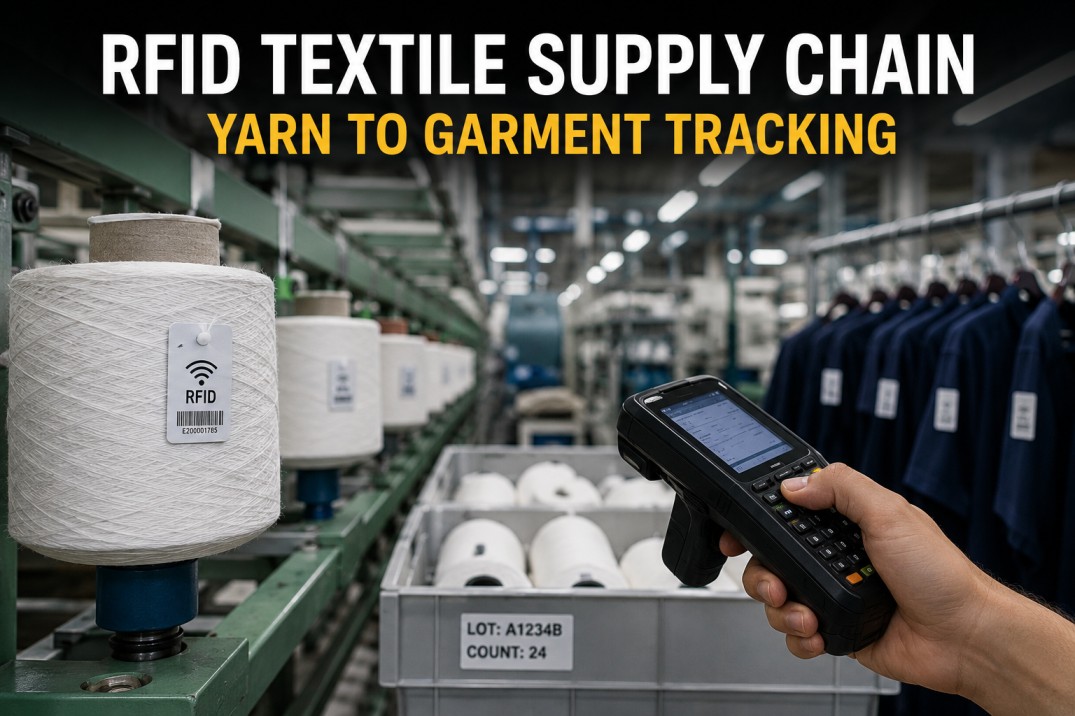
Most mills end up using both methods together rather than choosing one exclusively, since each has strengths suited to a different stage of the roll's journey through the plant.
| Method | Best Suited For | Key Advantage |
|---|---|---|
| QR Code | Manual scans at inspection and dispatch points | Low cost, works with any smartphone camera |
| RFID Tag | Automatic warehouse and gate movement tracking | No manual scan needed, reads in bulk and in motion |
| Combined Setup | Full plant-to-dispatch coverage | Redundant tracking with no blind spots in the chain |
What Export Teams Are Saying
A buyer asked for a complete production trail on a large export order, with less than two days notice, machine records, quality sign-offs, dye lot parameters, all of it. We scanned the roll batch and had the full report ready while the call was still going, and the buyer increased their next order once they saw how fast and complete our documentation was.
Export Operations Manager, Composite Mill
Frequently Asked Questions
Does every single roll need its own tag, or can we tag at the batch level?
Roll-level tagging is strongly recommended over batch-level tagging, since buyer questions and quality issues almost always come down to a specific roll rather than an entire batch. Batch-level tagging can mask which individual rolls actually experienced a deviation, forcing a mill to treat an entire batch as suspect when only one or two rolls were actually affected. The incremental cost of roll-level tags is generally small compared to the documentation speed and precision it provides during an audit or buyer inquiry.
How does this integrate with our existing warehouse management process?
RFID gate readers and handheld scanners feed movement data directly into the traceability system as rolls physically move through the warehouse, so location updates happen automatically rather than requiring a separate manual logging step. This typically runs alongside existing warehouse management processes rather than replacing them outright, adding the roll-level detail that generic warehouse systems usually lack. Teams can review how this fits their specific warehouse layout through support.
What happens if a QR code or RFID tag gets damaged or lost?
Every roll's full history remains stored in the system independently of the physical tag, so a damaged or missing tag does not mean lost data, it simply means a replacement tag needs to be generated and linked back to the existing roll record. Most mills build a quick re-tagging step into their damage-handling process specifically to cover this scenario, keeping the traceability chain intact even when a physical tag is compromised in transit or storage.
Can buyers or auditors access roll history directly, or does it go through our team?
Most mills configure a controlled external view that allows a buyer or auditor to scan a roll and see a defined subset of its history, such as quality sign-offs and compliance-relevant data, without exposing internal cost or process details that are not relevant to their request. This removes the mill's team from having to manually compile and send documentation for every request, while still keeping full control over exactly what external parties can see.
How long does a full traceability rollout take across an existing plant?
A pilot on one production line, including tagging, scanning setup, and initial data linkage, is typically operational within three to four weeks. Full plant rollout covering every line, warehouse zone, and dispatch point usually completes within eight to twelve weeks depending on plant size and how many existing systems need to be connected. Mills can book a demo to get a rollout plan scoped to their own facility layout.
FABRIC ROLL TRACEABILITY · QR & RFID TRACKING
Turn Every Audit Request Into a Two-Minute Task
Join textile mills already answering buyer and audit questions with a single roll scan.