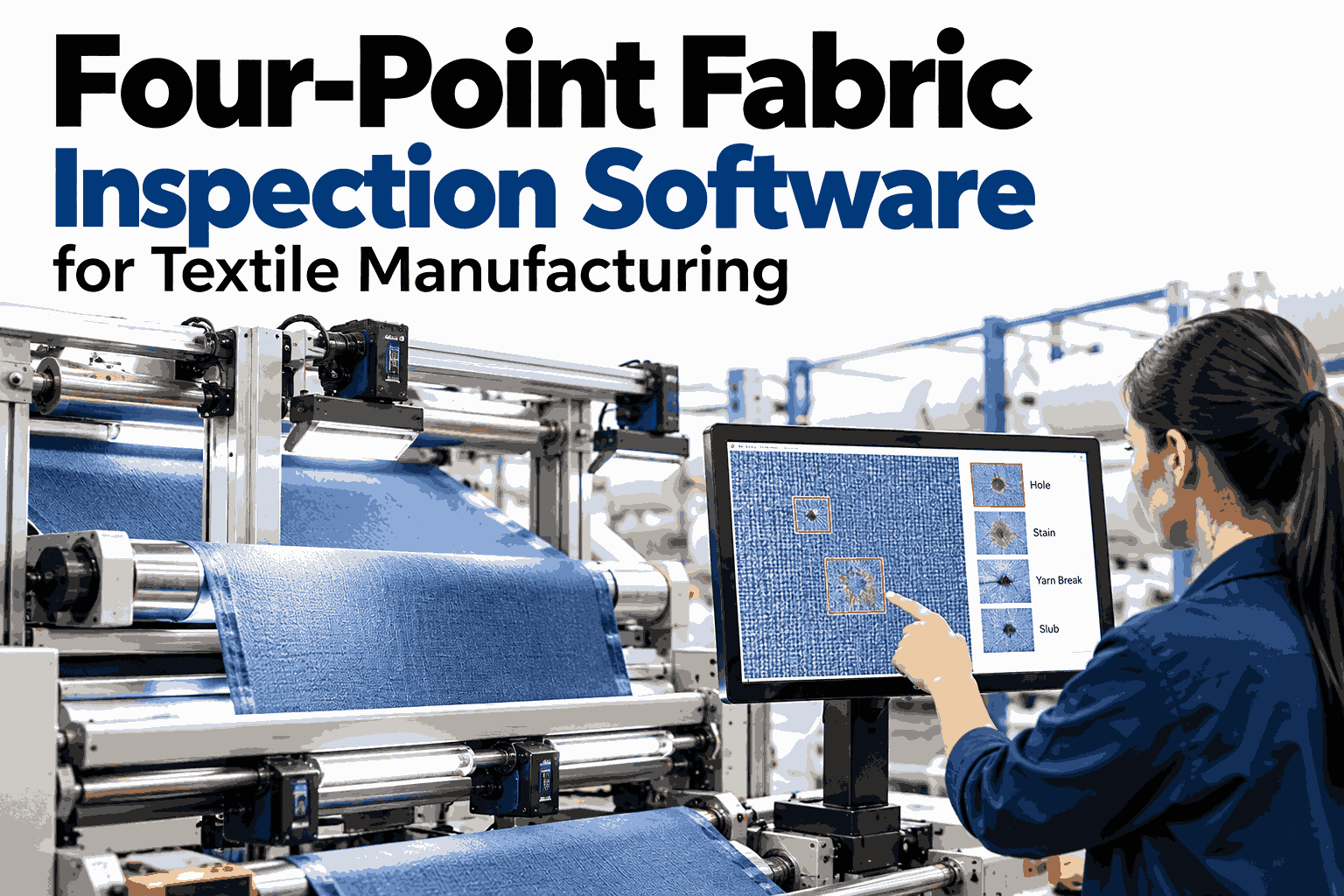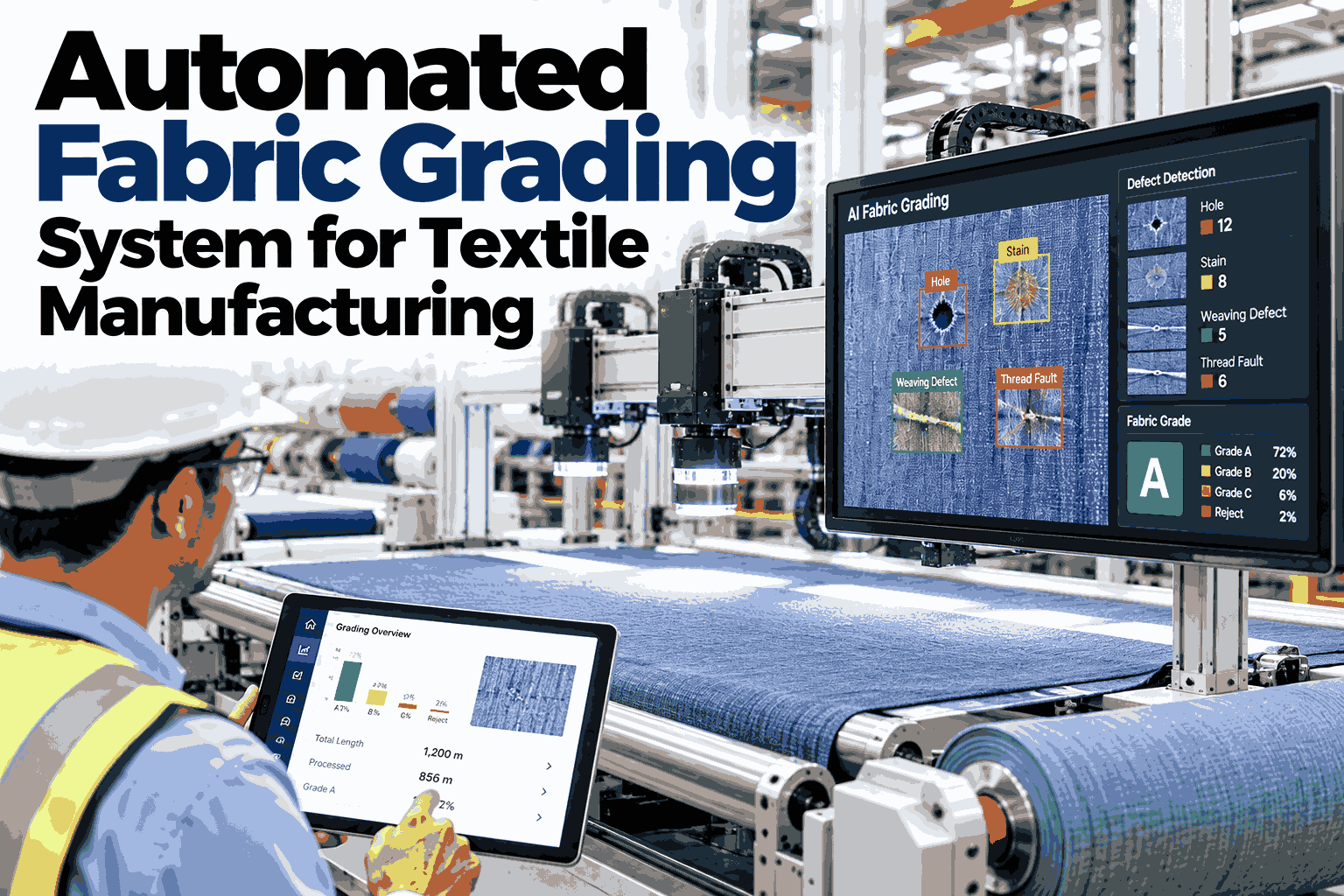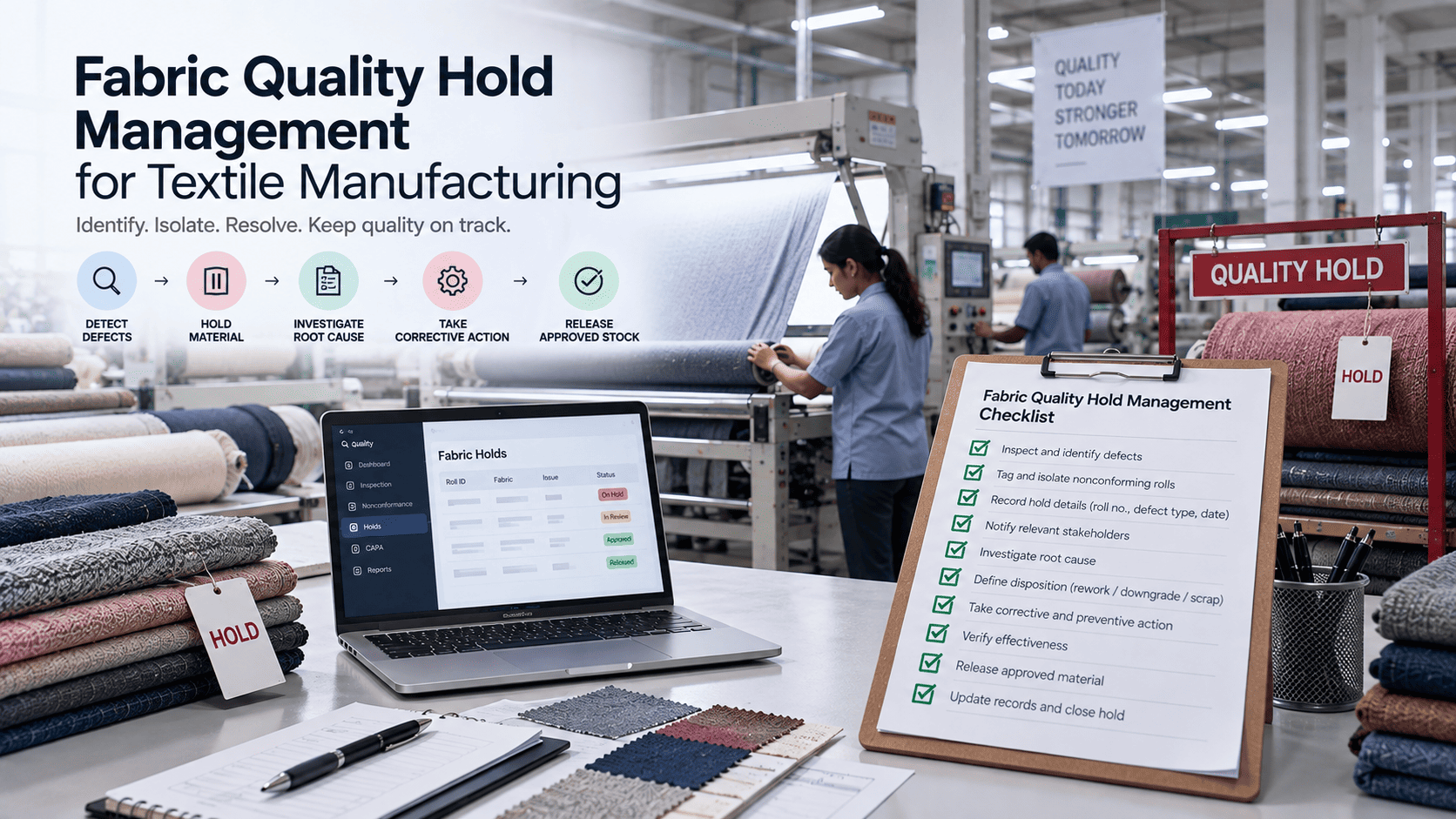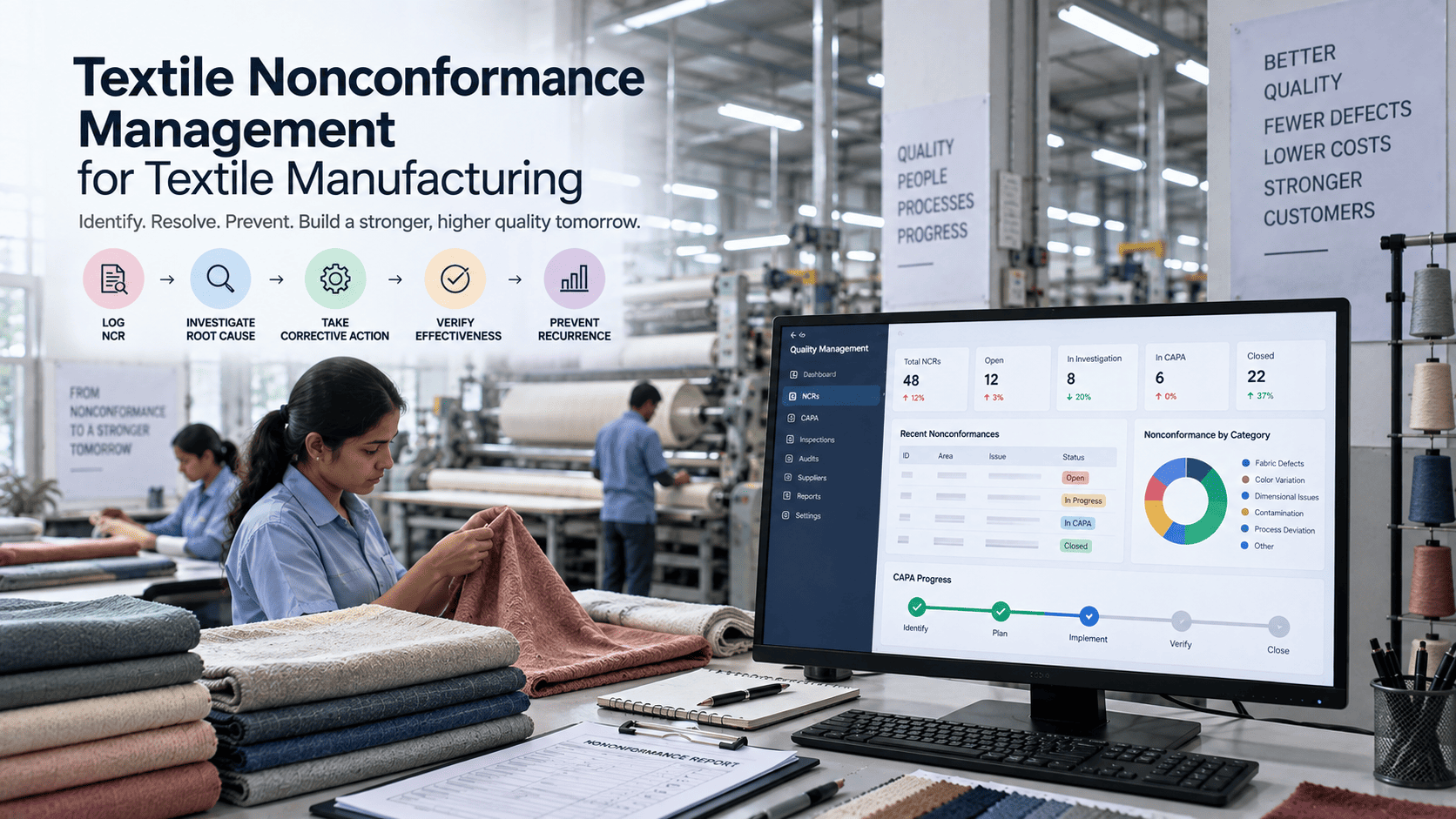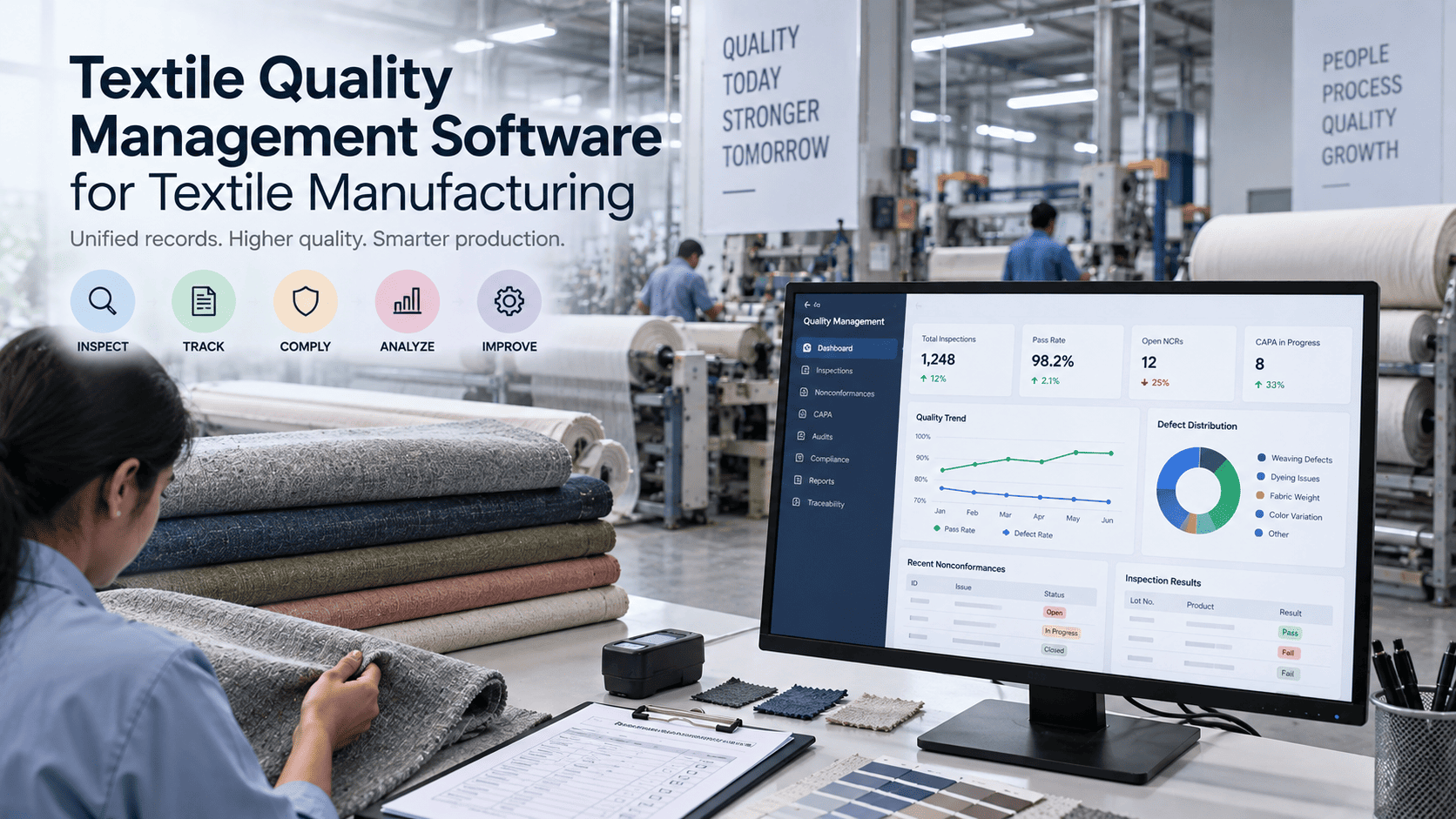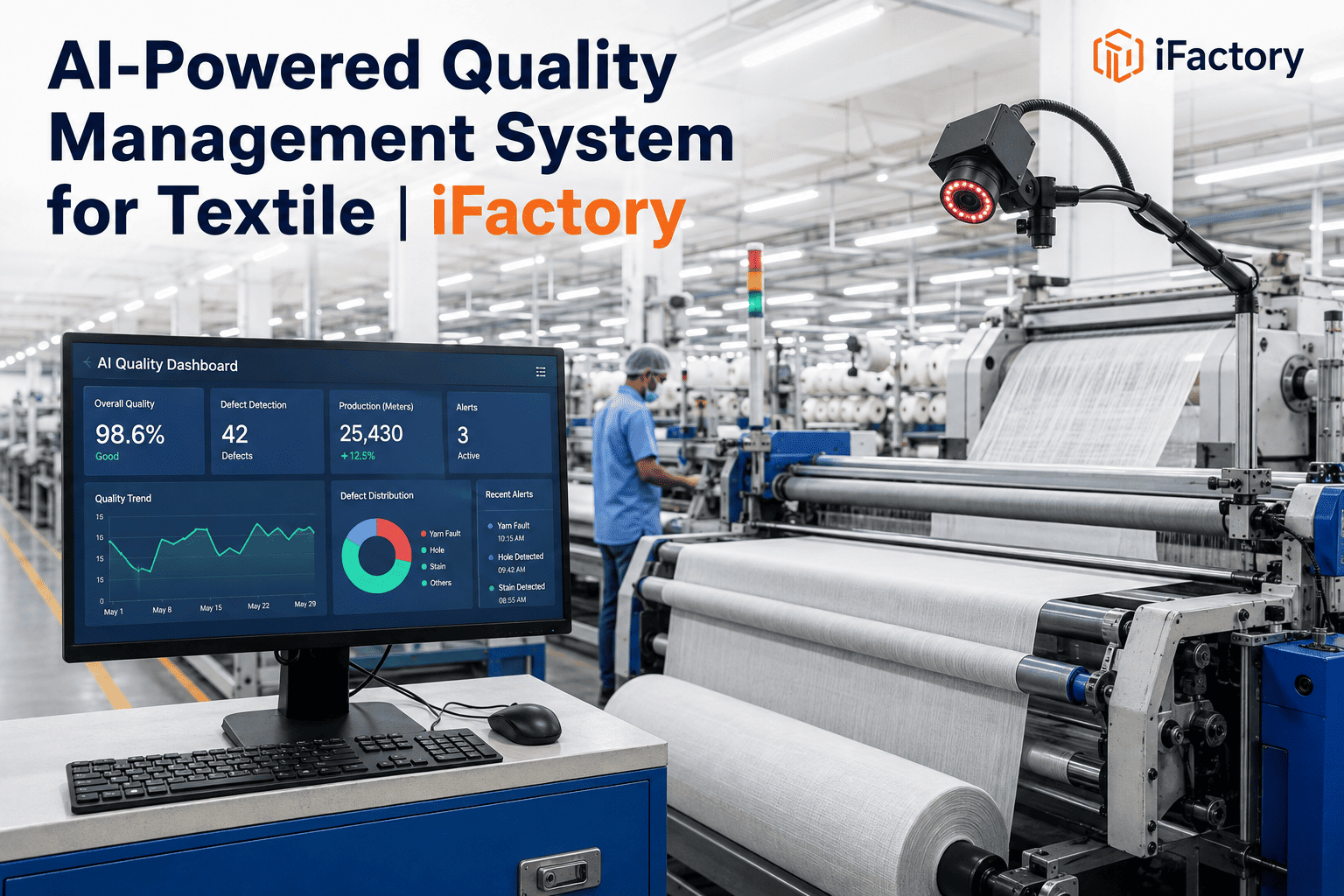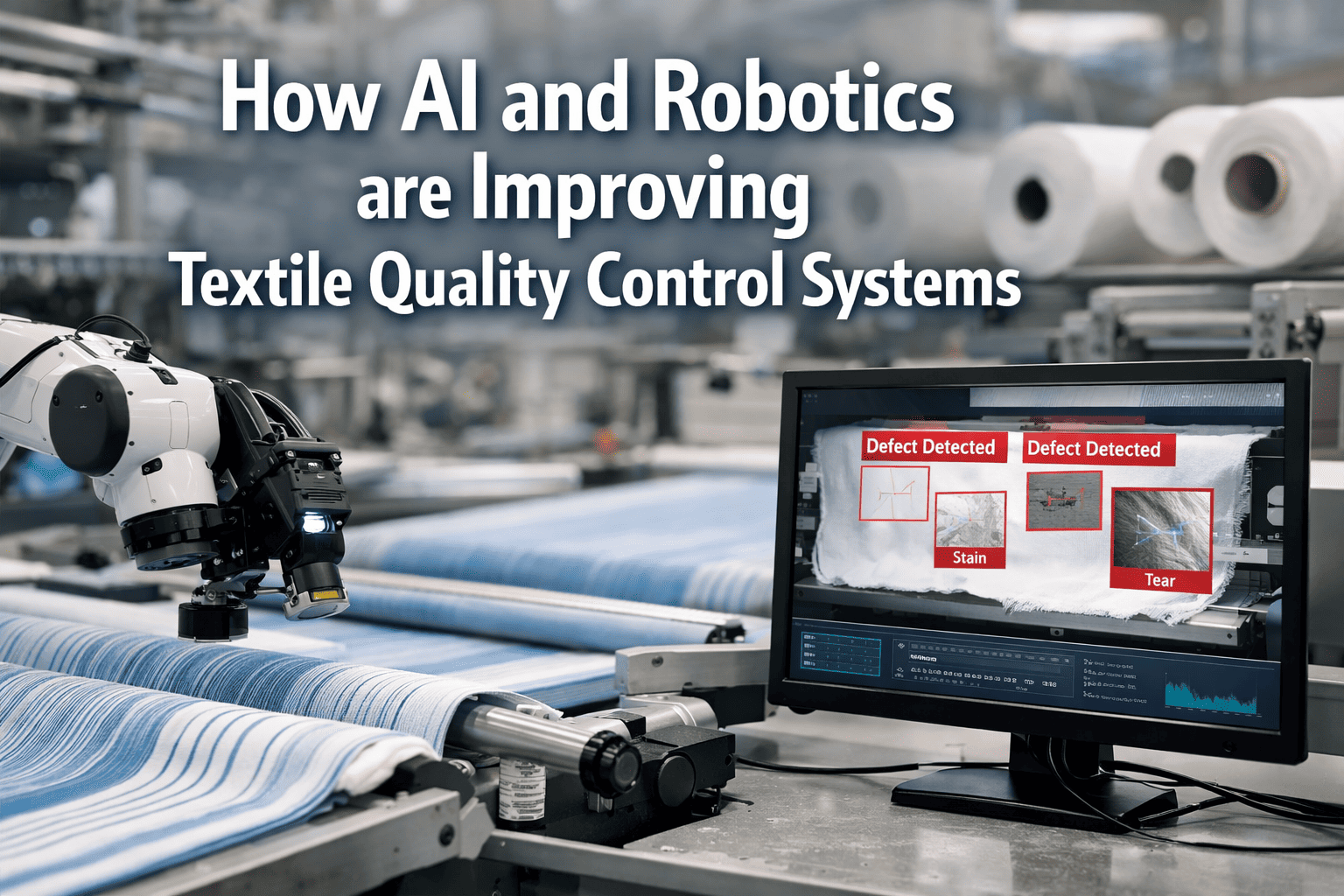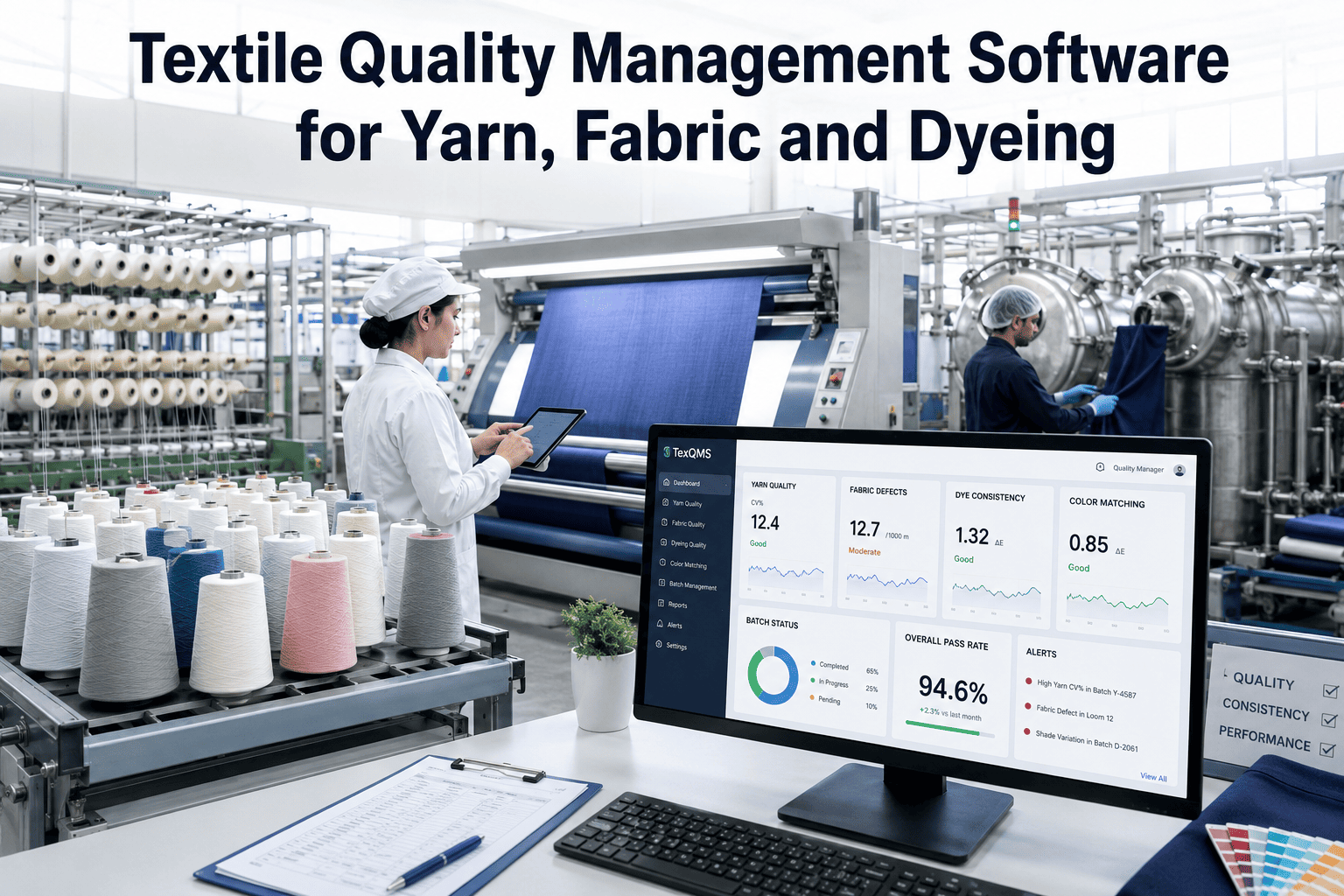
Quality data in most textile operations lives in at least four different places: inspection sheets at the loom, lab test results in a separate spreadsheet, dyeing lot records in a third system, and supplier certificates in email threads nobody can search. When a customer complaint comes in, someone has to manually stitch that trail back together before anyone can even confirm what went wrong. A unified quality management system replaces that scramble with one connected record spanning yarn, fabric, and dyeing, from the first inspection to the final CAPA closure. Quality and compliance teams evaluating a QMS built specifically for textile operations can book a demo to see it against their own product lines.
QUALITY MANAGEMENT · YARN, FABRIC & DYEING
One Quality Record, From Fiber to Finished Fabric
Inspections, specifications, test results, nonconformance, CAPA, and supplier quality connect in one system, so quality data stops living in separate spreadsheets that nobody has time to reconcile.
Quality Record
Inspections
Specifications
Test Results
Nonconformance
CAPA
Supplier Quality
Why Disconnected Quality Data Costs More Than It Looks Like
A fabric quality issue caught at final inspection often has its root cause three or four process stages earlier, in a dyeing lot, a yarn specification deviation, or a supplier's raw material batch. When that history lives in separate systems, tracing the actual cause takes days of cross-referencing spreadsheets and asking people to remember what happened weeks ago. By the time the root cause is confirmed, the same issue has usually already repeated on a second batch.
The cost isn't limited to rework either. Every hour spent reconstructing a quality trail manually is an hour not spent preventing the next issue, and every CAPA that closes without a clearly documented root cause is a problem that's likely to resurface under a different name in a future audit.
SEE YOUR OWN PRODUCT LINES CONNECTED
Walk Through a Real Nonconformance Trail End to End
See how a single defect traces back through dyeing, fabric, and yarn specifications.
How a CAPA Actually Closes the Loop
A nonconformance record is only as useful as the corrective action that follows it, and that's where most paper-based quality systems break down: the CAPA gets opened, a fix gets applied informally on the floor, and the record never gets updated to confirm it actually worked. A structured CAPA workflow keeps every step visible until it's genuinely closed.
1
Nonconformance logged against a specific lot, machine, or supplier batch with supporting inspection data attached.
2
Root cause investigation pulls related specification, test, and process history automatically into one view.
3
Corrective action assigned with an owner and a due date, tracked until the fix is actually implemented.
4
Effectiveness verified against a follow-up batch before the CAPA is formally closed out.
One Record
Yarn, fabric, and dyeing quality history connected instead of split across separate files
Full Traceability
Every nonconformance links back to the specific lot, machine, and supplier batch involved
Audit Ready
CAPA history and supplier quality records stay organized for buyer and compliance audits
What a Quality Director Told Us
Before this, a single fabric complaint could take our team the better part of a week just to trace back to a root cause, because the dyeing records and the yarn specifications lived in completely different systems. Now that same investigation takes an afternoon, and the CAPA history is something we can actually show an auditor without scrambling.
Quality Director, Composite Textile Manufacturer
Supplier Quality Without the Email Chase
Raw material quality issues, whether it's fiber consistency or dye lot variation from an external supplier, are hard to manage when supplier certificates and rejection history live in email threads. A connected supplier quality record tracks incoming material inspection results against each supplier over time, making it possible to see which suppliers are consistently within specification and which ones are quietly driving a disproportionate share of downstream nonconformance.
The Nonconformance Types Most Mills Track
Not every nonconformance looks the same, and lumping them all into one generic category makes trend analysis nearly useless. Separating them by type is what makes it possible to see, for example, that dyeing-related nonconformances are trending up while fabric-stage issues are trending down, which points to very different corrective actions.
Shade & Color Deviation
Dimensional Variance
Strength & Weave Defects
Contamination
Labeling & Documentation
Supplier Material Deviation
Rolling Out Across Multiple Facilities
Textile groups running more than one facility face a specific version of this problem: each plant may have built its own version of quality tracking over the years, which means comparing performance across sites honestly requires normalizing very different data first. A shared quality platform solves this by giving every facility the same underlying structure for inspections, specifications, and CAPA, while still allowing each plant's specific product lines and buyer requirements to stay configured independently.
Corporate quality teams typically start by standardizing CAPA and nonconformance tracking first, since that's where cross-site comparison delivers the fastest value, then extend the same structure to specification management and supplier quality as each facility's rollout matures.
Frequently Asked Questions
Can this handle specifications that differ by buyer or product line?
Yes, specification management supports different tolerance ranges and test requirements per buyer, product, or fabric construction, since a single mill often ships against several different buyer specification sheets at once. Inspections and test results are automatically checked against the correct specification for that specific order rather than a single generic standard. Teams can book a demo to see multi-specification handling in practice.
Does this replace our existing lab testing equipment or process?
No, the system captures and organizes test results from your existing lab equipment and process rather than replacing the testing itself. Results get logged against the relevant lot and specification automatically where lab equipment can feed data directly, and entered manually where it can't, so the system fits around your current testing setup rather than requiring new equipment.
How does this help during a buyer or compliance audit?
Auditors typically want to see a clear trail from raw material to finished product, including how nonconformances were identified and resolved, and a connected quality record produces that trail directly instead of requiring your team to assemble it from separate files beforehand. This significantly cuts audit preparation time and reduces the risk of gaps that raise auditor concerns. Audit preparation specifics can be discussed through support.
Can inspectors on the floor use this without extensive training?
Yes, floor-level inspection entry is designed to mirror the paper checklists inspectors already use, just organized into structured fields instead of handwriting. Most inspection teams are comfortable with the workflow within the first few shifts, since the underlying checks don't change, only how they're captured and connected.
How long does implementation take across yarn, fabric, and dyeing together?
Most mills start with one process area, commonly fabric inspection or CAPA management, and expand to yarn and dyeing quality over the following months rather than launching all three simultaneously. This phased approach gives quality teams time to adjust workflows and build confidence in the data before it becomes the system of record across the full product chain.
STOP RECONSTRUCTING QUALITY TRAILS
Connect Your Quality Data From Fiber to Finish
See how inspections, specs, and CAPA come together in one system.