Every metre of fabric that leaves your factory carries your brand's reputation. Yet in most textile mills, quality control still depends on tired human eyes, manual checklists, and inspections that happen too late — after defects have already travelled through three departments. AI and robotics are changing that equation permanently. This is what the shift looks like, why it matters right now, and how factories using iFactory are already ahead of the curve. Book a free demo and see it live on your production floor.
Your Quality Inspector
Never Blinks. Never Tires.
Never Misses a Defect.
AI-powered quality control is catching what human eyes can't — in real time, at full production speed, across every fabric type and every shift.
Why Manual Quality Control Is a Silent Profit Killer
Textile defects don't just hurt quality — they trigger rework, delay dispatch, damage buyer relationships, and create waste that eats into your margins silently every single day. The root problem? Humans catch defects too late.
What Defects Are We Actually Talking About?
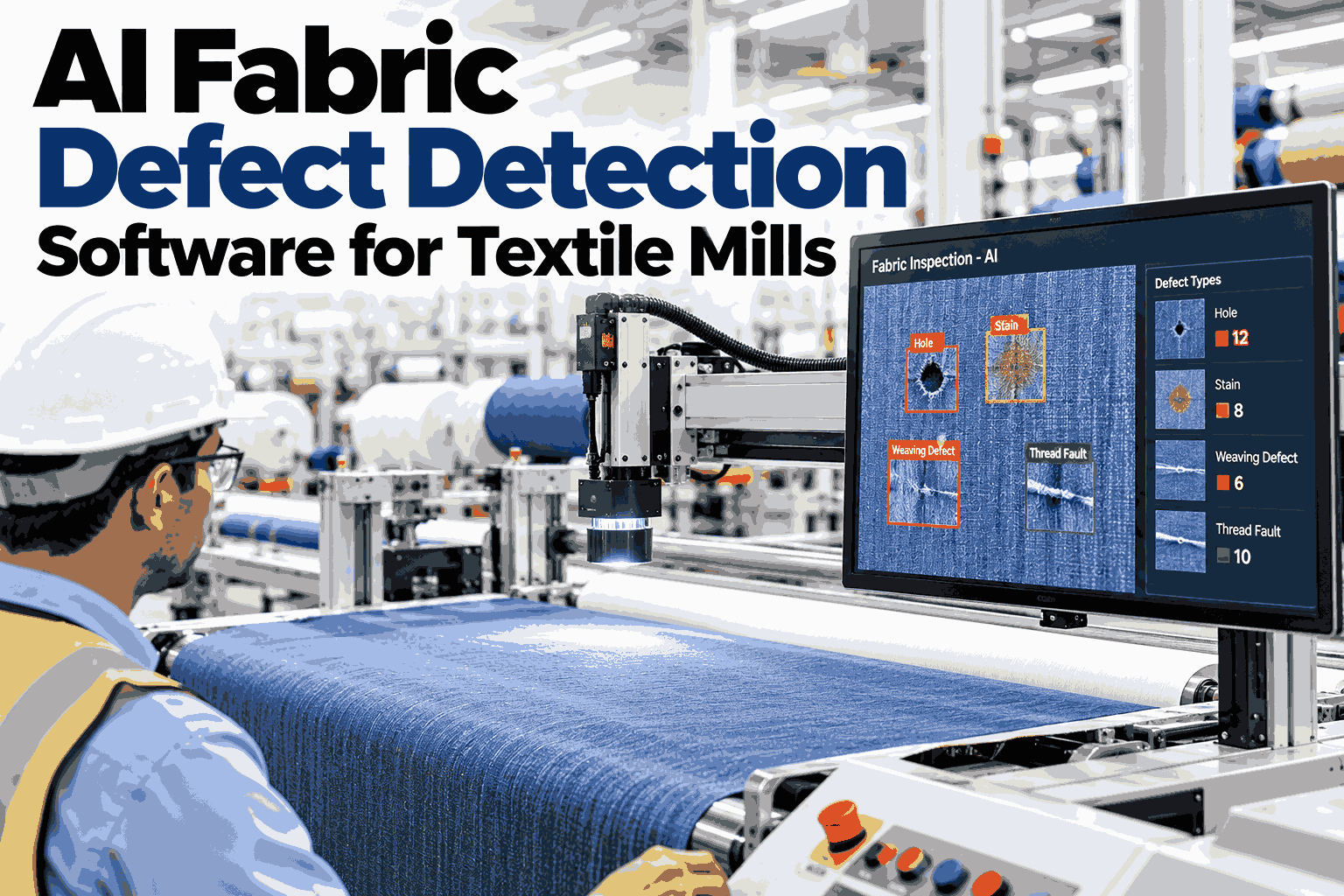
AI systems trained on textile data can detect over 13 categories of fabric defects — many of which are invisible to tired eyes or inconsistently flagged by manual inspection.
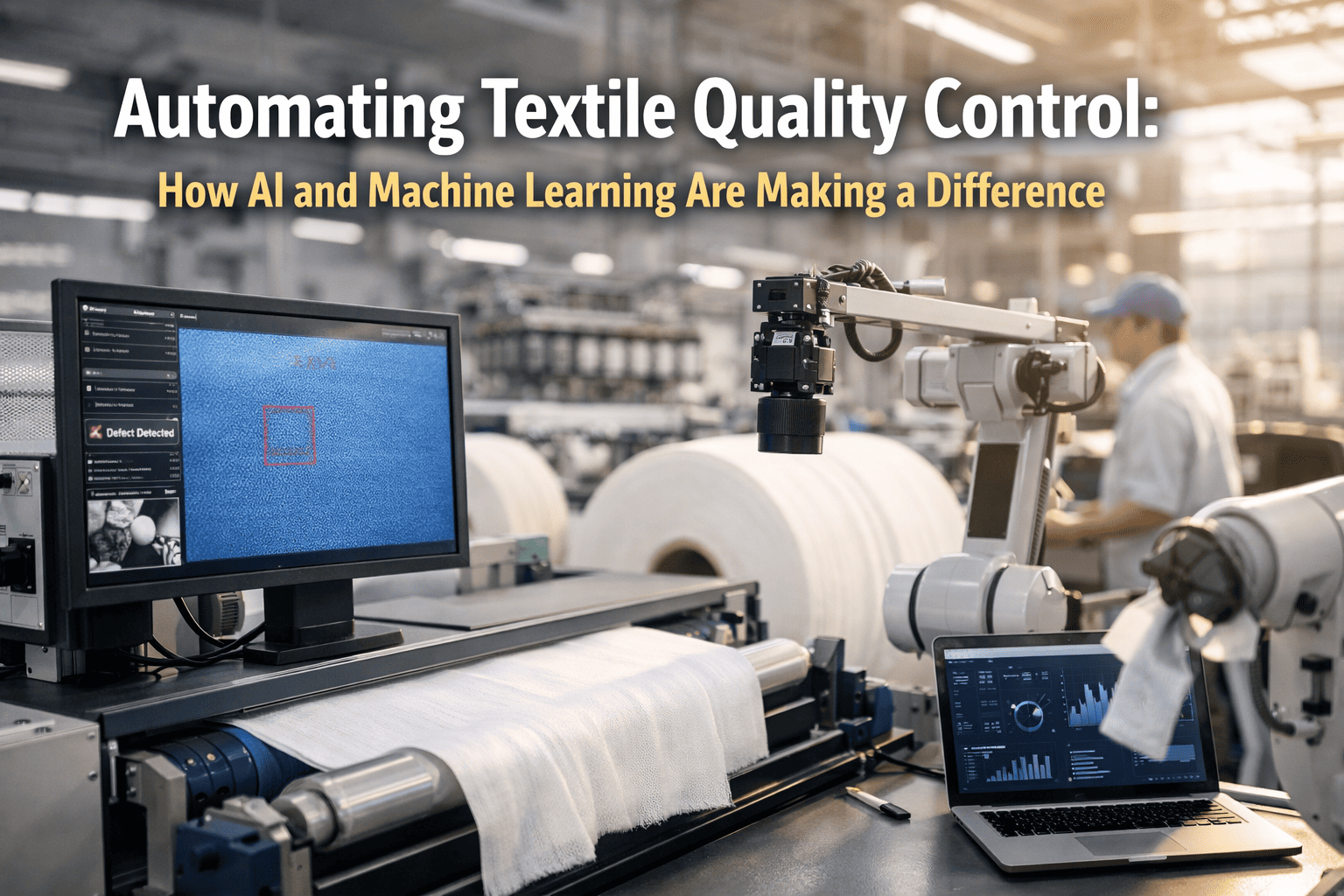
How AI + Robotics Actually Works on the Factory Floor
It's not science fiction. The technology stack is modular, deployable, and already running in textile factories across India, Bangladesh, Vietnam, and Turkey.
High-Speed Camera Capture
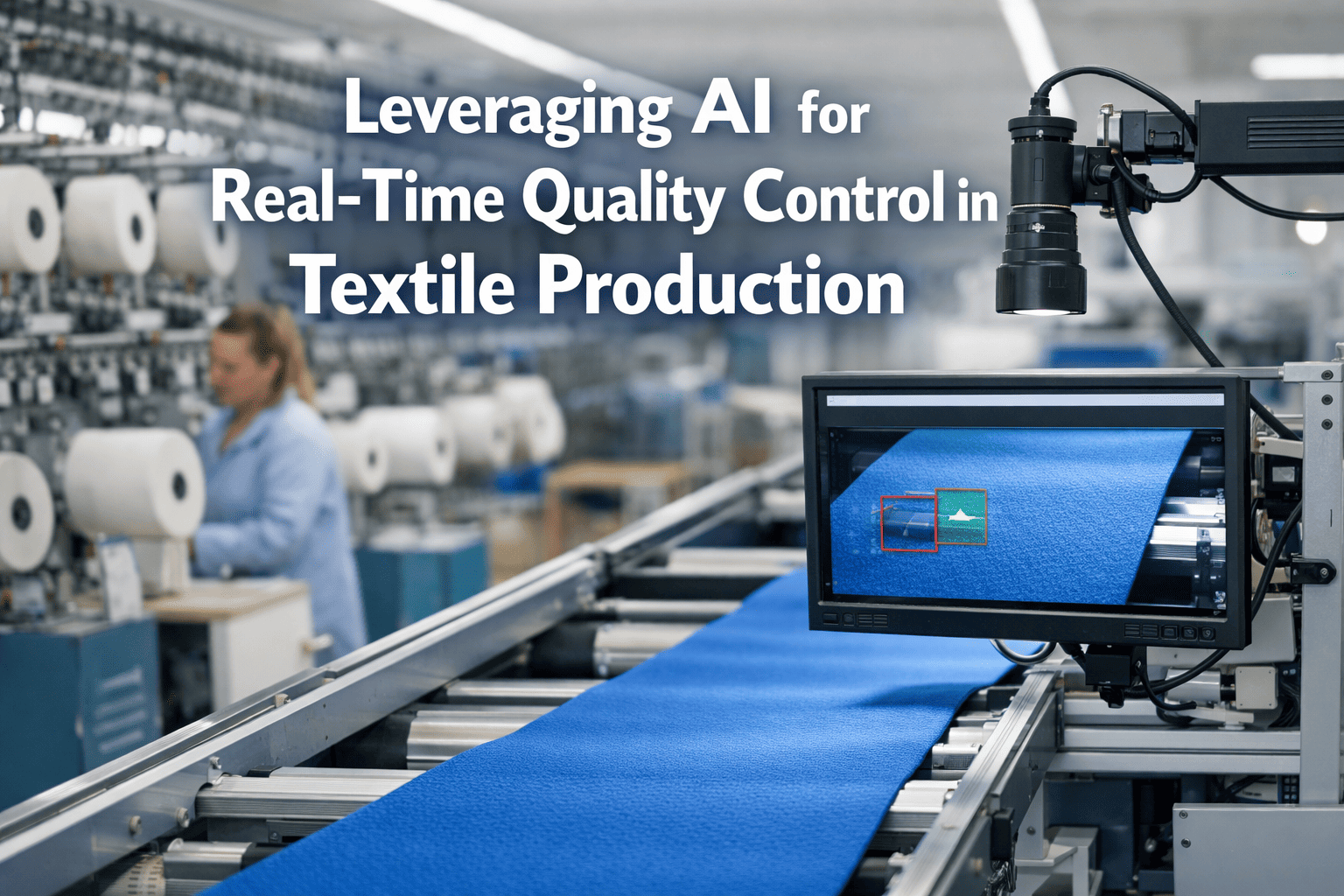
Line-scan cameras mounted above conveyor belts capture fabric surface images at full production speed — no slowdown required. Resolutions reach 8K–16K pixels per line.
AI Vision Model Analysis
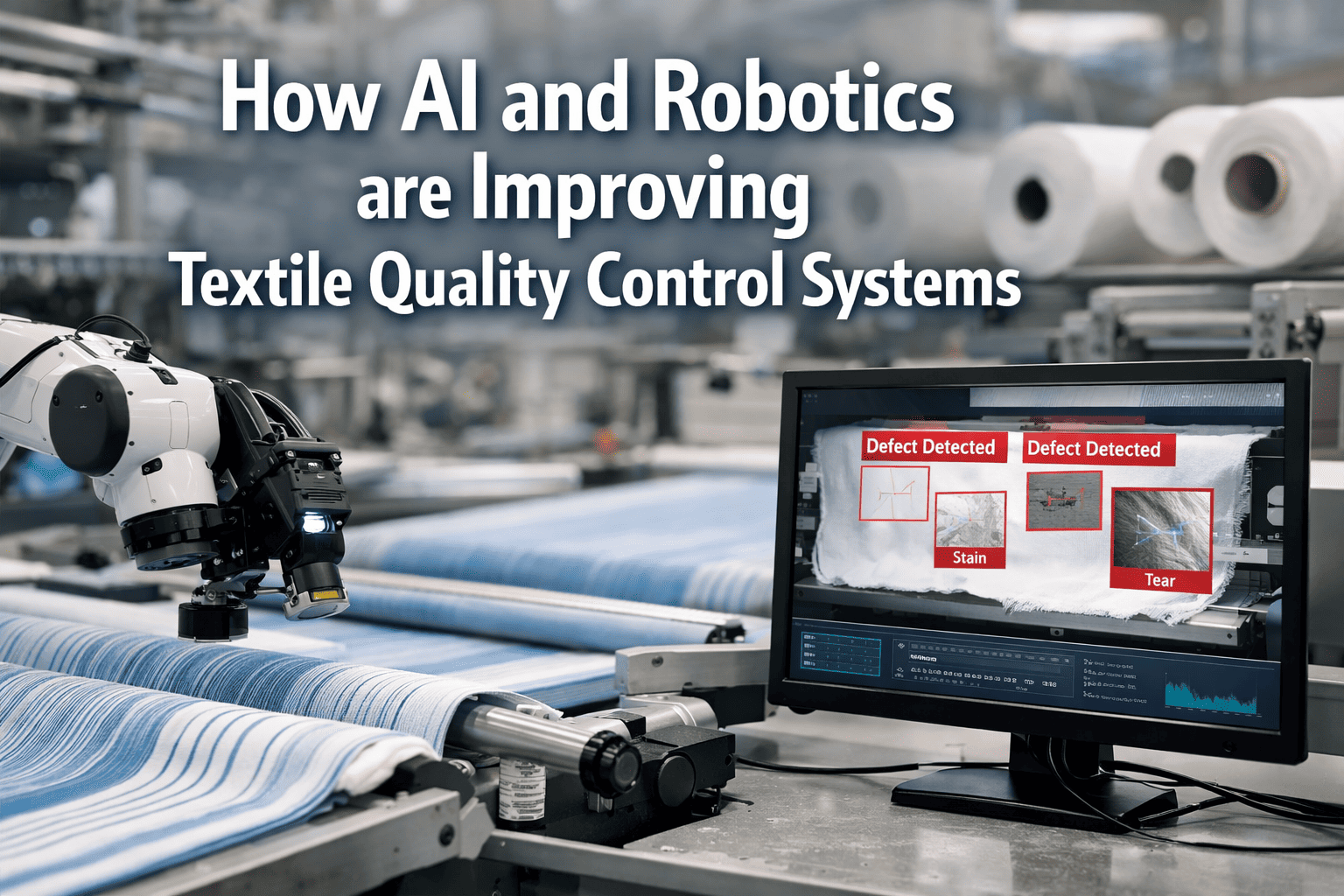
Deep CNN or YOLO-based models process every frame in milliseconds. The model classifies defect type, maps exact location, assigns a confidence score, and logs a unique defect ID — all automatically.
Robotic Action & Alert
On critical defects, a robotic arm flags, marks, or removes the defective section automatically. Simultaneously, operators and supervisors receive instant mobile alerts — so nothing waits for an end-of-shift report.
Dashboard, Logs & Learning
Every defect event is stored with timestamp, machine ID, shift, and operator. The system learns from new defect data over time — getting sharper with every batch it processes.
See AI-powered quality control running live on a textile production floor
Our specialists will walk you through a real demo — spinning, weaving, dyeing, finishing. Tailored to your factory, not a generic pitch.
Manual Inspection vs. AI Inspection: Side by Side
The gap between what a trained human inspector achieves and what an AI system delivers is not small — it's the difference between reactive quality management and proactive quality prevention.
The 5 Real Benefits Textile Factories Are Seeing
Beyond the technology story, here is what the numbers actually look like for mills that have made the switch to AI-assisted quality control.
Defects Caught Mid-Process
Issues are flagged during weaving or dyeing — not at final QC — cutting rework cost by up to 60% per incident.
Faster Production Cycles
Automated inspection removes the bottleneck of end-of-roll manual checks, accelerating throughput without sacrificing quality.
Zero Buyer Complaints on Defects
Factories using AI quality systems report dramatic reductions in buyer-side quality claims, protecting long-term order relationships.
Full Traceability in Seconds
Every defect is logged with machine, shift, lot, and operator data. What took hours of investigation now takes under 60 seconds to trace.
Smarter with Every Batch
AI models self-improve as they process more data. A system that starts at 90% accuracy can reach 97%+ within weeks of deployment on your specific fabric types.
Industry Adoption Is Accelerating — Fast
The factories that delay AI quality adoption aren't just standing still — they're falling behind competitors who are cutting defect rates and winning better buyer contracts right now.
How iFactory Brings AI Quality Control to Your Floor
iFactory is not a standalone hardware vendor — it is the intelligence layer that connects your quality data, work orders, machine logs, and operator activity into one unified platform. Quality control becomes part of your production workflow, not a separate end-of-line activity.
In-Process Quality Gates
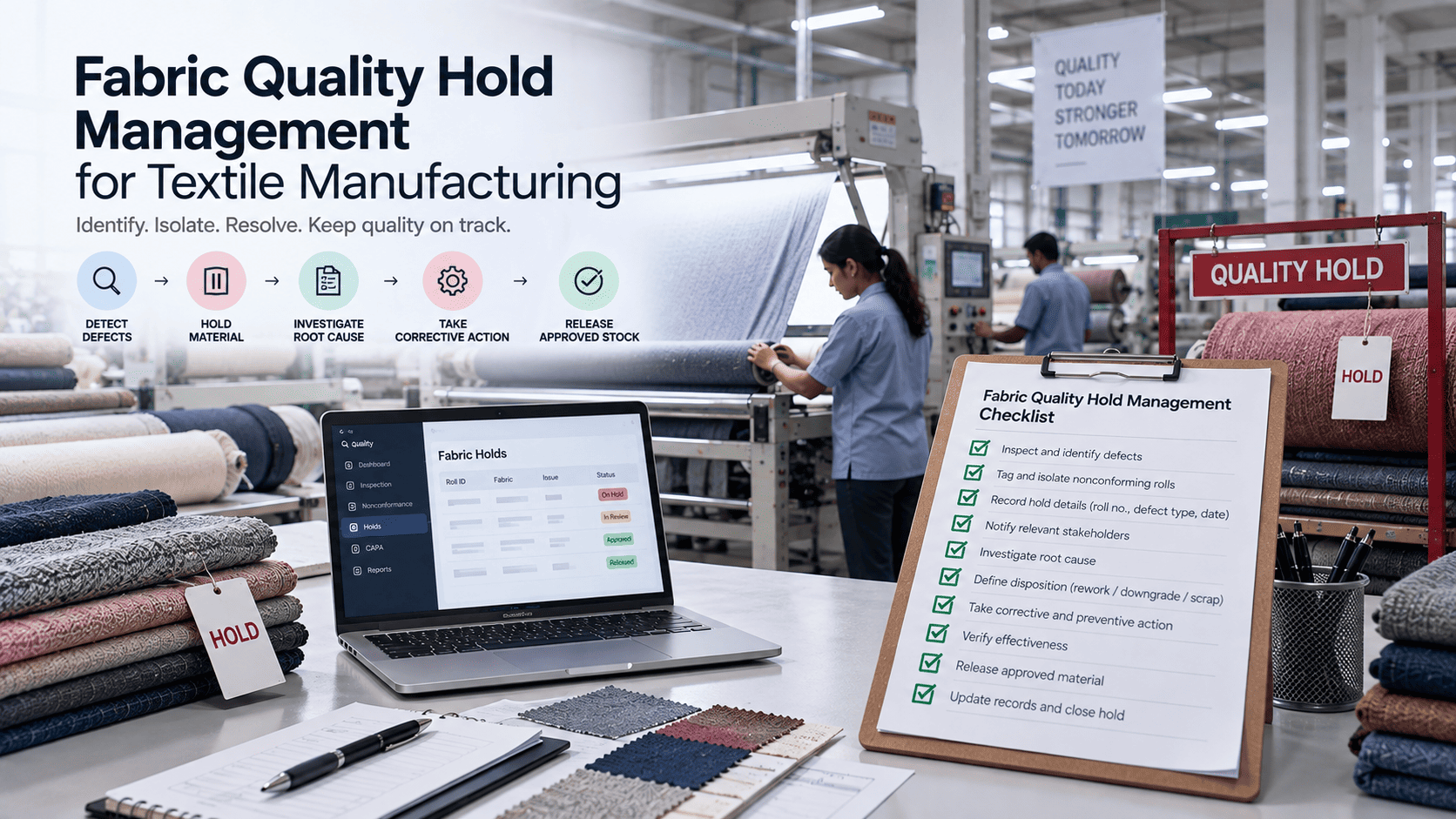
Quality checkpoints are embedded directly in digital work orders — operators confirm parameters at spinning, weaving, dyeing, and finishing before the job moves forward.
Defect-Linked Work Orders
When AI flags a defect, a corrective work order is auto-created and assigned to the right operator with full defect context — no manual follow-up needed.
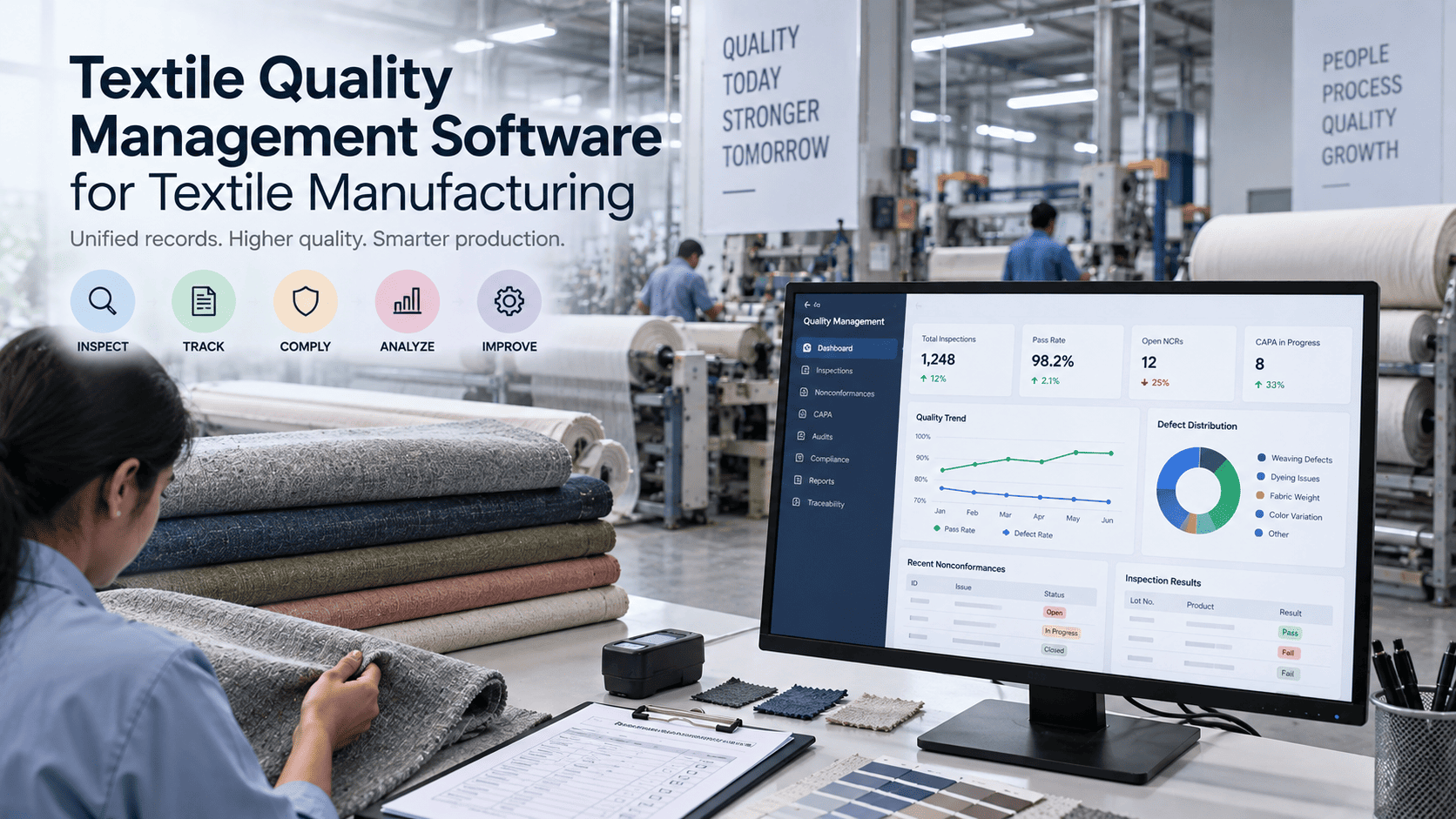
Live Quality Dashboard
See defect rates by machine, shift, department, and fabric type in real time. Catch a surge before it becomes a rejection. Act on data that's minutes old, not days old.
Compliance-Ready Reports
Auto-generated QC reports with defect logs, pass/fail ratios, and traceability data — ready for buyer audits, certifications, and internal reviews at any time.
When every defect is logged, timestamped, and linked to a machine and operator, quality stops being a guessing game. The AI doesn't just detect problems — it tells you exactly where to fix your process.
Frequently Asked Questions
Everything textile manufacturers ask before adopting AI and robotics for quality control — answered clearly.
Stop Catching Defects Too Late.
Start Preventing Them.
iFactory's AI-connected quality system is purpose-built for textile manufacturing — spinning, weaving, dyeing, finishing. Deploy in under 4 weeks. ROI within 90 days.