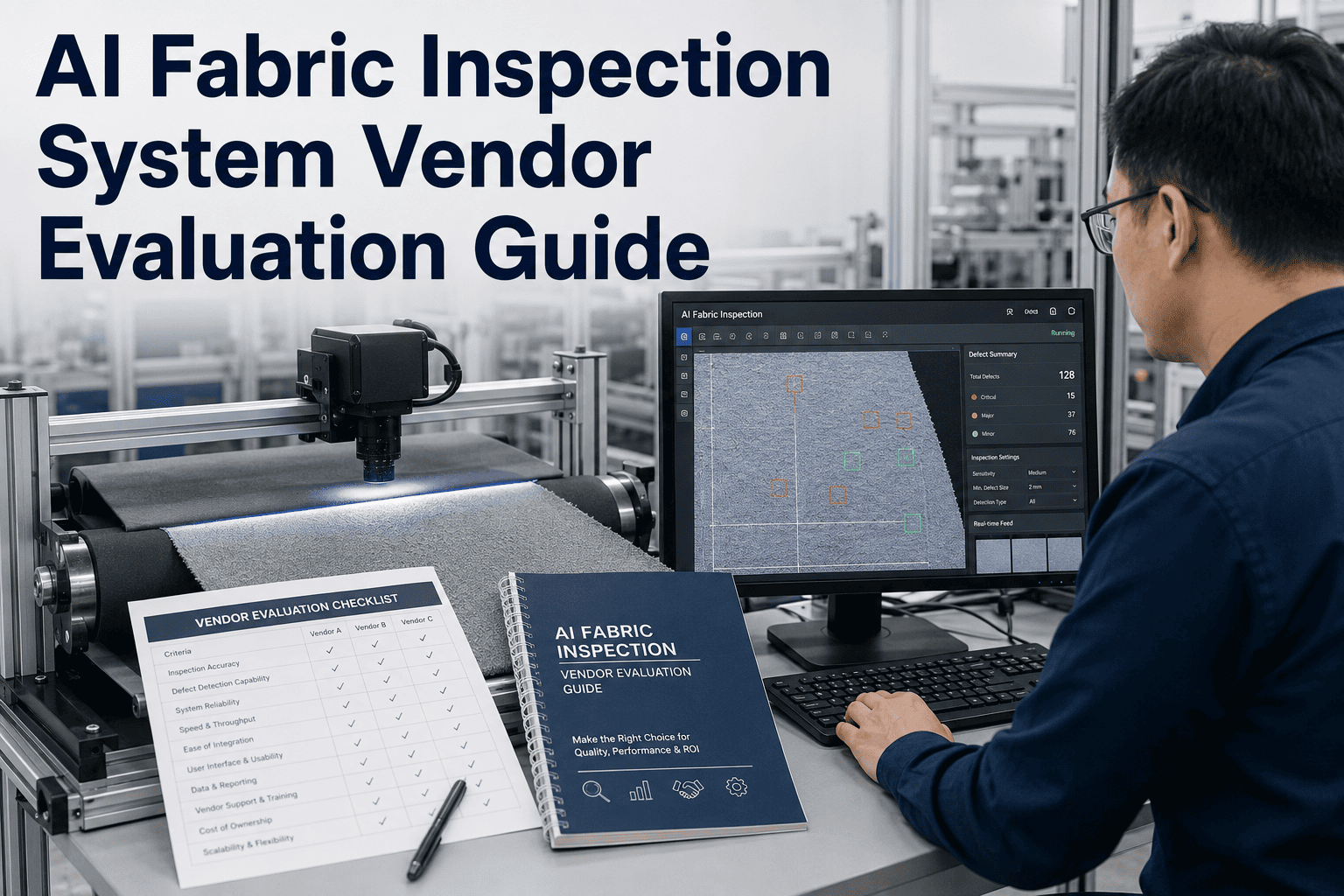
Buying an AI fabric inspection system usually starts with a vendor demo that looks impressive under ideal lighting on a defect-free sample, which tells you almost nothing about how the system performs on your actual fabric at your actual line speed. The gap between a demo and a production deployment shows up in exactly the details vendors don't volunteer: minimum detectable defect size, accuracy under your specific lighting conditions, and how well the edge hardware holds up integrated with your existing roll inspection line. This guide breaks down the criteria that actually separate a system that works on your floor from one that just works in a sales pitch, and mills partway through vendor evaluation can book a demo to compare against a real deployment.
BUYER'S GUIDE · AI FABRIC INSPECTION
What to Actually Check Before You Sign an AI Inspection Contract
Line speed, defect size, lighting conditions, and integration determine whether an AI fabric inspection system works on your floor, not just in a vendor's demo reel.
Why Demo Performance Rarely Predicts Floor Performance
A vendor demo is almost always run on a curated fabric sample under controlled lighting at a speed chosen to make the system look good. None of that reflects the reality of a production roll running at full line speed, under whatever lighting your inspection station actually has, with the full range of defect types your specific fabric produces. The questions below are designed to surface that gap before a contract is signed, not after installation.
01
Line Speed Tolerance
Ask for accuracy figures at your actual production speed, not a reduced demo speed. Some systems lose meaningful accuracy as fabric speed increases past a certain threshold.
02
Minimum Defect Size
Get a specific millimeter figure for the smallest defect the system reliably catches, and confirm it against defect types that matter most for your product, not just the easiest ones to detect.
03
Lighting Requirements
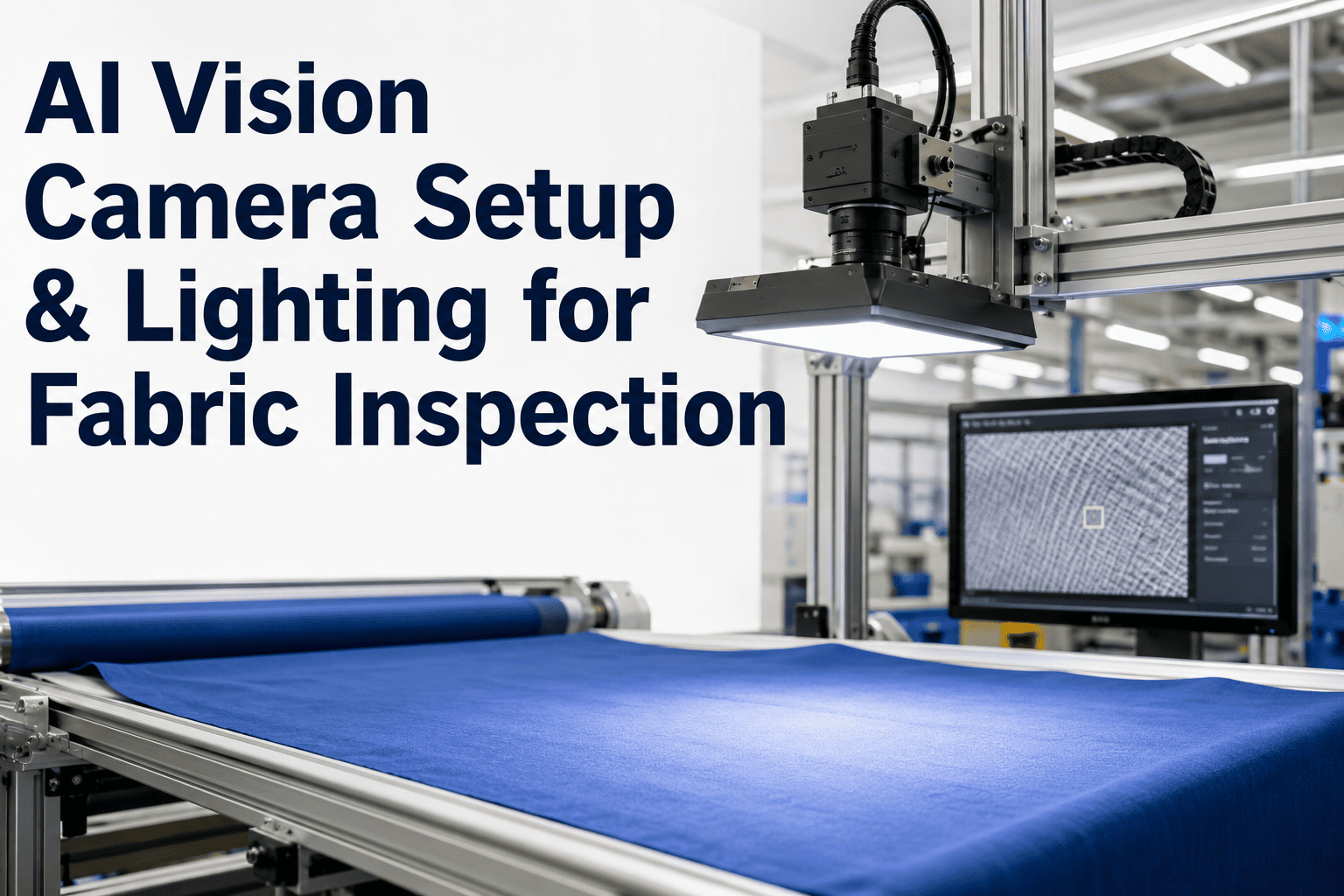
Confirm whether the system requires a specific lighting setup and what happens to accuracy if ambient light varies across your facility or throughout the day.
04
Camera and Edge Hardware
Ask what happens when a camera goes down, how quickly it can be replaced, and whether inspection continues in a degraded mode or stops entirely.
05
Integration With Existing Systems
Confirm how inspection data flows into your existing QMS or ERP, and whether roll grading decisions are automated or require manual review.
06
Roll Grading Logic
Understand exactly how the system converts detected defects into a roll grade, and whether that logic can be calibrated to your own grading standard.
TEST AGAINST YOUR OWN FABRIC
Run These Criteria Against a Real Inspection Deployment
See accuracy figures against your actual fabric type and line speed, not a demo sample.
Red Flags That Should Slow Down a Decision
Some warning signs are easy to miss in a sales process focused on getting to a signature quickly. A vendor unwilling to run a pilot on your own fabric before contract signature is one of the clearest ones, since a system that's confident in its accuracy should have no issue proving it on real production material first. Vague answers about minimum detectable defect size, or accuracy figures quoted without a stated fabric type and speed, are another sign the number may not hold up under your actual conditions.
Integration timelines that sound too short relative to your current systems are also worth questioning directly, since inspection data that doesn't reach your QMS or ERP cleanly ends up creating a second manual reconciliation step instead of removing one.
A Reasonable Pilot Structure
| Pilot Phase | What to Confirm |
|---|
| Shadow Mode | System runs alongside existing inspection without making grading decisions |
| Accuracy Comparison | AI results are compared against manual inspection on the same rolls |
| Speed Validation | Accuracy is tested at full production line speed, not a reduced pilot speed |
| Integration Test | Inspection results flow correctly into your existing QMS or ERP |
What a Quality Manager Told Us
We almost signed with a vendor whose demo looked flawless, and it wasn't until we insisted on a pilot with our own fabric at our own line speed that accuracy dropped noticeably below what they'd quoted. That pilot requirement should honestly be standard practice for anyone buying one of these systems.
Quality Manager, Woven Fabric Mill
Looking Past the Sticker Price
The quoted price for cameras and software licenses is rarely the full cost of a deployment. Edge hardware replacement cycles, ongoing recalibration when fabric types change, and the labor required to maintain integration with your QMS or ERP all add up over a multi-year period, and vendors don't always volunteer these figures upfront unless specifically asked.
A useful way to compare vendors honestly is to ask each one to walk through a full three-year cost projection, including hardware replacement and any recurring calibration or support fees, rather than comparing only the initial quote. The vendor with the lowest upfront price is not always the lowest total cost once these factors are included.
Questions Worth Asking About the Training Data
A system's accuracy claims are only as good as the data they were trained and validated against. It's worth asking directly whether quoted accuracy figures come from your fabric type and defect mix, a similar but different fabric, or a generic industry benchmark, since these can produce very different real-world results once the system runs on your specific product.
It's also worth asking how the model continues to improve after deployment. Some systems retrain periodically using your own production data and inspection corrections, which means accuracy should improve steadily over the first several months, while others ship with a fixed model that doesn't adapt to your specific fabric variation over time.
Typical Figures Worth Benchmarking Vendor Quotes Against
| Criterion | What a Well-Performing System Typically Offers |
|---|
| Real-Time Detection Accuracy | 85% or higher under production conditions, not just demo conditions |
| Manual Inspection Miss Rate | Manual inspection alone typically misses 10-40% of defects |
| Shadow Mode Duration | Two to four weeks running alongside manual inspection before go-live |
| Retraining Cadence | Periodic retraining using your own corrected inspection data |
Frequently Asked Questions
How long should a proper pilot evaluation take?
A pilot that genuinely validates accuracy at production speed, lighting, and fabric type typically takes two to four weeks, since it needs to cover enough production volume and defect variety to be statistically meaningful rather than just a single sample run. Rushing this step is one of the most common reasons mills end up with a system that underperforms once it's fully deployed. Teams can
book a demo to see a structured pilot approach.
Should accuracy be quoted as a single number across all defect types?
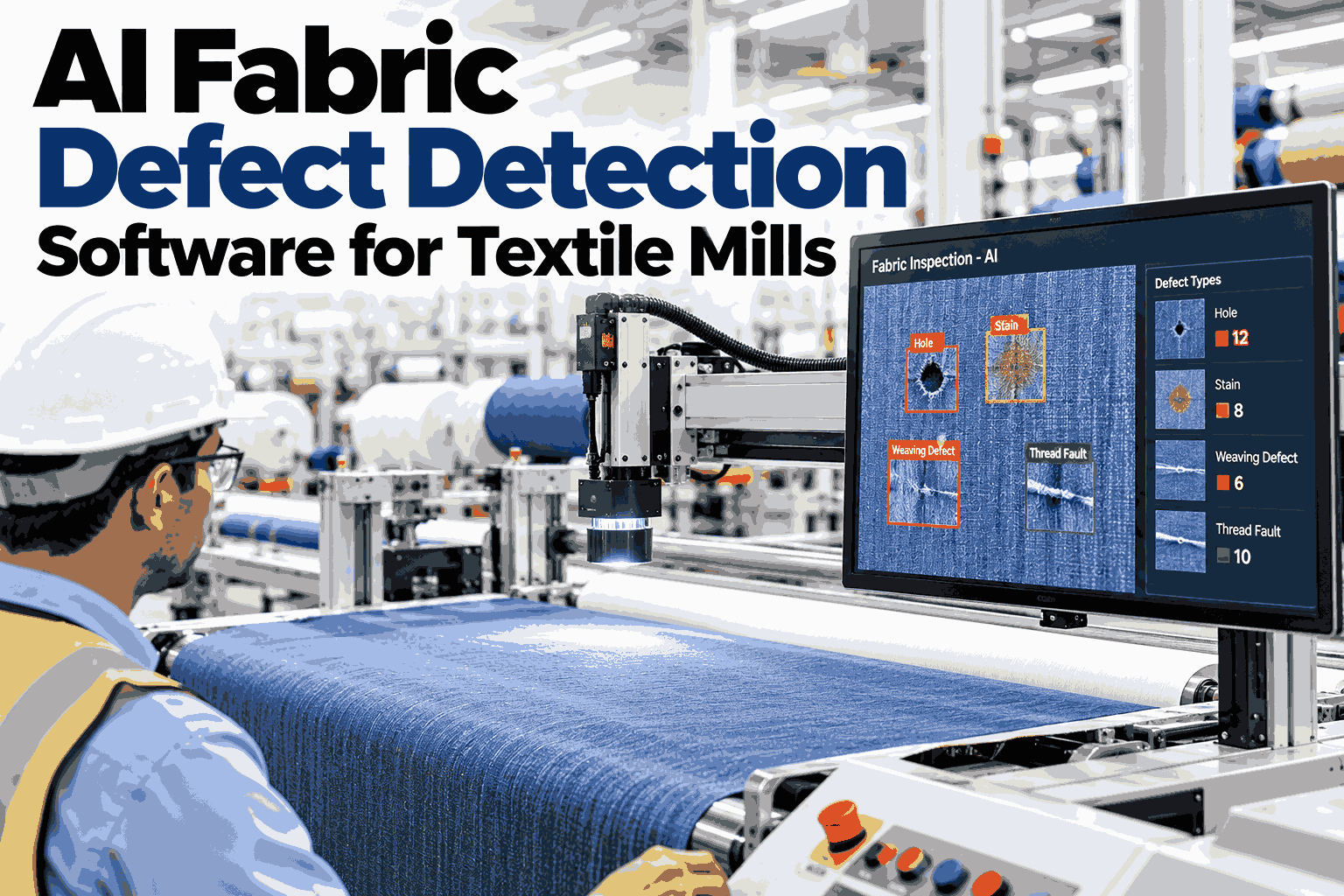
No, a single blended accuracy figure often hides weak performance on specific defect categories that matter more for your product, so it's worth asking for a breakdown by defect type rather than accepting one aggregate number. Some systems perform very well on obvious defects like holes or stains while performing noticeably worse on subtler issues like shade banding or fine slubs.
What happens to roll grading if the AI system goes down temporarily?
This is a critical question to ask before signing, since a production line can't simply stop if an inspection system experiences downtime. A well-designed deployment includes a documented fallback to manual inspection during outages, and vendors should be able to explain exactly how that failover works rather than treating it as an edge case. Specific fallback planning can be discussed through
support.
Does camera placement need to change if we switch fabric types often?
Camera placement is usually fixed once installed, but lighting and detection thresholds may need recalibration when fabric type, weight, or color changes significantly. Mills running a wide product mix should specifically ask how much recalibration time is needed per fabric change, since this affects how practical the system is for high product-mix operations.
Is it worth paying more for a vendor with better integration support?
Often yes, since a system with excellent detection accuracy but poor integration ends up creating a manual data reconciliation task that offsets much of the labor savings the system was meant to provide. Evaluating integration quality alongside detection accuracy, rather than treating them as separate decisions, usually leads to a better total outcome.
SKIP THE GUESSWORK
Compare These Criteria Against a Real System
See accuracy, speed handling, and integration on your own fabric before you decide.