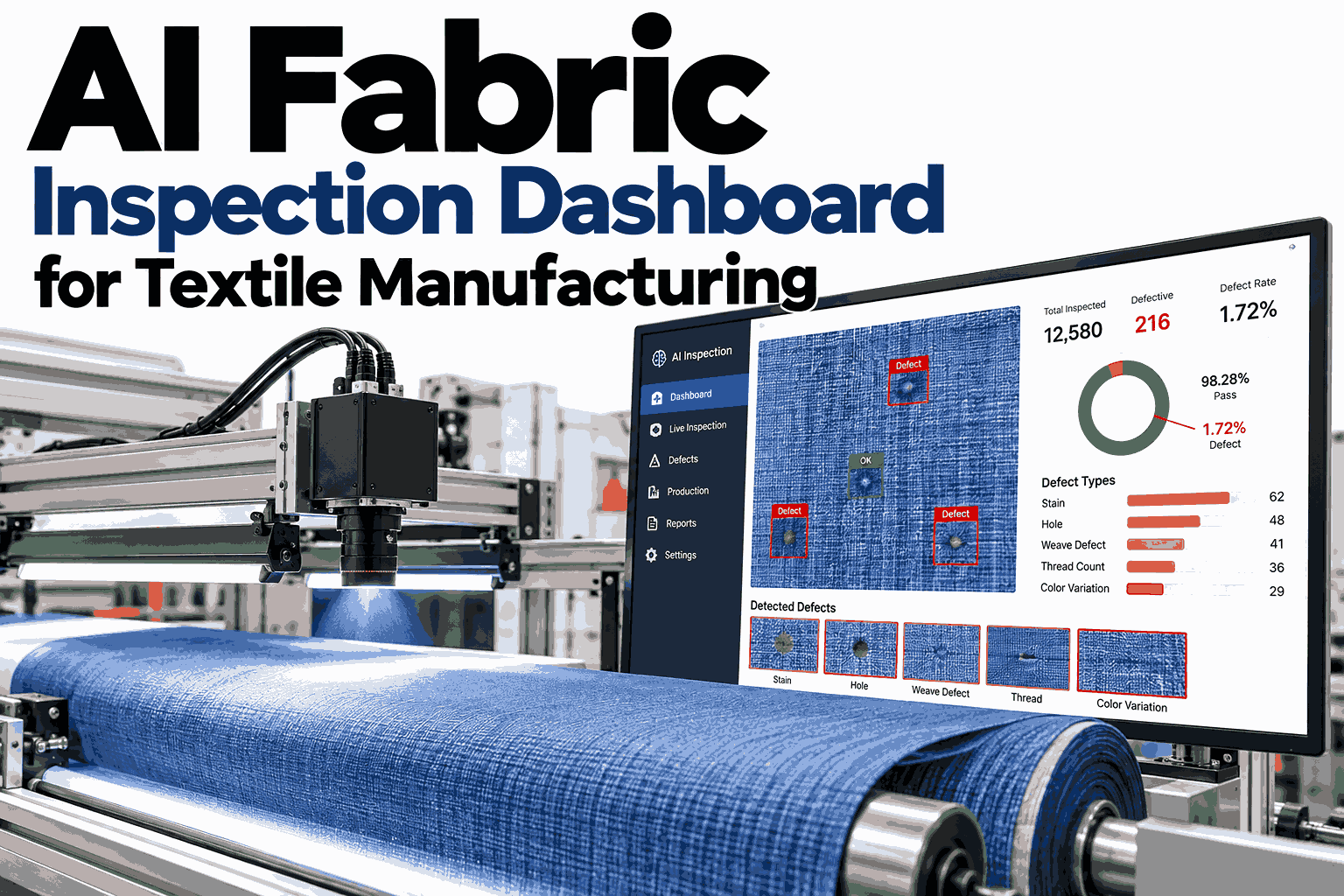
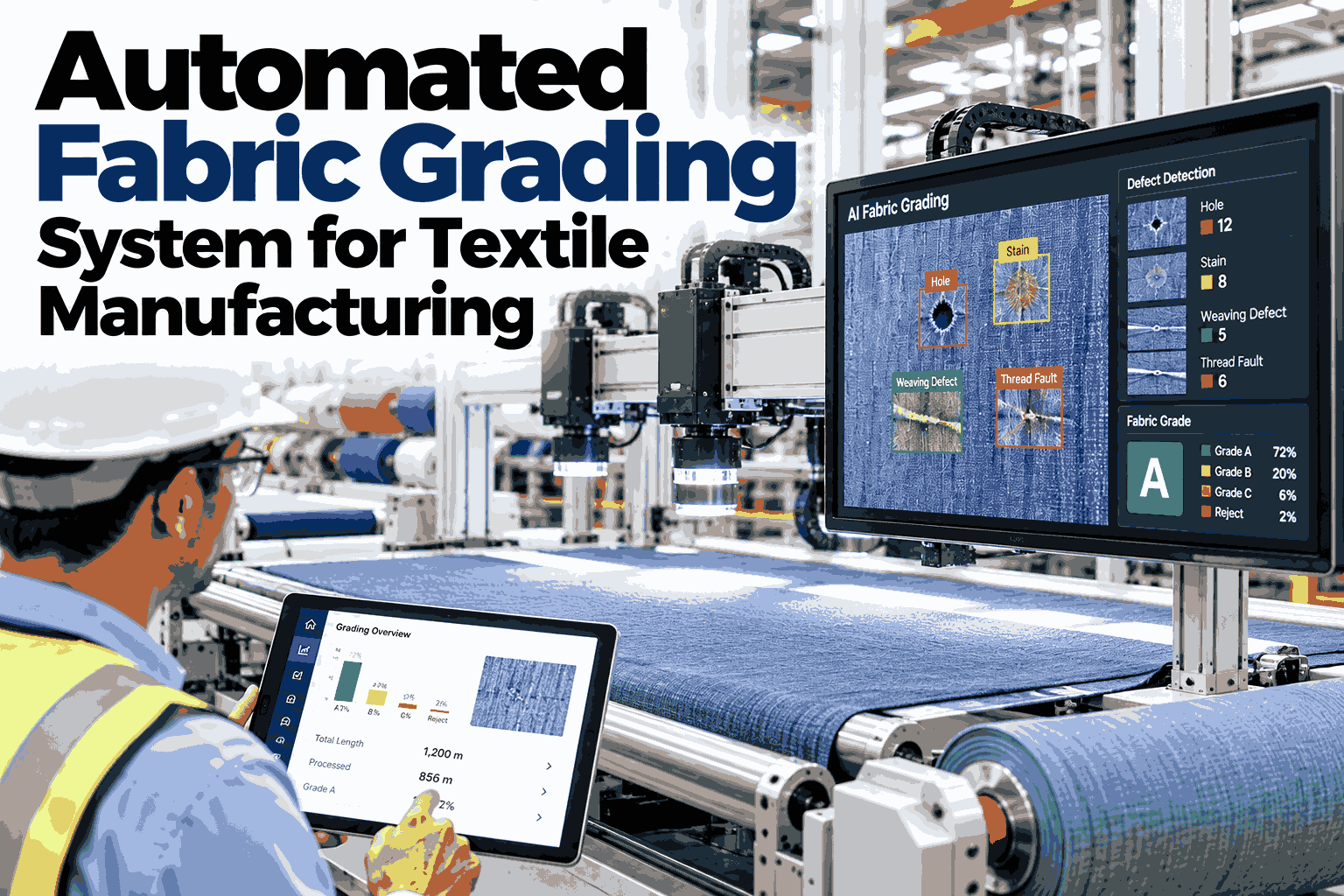
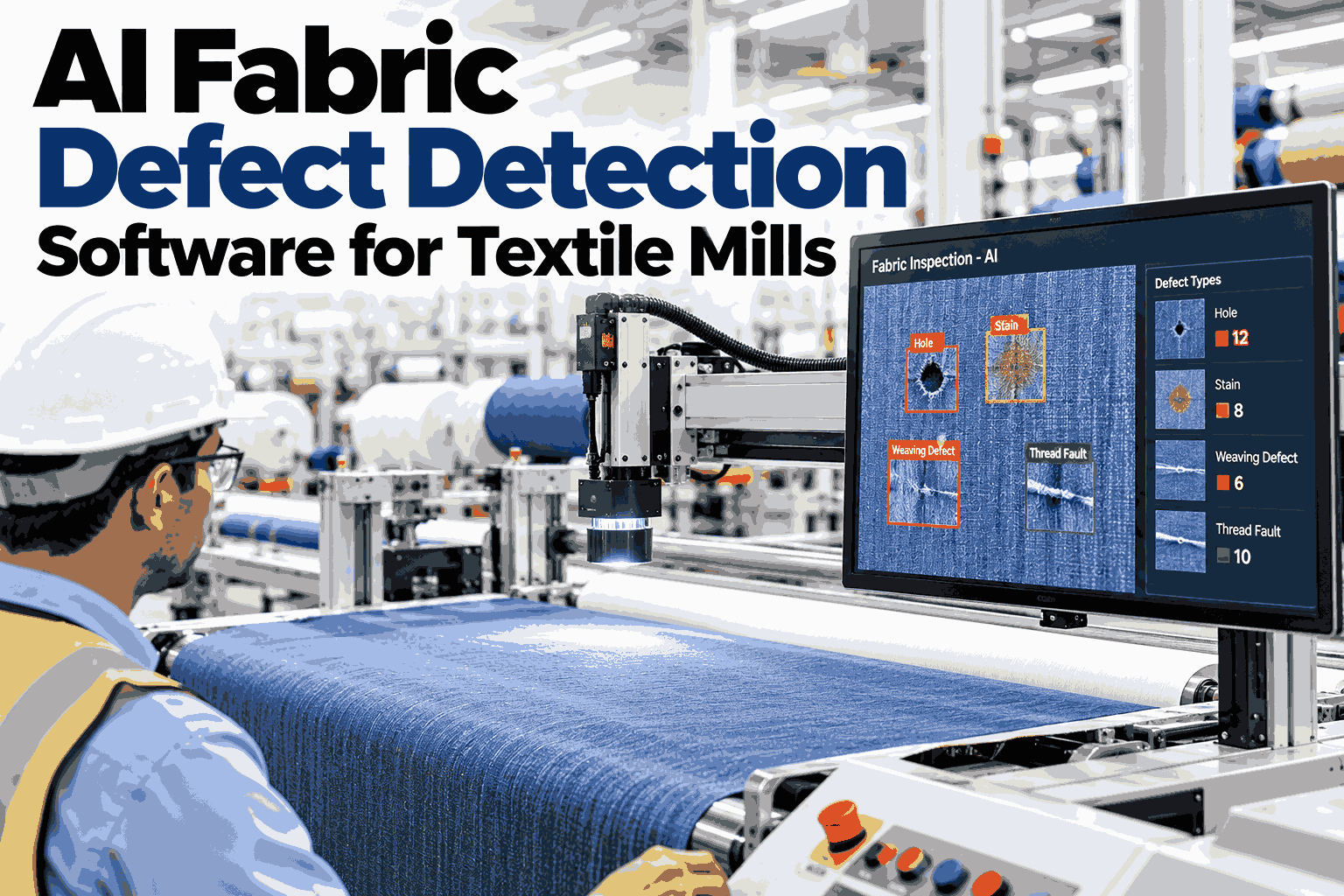
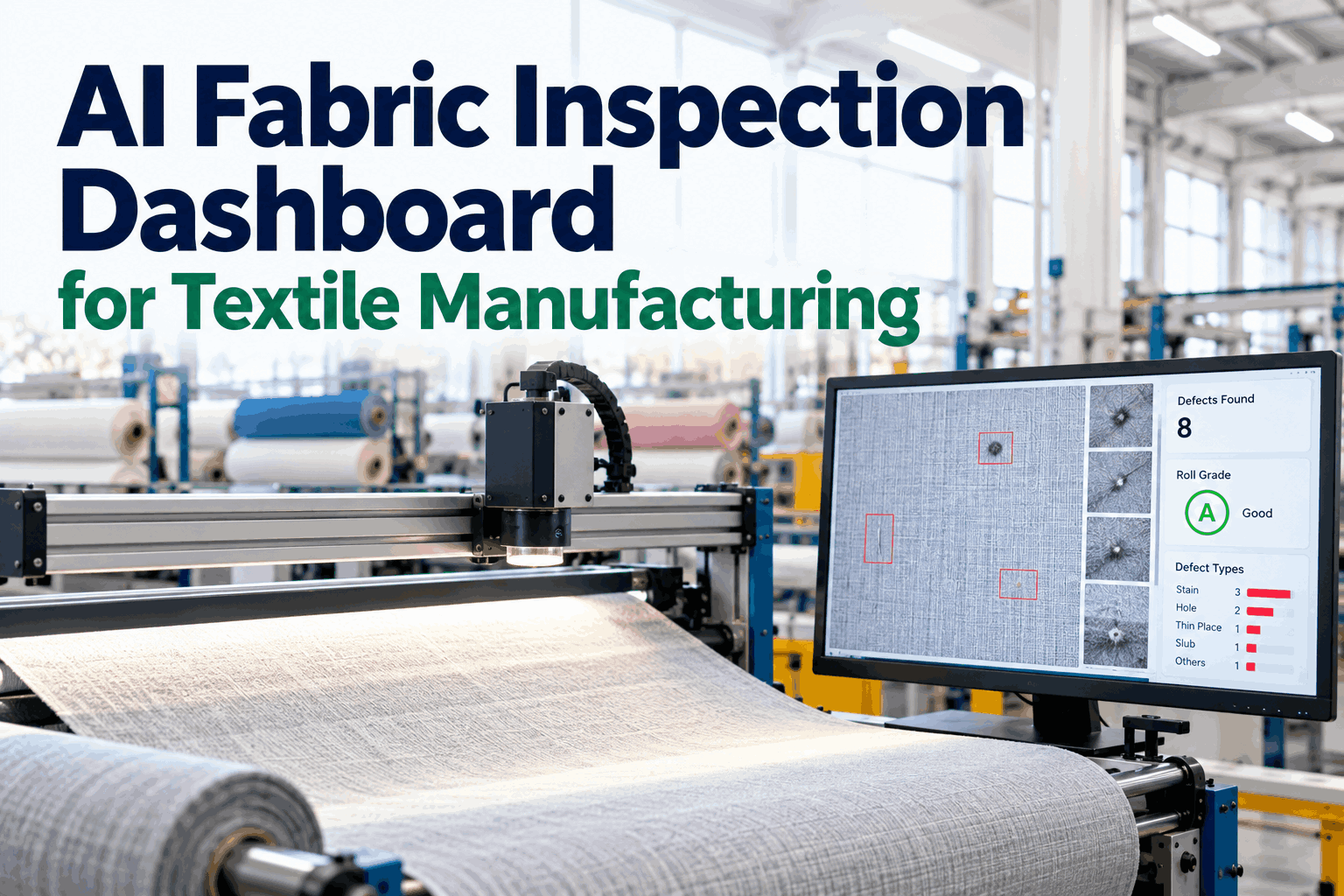
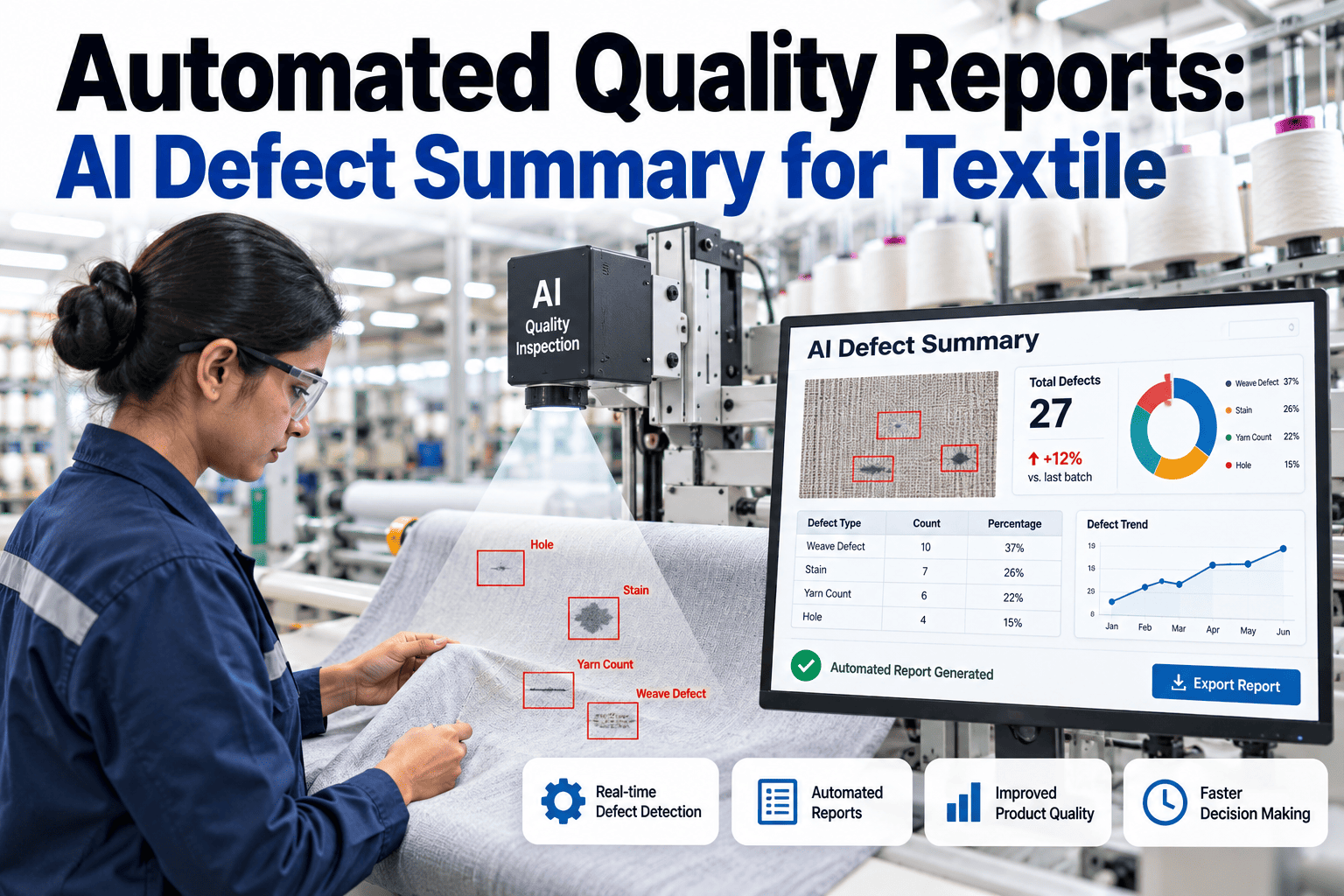
Fabric inspection is the first line of defense against production quality failures in textile and apparel manufacturing. Industry data shows that 60 to 70 percent of garment defects originate from fabric problems, making incoming roll inspection the highest-ROI quality control investment a manufacturer can make. Manual inspection under a light table catches 60 to 75 percent of defects under ideal conditions, but detection rates drop to 40 to 50 percent during the fourth hour of an eight-hour shift as inspector fatigue sets in. A single defective fabric roll of 100 meters at 3 dollars per meter represents 300 dollars in wasted material, plus 100 to 300 dollars in lost cutting and sewing labor, plus potential customer returns of 500 to 2,000 dollars from defective finished goods. Automated fabric roll inspection machines using high-resolution line-scan cameras and deep learning vision systems achieve 95 to 99 percent defect detection rates at speeds of 30 to 80 meters per minute, operating consistently across all shifts without fatigue. The fabric inspection machine market reached 1.2 billion dollars in 2024 and is growing at 6.8 percent CAGR, driven by quality demands from global brands and the transition from manual to AI-powered quality control.
Automated Fabric Roll Inspection Machine Buyers Guide
Reduce defect escape rates from 30 percent to under 2 percent. iFactory AI fabric inspection integrates with your existing roll handling equipment and delivers real-time defect detection at production line speed.
Three Types of Automated Fabric Inspection Systems
Automated fabric inspection machines are classified by where they are deployed in the production process. Each type serves a different purpose and delivers different ROI profiles. Understanding the distinction is essential before making a purchase decision.
On-Loom Inspection
Camera system mounted directly on the weaving machine, inspecting fabric at the reed immediately after formation. Detects warp and filling defects in real time and can stop the loom to prevent long-running defects.
Off-Loom Roll Scanner
Standalone inspection frame with motorized unwinding and rewinding, line-scan cameras, and backlighting. Fabric rolls are loaded and inspected at speeds of 30 to 60 meters per minute. The most common configuration in weaving and dyeing mills.
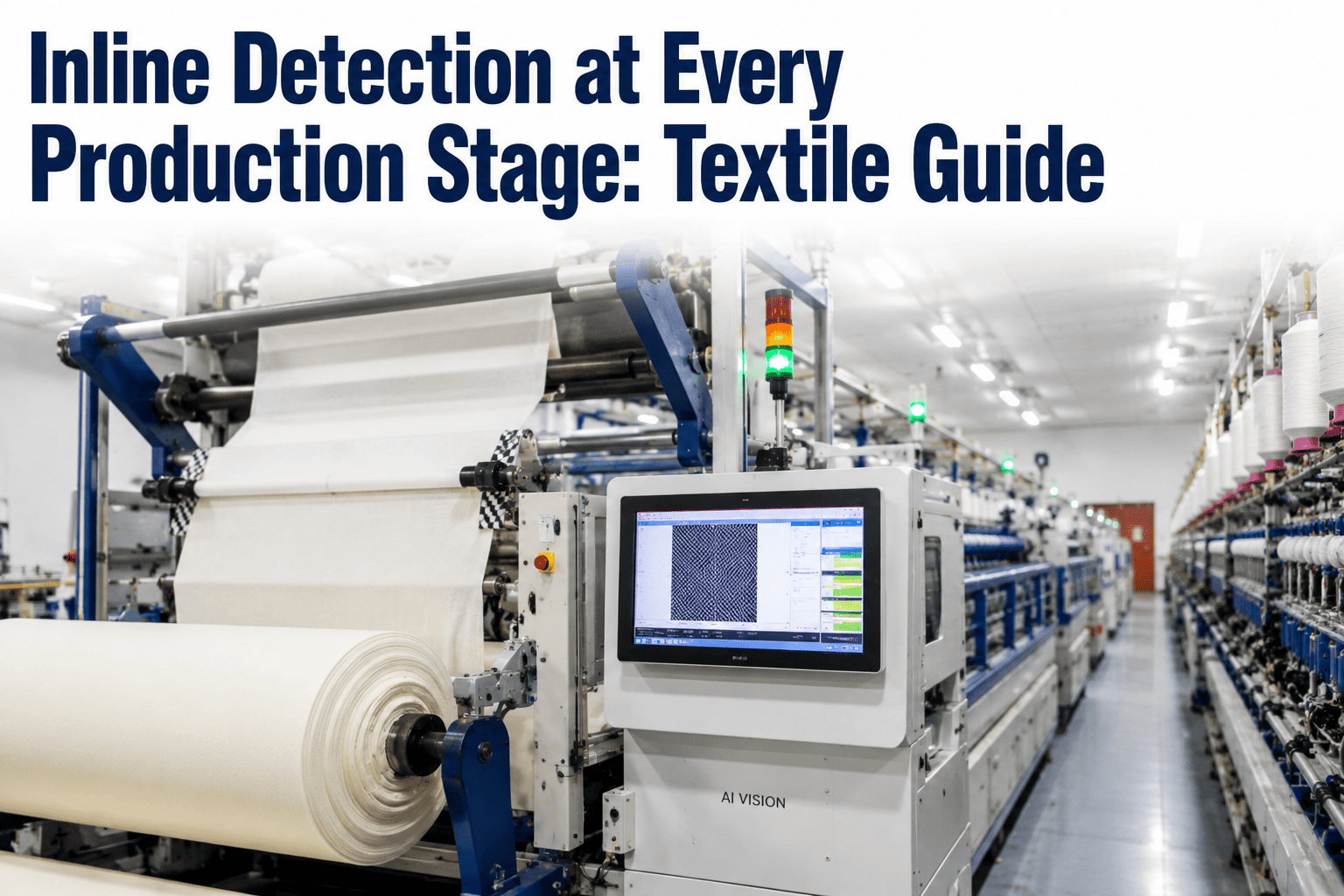
Inline Finishing Vision
Camera system integrated into finishing lines such as stenter frames, sanforizers, or compactors. Inspects fabric at full production line speed during finishing. Eliminates the need for a separate inspection step for certain fabric grades.
Manual versus Automated Inspection
The performance gap between manual and automated fabric inspection is not marginal it is the difference between catching two out of three defects and catching nineteen out of twenty. The comparison below is based on published data from Uster Technologies, Elbit Vision Systems, and independent textile research institutes.
Detection Accuracy by Defect Type
Deep learning models trained on textile-specific defect databases achieve consistent detection rates across all major defect categories. The table below shows expected accuracy ranges for production-grade AI inspection systems operating at standard line speeds.
| Defect Type | Detection Accuracy | False Positive Rate | Minimum Pixel Size |
|---|---|---|---|
| Holes and tears | 98-99% | 1-2% | 0.3 mm |
| Broken warp and weft yarns | 95-97% | 2-4% | 0.5 mm |
| Oil and grease stains | 93-96% | 3-5% | 0.5 mm |
| Color shading and variation | 90-94% | 4-7% | Delta-E 0.3 |
| Weave pattern errors | 96-98% | 1-3% | 0.4 mm |
| Slubs and neps | 94-97% | 2-4% | 0.3 mm |
Stop relying on inspectors who miss one out of every three defects. iFactory AI vision systems detect 95 to 99 percent of fabric defects at full production speed and generate a digital defect map for every roll inspected.
Six Criteria for Selecting an Automated Fabric Inspection Machine
Not all automated inspection systems deliver the same results. The selection criteria below are based on deployment experience across 40-plus textile mills producing woven, knitted, denim, and technical fabrics. Evaluate every candidate system against these six criteria before making a purchase decision.
Detection Algorithm and Defect Database
The core of any AI inspection system is its deep learning model and the defect database it was trained on. Demand proof of performance on fabric types similar to your production. A system trained on 10,000 images per defect category achieves 12 to 18 percent higher accuracy than one trained on fewer than 3,000 images. Verify that the supplier offers continuous model updates as new defect patterns emerge.
Inspection Speed and Camera Resolution
Match the system speed to your production throughput. Off-loom scanners typically operate at 30 to 60 meters per minute, while inline systems reach 120 meters per minute. Camera resolution must be sufficient to detect your smallest critical defect typically 0.3 to 0.5 millimeters. Higher resolution reduces throughput as the system processes more pixels per meter. The right balance depends on your defect tolerance and production volume.
System Integration and Data Output
The value of automated inspection multiplies when defect data feeds into your MES, ERP, or quality management system. Verify that the system exports defect maps in standard formats, supports real-time data upload, and can synchronize with automated packaging or cutting room systems. Systems that generate actionable reports without manual data entry deliver significantly higher ROI over time.
Fabric Type Flexibility and Style Changeover
Mills running multiple fabric types need a system that can switch between styles quickly. Modern systems with AI-assisted style tuning can configure detection parameters for a new fabric type in under 10 minutes using live camera images and textile parameter inputs. Systems that require manual rule reconfiguration for each style change create operational bottlenecks that offset automation gains.
Local Support and Model Update Commitment
An AI inspection system requires ongoing software updates and model retraining to maintain accuracy as your fabric styles and defect patterns evolve. Evaluate the supplier's local technical support capability, remote diagnostic tools, and history of software version releases. Systems from suppliers with proven global deployment and dedicated local service teams have lower lifetime cost of ownership and higher uptime.
False Positive Rate and Over-Detection Management
A system that flags every minor deviation as a defect creates operator fatigue and slows production. Demand a false positive rate below 5 percent for your fabric types. Advanced systems use machine learning classification to reduce over-detection, applying rule-based defect coding that operators can tune without creating false alarms. The goal is detection without operator alert fatigue.
ROI Calculation for Automated Fabric Inspection
The financial case for automated fabric inspection rests on four quantifiable benefits: labor reduction, defect waste elimination, rework cost avoidance, and customer claim prevention. The table below models the annual return for a mid-size weaving mill processing 500,000 meters per month at an average fabric value of 3 dollars per meter.
| Cost Category | Manual Inspection | Automated AI Inspection | Annual Savings |
|---|---|---|---|
| Inspection labor (3 shifts, 4 inspectors) | $144,000 | $36,000 | $108,000 |
| Defect waste (fabric cut around defects) | $96,000 | $28,800 | $67,200 |
| Rework and seconds downgrade cost | $120,000 | $36,000 | $84,000 |
| Customer claims and returns | $72,000 | $14,400 | $57,600 |
| Total annual cost | $432,000 | $115,200 | $316,800 |
Frequently Asked Questions
What is the typical ROI timeline for an automated fabric inspection machine?
Most manufacturers achieve full return on investment within 12 to 18 months. The primary drivers are inspection labor reduction typically 60 to 75 percent fewer inspectors needed, defect waste reduction of 10 to 15 percent of fabric value, and customer claim reduction of 70 to 80 percent. Higher-volume mills with 24-hour operations and multiple shifts see the fastest payback, often within 8 to 12 months. Slower payback of 18 to 24 months is typical for mills with lower throughput or single-shift operations.
Can automated inspection handle striped, plaid, or printed fabrics?
Yes, but the system must be configured correctly. Patterned fabrics require defect detection algorithms that distinguish between intentional pattern variations and actual defects. Modern deep learning models trained on patterned fabric databases can handle stripes, plaids, jacquard, and printed fabrics with detection accuracy above 94 percent. The key is ensuring the supplier has experience with your specific fabric type and provides pattern-specific training data. Multi-light-source systems using front, back, and oblique illumination perform better on patterned fabrics than single-light-source systems.
Does automated inspection replace human inspectors completely?
Most successful deployments use a human-machine collaboration model. The AI system handles high-speed primary inspection and defect classification, while human staff perform spot checks on flagged sections and handle complex edge cases such as unusual defect types that the model has not been trained on. This model achieves 95 to 99 percent detection rates while keeping skilled inspectors in the workflow for quality assurance. Full replacement of human inspectors is technically feasible for standard fabric types but is rarely the recommended approach for mills with diverse product mixes.
What is the 4-Point System and how does automated inspection support it?
The 4-Point System is the global industry standard for fabric inspection, adopted by AAMA and required by major retailers including Walmart, Target, H&M, Zara, and Uniqlo. It assigns penalty points based on defect size: 1 point for defects up to 3 inches, 2 points for 3 to 6 inches, 3 points for 6 to 9 inches, and 4 points for defects over 9 inches. Rolls scoring under 20 points per 100 square yards are first quality, 20 to 28 points are second quality, and over 28 points are rejected. Automated inspection systems support the 4-Point System by automatically measuring defect dimensions, calculating point values, assigning roll grades, and generating inspection reports that meet retailer documentation requirements.
What is the cost range for automated fabric inspection machines?
Cost varies significantly by system type and capability. On-loom inspection systems range from 5,000 to 8,000 dollars per loom. Off-loom standalone roll scanners with AI vision range from 20,000 to 100,000 dollars depending on camera resolution, fabric width capacity, and software capabilities. Inline finishing vision systems integrated into stenter frames or compactors range from 50,000 to 200,000 dollars. Full multi-station inspection lines with automated packaging integration range from 200,000 to 500,000 dollars. Custom AI model development and MES integration add 100,000 to 300,000 dollars for enterprise-scale deployments.
Move from 60 percent defect detection to 99 percent. Book a demo of iFactory AI fabric inspection and see your defect maps, grade reports, and ROI projection generated live from your fabric rolls.