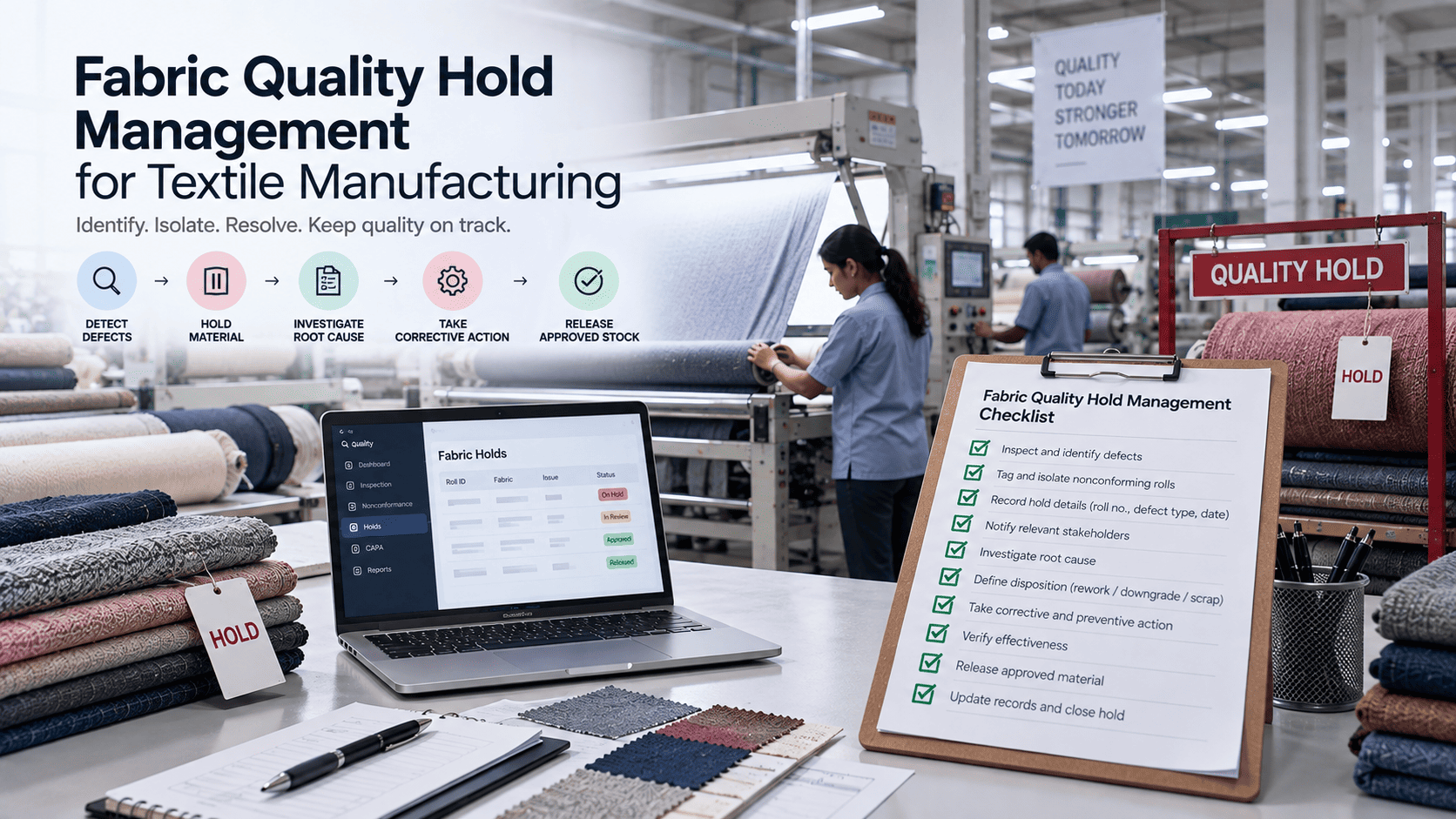
A fabric quality hold is not a decision — it is a delay of a decision. A roll fails inspection, gets marked with a hold tag, and moves to the hold area. Then, in most mills, it sits. Some rolls sit for days waiting for the QA head. Some sit for weeks waiting for the buyer to confirm a concession. Some get shipped anyway because pressure to fill an order outweighed the record. And some just disappear — the tag falls off, the location log is stale, and the roll re-enters inventory as first-grade. Hold management is the discipline that closes every one of those loops, on the clock, with the evidence intact.
iFactory / Fabric quality hold management
Every Held Roll Dispositioned — Release, Rework, Downgrade, or Reject
A fabric hold system that captures the defect that put the roll on hold, tracks its position in the hold area, routes it to the right disposition, and closes with named authority, reason code, and buyer-linked evidence.
Roll on hold
4-point score above threshold
Release
Concession approved
Downgrade
B-grade / second
4 paths
release · rework · downgrade · reject
Named
authority for every release
Days
not weeks in the hold area
The Problem on the Floor
A fabric hold looks simple on paper. A roll fails a 4-point inspection, gets a hold tag, moves to a designated area, and waits for disposition. In practice, the hold area is where quality visibility goes to die. A mill running one weaving hall can accumulate hundreds of held rolls across a season. Without a working hold system, the QA head doesn’t know how many rolls are held today, which buyer’s orders are affected, which rolls are eligible for concession, or which have been sitting past target. The result is emergency releases the day before shipment, downgraded rolls that never got the discount posted, and inventory ghosts that mask the true finished-goods position.
Where the Record Actually Breaks
Hold-area data breaks in exactly the same places at every mill. The specifics differ; the failure modes repeat.
Paper hold tags
Roll gets a paper hold tag with defect and inspector initials. Tag details never enter any digital system. When the tag falls off, the roll is anonymous.
Whiteboard tracker
Hold area whiteboard lists held rolls. Updated by hand at shift change. Half a shift old by mid-morning. Nobody trusts it enough to plan against.
Email approvals
Concession approvals from the buyer arrive by email. Filed in the merchandiser’s inbox. Not linked to the specific roll — so the roll waits in the hold area even after approval lands.
Silent releases
Under shipment pressure, a held roll gets released without recorded authority. Weeks later a buyer complaint traces back to it and nobody can defend the release decision.
What Good Looks Like on the Line
A working hold system holds four disciplines together — the entry into hold with full evidence, the location in the hold area, the disposition decision with named authority, and the closure with buyer or CAPA link.
Hold Entry
Every held roll captured with defect class, 4-point score, source loom, shift, target disposition date, and photographic evidence at the moment the hold opens.
Full evidence at entry
Location Tracking
Hold area position (aisle, rack, level) captured with the roll — a QA head can find any held roll in the hall inside two minutes.
Findable in the yard
Disposition Routing
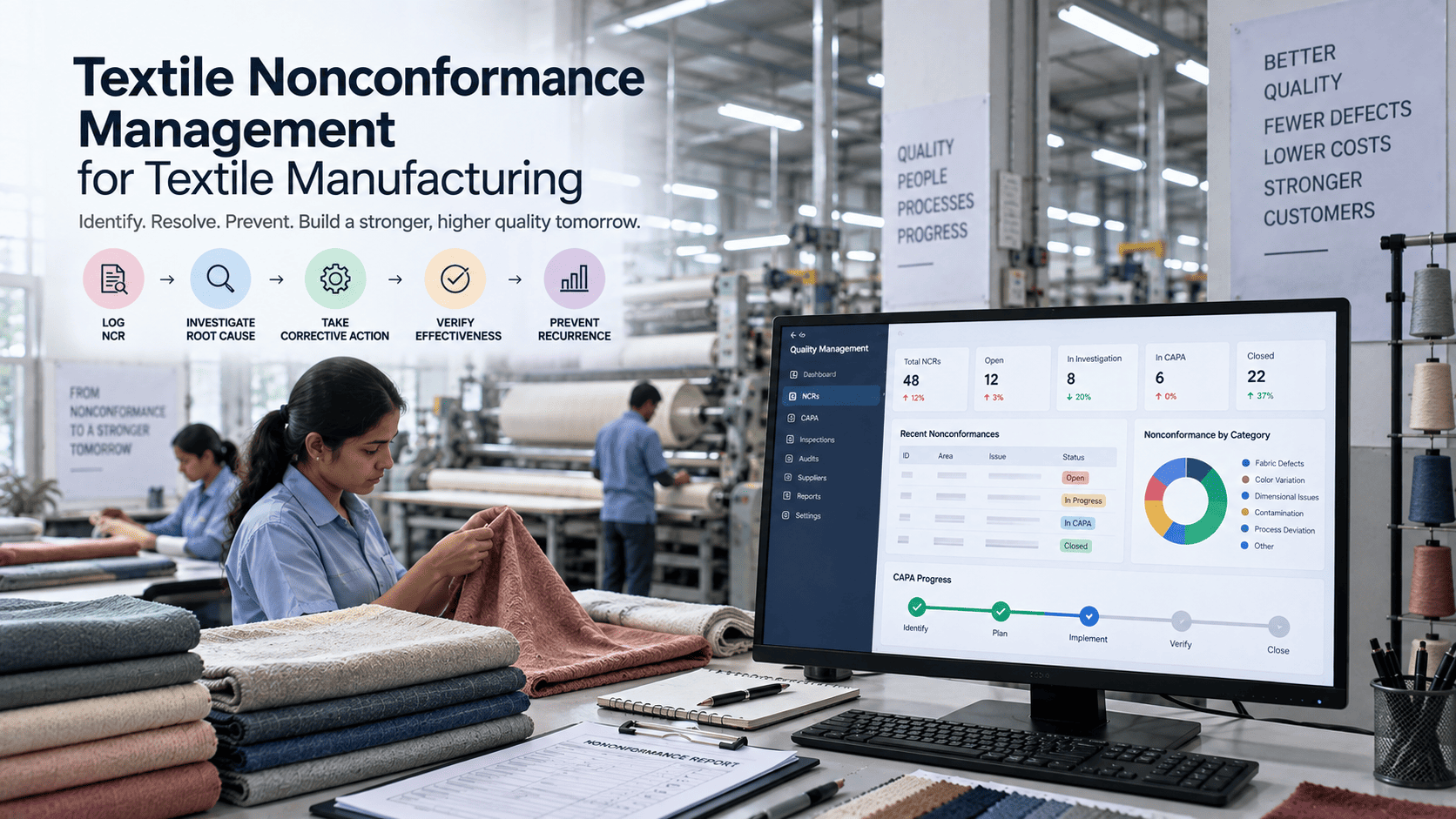
Four disposition paths (release, rework, downgrade, reject) each with defined authority requirements — release for major defects requires the QA head, not the shift supervisor.
Authority by path
Closure Evidence
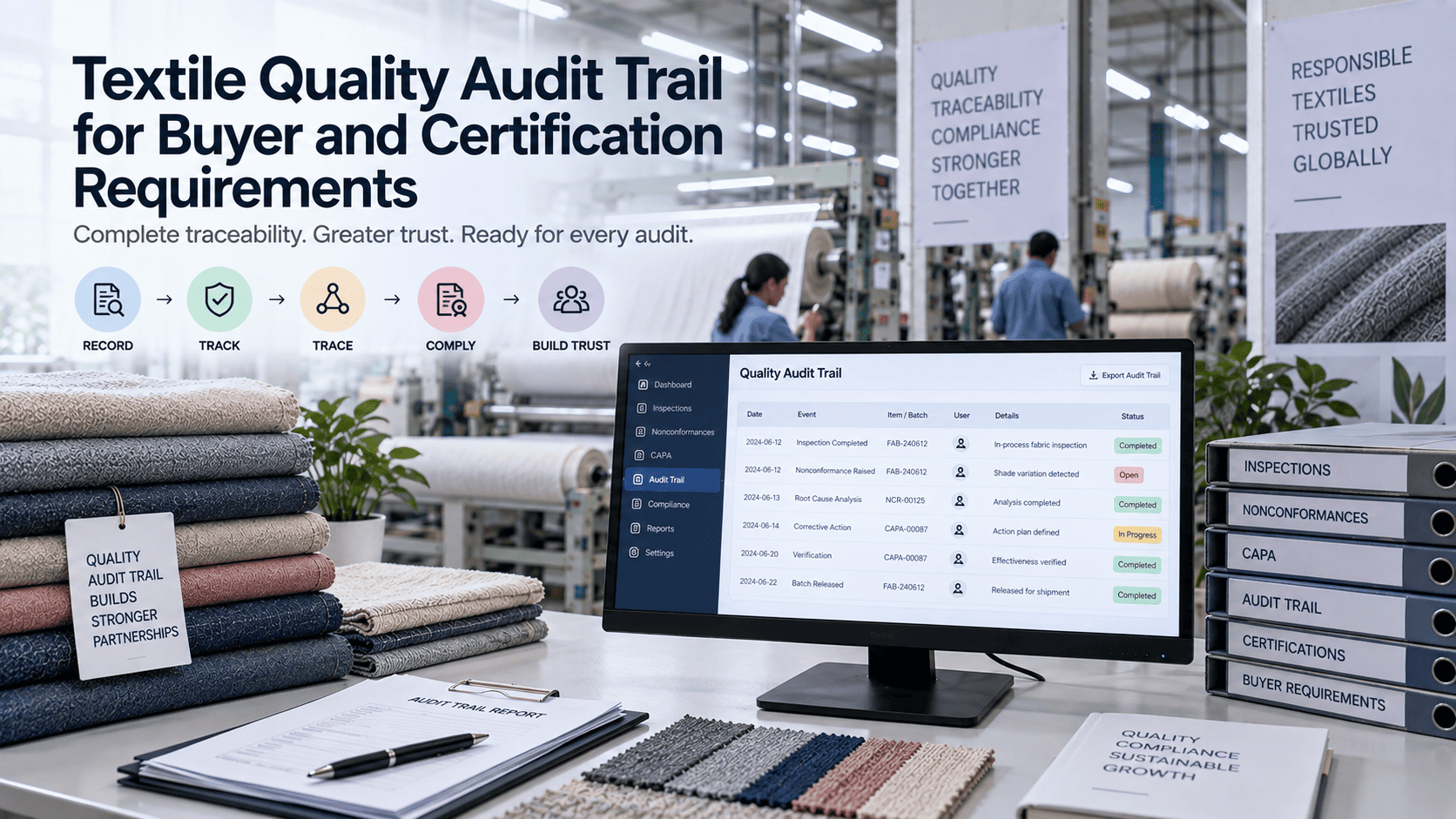
Every closure ties to a buyer concession approval, a rework work order, a downgrade grade card, or a scrap record — no roll closes with a bare “released” status.
Evidence, not just status
How iFactory AI Fits
iFactory AI overlays the WMS and QMS you already run, adding the hold-area discipline that makes the difference between managed holds and quiet leakage.
Hold Register
QMS + WMS
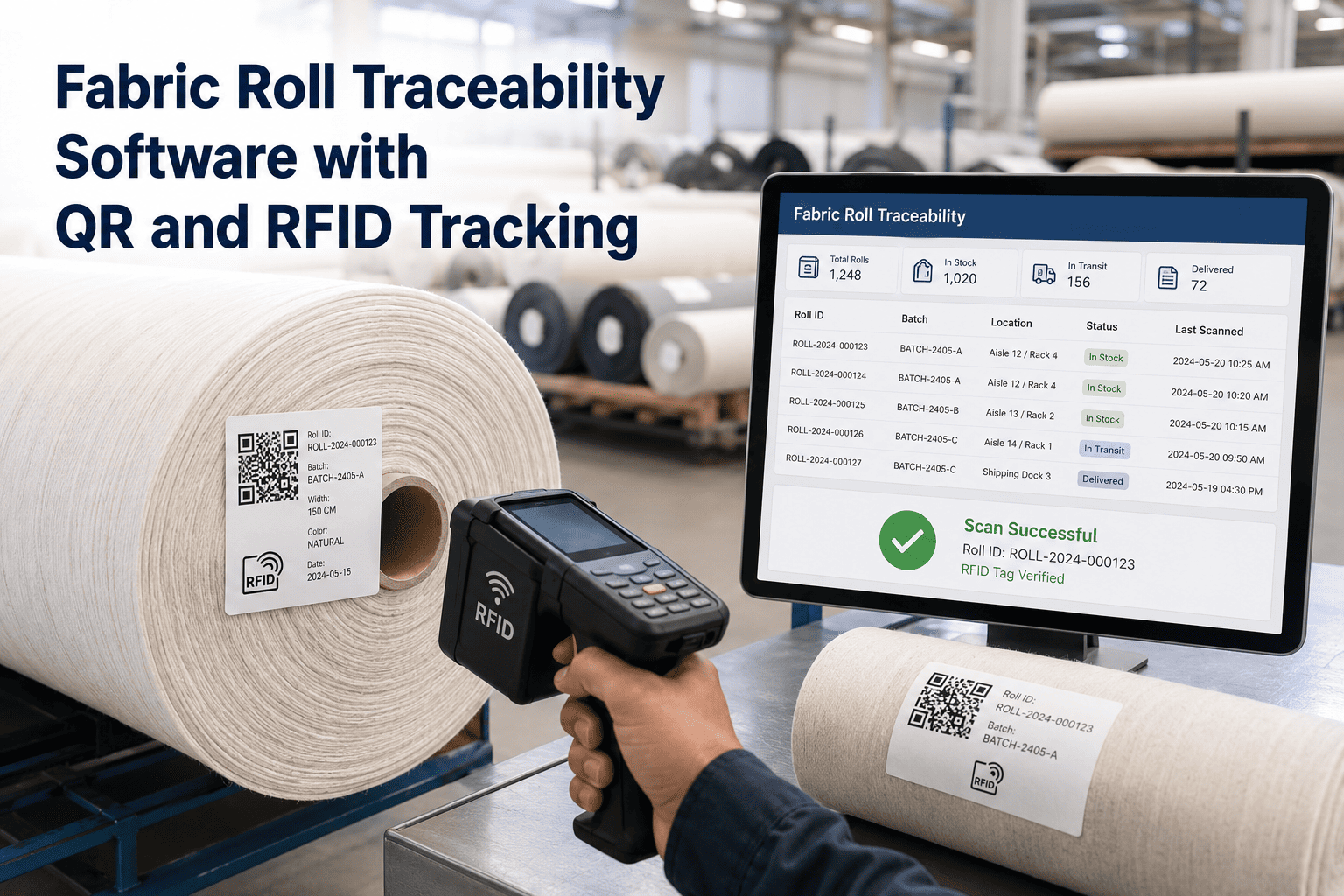
Every held roll live in the register with entry date, defect class, location, target disposition date, current status, and days-in-hold.
Buyer Concession
QMS Layer
Buyer concession approvals captured and linked to specific rolls — when the email approval lands, the affected rolls are automatically ready for release action.
Disposition Log
QMS + Compliance
Every disposition decision with named authority, reason code, and closure evidence — the record that defends a release decision at buyer audit.
Aging Dashboard
QMS Layer
Rolls aging past target disposition date surfaced daily with buyer and value at risk — no silent accumulation in the hold area.
Walk your hold area today and count the rolls. Then check the digital register and compare. If the numbers don’t match — most mills are off by 15-40% — the hold area is a black hole for both quality visibility and working capital. Book a hold area walkthrough — we’ll audit the gap live.
12-Week Rollout on One Line
One weaving hall, one hold area, twelve weeks. The pilot is scoped to prove that hold discipline (entry through closed disposition) actually shortens the average hold time and cleans up the phantom-inventory problem.
Weeks 1–2
Hold Baseline
Physical audit of the hold area. Count rolls, reconcile against digital records, baseline the average days-in-hold and disposition-rate mix. Identify aged inventory.
Weeks 3–4
Register Setup
Configure hold register with defect classes, disposition authority rules, and buyer-concession linkage. QA team walks through with named authorities for each disposition path.
Weeks 5–8
Live Enforcement
Every new held roll enters the register with full evidence. Location tracking active. Aging dashboard live. Weekly hold clearance meeting works from the dashboard.
Weeks 9–12
Aging Reduction
Twelve-week window closes. Compare average days-in-hold, held-inventory value, and disposition mix against the pre-pilot baseline. Rollout scope decided.
Who Owns the KPI
Hold management crosses inspection, QA, merchandising, and warehouse. Every function needs its number or the hold area quietly grows.
Inspection Head
Hold entry rate per 1000 rolls
Owns detection sensitivity — the entry rate is the first signal. Rising rates signal quality drift; falling rates can signal missed defects.
QA Head
Average days-in-hold
Owns the disposition speed — how long a roll sits before a decision is made. Under 5 days is the working target for most mills.
Merchandiser
Concession-linked releases %
Owns the buyer loop — what share of releases are tied to a documented buyer concession vs. bare release under shipment pressure.
Warehouse Head
Physical-to-digital reconciliation %
Owns the inventory integrity — the count of held rolls in the yard matches the count in the register. Below 98% is a symptom of hold-area leakage.
FAQ
What counts as a held roll — anything with any defect?
No — a held roll is one that scored above your predefined 4-point acceptance threshold or failed a lab test (GSM out of tolerance, colorfastness below spec, shrinkage above allowance). A roll with defects but below threshold is graded first-quality and moves through normal flow. The threshold is buyer-specific — one buyer’s 20-point limit may be another’s 28-point — so the system holds each buyer’s rules and applies them per lot destination. This means the same roll may be first-quality for Buyer A and held for Buyer B, and the system routes accordingly.
How is buyer concession approval handled without slowing shipment?
Concession requests are routed to the buyer with the roll’s photographic evidence, 4-point score, defect classification, and lot context — everything the buyer’s QA needs to decide in one message. When the buyer approves (typically via email or a portal), the approval is captured and automatically linked to the affected rolls, which move to ready-for-release status. If the buyer declines, the roll routes to rework, downgrade, or reject based on your rules. The average concession decision time drops from 3-5 days (manual chase) to under a day (structured request).
Book a demo to see the concession workflow on your buyer standards.
What about rolls that get partially reworked — half rejected, half saved?
This is common with mending — a roll may have three major defects clustered in the first 8 yards and clean fabric for the remaining 72 yards. The system splits the roll into two records: the rejected portion (with rework, downgrade, or scrap disposition) and the recovered portion (which returns to first-quality inventory with the trace preserved). Both retain the parent roll’s lineage so the buyer-audit trail stays intact. Yield recovery on mending is often 60-80% of the affected fabric — visible in the register instead of lost in the hold area.
Stop losing quality visibility in the hold area.
Audit One Hold Area — Physical vs Digital, Aging vs Target
Bring one weaving hall and one hold area. We’ll count the rolls with your team, reconcile against your current register, and quantify the aging inventory the hold area is quietly carrying.