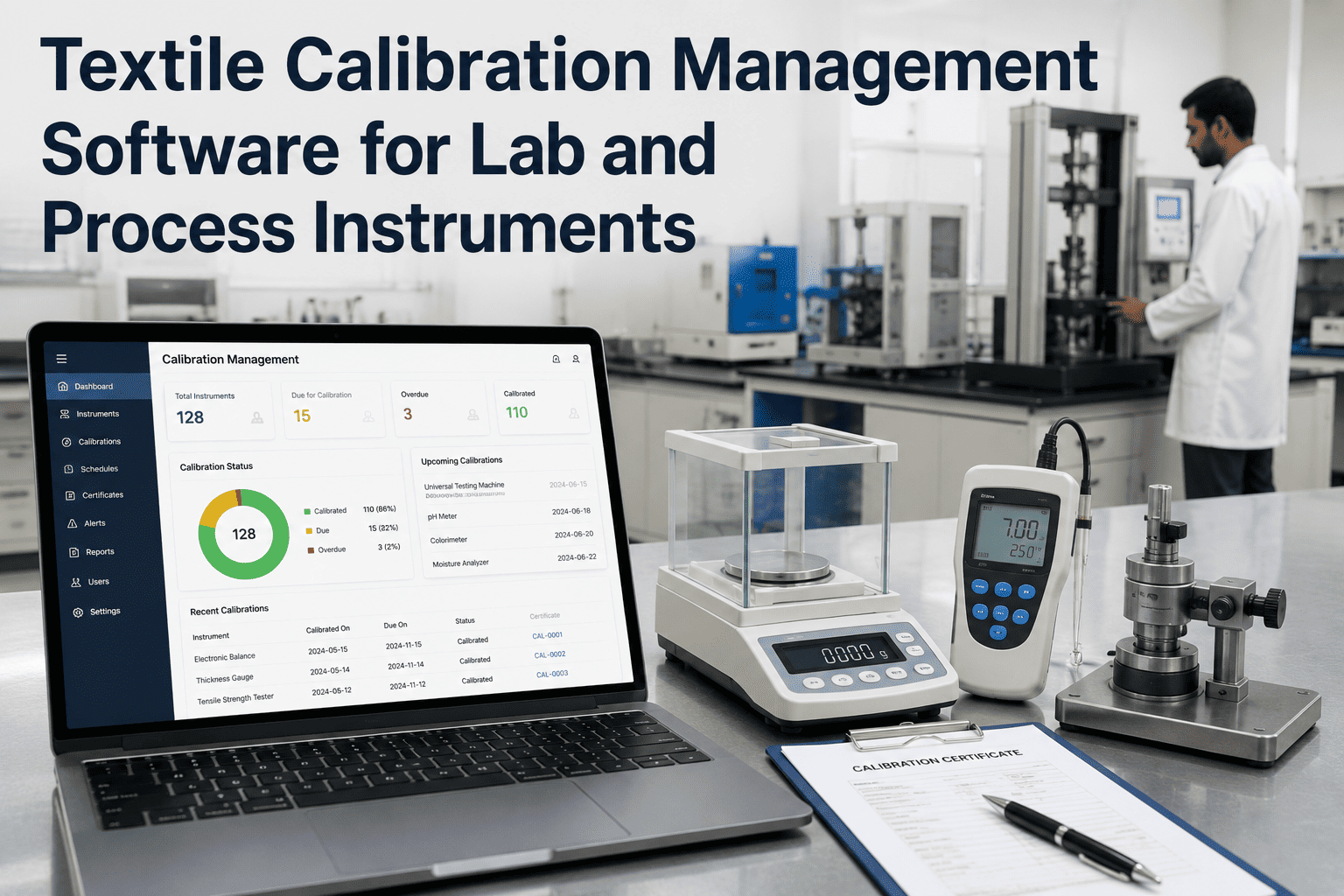
An auditor picks up a spectrophotometer in the lab and asks for its last calibration certificate, and the answer comes back after twenty minutes of searching through a binder that was last updated by someone who left the company eight months ago. That gap is not just an audit finding waiting to happen, it is a quality risk sitting quietly in every shade match and every test result the instrument has produced since its calibration lapsed. Calibration management software closes that gap by scheduling, tracking and documenting every spectrophotometer, balance, pH meter and process sensor automatically, so the certificate is one search away instead of a binder away. Book a calibration tracking demo to see what audit-ready actually looks like.
Never Search a Binder for a Calibration Certificate Again
iFactory schedules, tracks and documents calibration for every lab and process instrument across your mill, so audit readiness is a standing state, not a scramble before the auditor arrives.
Why Calibration Tracking Quietly Fails
Most mills have a calibration schedule somewhere, usually a spreadsheet, and a real intention to keep it updated. The problem is that spreadsheets do not send reminders, do not flag an instrument that is three weeks overdue, and do not attach the actual certificate in a way anyone can find quickly six months later during an audit.
Missed Due Dates
An instrument slips past its calibration due date unnoticed until someone happens to check the spreadsheet.
Lost Certificates
Calibration certificates get filed in different places by different people, making audit prep a scavenger hunt.
Uncalibrated Test Results
A test run on a lapsed instrument produces a result nobody realizes is questionable until it is challenged later.
Audit Prep Scramble
Days go into pulling together calibration evidence before every audit instead of it being current at all times.
See Your Instrument List Tracked Automatically
Bring your current calibration schedule or instrument list to the call and iFactory will show you what live tracking and reminders look like against it.
How the Schedule Actually Runs
Instrument Registry
Every spectrophotometer, balance, pH meter, flow meter and process sensor is registered with its calibration interval and standard.
Automated Reminders
The system alerts the responsible team ahead of each due date, with escalation if a calibration slips past its window.
Certificate Storage
Completed calibration certificates upload directly against the instrument record, searchable by instrument, date or lab area.
Instant Audit Export
A full calibration status report, current and historical, exports in minutes when an auditor or customer asks for evidence.
Spreadsheet Tracking vs Automated Calibration Management
| Factor | Spreadsheet Schedule | iFactory Calibration Management |
|---|---|---|
| Due date reminders | Manual check required | Automated alerts before due date |
| Certificate access | Filed across different locations | Attached directly to instrument record |
| Overdue visibility | Noticed only when checked | Flagged and escalated automatically |
| Audit prep time | Days of document gathering | Minutes, export is always current |
Impact on Compliance and Audit Readiness
missed calibration due dates once automated reminders and escalation are in place
reduction in time spent preparing calibration evidence before an audit
of instrument certificates centrally stored and searchable in one system
Frequently Asked Questions
Can we track instruments with different calibration intervals and standards in the same system?
Yes. Each instrument is registered with its own calibration interval, applicable standard and responsible calibration provider, whether that is an internal lab team or an external accredited calibration house. A spectrophotometer on a quarterly interval and a process flow meter on an annual interval are both tracked in the same registry, with reminders scheduled independently against each one's specific due date.
What happens if an instrument fails calibration or is found out of tolerance?
An out-of-tolerance result gets logged against the instrument record along with any corrective action taken, and the system can flag any test results or production data produced by that instrument since its last known good calibration for review. This traceability is often the exact evidence an auditor or a customer quality team wants to see when questioning whether a specific result is reliable.
Does this work with external calibration vendors we already use?
Yes, the system tracks calibration performed by external accredited vendors the same way it tracks internal calibration, including uploading the vendor's certificate directly against the instrument record. Many mills use a mix of internal calibration for simpler instruments and external vendors for instruments requiring accredited traceability, and both are managed from the same dashboard.
Can the system generate the specific reports our ISO or customer audits require?
Yes, calibration status reports export in formats that align with common quality standard requirements, covering instrument identification, calibration history, current status and certificate attachments. Talk to a specialist about the specific report format your quality system or customer audits require, since these details vary by certification body and customer.
How long does it take to get our full instrument inventory into the system?
Most mills complete instrument registration within two to three weeks, depending on how many instruments are in the lab and process areas and how organized the existing calibration records are going in. Historical certificates can be uploaded during this same period so the system starts with a complete history rather than only tracking forward from go-live. Book a scoping call to get a timeline for your instrument count.
Audit Readiness Should Be a Standing State, Not a Scramble
A calibration schedule that lives in a spreadsheet is only as reliable as the last person who remembered to update it, and that reliability tends to fail exactly when an audit or a customer quality review needs it most. Automated calibration management keeps every spectrophotometer, balance, pH meter and process instrument on schedule, with certificates stored and searchable the moment they are needed. Talk to iFactory about what your lab and process instrument tracking would look like once it runs itself.