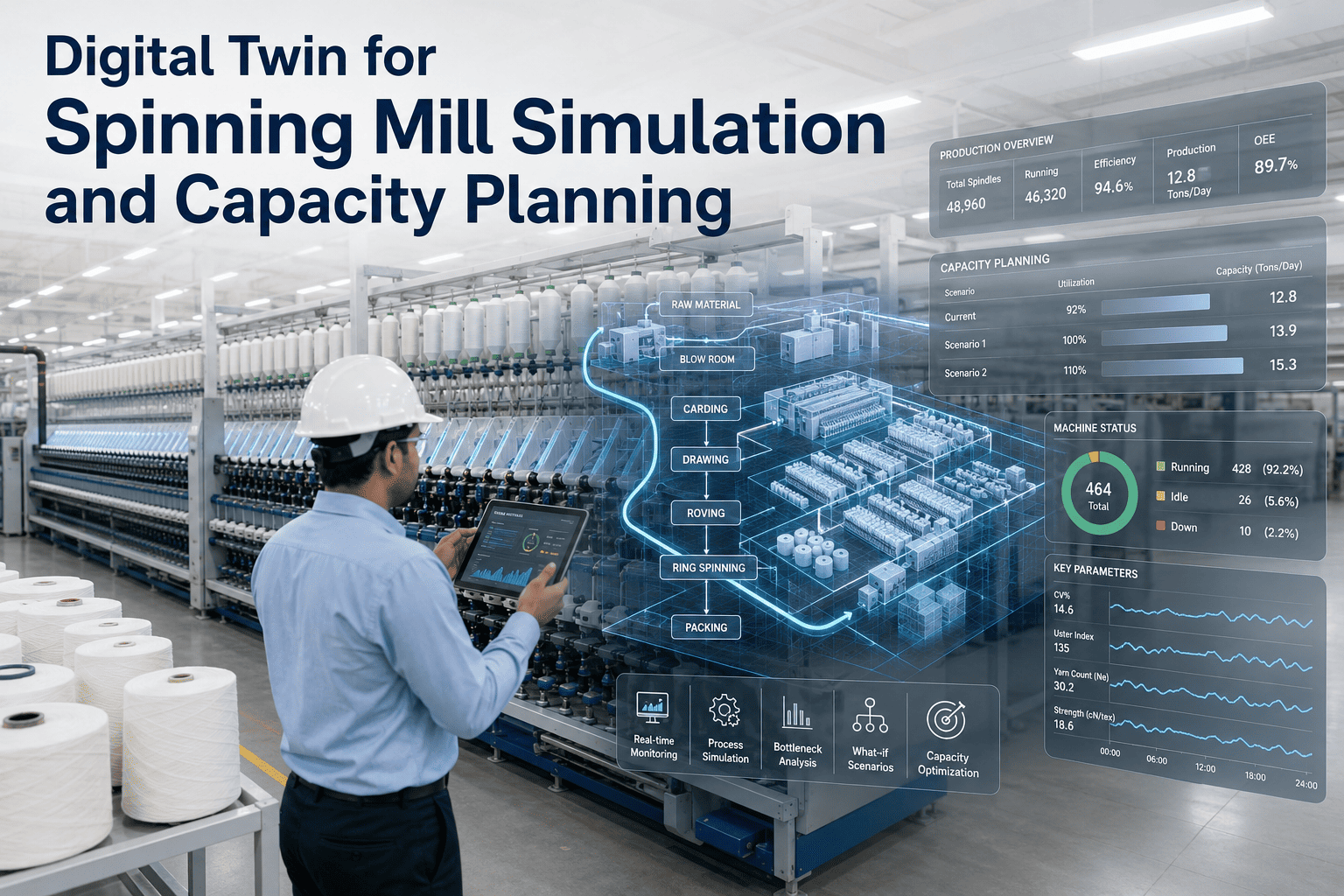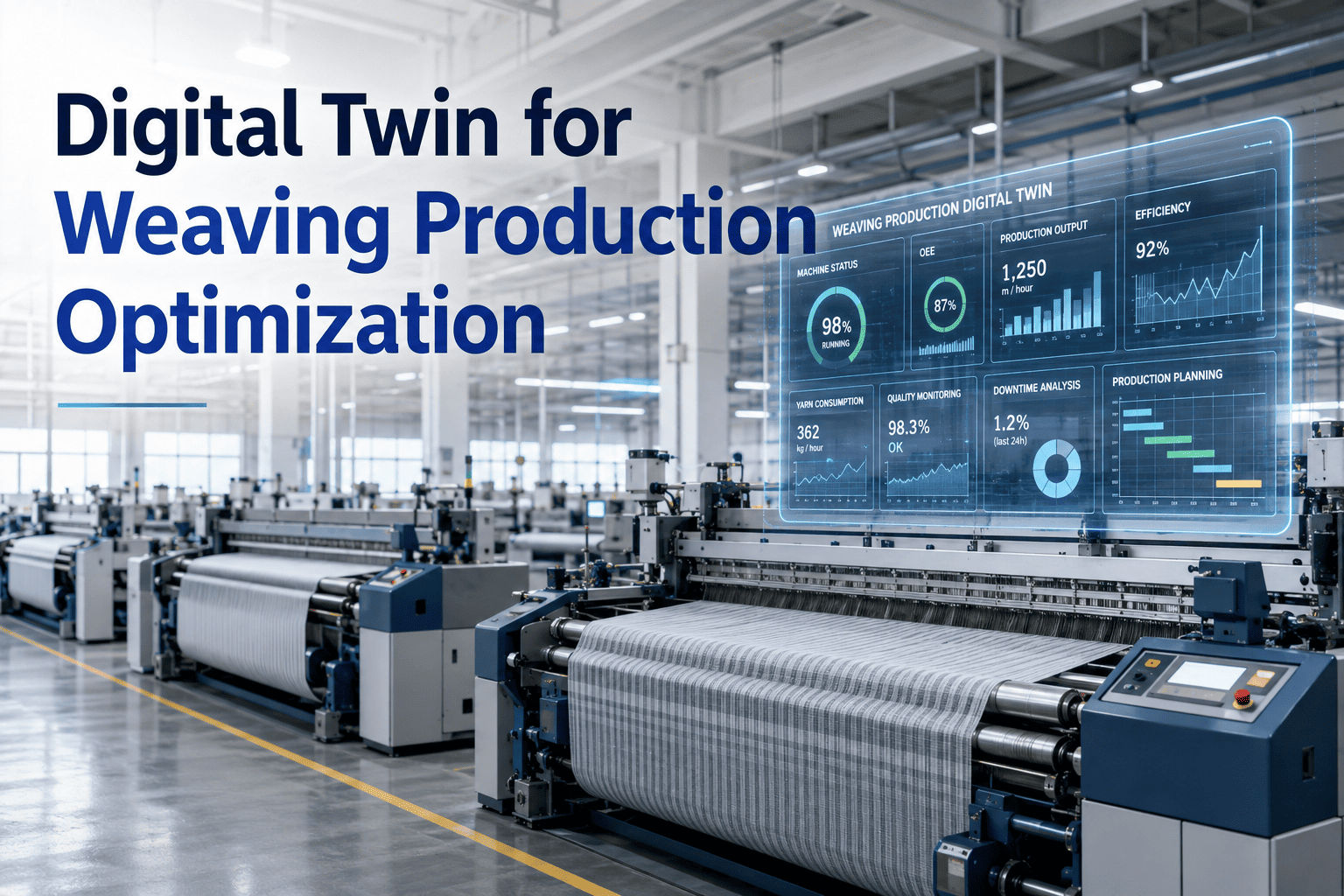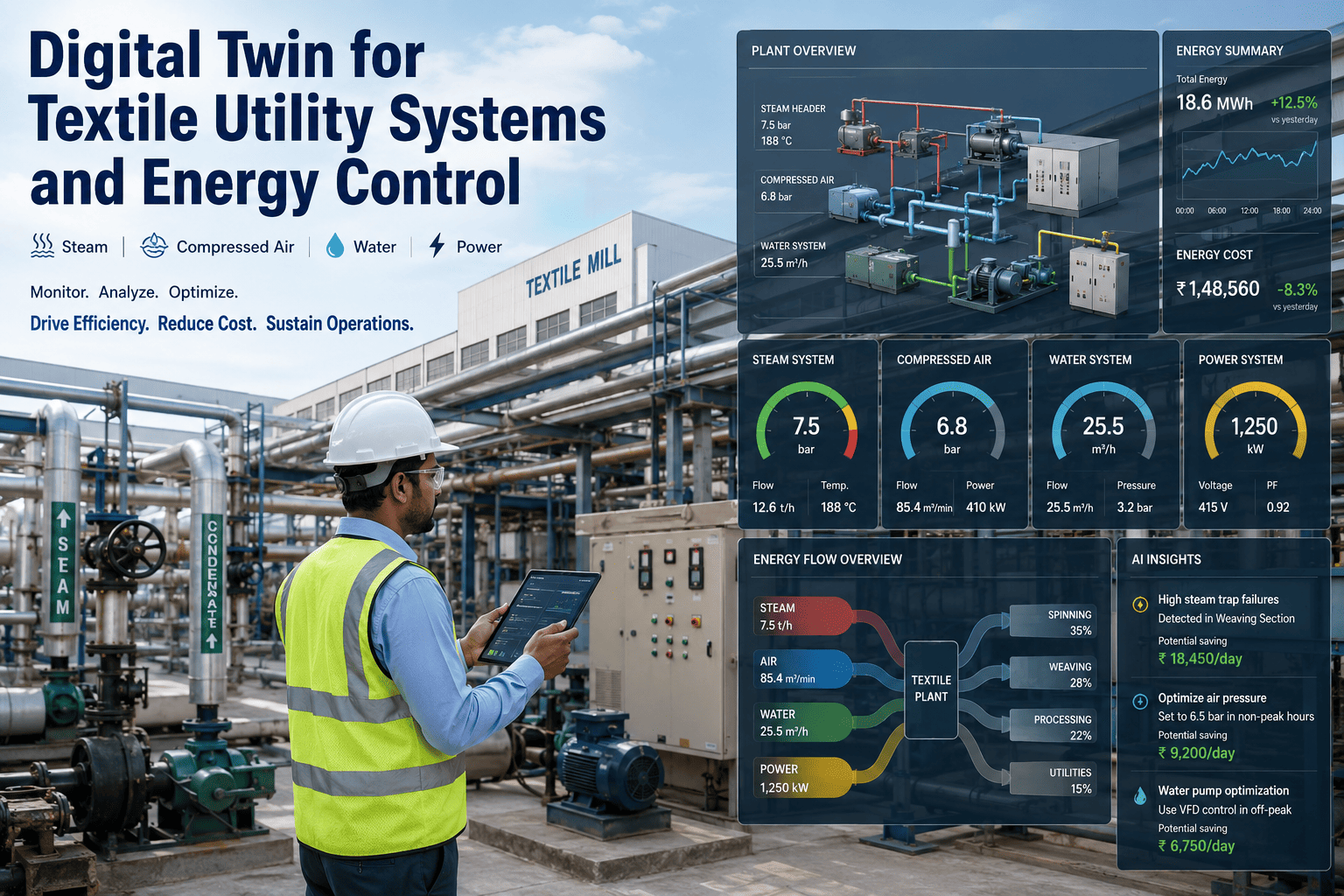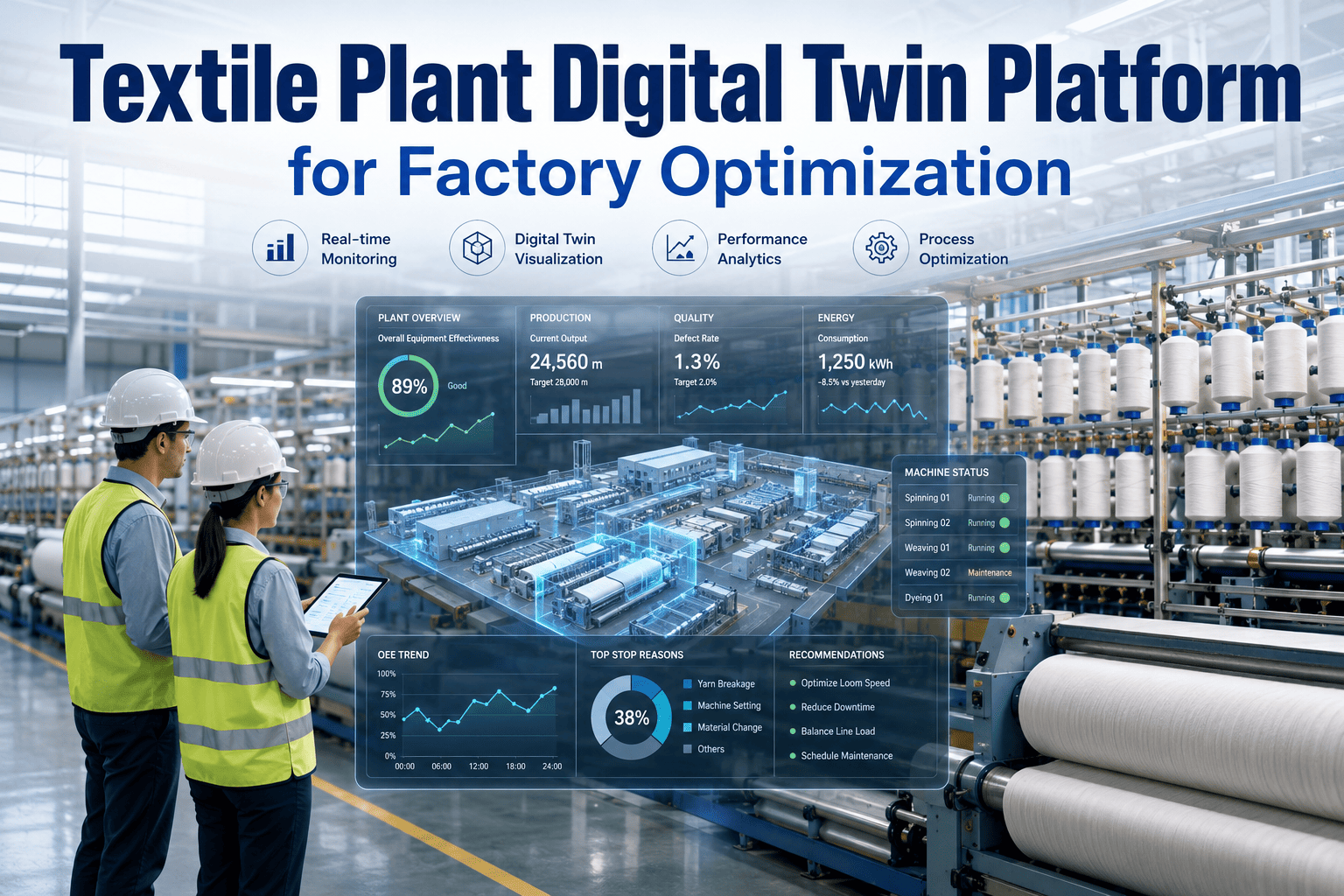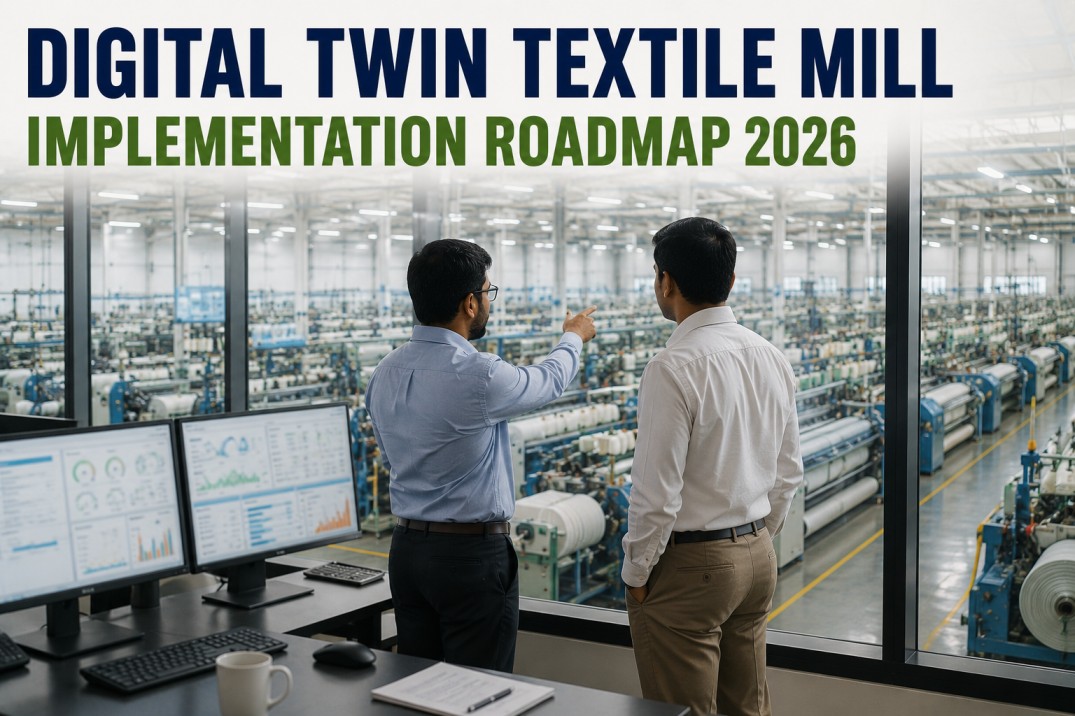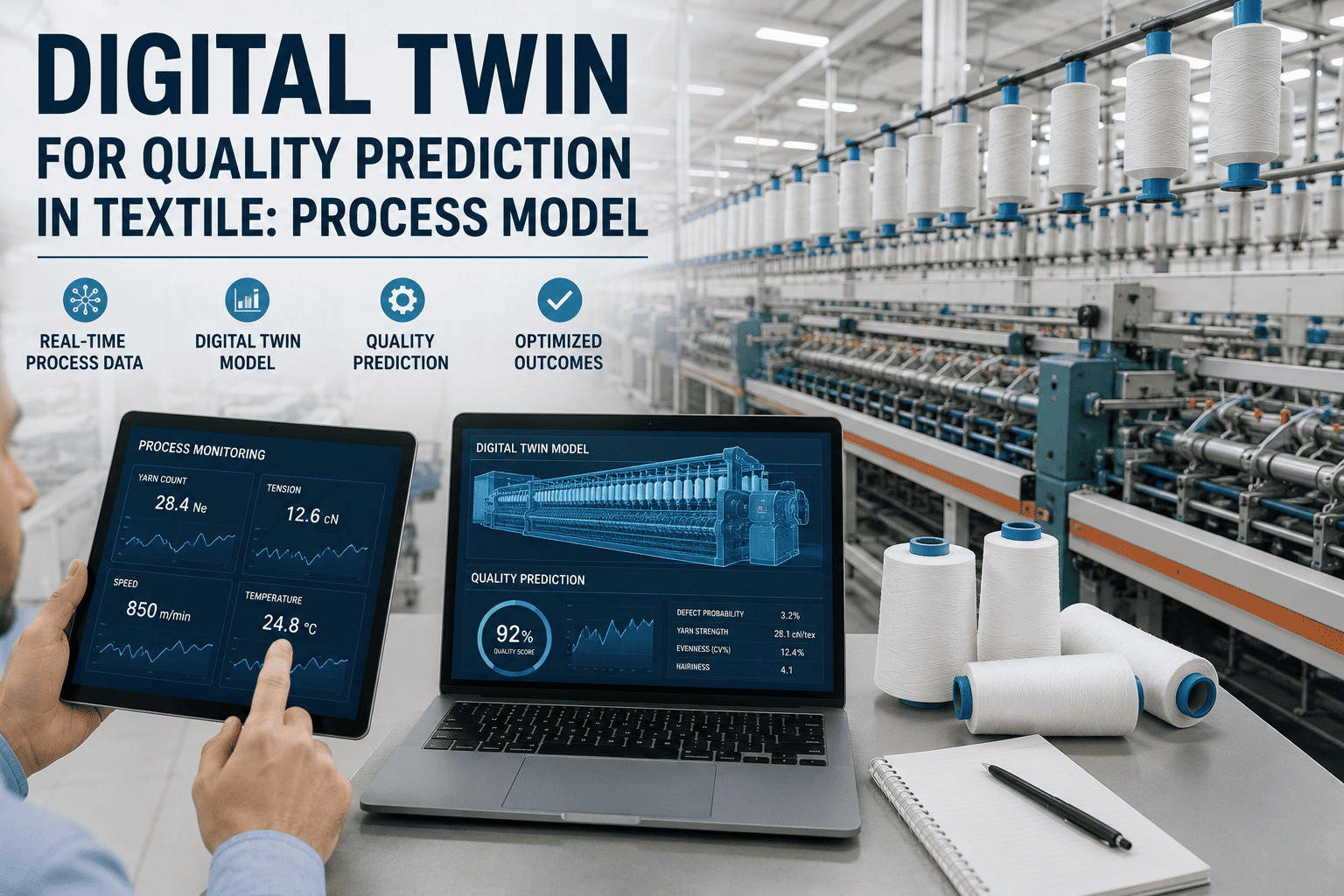
Textile and light manufacturing sit below 30% digital twin adoption — the lowest of any manufacturing vertical — while food, pharma, and chemicals have already reached 30–50%. That gap isn't because textile quality problems are simpler; dye uptake, shade consistency, and tension-driven defects are some of the most parameter-sensitive outcomes in any process industry. It's because most textile quality control still happens after the fact, at inspection, rather than as a prediction made while the batch is still running. iFactory's digital twin engine models dye bath temperature, tension, pH, and liquor ratio against your actual quality outcomes, so a batch heading toward a shade variation or a barre defect gets flagged while there's still time to correct it. The irony is that textile manufacturing was already deeply quantitative long before digital twins existed as a category — dye houses have run on precise temperature curves, pH targets, and liquor ratios for decades. What's been missing isn't the data discipline; it's the connective layer that takes those individually well-controlled parameters and continuously translates their combined effect into a forward-looking quality prediction instead of a lagging inspection result.
Your Dye Bath Doesn't Know It's About to Produce a Reject. Your Digital Twin Does.
A digital twin runs the same process parameters through a live model in parallel with the physical batch — surfacing a predicted quality outcome minutes into the run, not hours later at final inspection time.
Live Parameter Tracking — What the Twin Watches During a Dye Batch
A digital twin's value depends entirely on which parameters it tracks and how tightly those parameters correlate with the quality outcomes that matter. In dyeing and finishing specifically, a small set of variables drives the overwhelming majority of defects — temperature, time, pH, liquor ratio, and tension — and each one has a documented, well-understood relationship to specific defect types. The panel below reflects the kind of live comparison a textile digital twin surfaces during an active batch.
What makes this panel more useful than a standard SCADA readout is the fourth row — the predicted shade match isn't a sensor reading at all, it's the twin's live output, generated by feeding the current temperature, pH, and tension trend into the quality model and asking what result those conditions are likely to produce. That's the fundamental shift: instead of four separate parameter readings that a technician has to mentally combine and interpret based on experience, the twin does that combination continuously and expresses it as a single, actionable confidence score against the target standard.
Illustrative live-monitoring layout — actual thresholds and predicted outcomes are configured per fabric type, dye class, and machine during implementation.
Why Textile Quality Is Especially Well Suited to Digital Twin Prediction
Not every manufacturing process benefits equally from a digital twin, but textile wet processing is close to an ideal case. The relationship between process parameters and quality outcomes is well characterized — decades of textile chemistry research have mapped exactly how temperature affects dye diffusion rate, how liquor ratio affects shade depth, and how tension variation produces specific visible defects like barre or bowing. That existing body of process knowledge is precisely what a digital twin needs as its foundation; it isn't starting from a blank model, it's encoding relationships textile engineers already understand and turning them into a live prediction running alongside the physical batch.
Compare that to a process like injection molding or precision machining, where a digital twin has to learn far more from scratch because the failure modes are more numerous and less uniformly documented across the industry. Textile dyeing benefits from a century of published chemistry — dye class behavior, fiber affinity curves, temperature-diffusion relationships — that gives a digital twin a running start most other manufacturing processes don't have. The model isn't inventing new physics; it's operationalizing physics that's already well understood, which shortens the path from pilot to production-ready accuracy considerably.
The second reason textile is well suited to this approach is that defects are expensive to catch late and cheap to catch early. A shade variation caught at final inspection means the entire lot is at risk of rejection, reprocessing, or a downgrade sale — but the same deviation caught twenty minutes into a two-hour dye cycle can often be corrected by adjusting temperature or dosing before the damage compounds. The window for intervention exists; most plants simply don't have visibility into it until the batch is already finished — which is precisely the gap a digital twin is built to close.
That intervention window matters more in textile than in many other industries because the cost of a wasted batch compounds across several resource categories simultaneously — water, energy, dye chemicals, and labor time are all consumed regardless of whether the batch passes or fails inspection. A rejected lot doesn't just cost the reprocessing labor; it represents water and energy that already went down the drain, quite literally, with nothing to show for it. Predictive intervention converts that sunk cost into a recoverable one.
Shade & Uneven Dyeing Prediction
The twin models dye uptake rate against bath temperature, pH drift, and liquor ratio in real time, flagging when the trajectory is heading away from the approved standard before the batch reaches final color development.
Tension-Driven Defect Prediction
Barre, bowing, and skewing all trace back to uneven tension distribution across the fabric width during processing. The twin correlates warp and weft tension readings against known defect signatures to flag a developing pattern before it's visible on the roll.
Shrinkage & Width Stability
Heat-set temperature and dwell time determine final fabric width and shrinkage stability, with the relationship differing meaningfully by fiber type. The twin adjusts its prediction model per fiber class rather than applying one blanket curve to every fabric on the line.
Yarn & Weave Integrity
Yarn evenness and tensile strength going into weaving predict downstream breakage risk and fabric density variation. The twin flags incoming yarn lots that fall outside the range the current weave parameters were tuned for.
A Prediction Made While the Batch Is Running Beats a Defect Found After It's Done
iFactory's digital twin runs your process parameters against a live quality model, so a drifting dye batch or a tension anomaly surfaces as an alert — not a rejected lot at final inspection.
From Reactive Inspection to Predictive Quality — What Actually Changes
The shift a digital twin enables isn't just faster detection — it's a change in when the decision gets made. Traditional textile quality control is fundamentally reactive: the batch runs to completion, the fabric is inspected, and a pass or fail decision happens after all the time, energy, water, and chemicals have already been spent. A digital twin moves that decision point earlier, into the window where the process can still be adjusted rather than only judged.
This reframing has an organizational effect worth naming: it shifts quality from being solely a downstream inspection function to being a live, in-process capability that operators and process engineers interact with directly during the run. Inspection teams don't disappear from the equation — final inspection remains the last checkpoint before shipment — but a meaningful share of what used to require a rejection and rework cycle can instead be resolved with a mid-batch parameter correction, changing the economics of quality from "detect and discard" to "predict and correct."
Building a Textile Digital Twin — The Practical Sequence
A digital twin implementation doesn't start with a full factory model on day one, and treating it that way is one of the most common reasons textile digital twin projects stall before delivering value. The more reliable path starts narrow — one process, one machine class, one defect type — and expands only after the model proves accurate against real outcomes.
This staged approach matters more than it might seem on paper. A plant that attempts to model dyeing, weaving, and finishing simultaneously from the outset typically ends up with three shallow, unvalidated models instead of one deep, trustworthy one — and a shallow model that's occasionally wrong erodes operator confidence faster than no model at all, because technicians learn to ignore its alerts. Starting narrow isn't a limitation of the technology; it's the discipline that determines whether the eventual plant-wide model gets built on a foundation people actually trust.
Start with one high-value process
Dyeing is usually the best starting point — it has the clearest, most researched relationship between process parameters and visible quality outcomes, and defects caught here are among the most expensive to discover downstream.
Instrument the parameters that actually predict quality
Temperature, pH, tension, and liquor ratio drive the majority of dyeing defects — build the initial model around these rather than trying to capture every measurable variable on the machine.
Validate the model against historical batch outcomes
Before trusting a live prediction, run the model against past batches with known outcomes — good and rejected — to confirm it correctly identifies the parameter patterns that led to each result.
Run in shadow mode before acting on predictions
Let the twin generate predictions alongside live production without changing operator behavior at first, so you can confirm accuracy on real batches before the model starts driving process adjustments.
Expand to the next process once the first model is proven
Weaving, finishing, and heat-setting each have their own parameter-to-defect relationships — extend the twin process by process rather than attempting a plant-wide model from the start.
What Textile Digital Twins Are Delivering — By the Numbers
Digital twin adoption in textile manufacturing is still early relative to sectors like automotive and aerospace, but the documented results from plants that have deployed the technology are substantial enough to explain why adoption is accelerating. Reported outcomes vary by scope and maturity, but the pattern across published case data is consistent: less downtime, less waste, and materially faster identification of process deviations. These aren't marginal efficiency gains — for a mid-size plant, a 30% reduction in ramp-up waste alone can represent a meaningful share of annual material cost, without any change to the fabrics or dyes being run.
It's worth noting that these figures come from plants at varying stages of maturity, and the largest gains tend to show up in the ramp-up and changeover phases rather than steady-state production — which makes intuitive sense, since ramp-up is exactly when a process is furthest from its proven, well-characterized operating point and most likely to drift toward a defect. A plant running the same fabric, same dye, same recipe for months at a time has less room for a twin to add predictive value than a plant frequently switching between fabric types, colors, and specifications, where every changeover reintroduces uncertainty a twin can help resolve faster than trial and error.
| Reported Outcome | Typical Range | Where It Comes From |
|---|---|---|
| Downtime reduction | ~20% | Simulating schedule and maintenance scenarios before physical changes |
| Line capacity gain | ~15% | Bottleneck identification in the virtual model before floor changes |
| Material waste reduction (ramp-up) | ~30% | Catching process deviation in the virtual model before physical waste occurs |
| Maintenance cost reduction | Up to ~40% | Predictive maintenance models running alongside quality models |
Ranges reflect published industry case data across textile and apparel digital twin deployments; actual results depend on process scope, data quality, and implementation maturity.
Common Mistakes That Undermine Digital Twin Quality Projects
The plants that get real value from a textile digital twin are the ones that resist the urge to model everything at once. Dyeing has the richest, best-understood parameter-to-defect relationship of any textile process — start there, prove the model catches what your best dye house technician already knows intuitively, and only then expand. A twin that's right about one process builds trust; a twin that's approximately right about ten processes builds skepticism.
Frequently Asked Questions
What's the difference between a digital twin and regular process monitoring dashboards?
A monitoring dashboard shows current parameter readings against set thresholds — it tells you what's happening right now. A digital twin goes a step further by running a live model that predicts the quality outcome the current parameter trajectory will produce, before the batch finishes. The dashboard tells you the bath is at 58°C; the twin tells you that at this temperature trend, the predicted shade match is likely to fall outside tolerance in another twenty minutes.
That predictive layer is what allows intervention during the batch rather than only reporting on the result after it's complete. Book a demo to see how iFactory's twin models translate live parameter data into a quality prediction in real time.
How much historical data do we need before a digital twin model becomes accurate?
There's no fixed number that applies universally, since it depends on how much natural variation exists in your process and how many distinct fabric or dye combinations the model needs to cover. As a practical starting point, a model trained on several months of batch history — spanning both successful and rejected outcomes — is typically enough to validate whether the core parameter relationships are being captured correctly.
The more important factor than raw data volume is data quality: consistent, accurately timestamped parameter logs matched to confirmed final quality outcomes matter more than sheer batch count. Book a demo to review what a realistic validation timeline looks like for your specific process history.
Can a digital twin actually prevent a defect, or does it just detect it earlier?
Both, depending on how the prediction is used. At minimum, a twin detects a developing defect earlier than final inspection would, which alone reduces waste since corrective action can happen before the full batch is committed. In more mature implementations, the prediction feeds directly into a recommended parameter adjustment — for example, suggesting a temperature correction the moment the model detects the trajectory drifting toward an out-of-tolerance shade.
Whether the twin only alerts or actively recommends adjustments is a maturity question, not a limitation of the technology itself — most plants start with alerting and move toward adjustment recommendations as trust in the model builds. Book a demo to see how iFactory structures the transition from alert-only to adjustment-recommending predictions.
Do we need new sensors on our dyeing and weaving machines to build a digital twin?
It depends on what's already instrumented. Many textile machines already log temperature, time, and basic process parameters through their existing control systems — the gap is usually not sensing hardware but rather getting that data out of an isolated machine controller and into a system that can model it against quality outcomes over time.
Tension monitoring is the parameter most commonly missing on older equipment, since it wasn't historically logged even though it strongly predicts several visible defect types. iFactory's support team can help assess what's already available on your existing machine controllers before recommending any new instrumentation.
Is digital twin technology only worthwhile for large textile plants, or does it apply to smaller operations too?
Scale changes the implementation approach more than it changes the underlying value. A smaller plant with fewer machine types can often build an accurate model faster, since there's less process variation to capture — the model doesn't need to generalize across dozens of different dye house configurations. The economics work differently too: a smaller plant may not need the full scheduling and multi-line optimization capabilities that justify a twin at larger scale, but the core quality prediction value on a single critical process, like dyeing, applies regardless of plant size.
Book a demo to discuss a scoped starting point that matches your plant's current process footprint.
Stop Waiting for Final Inspection to Find Out What Happened
iFactory's digital twin models your dye bath, tension, and finishing parameters against real quality outcomes — surfacing a predicted result while the batch is still running, not after it's already fully committed.