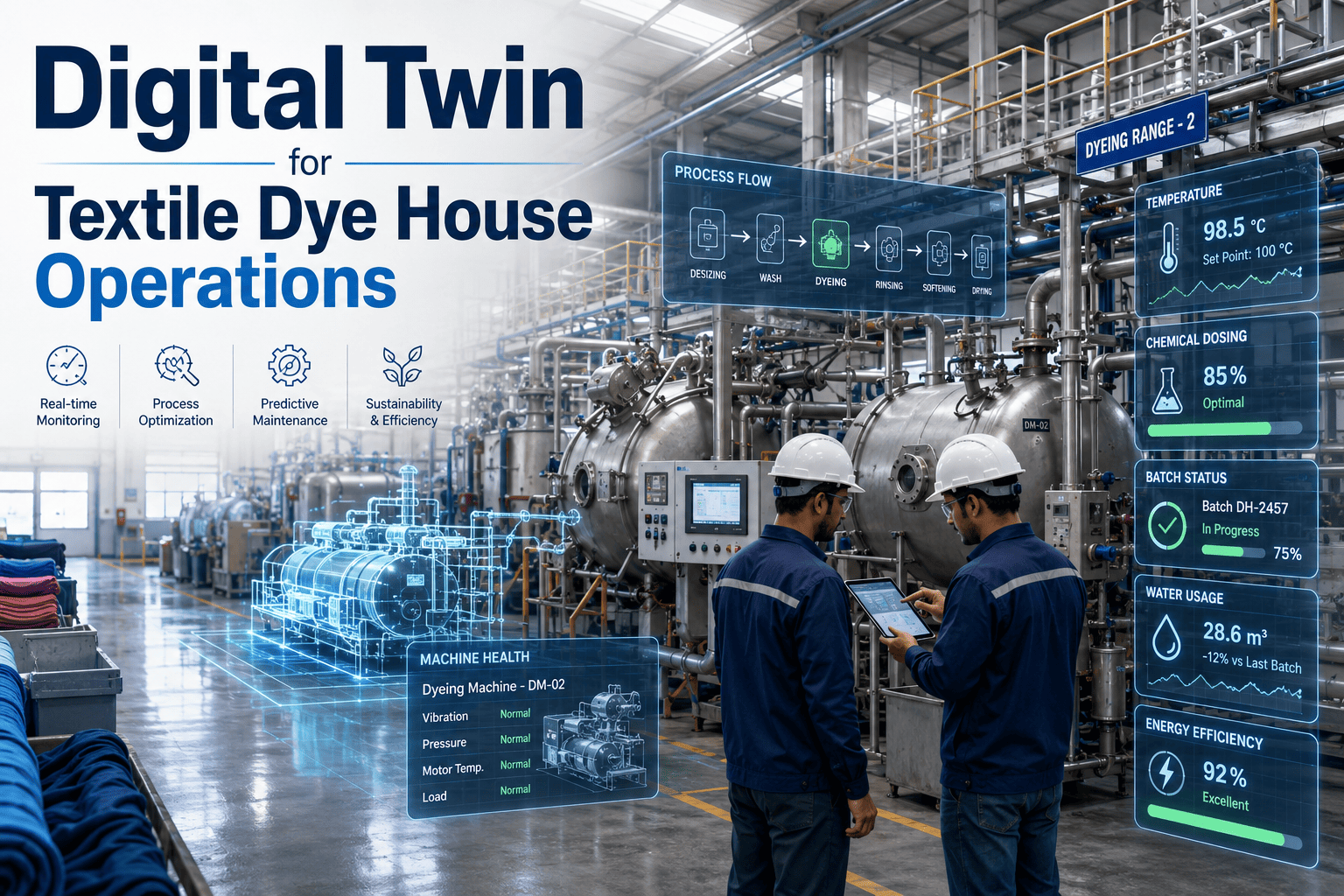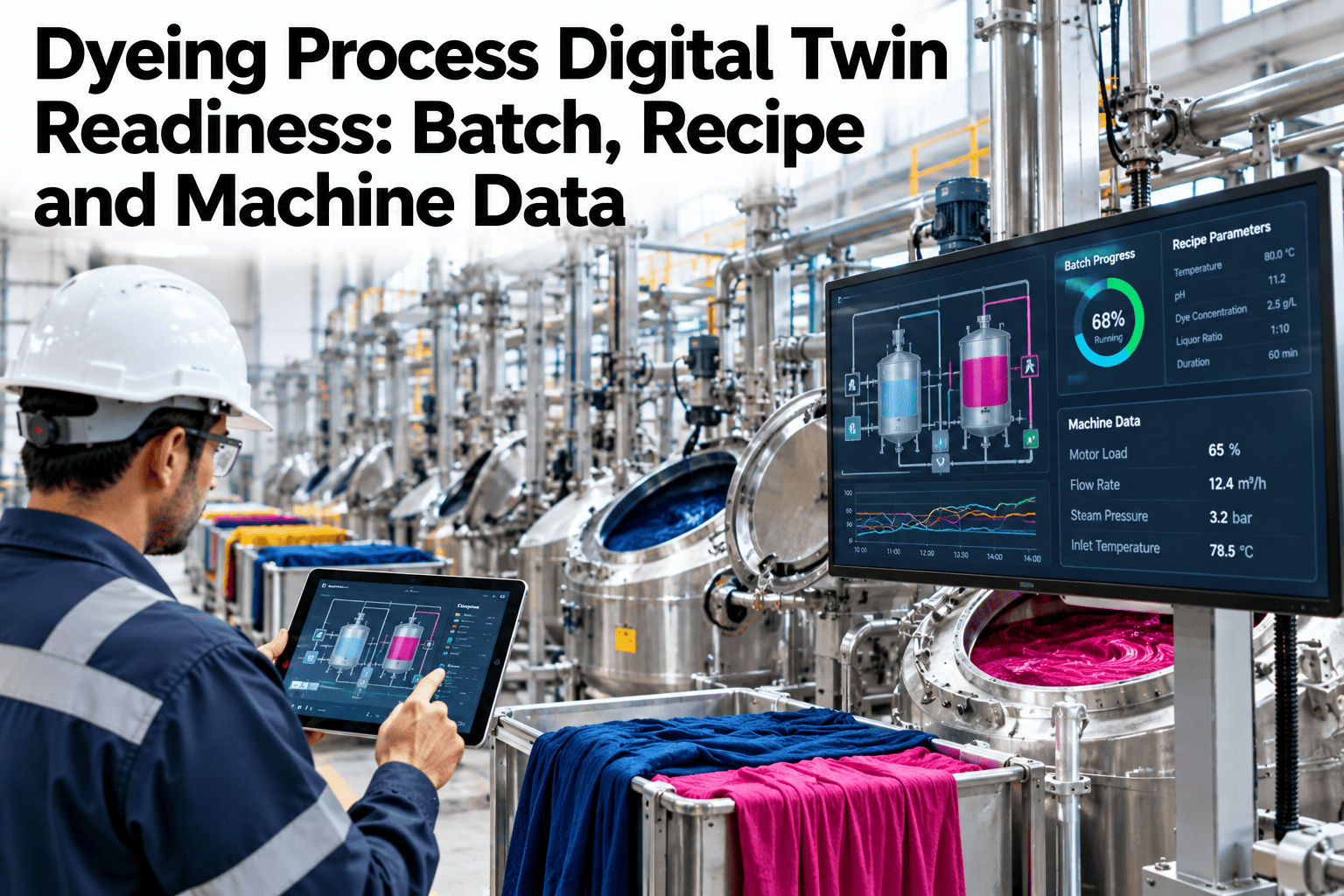
A digital twin of a dyeing process is only as good as the data connecting it to reality, and most dye houses that attempt one discover partway through that their recipe data lives in one system, their batch history in a logbook, their machine conditions nowhere digital at all, and their quality outcomes in a spreadsheet nobody else can access. None of that is a reason to abandon the idea, it's a reason to assess the data foundation honestly before building anything, since a twin built on disconnected or incomplete data produces a model that looks sophisticated and predicts nothing reliably. Mapping that foundation first is what a real digital twin readiness assessment looks like for a dye house.
A Twin Is Only as Connected as the Data Feeding It
iFactory AI assesses whether batch history, recipes, machine conditions, energy, water, chemicals, and quality outcomes are actually connected enough to support a working digital twin.
Why Twin Projects Stall on Data, Not Modeling
The modeling techniques behind a digital twin are well established. What derails most dyeing twin projects is discovering, after the modeling work has already started, that the underlying data can't actually support it.
Data Lives in Disconnected Systems
Recipes sit in one system, machine logs in another, and quality results in a spreadsheet, with no shared batch identifier linking them together.
Historical Data Lacks Consistency
Years of batch records exist, but recipe naming, unit conventions, and recorded fields changed enough over time that the history isn't usable as a single training set.
Machine Condition Isn't Captured at All
Without pump, valve, and heat exchanger condition data tied to each batch, a twin has no way to account for equipment variation between machines or over time.
What Each Data Domain Needs to Provide
Each domain has a specific minimum bar for usability, and falling short on any one of them limits what the twin can reliably predict.
| Domain | What's Needed | Common Gap |
|---|---|---|
| Batch History | Consistent batch identifiers linking every related record | Paper logs or spreadsheets with no shared ID across systems |
| Recipe Data | Structured, version-controlled recipe records | Recipes stored as free text or informal operator notes |
| Machine Conditions | Pump, valve, and heat exchanger readings per cycle | No digital capture of equipment condition at all |
| Energy, Water, Chemicals | Consumption tracked per batch, not just per shift or day | Utility data aggregated at a level too coarse to attribute to a batch |
| Quality Outcomes | Shade and uniformity results tied to the specific batch | Quality inspection results recorded separately from production data |
A twin doesn't need every domain to be perfect before starting, but it does need a shared batch identifier connecting all of them, since that's what makes the other gaps fixable incrementally rather than requiring a full rebuild.
Map Your Own Data Readiness by Domain
Bring a sample of your current batch, recipe, and quality records to a 30-minute session and see where the connectivity gaps actually are.
A Readiness Assessment, Step by Step
A structured assessment prevents the project from jumping straight to modeling before the data foundation is actually confirmed.
A Readiness Checklist Before Modeling Begins
These checks separate a dye house that's genuinely ready to start building a twin from one that needs more data foundation work first.
An Illustrative Comparison: Model Reliability by Data Readiness
The figures below are a labeled illustrative composite, not a reported customer result, showing how a model's prediction reliability can differ depending on how connected its underlying data was before training.
The dye houses that get real value from a digital twin are rarely the ones that start with the most advanced modeling approach, they're the ones that spent real time first confirming every batch's recipe, machine, utility, and quality data actually connects through a shared identifier. That connectivity work feels unglamorous compared to building predictive models, but it's what determines whether the eventual twin reflects reality or just produces confident-looking numbers nobody can trust.
Frequently Asked Questions
Do we need perfect data in every domain before starting a twin project?
No, but you do need a shared batch identifier connecting the domains, since that's what lets the weaker domains be improved incrementally while the twin project proceeds, rather than requiring every domain to reach perfection before any modeling can begin. Assess which domains are strong enough to start with in a short session.
How far back does our historical batch data need to go?
Enough history to cover meaningful variation in recipes, seasons, and machine conditions is more valuable than simply the longest available time span, so a shorter but genuinely representative dataset often outperforms a longer one with significant gaps or inconsistencies. Ask the iFactory AI team how much history your project needs.
What's the minimum machine condition data a twin actually needs?
Pump flow and valve response are generally the highest-value starting signals, since they most directly affect temperature uniformity and cycle stability, with heat exchanger and additional sensor data adding further precision once the foundational signals are connected. Review minimum machine data requirements in a demo.
Can an existing CMMS or QMS system be the source of this data?
Yes, an existing CMMS, QMS, or MES system is often the right source rather than building new data collection from scratch, provided the system actually links records to a consistent batch identifier that other domains can reference. Discuss your current systems as a data source with the support team.
How long does a readiness assessment typically take?
A focused assessment across the key data domains can be completed in a matter of weeks for most dye houses, well before any modeling work begins, since the goal is mapping what exists and where the gaps are rather than building new infrastructure during the assessment itself. Get a realistic assessment timeline on a call.
Confirm the Data Foundation Before You Build the Model
iFactory AI assesses whether your batch, recipe, machine, and quality data are actually connected enough to support a digital twin. Book a walkthrough on your own data.