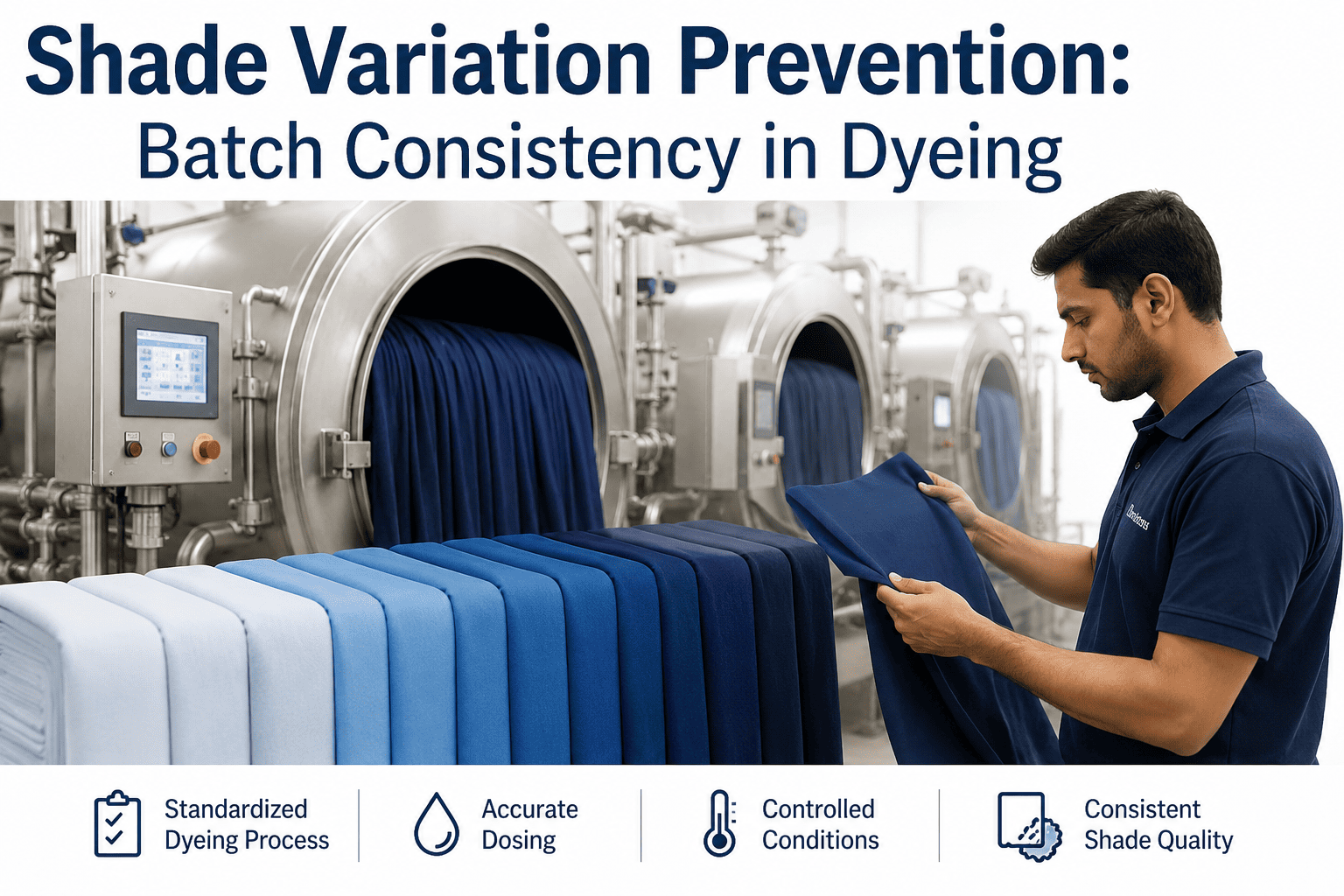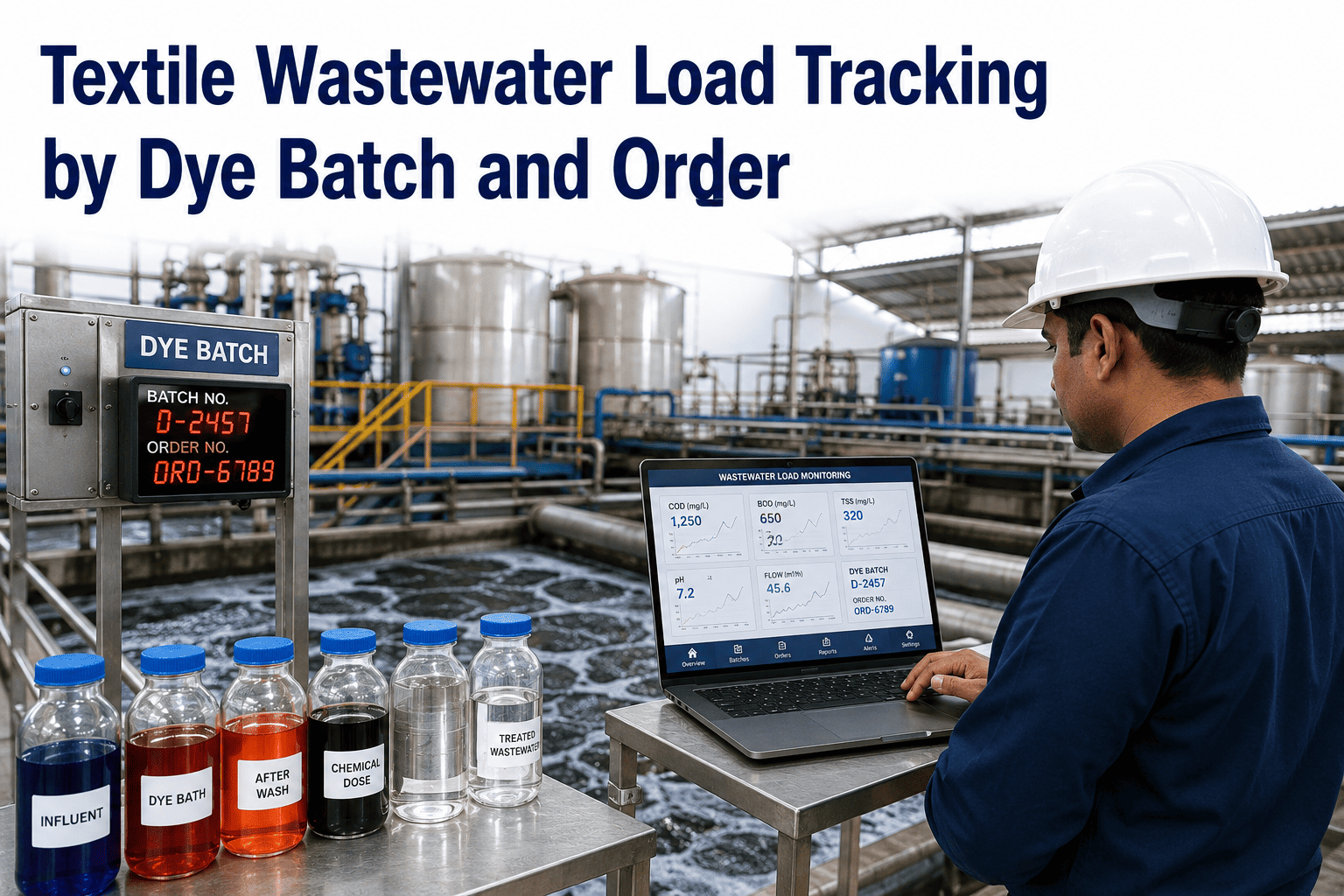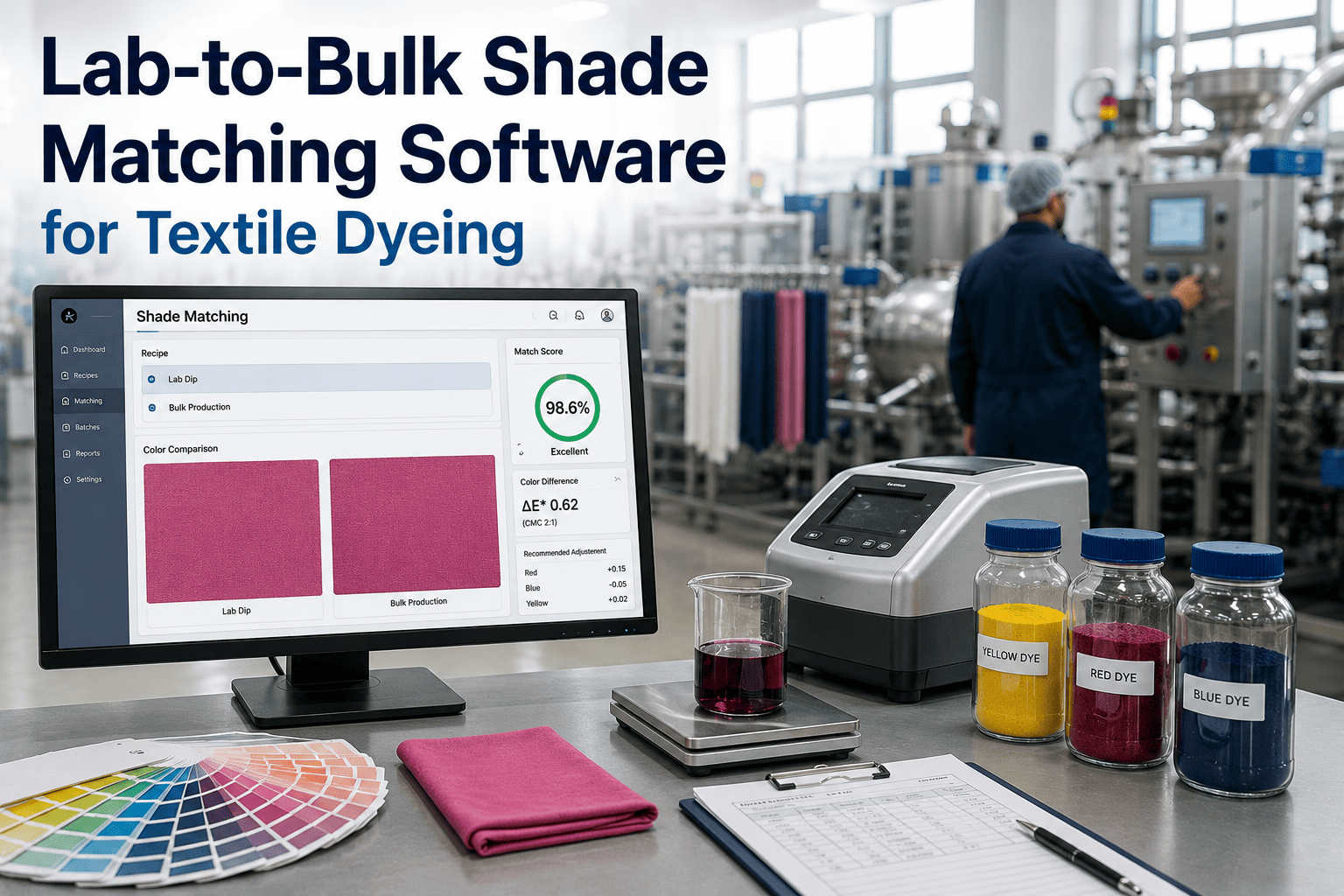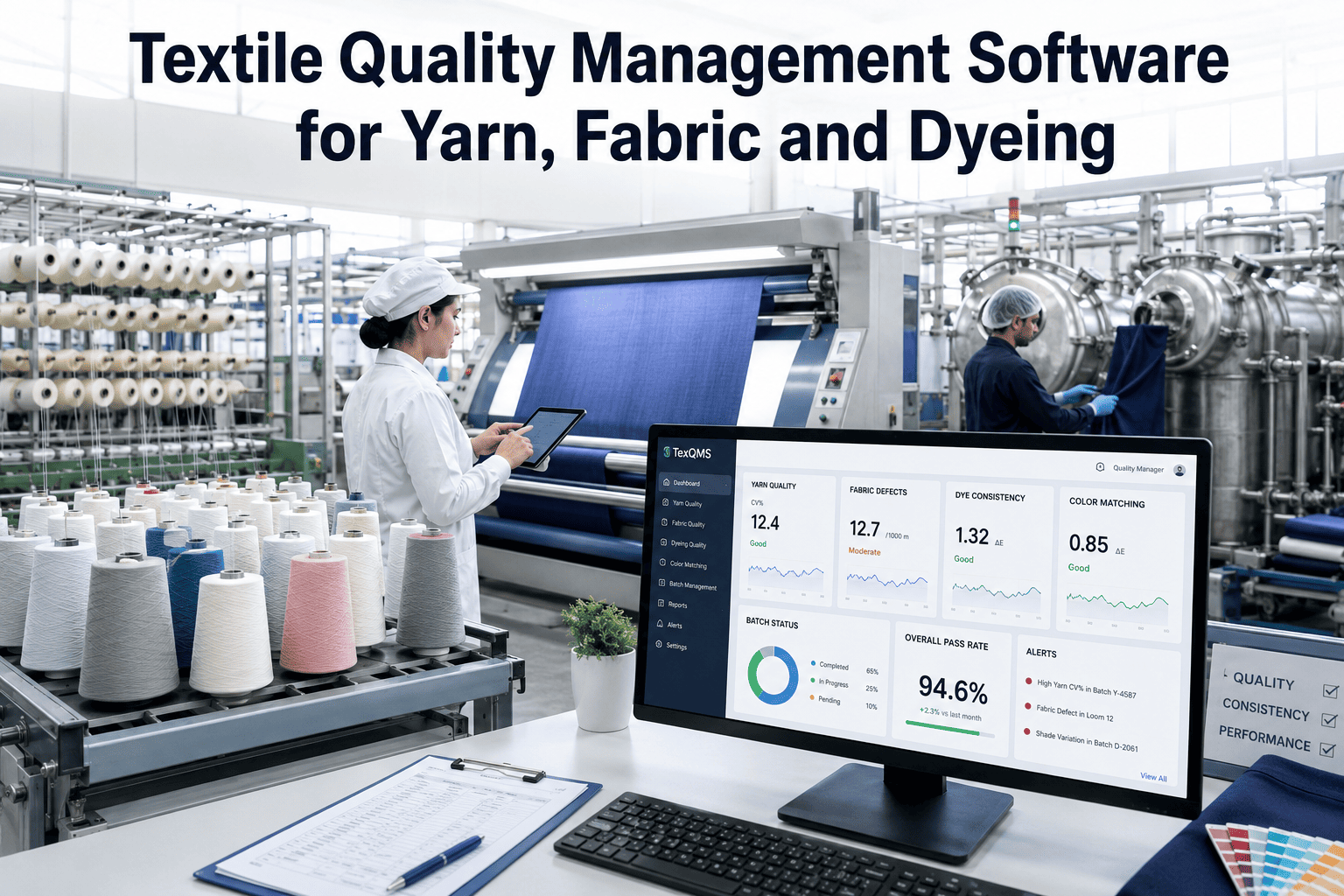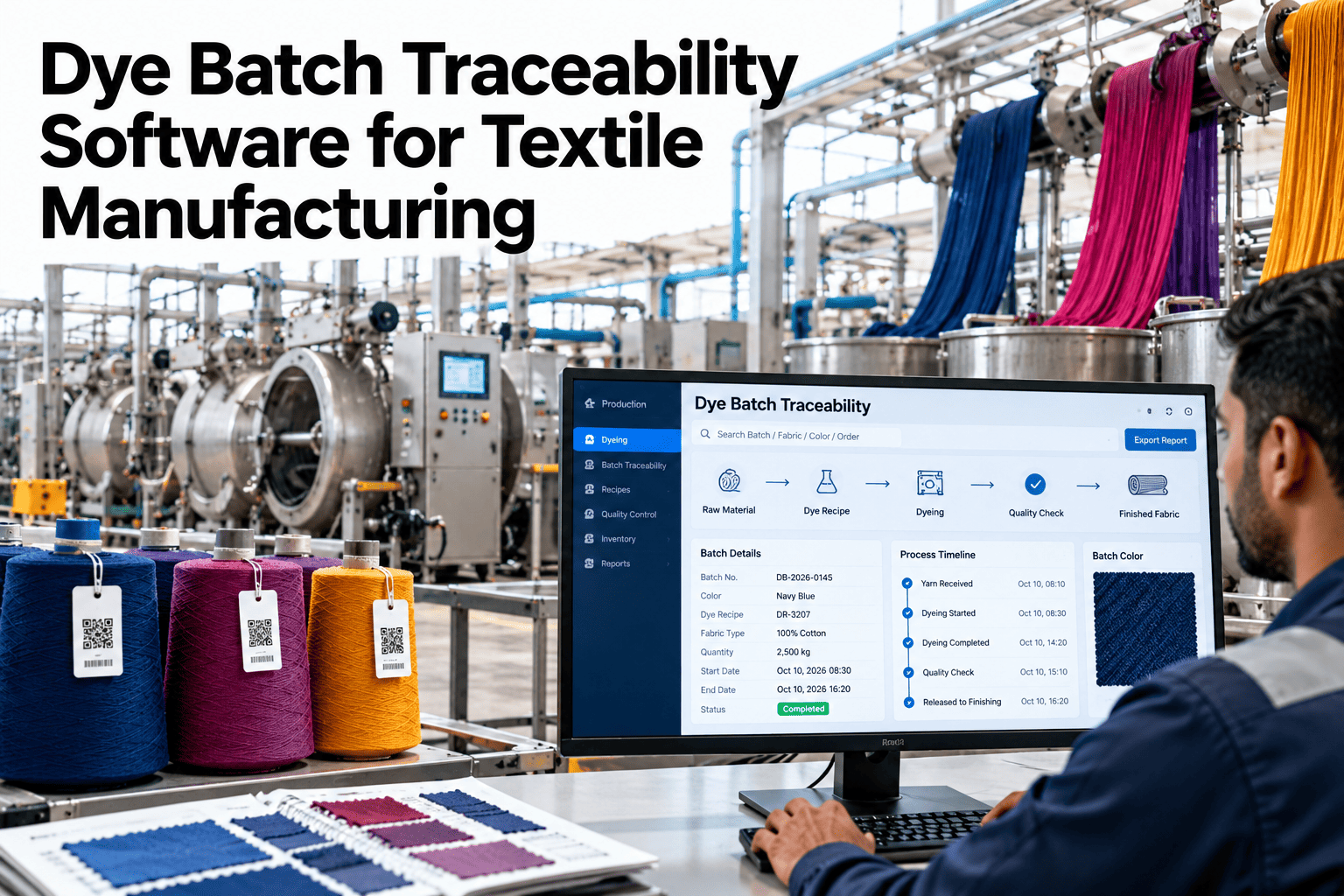
When a customer rejects a shipment for shade variation, the question that decides how fast the mill can respond is simple to ask and often hard to answer: which machine ran this batch, which chemical lot went into it, and what recipe was used. Without a traceable link from the finished shade back through recipe, chemical lot and machine, a mill investigating a complaint is left guessing, and the same unidentified cause can keep producing rejected batches while the investigation drags on. Dye batch traceability connects every finished lot back to the specific recipe, chemical batch and machine that produced it, turning a guessing exercise into a direct lookup. Dyeing and finishing teams building this capability can trace a finished batch back to its recipe and chemical lot live before the next customer complaint arrives.
Dye Batch Traceability Software for Textile Manufacturing
Every finished shade connected back to its recipe, chemical lot and machine, in one traceable chain.
Why Untraceable Batches Cost More Than the Rejection
A single rejected batch without traceability behind it creates a problem that extends well beyond that one shipment.
Without a traced link, finding which machine or chemical lot caused the issue can take days.
An unidentified cause keeps producing rejected batches while the investigation is still underway.
A customer asking for root cause evidence gets a reconstructed guess instead of a traced answer.
A complete traceability chain turns a multi-day investigation into a lookup that takes minutes.
What Gets Linked, and Why
Four pieces of data need to connect to the same finished batch for traceability to actually work.
Trace Your Own Last Rejected Batch
Book a 30-minute session and bring a recent batch record. iFactory AI will show how it would trace back through recipe, chemical lot and machine.
Manual Investigation vs Traced Lookup
The time and confidence difference between the two approaches is significant.
| Factor | Manual Investigation | Traced Lookup |
|---|---|---|
| Time to identify cause | Hours to days | Minutes |
| Evidence quality | Reconstructed from memory and paper logs | Direct record tied to the batch |
| Repeat prevention | Depends on investigation speed | Cause identified before more batches run |
| Customer confidence | Depends on investigation thoroughness | Traceable evidence presented directly |
What iFactory AI Supports
Every finished batch carries its full traceability chain automatically, not as a reconstruction after the fact.
Automatic Chain Linking
Recipe, chemical lot, machine and shade result are linked automatically as the batch runs.
Instant Batch Lookup
Any finished batch can be traced back through its full chain in seconds.
Chemical Lot Cross-Reference
A suspect chemical lot can be traced forward to every batch it was used in.
Customer-Ready Evidence
The traced record exports in a format suitable for sharing with a customer or auditor.
iFactory AI connects recipe, chemical inventory and machine data into one traceable chain. Scope covers data integration, chain mapping and validation.
Expert Review
Chemical lot cross-referencing is the capability mills value most once they have it, and the one they rarely think to ask for upfront. Being able to trace forward from a suspect lot to every batch it touched, rather than only tracing backward from one rejection, is what stops a recurring problem from repeating across a whole production week.
The investigations that drag on longest are almost always the ones where paper logs for recipe, chemical lot and machine were kept separately and never cross-referenced. Automatic linking removes that gap entirely rather than making the manual cross-reference faster.
Frequently Asked Questions
Does this require barcode or RFID tracking on chemical drums?
Barcode or RFID tracking makes chemical lot linking more automatic, but it is not strictly required if lot numbers are already logged manually at the dosing step. The system can work with either approach, though automated scanning reduces transcription errors. Ask about your current chemical tracking method in a working session.
Can we trace forward from a chemical lot to see every batch it affected?
Yes, forward tracing from a chemical lot to every batch it was used in is one of the core capabilities, which is particularly useful when a supplier flags a quality issue with a specific lot after it has already shipped. Request a forward-trace example from support.
How far back does the traceability record typically need to go?
Retention periods vary by customer contract and regulatory requirement, but many mills retain traceability records for a year or more to cover the realistic window for a customer complaint or quality claim. Discuss your retention requirements in a session.
Does this integrate with our existing ERP or inventory system?
Yes, chemical lot and inventory data is pulled from existing ERP or warehouse management systems rather than requiring duplicate manual entry. Contact support about your specific ERP setup.
How long before the full chain is reliably linked for every batch?
Most mills have the full recipe, chemical and machine chain reliably linked within six to nine weeks, validated against a set of known past batches before go-live. Book a session to estimate your own timeline.
Answer "Which Batch Was This" in Seconds, Not Days
iFactory AI links every finished batch to its recipe, chemical lot and machine automatically. Book a walkthrough on your own data.