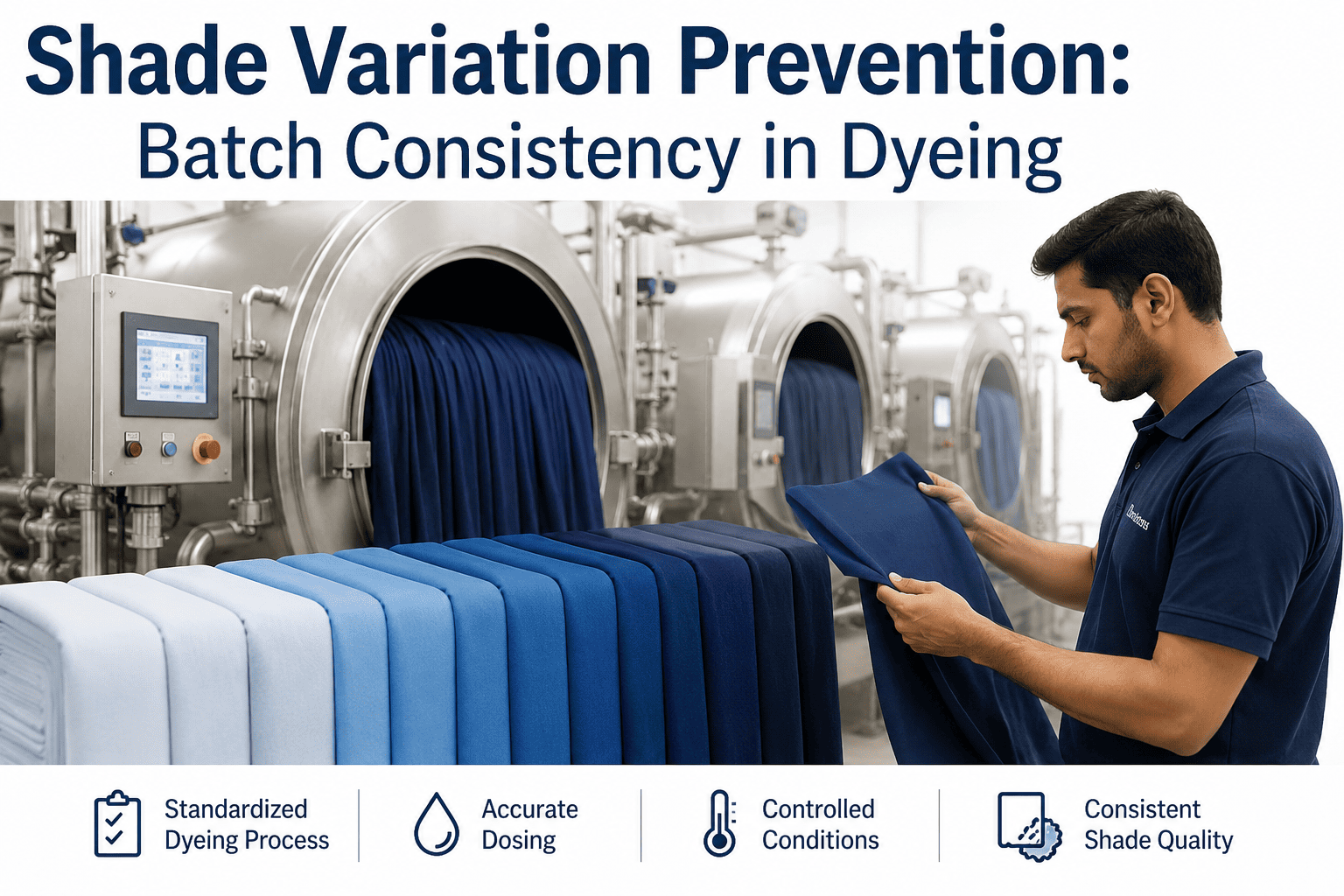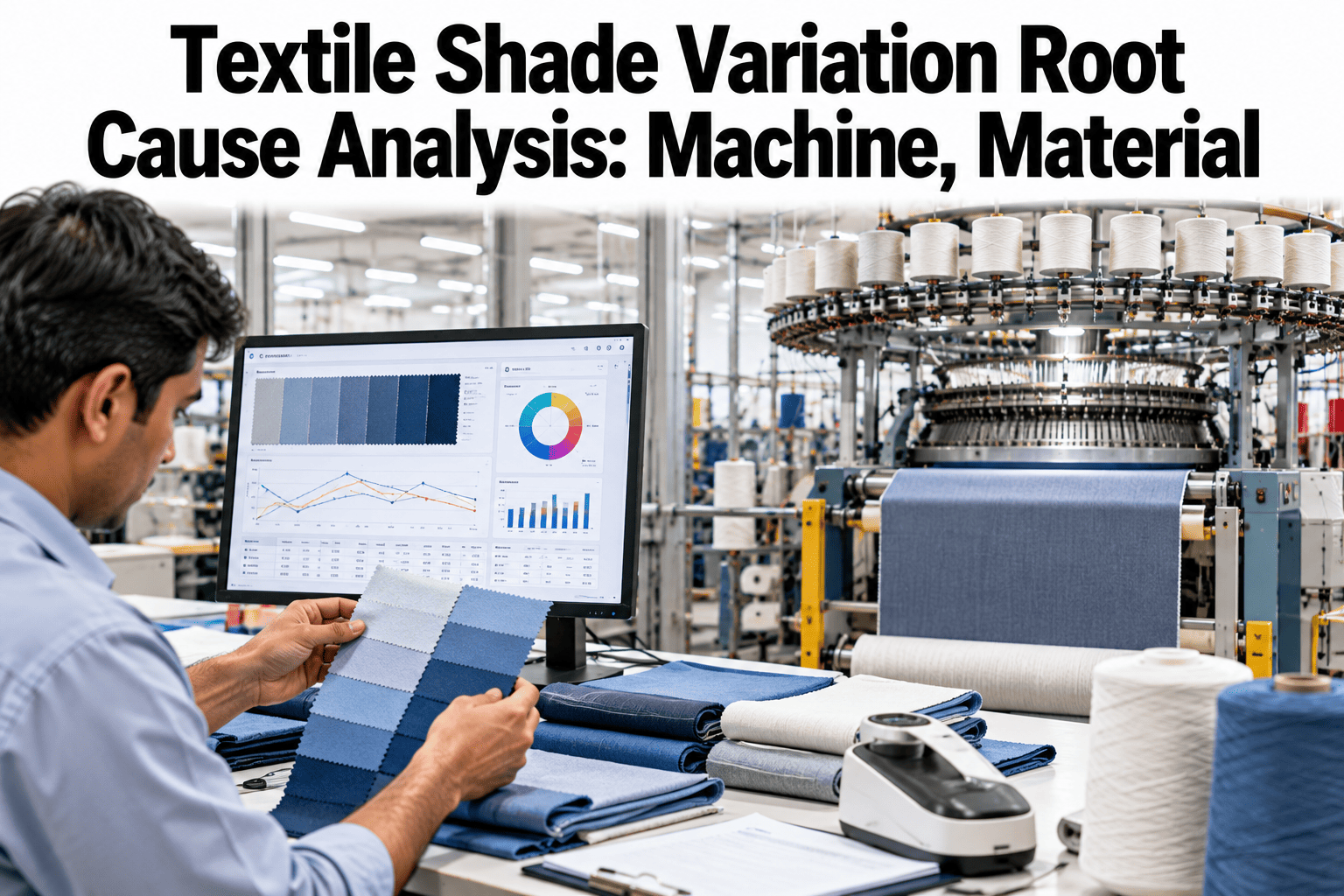
Shade variation between rolls, or between a sample and the bulk production run, is one of the most common rejection causes in textile dyeing, and also one of the hardest to pin down after the fact. The cause could sit in the machine, in how the recipe was executed, or in the material itself: fiber lot variation, yarn count differences, or fabric construction inconsistency can all shift how a dye takes even when the recipe and machine ran perfectly. Root cause analysis that checks all three categories systematically, rather than defaulting to "redo the recipe," is what actually finds the real cause instead of masking it with a workaround. Quality and dyeing teams rethinking this process can see shade variation root cause analysis run across machine, recipe and material live before the next variation complaint arrives.
Textile Shade Variation Root Cause Analysis: Machine, Material
A systematic check across machine, recipe and material, instead of defaulting to a recipe redo.
Why "Redo the Recipe" Often Doesn't Fix It
Defaulting to a recipe adjustment treats the symptom without checking whether the recipe was actually the cause.
If the real cause is material variation, adjusting the recipe fixes nothing and wastes a batch.
A recipe tweak can temporarily mask a machine issue that keeps recurring on the next batch.
Without checking all three categories, the actual cause is often never identified.
A systematic check across machine, recipe and material finds the real cause instead of guessing at the most familiar fix.
Checking Each Category
Each category has its own specific signals to check before being ruled in or out.
| Category | What to Check | Typical Signal |
|---|---|---|
| Machine | Flow rate, temperature uniformity across the bath | Variation concentrated on one machine |
| Recipe | Dosing timing, sequence and hold time compliance | Variation tied to a specific recipe or operator |
| Material | Fiber lot, yarn count and fabric construction | Variation tied to a specific material lot |
Check a Recent Shade Complaint Against All Three Categories
Book a 30-minute session and bring a recent shade complaint. iFactory AI will check it systematically across machine, recipe and material.
A Systematic Analysis Sequence
Working through the categories in a consistent order avoids jumping to the most familiar explanation.
What iFactory AI Supports
The system checks machine, recipe and material data together, rather than relying on manual cross-referencing.
Cross-Category Comparison
Affected batches are compared automatically across machine, recipe and material lot.
Pattern Detection
A shared machine, recipe or material lot across affected batches is surfaced automatically.
Recipe Compliance Check
Logged process data is checked against the recipe to rule execution error in or out.
Confirmed Cause Reporting
The identified cause is documented with the supporting data behind the conclusion.
iFactory AI connects machine, recipe and material lot data into one root cause model. Scope covers data integration, model setup, and validation.
Expert Review
Material-driven shade variation is more common than most quality teams assume, largely because it is the hardest category to check without cross-referencing fiber lot data against the complaint pattern. Teams that only check recipe and machine data consistently miss it.
The fastest investigations are the ones that compare affected batches against unaffected batches on the same recipe and machine before touching any process parameter. That comparison alone usually narrows the cause to one category within minutes.
Frequently Asked Questions
How is material-driven variation distinguished from recipe or machine issues?
Material-driven variation typically shows up across multiple machines and recipes but traces back to a shared fiber or yarn lot, while machine or recipe issues tend to concentrate on one specific machine or recipe regardless of material. Comparing the pattern across both dimensions separates the two. See this comparison demonstrated in a live session.
Does this require lab-tested fiber lot data to check material causes?
Basic fiber and yarn lot identifiers already tracked through procurement are usually enough to check whether affected batches share a common lot. Lab testing can confirm a suspected material cause but is not required for the initial pattern check. Ask support about your current material lot tracking.
Can this analysis run on historical complaints, not just new ones?
Yes, past shade complaints can be re-analyzed against machine, recipe and material data if that data was recorded at the time, which can reveal a pattern across multiple older complaints that were each investigated individually. Request a historical complaint re-analysis.
What happens once a root cause is confirmed?
A confirmed cause generates a documented finding with the supporting comparison data, which can feed directly into a corrective action process, whether that means a machine adjustment, a recipe fix or a material specification change. Contact support about connecting findings to your corrective action workflow.
How long before this analysis is reliable on our own production data?
Most quality teams have the cross-category comparison model validated against known past cases within six to nine weeks, depending on how much historical machine, recipe and material data is already captured digitally. Book a session to estimate your own timeline.
Find the Real Cause, Not Just the Familiar Fix
iFactory AI checks machine, recipe and material together to find the actual cause of shade variation. Book a walkthrough.