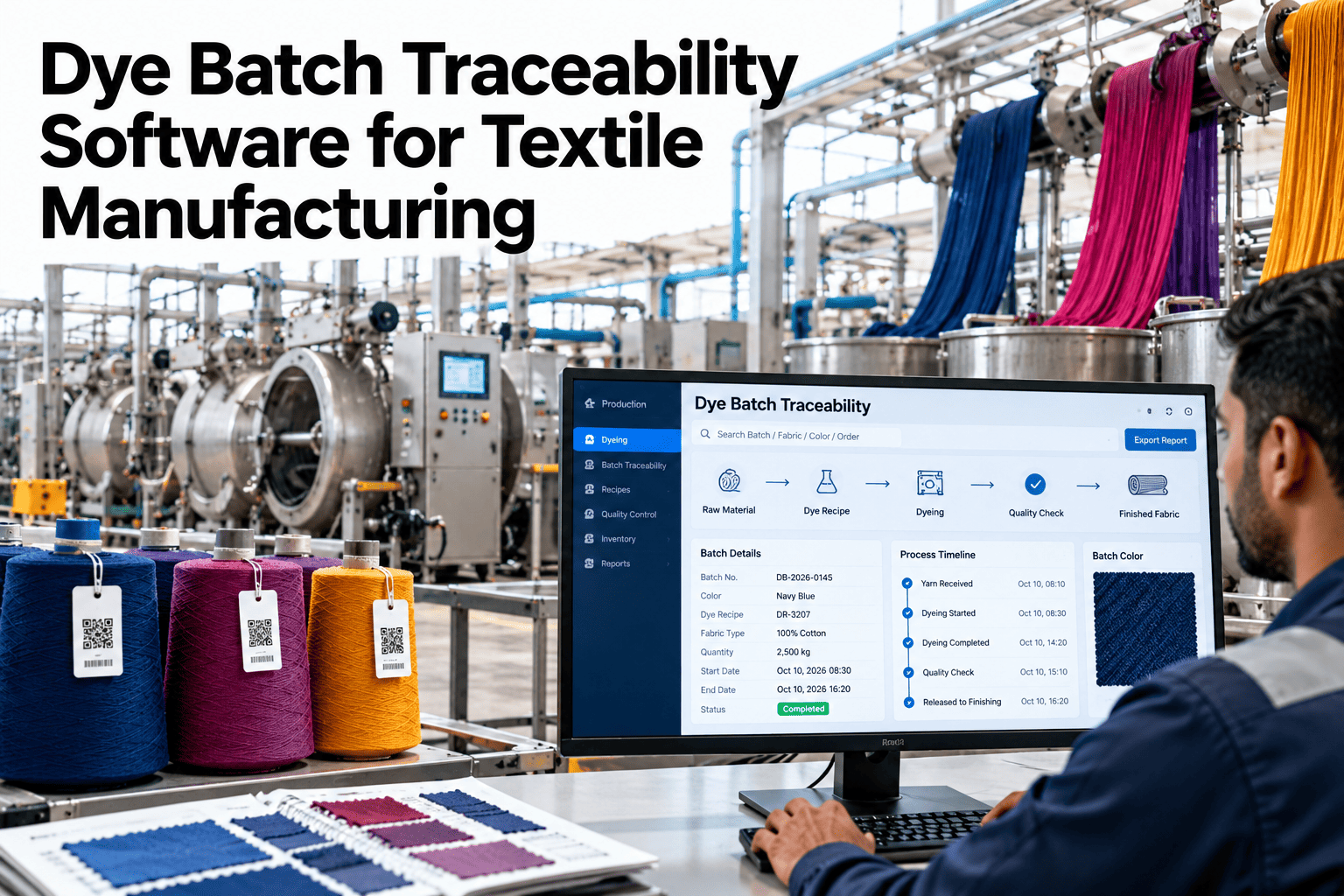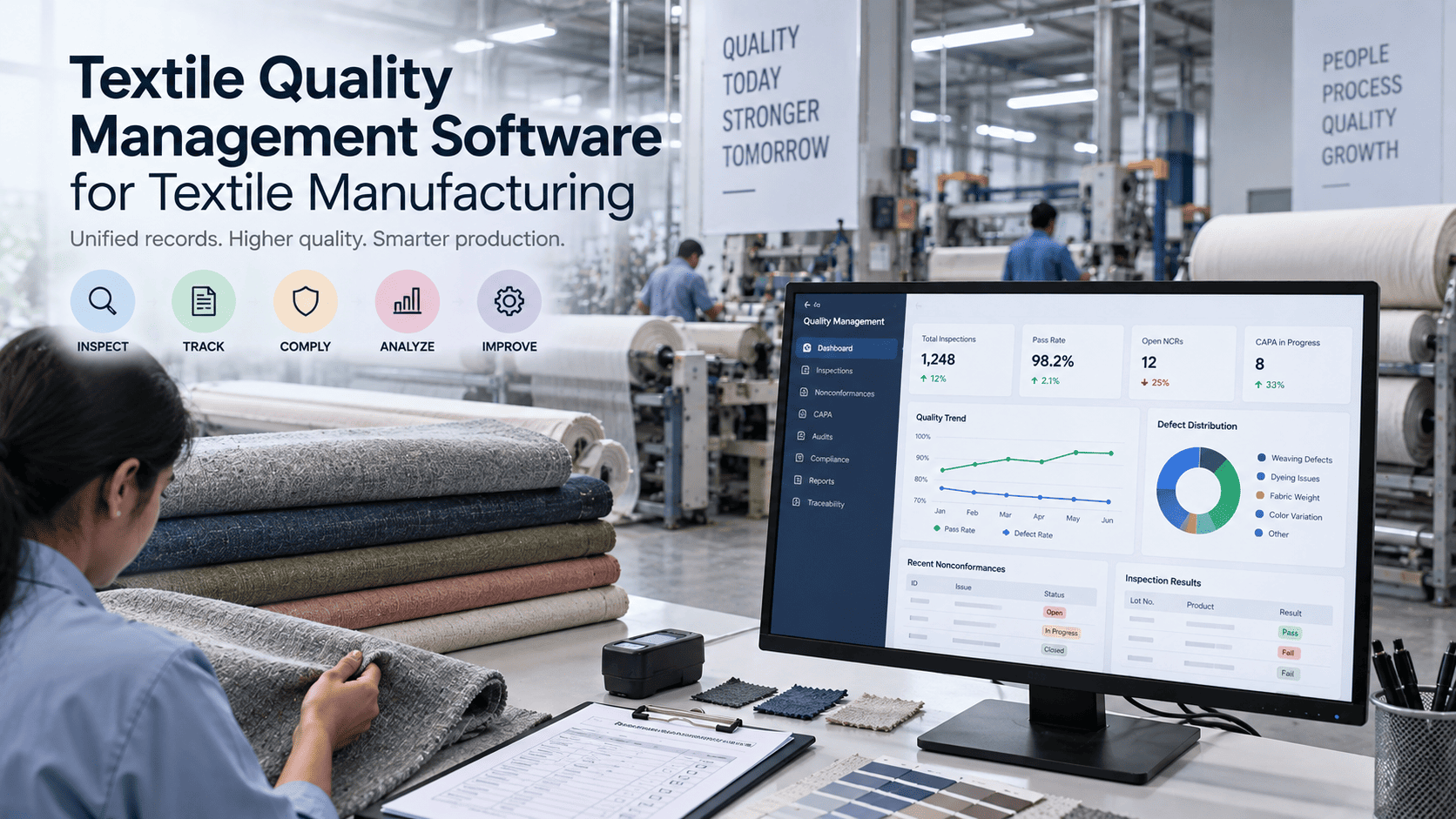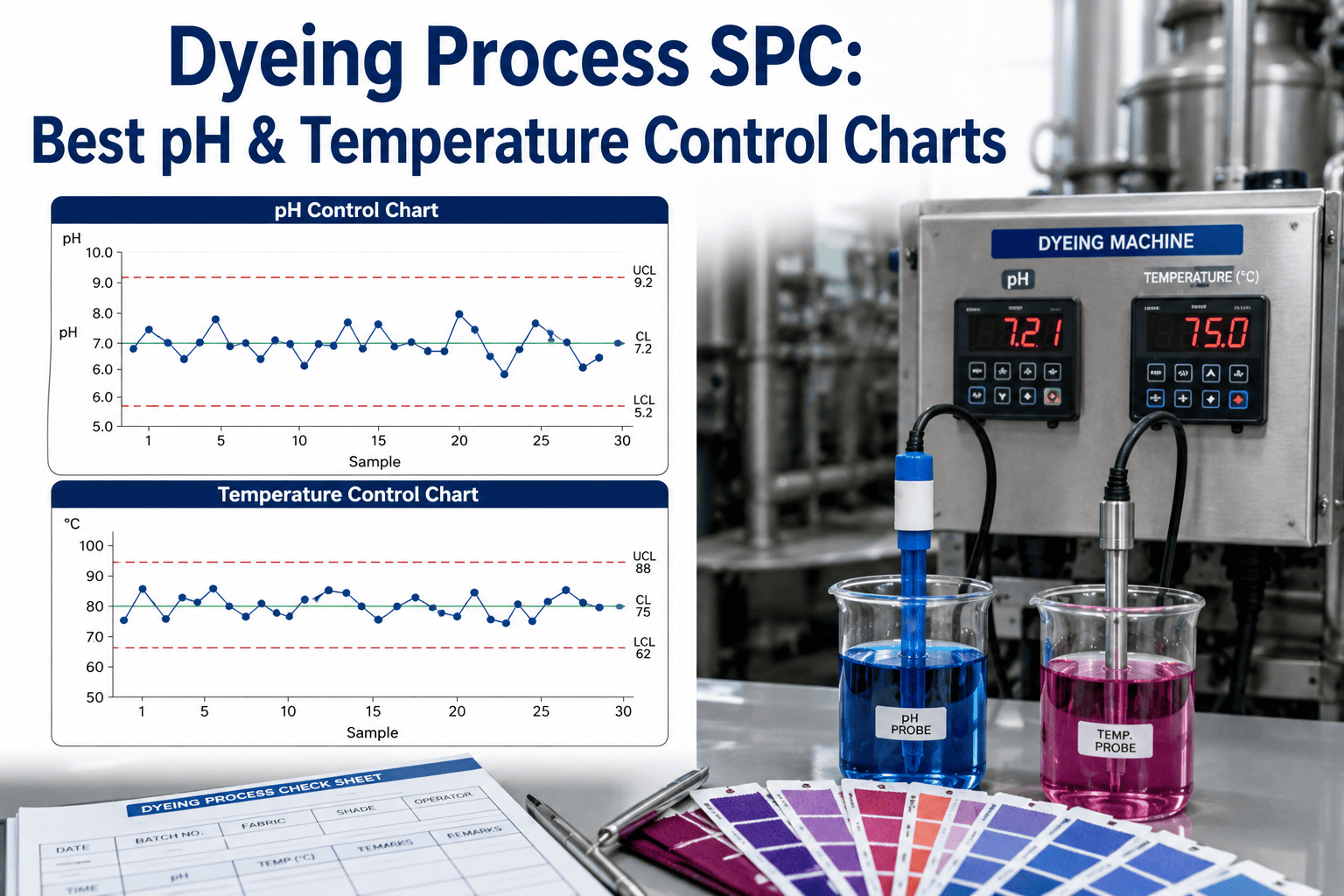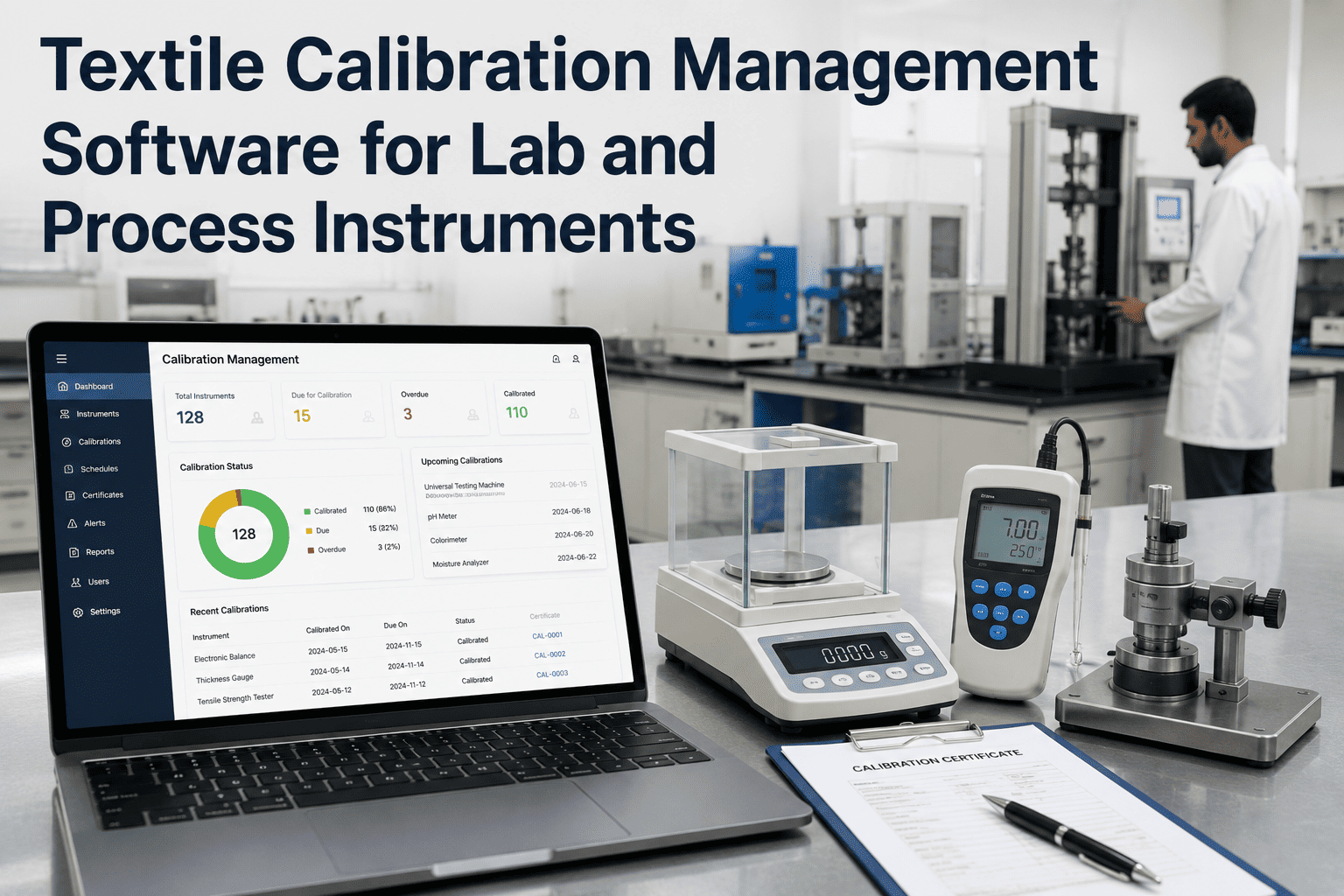
A dyeing batch that goes wrong rarely fails all at once. It drifts: a temperature ramp that runs a few degrees fast, a pH reading that wanders outside the recipe band, a chemical dosing step logged slightly late. Any one of these alone might not ruin the batch, but a mill checking temperature on one chart, pH on a separate log, and dosing on a paper sheet has no way to see them drifting together until the shade comes out wrong at inspection. Process monitoring that tracks temperature, pH and recipe compliance together, in real time, catches the combination before it becomes a rejected batch. Dyeing and finishing teams rethinking this visibility can see temperature, pH and recipe compliance tracked together live before the next batch runs.
Textile Dyeing Process Monitoring for Textile Manufacturing
Temperature, pH and recipe compliance tracked together, batch by batch, instead of across separate logs.
Why Separate Logs Miss the Combination
Each parameter can look acceptable on its own chart while the combination of small drifts still ruins the batch.
Temperature, pH and dosing records live in separate systems that nobody cross-checks in real time.
A drift is usually only noticed once the finished shade fails inspection at the end of the batch.
Confirming dosing happened at the right step and time depends on a paper log being filled in correctly.
Tracking all three parameters on one timeline is what surfaces the combination of small drifts before the batch is lost.
What Each Parameter Actually Protects Against
Each of the three parameters guards against a different failure mode, which is why all three need tracking together.
Temperature Ramp
Too fast a ramp or an off-target hold affects dye uptake and shade consistency.
pH Band
pH outside the recipe's band changes how the dye bonds to the fabric.
Dosing Sequence
Chemicals added out of order or late in the cycle can shift the final shade.
Hold Time
A shortened or extended hold at target temperature affects dye exhaustion and levelness.
Check a Recent Batch Against This Monitoring Model
Book a 30-minute session and bring a recent batch record. iFactory AI will show where temperature, pH and dosing may have drifted together.
Separate Logs vs Unified Monitoring
The practical difference shows up at the exact moment a batch starts to drift.
| Factor | Separate Logs | Unified Monitoring |
|---|---|---|
| Cross-parameter view | Not available without manual cross-check | All three shown on one timeline |
| Drift detection | Usually after the batch completes | Flagged as the drift happens |
| Dosing verification | Paper log, manually checked | Automatically logged and timestamped |
| Root cause after rejection | Reconstructed from separate records | Already visible on one combined record |
What iFactory AI Supports
Monitoring runs continuously from live sensor and process data, not a post-batch review.
Combined Parameter Timeline
Temperature, pH and dosing are displayed together on one timeline per batch.
Live Drift Alerts
A parameter moving outside its recipe band is flagged while the batch is still running.
Automatic Dosing Verification
Dosing steps are logged and checked against the recipe sequence automatically.
Batch Record Export
A complete combined record exports for quality review or customer documentation.
iFactory AI connects to existing dyeing machine sensors and recipe systems. Scope covers data integration, monitoring model setup, team training and ongoing support.
Expert Review
The batches we see rejected most often were not caused by one parameter being badly out of range. They were caused by two or three parameters each drifting slightly, in a combination that no single chart would have flagged as a problem on its own.
Dosing sequence verification is the piece mills most often skip when they first set up monitoring, usually because temperature and pH feel like the obvious things to track. In practice, a mistimed dosing step is one of the more common root causes behind a shade that comes out wrong.
Frequently Asked Questions
Does this require new sensors on our dyeing machines?
Many machines already have temperature and pH sensors that can be connected to, and dosing verification can often use existing chemical dosing system logs. New sensors are added only where current monitoring is genuinely missing. Ask about your current sensor setup in a working session.
Can recipe bands be set differently for each fabric and color?
Yes, temperature, pH and dosing tolerance bands are configured per recipe, since a deep shade and a pastel shade can have very different acceptable ranges. Ask support about configuring recipe-specific bands for your product range.
What happens when a drift alert fires mid-batch?
The operator is alerted immediately with the specific parameter and the size of the drift, giving them the chance to correct it before the batch continues, rather than discovering the issue only at final inspection. See a mid-batch alert in a live session.
Can this data support a customer quality audit?
Yes, the combined batch record exports in a format suitable for customer or internal quality review, showing temperature, pH and dosing compliance together rather than three separate records. Contact support for a sample export format.
How long before the monitoring model is tuned to our recipes?
Most mills have recipe bands configured and validated within six to nine weeks, depending on how many distinct recipes need their own tolerance settings. Book a session to estimate your own timeline.
Catch the Combination of Drifts Before the Shade Does
iFactory AI tracks temperature, pH and recipe compliance together, batch by batch. Book a walkthrough on your own process data.