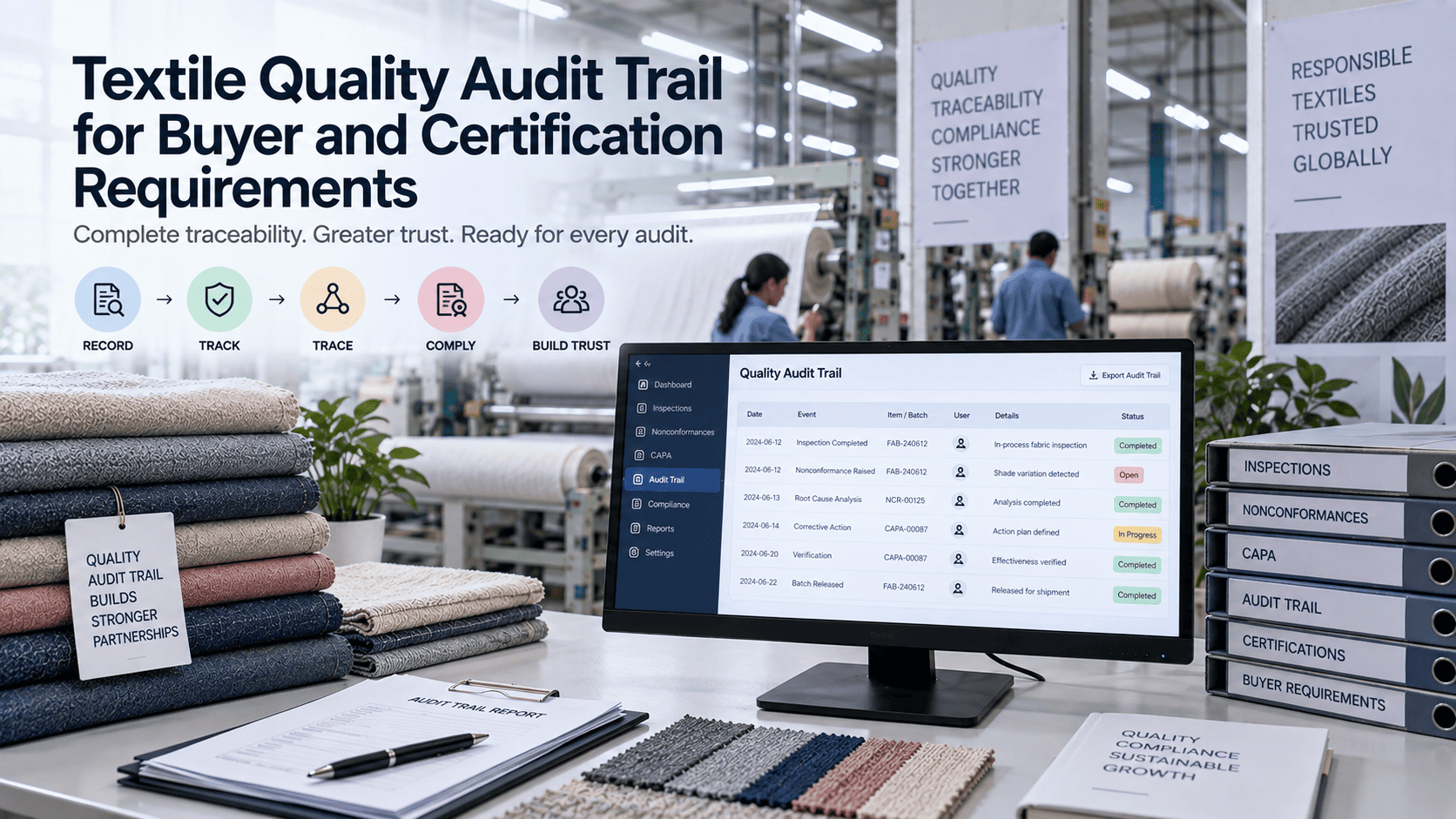
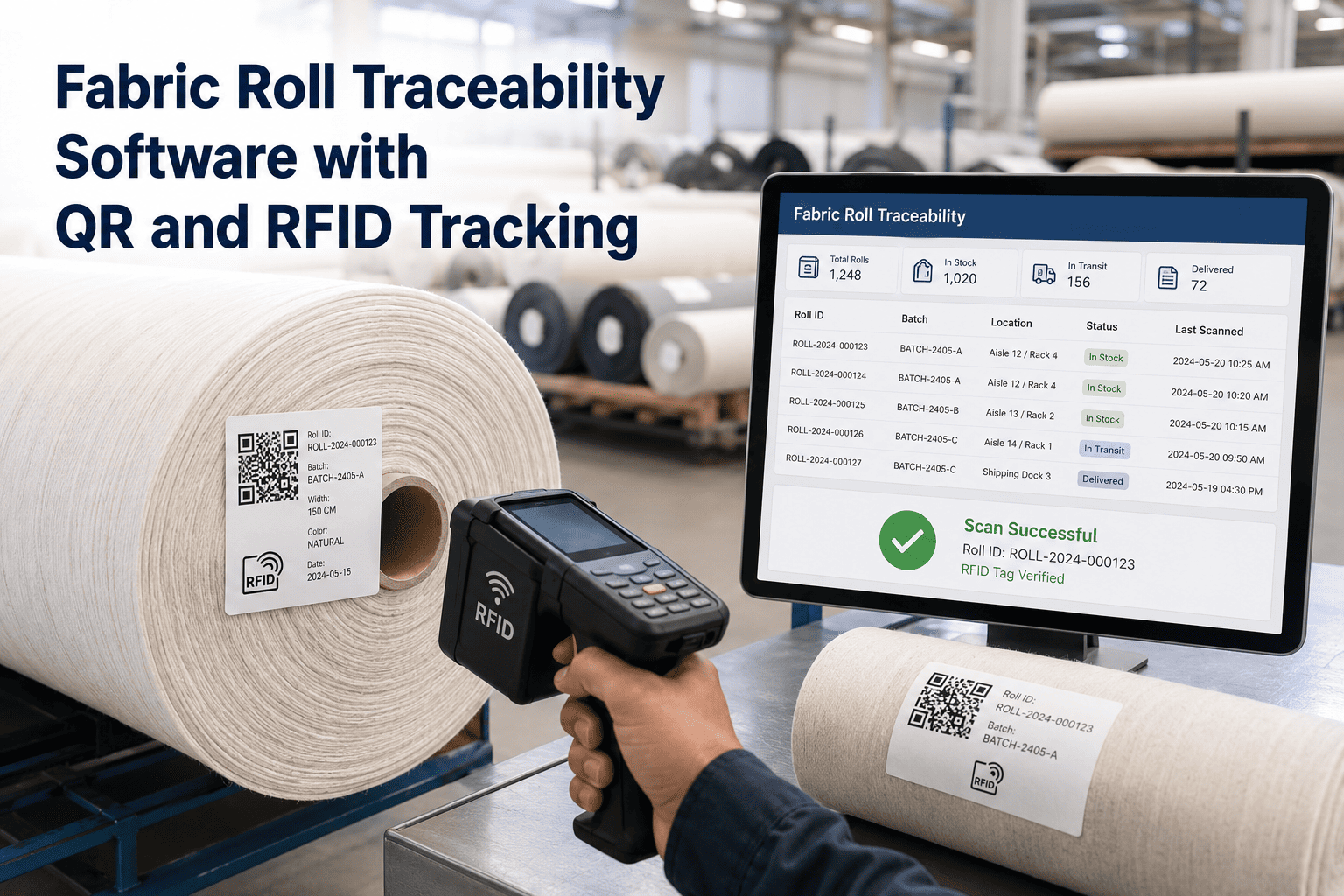
A textile mill’s quality data is not missing — it is scattered. The loom stop log is on paper in the weaving shed. The 4-point inspection sheet is in Excel. The lab test PDF sits in a shared drive. The AQL audit report is in the QA head’s inbox. The customer complaint is in the merchandiser’s email. The CAPA is in a bound book. Every one of these exists. What does not exist is a single query that answers the buyer’s next question — which specific rolls from Tuesday’s shift on Loom 14 went into the shipment that got claim-noted last week. A textile QMS is one unified record connecting the sources you already have.
iFactory / Textile quality management
One Quality Record per Lot — Roll to Loom to Shift to CAPA
A textile QMS overlay that ingests loom stop logs, 4-point inspection sheets, lab test PDFs, AQL audit reports, and CAPA records into one queryable quality history per roll, per lot, per shipment.
↓
One quality record per lot
Roll → line → shift → CAPA → shipment
ASTM D5430
4-point system baseline
AQL 2.5
major defects standard
One record
per roll · lot · shipment
The Problem on the Floor
A textile QMS is not the same as a discrete-manufacturing QMS. Textile defects are graded on the 4-point system (ASTM D5430) where defect length in inches drives penalty points and any single flaw is capped at four points. AQL 2.5 is standard for major defects on apparel-bound fabric. Lab tests cover GSM, shrinkage after wash cycles, colorfastness (AATCC 61 wash, AATCC 8 crocking), and pilling. Buyer complaints often arrive as a photo of a defect on a finished garment weeks after shipment. Connecting that photo back to a specific fabric roll, from a specific loom, on a specific shift is the QMS discipline most mills cannot execute in under a day.
Where the Record Actually Breaks
The quality record breaks in exactly the same places at almost every mill. The specifics differ; the pattern is universal.
Paper loom logs
Weaver marks a stop on the shift log. The reason (broken warp, weft break, sizing issue) is written but never enters any digital system. The pattern per loom per shift is invisible.
Excel 4-point sheets
Fabric inspector fills a 4-point spreadsheet per shift. Each shift is a separate file. No trend across shifts. A rising defect signature on Loom 14 only surfaces when a customer complains.
Lab PDF results
Lab issues GSM, shrinkage, and fastness results as PDFs. Attached to an email. Filed in a shared drive. Not linked to the specific rolls the tested sample was cut from.
CAPA notebook
Corrective action recorded in a bound notebook. Root cause noted. Nobody checks whether the same failure repeats three months later, because the notebook doesn’t search.
What Good Looks Like on the Line
A working textile QMS holds four disciplines together — the defect scoring at inspection, the lab-test integration, the buyer-audit trail, and the CAPA loop-close — all against the same unified lot record.
4-Point Scoring
Every roll scored against ASTM D5430 at inspection, with the defect type (holes, slubs, broken ends, floats, stains) classified and points-per-100-sq-yards computed automatically.
ASTM-compliant at capture
Lab Integration
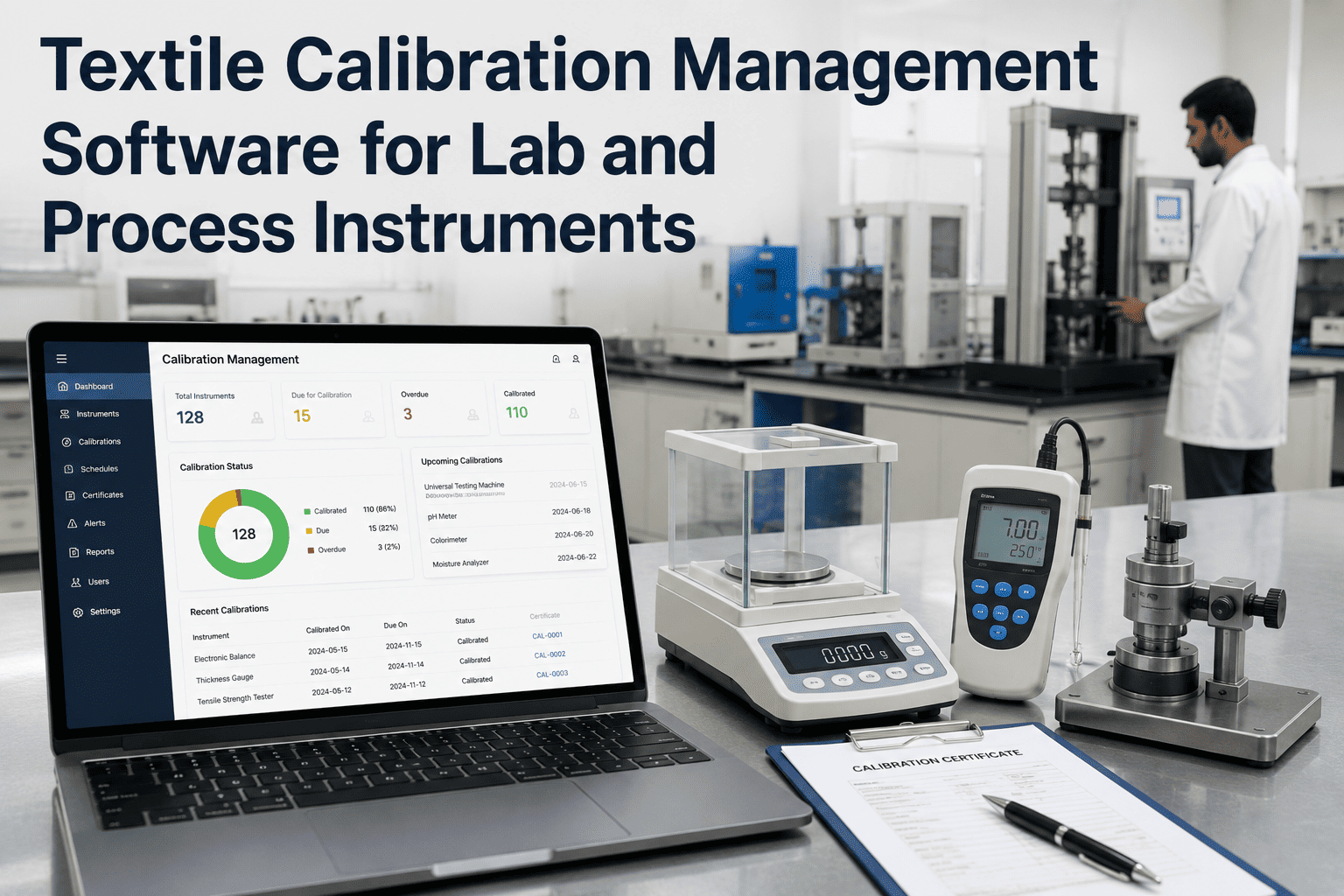
Lab test results (GSM, AATCC 61, AATCC 8, pilling, tensile) ingested directly from the LIMS and linked to the specific rolls the sample was drawn from.
Lab data linked
AQL Audit
AQL 2.5 sampling per shipment lot with the sample plan (single, double, or tightened) applied per ISO 2859-1 and results held against the lot for buyer review.
ISO 2859-1 sampling
CAPA Loop-Close
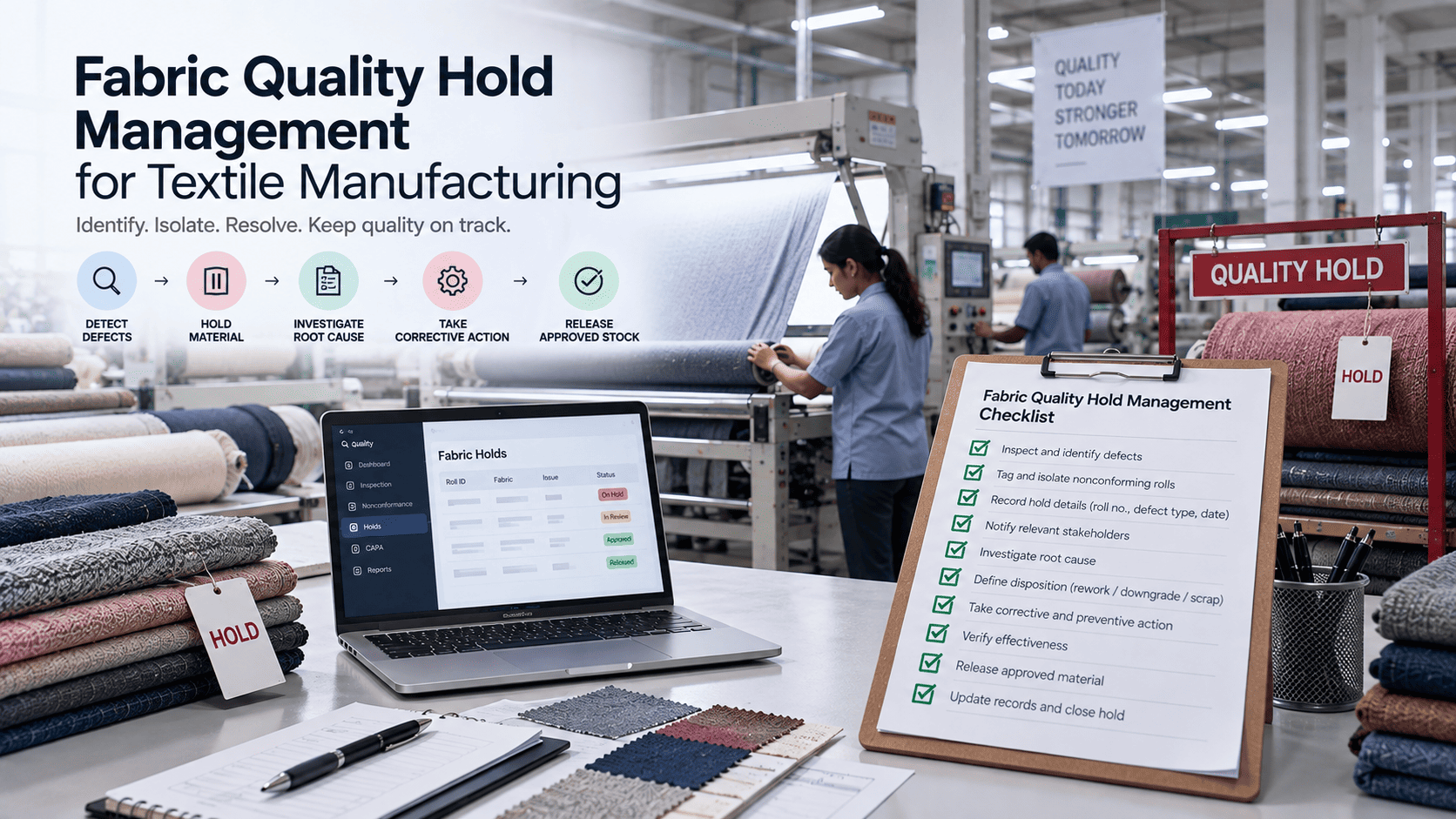
Every defect above the acceptable threshold triggers a CAPA with root cause, corrective action owner, effectiveness verification date — and the effectiveness check is enforced, not optional.
Closure verified
How iFactory AI Fits
iFactory AI works as an overlay on the systems you already run — no replacement of your ERP, LIMS, or existing shop-floor data collection. It sits above them, ingests the fragmented records, and presents one unified quality view.
Roll-Level Record
Textile QMS Layer
Every roll’s 4-point score, lab tests, loom of origin, shift, and downstream shipment consolidated into one queryable record.
Loom & Shift Trend
QMS + MES
Defect rate per loom per shift trended over time — a rising signature on one loom or one shift surfaces before it becomes a buyer complaint.
AQL Audit Package
QMS Layer
Shipment-ready AQL audit package with sample plan, defect classifications, and photographic evidence — the artefact the buyer’s QA lead actually reviews.
CAPA Register
QMS + Compliance
Every CAPA with root cause, action, owner, effectiveness date, and closure evidence — the register that answers repeat-failure questions instantly.
Test the buyer-audit clock at your mill. Take one claim from last quarter and ask how long it takes to produce the specific rolls, looms, shifts, and inspection records tied to that shipment. If the answer is more than half a day, the fragmentation is costing every claim negotiation. Book a QMS assessment — we’ll walk one claim live.
12-Week Rollout on One Line
One weaving hall, one product family, twelve weeks. The pilot is scoped to prove that the unified quality record actually assembles under buyer-audit pressure — not to prove that QMS software exists.
Weeks 1–2
Data Source Audit
Inventory every quality data source — loom logs, inspection sheets, lab PDFs, AQL reports, CAPA book. Identify the authoritative source for each event type.
Weeks 3–4
Ingest & Link Rules
Configure ingestion for the identified sources. Define link rules — how a lab PDF joins to specific rolls, how a CAPA joins to a defect pattern. QA lead validates.
Weeks 5–8
Live on One Line
Unified quality record active for the pilot product family. Every roll, lot, and shipment carries its full history. Team runs live queries against last month’s data.
Weeks 9–12
Buyer Audit Test
QA team runs a mock buyer audit against the pilot data. Retrieval time and record completeness measured against the pre-pilot baseline. Rollout scope decided.
Who Owns the KPI
Textile QMS crosses weaving, inspection, lab, QA, and merchandising. Each function needs a specific number on the KPI board or the unified record devolves into someone’s spreadsheet.
Weaving Supervisor
Points per 100 sq yd by loom
Owns the loom-level defect trend — a rising per-loom score means warp, weft, sizing, or reed condition needs attention before it becomes a shipment reject.
Inspection Head
4-point pass rate by shift
Owns the inspection discipline — pass rate variation by shift signals inspector calibration, lighting, or fatigue issues that need training or process fixes.
QA Head
Audit-record retrieval time
Owns buyer-audit readiness — the time to produce a full quality record for any shipment on demand. Under half a day is the working target.
Merchandiser / Sales
Buyer claims won on evidence
Owns the commercial outcome — the share of buyer claims defended with unified quality evidence rather than settled for lack of a record.
FAQ
Do we need to replace our current inspection sheets and lab system?
No — the overlay ingests what you already have. Your 4-point Excel sheets, your lab’s LIMS PDFs, your loom log entries, and your CAPA records all get pulled into the unified view without changing how your inspectors, lab techs, or weavers work day to day. The change is that a QA head can now query across all of them in one place. Over time you may choose to digitize some sources further (paper loom logs into tablet capture, for example) but that decision is driven by the pilot findings, not by an upfront rip-and-replace.
How does this handle 4-point scoring specifically?
The system enforces the ASTM D5430 rules at capture — defect length in inches (or millimetres) drives the 1/2/3/4 point classification, no single defect exceeds 4 points, and total points are normalized per 100 square yards. Defect classes (holes, slubs, broken ends, floats, stains) are captured against a defined list. When the inspector logs a defect, the point count is computed automatically, and the roll grade against your predefined acceptance threshold (typically 20-40 points per 100 sq yd depending on end use and buyer) is written to the roll record.
Book a demo to see 4-point scoring on your own defect classes.
Can it handle multiple simultaneous buyer standards on the same production line?
Yes — this is a common case. One weaving hall may produce for a buyer with a 20 point/100 sq yd threshold, another with 28 points, and a third with a stricter tightened AQL. The system holds each buyer’s standards separately, applies them per shipment lot based on which buyer the lot is destined for, and produces the appropriate audit package per buyer. Rolls that pass one buyer’s standard but fail another are flagged for allocation decision — instead of being discovered at packing.
Stop assembling the quality record after the buyer complaint arrives.
Unify One Product Family’s Quality Record End-to-End
Bring one weaving hall, one product family, and one buyer complaint from last quarter. We’ll show the loom log, 4-point sheet, lab PDF, and CAPA record joined into one query — and audit where the record breaks today.