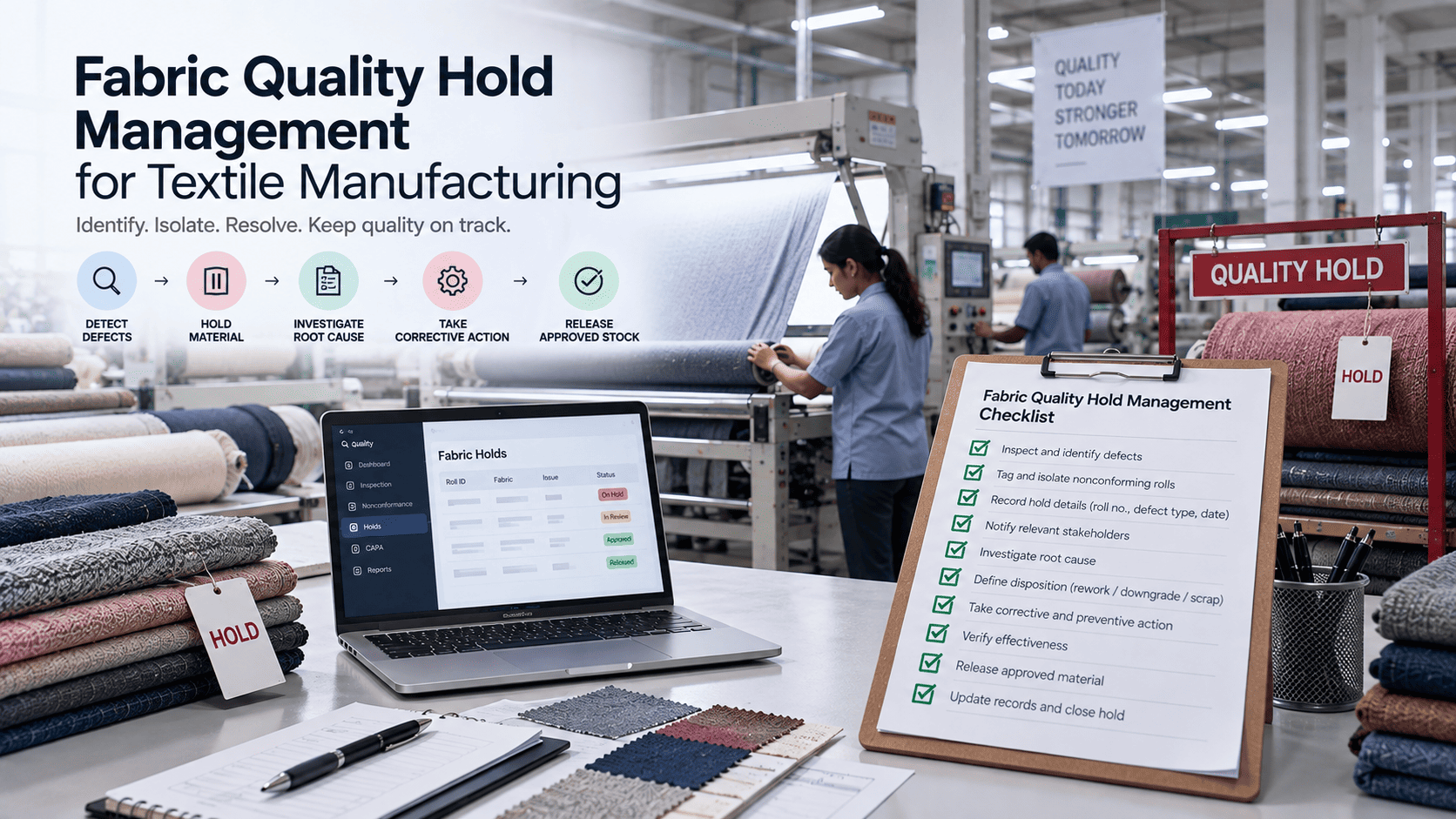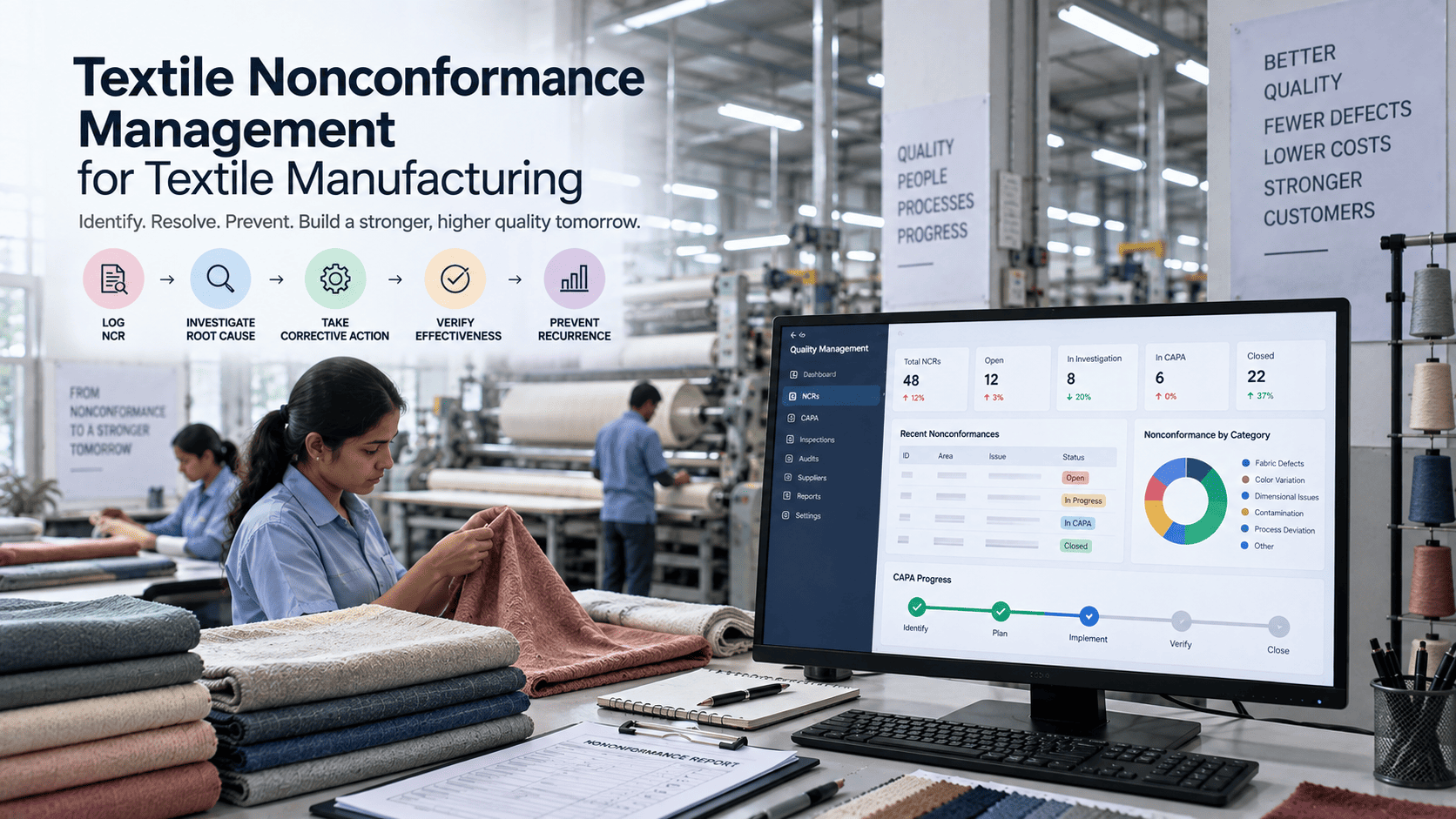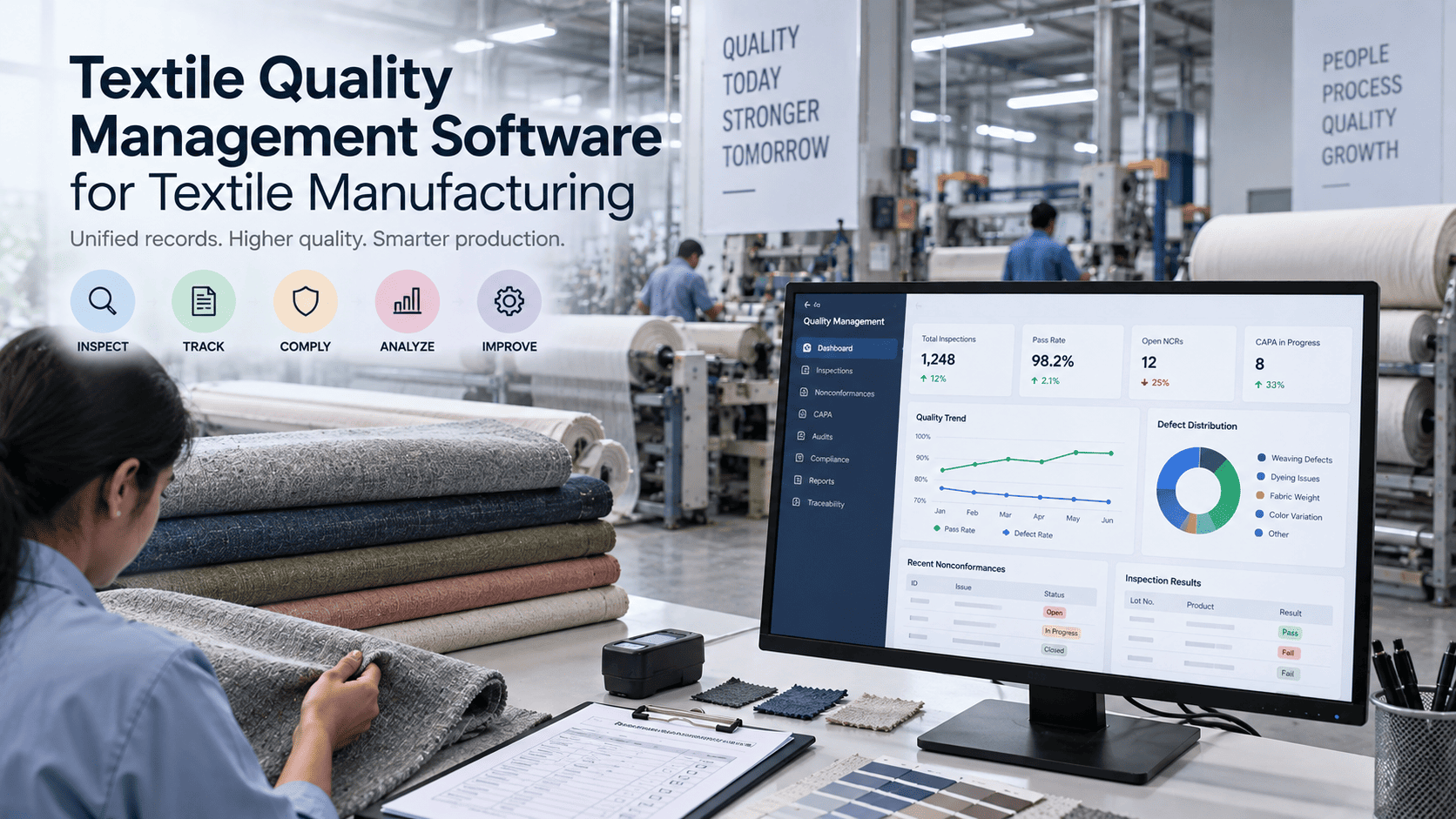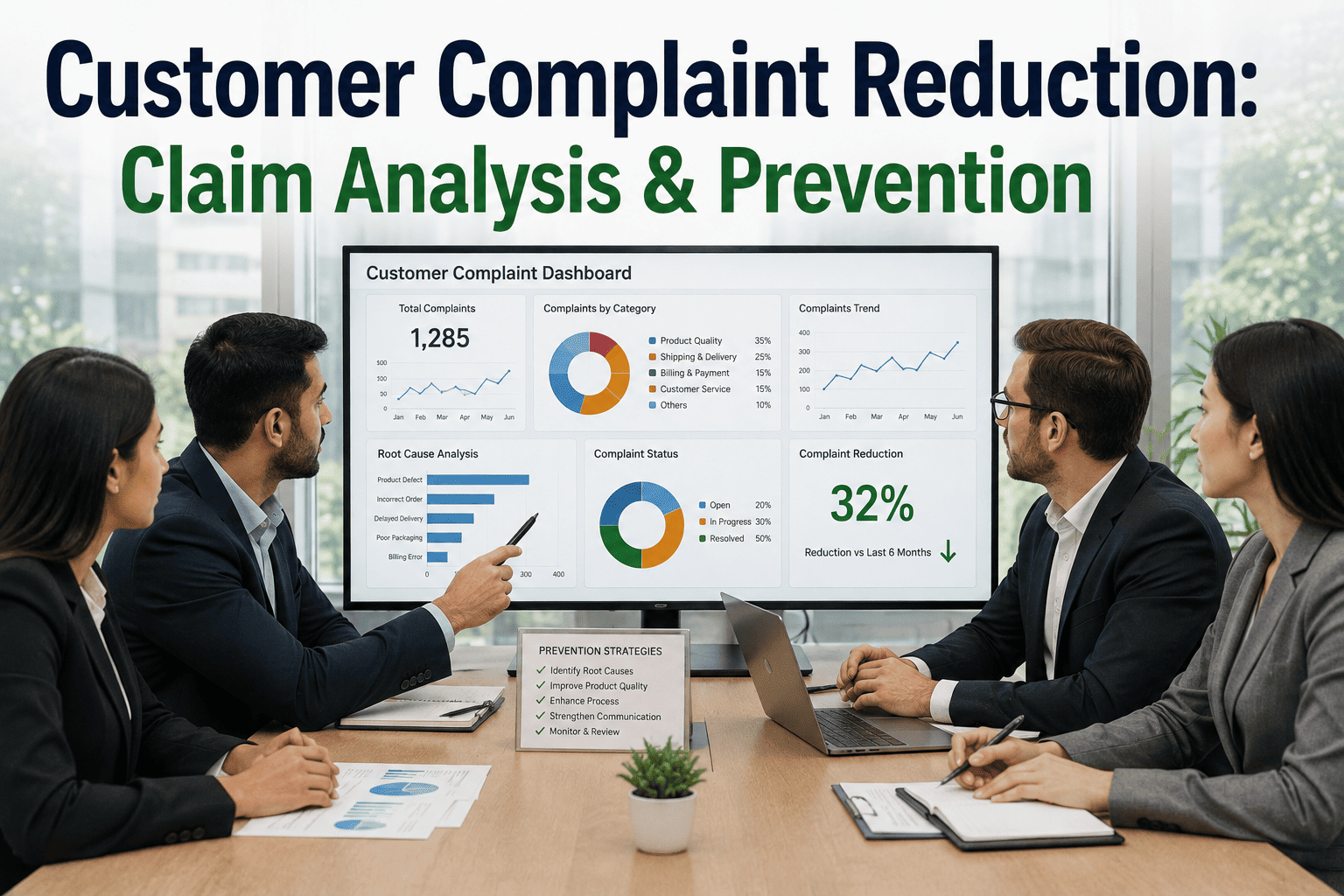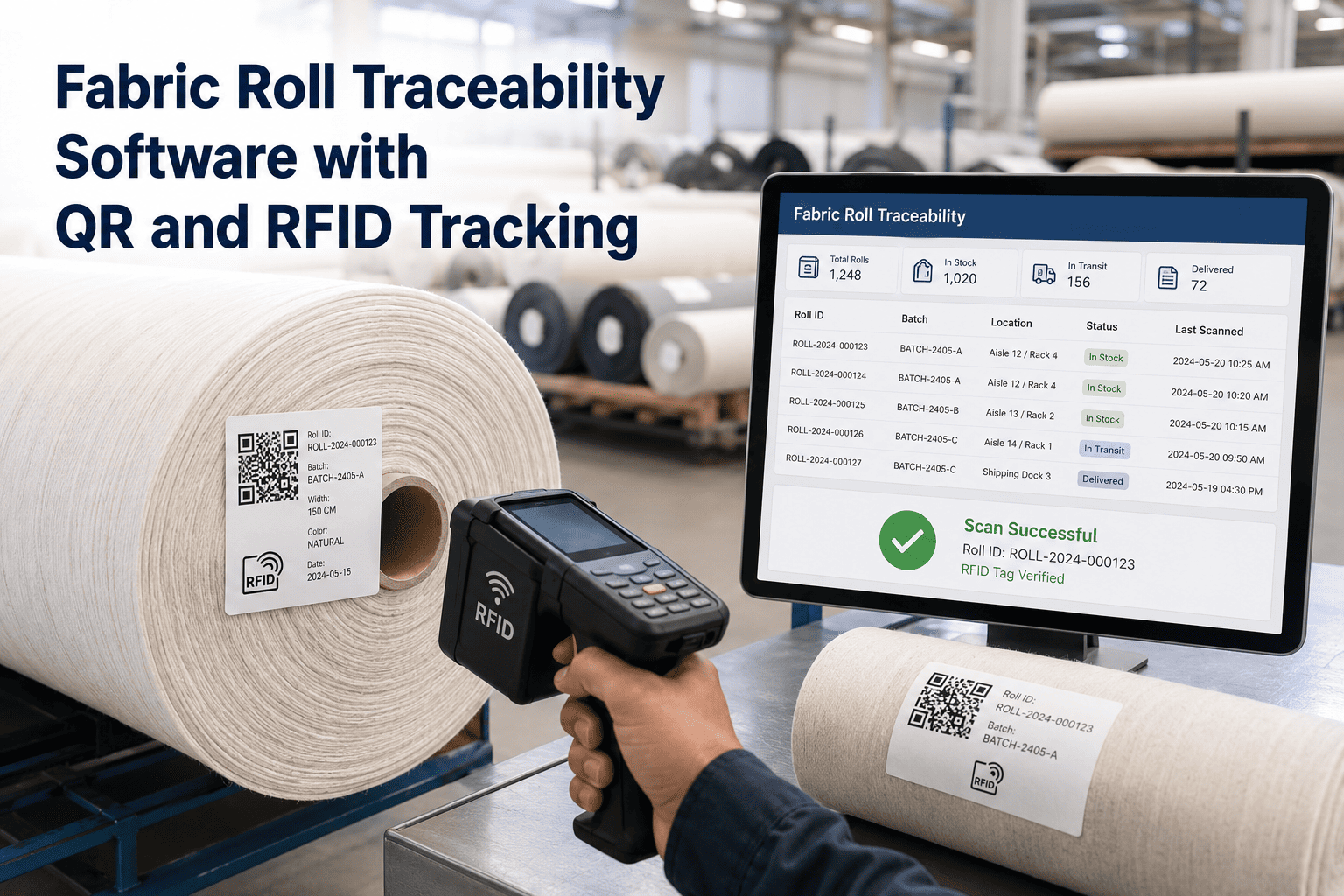
A customer claim on a fabric roll rarely arrives with a clean explanation attached — it shows up as a complaint about shade variation, strength failure or a dimensional defect, and it's on the quality team to trace that symptom back through inspection records, the dye recipe, the machine and the shift that produced it, often weeks after the roll left the mill. Without a system linking claims directly to lot, roll and process data, root cause investigation turns into an email chain and a filing cabinet search that rarely finishes before the customer relationship takes damage. AI-supported root-cause and CAPA management gives quality teams the traceability to answer "why did this happen" with evidence instead of a best guess, and to prove the corrective action actually worked. If your last claim investigation took longer than the customer's patience allowed, Book a Demo to see claim-to-root-cause traceability built for textile manufacturing.
Trace Every Claim Back to Its Actual Cause
iFactory links customer claims directly to lots, rolls, recipes, machines and inspection records — turning root-cause investigation from a search into a lookup, and CAPA tracking from paperwork into a closed loop.
Why Claim Investigations Take So Long in Textile Mills
A textile claim investigation typically starts with a physical roll or garment and needs to work backward through several disconnected systems — production logs to find which machine and shift made it, a separate quality inspection record to check what was caught at the time, and a recipe or process card to understand what parameters were actually used. When these live in different places, on different formats, maintained by different people, the investigation itself becomes the bottleneck, and by the time root cause is identified, the affected lot may already be fully shipped and distributed.
The cost of a slow investigation compounds beyond the original claim. Without fast root-cause identification, a systemic issue — a miscalibrated sensor, a drifting dye recipe, a worn machine part — keeps producing defective output while the investigation is still underway, turning one customer complaint into a much larger recall or credit note exposure.
From Claim to Closed CAPA: The Full Trace Path
Claim Logged
Customer complaint is entered with roll or lot reference, defect description and supporting evidence such as photos or lab results.
Traceability Pulled
The system automatically pulls the linked lot's full production record — machine, shift, recipe, inspection results and any prior in-process flags.
Root Cause Identified
Quality engineers investigate against the assembled evidence rather than starting from scratch, cutting investigation time significantly.
Containment Executed
Any other lots sharing the same root cause condition are flagged automatically, so containment happens before further shipment, not after.
CAPA Tracked to Closure
Corrective and preventive actions are assigned, tracked against a due date, and verified effective before the claim record is closed.
The value of this path is not just speed — it's confidence. When a claim response tells a customer exactly which shift, machine and recipe parameter caused the defect, and what specific corrective action closes the gap, it demonstrates a level of control that a generic apology letter never can. Quality directors under pressure to protect key accounts can Book a Demo to see a full claim trace built against a sample lot.
See How Fast a Real Claim Traces Back to Root Cause
Bring a recent claim — we'll show you the full lot, recipe and machine trail your team would have had in minutes, not days.
Common Root Causes and How Traceability Catches Them
| Defect Type | Frequent Root Cause | Traceability Signal |
|---|---|---|
| Shade Variation | Dye recipe drift or inconsistent dyeing parameters between batches | Recipe version and process parameter log linked to lot |
| Strength Failure | Yarn quality issue or incorrect twist parameter at spinning | Spinning machine settings and yarn lot traced to fabric roll |
| Dimensional Defect | Finishing machine calibration drift or incorrect tension setting | Machine calibration history linked to finishing run |
| Contamination | Foreign fiber or cross-contamination during production or handling | Inspection checkpoint results tied to specific roll and station |
CAPA That Actually Gets Verified, Not Just Closed
The most common failure in traditional CAPA management is not identifying the corrective action — it's verifying that the action actually worked before marking the record closed. iFactory requires effectiveness verification as a distinct step, checking that the same defect type has not recurred for a defined period before a CAPA can be closed, and automatically reopening the record if it does. This single change addresses the root cause of most repeat claims: corrective actions that were assigned, documented and closed, but never actually confirmed to solve the underlying problem.
Frequently Asked Questions
How does the system link a customer claim back to specific production data?
Every roll or lot carries a traceability code established during production, connecting it to the machine, shift, recipe version and inspection records generated at the time it was made. When a claim references that lot or roll number, the system automatically retrieves the full linked history rather than requiring a manual search across separate records.
Can we manage claims and CAPA for multiple customers and product lines in one system?
Yes — the platform is designed to handle claims across every customer, style and product line in one unified view, while still allowing filtered reporting by customer or product category for account-specific review meetings and quality performance discussions.
What counts as effective verification before a CAPA can be closed?
Effectiveness verification typically means confirming that the specific defect type has not recurred across a defined number of subsequent lots or a defined time period after the corrective action was implemented. The exact verification window can be configured per defect category based on production frequency, and details can be reviewed through Support.
How quickly can related lots be identified once a root cause is confirmed?
Once a root cause condition is confirmed — such as a specific machine, shift or recipe parameter — the system searches production records for all other lots sharing that same condition and flags them for containment review immediately, rather than relying on manual cross-referencing that can miss affected lots entirely.
Does this integrate with our existing inspection and lab testing records?
Yes — in-process inspection results and lab test data already captured in your quality workflow feed directly into the same traceability chain, so investigators see inspection history alongside production data without switching between separate systems. Book a Demo to see this integration with your current inspection process.
Turn Every Claim Into Evidence, Not Just an Apology
Customer trust in a textile relationship is built on how well you handle the claims that do happen, not just how few of them occur. iFactory's claim-to-CAPA traceability gives your quality team the evidence to identify root cause quickly, contain related lots before they ship, and prove — with verified data — that the corrective action actually solved the problem. That is the difference between a claim response that reassures a key account and one that quietly erodes it.
Ready to Close the Gap Between Claim and Cause?
See how iFactory connects your quality, production and customer claim data into one traceable record.