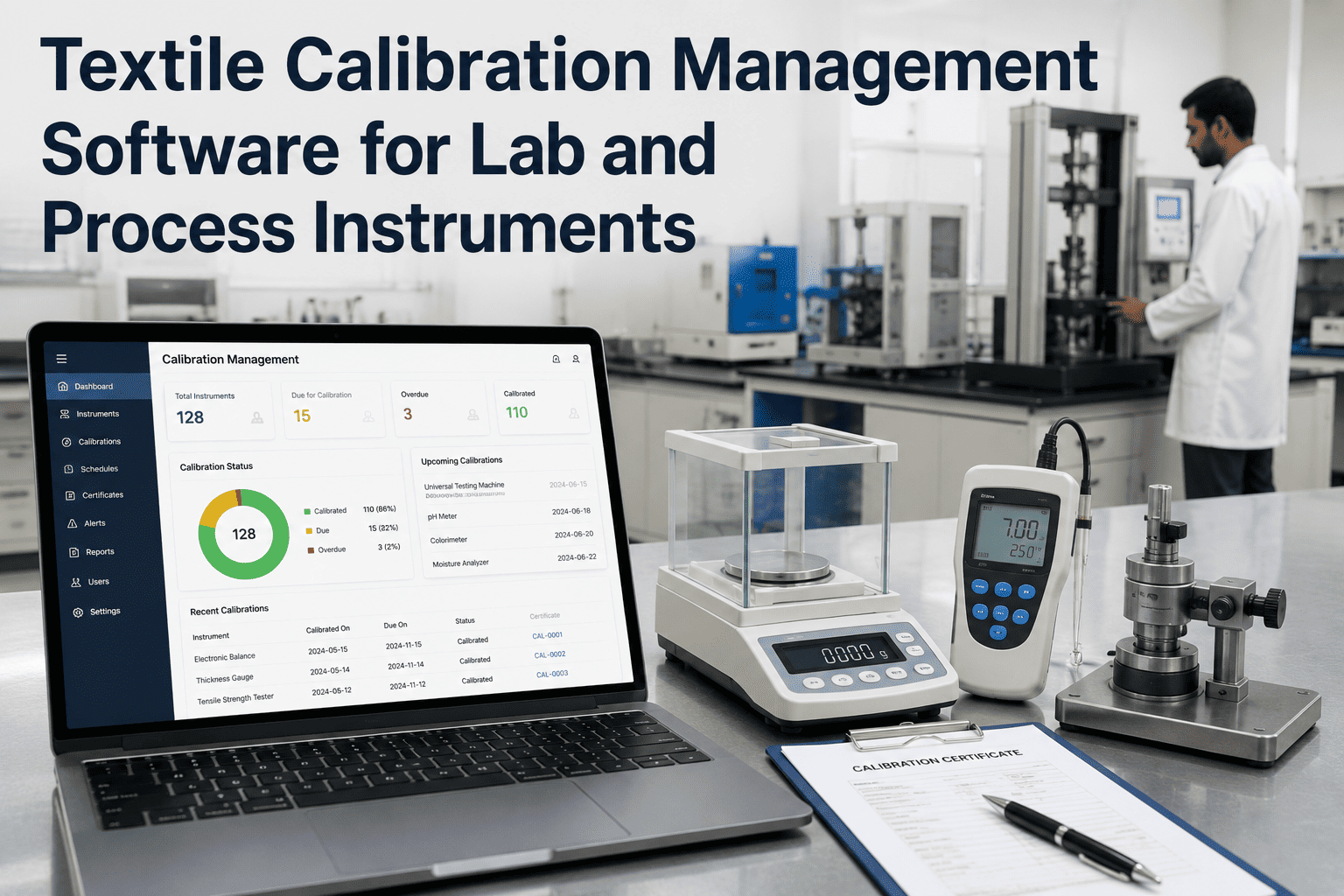
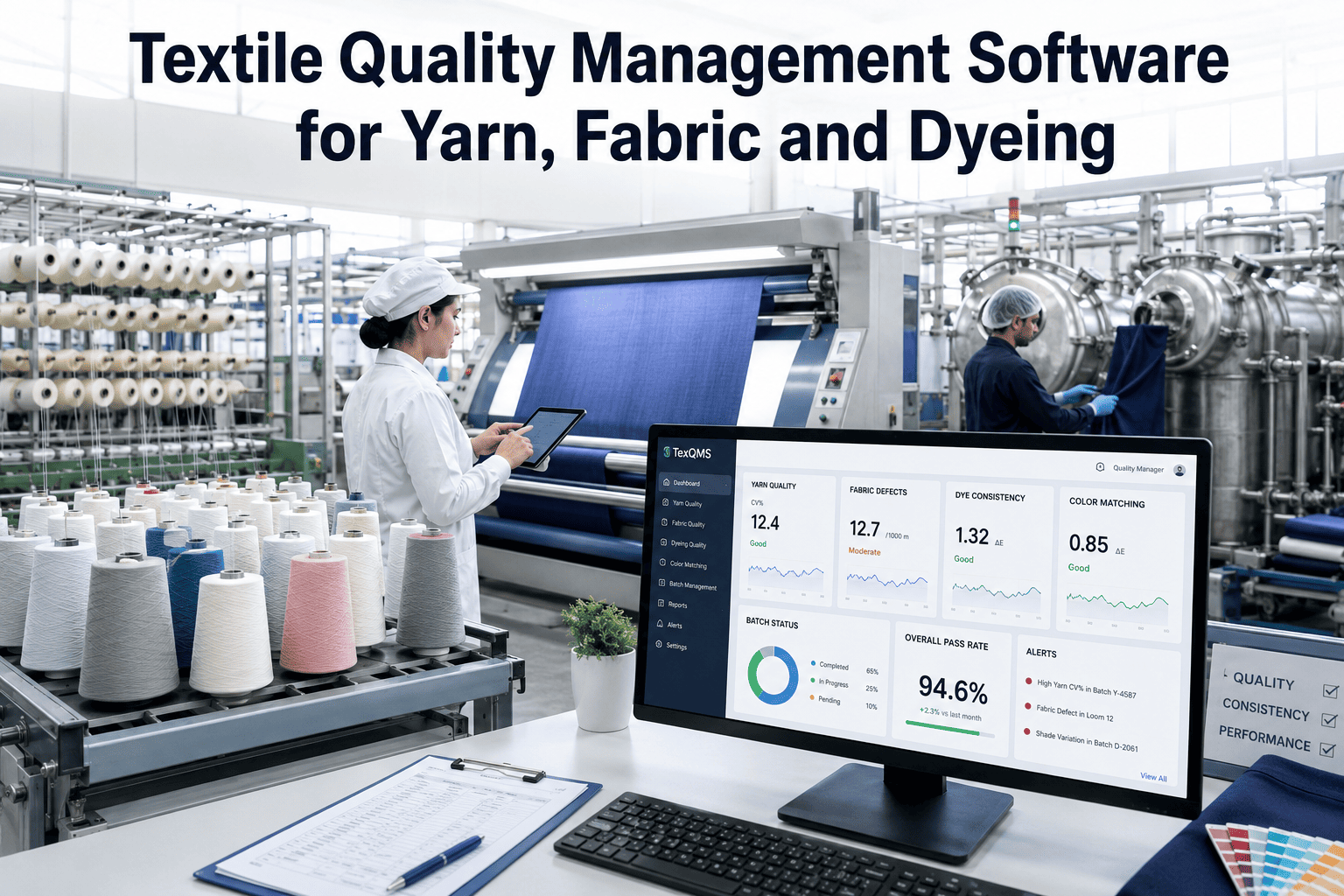
A test report is only as credible as the laboratory system behind it, and buyers have stopped taking that credibility on faith. Large enterprise brands with strict compliance programs now routinely require test reports from ISO 17025 accredited laboratories before goods clear their supply chain, which means accreditation has shifted from a competitive advantage to a baseline requirement for serious textile exporters. The accreditation process itself takes 6 to 12 months to complete, and measurement uncertainty calculations remain one of the most common reasons initial assessments stall. This article walks through what ISO 17025 actually demands of a textile testing lab — proficiency testing, measurement uncertainty, and the quality management system underneath both. Book a demo to see lab quality data tracked continuously inside iFactory.
Quality Testing & Standards
ISO 17025 Lab Accreditation for Textile Testing
15 min read
114,600+
Laboratories accredited worldwide under the ILAC Mutual Recognition Arrangement as of March 2025
6-12 mo
Typical timeline to complete the full ISO 17025 accreditation cycle from start to certification
3 yrs
Standard validity period before full reassessment, with annual surveillance audits in between
700+
Proficiency testing providers accredited globally to support inter-laboratory comparison programs
What ISO 17025 Actually Tests For
ISO 17025 is not a documentation formality — it is a technical competence standard that examines whether a lab can consistently generate valid data under controlled conditions, using appropriate methods and qualified personnel. For a textile testing lab specifically, this means demonstrated capability across fiber composition analysis, colorfastness testing, tensile strength measurement, chemical substance screening, and dimensional stability assessment, each backed by calibrated equipment and a documented uncertainty budget.
The standard's clause structure covers the full chain from sample handling to final report. Clause 7.7 requires documented procedures for transporting, receiving, and storing samples. Clause 7.8 requires calibration labs to evaluate and report measurement uncertainty. Clause 7.9 covers internal quality controls — standard checks, replicate tests, blanks, and proficiency testing — to continuously monitor result consistency. Clause 7.10 defines the minimum content every test report must include, from method references to uncertainty statements. Clause 8 layers a management system requirement on top, closely paralleling ISO 9001 as adapted to a laboratory context.
Measurement Uncertainty: The Clause Labs Fail Most Often
Uncertainty of measurement is consistently one of the highest-frequency nonconformities cited in ISO 17025 assessments, and it is the gap that most undermines the practical value of a certificate of analysis. The standard requires labs to identify every significant source of uncertainty for each accredited method and provide uncertainty estimates in reports when a client needs them — not as a one-time calculation, but as a living figure. Start free trial to see measurement uncertainty tracking automated against your calibration schedule.
Common FailureMany labs calculate uncertainty once during initial method validation, document it, and never revisit the figure — even as reagent lots change, instruments age, analysts turn over, and new fabric matrices are added to the workload.
Review CadenceMost compliant laboratories establish annual review cycles for uncertainty evaluations, with additional reviews triggered by significant method modification, equipment replacement, or proficiency testing results suggesting the estimate needs adjustment.
What to VerifyBefore submitting samples, confirm the specific test method is listed within the lab's current accredited scope for the exact fabric matrix, and ask what measurement uncertainty applies to the figure appearing on your report.
Proficiency Testing and Inter-Laboratory Comparison
Accredited labs employ ISO 17043 proficiency testing programs to prove their results align with peer laboratories running the identical method on the same material. This is not a one-time check — it is a recurring requirement built into the ongoing surveillance cycle, and it is often the fastest way a lab discovers that a piece of equipment or a technician's technique has drifted from acceptable tolerance without anyone noticing internally.
Why Inter-Lab Comparison Matters
A lab can pass every internal quality check and still be wrong. Proficiency testing catches systematic bias that internal replicate testing cannot — because internal checks measure repeatability against the lab's own instruments, while inter-laboratory comparison measures accuracy against an independent external reference. Both are required; neither substitutes for the other.
The Accreditation Timeline: What Actually Takes 6 to 12 Months
What This Means for Buyers Reading a Textile Test Report
Most brands ask a testing lab the wrong question. "Are you ISO 17025 accredited?" is incomplete on its own, because accreditation applies to a defined scope of specific methods and matrices — not a blanket certification covering every possible test a lab performs. The more useful question is whether the specific test method used for your fabric is actually listed in that lab's current accredited scope, and what measurement uncertainty applies to the number on your report.
1Confirm the exact test method and fabric matrix appear within the lab's current accredited scope, not just a general accreditation claim
2Request the measurement uncertainty figure associated with the specific result on your certificate of analysis
3Check the accreditation certificate number against the issuing body's public registry rather than accepting the claim at face value
4Ask when the lab's most recent surveillance audit occurred, since accreditation between full reassessment cycles depends on maintaining annual compliance
Bring the Same Rigor to Your Lab's Quality Data
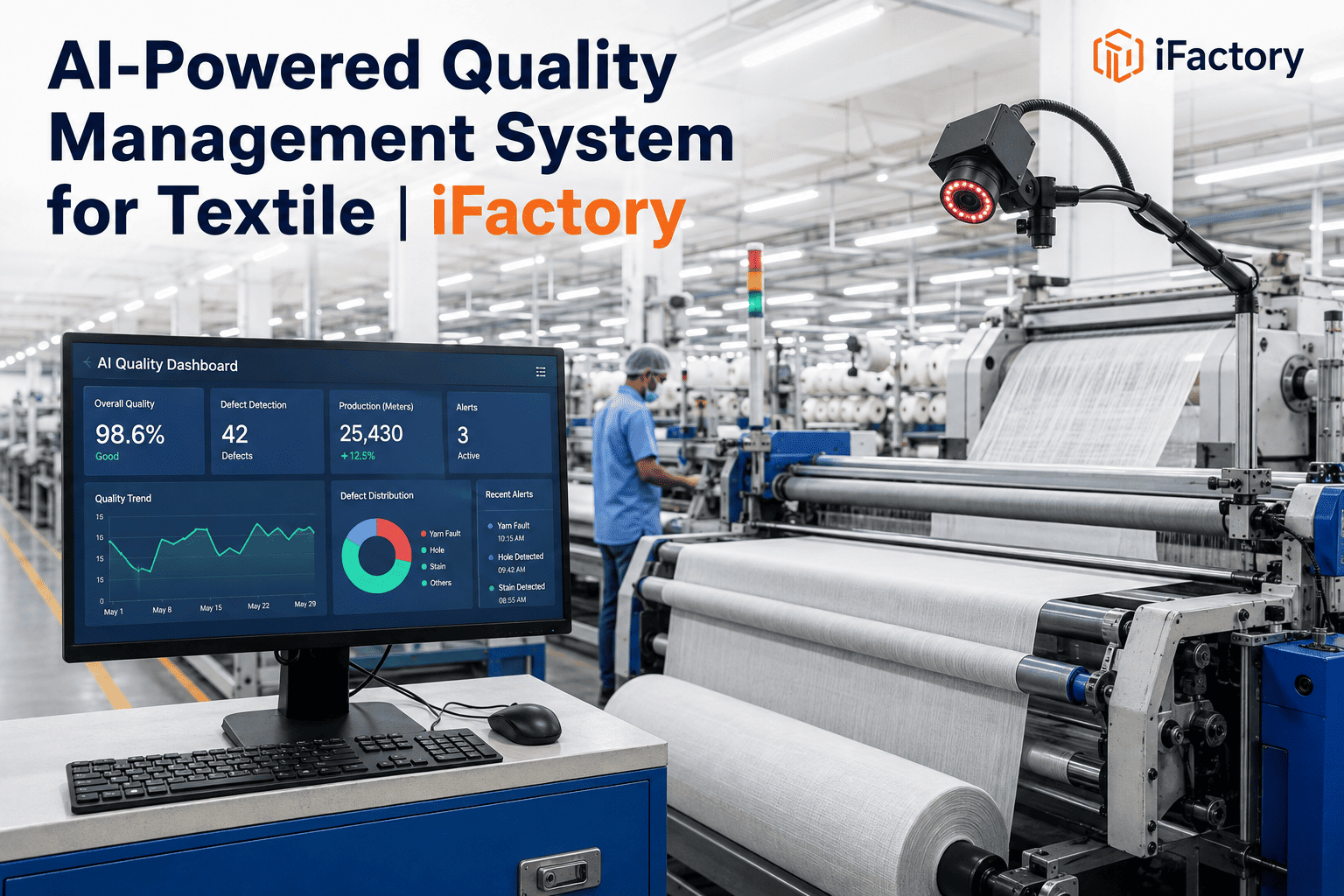
iFactory connects calibration schedules, proficiency testing results, and measurement uncertainty reviews into one continuous quality record — so accreditation surveillance audits find a documented trail instead of a scramble to reconstruct one.
Sector-Specific Testing Capabilities Accredited Textile Labs Typically Cover
Colorfastness
Resistance to fading and bleeding when subjected to washing, sunlight exposure, perspiration, and mechanical rubbing across repeated test cycles.
Tensile and Tear Strength
Physical durability testing including tensile strength, tear resistance, and abrasion resistance to confirm the fabric withstands normal use conditions.
Fiber Composition
Chemical analysis confirming actual fiber content matches labeled composition, a frequent compliance requirement for cross-border apparel shipments.
Dimensional Stability
Shrinkage assessment after wash cycles, confirming the fabric holds its specified dimensions within tolerance through the garment's expected care cycle.
Frequently Asked Questions
QWhat is the difference between ISO 17025 lab accreditation and a product certification like OEKO-TEX?
ISO 17025 accredits the laboratory itself — its competence, methods, equipment, and quality system — while product certifications like OEKO-TEX certify a specific fabric or garment against a defined set of chemical or safety criteria. A lab can be ISO 17025 accredited and still not hold any product-specific certification, and conversely, a product certification does not by itself confirm that the testing lab behind it operates under an accredited quality system. Buyers evaluating textile suppliers often need to check both separately, since one credential does not substitute for the other.
Book a demo to see how lab accreditation status is tracked alongside product certifications in one system.
QWhy do measurement uncertainty calculations cause so many labs to fail their initial ISO 17025 assessment?
Measurement uncertainty requires labs to identify and quantify every significant source of variation in a test method — instrument precision, environmental conditions, operator technique, sample preparation — and combine them into a defensible statistical estimate, which is a genuinely technical statistical exercise many labs have not previously had to formalize. Repeatability and reproducibility studies underlying this calculation require running the same test multiple times under controlled and varied conditions, which takes real time and instrument availability that competes with production testing volume. Labs that treat this as a one-time checkbox rather than an ongoing practice tend to see the estimate drift out of validity as equipment ages and methods evolve.
QHow often does accredited equipment need to be recalibrated to stay in compliance?
Calibration frequency depends on instrument type and usage intensity — major instruments like tensile testers, colorimeters, and shrinkage ovens are typically calibrated annually by an accredited or nationally traceable service provider, while high-use devices like fabric pilling testers or abrasion machines often receive quarterly or semi-annual intermediate verification between formal calibrations. Critical instruments such as electronic balances, pH meters, and spectrophotometers may require monthly internal checks or verification before each use in ISO 17025-certified labs. Any repair, software update, or physical relocation of an instrument triggers immediate recalibration before it returns to accredited use.
Start free trial to see calibration schedules tracked automatically across every instrument in your lab.
QDoes NABL accreditation carry the same weight internationally as accreditation from other national bodies?
NABL, India's National Accreditation Board for Testing and Calibration Laboratories, operates as a signatory within the broader ILAC Mutual Recognition Arrangement, which means NABL-accredited test results generally carry recognition equivalent to accreditation bodies in other signatory countries for the purposes of international trade and buyer compliance programs. This mutual recognition framework is precisely why exporters seek NABL accreditation specifically rather than an unaffiliated certification — it gives international buyers confidence the underlying competence assessment meets a globally consistent standard, not just a domestic one.
QWhat happens during the annual surveillance audits between full reassessment cycles?
Surveillance audits verify the lab continues to meet accreditation requirements between the three-year full reassessment cycles, typically reviewing a sample of accredited methods rather than the complete scope, along with checking proficiency testing participation, calibration records, and any changes to personnel, equipment, or procedures since the last assessment. Labs that maintain continuous documentation throughout the year — rather than reconstructing records just before an audit — generally move through surveillance visits with fewer findings, since assessors are specifically looking for evidence that quality controls operate continuously rather than being assembled reactively for the audit itself.
Make Accreditation Evidence a Byproduct of Daily Operations
iFactory keeps calibration logs, proficiency testing results, and uncertainty reviews continuously current across every accredited method — so the documentation trail an assessor needs already exists before the audit is even scheduled.