A textile mill's quality management system usually grew the way most legacy systems do — a grading spreadsheet here, a shade approval binder there, a claims log in someone's inbox, none of it talking to any of the others. That fragmentation isn't just inefficient, it's the reason a mill can pass its own internal review and still get blindsided by a buyer's final inspection, because nobody connected the in-line defect data to the shade approval record to the claims history in time to see the pattern forming. An AI-powered QMS built for textile specifically, not a generic manufacturing template with a textile logo on it, closes that gap by treating grading, shade, and claims data as one connected system rather than three separate ones. iFactory's textile QMS connects these threads from day one, not as a future integration project.
Your Grading Spreadsheet and Your Claims Log Are Describing the Same Problem. They Just Never Talk.
A textile-specific AI quality management system connects in-line defect grading, shade approval workflows, and buyer claims history into one intelligence layer, so a pattern shows up as a flag before it shows up as a rejected shipment.
Why a Generic Manufacturing QMS Doesn't Fit a Textile Mill
Most quality management platforms were built around discrete-unit manufacturing logic — a part either passes or fails, a defect either exists or doesn't. Textile quality doesn't work that way. Fabric is graded on a continuous scale, defects vary by severity and buyer-specific tolerance, and the same physical flaw can be acceptable for one order and a rejection cause for another depending on the buyer's approved standard.
This mismatch shows up most clearly at implementation time, when a mill tries to force fabric grading logic into a system built for assembling discrete parts. A generic platform expects to log a unit as pass or fail against one fixed specification; a textile mill needs to log points-per-hundred-yards against a scale that shifts depending on whose order the roll belongs to. Configuration workarounds can approximate this, but they add friction and maintenance overhead that a purpose-built textile system avoids by design rather than by patching around a mismatch.
Continuous Grading, Not Pass/Fail
A roll of fabric gets graded on a point system across its full length, not a binary accept or reject, which a generic QMS built around discrete unit inspection doesn't model well.
Buyer-Specific Tolerance
The same shade variation or minor slub can be acceptable to one buyer and a rejection cause for another, so defect tolerance has to be configurable per customer, not fixed plant-wide.
Claims Data as a Leading Indicator
A pattern in buyer claims often points backward to a specific fabric style, shift, or supplier lot — but only if claims data is connected to production records rather than sitting in a separate system.
The Three Threads a Textile QMS Actually Needs to Connect
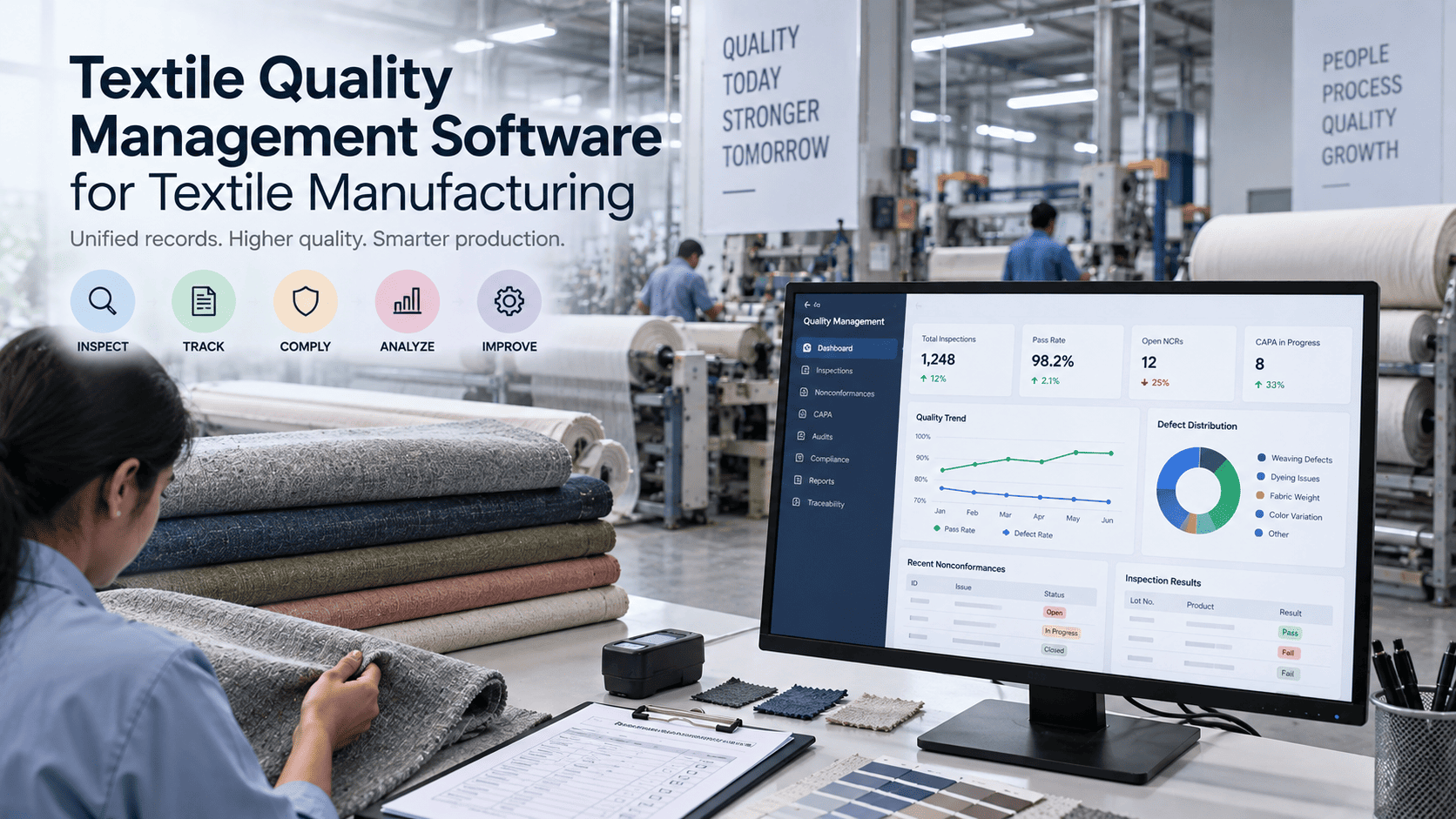
Rather than treating quality management as one generic workflow, a textile-specific system organizes around the three data threads that actually drive fabric quality outcomes — and critically, ties them together so a signal in one shows up automatically in the others.
Treating these as three separate systems is the default state at most mills not because anyone decided it should be that way, but because each thread historically grew up under a different department with a different tool. Grading data lives with quality control. Shade records live with the color lab. Claims live with customer service or merchandising. None of those teams did anything wrong — the fragmentation is structural, not a failure of any individual group, which is exactly why fixing it requires a platform decision rather than a process reminder to communicate more.
In-Line Grading Data
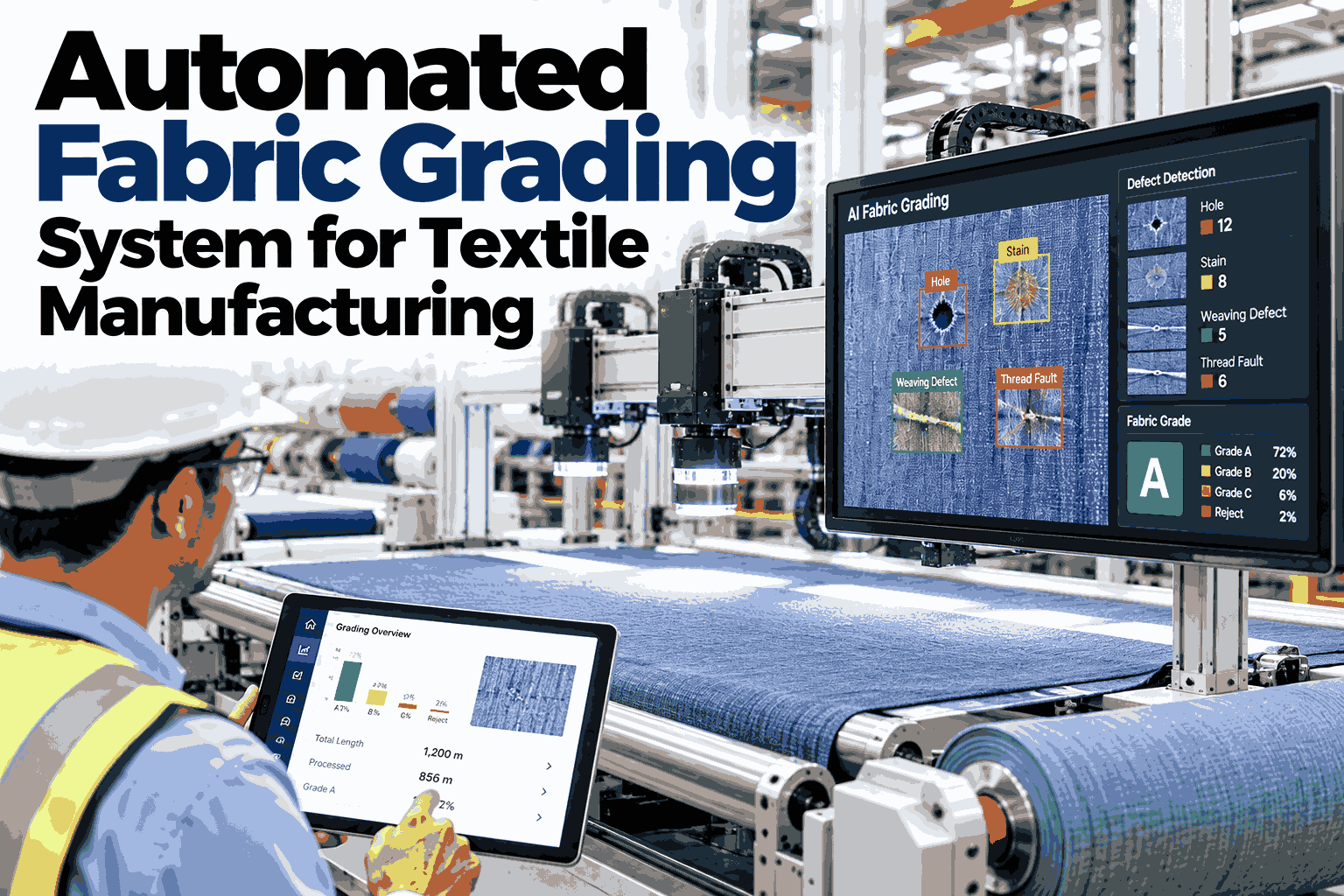
Defect type, severity, and roll-length position logged continuously as fabric moves through inspection, building a live map of quality performance by style, shift, and line.
Shade Approval Records
Buyer-approved shade references, measured color difference data, and lot-by-lot color consistency tracking tied directly to the styles and orders they apply to.
Buyer Claims History
Every claim logged with the specific defect type, affected style, and originating production window, rather than filed as an isolated incident disconnected from the data that could explain it.
None of these three threads is new to a textile mill — every mill already tracks some version of each. What's usually missing is the connective layer that lets a claim on a specific style automatically surface the grading and shade data from the production run that generated it.
From Reactive Grading to Predictive Quality
Most mills' quality systems today are fundamentally reactive — a defect gets caught, graded, and logged after it's already been produced. An AI-powered layer sitting on top of that same grading data can shift a meaningful share of that work earlier, correlating process parameters with defect patterns closely enough to flag a developing problem before it produces a run of defective fabric.
The transition from reactive to predictive doesn't require a mill to abandon the grading process it already trusts — it requires connecting that process to the upstream variables that actually drive its outcomes. Dye bath temperature, tension settings, humidity, and fiber lot are all recorded somewhere in most mills already; the shift is in treating those records as inputs to a correlation model rather than as isolated logs kept for their own separate purposes.
Defects are caught, graded, and logged after they've already been produced
Patterns across shifts, styles, or suppliers are visible only after someone manually reviews accumulated records
Corrective action happens after a claim, once the cost has already been incurred
Process parameters are correlated against grading outcomes continuously, in the background
A drifting parameter — dye temperature, tension, humidity — gets flagged before it produces a defect cluster
Corrective action happens during the run that would have generated the defect, not after a claim arrives
Intelligent Reporting: Turning Quality Data Into a Document a Buyer Actually Trusts
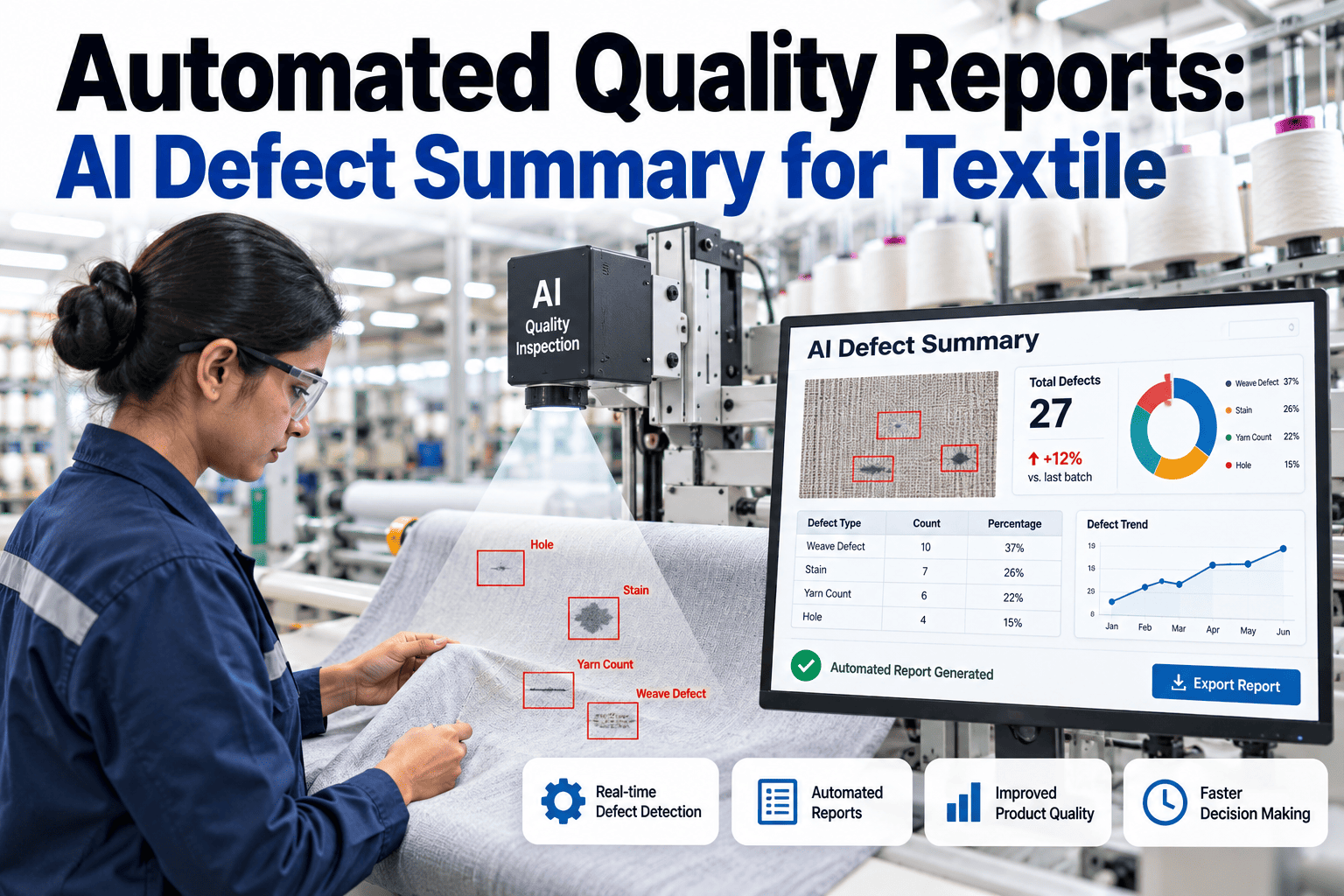
A defect log full of raw entries is data. A structured, evidence-backed report that shows exactly what was inspected, how, and against what standard is what actually resolves a buyer dispute quickly. Intelligent reporting means the QMS generates that document automatically from the underlying data rather than requiring someone to manually assemble it from three different sources under deadline pressure.
The time saved here compounds across a claims season rather than showing up as a single dramatic improvement. A quality team that used to spend a day assembling evidence for each disputed shipment, pulling records from separate grading, shade, and shipping systems, can instead generate that same evidence package in minutes because the underlying data was already connected before the dispute ever arose — turning what used to be reactive scrambling into a routine, low-effort task.
Automated Defect Mapping
Every defect gets logged with type, severity, and precise roll-length position automatically, generating a complete grading record for every roll without manual data entry.
AQL Projection Before Shipment
Accumulated grading data across a lot projects the likely result of a buyer's own AQL sample before goods are booked, rather than finding out only at final inspection.
One-Click Claim Resolution Package
When a claim does arrive, the system assembles the relevant grading, shade, and production records into a single evidence package instead of requiring a manual search across separate systems.
Resolving a Buyer Dispute Shouldn't Require a Manual Records Search Under Deadline Pressure
iFactory generates the evidence package automatically the moment a claim is logged, pulling from grading, shade, and production data already connected in one system.
What Fragmented Quality Data Costs Beyond the Obvious
The direct cost of fragmented quality systems is easy to name — time spent manually cross-referencing records, slower claim resolution, a pattern that takes months to notice instead of days. The less obvious cost is what happens to trust, both internally and with buyers, while that fragmentation persists.
Slower Buyer Dispute Resolution
A buyer waiting longer than necessary for evidence on a disputed shipment forms an impression of the mill's quality discipline independent of whether the underlying goods were actually fine.
Repeated Root Cause Investigations
Without connected data, the same underlying issue can get independently investigated multiple times under different claim tickets before anyone realizes it's one problem, not several.
Diminished Internal Confidence
A quality team that can't quickly explain why a defect happened, even when the data technically exists somewhere in the building, loses credibility with operations and management over time.
A Composite Scenario: The Shade Claim Pattern That Took Three Months to Notice Manually
A composite mid-size finishing mill supplying multiple apparel buyers had been logging shade-related claims individually as they arrived, each one investigated and closed independently by whichever quality team member handled it. Over roughly a three-month period, the mill accumulated seven separate shade claims across three different buyers, each treated as an isolated incident with its own investigation and resolution.
Only when the mill implemented a connected QMS that automatically tied claims to the originating production data did a pattern become visible immediately — all seven claims traced back to fabric processed on the same dye line during a specific shift rotation, correlating with a documented but previously unflagged period of inconsistent dye bath temperature control on that line. The mill corrected the temperature control issue on that specific line and shift, and shade-related claims from that dye line dropped to their prior baseline within the following month, a pattern that had gone unnoticed for three months under the previous manually-reviewed claims process.
Assumptions That Keep Textile QMS Systems Fragmented
A handful of assumptions show up repeatedly across mills weighing whether a connected system is actually worth the change, and most of them don't hold up once tested against how these systems actually behave in production.
A generic manufacturing QMS platform can be adapted to textile with minor configuration changes.
Continuous grading scales, buyer-specific tolerance levels, and shade-based defect definitions are structurally different from discrete pass/fail manufacturing logic, and configuration alone rarely closes that gap cleanly.
Claims data and production grading data serve different purposes and don't need to be connected in the same system.
Claims data is one of the most reliable leading indicators of a systemic production issue, but only when it's connected back to the grading and process data from the run that generated it.
Predictive quality management requires replacing existing grading and inspection processes entirely.
A predictive layer sits on top of the grading data a mill is already collecting, correlating it against process parameters rather than requiring the underlying inspection workflow to change.
A Checklist for Evaluating a Textile-Specific QMS
Grading, shade, and claims data live in one connected system
If a claim requires manually cross-referencing separate systems to understand its cause, the QMS isn't actually connected regardless of what any single module offers.
Defect tolerance is configurable per buyer, not fixed plant-wide
A system that applies one universal defect standard across all buyers will either over-reject for lenient buyers or under-catch for strict ones.
The system projects AQL outcomes before a shipment is booked
Waiting for a buyer's own final inspection to learn whether a lot will pass means finding out too late to correct anything.
Claim resolution reports assemble automatically from existing data
A manual, ad hoc report built under deadline pressure is slower and less consistent than one generated automatically from data the system already has.
Frequently Asked Questions
How is a textile-specific AI QMS different from a general manufacturing quality platform?
A textile-specific system is built around continuous grading scales, buyer-configurable defect tolerance, and shade-based quality metrics rather than discrete pass/fail unit inspection, and it connects claims, grading, and shade data as one workflow rather than three separate modules. Visit support to see how this differs from a generic QMS adapted for textile.
Can an AI-powered QMS actually predict a quality issue before it happens?
Correlating process parameters — dye temperature, tension, humidity — against historical grading outcomes can flag a developing drift before it produces a run of defective fabric, converting a share of quality management from reactive grading into earlier process correction.
Does implementing a connected QMS require replacing existing grading and inspection equipment?
No — a connected QMS layer typically integrates with existing grading and inspection systems rather than replacing them, pulling in the data those systems already generate and connecting it to shade and claims records. Book a demo to see integration with a specific existing inspection setup.
How does buyer-specific defect tolerance actually get configured in the system?
Each buyer's approved AQL levels, defect classifications, and tolerance thresholds are configured against their profile in the system, so the same physical defect is evaluated against the correct standard automatically depending on which buyer's order it applies to.
What happens to historical claims and grading data when moving to a connected QMS?
Historical records can typically be imported and linked retroactively to the production data they relate to, which is often where the first useful patterns emerge — connecting past claims to production history that was never cross-referenced at the time. Contact support to review a migration plan for existing historical records.
Stop Investigating Claims That Your Own Data Already Explained
iFactory connects grading, shade, and claims data into one textile-specific QMS, so a pattern surfaces automatically instead of requiring a manual investigation months later.