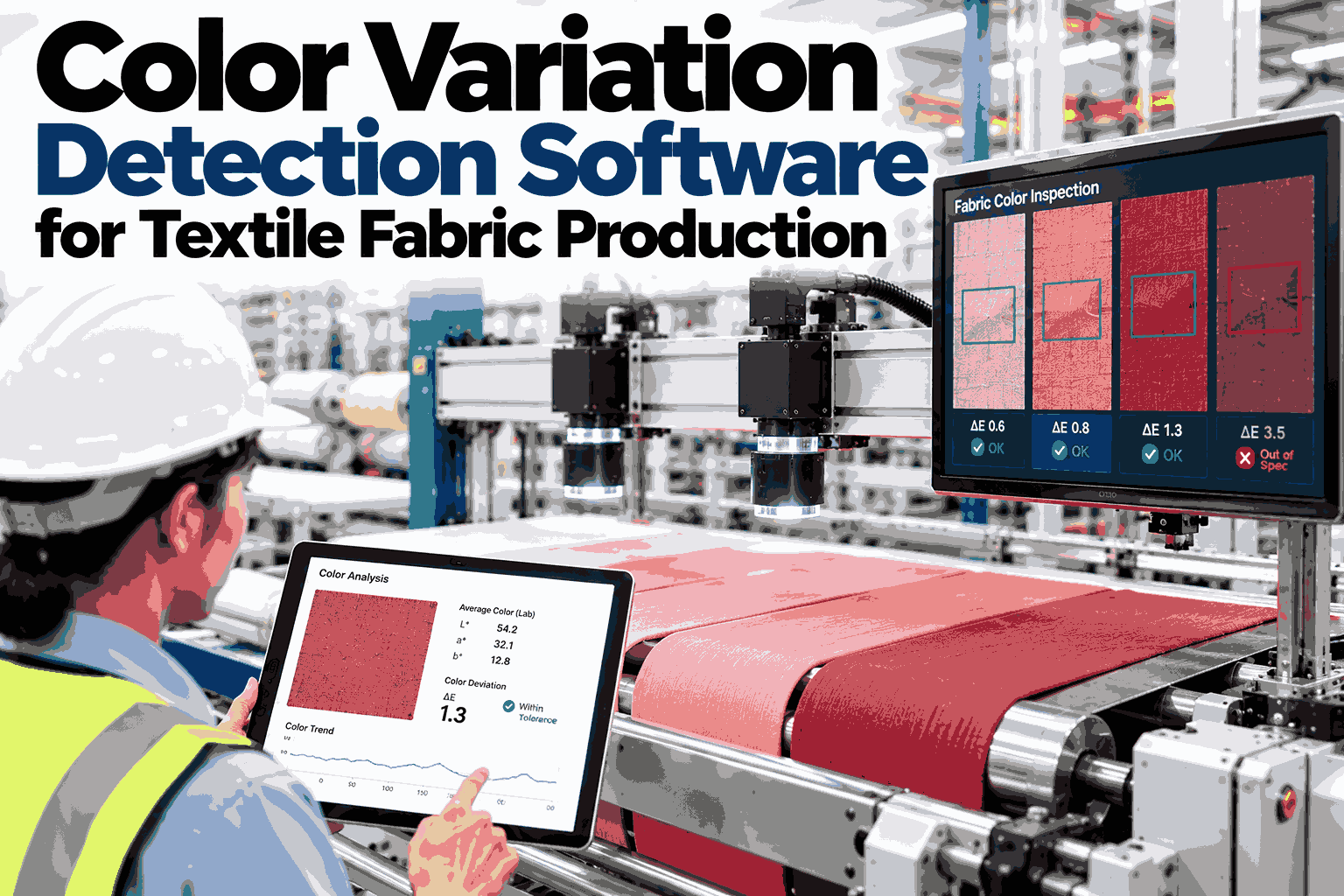
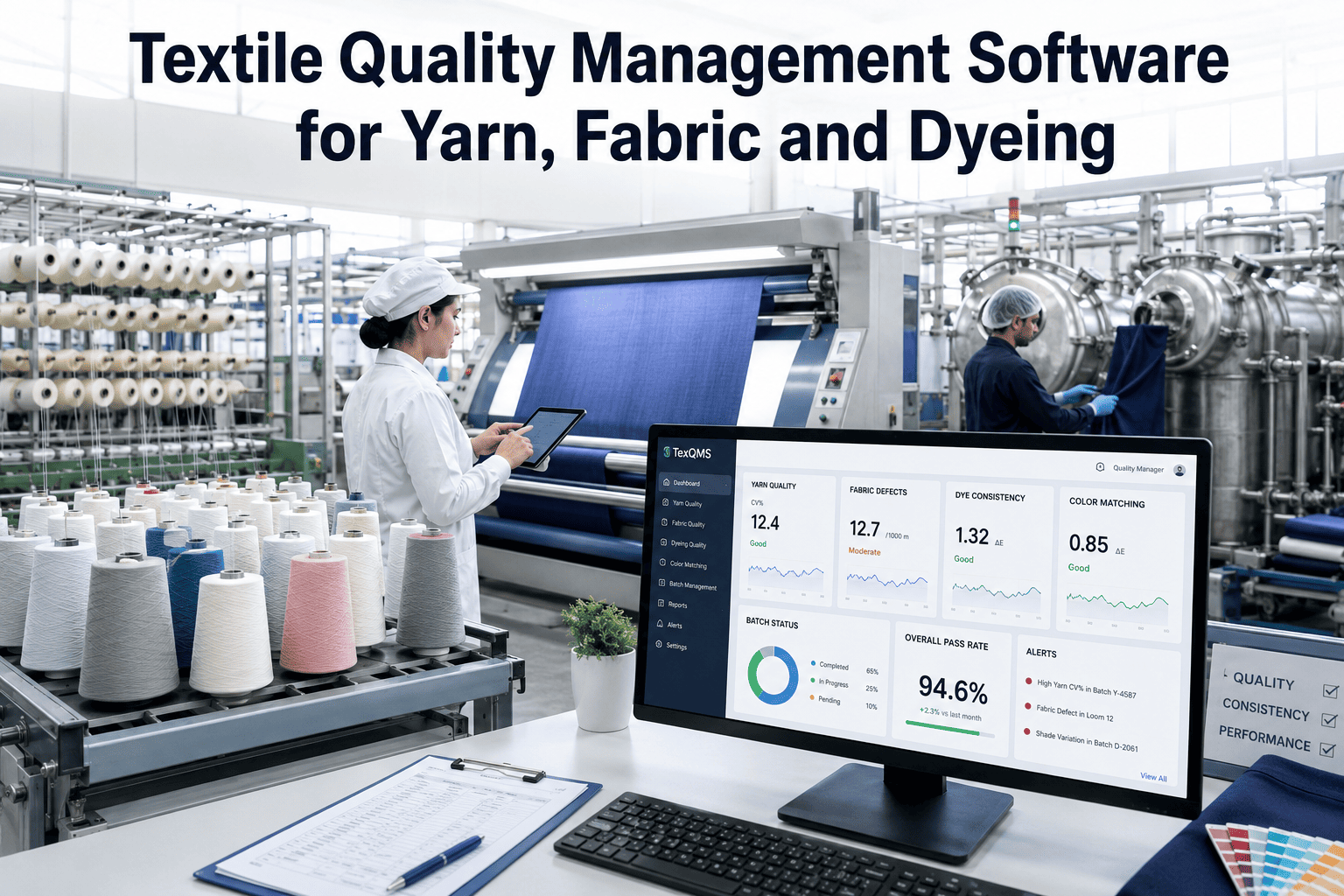
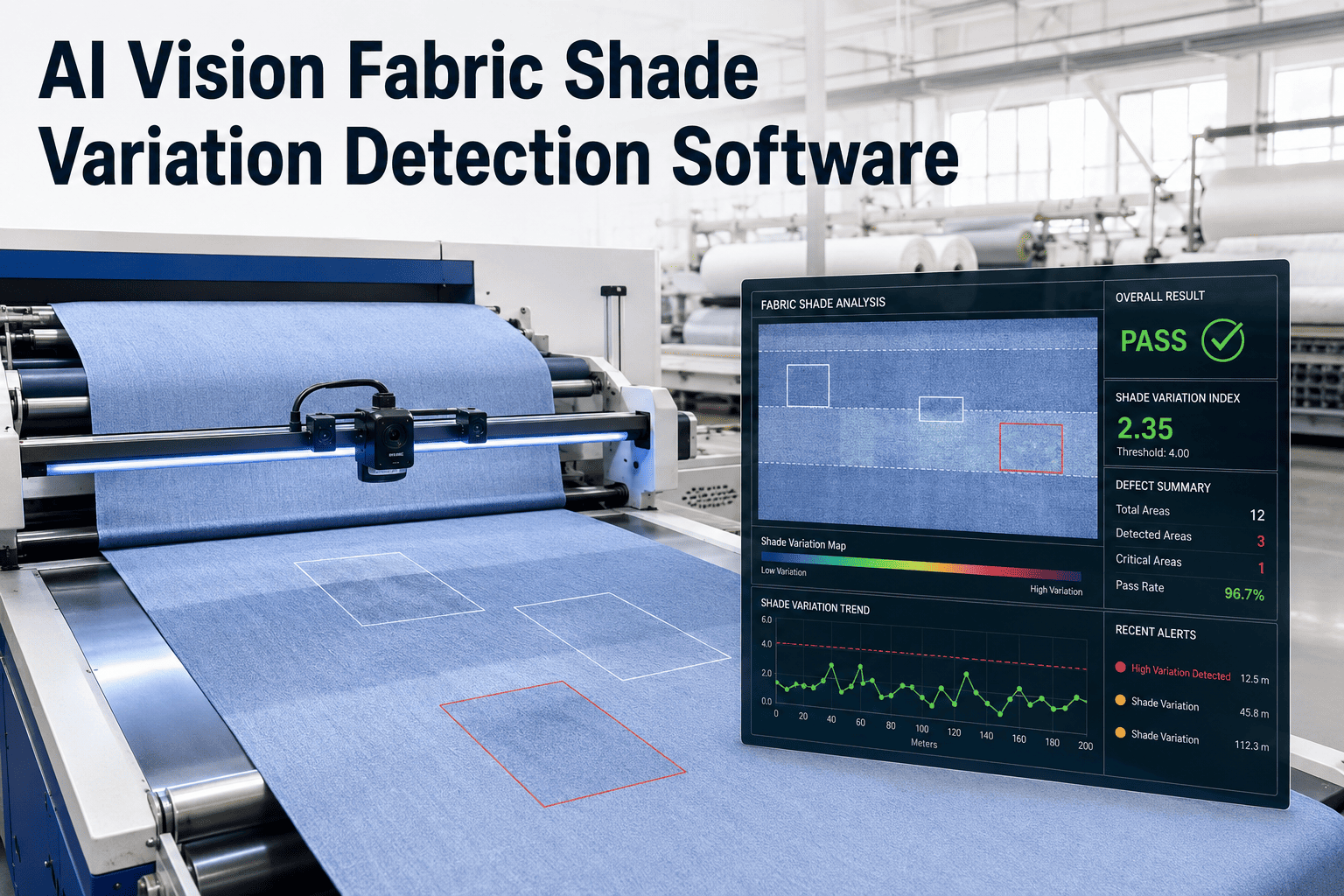
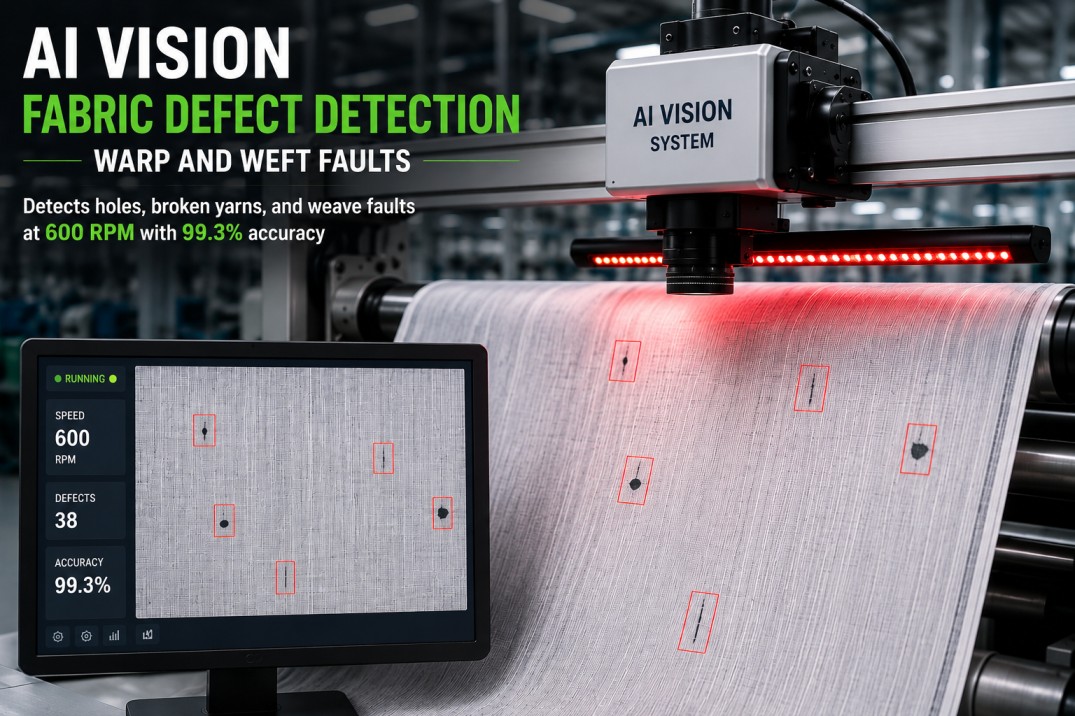
Every textile mill knows the feeling of a roll that looked fine on the loom and failed at the final inspection table. By then the defect has travelled through dyeing and finishing, absorbing cost at every step. Manual inspectors do careful work, but eyes tire over long shifts and fast-moving cloth hides small flaws. AI fabric defect detection moves the catch point upstream and grades every metre the same way. Mills evaluating this shift can see the inspection logic on their own fabric before committing to anything.
AI VISION AND QUALITY FOR TEXTILE MILLS
Find Every Fabric Defect While the Roll Is Still Moving
iFactory AI connects vision inspection, defect classification, and fabric grading so your mill stops flaws at the source instead of discovering them at the end.
Slub detected at 2.4 mHole flagged at 7.1 mStain logged at 11.8 m
THE HIDDEN COST
Why Late Detection Is the Most Expensive Kind
A defect found at the loom costs a short stop and a fix. The same defect found after dyeing costs the cloth, the dye, and the time already spent.
At the loom or knitting machineLowest cost
Greige inspectionLow
After dyeingHigh
After finishingHigher
At the customerHighest, plus lost trust
Illustrative view of how cost grows the further a defect travels.
DEFECT LIBRARY
What the Vision System Learns to Recognise
Good classification matters more than simple detection, because each defect type points to a different cause upstream.
Weaving
Missing ends and picks
Broken pattern
Slubs and knots
Float and snag
Knitting
Dropped stitches
Needle lines
Holes and runs
Barre and streaks
Dyeing and finishing
Shade variation
Oil and dirt stains
Creases and crack marks
Print misregistration
HOW IT WORKS
From Camera Frame to Graded Roll
The system treats inspection as a connected chain, not a single camera pointed at cloth.
01
Capture
Line-scan cameras and controlled lighting image the full fabric width at running speed.
02
Detect
Models separate real flaws from normal weave texture and lighting noise.
03
Classify
Each flaw is typed, sized, and mapped to its position on the roll.
04
Grade and alert
Points are scored automatically and recurring defects trigger an upstream alert.
See your own fabric through the inspection model
Share a few sample rolls and watch how detection and classification handle your actual defects.
MANUAL VS AI
What Changes on the Inspection Floor
The gain is not only speed. It is consistency from the first roll of the shift to the last.
| Factor | Manual Inspection | AI Vision Inspection |
|---|
| Coverage | Depends on speed and attention | Full width, every metre |
| Consistency | Varies between inspectors and shifts | Same rules applied to every roll |
| Records | Paper tags and memory | Digital defect map per roll |
| Feedback to production | Delayed until the report is read | Alerts while the roll is running |
FABRIC GRADING
Automating the Four-Point System
Most mills grade with the four-point system. Software simply applies it the same way every time.
| Defect Length | Penalty Points |
|---|
| Up to 3 inches | 1 |
| Over 3 and up to 6 inches | 2 |
| Over 6 and up to 9 inches | 3 |
| Over 9 inches | 4 |
Many buyers treat a roll as second quality above roughly 40 points per 100 square yards, though acceptance limits vary by contract.
CLOSING THE LOOP
Turning Defect Data Into Fewer Defects
Detection only pays off when it changes what happens at the machine.
Repeat pattern spotted
The same flaw at regular intervals points to a worn part or a setting.
Machine linked
Defects are tied to the loom, knitting unit, or process that produced them.
Fix before the next roll
Maintenance acts early, so one fault does not become a hundred metres of waste.
ROLLOUT
A Practical Path to Go-Live
Rollout follows your inspection line, not a generic template.
Weeks 1-2
Line survey, camera placement, and sample fabric capture
Weeks 3-4
Defect library training and grading rule setup
Weeks 5-6
Parallel run with inspectors, then dashboard go-live
FREQUENTLY ASKED QUESTIONS
What Mill Teams Ask Before Starting
Can it work on both woven and knitted fabric?
Yes, the defect library covers woven, knitted, dyed, and printed fabrics, and models are tuned to your own materials. Different structures need different lighting and training samples, which is handled during setup. You can
walk through a live demo using your own fabric type.
Will it replace our inspectors?
It supports them rather than replacing them. The system flags and classifies flaws, while experienced inspectors review borderline cases and confirm the final grade. This keeps human judgment where it matters most. Questions about workflow can go to
our support specialists.
Does it handle patterned or textured fabric?
Textured and patterned cloth is harder than plain fabric, so the model learns your normal pattern before judging anything as a defect. That reduces false alarms on dobby, jacquard, or printed designs. A
sample fabric review session shows how this works on your patterns.
Do we need to replace our inspection machines?
Often not. Cameras and lighting can be fitted to an existing inspection frame or machine line, depending on its layout and speed. The software then adds classification, grading, and reporting on top.
Reach the support team to check compatibility with your line.
How soon will we see results?
Most teams see value during the parallel run, when software findings are compared with inspector reports. Early wins usually come from consistent grading and faster alerts on repeating defects.
Plan a demo session to set realistic targets for your mill.
CATCH IT EARLY, SHIP IT RIGHT
Give Your Mill an Inspector That Never Gets Tired
iFactory AI brings real-time fabric inspection, defect classification, and automated grading into one connected workflow built for textile mills.