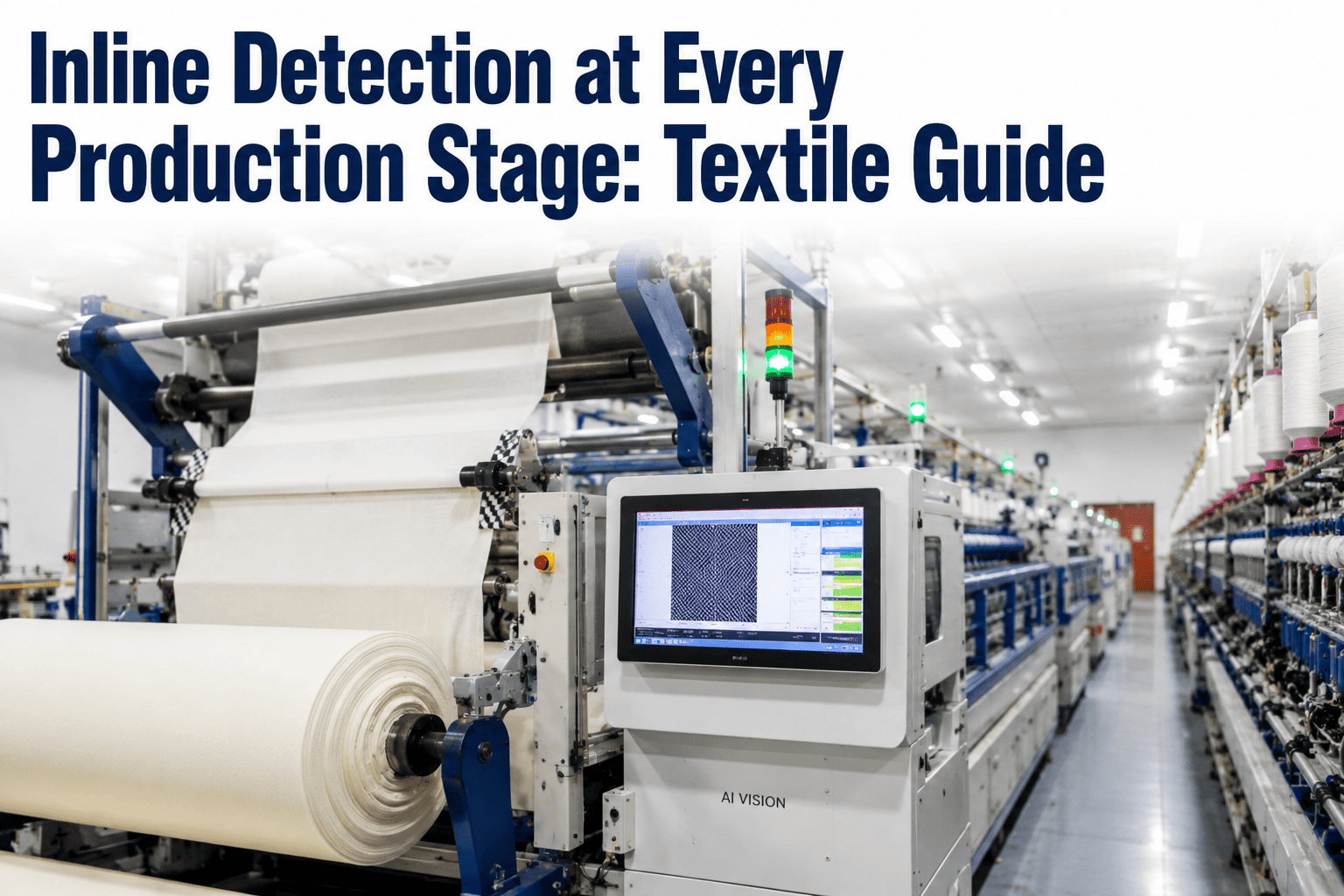
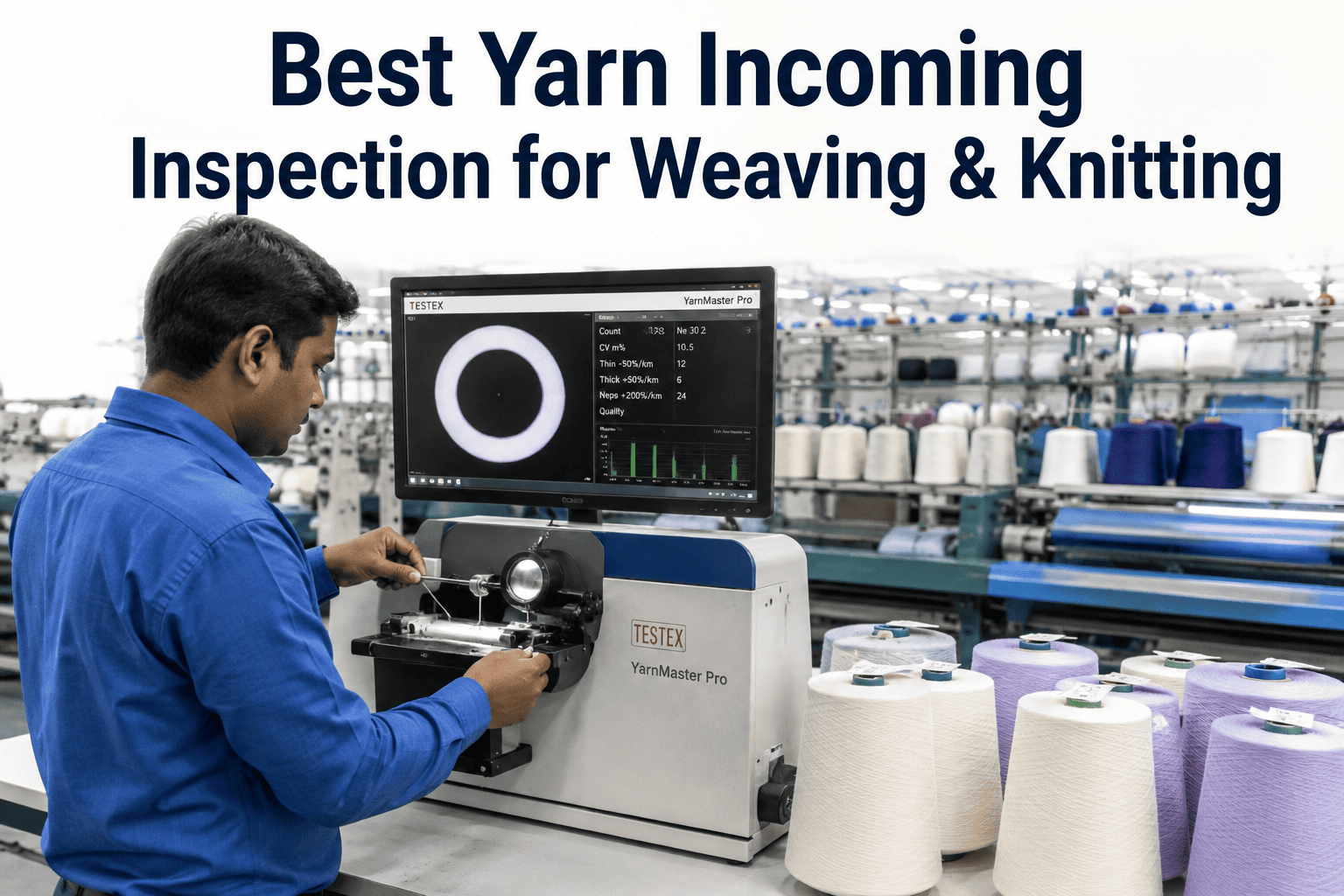
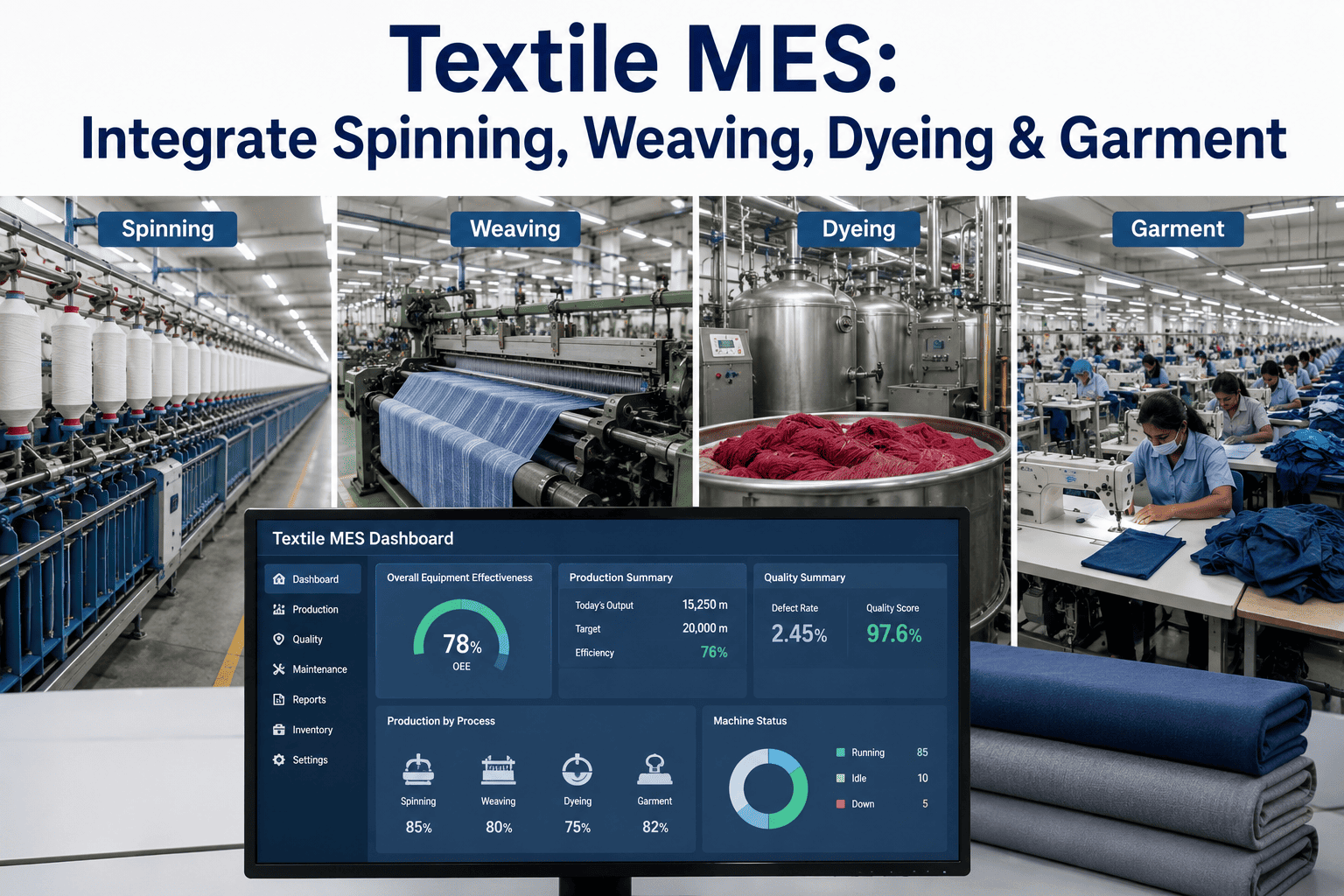
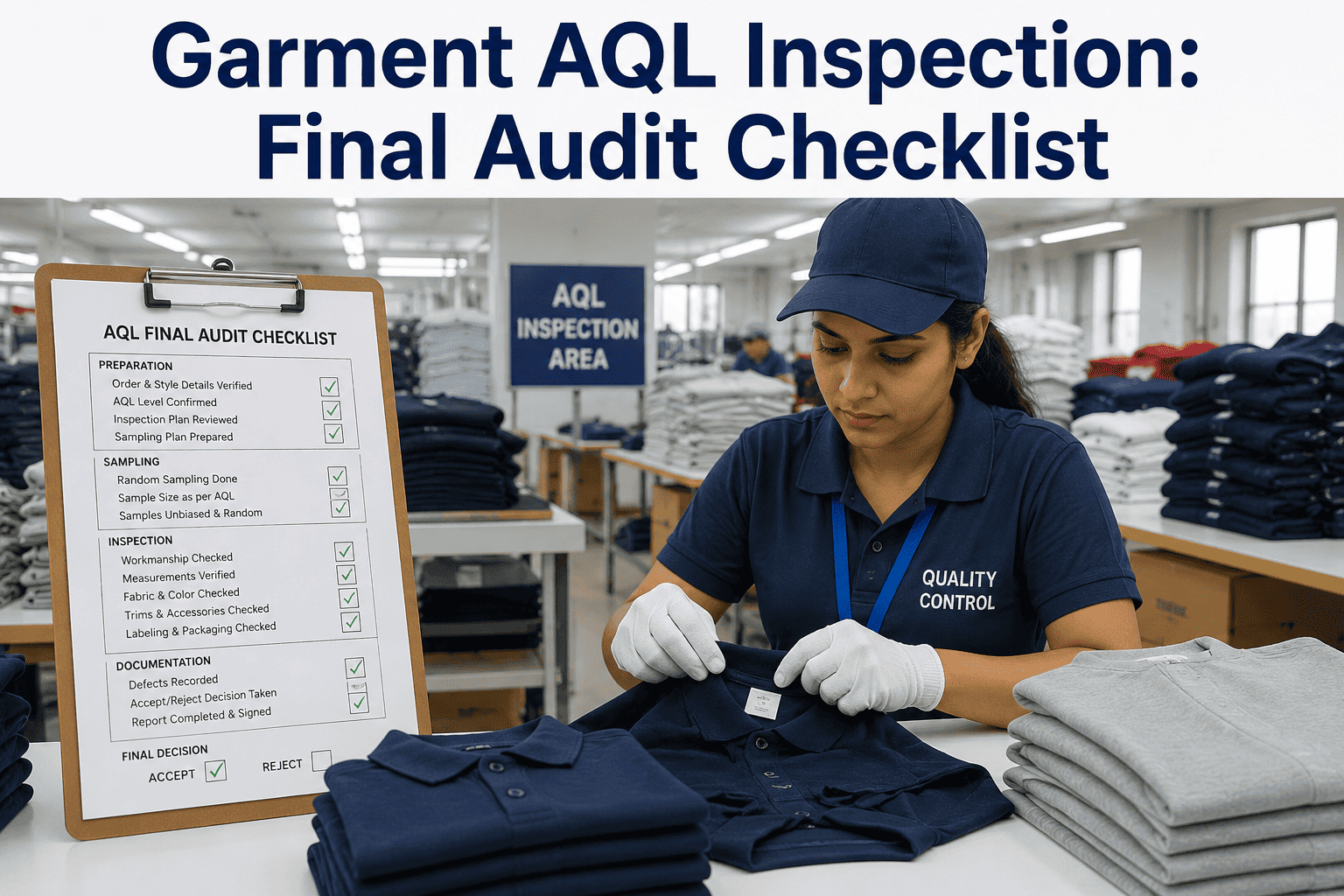
A fabric roll can travel through four or five separate production stages before anyone notices the flaw that started it all — a broken filament at spinning, a tension fault at weaving, an uneven dye uptake, a finishing scorch — and by the time it surfaces at final inspection, the material, the machine time, and the energy spent on every intermediate stage are already sunk costs. Most textile plants still rely on a single inspection checkpoint near the end of the line, which catches defects far too late to prevent the losses that compound at every stage the fault was allowed to travel through. Inline detection at every production stage changes this by placing quality checkpoints directly into spinning, weaving, dyeing, finishing, and garment assembly, so a defect is caught at the stage it originates rather than several stages downstream. Talk to the iFactory team about stage-by-stage inline detection for your production line.
Textile Quality · Multi-Stage Inline Inspection
Inline Defect Detection at Every Production Stage: Stop Chasing Faults After They Have Already Cost You
Spinning, weaving, dyeing, finishing, and garment inspection working together as one continuous quality net — catching defects where they start instead of where they finally get noticed.
5
Stages Where Faults Typically Originate
1
Checkpoint in Most Traditional Lines
70%+
Of Faults Are Preventable With Earlier Detection
Why One Checkpoint Is Not Enough
The Single-Point Inspection Model Was Built for a Simpler Supply Chain
End-of-line inspection made sense when production runs were shorter, product mix was simpler, and the cost of a missed defect was smaller. Modern textile manufacturing runs faster, mixes more styles through the same lines, and sources fibre from more variable suppliers — all of which increase the number of places a defect can originate and the speed at which an undetected fault multiplies across downstream processing. A single inspection point, no matter how well staffed, cannot see a fault until the material physically reaches it, which means every stage between the fault's origin and the checkpoint has already added cost to a piece of material that may ultimately be rejected. There is also a statistical reality working against single-point inspection that many plants underestimate: manual sampling at a single checkpoint typically covers only a fraction of total production volume, meaning a meaningful share of defective material passes the checkpoint undetected simply because it was not part of the sample examined, regardless of how skilled the inspector happened to be that shift.
Fault Originates
A defect begins at any single stage — a broken filament, a tension spike, an uneven bath
→
Travels Undetected
Material passes through every remaining stage carrying the fault forward
→
Found Too Late
Final inspection catches it after full processing cost has already been spent
Stage-By-Stage Coverage
What Inline Detection Looks Like at Each Point in the Line
01
Spinning — Yarn Formation
Online sensors mounted at spinning positions track evenness, thick and thin places, hairiness, and imperfection counts as yarn is being formed, flagging a drifting position before it produces an entire bobbin of off-spec yarn. This is the earliest possible checkpoint in the textile value chain, and catching a fault here means every downstream process — winding, warping, weaving — never touches defective material at all.
02
Weaving — Fabric Formation
Camera systems positioned over the loom monitor the fabric as it is woven, detecting broken picks, misweaves, oil stains, and reed marks in real time rather than waiting for the roll to be inspected after it comes off the loom entirely. A loom running with an undetected fault for hours can produce a very long section of unsellable fabric before anyone notices — inline detection stops that loom within seconds of the fault appearing.
03
Dyeing — Colour and Uptake
Inline colour measurement and shade-matching sensors evaluate dye uptake continuously through the dyeing process, catching batch-to-batch shade variation, uneven penetration, and streaking while the batch is still in process and correctable, rather than after the entire lot has been dried, inspected, and found to be off-shade.
04
Finishing — Coating and Treatment
Sensors and vision systems at finishing stages check for scorching, uneven coating application, width and weight deviation, and finish quality as fabric passes through stenters and calendering lines, giving operators the chance to adjust temperature, tension, or chemical application before an entire batch is finished incorrectly.
05
Garment Assembly — Cut and Sew
Vision-assisted inspection at cutting and sewing stations checks stitch quality, seam alignment, and panel matching as garments are constructed, catching assembly defects before a garment is fully finished, pressed, and packed — the point at which correcting a defect becomes the most labour-intensive and expensive of any stage.
Each of these five checkpoints operates independently, but their real value compounds when they are treated as one continuous system rather than five separate quality programmes. A fault caught at spinning prevents that fault from ever reaching weaving, dyeing, finishing, or garment assembly at all — which means the earlier stages in this list are not just individually valuable, they multiply the value of everything downstream by reducing the volume of defective material those later stages ever have to process in the first place.
Every Stage, One Connected Quality System
iFactory Links Every Inspection Point Into a Single Traceable Quality Record
Instead of five separate inspection systems that never talk to each other, iFactory connects spinning, weaving, dyeing, finishing, and garment inspection into one platform — so a fault caught at any stage is logged, traced back to its source, and used to prevent the next occurrence across the entire line.
Coverage Comparison
Single-Point Inspection vs. Multi-Stage Inline Detection
| Dimension | Single End-of-Line Checkpoint | Inline Detection at Every Stage |
|---|
| Detection point | After all processing is complete | At the exact stage the fault originates |
| Material at risk per fault | Full processing cost across all stages | Limited to the single stage of origin |
| Root cause visibility | Difficult — fault could have started anywhere upstream | Immediate — fault is logged at its actual source |
| Correction speed | Entire batch may already be complete | Batch can often be corrected mid-process |
| Inspector dependency | High — relies on manual sampling accuracy | Reduced — continuous automated coverage |
Getting Started
Rolling Out Inline Detection Without Disrupting Existing Production
Start With the Highest-Cost Stage
Rather than instrumenting every stage simultaneously, most plants begin with whichever stage currently contributes the largest share of downstream rejects — often weaving or dyeing — and expand coverage once the first deployment proves out.
Integrate With Existing Line Speed
Inline sensors and cameras are selected and configured to match your actual line speed, so detection does not become a bottleneck that slows production in the name of catching more defects.
Connect Data Across Stages
Once multiple stages are instrumented, connecting their data lets you trace a fault found at finishing back to a specific spinning position or loom, closing the loop between detection and prevention.
Train Operators on the New Alerts
Inline systems only deliver value if operators trust and act on the alerts — structured training on what each alert means and the correct response is as important as the sensor installation itself.
A rollout plan that ignores the human side of this transition tends to underperform even when the sensor technology itself works flawlessly. Operators who have spent years trusting their own visual judgement over automated systems need time and repeated positive experience before they treat an inline alert with the same seriousness as a defect they spotted themselves. Building that trust usually means starting with a period where alerts are logged and reviewed alongside operator judgement rather than immediately forcing a stop, letting the team see the system's accuracy demonstrated with their own production data before it becomes the primary trigger for a line stop. Plants that skip this transition period and go straight to fully automated stoppage sometimes see operators override or disable alerts they do not yet trust, which undermines the entire investment regardless of how accurate the underlying detection technology actually is.
Practitioner Perspective
The plants that get the most value from multi-stage inline detection are not the ones that try to instrument everything on day one — they are the ones that pick one stage, prove the fault-catch rate improves, and use that evidence to build the case for expanding coverage. I have watched plants stall for a year trying to plan a comprehensive rollout, when a single well-executed pilot at the weaving stage would have given them both the operational win and the internal credibility to move faster on the rest of the line. Start narrow, prove the value, then connect the stages together — that sequencing matters more than most teams expect.
Consuela Byrdthistle
Textile Quality Systems Consultant · 15 years deploying inline inspection across spinning, weaving, and finishing operations · Former Head of Quality Engineering, integrated textile manufacturing group
Common Questions
Inline Detection at Every Stage — FAQ
Do we need to instrument every stage at once, or can we start with just one?
Most successful deployments start with a single stage — typically the one currently generating the most downstream rejects or customer complaints — rather than attempting a full simultaneous rollout across spinning, weaving, dyeing, finishing, and garment assembly. Starting narrow lets your team learn the operational workflow of responding to inline alerts, validate that detection accuracy holds up under your actual production conditions, and build a clear before-and-after comparison that justifies expanding to additional stages.
Book a call to identify which stage should come first for your specific defect profile.
Will inline sensors and cameras slow down our current line speed?
Properly specified inline detection equipment is selected to match your actual production speed rather than forcing your line to slow down to accommodate the sensor's processing rate. Camera systems for weaving and garment inspection use high-speed image capture designed for loom and sewing line speeds, and spinning sensors are built to sample continuously at spindle operating speed without introducing drag or mechanical interference. The evaluation process before installation should always include a speed compatibility check specific to your equipment, since mismatched sensor specifications are the most common cause of unexpected line slowdowns after installation.
How do we connect data from five different stages into something useful, rather than five disconnected reports?
Connecting stage-level data requires a shared platform that every inspection point reports into, using a consistent way of identifying which lot, roll, or batch each measurement belongs to as it moves through the line. Without this shared identifier, a fault found at finishing cannot be reliably traced back to the spinning position or loom that produced it, which limits the value of inline detection to catching defects rather than preventing their recurrence. iFactory's platform is built specifically to carry material identity across stages so root cause tracing works end to end.
Contact support for details on integrating your existing stage-level sensors into one connected view.
What happens when an inline system flags a false alarm — does this create more work for operators than it saves?
False alarm rate is a legitimate concern and the right question to ask before deployment, since a system that alerts too frequently on non-issues will train operators to ignore it entirely, which defeats the purpose. Well-tuned inline detection systems are calibrated against your specific material and fault types during commissioning, and false alarm rates typically decrease significantly over the first few weeks as thresholds are refined against real production data. A good deployment plan includes a tuning period where alert accuracy is actively monitored and adjusted before the system is considered fully operational, rather than assuming default settings will work correctly from day one.
How long does it typically take to see a measurable reduction in downstream rejects after deploying inline detection?
Most plants begin seeing measurable improvement within the first four to eight weeks of a stage going live, once the system is properly tuned and operators are consistently responding to alerts, though the exact timeline depends heavily on your current defect rate and how quickly your team adapts its response workflow to the new detection capability. The clearest early signal is usually a reduction in the rate of downstream rejects traced back to the newly instrumented stage, since faults that used to travel undetected are now being caught and corrected at the source.
Book a session to build a realistic timeline based on your current inspection data and defect history.
Stop Finding Out About Defects After the Cost Is Already Spent
Build a Connected Quality Net Across Every Stage of Your Line
iFactory helps textile manufacturers deploy inline detection at spinning, weaving, dyeing, finishing, and garment assembly — connected into one traceable system that catches faults where they start and prevents them from repeating.