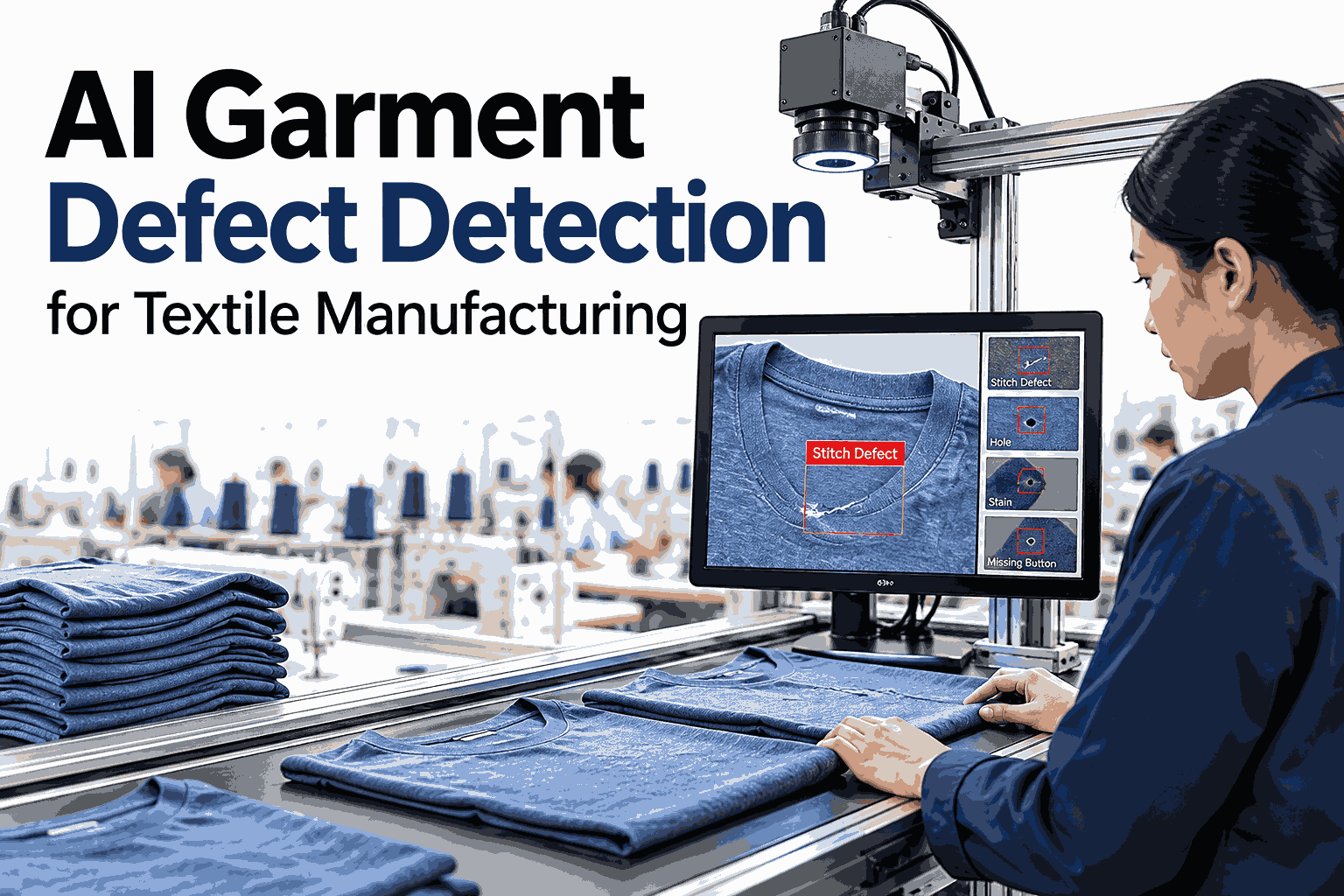
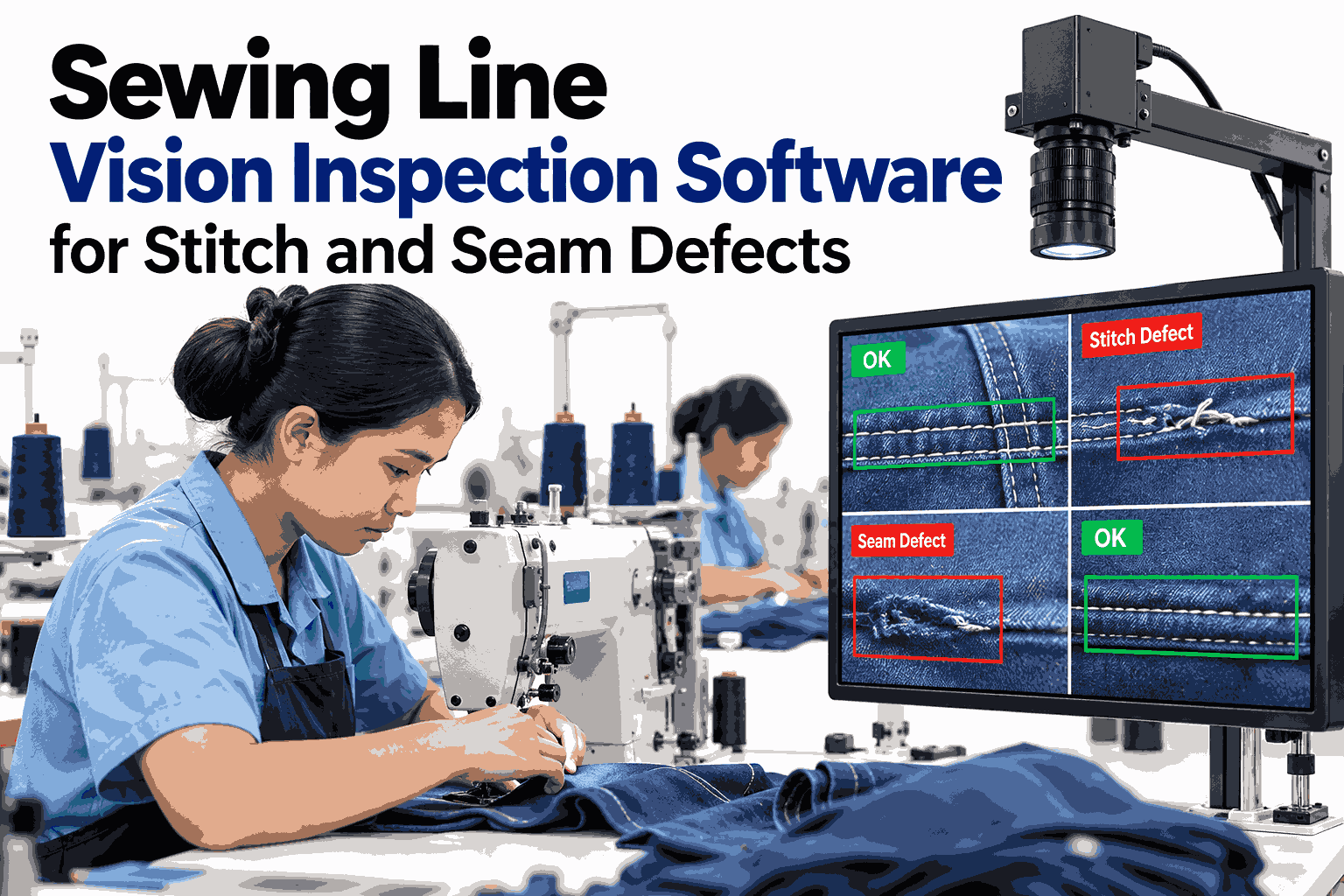
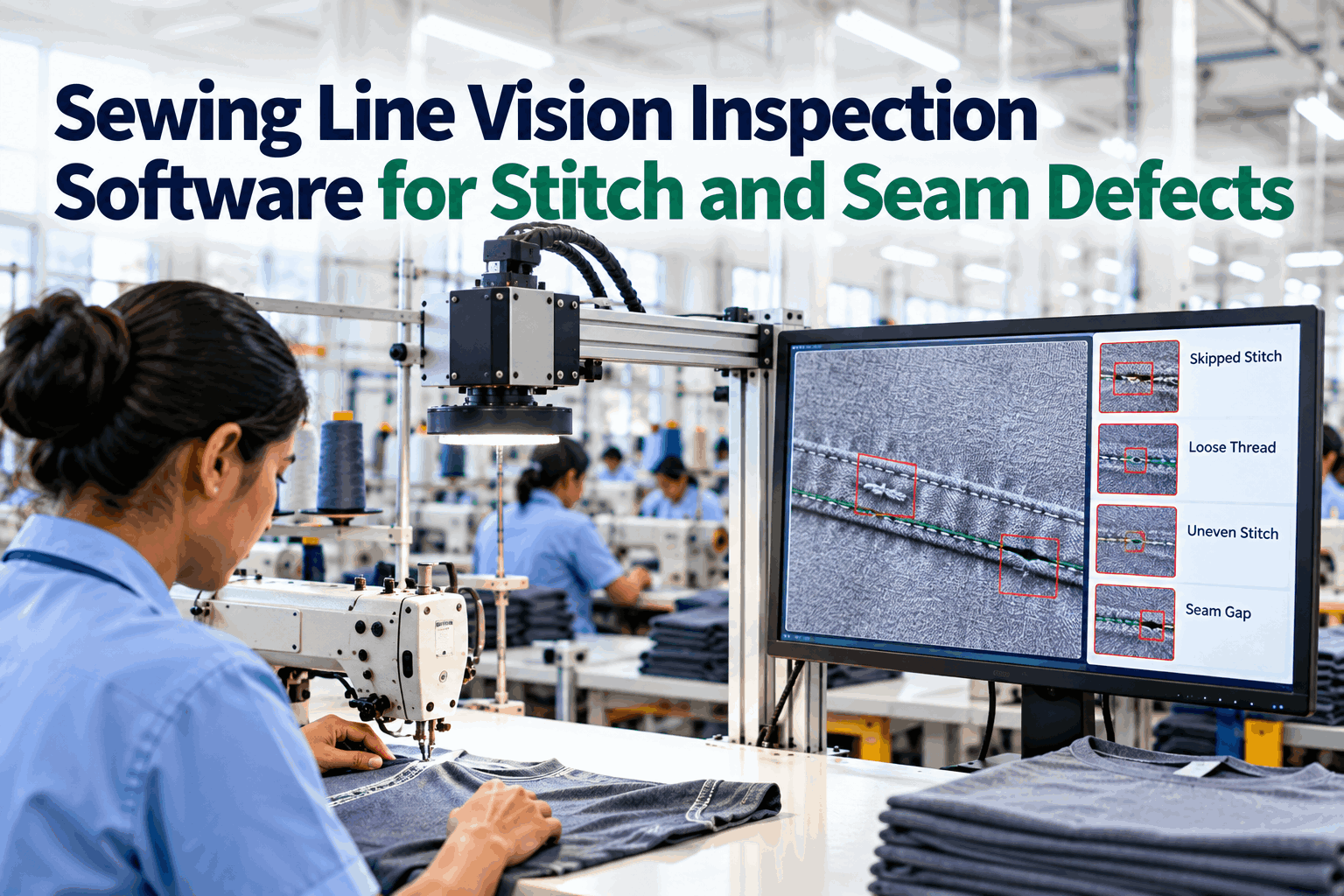
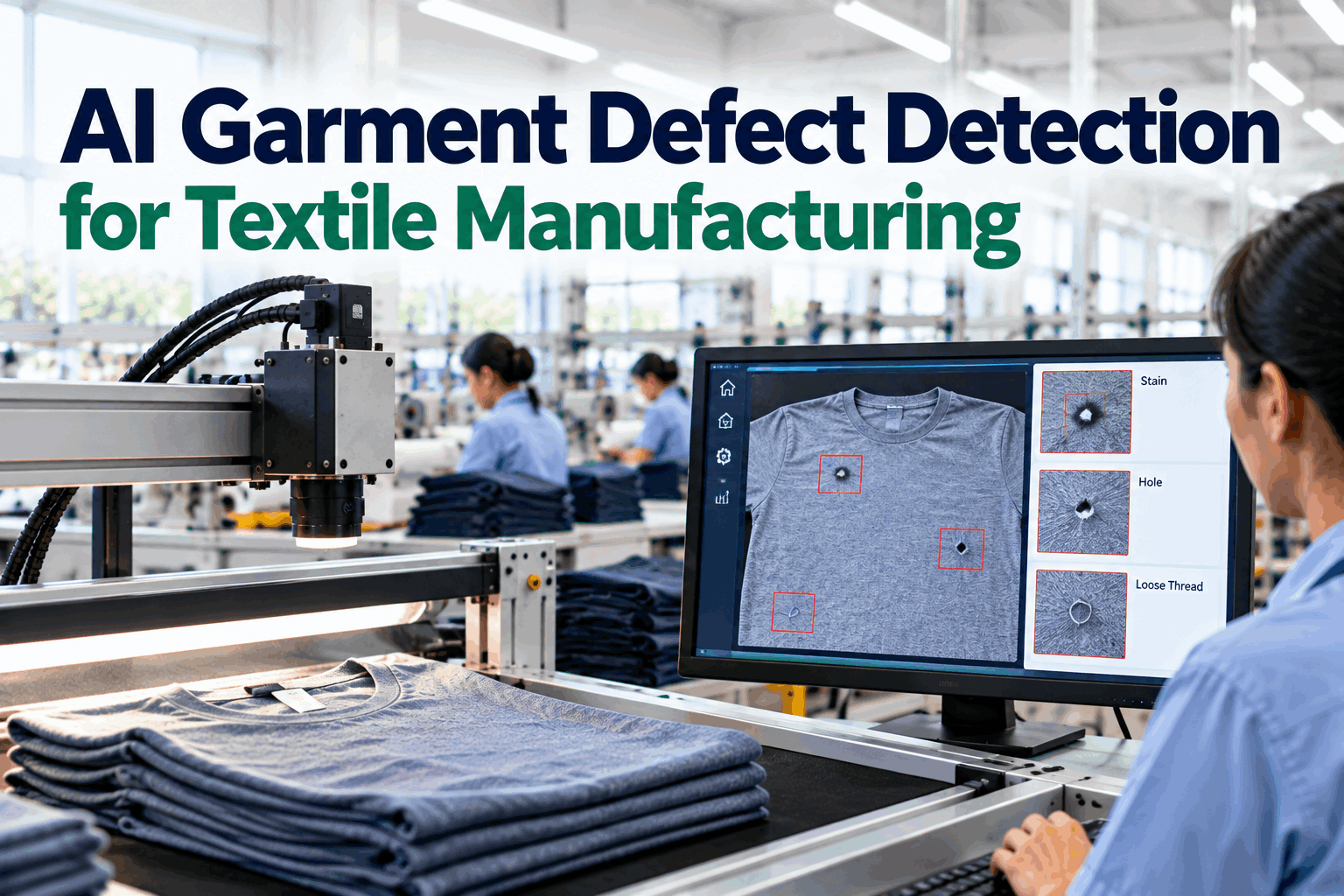
Garment defects cost apparel manufacturers 3 to 5 percent of revenue in returns, chargebacks, and rework. Industry studies show that 60 to 70 percent of garment defects originate at the sewing stage, making stitch and seam inspection the single highest-impact quality intervention point in apparel production. Broken stitches, skipped stitches, puckering, exposed seams, loose threads, and trim misalignment account for the majority of sewing-stage defects. Manual line inspection catches 50 to 65 percent of sewing defects under normal production conditions. The remaining 35 to 50 percent of defective garments reach the packing station, where detection rates drop to near zero before shipment. Retailers reject garment lots with defect rates exceeding 2 to 3 percent, and chargebacks range from 50 to 500 dollars per defective shipment. Automated AI garment inspection using high-resolution cameras and deep learning vision systems achieves 95 to 98 percent detection rates for stitching, seam, and trim defects at line speeds of 20 to 60 garments per minute. The automated garment inspection market reached 850 million dollars in 2024 and is projected to grow at 9.2 percent CAGR as brands tighten quality requirements and labor shortages intensify.
Garment Defect Detection AI for Sewing, Stitch, and Trim Inspection
Stop shipping defective garments. iFactory AI garment inspection detects broken stitches, skipped seams, and trim defects at full line speed with 95 to 98 percent accuracy.
Manual versus AI Garment Inspection
The performance gap between manual sewing-line inspection and AI-powered garment inspection is substantial. Human inspectors working on moving garment lines must identify defects in fractions of a second while managing visual fatigue across long shifts. AI vision systems process every garment at full line speed with consistent accuracy from the first minute of a shift to the last. The comparison below reflects production data from apparel factories using AI inspection systems alongside traditional manual inspection methods.
Garment Defect Classification and AI Detection Rates
Garment defects fall into four primary categories at the sewing and finishing stage. The table below lists the most common defect types within each category along with expected AI detection accuracy from production-grade vision systems deployed in apparel manufacturing environments.
| Category | Defect Type | Description | Severity | AI Detection Rate |
|---|---|---|---|---|
| Stitching | Broken stitch | Thread break causing visible gap in stitch line | Critical | 97-99% |
| Stitching | Skipped stitch | Missing needle penetration in stitch pattern | Critical | 95-98% |
| Stitching | Uneven stitch density | Stitches per inch outside specification range | Major | 93-96% |
| Stitching | Thread tension variation | Loose or tight thread causing distorted seam | Major | 90-94% |
| Seam | Seam puckering | Wavy or gathered fabric along seam line | Critical | 94-97% |
| Seam | Open seam or gap | Seam allowance not fully closed | Critical | 98-99% |
| Seam | Crooked or twisted seam | Seam deviating from intended path | Major | 92-95% |
| Seam | Seam allowance variation | Inconsistent seam width along length | Minor | 88-92% |
| Trim | Loose or uncut thread | Excess thread tail left on finished garment | Major | 95-98% |
| Trim | Misaligned trim or label | Trim piece or care label positioned off-spec | Major | 93-96% |
| Trim | Missing component | Missing button, zipper, snap, or hook | Critical | 99% |
| Cut and Sew | Pleated or tucked fabric | Unintended fabric fold caught in seam | Critical | 96-98% |
Cut garment returns and retailer chargebacks by 80 percent. iFactory AI vision detects twelve defect categories across stitching, seams, trims, and cut-and-sew at production line speeds.
How AI Garment Inspection Works
Modern AI garment inspection follows a four-stage pipeline designed for integration into existing sewing and finishing lines. The system captures images at line speed, classifies defects, grades garments, and feeds data back into production management systems for continuous quality improvement.
Image Capture
High-resolution line-scan or area-scan cameras positioned above and around the garment conveyor capture front, back, and side images of every garment at line speed. Multi-angle lighting systems illuminate stitching details, seam edges, and trim components. Typical resolution ranges from 0.1 to 0.3 millimeters per pixel, sufficient to detect broken threads, skipped stitches, and seam puckering on most garment types.
AI Classification
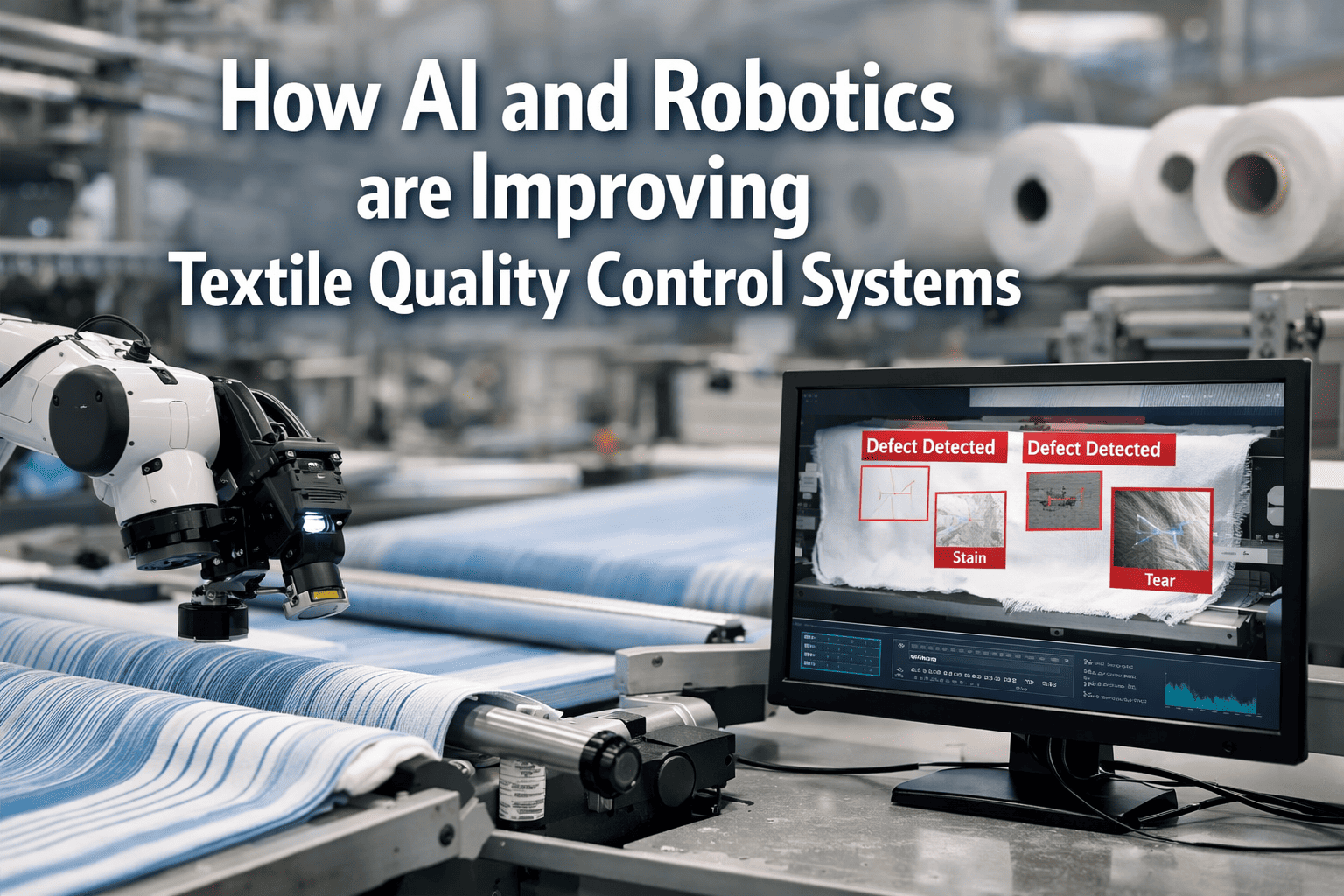
Deep learning models trained on garment-specific defect databases analyze each image in real time. The system classifies detected anomalies into predefined defect categories such as broken stitch, skipped stitch, seam puckering, open seam, loose thread, or missing component. Advanced models using convolutional neural networks achieve inference times of 30 to 80 milliseconds per garment, enabling full inspection at line speeds exceeding 60 garments per minute.
Grading and Sorting
Each garment receives a quality grade based on the number, type, and severity of detected defects. First-quality garments pass through to packing. Second-quality garments are flagged for repair or downgrade. Reject-grade garments are diverted for rework or scrap. Automated sorting gates or conveyor diverters can be triggered based on the AI classification, eliminating the need for manual sorting stations.
Reporting and Analytics
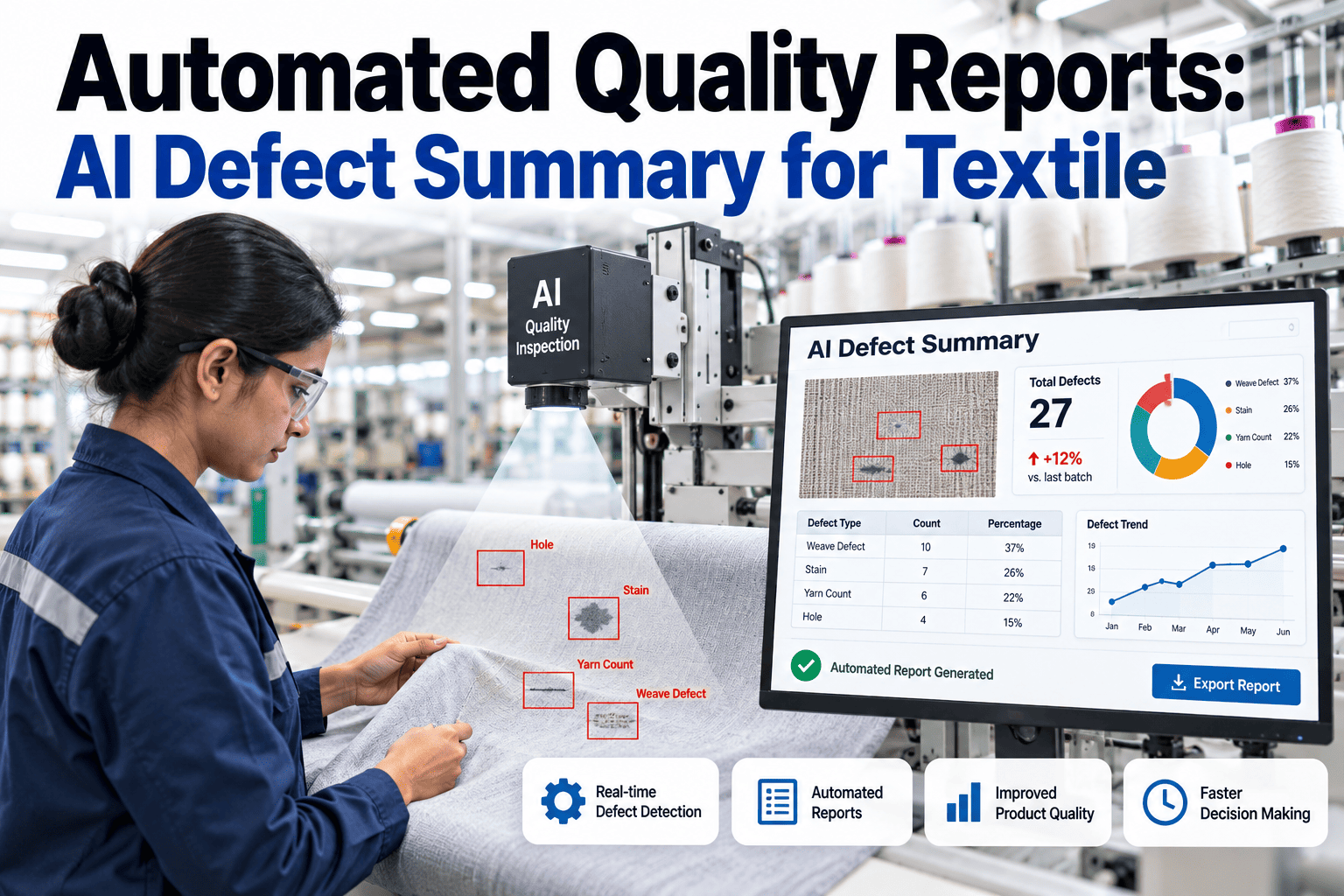
Defect data feeds into a central quality dashboard showing real-time defect rates by style, sewing station, operator shift, and defect category. Trend analysis identifies recurring defect patterns linked to specific machines, operators, or fabric batches. Historical reports support continuous improvement programs and provide documented quality evidence for retailer compliance audits.
Six Criteria for Selecting a Garment AI Inspection System
Not all AI garment inspection systems deliver the same results. Systems vary widely in detection accuracy, speed, ease of deployment, and total cost of ownership. Evaluate every solution against these six criteria before making a purchasing decision. The criteria are based on deployment experience across apparel factories producing woven, knitted, denim, and performance garments.
Detection Model and Training Data
The AI model's performance depends on the quality and volume of training data. Systems trained on 5,000 to 10,000 images per defect category achieve 8 to 15 percent higher accuracy than those trained on fewer than 2,000 images. Verify that the supplier has trained models on garment types matching your production including woven shirts, knit T-shirts, denim jeans, jackets, and performance wear. Continuous model updates as new defect patterns emerge are essential for long-term accuracy.
Inspection Speed and Camera Coverage
Match the system's inspection speed to your production line throughput. Entry-level systems inspect 15 to 25 garments per minute. Mid-range systems reach 40 to 50 garments per minute. High-speed systems exceed 60 garments per minute. Full garment coverage requires multiple cameras capturing front, back, inside, and side views. Systems with fewer than four camera positions may miss defects on unseen garment surfaces. Camera resolution of at least 0.3 millimeters per pixel is recommended for stitch-level defect detection.
Defect Classification Granularity
Systems differ in how finely they classify defects. Basic systems flag a garment as pass or fail with no defect type identification. Advanced systems classify defects by category, type, severity, and exact location on the garment. Granular classification enables targeted rework, root cause analysis, and operator training. Demand a system that outputs defect type, severity grade, and pixel-level coordinates for each anomaly detected.
Style Changeover and Flexibility
Factories running multiple garment styles need a system that adapts quickly. AI systems with automatic style recognition can detect garment type and adjust inspection parameters without operator intervention. Systems requiring manual reconfiguration for each style change create operational bottlenecks that reduce the value of automation. Look for systems that support style libraries, auto-detection of garment geometry, and changeover times under five minutes between different garment types.
False Positive Rate and Over-Detection
A system that flags acceptable variations as defects creates operator fatigue, slows production, and reduces trust in the system. Demand a false positive rate below 5 percent for your garment types. Premium systems use hierarchical classification that applies strict criteria for critical defects and adjustable thresholds for minor defects. The ability to tune sensitivity per defect category without requiring model retraining is a key operational feature.
Local Support and Integration Capability
Garment AI inspection systems require ongoing model updates, camera calibration, and integration with existing MES or ERP systems. Evaluate the supplier's local service presence, remote diagnostic tools, and software update track record. Systems that integrate with standard data formats such as JSON, XML, or REST APIs simplify MES integration. Suppliers with dedicated on-site installation and training teams reduce deployment time and improve long-term system adoption.
ROI Calculation for AI Garment Inspection
The financial return from AI garment inspection comes from four measurable cost reductions: labor savings, returns and chargeback reduction, rework cost reduction, and seconds downgrade elimination. The table below models the annual impact for a mid-size apparel factory producing 3 million garments per year at an average selling price of 25 dollars per garment with a 4 percent defect rate before AI implementation.
| Cost Category | Before AI (Manual) | After AI Inspection | Annual Savings |
|---|---|---|---|
| Inspection labor (2 lines, 2 shifts) | $168,000 | $56,000 | $112,000 |
| Customer returns and chargebacks | $240,000 | $48,000 | $192,000 |
| Rework and repair cost | $150,000 | $45,000 | $105,000 |
| Seconds and markdown losses | $90,000 | $27,000 | $63,000 |
| Total annual cost | $648,000 | $176,000 | $472,000 |
Frequently Asked Questions
What garment types can AI vision inspection handle?
AI garment inspection systems can handle woven shirts, knit T-shirts, denim jeans, jackets, trousers, dresses, activewear, performance garments, and knitted sweaters. The key requirement is that the garment can be presented to cameras in a consistent orientation on a conveyor or hanger system. Complex garment types such as lined jackets, multi-layer garments, and heavily embellished items may require additional camera angles or lighting configurations. Most suppliers offer application engineering services to configure the system for your specific garment mix. Systems with automatic style recognition can switch between different garment types without manual reconfiguration, making them suitable for factories with high style-mix variability.
Can AI detect defects on dark-colored or black garments?
Yes, with appropriate camera and lighting configuration. Dark-colored garments require higher-intensity illumination and cameras with higher dynamic range to resolve thread and seam details against dark backgrounds. Infrared or near-infrared imaging can enhance thread contrast on dark fabrics. Systems with co-axial lighting or dark-field illumination techniques perform better on dark and black garments than standard front-light configurations. When evaluating suppliers, specifically request performance data on dark-colored garments matching your production mix. Detection rates on black garments are typically 2 to 4 percent lower than on light-colored fabrics and should be factored into system accuracy specifications.
Does AI garment inspection replace human inspectors completely?
Most successful AI garment inspection deployments use a human-machine partnership model. The AI system serves as the primary high-speed inspector, detecting and classifying defects on every garment at line speed. Human inspectors are redeployed to handle flagged garments, verify ambiguous defect classifications, and perform spot checks on random samples. This model typically reduces the inspection workforce by 60 to 70 percent while achieving higher overall detection rates than either humans or AI alone. Full automation is technically feasible for standard garment types with well-defined defect libraries but is not recommended for factories with high style diversity or frequent new product introductions.
What is the typical payback period for an AI garment inspection system?
Most apparel manufacturers achieve full return on investment within 6 to 12 months. The primary drivers are inspection labor reduction of 60 to 70 percent, customer return and chargeback reduction of 70 to 80 percent, rework cost reduction of 50 to 60 percent, and seconds downgrade elimination of 40 to 50 percent. Higher-volume factories with multiple production lines, two or three shift operations, and high defect rates see the fastest payback typically within 4 to 8 months. Factories with lower throughput or single-shift operations typically see payback within 10 to 16 months. System cost ranges from 50,000 to 250,000 dollars depending on camera configuration, line speed, and integration requirements.
How does AI inspection handle garment style changes on the same line?
Modern AI garment inspection systems handle style changes through automatic style recognition or operator-assisted style selection. Systems with automatic style recognition use the camera image to identify garment geometry, panel layout, seam positions, and trim locations, then load the corresponding inspection profile without operator intervention. Profile-based systems require the operator to scan a barcode or select the style from a touchscreen, which loads pre-configured inspection parameters including defect criteria, sensitivity thresholds, and grade boundaries. The best systems enable style changeover in under 30 seconds without stopping the production line. The key is building a comprehensive style library during deployment so that every style in your product range is pre-configured with validated inspection parameters.
Stop losing revenue to defective garments. iFactory AI garment inspection detects broken stitches, skipped seams, and trim defects with 95 to 98 percent accuracy at production line speeds.