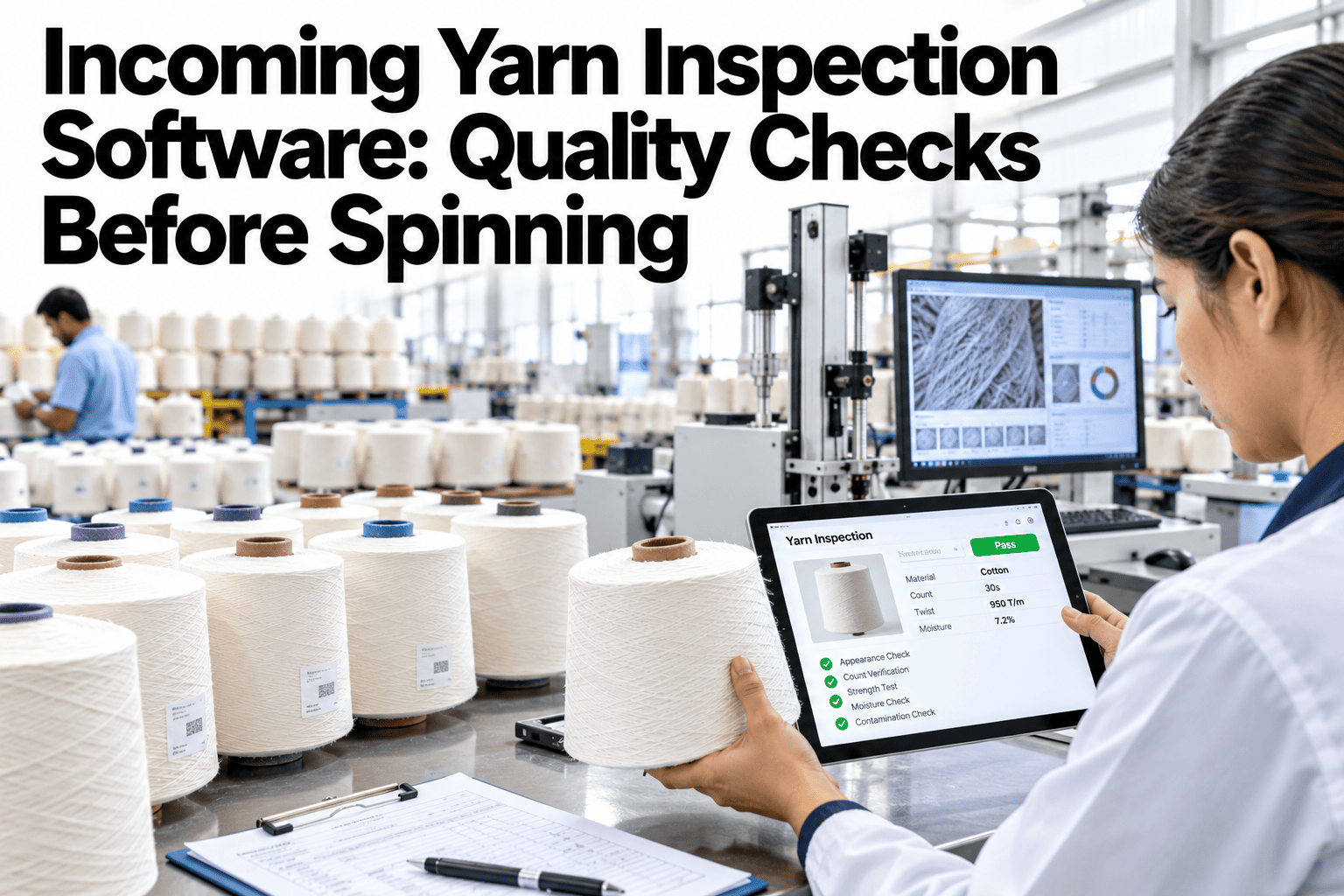
Yarn problems are cheapest to stop at the gate. Once a lot has been spun into fabric, a count or strength issue has already cost warping, weaving and dyeing time, and the only remaining choice is who pays for it. A structured incoming inspection decides, before spinning or weaving begins, whether a lot is accepted, held or rejected, and records why. This checklist walks through every step of that routine, and mills that want it tracked automatically can ask iFactory AI how incoming yarn results are recorded and linked to production.
The Incoming Yarn Inspection Checklist: Quality Checks Before Spinning and Weaving
From paperwork to package to lab results, iFactory AI keeps every incoming lot on one record, so accept, hold and reject decisions are fast, consistent and traceable.
The Inspection Flow and Where Each Checklist Fits
Every lot passes through the same stages. Each checklist below supports one of them.
Tick First: The Yarn Parameters Worth Testing
Which tests you run depends on the end use, but these are the common ones. Agree limits with each supplier in writing.
| Parameter | What It Shows | Why It Matters Downstream |
|---|---|---|
| Count and count variation | Whether the yarn is the right thickness and consistent | Fabric weight, barre and shade |
| Strength and elongation | How well the yarn withstands tension | Breaks in warping, weaving and knitting |
| Evenness and imperfections | Thin places, thick places and neps | Visible faults and breaks |
| Twist | Whether twist matches the specification | Hand feel, strength and fabric appearance |
| Hairiness and cleanliness | Surface fibres and foreign matter | Friction, snags and contamination |
| Moisture regain | Water content of the yarn | Weight billing and process behaviour |
Checklist 0: Setup Before the First Lot
Set the routine up once and every lot becomes easier. Tick each box before inspecting.
Checklist 1: Documents and Identification at Receipt
Before touching the yarn, confirm that it is what was ordered.
Checklist 2: Physical Package Inspection
Many problems are visible without a lab. Walk the load before unloading is complete.
Stop Finding Yarn Problems After the Fabric Is Woven
Book a 30-minute session and iFactory AI will review your receiving routine and past complaints to show how incoming checks can protect spinning, weaving and dyeing.
Checklist 3: Laboratory Tests
Sample according to the plan, condition the samples, then test. Tick each box as results are recorded.
Checklist 4: The Accept, Hold or Reject Decision
Every lot needs a recorded decision and a reason, even when it is accepted.
Checklist 5: Storage and Handling
Good yarn can be damaged between receipt and use. Run this list on every store.
Checklist 6: Supplier Feedback and Weekly Review
Inspection is also a conversation with the supplier. Close the loop every week.
Mistakes to Avoid: The Do-Not-Tick List
If any of these describe your routine, fix them first.
What iFactory AI Ticks Off For You
iFactory AI is smart manufacturing and industrial software for textile operations. These items can run automatically once the lot record is connected.
Score Your Incoming Yarn Inspection
Count the boxes you can honestly tick across all the checklists above, then read your result.
Under 15 ticked
Inspection is informal. Start with setup, documents and a sampling plan.
15 to 30 ticked
The basics work. Focus on testing discipline and recorded decisions.
30 to 40 ticked
A solid routine. Automate comparisons and supplier feedback.
Above 40 ticked
Excellent. Share the routine and benchmark supplier results.
Review of Incoming Yarn Inspection
A practical review of what makes incoming checks effective, written as editorial guidance rather than a named expert quote.
Test what the end use needs
A shorter, well-chosen test list used on every lot beats a long list used rarely.
Sample the whole lot
One package cannot represent a delivery, so sample across the lot.
Record every decision
A recorded reason turns a disagreement into evidence.
Frequently Asked Questions
Why inspect incoming yarn before spinning or weaving?
Problems found at the gate cost far less than problems found in fabric. See an incoming lot decision in a live demo with realistic data. A recorded decision also gives you evidence in supplier discussions. Early checks protect every later process.
Which tests should we run on every lot?
Common choices are count, strength, evenness and imperfections, and twist where specified, with hairiness and cleanliness added as needed. The end use decides the list. Agree the limits with each supplier in writing.
How many packages should we sample?
Follow the plan agreed with the supplier, drawing samples from several packages across the lot rather than one. Ask support how sampling plans are stored per yarn type in the system. A written plan keeps results defensible.
What should happen to a held lot?
It should be separated, tagged and reviewed by a named person against agreed limits, then released, reworked or rejected with a recorded reason. Holding without a deadline simply moves the problem.
How quickly can a mill improve its incoming inspection?
Many mills tighten the routine within weeks by agreeing limits and recording decisions. Book time to scope an incoming inspection pilot for one yarn type. Visible supplier trends build support for expansion.
Make Every Yarn Lot Earn Its Place on the Floor
iFactory AI records, compares and links every incoming lot so only yarn that meets the standard enters production. Book a walkthrough to see it on your own receiving data.