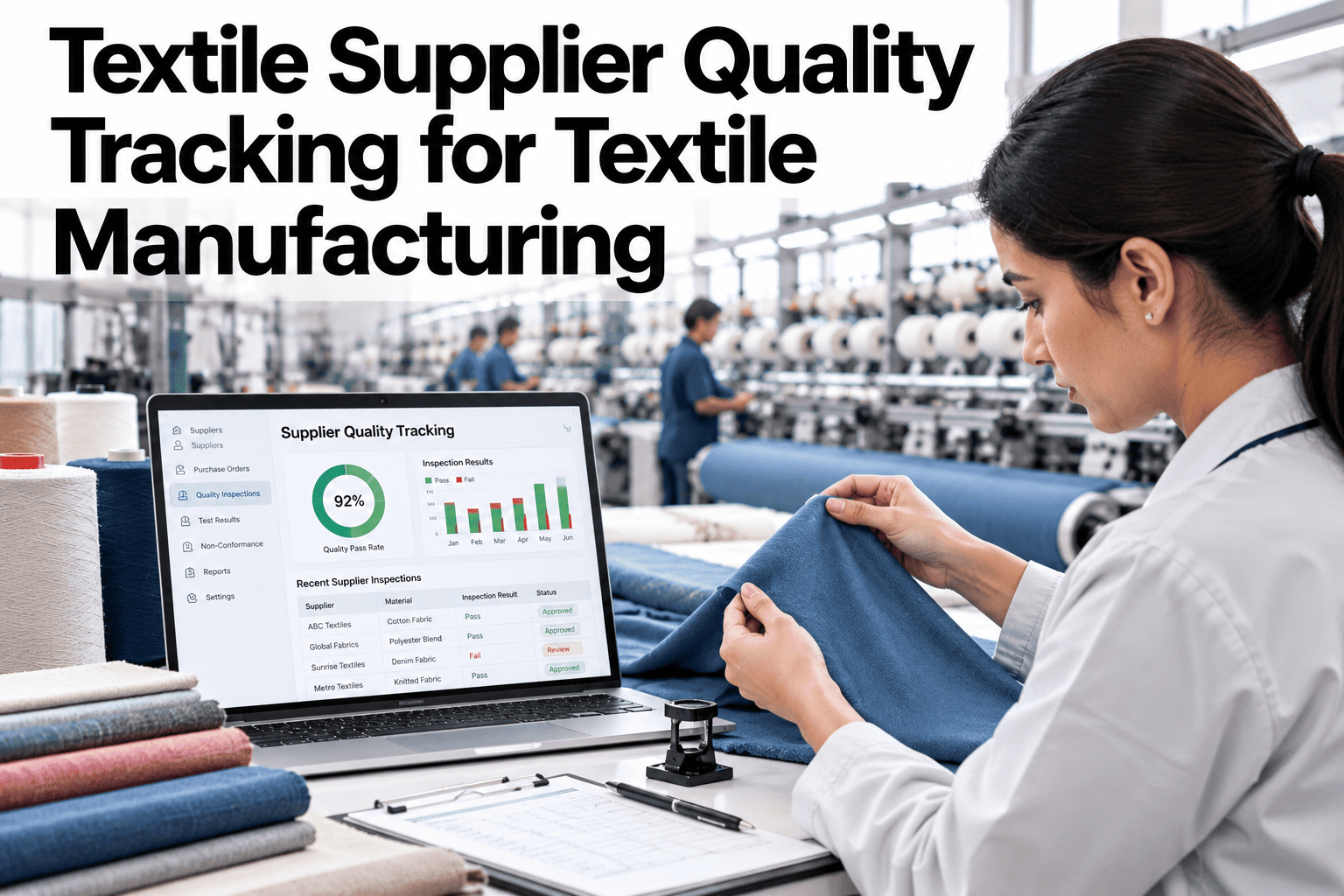
A fabric problem often starts before the fabric exists. A yarn lot with uneven count, a dye with a shifted strength or a greige delivery that arrives out of specification will show up in your product long after the supplier has invoiced. Tracking supplier quality turns those scattered surprises into a score that every buyer, planner and quality lead can see. Teams that want that clarity can ask iFactory AI how supplier results are linked to your production lots.
Know Which Suppliers Protect Your Quality and Which Do Not
iFactory AI links incoming yarn, fabric and chemical results to the lots they became, so supplier quality is scored on real production impact, not just paperwork.
What a Supplier Scorecard Should Measure
A scorecard works when it measures what actually affects your product. These four measures cover most of it.
What to Track for Each Supplier Type
Yarn, fabric and chemicals fail in different ways. This table shows what to watch for each.
| Supplier Type | What to Track | Typical Risk |
|---|---|---|
| Yarn suppliers | Count variation, strength, hairiness, cleanliness | Variation that shows later as barre or breaks |
| Greige fabric suppliers | Weight, width, defect level, shrinkage | Defects discovered after dyeing |
| Dye and chemical suppliers | Strength, purity, batch-to-batch consistency | Shade shifts and process upsets |
| Trims and packaging | Dimensions, colour match, labelling accuracy | Delays and customer-facing errors |
Which Supplier Issues Hurt Which Process
Supplier problems travel downstream. The matrix, shown as an illustration, shows where each tends to bite.
| Issue | Yarn | Fabric | Chemicals |
|---|---|---|---|
| Count or weight variation | High | High | Low |
| Strength or performance gaps | High | Moderate | Moderate |
| Shade or colour drift | Moderate | High | High |
| Packaging and labelling errors | Moderate | Moderate | Moderate |
An Incoming Inspection Routine in Five Steps
A consistent routine makes supplier data comparable. These steps work for yarn, fabric and chemicals.
Record supplier, lot and quantity on arrival.
Take samples by an agreed plan for each material.
Measure the parameters that matter to your product.
Accept, hold or reject with a recorded reason.
Send results to the supplier and the production team.
Turn Supplier Surprises Into a Visible Scorecard
Book a 30-minute session and iFactory AI will review your incoming records and downstream defects to show which suppliers cost you the most.
Reactive Complaints or Tracked Performance
Most teams handle suppliers by complaint. Tracked performance changes the conversation entirely.
Where Supplier Management Matures
Supplier quality management improves in clear steps. Knowing your step shows what to do next.
What a Supplier Problem Costs Downstream
The invoice is only the start. The chart shows an illustrative view of where supplier-caused costs usually land.
A Composite Scenario: The Yarn Lot That Cost a Month
This is a composite example, not a named mill. It shows how linked records protect the relationship and the bill.
Supplier Review Meeting Checklist
Run this list at each review. It keeps the meeting factual and short.
What iFactory AI Adds to Supplier Quality
iFactory AI is smart manufacturing and industrial software for textile operations. Explore supplier tracking in a live product tour on realistic data.
Lot-Level Linking
Incoming yarn, fabric and chemical lots are linked to the production lots they became.
Live Scorecards
Supplier scores update as results arrive, not at month end.
Impact Costing
Downstream rework and downgrades are attributed to the supplier lots behind them.
Shareable Reports
Supplier packs show the same evidence your team sees.
Review of Supplier Quality Tracking
A practical review of what makes supplier scorecards credible, written as editorial guidance rather than a named expert quote.
Score on impact
A supplier is judged by what its material did in your process, not just by paperwork.
Share the data
Suppliers improve faster when they see the same evidence you do.
Review on a schedule
Regular reviews keep the conversation constructive and prevent surprises.
Frequently Asked Questions
Why track supplier quality in a textile plant?
Many defects start in yarn, fabric or chemicals, and without tracking you only meet them downstream. A scorecard shows which suppliers help and which cost you. See a live supplier scorecard on realistic data in a short walkthrough. It also strengthens negotiations.
What should a supplier scorecard include?
Incoming defect rate, lot-to-lot consistency, delivery reliability and documentation accuracy cover most needs. Keep it short, and add measures only if they change decisions. A scorecard everyone understands gets used.
How do we link supplier lots to production?
Record the supplier lot number at receipt and carry it onto every production lot that uses it. Ask support how lot linking works across your processes in practice. Linking turns complaints into evidence.
Will suppliers accept being scored?
Most do, especially when scores are fair, evidence-based and shared with them. Open data usually leads to better supplier behaviour than silent complaints. Start with one or two key suppliers to build the habit.
How quickly can we see results?
Many mills see their first useful supplier insight within weeks of linking incoming data to lots. Book a call to scope a first supplier tracking pilot with your biggest supplier. One clear finding makes the case for the rest.
Hold Every Supplier to the Standard Your Product Needs
iFactory AI links supplier results to the lots they became, so quality is protected from the first delivery. Book a walkthrough to see it on your own supplier data.