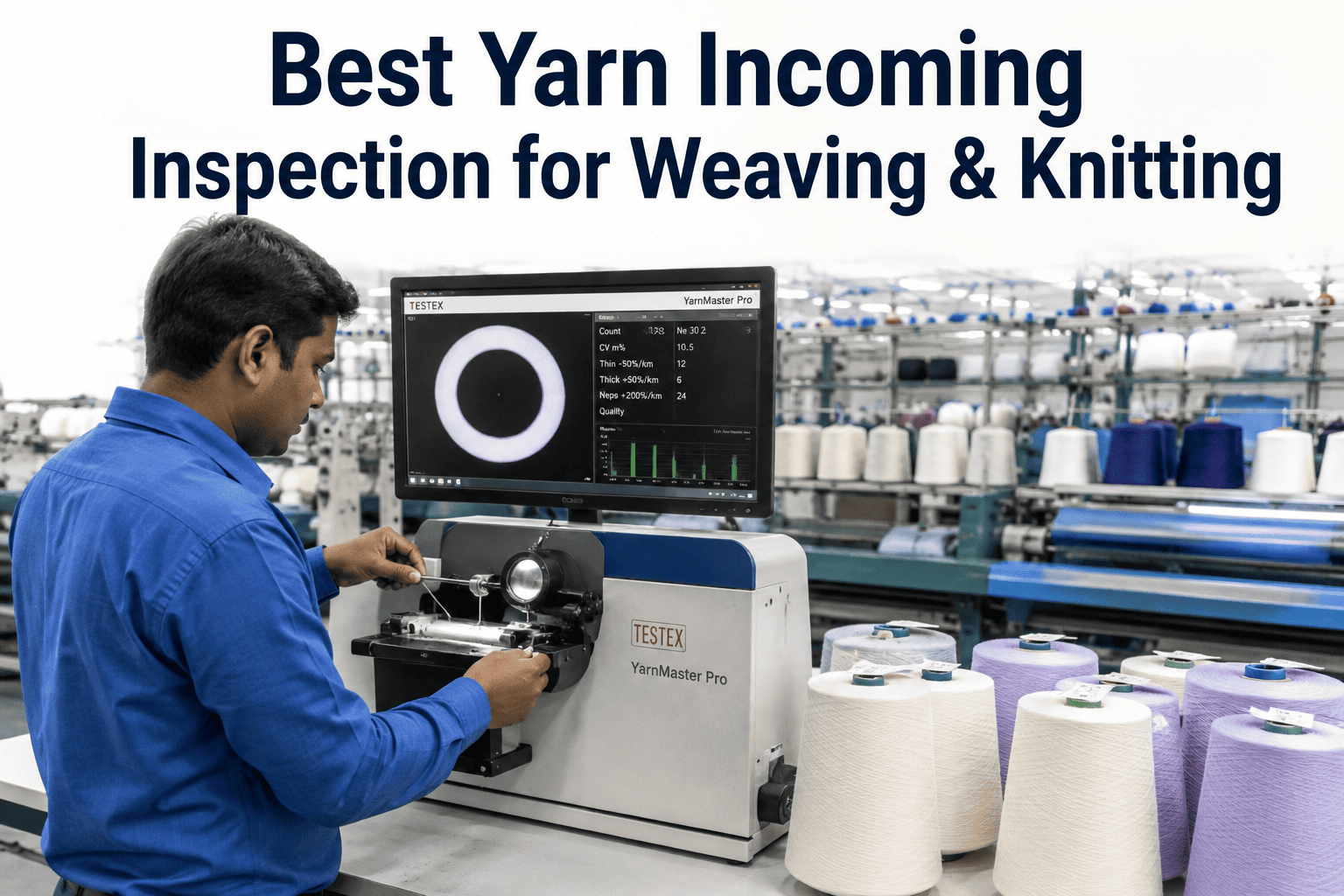
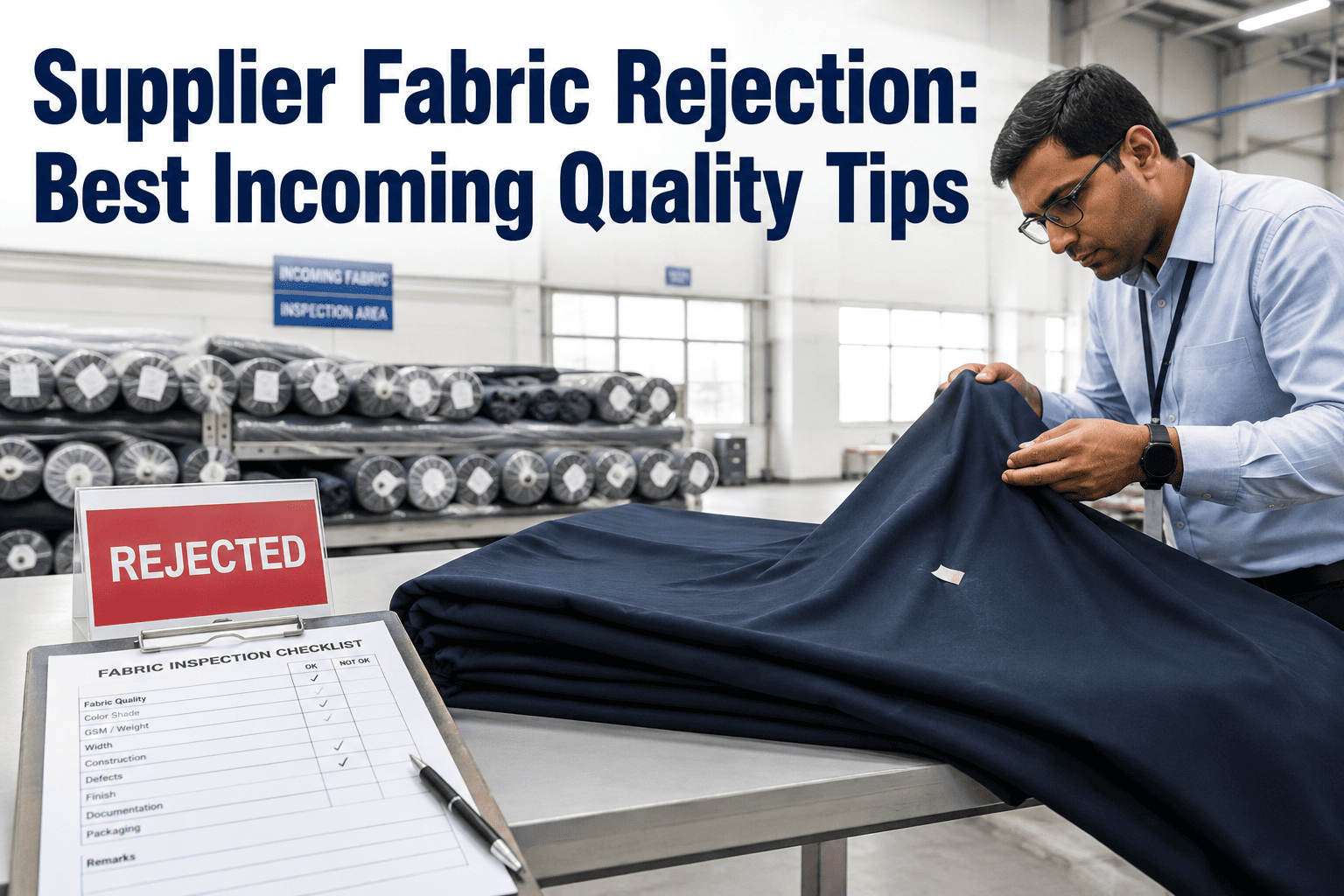
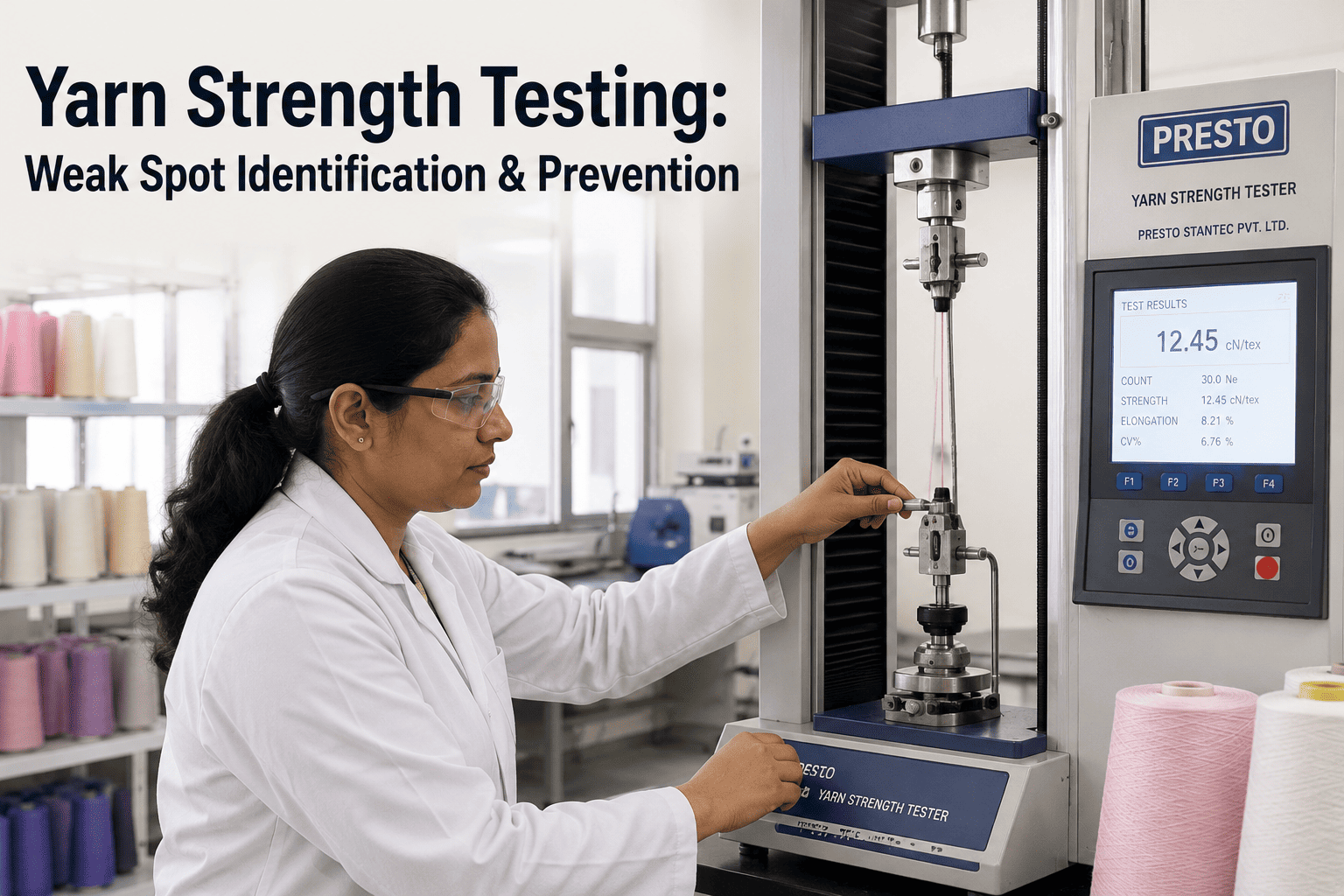
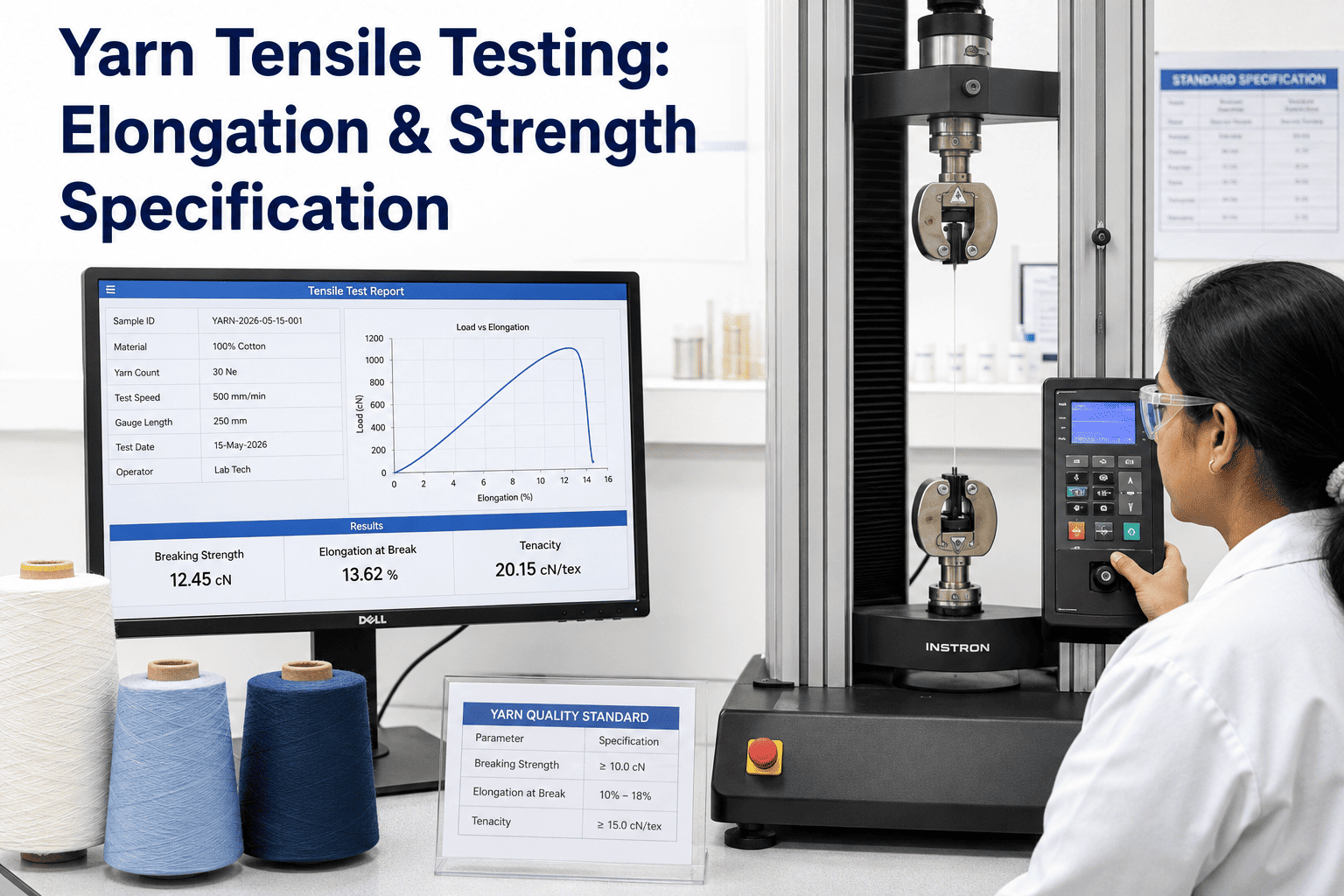
Every downstream problem in a weaving or knitting mill has an easy first suspect: the yarn. Sometimes that suspicion is correct, and sometimes it is a convenient place to stop looking, and the only way to tell the difference is a genuine incoming inspection that checks count, strength, and evenness before the yarn ever reaches a loom or knitting machine. Mills that skip this step end up running quality investigations backward, tracing fabric defects all the way back to a yarn lot that should have been rejected at receiving. Book a demo to see incoming yarn inspection data connected directly to your production floor.
Weaving & Knitting · Yarn Quality
The Yarn Lot That Fails Later Was Never Actually Checked at Receiving
Count verification, strength testing, and evenness assessment applied consistently to every incoming yarn lot, so acceptance decisions are based on data, not the supplier's own certificate.
3
Core tests that catch most incoming yarn quality issues before production
Three Tests, Three Different Failure Types
Count, strength, and evenness each catch a different category of yarn problem, and a lot that passes one test can still fail badly on another, which is why all three belong in a standard incoming check rather than a single pass or fail decision.
Count Verification
Confirms actual linear density matches the ordered count within tolerance, since count drift changes fabric weight and construction even when the yarn otherwise looks normal.
Strength Testing
Measures tensile strength and elongation against a minimum threshold, catching lots that will produce excessive breakage even if count and appearance are acceptable.
Evenness Assessment
Detects thick and thin places along the yarn that cause visible fabric defects and irregular dye uptake, independent of average count or strength.
What Happens When Each Test Is Skipped
| Test Skipped | Downstream Consequence |
| Count Verification | Fabric weight variance and construction inconsistency discovered only after weaving or knitting is complete |
| Strength Testing | Elevated end-down or yarn break rate traced back to the yarn lot only after significant production time is lost |
| Evenness Assessment | Visible fabric defects and shade variation appear at inspection, well after the yarn is already committed to production |
Catch a Bad Yarn Lot at Receiving, Not at Fabric Inspection.
iFactory logs count, strength, and evenness results against every incoming lot, so acceptance decisions are consistent and traceable back to the exact test data, not a supplier certificate alone.
Getting Sampling Right Without Slowing Down Receiving
Full testing of every package in a lot is rarely practical, but a defensible sampling plan can still catch the overwhelming majority of genuine quality issues without holding up the receiving process for hours.
1
Define a Consistent Sample Size
Set a fixed number of packages sampled per lot based on lot size, applied the same way regardless of supplier or urgency.
2
Sample Across the Full Lot
Draw samples from multiple points across the lot rather than the first few accessible packages, to catch variation within the lot itself.
3
Record Results Against the Lot Number
Log every test result against the specific lot and supplier, building a quality history that outlasts any single receiving decision.
We were relying entirely on supplier test certificates for years, which worked fine until it didn't. A batch of yarn that had a clean certificate on paper turned out to have significant evenness problems that only showed up once fabric started coming off the loom with a visible pattern of thick and thin bands. We lost almost a full week of production before tracing it back to that single lot. Since we started running our own evenness and strength checks on every incoming lot regardless of the paperwork, we've caught two similar issues before they ever reached a loom.
— Quality Manager, Composite Weaving Mill, Bhilwara
Setting Acceptance Criteria That Actually Reflect Your Production
Generic industry tolerance bands are a reasonable starting point, but the acceptance criteria that matter most are the ones calibrated against what your specific looms or knitting machines can actually tolerate.
Count Tolerance
Set tighter tolerance for fabric constructions where weight consistency is a customer specification, looser where it is less critical.
Strength Threshold
Calibrate minimum strength against the actual tension your machines apply, not just a generic industry reference value.
Evenness Limits
Set stricter evenness limits for fabrics with visible surface requirements than for constructions where minor variation is hidden by texture.
Yarn Incoming Inspection — Frequently Asked Questions
Is it necessary to test every incoming yarn lot even from a long-trusted supplier?
Testing every lot, even from a supplier with a strong track record, is worth maintaining because supplier consistency can change for reasons unrelated to their overall reputation, such as a different production line, a raw material substitution, or a process adjustment on their end that never gets communicated. A lighter sampling plan for trusted suppliers is reasonable, but removing testing entirely means the first sign of a problem becomes a fabric defect rather than a receiving rejection.
Contact support for help calibrating a sampling plan by supplier history.
How large a sample size is actually needed to catch most incoming yarn quality issues?
Sample size should scale with lot size rather than using a fixed number regardless of how much yarn is in a shipment, since a small fixed sample from a very large lot provides much weaker statistical confidence than the same sample size from a smaller lot. A structured sampling plan tied to lot size and drawn from multiple points across the lot, rather than convenience sampling from the first available packages, catches meaningfully more genuine quality issues without requiring full lot testing.
What is the difference between a count problem and an evenness problem in practice?
Count measures the average linear density of the yarn across its full length, while evenness measures how much that density varies at specific points along the yarn. A yarn lot can have a perfectly correct average count and still have significant evenness problems, with thick and thin sections that average out to the right number but cause visible fabric defects and irregular dye uptake at those specific points. Both need to be tested separately because a passing count result gives no information about evenness.
Should acceptance criteria be the same across all fabric constructions produced from the same yarn?
Acceptance criteria are more effective when calibrated to the specific end use rather than applied as one blanket standard, since a yarn defect that is invisible in a heavily textured fabric construction may be highly visible in a smooth, tightly woven one. Setting tighter tolerance for constructions where surface uniformity is a customer specification, and slightly looser tolerance where texture masks minor variation, allows a mill to reject genuinely risky lots without over-rejecting yarn that would have performed fine for a specific product.
How does incoming inspection data help beyond the immediate accept or reject decision?
Logged against lot and supplier over time, incoming inspection data builds a quality history that becomes useful well beyond the individual receiving decision, revealing patterns such as a specific supplier's evenness gradually drifting worse over several months, or a particular yarn count consistently running near the strength threshold. That trend data supports supplier conversations and sourcing decisions with evidence, rather than relying on anecdotal impressions of which supplier has been causing problems recently.
Stop Discovering Yarn Problems at Fabric Inspection.
Verify count, strength, and evenness on every incoming lot, and catch the yarn that would have failed downstream before it ever reaches a loom or knitting machine.