Fabric strength failures rarely show up on the cutting table — they show up months later as a seam blowout on a customer's first wear, a torn pocket during shipping, or a burst mattress ticking under normal pressure, at which point the cost is no longer a rejected sample but a full retail return and a damaged supplier relationship. Three mechanical tests govern most strength specifications: tensile strength measures resistance to straight-line pulling force, tear strength measures resistance to a propagating rip once damage has started, and bursting strength measures resistance to multidirectional pressure typical of knit fabrics under stretch. Each test uses different equipment, sample geometry, and failure mechanics, and a fabric engineered to resist one type of stress can still fail badly under another. Quality teams that test only one method because it is the fastest or cheapest to run consistently miss the specific failure mode that later shows up in the field, since a fabric's weakest property is rarely the one covered by whichever single test happens to be routine. Book a Demo to see how iFactory tracks strength trends across every fabric lot before a weak batch reaches cutting.
Relative Force Required to Fail Common Fabric Types (Illustrative)
Lightweight Cotton Poplin
18 kgf
Polyester Knit Jersey
24 kgf
A Strong Sample Doesn't Guarantee a Strong Lot. Track Every Batch.
iFactory captures tensile, tear, and burst results across every production lot, flags fabric trending below specification before it reaches cutting, and builds a strength history you can defend in any buyer audit.
The Three Mechanical Strength Tests and What Each One Measures
Tensile, tear, and burst testing measure fundamentally different failure modes, and a buyer technical pack typically requires all three for wovens while knits are usually tested for burst strength alone due to their stretch behavior. Compare your current fabric strength results against category benchmarks with our quality team.
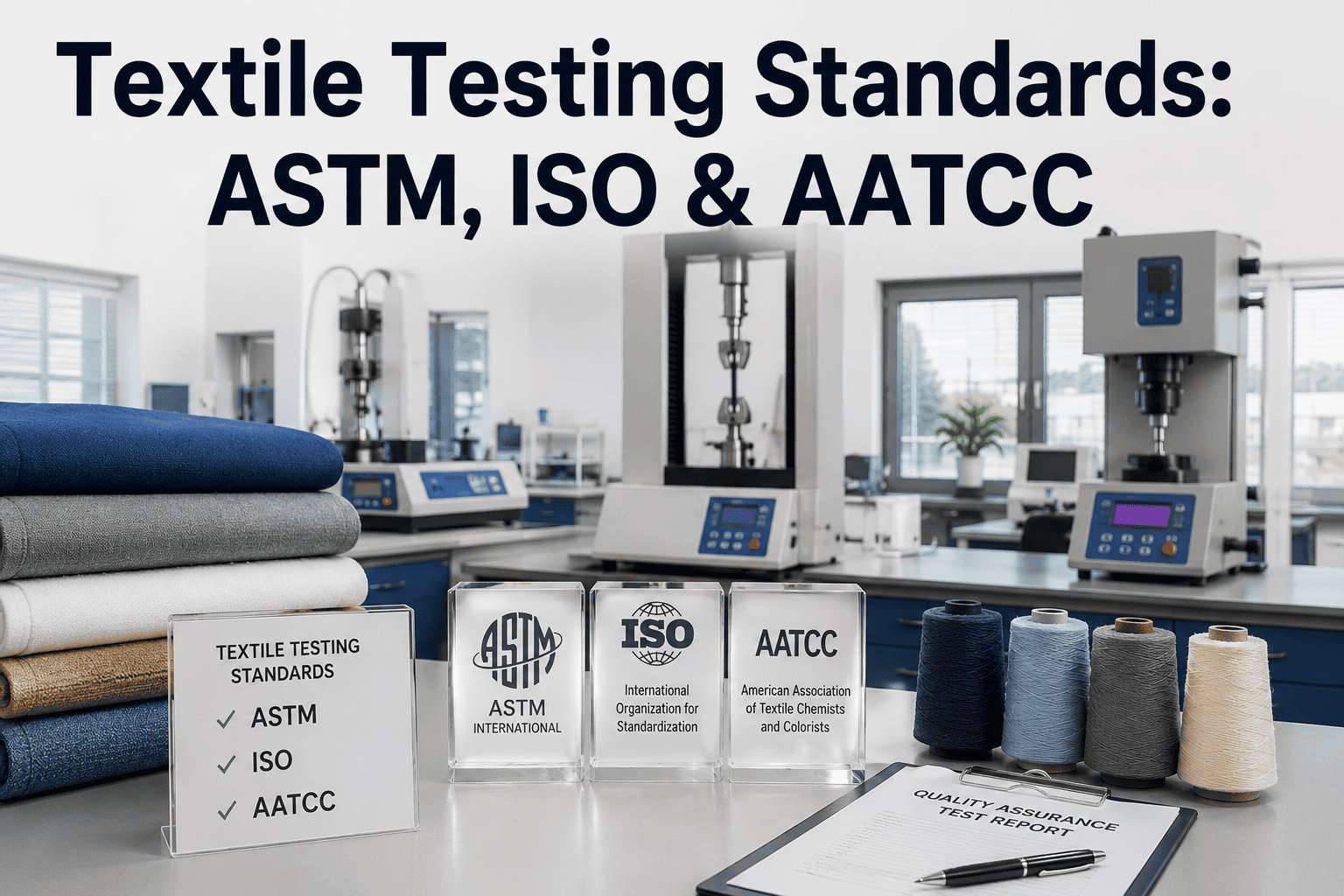
ASTM D5034 / ISO 13934-1
Grab Tensile Strength
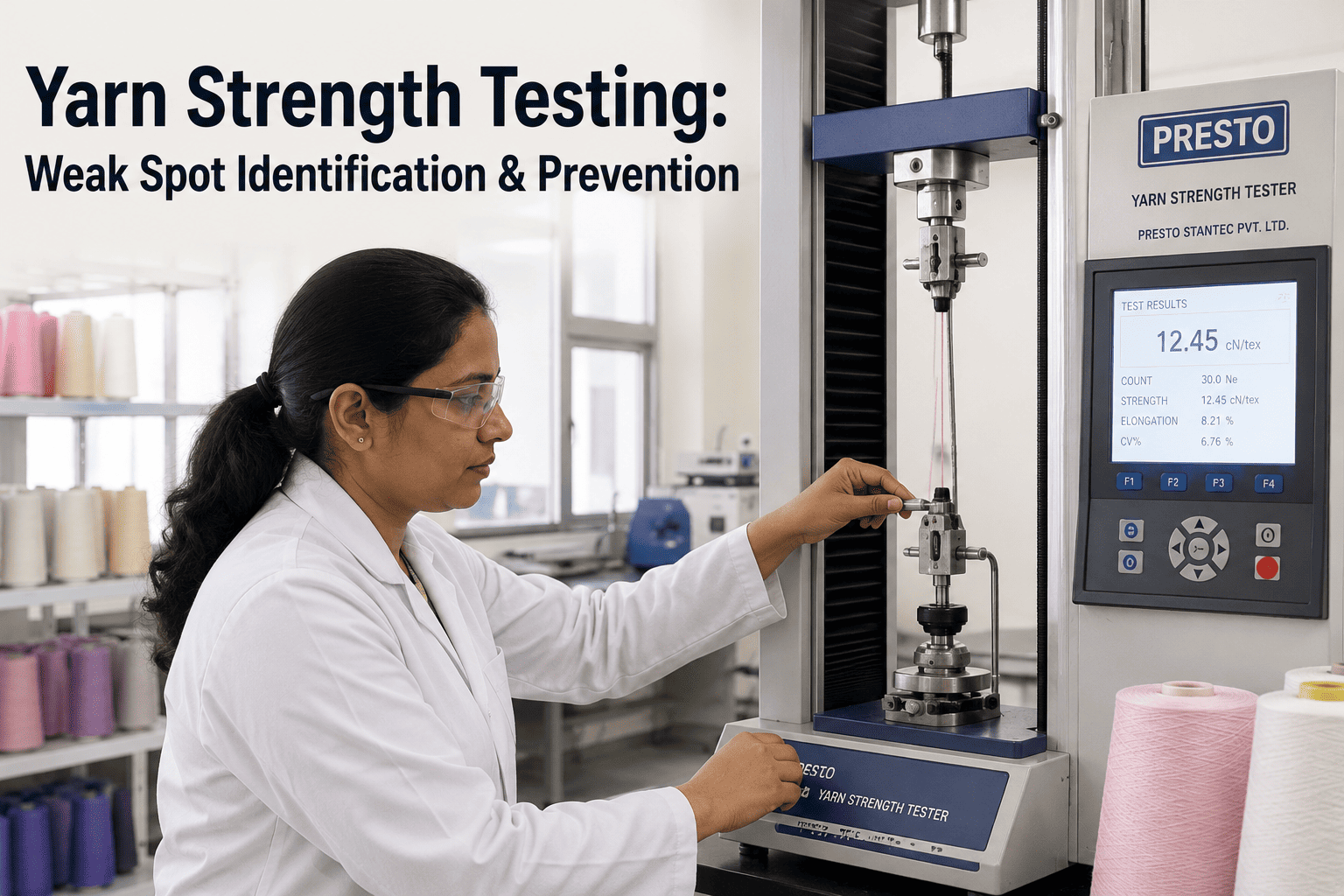
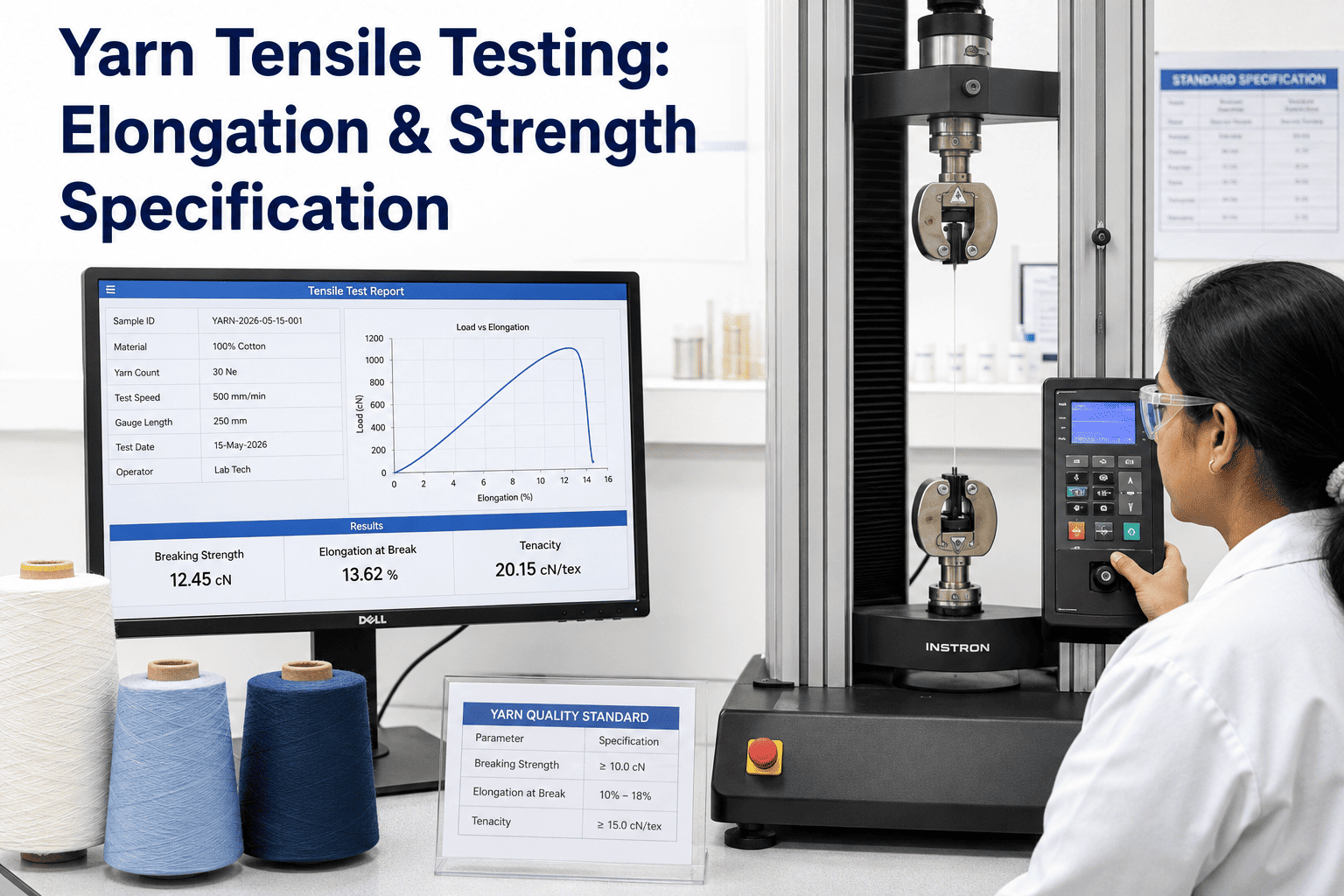
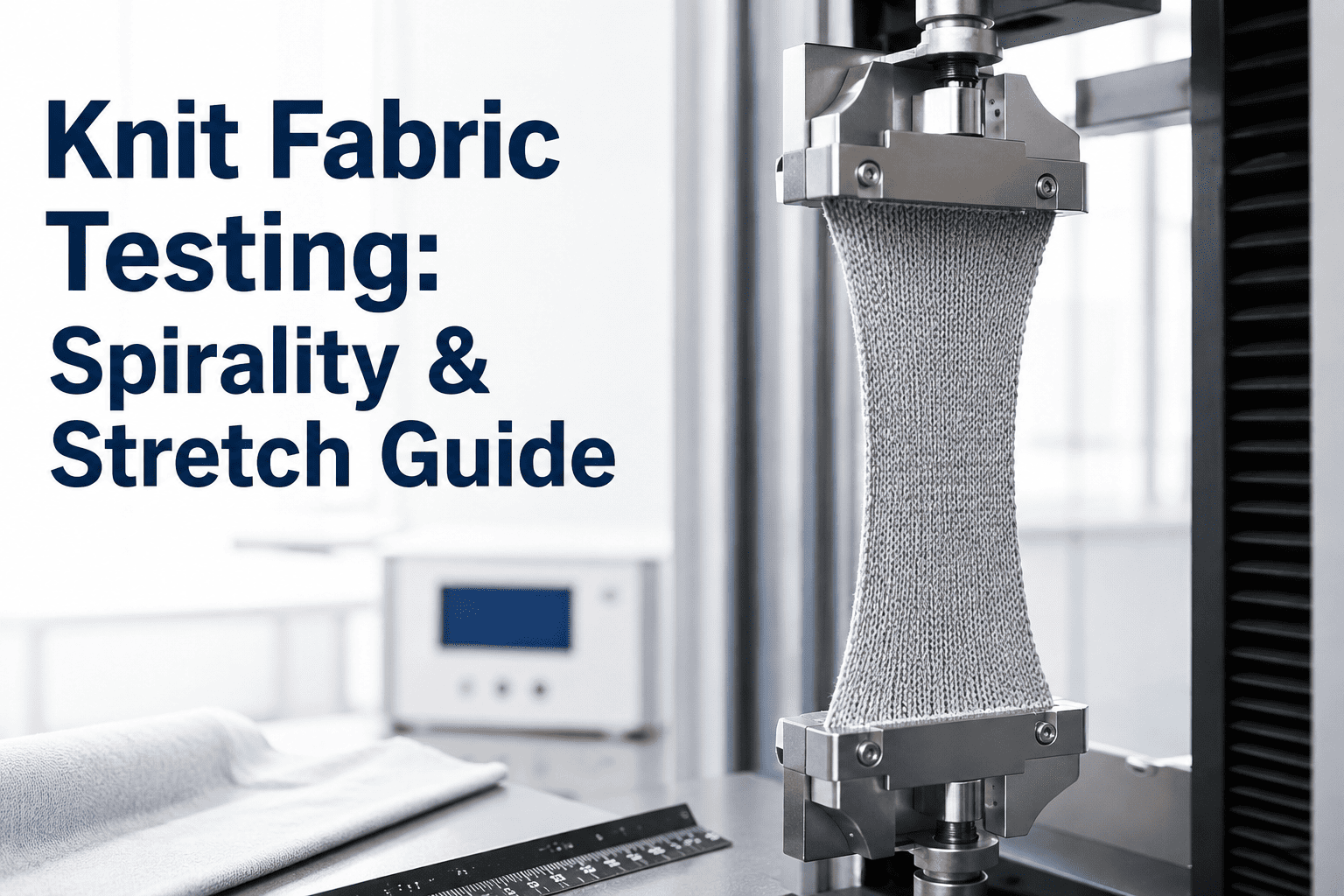
Clamps a fabric strip in two jaws and pulls it apart at a controlled rate until failure, measuring the maximum force the fabric withstands and its elongation at break. The grab method uses wider jaws than the fabric strip, capturing support from adjacent yarns similar to real garment stress.
ASTM D1424 / ISO 13937-2
Elmendorf Tear Strength
Uses a pendulum apparatus to propagate a pre-cut slit through the fabric, measuring the energy required to continue tearing once damage has already started, which correlates closely with real-world snag and rip resistance.
ASTM D3786 / ISO 13938-1
Mullen Bursting Strength
Applies increasing hydraulic or pneumatic pressure through a rubber diaphragm against the fabric surface until rupture, simulating multidirectional stress that knit fabrics experience under stretch and is difficult to measure with linear tensile methods.
Strength Test Comparison and Typical Sample Requirements
Sample preparation differs meaningfully between methods, and a common cause of failed or disputed results is cutting a sample to the wrong geometry for the specified standard. Even experienced lab technicians occasionally default to whichever jig or template is already set up on the equipment rather than confirming the geometry required by the specific buyer's method, which is a fast way to generate a technically invalid result that still looks plausible on paper.
| Test | Sample Size | Fabric Types Typically Required | Common Failure Point |
|---|
| Grab Tensile | 100mm x 150mm, both warp/weft | Wovens, some coated fabrics | Low yarn count, weak sizing |
| Strip Tensile (ISO) | 50mm x 200mm, both directions | Wovens per European buyer packs | Insufficient yarn density |
| Elmendorf Tear | 63mm x 76mm with pre-cut slit | Wovens, outerwear, workwear | Weak weft yarns, low twist |
| Mullen Burst | Circular clamp, no directional cut | Knits, nonwovens, coated fabrics | Thin gauge, over-stretched knit structure |
Why Strength Results Vary Across the Same Fabric Roll
Fabric strength is rarely uniform across a full production roll, and testing only the leading edge or a single convenient section can miss weak zones that later fail in the field. Understanding the common causes of intra-roll variation helps quality teams design a sampling plan that actually catches the problem rather than passing a lot on an unrepresentative sample. In most root-cause investigations, the finished fabric chemistry is not the issue at all; the issue is a process variable drifting silently somewhere upstream, and strength testing is simply the point where that drift finally becomes visible.
01
Yarn tension drift during weaving or knitting
Tension settings can drift gradually across a long production run, producing sections with lower yarn density and correspondingly lower strength than the roll's leading edge.
02
Uneven finishing chemical penetration
Softening, sizing, or resin finishing applied unevenly across fabric width can leave edge zones under-treated, reducing tear and tensile performance specifically at roll selvedge.
03
Sample cut parallel to a defect line
A sample cut adjacent to a barré line, slub, or thin place can either overstate or understate true average roll strength depending on which side of the defect it favors.
04
Conditioning atmosphere not standardized before testing
Fiber moisture content affects tensile and tear results measurably; testing samples straight from a hot finishing line without proper conditioning produces inflated or understated results.
05
Single-point sampling instead of roll-length distribution
Testing only the roll's start or end misses the gradual strength drift common in long production runs, leaving mid-roll weak zones undetected until they reach the customer.
Matching Strength Specification to Actual Garment Stress
A common and costly mistake in fabric development is applying a generic strength specification across an entire product line regardless of garment construction and end use, rather than matching the test emphasis to the stress the fabric will actually experience. A woven shirt fabric experiences primarily tensile stress at seams and buttonholes, making grab tensile the most predictive test for field performance. A denim workwear fabric experiences repeated flexing and abrasion at stress points like pocket corners and belt loops, making tear strength the more predictive indicator of real-world durability. A knit legging fabric experiences continuous multidirectional stretch, making burst strength the far more relevant measure than either tensile or tear alone. Specifying all three tests uniformly across every fabric type is not wrong, but weighting pass/fail risk assessment toward the test that matches actual garment stress produces a more accurate prediction of field performance than treating all three results as equally important for every product category.
Wovens: Shirting
Tensile-Dominant Stress
Seams and buttonholes experience primarily straight-line pulling force; grab or strip tensile results are the strongest predictor of field durability.
Wovens: Workwear
Tear-Dominant Stress
Pocket corners, belt loops, and reinforcement points experience repeated flex and snag stress once damage initiates; tear strength predicts durability best.
Knits: Activewear
Burst-Dominant Stress
Continuous multidirectional stretch under body movement makes bursting strength a far more relevant indicator than linear tensile testing alone.
iFactory correlates strength results against roll position, finishing parameters, and yarn tension logs, identifying which production conditions actually produce weak fabric zones before they leave the mill.
Results from Mills Reducing Strength-Related Returns
The following outcomes reflect real mill operations after implementing distributed strength sampling and trend tracking. Request the full case study for your fabric category and construction.
A denim mill experiencing intermittent tensile failures traced to mid-roll yarn tension drift implemented distributed sampling across roll length instead of single-point leading-edge testing. Correlating strength results against loom tension logs identified the specific shift pattern causing drift, and corrective maintenance eliminated the weak zone pattern within one production cycle. The mill now flags any roll showing early signs of tension drift for additional sampling before it is released to cutting, rather than discovering the issue after garments are already in production.
76%
Reduction in mid-roll tensile failures
3 weeks
Root cause identification to resolution
$280K
Annual returns avoided from strength claims
A knit jersey producer supplying activewear brands faced recurring burst strength disputes from buyers testing at different roll positions than the mill's own quality lab. Standardizing a documented multi-point sampling plan matched to buyer expectations closed the gap between internal and buyer-side results, and shipment holds tied to burst strength disputes stopped entirely within the following quarter. The producer also shared the documented sampling plan directly with buyer compliance teams, which removed the ambiguity that had previously triggered independent retesting on nearly every shipment.
0
Burst strength shipment holds since rollout
92%
Internal-to-buyer result agreement rate
1 quarter
Time to eliminate dispute pattern
What Quality Engineers Say About Strength Trend Tracking
We were testing one sample per roll and calling it representative. Once we mapped strength results against roll position, we found weak zones we had been shipping for months without knowing it.
Quality Engineer
Denim Mill, India
Burst strength disputes with buyers used to feel arbitrary because we never knew exactly where on the roll they were sampling from. Matching our sampling plan to theirs ended the disagreements almost immediately.
Lab Manager
Knit Fabric Producer, Vietnam
Tear strength was our biggest recurring failure and we assumed it was a fiber quality issue. It turned out to be a finishing line temperature problem affecting only certain sections of certain rolls.
Production Manager
Woven Outerwear Mill, China
Correlating strength trends against loom maintenance schedules gave us a preventive maintenance trigger we never had before. Weak zones now get caught before the roll even finishes weaving.
Plant Director
Canvas and Workwear Fabric Mill, Turkey
Frequently Asked Questions
Why does a fabric pass tensile strength but fail tear strength testing?
Tensile strength measures resistance to a straight pulling force distributed evenly across intact yarns, while tear strength measures how easily a rip continues once fabric has already been damaged or punctured. A tightly woven, high-density fabric can resist pulling force well while still tearing easily once a small cut or snag has started, because tear propagation depends more on individual yarn slippage and weave structure than on overall fabric density. This is why a fabric technically rated as high-tensile can still generate customer complaints about tearing at stress points, since the two properties are simply not measuring the same underlying failure mechanism.
How many samples should be tested per fabric roll to get a representative strength result?
Most buyer technical packs specify a minimum of five samples per direction taken from different points across a roll's width and length, rather than a single sample from one location. Testing only the leading edge, which is the most convenient and commonly tested section, systematically misses the mid-roll and trailing-edge variation that causes the majority of field strength failures.
Does bursting strength testing apply to woven fabrics or only knits?
Bursting strength is primarily specified for knit fabrics, nonwovens, and coated materials because their multidirectional stretch behavior makes linear tensile testing less representative of real-world failure. Wovens are typically tested using tensile and tear methods instead, though some technical or coated woven fabrics may carry burst strength requirements depending on end use, particularly for filtration or industrial applications.
How does fiber moisture content affect strength test results?
Most natural and many synthetic fibers change mechanical properties measurably with moisture content, which is why both ASTM and ISO methods require samples to be conditioned for a minimum period at standardized temperature and relative humidity before testing. Testing a sample straight off a hot finishing line, or one that has absorbed ambient humidity inconsistently, can shift tensile and tear results enough to change a pass into a fail or vice versa.
What is the most effective way to prevent strength-related field failures before they reach the customer?
Distributed sampling across full roll length and width, combined with tracking strength results against production variables like yarn tension and finishing temperature, catches weak zones and their root causes before fabric reaches cutting rather than after a garment fails in wear.
Book a demo to see how correlated strength tracking fits into your existing lab workflow.
Stop Guessing Where the Weak Fabric Is. Track Strength Roll to Roll.
iFactory captures tensile, tear, and burst results across full roll length, correlates weak zones against production variables, and gives you the audit trail to defend every shipped lot.
Distributed sampling catches mid-roll weak zones
Strength trends correlated to yarn tension and finishing data
Covers tensile, tear, and burst across wovens and knits
Full audit trail for every buyer compliance review