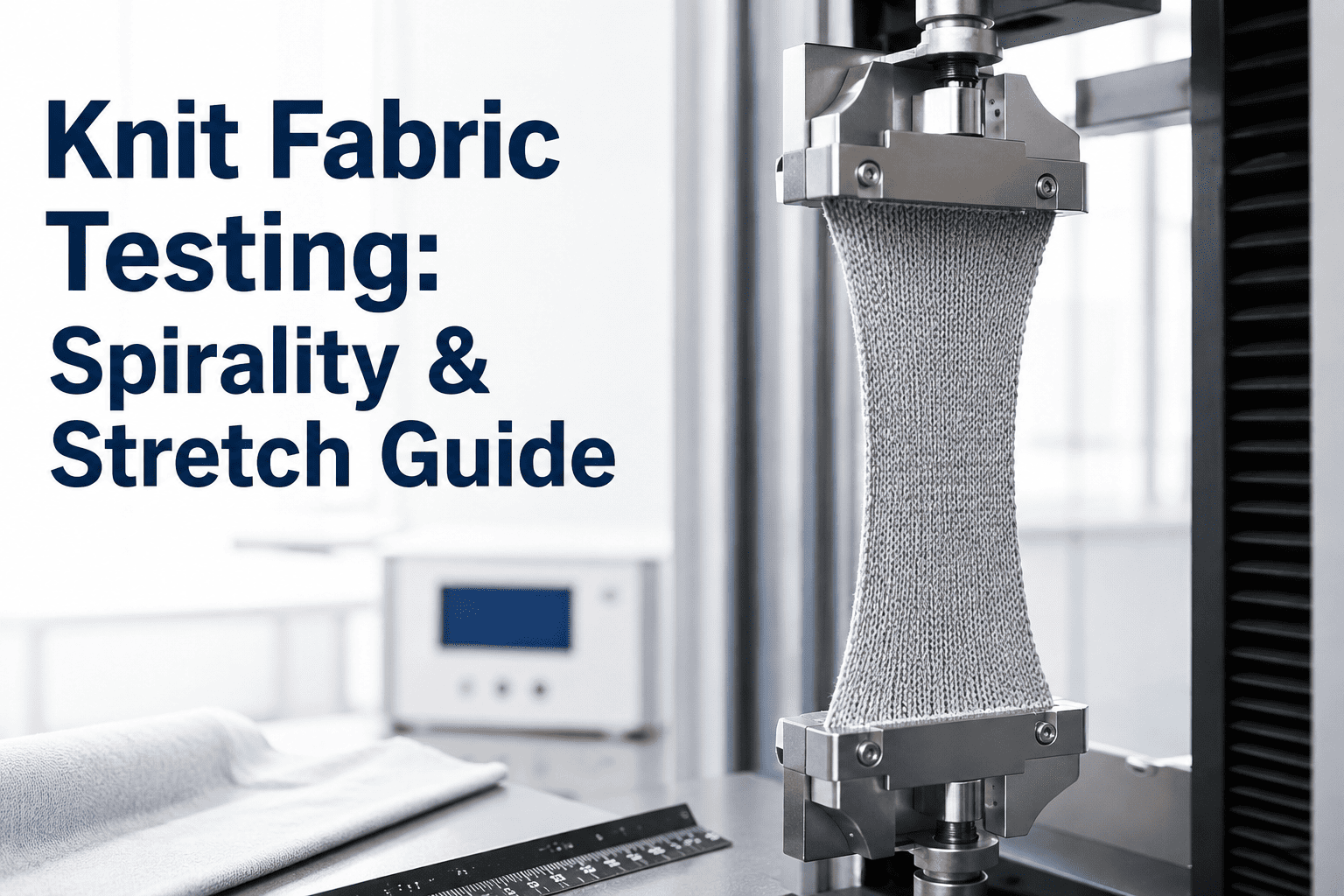
Textile mills and apparel brands lose an estimated 8-12% of shipped orders to quality disputes rooted in one root cause: testing against the wrong standard, or testing correctly but interpreting results inconsistently across labs. A single fabric lot can legitimately pass ASTM D5034 tensile testing while failing the equivalent ISO 13934-1 method on the same sample, because sample size, jaw speed, and conditioning atmosphere differ between the two frameworks. Buyers in the US typically specify AATCC and ASTM, European buyers specify ISO and BS EN, and a mill supplying both markets without a documented standard-selection process ends up re-testing the same fabric three or four times before shipment. That rework consumes lab capacity, delays dispatch by days, and still leaves quality teams unsure which result a retailer's compliance auditor will actually accept. Book a Demo to see how iFactory maps your buyer requirements to the correct standard automatically before a single sample reaches the lab.
4
Major standards bodies mills must reconcile: ASTM, ISO, AATCC, BS EN
30-40%
Of lab retests caused by wrong standard selection at intake
6-9 days
Typical shipment delay caused by a single failed compliance retest
92%
Standard-mapping accuracy achieved with AI-guided test selection
Wrong Standard, Wrong Result. Right Every Time With AI Test Mapping.
iFactory reads buyer technical packs, cross-references them against ASTM, ISO, AATCC, and BS EN test libraries, and routes every sample to the correct method, sample size, and conditioning protocol before testing begins.
The Four Standards Bodies Every Textile Lab Must Navigate
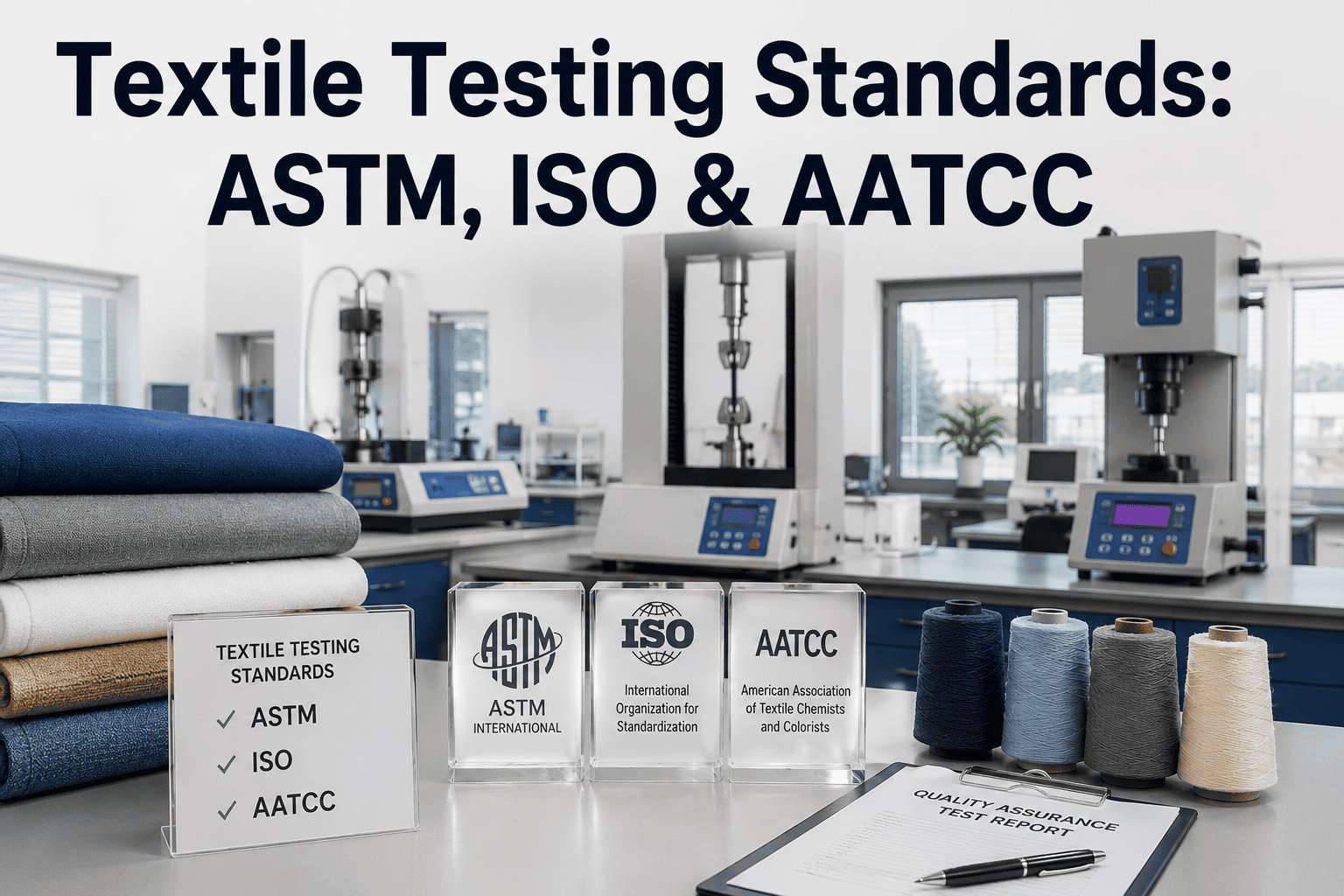
Each standards body governs test methods differently, and the differences are rarely cosmetic. ASTM (American Society for Testing and Materials) dominates US retail specifications and tends toward imperial units and grab-test geometry. ISO (International Organization for Standardization) governs most European and increasingly Asian buyer packs, favoring strip-test geometry and metric conditioning. AATCC (American Association of Textile Chemists and Colorists) owns nearly every colorfastness and wet-processing method used globally, regardless of which body governs the physical tests around it. BS EN (British Standards, harmonized with European Norms) frequently duplicates ISO content but carries its own numbering and is still specified directly by UK and Commonwealth buyers. A mill serving three or four regions simultaneously effectively operates four parallel testing frameworks, and without a structured mapping process, technicians default to whichever method they last performed rather than the one the current order actually requires. This is rarely a knowledge gap; experienced lab staff know the methods well. The gap is procedural: nothing in the workflow forces a check against the specific buyer pack governing the specific order in front of them, so familiarity quietly substitutes for verification.
ASTM
American Society for Testing and Materials
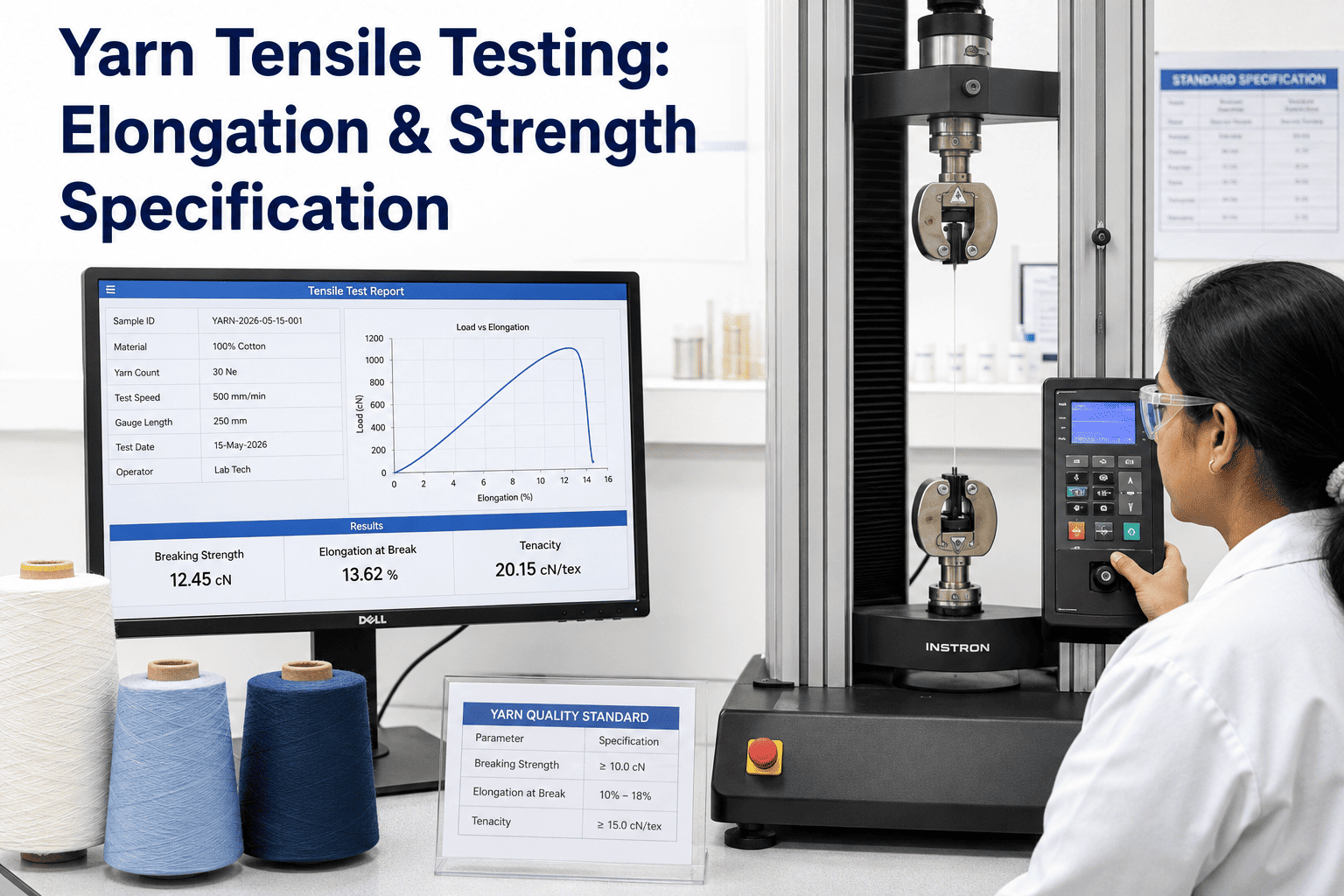
Governs the majority of US retailer technical packs. Grab tensile (D5034), Elmendorf tear (D1424), and Mullen burst (D3786) are the three most frequently cited ASTM mechanical methods in apparel sourcing.
ISO
International Organization for Standardization
Governs European and much of the growing Asian domestic retail market. Strip tensile (ISO 13934-1) and trapezoidal tear (ISO 13937-2) are the equivalent methods most commonly substituted for ASTM tests.
AATCC
American Association of Textile Chemists and Colorists
Owns colorfastness, dimensional stability, and finish-durability methods almost universally, cited inside both ASTM and ISO-based technical packs regardless of which mechanical standard governs strength testing.
BS EN
British Standards, Harmonized with European Norms
Frequently duplicates ISO content under different reference numbers. Still specified directly by UK, Commonwealth, and some Middle Eastern buyers, requiring labs to maintain a live cross-reference table.
Choosing the Correct Test Method for a Given Buyer Pack
Standard selection is not optional guesswork — every reputable buyer technical pack specifies exactly which method, sample count, and pass threshold applies to a given fabric category. The failure point is almost always human: a lab technician defaults to the method used last week rather than checking the current pack, or a mill supplying multiple regions applies one region's default standard to all orders. This becomes especially costly on private-label programs, where the same fabric base may ship under three or four different retailer packs in the same season, each with a slightly different pass threshold even when the underlying method number is identical. iFactory's platform ingests buyer technical packs directly and pre-populates the correct method, sample preparation instructions, and conditioning atmosphere before a garment ever reaches the test bench. See how automated standard mapping compares against your current manual test-assignment process.
| Test Category |
ASTM Method |
ISO Equivalent |
Typical Buyer Region |
| Tensile Strength |
D5034 (Grab Test) |
13934-1 (Strip Test) |
US buyers: ASTM. EU/Asia buyers: ISO |
| Tear Strength |
D1424 (Elmendorf) |
13937-2 (Trapezoidal) |
US buyers: ASTM. EU buyers: ISO |
| Bursting Strength |
D3786 (Mullen) |
13938-1 (Hydraulic) |
Knit-heavy programs across both regions |
| Colorfastness to Wash |
AATCC 61 |
ISO 105-C06 |
Cited in nearly every regional pack |
| Pilling Resistance |
ASTM D3512 (Random Tumble) |
ISO 12945-2 (Martindale) |
Martindale dominant in EU and premium US programs |
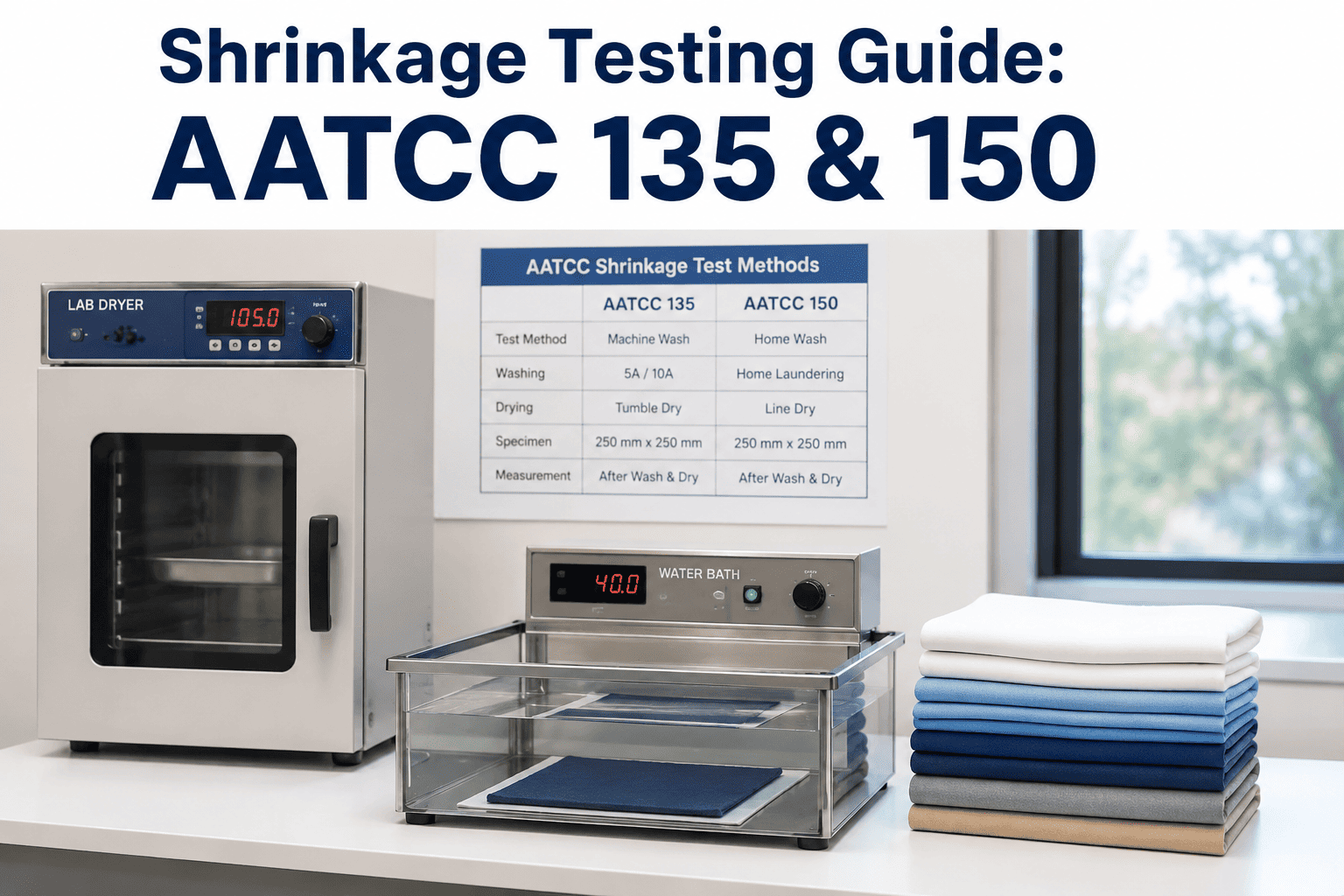
| Dimensional Stability |
AATCC 135 / ASTM D3866 |
ISO 6330 / ISO 5077 |
Both regions, method depends on care label instructions |
Where Standard-Selection Mistakes Actually Happen
Most compliance failures trace back to five recurring points of breakdown across the testing workflow, each one preventable with a documented, system-enforced standard-selection process rather than reliance on individual technician memory. None of these five failure points require new equipment or additional headcount to fix; they require the testing workflow itself to enforce the check rather than leaving it to memory under deadline pressure. Mills that map these points against their own process usually find two or three of the five already causing measurable rework, well before they consider a platform change.
01
Outdated buyer pack referenced at sample intake
Buyers revise technical packs seasonally, but labs frequently continue testing against a prior season's method until a shipment is rejected and the discrepancy surfaces.
02
Sample size mismatch between ASTM and ISO geometry
Grab-test and strip-test sample dimensions differ; cutting samples to the wrong geometry produces results that fail even when the fabric itself meets specification.
03
Conditioning atmosphere skipped or shortened
Both ASTM and ISO require 24-hour conditioning at defined temperature and humidity before mechanical testing; skipping this step under deadline pressure skews tensile and tear results measurably.
04
Cross-region method substitution without buyer sign-off
Substituting an ISO result for a requested ASTM method without documented buyer approval is a common cause of shipment hold even when the fabric genuinely meets performance intent.
05
Inconsistent grading scale interpretation between technicians
Grey scale and grading judgments carry inherent subjectivity; without calibration checks across technicians, the same fabric can receive different pass/fail outcomes depending on who reads it.
Building an Internal Standards Reference Library That Actually Gets Used
A documented standards library only reduces errors if lab staff reference it consistently, which means the format matters as much as the content. Static PDF binders of standard specification sheets are technically accurate but rarely consulted under deadline pressure, which is precisely when most standard-selection mistakes occur. Mills that succeed at reducing compliance rework tend to build their reference library around three principles: the correct method surfaces automatically at sample intake rather than requiring a technician to search for it, every buyer's current technical pack version is the single source of truth rather than a locally saved copy that may be outdated, and equivalence decisions between ASTM, ISO, AATCC, and BS EN methods are pre-approved and documented rather than judgment calls made mid-shift.
Step 1
Centralize every current buyer technical pack
Replace locally saved copies with a single, version-controlled source so every technician references the same current specification regardless of when it was last updated.
Step 2
Pre-approve cross-standard equivalences
Document which ASTM-to-ISO or ISO-to-BS EN substitutions each buyer has formally approved, removing case-by-case negotiation from the testing workflow entirely.
Step 3
Attach method selection to sample intake
Surface the correct method, sample geometry, and conditioning requirement automatically the moment a sample is logged, rather than relying on manual lookup mid-process.
Step 4
Calibrate grading across every technician quarterly
Run periodic blind grading comparisons on colorfastness, pilling, and appearance retention to catch subjective drift between technicians before it reaches a buyer audit.
Stop Re-Testing Fabric That Already Passed. Fix Standard Selection at the Source.
iFactory's compliance intelligence layer cross-references live buyer technical packs against your lab's method library, flags mismatches before a sample is cut, and keeps a full audit trail for every test decision.
Results from Mills Running Standardized Test Mapping
The following outcomes reflect real mill operations after implementing automated standard mapping across multi-region buyer programs. Request the full compliance case study relevant to your buyer region mix.
A denim mill shipping to both US department stores and European fast-fashion brands was running every fabric lot through both ASTM and ISO tensile methods by default, doubling lab workload. Automated buyer-pack mapping identified that 70% of orders only required a single method based on destination market, cutting redundant testing immediately and freeing lab capacity for genuine compliance edge cases.
70%
Reduction in redundant dual-standard testing
5 days
Faster average shipment clearance
92%
First-pass compliance rate on new orders
A knitwear manufacturer supplying both US and UK retailers faced repeated shipment holds from grading inconsistency between technicians reading AATCC and ISO colorfastness results differently. Standardized grading calibration and automated method-to-buyer mapping brought grading variance across technicians down substantially within one quarter, and audit documentation satisfied buyer compliance reviews on first submission.
85%
Drop in cross-technician grading variance
0
Shipment holds from grading disputes post-rollout
3 weeks
Time to full lab rollout across two facilities
What Quality Managers Say About Standardized Test Mapping
We were testing every order against both ASTM and ISO out of habit because nobody wanted to be the one who shipped a fabric that failed the wrong standard. iFactory showed us exactly which method each buyer pack actually required, and our lab throughput went up without adding headcount.
Quality Assurance Manager
Denim Mill, India
Grading disputes between our two labs used to delay shipments for a week at a time. Having a documented, calibrated grading process tied directly to the buyer's specified standard removed the guesswork entirely.
Lab Director
Knitwear Manufacturer, Bangladesh
The audit trail alone justified the switch. When a buyer questions a result, we can show exactly which standard was applied, why, and who signed off, instead of reconstructing the decision after the fact.
Compliance Head
Woven Fabric Exporter, Vietnam
Supplying both US and European retailers from one facility used to mean duplicating almost every test. Now the system tells us upfront which single method actually satisfies the order, and we test once.
Plant Manager
Multi-Region Apparel Supplier, Turkey
Frequently Asked Questions
How do I know whether a buyer expects ASTM or ISO testing on a given order?
The buyer's technical pack or purchase order specification sheet always names the exact standard and method number expected for each property. When a pack is ambiguous or references an outdated method, the safest path is written confirmation from the buyer's compliance contact before testing, since substituting a method without sign-off is a common cause of shipment rejection even when the underlying fabric performance is acceptable.
Can ISO results be submitted when a buyer specifically requests ASTM testing, or vice versa?
Generally no, unless the buyer has explicitly approved an equivalence table in writing. While ASTM D5034 and ISO 13934-1 measure the same underlying property, sample geometry and grip distance differ enough that results are not numerically interchangeable, and most retail compliance departments will reject a mismatched method regardless of how close the values appear.
Why does the same fabric sometimes pass in one lab and fail in another?
The most common causes are inconsistent conditioning atmosphere before testing, sample cutting geometry that does not match the specified method exactly, calibration drift on tensile or tear equipment, and subjective grading differences between technicians on properties like colorfastness or pilling. A documented calibration and standard-selection process closes most of this gap.
Do BS EN standards require separate testing from ISO, or can one test satisfy both?
Most BS EN mechanical and colorfastness methods are harmonized with ISO content and share identical test parameters under a different reference number, meaning one properly documented ISO test typically satisfies both citations. Some legacy BS methods predate harmonization and retain unique requirements, so cross-referencing the exact BS EN number against its ISO counterpart before assuming equivalence remains necessary.
How can a multi-region supplier reduce duplicate testing without risking compliance failures?
Building a live cross-reference table mapping every buyer's specified standard to the equivalent method already covered by a prior test, combined with documented buyer sign-off on accepted equivalences, allows a single test run to satisfy multiple regional requirements safely.
Book a demo to see how automated mapping identifies genuine duplicate-testing opportunities across your order book.
Stop Guessing Which Standard a Buyer Actually Wants. Map It Automatically.
iFactory reads buyer technical packs, applies the correct ASTM, ISO, AATCC, or BS EN method automatically, and keeps a full audit trail so every compliance decision is documented and defensible.
92% standard-mapping accuracy from buyer pack to test method
Up to 70% reduction in redundant dual-standard testing
Calibrated grading reduces cross-technician variance sharply
Full audit trail for every compliance decision made